From Surf Wiki (app.surf) — the open knowledge base
Battle of Luzon
1945 World War II battle

1945 World War II battle
| Field | Value | |
|---|---|---|
| conflict | Battle of Luzon | |
| partof | the Philippines campaign (1944–1945) of World War II | |
| width | 380px | |
| image | Baleta Pass, near Baugio, Luzon.jpg | |
| image_size | 300 | |
| caption | A squad leader points out a suspected Japanese position at the edge of Balete Pass, near Baguio, where troops of the 25th Infantry Division are in fierce combat with Japanese forces. 23 March 1945. | |
| date | 9 January 1945 – 15 August 1945 | |
| place | Luzon, Philippines | |
| result | Allied victory | |
| territory | Allies liberate the Luzon island group | |
| combatant1 | United States | |
| combatant2 | Empire of Japan | |
| commander1 | {{indented plainlist | |
| commander2 | {{indented plainlist | |
| strength1 | United States*United States* | |
| Sixth Army (9 January-30 June 1945) | ||
| strength2 | Empire of Japan*Japan* | |
| (Including Naval personnel) | ||
| casualties1 | {{indented plainlist | |
| *Total<ref name | "The War With Japan""The War With Japan" Part 3, p. 95. Retrieved 29 Dec. 2023 | |
| *Sixth Army:<ref name | "Report of Luzon Operation, vol. III"Report of Luzon Operation, vol. III p. 7. Retrieved 29 Dec. 2023 | |
| *USAFIP (NL):<ref>[https://books.google.com/books?id | kD3zAAAAMAAJ&q=5%2C000 Liberation of Northern Luzon (after-battle Report)] p. 110. Retrieved 29 Feb. 2024 | |
| casualties2 | {{indented plainlist | |
| *Total (US estimate)<ref name | "The War With Japan""The War With Japan" Part 3, p. 95. Retrieved 29 Dec. 2023 | |
| campaignbox | ||
- Philippines Commonwealth of the Philippines Australia}} Mexico
- Second Philippine Republic
- United States Douglas MacArthur
- United States Walter Krueger
- Philippines Basilio J. Valdes
- Mexico Antonio Rodriguez
- Empire of Japan Tomoyuki Yamashita
- Empire of Japan Akira Mutō
- Empire of Japan Shizuo Yokoyama Sixth Army (9 January-30 June 1945)
- 146,119 authorized, 143,993 assigned (17 Jan)
- 247,085 authorized, 232,925 assigned (12 Feb)
- 187,022 authorized, 179,746 assigned (30 Jun)
- Total replacements 9 Jan-30 Jun: 51,940 Eighth Army (1 July-15 August 1945)
- 76,989 authorized, 72,922 actual (1 Jul)
- 83,210 authorized, 80,305 actual (15 Aug)
- Total replacements 1 Jul-15 Aug: 11,375 Fifth Air Force (During Sixth Army period)
- 550 fighters
- 192 light bombers
- 128 medium bombers
- 192 heavy bombers
- 66 reconnaissance
- 166 Marine SBDs
- 1,294 total (2/3 operable) PhilippinesPhilippines (under USAFFE)
- 59,723 (Sixth Army phase)
- 43,000 (Eighth Army phase) MexicoMexico (Escuadrón 201, attached to Fifth Air Force)
- 300 personnel (ground and air crew) (Including Naval personnel)
US Post-battle Estimate
- 126,760 Mobile Combat
- 35,580 Base Defense
- 95,550 Service Troops
- 257,890 Total (excludes ~13,000 laborers) Per US Army Official History
- 275,685 (includes 23,500 civilians) United States United States Army Battle Casualties
- Total
- 8,436 killed and missing
- 32,129 wounded Army Nonbattle Casualties
- Sixth Army:
- 86,954 sick
- 5 missing
- 254 deaths
- 6,209 injured
- Eighth Army:
- 6,443 total Navy, Merchant, Shipboard
- 13 Dec. 1944-13 Jan. 1945
- Includes Royal Australian Navy
- 1,655 killed
- 2,100 wounded
- 24 ships sunk
- 67 ships damaged Philippines Philippines
- USAFIP (NL):
- 1,441 killed
- 84 missing
- 3,475 wounded
- Other guerrilla losses unknown
- Mexico Mexico
- 10 dead (5 in the aviation school) }} Empire of Japan Japan Battle/Nonbattle Casualties
- Total (US estimate)
- 192,561 dead
- 9,656 captured Equipment
- US estimate to 30 June 1945
- 308 tanks
- 51 armored vehicles
- 2,022 motor vehicles
- 955 artillery pieces
- 686 AA guns and cannon
- 1,196 mortars (837 50 mm and "knee mortars")
- 600 aircraft (13 Dec. to 13 Jan. 1945)
Interned after 20 August 1945
- 63,500+ survivors
The Battle of Luzon (; ; ) was a land battle of the Pacific Theater of Operations of World War II by the Allied forces of the U.S., its colony the Philippines, Mexico, and allies against forces of the Empire of Japan. The battle resulted in a U.S. and Filipino victory. The Allies had taken control of all strategically and economically important locations of Luzon by March 1945, although pockets of Japanese resistance held out in the mountains until the unconditional surrender of Japan. While not the highest in U.S. casualties, it is the highest net casualty battle U.S. forces fought in World War II, with 192,000 to 217,000 Japanese combatants dead (mostly from starvation and disease), 8,000 American combatants killed, and over 150,000 Filipinos, overwhelmingly civilians who were murdered by Japanese forces, mainly during the Manila massacre of February 1945.
Background
The Philippines was considered to be of great strategic importance because its capture by Japan would pose a significant threat to the U.S. As a result, 135,000 troops and 227 aircraft were stationed in the Philippines by October 1941. However, Luzon—the largest island in the Philippines—was captured by Imperial Japanese forces in 1942. General Douglas MacArthur—who was in charge of the defense of the Philippines at the time—was ordered to Australia, and the remaining U.S. forces retreated to the Bataan Peninsula.
A few months after this, MacArthur expressed his belief that an attempt to recapture the Philippines was necessary. The U.S. Pacific Commander Admiral Chester Nimitz and Chief of Naval Operations Admiral Ernest King both opposed this idea, arguing that it must wait until victory was certain. MacArthur had to wait two years for his wish; it was 1944 before a campaign to recapture the Philippines was launched. The island of Leyte was the first objective of the campaign, which was captured by the end of December 1944. This was followed by the attack on Mindoro, and later, Luzon.
Prelude
Before U.S. forces could launch the attack on Luzon, a base of operation needed to be established close to the island. Airbases in particular had to be established in order to provide the advancing troops with air support. Troops under Brigadier General William C. Dunckel captured the island of Mindoro, with the assistance of the 7th Fleet. By 28 December, two airbases were controlled by the U.S. and were ready to assist in the attack on Luzon, which was scheduled to be launched on 9 January 1945. With the capture of Mindoro, U.S. forces were positioned south of Luzon. However, MacArthur intended to land his forces at Lingayen, further north. This would place his troops close to several roads and railways on Luzon, which led to Manila—the main objective—through the plains in the center of the island.
Deception operations
U.S. aircraft constantly made reconnaissance and bombing flights over southern Luzon, intending to deceive the Japanese forces into believing that the attack on Luzon would come from the south. In addition, transport aircraft were used to make parachute drops with dummies. Minesweepers were used to clear the bays of Balayan, Batangas, and Tayabas, located to the south of Luzon, and Filipino resistance fighters conducted sabotage operations in southern Luzon. These deception operations failed to convince General Tomoyuki Yamashita, the leader of the Imperial Japanese Army in the Philippines, and he built significant defensive positions in the hills and mountains surrounding Lingayen Gulf in Northern Luzon.
Opposing forces
Allied
Lingayen area San Fabian area
Allied Forces, Southwest Pacific Area General Douglas MacArthur
Lieutenant General Walter Krueger
Western Landing Area (Lingayen) : [[Image:US_XIV_Corps_patch.svg|20px]] XIV Army Corps : Major General Oscar W. Griswold : Embarked in Task Force 79 (Vice Adm. Theodore S. Wilkinson) :: Left (Crimson and Yellow) beaches ::: [[Image:37th_Infantry_Division_CSIB.svg|18px]] 37th Infantry ("Buckeye") Division ::: Major General Robert S. Beightler ::::129th Infantry Regiment :::: 145th Infantry Regiment :::: 148th Infantry Regiment :::: 6th, 135th, 140th Field Artillery Bttns. (105mm) :::: 136th Field Artillery Bttn. (155mm) :: Right (Orange and Green) beaches ::: [[Image:40th_Infantry_Division_CSIB.svg|18px]] 40th Infantry ("Sunshine") Division ::: Major General I. Rapp Brush :::: 108th Infantry Regiment :::: 160th Infantry Regiment :::: 185th Infantry Regiment :::: 143rd, 164th, 213th Field Artillery Bttns. (105mm) :::: 222nd Field Artillery Bttn. (155mm)
Eastern Landing Area (San Fabian) : [[Image:U.S._I_Corps_CSIB.svg|18px]] I Army Corps : Major General Innis P. Swift : Embarked in Task Force 78 (Vice Adm. Daniel E. Barbey) :: Left (White) beaches ::: [[Image:43rd Infantry_Division_CSIB.svg|18px]] 43rd Infantry ("Winged Victory") Division ::: Major General Leonard F. Wing :::: 103rd Infantry Regiment :::: 169th Infantry Regiment :::: 172nd Infantry Regiment :::: 103rd, 152nd, 169th Field Artillery Bttns. (105mm) :::: 192nd Field Artillery Bttn. (155mm) :: Right (Blue) beaches ::: [[Image:6th_Infantry_Division.svg|16px]] 6th Infantry ("Red Star") Division ::: Major General Edwin D. Patrick :::: 1st Infantry Regiment :::: 20th Infantry Regiment :::: 63rd Infantry Regiment :::: 1st, 51st, 53rd Field Artillery Bttns. (105mm) :::: 80th Field Artillery Bttn. (155mm)
Japanese

Fourteenth Area Army
General Tomoyuki Yamashita
Northern Luzon : Shobu Group (Gen. Yamashita) : approx. 152,000 officers and enlisted
Central Luzon : Kembu Group (Lieut. Gen. Rikichi Tsukada) : approx. 30,000 officers and enlisted
Southern Luzon : Shimbu Group (Lieut. Gen. Shizuo Yokoyama) : approx. 80,000 officers and enlisted
Battle
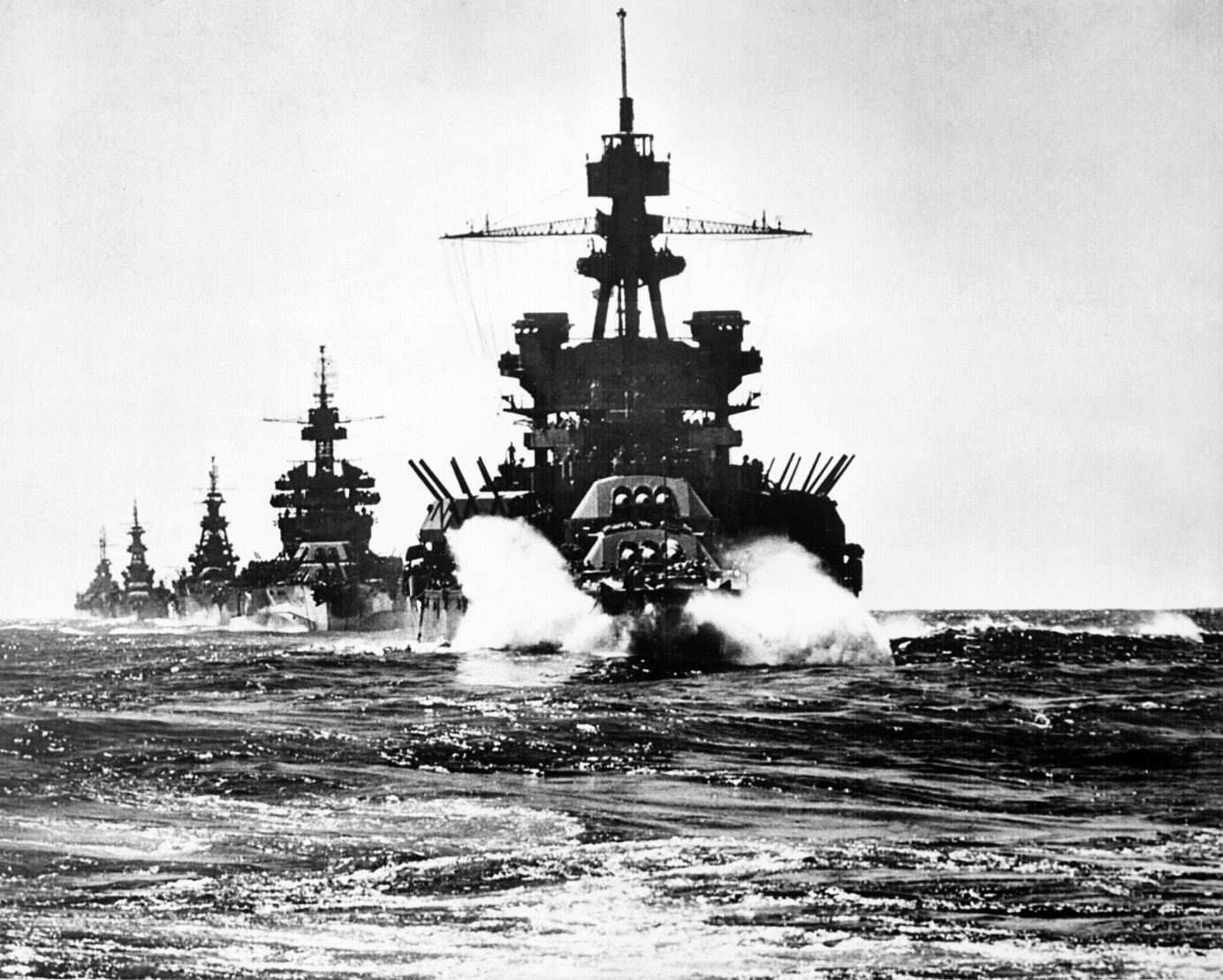
The assault on Luzon was launched, as planned, on 9 January 1945, codenamed S-day. The Japanese forces reported more than 70 Allied warships entering Lingayen Gulf, though the total Allied invasion force involved that month would equal close to 800 ships. Pre-assault bombardment of Japanese shore positions from roughly 70 battleships and cruisers began at 7:00. The landings were commenced an hour later. The landing forces faced strong opposition from Japanese kamikaze aircraft. The escort carrier was destroyed by a kamikaze attack, with a total of around 47 ships damaged, and four sunk, on January 3–13, primarily by kamikazes.

The landings at Lingayen Gulf on 9 January were carried out by the 6th Army under the command of General Walter Krueger. Approximately 175,000 troops from the 6th Army landed along the 20 mi beachhead within a few days, while the I Corps protected their flanks. XIV Corps under General Oscar Griswold then advanced south toward Manila, despite Krueger's concerns that his eastern flank was unprotected and vulnerable if the Japanese forces attacked. However, no such attack occurred, and the U.S. forces did not meet much resistance until they reached the Clark Air Base on 23 January. The battle there lasted until the end of January, and after capturing the base, XIV Corps advanced toward Manila.

From the middle of January to early February the largest ever tank battle between American and Japanese forces took place. The Japanese 2nd Tank Division's 220 tanks (175 Type 97 ShinHōtō Chi-Ha medium tanks, 25 Type 89 I-Go medium tanks, and 20 Type 95 Ha-Go light tanks) faced off against only 76 American tanks (59 M4 Sherman medium tanks and 17 M5A1 Stuart light tanks) supported by infantry armed with bazookas and dozens of 105mm M7 Priest self-propelled howitzers. Krueger had more tanks held in reserve to the north because of the threat of an unknown number of Japanese tanks being withheld from combat until ambushing them en masse in the exposed open flat plains of Central Luzon so the 76 Shermans and Stuarts and accompanying M7 Priests were tasked with finding and destroying them with their superior guns and armor. The Japanese made this tank battle last for over three weeks instead of a single one-day battle by hiding their tanks behind and under camouflaged and protected fortifications, either digging the tanks into the ground or creating a series of semi-enclosed fortifications for them to move around and reposition during the battles. Some of these tanks were used to patrol and engage the enemy especially at night. From San Manuel to Muñoz the tanks dueled with each other leading to the deaths of hundreds of American soldiers and thousands of Japanese soldiers as well as the loss of dozens of American tanks and around 200 Japanese tanks.
A second amphibious landing took place on 15 January, 45 mi southwest of Manila. On 31 January, two regiments of the 11th Airborne Division made an airborne assault, capturing a bridge, and later advanced toward Manila. On 3 February, the 1st Cavalry Division captured the bridge across Tullahan River leading to the city. They advanced into the city that evening, beginning the battle for the capture of Manila. On 4 February, the paratroopers of the 11th Airborne—approaching the city from the south—came to the main Japanese defenses south of the city of Manila where their advance was halted by heavy resistance. General Yamashita had ordered his troops to destroy all bridges and other vital installations as soon as the U.S. forces entered the city, and Japanese forces entrenched throughout the city continued to resist U.S. forces. General MacArthur announced the imminent recapture of Manila on the same day. On 11 February, the 11th Airborne Division captured the last Japanese outer defenses, thus encircling the whole city. U.S. and Filipino forces carried out clearing operations in the city in the following weeks. Military casualties totaled 1,010 Americans, 3,079 Filipinos, and 16,000 Japanese.
In the campaign to recapture the island of Luzon in the Philippines, American planes dropped more than one million gallons of napalm in support of ground forces. The weapon attracted little attention during World War II in part because the name “napalm” was classified.
Aftermath
Battles continued throughout the island of Luzon in the following weeks, with more U.S. troops having landed on the island. Filipino and American resistance fighters also attacked Japanese positions and secured several locations. The Allies had taken control of all strategically and economically important locations of Luzon by early March. Small groups of the remaining Japanese forces retreated to the mountainous areas in the north and southeast of the island, where they were besieged for months. Pockets of Japanese soldiers held out in the mountains—most ceasing resistance with the unconditional surrender of Japan, but a scattered few holding out for many years afterwards. Total Japanese losses were 217,000 dead and 9,050 taken prisoner. U.S. losses were 8,310 killed and 29,560 wounded. Civilian casualties are estimated at 120,000 to 140,000 dead. Only 2,000 Japanese troops out of the 30,000 in the Kembu group and 8,300 troops out of the 80,000 in the Shimbu group survived the war. After the Japanese surrender it was revealed that Yamashita's Shobu group in northern Luzon had enough food to sustain themselves for only one more month. Yamashita had planned on committing suicide if the war had continued and almost all of his remaining men died of starvation and were no longer able to fight.
Appendix
Weapons on hand and ammunition expended by Sixth Army units, 9 January 1945 to 30 June 1945, exclusive of Eighth Army phase (173 days):
| Item/Ammunition Type | Ammunition Expended | Average per Day | Maximum number of weapons | Total Tonnage Expended (short tons) | 111,327 | 644 | -- | ||||
|---|---|---|---|---|---|---|---|---|---|---|---|
| Carbine | 12,992,493 | 75,101 | 77,773 | ||||||||
| Automatic Rifle | 11,467,625 | 66,267 | 3,145 BAR, 3,212 '03 Rifle | ||||||||
| M1 Rifle | 22,388,947 | 129,416 | 58,380 | ||||||||
| .30 cal. MG | 25,257,659 | 145,998 | 5,369 | ||||||||
| .45 cal. pistol | 7,102,776 | 41,057 | 9,664 pistol, 13,533 SMG | ||||||||
| .50 cal. MG | 4,318,847 | 24,964 | 3,756 ground, 1,829 AA | ||||||||
| 40 mm AA gun | 33,053 | 191 | 280 | ||||||||
| 90 mm AA gun | 44,570 | 258 | 102 | ||||||||
| 37 mm Tank & AT gun | 64,524 | 373 | 116 Tank, 355 AT | ||||||||
| 37 mm T-32 | 10,818 | 63 | 33 | ||||||||
| 57 mm AT gun | 25,244 | 146 | 235 | ||||||||
| 60 mm mortar | 691,969 | 4,000 | 892 | ||||||||
| 81 mm mortar | 1,061,620 | 6,136 | 559 | ||||||||
| 75 mm Tank gun | 81,524 | 471 | 229 | ||||||||
| 76 mm AT gun | 15,398 | 89 | 36 | ||||||||
| 3 inch (76.2 mm) AT gun | 10,948 | 63 | 72 | ||||||||
| 75 mm howitzer | 144,959 | 898 | 52 Field Artillery, 21 LVT/SP | ||||||||
| 105 mm howitzer M2A1 | 689,010 | 9,763 | 380 Field Artillery, 135 SP-Tank, 10 Tank | ||||||||
| 105 mm howitzer M3 | 17,296 | 141 | 12 | ||||||||
| 155 mm howitzer M1 | 384,288 | 2,220 | 180 | ||||||||
| Launcher, rocket, 2.36 inch | 83,494 | 483 | 5,892 | ||||||||
| Rifle & Carbine grenades | 117,322 | 678 | 18,250 launchers | ||||||||
| Hand grenades | 841,413 | 4,864 | -- | ||||||||
| 155 mm gun | 56,424 | 326 | 36 | ||||||||
| 8 inch (203 mm) howitzer | 14,026 | 92 | 12 | ||||||||
| 240 mm howitzer | 5,445 | 41 | 6 | ||||||||
| Land mines/Bangalore torpedoes | 11,923 | 69 | -- | ||||||||
| Artillery fuses | 374,493 | 2,165 | -- | ||||||||
| Flares, signals, projectors | 36,978 | 214 | -- |
Notes
References
References
- [[201st Fighter Squadron (Mexico). Escuadrón 201]], a Mexican fighter–bomber squadron that participated during the last phase of the battle.
- [https://cgsc.contentdm.oclc.org/digital/collection/p4013coll8/id/5910/rec/1 Report of Luzon Operation, vol. III] pp. 4-5, 8. Retrieved 29 Dec. 2023
- [https://cgsc.contentdm.oclc.org/digital/collection/p4013coll8/id/4548/rec/1 Report of Commanding General, Eighth Army on Luzon mop-up Operation] p. 38. Retrieved 29 Dec. 2023
- [https://cgsc.contentdm.oclc.org/digital/collection/p4013coll8/id/2304/rec/1 Report of Luzon Campaign vol. I] pp. 100-101. Retrieved 29 Dec. 2023
- [https://cgsc.contentdm.oclc.org/digital/collection/p4013coll8/id/5910/rec/1 Report of Luzon Operation, vol. III] p. 3. Retrieved 29 Dec. 2023
- [https://cgsc.contentdm.oclc.org/digital/collection/p4013coll8/id/5364/rec/9 Operational Monograph of Luzon mop-up] p. 7. Retrieved 29 Dec. 2023
- [https://www.nationalmuseum.af.mil/Visit/Museum-Exhibits/Fact-Sheets/Display/Article/196130/escuadron-201/ U.S. National Museum of the U.S. Air Force – Escuadrón 201]. Retrieved 29 Dec. 2023
- [https://cgsc.contentdm.oclc.org/digital/collection/p4013coll8/id/3186 Enemy on Luzon: An Intelligence Summary] p. 152. Retrieved 29 Dec. 2023
- [https://web.archive.org/web/20120927073909/http://www.history.army.mil/html/books/005/5-10-1/CMH_Pub_5-10-1.pdf] https://history.army.mil/html/books/005/5-10-1/CMH_Pub_5-10-1.pdf Smith, "Triumph in the Philippines"] p. 694 Retrieved 29 Dec. 2023
- [https://cgsc.contentdm.oclc.org/digital/collection/p4013coll8/id/3140/rec/1 "The War With Japan"] Part 3, p. 95. Retrieved 29 Dec. 2023
- [https://cgsc.contentdm.oclc.org/digital/collection/p4013coll8/id/5910/rec/1 Report of Luzon Operation, vol. III] p. 7. Retrieved 29 Dec. 2023
- [https://cgsc.contentdm.oclc.org/digital/collection/p4013coll8/id/4548/rec/1 Report of Commanding General, Eighth Army on Luzon mop-up Operation] p. 35. Retrieved 29 Dec. 2023
- [https://cgsc.contentdm.oclc.org/digital/collection/p4013coll8/id/5364/rec/9 Operational Monograph of Luzon mop-up] p. 58. Retrieved 29 Dec. 2023
- [https://cgsc.contentdm.oclc.org/digital/collection/p4013coll8/id/4548/rec/1 Report of Commanding General, Eighth Army on Luzon mop-up Operation] p. 52. Retrieved 29 Dec. 2023
- Smith, "Triumph in the Philippines" pp. 65-66
- [https://books.google.com/books?id=kD3zAAAAMAAJ&q=5%2C000 Liberation of Northern Luzon (after-battle Report)] p. 110. Retrieved 29 Feb. 2024
- Vega, J. G.; (March 1997); [https://www.ibiblio.org/hyperwar/UN/Mexico/MEAF-201/index.html#fn77/ The Mexican Expeditionary Air Force in World War II:The Organization, Training, and Operations of the 201st Squadron]; (Mexico); Retrieved 2 October 2019
- [https://www.historians.org/research-and-publications/perspectives-on-history/september-2007/lessons-from-iwo-jima John Dower, "Lessons from Iwo Jima"] quoting Akira Fujiwara, ''Uejinishita Eireitachi'' ("The War Dead Who Starved to Death"). Retrieved 29 Dec. 2023
- [https://cgsc.contentdm.oclc.org/digital/collection/p4013coll8/id/2304/rec/1 Report of Luzon Campaign vol. I] p. 36. Retrieved 29 Dec. 2023
- [http://ddsnext.crl.edu/titles/31862?terms=&item_id=451264#?c=0&m=6&s=0&cv=99&r=0&xywh=-2272%2C-270%2C7602%2C5363 JM-7] p. 100. Retrieved 23 Dec. 2023
- [http://ddsnext.crl.edu/titles/31862?terms=&item_id=451264#?c=0&m=6&s=0&cv=134&r=0&xywh=42%2C748%2C3422%2C2414 JM-7] p. 135. Retrieved 29 Dec. 2023
- [https://cgsc.contentdm.oclc.org/digital/collection/p4013coll8/id/3186 Enemy on Luzon: An Intelligence Summary] pp. 221-222 Retrieved 29 Dec. 2023
- Smith, "Triumph in the Philippines" pp. 65-66
- [https://cgsc.contentdm.oclc.org/digital/collection/p4013coll8/id/4548/rec/1 Report of Commanding General, Eighth Army on Luzon mop-up Operation] p. 41. Retrieved 29 Dec. 2023
- Spector, ''Eagle Against the Sun'', p. 529
- "The Philippines".
- C. Peter Chen. "Philippines Campaign, Phase 2".
- "Luzon 1944–1945".
- Chun, Clayton K.S.. (2017). "Luzon 1945: The final liberation of the Philippines". Oxford.
- "The Battle of Luzon Compared With Other Battles of World War II".
- Morison, Samuel Eliot. (2001). "The Liberation of the Philippines, Luzon, Mindanao, the Visayas, 1944–1945". Castle Books.
- (15 January 1945). "Target: Luzon".
- https://warfarehistorynetwork.com/article/the-enemy-must-be-annihilated/. Retrieved 3 November 2024.
- https://takihomepage.web.fc2.com/history2.htm "History of Battles of Imperial Japanese Tanks - Part II". Retrieved 3 November 2024.
- Brooks E. Kleber and Dale Birdsell, The Chemical Warfare Service: Chemicals in Combat (Washington, DC: Office of the Chief of Military History, 1966), 628, 630-35. The United States military used napalm as a tactical weapon in support of ground forces during World War II.
- Louis F. Fieser, The Scientific Method: A Personal Account of Unusual Projects in War and in Peace (New York: Reinhold, 1964, box 764, Chronological File 1949-June 1954, Office of Security Review, Assistant Secretary of Defense for Legislative and Public Affairs, RG 330, NA.
- "The Guerrilla War". [[Public Broadcasting Service.
- . (September 2007). ["The Philippines (Leyte Gulf)"](https://www.pbs.org/thewar/detail_5226.htm). *WETA*.
- Smith, ''Triumph in the Philippines'' Appendix H. [https://web.archive.org/web/20120927073909/http://www.history.army.mil/html/books/005/5-10-1/CMH_Pub_5-10-1.pdf]. Page 692
- Smith, Robert Ross. ''Triumph in the Philippines''. [https://web.archive.org/web/20120927073909/http://www.history.army.mil/html/books/005/5-10-1/CMH_Pub_5-10-1.pdf] . Page 208, 422, and 577-578. Retrieved 4 November 2024.
- [https://cgsc.contentdm.oclc.org/digital/collection/p4013coll8/id/5910/rec/1 Report of Luzon Operation, vol. III] pp. 103-108. Retrieved 29 Dec. 2023
This article was imported from Wikipedia and is available under the Creative Commons Attribution-ShareAlike 4.0 License. Content has been adapted to SurfDoc format. Original contributors can be found on the article history page.
Ask Mako anything about Battle of Luzon — get instant answers, deeper analysis, and related topics.
Research with MakoFree with your Surf account
Create a free account to save articles, ask Mako questions, and organize your research.
Sign up freeThis content may have been generated or modified by AI. CloudSurf Software LLC is not responsible for the accuracy, completeness, or reliability of AI-generated content. Always verify important information from primary sources.
Report