From Surf Wiki (app.surf) — the open knowledge base
Battir
Village in Bethlehem, Palestine

Village in Bethlehem, Palestine
| Field | Value | |
|---|---|---|
| name | Battir | |
| translit_lang1 | Arabic | |
| translit_lang1_type | Arabic | |
| translit_lang1_info | بتير | |
| translit_lang1_type1 | Latin | |
| translit_lang1_info1 | Bateer (official) | |
| type | Municipality type C | |
| image_skyline | File:BattirVillageJan212023.jpg | |
| image_caption | Battir | |
| pushpin_map | Palestine#West Bank | |
| pushpin_map_caption | Location of Battir within Palestine | |
| coordinates | ||
| grid_name | Palestine grid | |
| grid_position | 163/126 | |
| subdivision_type | Country | |
| subdivision_name | ||
| subdivision_type1 | Governorate | |
| subdivision_name1 | Bethlehem | |
| subdivision_type2 | Israeli District | |
| subdivision_name2 | Jerusalem (nominally) | |
| subdivision_type3 | Israeli Regional Council | |
| subdivision_name3 | Mateh Yehuda (nominally) | |
| established_title | Founded | |
| government_footnotes | tags -- | |
| government_type | Municipality | |
| leader_title | Head of Municipality | |
| leader_name | Akram Bader | |
| unit_pref | dunam | |
| area_total_km2 | 7.4 | |
| area_total_dunam | 7419 | |
| population_footnotes | ||
| population_total | 4696 | |
| population_as_of | 2017 | |
| population_density_km2 | auto | |
| blank_name_sec1 | Name meaning | |
| blank_info_sec1 | After ancient Betar | |
| footnotes | {{designation list | embed=yes |
| designation1 | WHS | |
| designation1_offname | Palestine: Land of Olives and Vines — Cultural Landscape of Southern Jerusalem, Battir | |
| designation1_date | 2014 (38th session) | |
| designation1_type | Cultural | |
| designation1_criteria | iv, v | |
| designation1_number | 1492 | |
| designation1_free1name | Region | |
| designation1_free1value | Arab States | |
| designation1_free2name | Endangered | |
| designation1_free2value | Since 2014 |
the village
Battir (, Hebrew: ביתר) is a Palestinian village in the Bethlehem Governorate of the State of Palestine, in the West Bank, 6.4 km west of Bethlehem, and southwest of Jerusalem. In 2017, the village had a population of 4,696.
Battir has long history that dates back to ancient times. Within its area is an archaeological site containing the remains of Beitar, an ancient Jewish village and the last stronghold of the Bar Kokhba revolt against the Roman Empire. The village is particularly known for its ancient terraces and an irrigation system that dates back to the Roman period. Due to this, In 2014, Battir was inscribed in the List of World Heritage Sites as a World Heritage Site in the State of Palestine, under the name Battir – Land of Olives and Vines — Cultural Landscape of Southern Jerusalem.
Battir was inhabited during the Byzantine and Islamic periods, and in the Ottoman and British Mandate censuses its population was recorded as primarily Muslim. In former times, the city lay along the route from Jerusalem to Bayt Jibrin. Battir is situated just above the modern route of the Jaffa–Jerusalem railway, which served as the armistice line between Israel and Jordan from 1949 until the Six-Day War, when it was occupied by Israel. In 2007, Battir had a population of about 4,000.
Etymology
The Arabic name Battīr preserves the name Betar, an ancient Jewish town destroyed in the Bar Kokhba revolt, whose ruins can be found within the present-day village. The name is first recorded in the Septuagint, in a verse missing from the Masoretic Text, as Bαιθηρ, or in some manuscripts Θεθηρ.
History
Ancient period
Main article: Betar (ancient village)
Battir is built just north east of Khirbet el-Yahud (), also known as Tel Beitar, an archeological site that comprises the ruins of ancient Betar. It was continuously inhabited since the Iron Age up until the second century CE, when the Romans destroyed it during the Bar Kokhba revolt.
Spearheads, stone balls, vessels, two cisterns, and coins from both the First Jewish-Roman War and the Bar Kokhba revolt were found in Battir in 1907 when three local families who owned the land near the ruin began cleaning the stones. The Warren Cup is also said to have been found near Battir.
According to one Jewish tradition, it is also the site of the tomb of the Tannaic sage Eleazar of Modi'im.
Byzantine period
A mosaic from the late Byzantine or early Islamic period was found in Battir.
Ottoman period
In 1596, Battir appeared in Ottoman tax registers as a village in the Nahiya of Quds in the Liwa of Quds. It had a population of 24 households and two bachelors, all Muslims, and paid taxes on wheat, summer crops or fruit trees, and goats or beehives; a total of 4,800 Akçe. All of the revenue went to a Waqf.
In 1838 it was noted as Bittir, a Muslim village in the Beni Hasan district, west of Jerusalem.
French explorer Victor Guérin visited the place in 1863, while an Ottoman village list from about 1870 showed that Battir had a population of 239, in a total of 62 houses, though that population count only included men. It was further noted that it had "a beautiful spring flowing through the courtyard of the mosque".
In 1883, the PEF's Survey of Western Palestine described Battir as a moderate sized village, on the precipitous slope of a deep valley.
In 1896 the population of Bettir was estimated to be about 750 persons.


In the 20th century, Battir's development was linked to its location alongside the railroad to Jerusalem, which provided access to the marketplace as well as income from passengers who disembarked to refresh themselves en route.

British Mandate period
In the 1922 census of Palestine, conducted by the British Mandate authorities, Batir had an all Muslim population of 542 persons, increasing in the 1931 census to 758; 755 Muslims, two Christians and one Jew, in 172 houses.
In the 1945 statistics the population of Battir was 1,050, all Muslims, with a total of 8,028 dunams of land according to an official land and population survey. Of this, 1,805 dunams were plantations and irrigable land, 2,287 for cereals, while 73 dunams were built-up (urban) land.

Jordanian period
During the 1948 war, most of the villagers had fled, but Mustafa Hassan and a few others stayed. At night they would light candles in the houses, and in the morning they would take out the cattle. When nearing the village, the Israelis thought Battir was still inhabited and gave up attacking. The armistice line was drawn between the railroad and the main part of the village, with Battir ending up just meters from Jordan's border with Israel on the Jordanian side. At least 30% of Battir's land lies on the Israeli side of the Green Line, as well as a few of its buildings, but the villagers were allowed to keep it in return for preventing damage to the railway, thus being the only Palestinians officially allowed to cross into Israel and work their lands before the Six-Day War. The parts of Battir falling on the Israeli side of the Green Line are officially within the territorial jurisdiction of the Mateh Yehuda Regional Council but do not have a local committee of their own and the council's authority is not exercised there.
Battir came under Jordanian administration following the 1948 Arab–Israeli War and was annexed by Jordan in 1950.
The Jordanian census of 1961 found 1,321 inhabitants in Battir.
Post-1967
Since the Six-Day War in 1967, the status of Battir changed from Jordanian rule on to Israeli occupation. The population in the 1967 census was 1445.
Since the signing of the Oslo II Accord in 1995, Battir has been administered by the Palestinian National Authority (PNA). It is governed by a village council currently administrated by nine members appointed by the PNA. 23.7% of the village's lands were classified as Area B, while the remaining 76.3% were classified as Area C.
In 2007, Battir had a population of 3,967, in 2012 the population was estimated at 4,500. In 2024, Israel approved a new settlement on the UNESCO World Heritage Site, which Peace Now denounced as a threat to Battir's "ancient terraces and sophisticated irrigation systems, evidence of thousands of years of human activity".
Geography
Battir is located 6.4 km north-west of Bethlehem on a hill above Wadi el-Jundi (lit. "Valley of the Soldier"), which runs southwest through the Judean hills to the coastal plain.[[File:Battir-Land-of-Olives-and-Vines.jpg|thumb|Battir's historical core, surrounded by the ancient terraces]] The village's historical core is characterized by its dense structure, surrounded by agricultural terraces. A newer section of Battir extends along the main way to Bethlehem. Ein al-Balad, the village's spring, is encased in a spring house.
The PEF's Survey of Western Palestine in 1883 described the city's natural defenses, saying its houses stand upon rock terraces, having a rocky scarp below; thus from the north the place is very strong, whilst on the south a narrow neck between two ravine heads connects the hill with the main ridge. At an elevation of around 760 m above sea level, Battir's summers are temperate, and its winters mild with occasional snowfall. The average annual temperature is 16o C.
Ancient irrigation system and terraces
Battir has a unique irrigation system that utilizes man-made terraces (habbai'l) and a system of manually diverting water via sluice gates. The Roman-era network is still in use, fed by seven springs which have provided fresh water for 2,000 years. The irrigation system runs through a steep valley near the Green Line where a section of the Ottoman-era Hejaz Railway was laid. Battir's eight main clans take turns each day to water the village's crops. Hence a local saying that in Battir "a week lasts eight days, not seven." According to anthropologist Giovanni Sontana of UNESCO, "There are few, if any, places left in the immediate region where such a traditional method of agriculture remains, not only intact, but as a functioning part of the village."

In 2007, the village of Battir sued the Israeli Defense Ministry to try to force them to change the planned route of the Israeli West Bank barrier which would cut through part of Battir's 2,000-year-old irrigation system, which is still in use. This affidavit was one of four expert opinions that contended the fence would decimate the unique farming system, and in early May 2013, the Israeli High Court of Justice ruled that the Defense Ministry must explain “why should the route of the separation barrier in the Battir village area not be nullified or changed, and alternately why should the barrier not be reconfigured.” The Defense Ministry had to submit a new plan for securing the border that will not destroy Battir by July 2, 2013. A separate petition against the separation barrier was also filed by the nearby Jewish city Beitar Illit, fearing that it would prevent them from expanding the settlement.

In 2011 UNESCO awarded Battir a $15,000 prize for "Safeguarding and Management of Cultural Landscapes" due to its care for its ancient terraces and irrigation system.
In May 2012, the Palestinian National Authority sent a delegation to UNESCO headquarters in Paris to discuss the possibility of adding Battir to its World Heritage List. The PNA's deputy minister of tourism, Hamadan Taha, said that the organization wants to "maintain it as a Palestinian and humanitarian heritage," making special note of its historic terraces and irrigation systems. the nomination of Battir was blocked at the last minute because the formal submission was too late. In a document concerning the damage the separation barrier would do to the area, the Israel Nature and Parks Authority (INPA) noted "The struggle of our neighbors to name the area a World Heritage Site places us in an embarrassing position, and we should work together with them to protect the landscape." The area was designated a World Heritage Site in the State of Palestine in 2014.
In January 2015, according to the village mayor Akram Badir, the Israeli Supreme Court rejected the IDF request to build the separation barrier through the village
Culture and cuisine
Battir is renowned for its distinctive local eggplant variety, known as the Battiri eggplant or "Bitinjan Battiri" to Palestinians. This elongated eggplant features a light purple hue and seedless, soft white flesh, and is a key ingredient in Palestinian dishes such as Maqluba. Battir is also known for its khyar abyad, a white cucumber grown in the village and in nearby Wadi Fukin.
Every summer, Battir hosts the Eggplant Festival, an event dedicated to supporting local producers and farmers, and celebrating the cultivation of the renowned Battiri eggplants.
Demography
Among the residents of Battir village are members of the Abu 'Ebeid Allah, Abu Ni'ma, Batma, Batha, Kttoush, Mashni, Mu'ammar, and 'Uweina families.
Archaeology
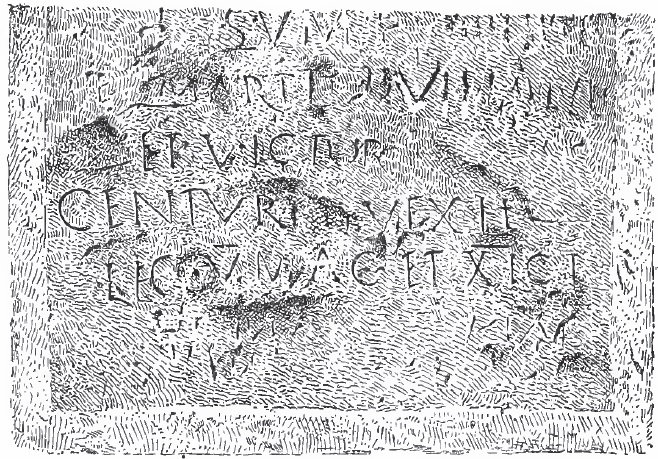
Archaeologist D. Ussishkin dates the village to the Iron Age, and states that at the time of the Revolt it was a village of between one and two thousand people chosen by Bar Kochba for its spring, defensible hilltop location, and proximity to the main Jerusalem-Gaza road. A Roman inscription was also discovered near one of the city's natural springs on which are inscribed the names of the Fifth Macedonian Legion and the Eleventh Claudian Legion, which said legions presumably took part in the siege of the city during Emperor Hadrian's reign.
There isn't any evidence of habitation in the period immediately after the Revolt.
Sister cities
- UK Luton, United Kingdom
References
Bibliography
References
- (February 2018). "Preliminary Results of the Population, Housing and Establishments Census, 2017". [[State of Palestine]].
- Palmer, 1881, p. [https://archive.org/stream/surveyofwesternp00conduoft#page/292/mode/1up 292]
- (1993). "Archaeological Soundings at Betar, Bar-Kochba's Last Stronghold". Tel Aviv.
- Carroll, W. D.. (1923). "Bittîr and Its Archaeological Remains". The Annual of the American Schools of Oriental Research.
- (2014-06-21). "Mayassa hails heritage status for West Bank landscape".
- Centre, UNESCO World Heritage. "Palestine: Land of Olives and Vines – Cultural Landscape of Southern Jerusalem, Battir".
- Conder, Claude R.. (1887). "Tent Work in Palestine: A Record of Discovery and Adventure". R. Bentley & Son.
- K. Singer, Pottery of the Early Roman Period from Betar, Tel Aviv 20, 1993, pp. 98-103.
- After Joshua 15:59 the Septuagint has "Θεκὼ καὶ Ἐφράθα, αὕτη ἐστὶν Βαιθλέεμ, καὶ Φαγὼρ καὶ Αἰτὰν καὶ Κουλὸν καὶ Τατὰμ καὶ Σωρὴς καὶ Καρὲμ καὶ Γαλλιμ καὶ Βαιθὴρ (or Θεθὴρ) καὶ Μανοχώ, πόλεις ἕνδεκα καὶ αἱ κῶμαι αὐτῶν".
- Palmer, 1881, p. [https://archive.org/details/surveyofwesternp00conduoft/page/312/mode/1up 312]
- A. Oppenheimer, Between Rome and Babylon, 2005, 313-9
- Dowling, Archdeacon. (1907-10-01). "Interesting Coins of Pella and Bittîr". Palestine Exploration Quarterly.
- WILLIAMS, Dyfri. (2015). "A Cantharus from Ancient Betar near Jerusalem (the So-called Warren Cup) and Roman Silver Plate". Babesch.
- Castaldo, Daniela. (2018-03-22). "Musical Themes and Private Art in the Augustan Age". Greek and Roman Musical Studies.
- Zeichmann, Christopher B.. (2020-06-18). "Same-Sex Intercourse Involving Jewish Men 100 BCE–100 CE". Religion and Gender.
- link. (October 2, 2012)
- Dauphin, 1998, p. 911
- Hütteroth and Abdulfattah, 1977, p. 115
- Robinson and Smith, 1841, vol 3, 2nd appendix, p. [https://archive.org/stream/biblicalresearch03robiuoft#page/123/mode/1up 123]
- Robinson and Smith, 1841, vol 2, pp. [https://archive.org/stream/biblicalresearc00smitgoog#page/n346/mode/1up 324]-325
- Guérin, 1869, p. [https://archive.org/stream/descriptiongogr03gugoog#page/n398/mode/1up 387] ff
- Socin, 1879, p. [https://archive.org/stream/zeitschriftdesde01deut#page/148/mode/1up 148] It was also noted as located in the ''Beni Hasan'' district
- Hartmann, 1883, p. [https://archive.org/stream/bub_gb_BZobAQAAIAAJ#page/n930/mode/1up 122] also noted 62 houses
- Conder and Kitchener, 1883, SWP III, pp. [https://archive.org/stream/surveyofwesternp03conduoft#page/20/mode/1up 20]-21
- Schick, 1896, p. [https://archive.org/stream/zeitschriftdesde19deut#page/n232/mode/1up 125]
- [http://ags.ou.edu/~bwallach/documents/A%20Window%20on%20the%20West%20Bank.pdf A Window on the West Bank], by Bret Wallach
- Barron, 1923, Table VII, Sub-district of Jerusalem, p. [https://archive.org/stream/PalestineCensus1922/Palestine%20Census%20%281922%29#page/n16/mode/1up 14]
- Mills, 1932, p. [https://archive.org/details/CensusOfPalestine1931.PopulationOfVillagesTownsAndAdministrativeAreas 37]
- Government of Palestine, Department of Statistics, 1945, p. [http://cs.anu.edu.au/~bdm/yabber/census/VSpages/VS1945_p24.jpg 24]
- Government of Palestine, Department of Statistics. ''Village Statistics, April, 1945.'' Quoted in Hadawi, 1970, p. [http://www.palestineremembered.com/download/VillageStatistics/Table%20I/Jerusalem/Page-056.jpg 56]
- Government of Palestine, Department of Statistics. ''Village Statistics, April, 1945.'' Quoted in Hadawi, 1970, p. [http://www.palestineremembered.com/download/VillageStatistics/Table%20II/Jerusalem/Page-101.jpg 101]
- Government of Palestine, Department of Statistics. ''Village Statistics, April, 1945.'' Quoted in Hadawi, 1970, p. [http://www.palestineremembered.com/download/VillageStatistics/Table%20III/Jerusalem/Page-151.jpg 151]
- Hans-Christian Rößler. (June 21, 2012). "Palästinenserdorf Battir: Widerstand durch Denkmalschutz". Frankfurter Allgemeine Zeitung.
- (2013). "Jordan and the Palestinians:The Creation of the Hashemite Kingdom of Jordan and the Unification of the Two Banks". Presses de l’Ifpo.
- Government of Jordan, Department of Statistics, 1964, p. [http://users.cecs.anu.edu.au/~bdm/yabber/census/JordanCensusPages/JordanCensus1961-p23.pdf 23]
- Perlmann, Joel. (November 2011 – February 2012). "The 1967 Census of the West Bank and Gaza Strip: A Digitized Version".
- [http://www.pcbs.gov.ps/Portals/_PCBS/Downloads/book1487.pdf 2007 PCBS Census] {{Webarchive. link. (2 December 2024 [[Palestinian Central Bureau of Statistics]]. p.116.)
- (February 1, 2013). "Palestine readying to propose Battir for UNESCO protection". Ma'an News Agency.
- "Israel Approves New Settlement On UNESCO Site Near Bethlehem". Agence France Presse.
- Ben-Yosef, Sefi. (2001). "The New Israel Guide: Shefela Foothills". Keter Publishing House.
- (2010). "Battir Village Profile". The Applied Research Institute – Jerusalem.
- [https://www.bbc.co.uk/news/magazine-18012895 West Bank barrier threatens villagers' way of life]. ''[[BBC News]]''. 2012-05-09.
- [https://www.nytimes.com/2012/06/26/world/middleeast/palestinian-village-tries-to-protect-landmark.html?pagewanted=all A Palestinian Village Tries to Protect a Terraced Ancient Wonder of Agriculture]. ''[[The New York Times]]''. 2012-06-25.
- link. (2012-12-12 . ''[[Ma'an News Agency]]''.)
- Zafrir Rinat. (September 13, 2012). "For first time, Israeli state agency opposes segment of West Bank separation fence". Haaretz.
- Daniella Cheslow. (June 10, 2013). "Land for Peace in the Battle Over Millennia-Old Palestinian Farming Terraces". Tablet Magazine.
- Ruth Michaelson. (March 12, 2013). "Historic Palestinian village fights Israel's separation wall". Radio France Internationale.
- Daniella Cheslow. (May 14, 2012). "West Bank Barrier Threatens Farms". Pittsburgh Post-Gazette.
- (May 30, 2012). "PNA intensifies efforts to add more sites to World Heritage list". Xinhua News Agency.
- Zion, Ilan Ben. (2023-06-21). "In the West Bank, UNESCO site Battir could face a water shortage from a planned Israeli settlement".
- link. (2015-01-09 [[Ma'an News Agency]] 4 January 2015.)
- Network (PNN), Palestine News. "In Battir, the Eggplant Festival to encourage local production and Palestinian culture".
- (2013-09-16). "ريبورتاج - مهرجان ل"الباذنجان" في قرية بتير القريبة من بيت لحم في الضفة الغربية".
- Gola, Alessandra. (2010). "The recovery of historical paths for tourism as tool for social and territorial development: the palestinian case of Battir". Almatourism - Journal of Tourism, Culture and Territorial Development.
- "Eggplant and Sumac Fatteh Recipe - Suzanne Matar (I'billin)".
- "The Flavors of Summer in Palestine".
- Bauck, Whitney. "'They kept us alive for thousands of years': could saving Palestinian seeds also save the world?".
- "The Battir Eggplant Festival".
- [http://vprofile.arij.org/bethlehem/pdfs/VP/Battir_vp_en.pdf Battir village profile], ARIJ, p, 7
- [[D. Ussishkin]], [http://www.tau.ac.il/humanities/archaeology/projects/proj_past_betar.html Soundings in Betar, Bar-Kochba's Last Stronghold], Journal of the Institute of Archaeology of Tel Aviv University, 20, 1993, pp. 66-97.
- Clermont-Ganneau, 1899, pp. [https://archive.org/stream/archaeologicalre01cler#page/463/mode/1up 463]-470.
- [http://www.twinningwithpalestine.net/twin-lutonbattir.html Britain Palestine Twinning Network.] {{webarchive. link. (September 27, 2007)
This article was imported from Wikipedia and is available under the Creative Commons Attribution-ShareAlike 4.0 License. Content has been adapted to SurfDoc format. Original contributors can be found on the article history page.
Ask Mako anything about Battir — get instant answers, deeper analysis, and related topics.
Research with MakoFree with your Surf account
Create a free account to save articles, ask Mako questions, and organize your research.
Sign up freeThis content may have been generated or modified by AI. CloudSurf Software LLC is not responsible for the accuracy, completeness, or reliability of AI-generated content. Always verify important information from primary sources.
Report