From Surf Wiki (app.surf) — the open knowledge base
Basilica of the National Shrine of the Immaculate Conception
Catholic church in Washington, D.C.
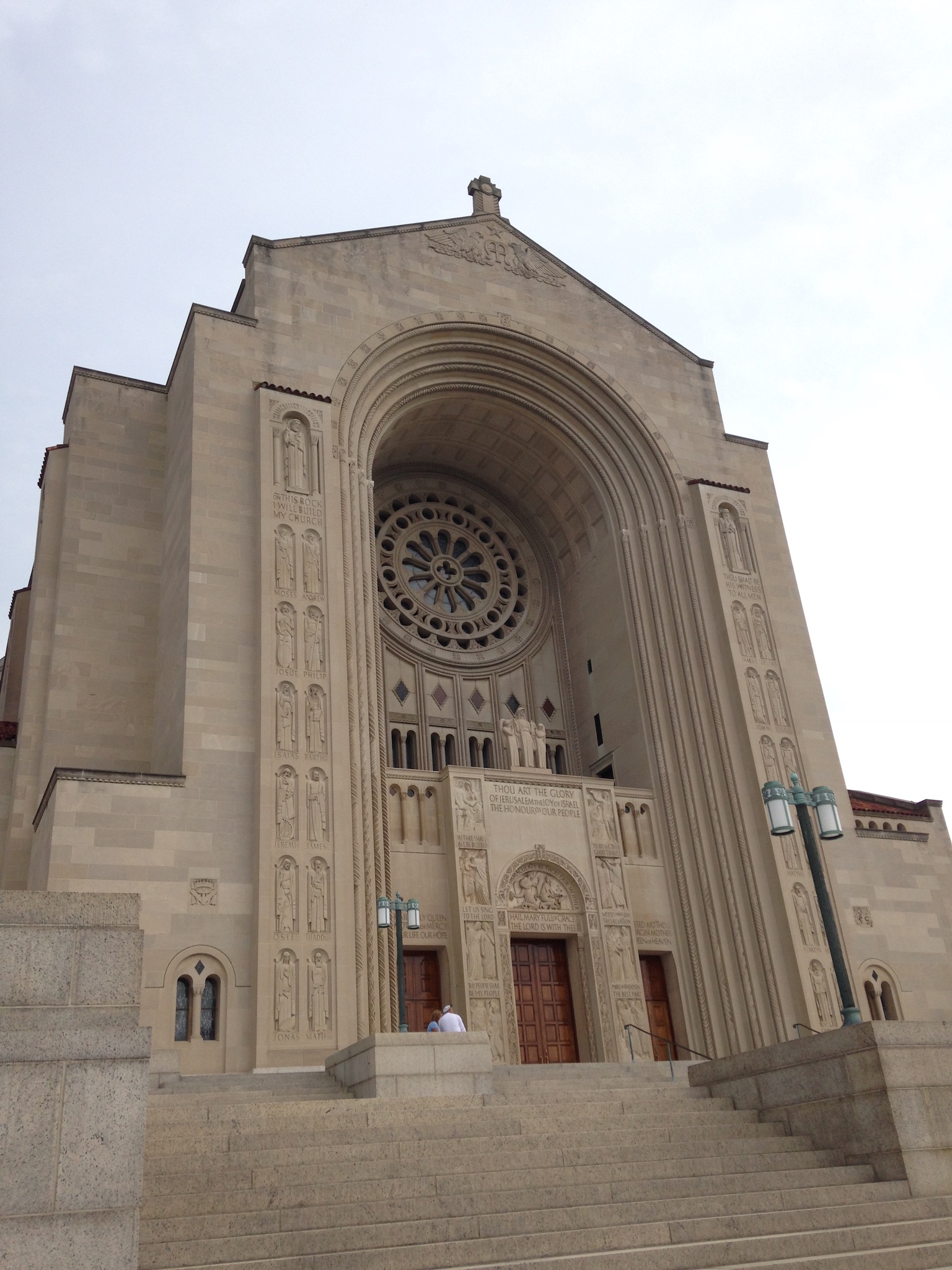
Catholic church in Washington, D.C.
| Field | Value |
|---|---|
| denomination | Catholic Church |
| sui iuris church | Latin Church |
| name | Basilica of the National Shrine of the Immaculate Conception |
| other name | |
| img | Basilica of the National Shrine of the Immaculate Conception, Washington.jpg |
| image_upright | 1.13 |
| caption | View from south in 2010 |
| imagealt | Tree-lined entry road leading to the main façade, showing the entry with the great rose window, dome, and bell tower attached to the left of the main structure |
| pushpin map | United States Washington, D.C. |
| pushpin label position | none |
| pushpin map alt | Map of the city of Washington, D.C., with a red dot on the Basilica of the National Shrine of the Immaculate Conception |
| coordinates | |
| map caption | Location of the Basilica of the National Shrine of the Immaculate Conception in Washington, D.C. |
| country | United States |
| address | 400 Michigan Avenue NE |
| location | Washington, D.C., U.S. |
| tradition | Roman Rite, various Eastern Catholic liturgies |
| website | |
| status | |
| dedication | Immaculate Conception |
| consecrated date | |
| dedicated date | |
| architect | Maginnis & Walsh |
| architectural type | Basilica |
| style | Byzantine Revival and Romanesque Revival |
| groundbreaking | |
| year completed | |
| capacity | 3,500 |
| length | 459 ft |
| width | 240 ft |
| width nave | 157 ft |
| height max | 329 ft |
| dome height outer | 237 ft |
| dome height inner | 159 ft |
| dome dia outer | 108 ft |
| dome dia inner | 89 ft |
| archdiocese | Archdiocese of Washington |
| archbishop | Robert W. McElroy |
| rector | Walter R. Rossi |
| priest | |
| organist | |
| logo | Coat of arms of the Basilica of the National Shrine of the Immaculate Conception.svg |
| director |
The Basilica of the National Shrine of the Immaculate Conception is a Catholic minor basilica and national shrine in Washington D.C. It is the largest Catholic church building in North America and is also the tallest habitable building in Washington, D.C. Its construction of Byzantine and Romanesque Revival architecture began on September 23, 1920.
The basilica is dedicated to the Blessed Virgin Mary as the Immaculate Conception, designated as the principal Patroness accorded by Pope Pius IX on February 7, 1847. Pope Pius XI donated a mosaic rendition of the image in 1923. It serves as the patronal church of the Catholic Church in the United States.
Pope John Paul II raised the National Shrine to the status of Minor Basilica via his Pontifical decree Clarum Constat Templum on October 12, 1990. At the shrine, Pope Benedict XVI bestowed a Golden Rose on April 26, 2008, and Pope Francis canonized Junípero Serra on September 23, 2015.
Details of vicinity
Although the basilica is situated within the geographical boundaries of the Archdiocese of Washington, the basilica is not a parish of the archdiocese, does not have its own parish community, and the shrine's administration does not fall under the direct authority of the local Archbishop, but it serves adjacent Catholic University, which donated the land for its construction, and the United States Conference of Catholic Bishops. It also hosts numerous Masses for various organizations of the Church from across the United States. The basilica is not the cathedral of the archdiocese, as that title and honor belongs to the Cathedral of St. Matthew the Apostle, although numerous archdiocesan events are held at the basilica. As of 2025, the rector of the basilica is the Reverend Monsignor Walter R. Rossi, who holds a Licentiate of Canon Law.
The basilica is served by the Brookland–CUA station on the Red Line, roughly 500 m away.
Architecture
The basilica houses 82 Marian chapels (including the Our Mother of Africa Chapel), as well as other sacred images, flanking the sides of the Great Upper Church and the Crypt Church. They were designed to reflect the origins of Catholic Americans and the religious orders whose generosity erected them.
Its Greek-styled interior is crowned with numerous domes decorated in mosaics, similar to the Basilica of St. Mark in Venice, Italy, but much larger. The mosaics feature American renditions of traditional Catholic images. Artist Jan Henryk De Rosen, who presided over the shrine's iconography committee was also responsible for much of its decor, including composing the large mosaic over the northern apse.
The exterior of the basilica is 459 ft long, 240 ft wide, and 237 ft tall to the top of the cross on the dome. The exterior area of the basilica is 10234 m². The Trinity Dome (the main dome of the structure) is only 7 ft smaller than that of the U.S. Capitol. The interior area of the basilica is 7097 m² for the Upper Level and Great Upper Church, and 12069 m² for the Lower Level and Crypt Church, for a grand total of 19166 m².
The Trinity Dome of the basilica is covered in 47,000 gloss Ludowici shingle tiles arranged to form biblical patterns. The blue tiles represent the Virgin Mary, the yellow is a reference to common architecture found on Hebrew churches, red is symbolic of Christ's blood, and the grey tiles are a neutral color to emphasize the patterns. Ludowici also produced the roof tiles for the tower and lower roof.
The shrine was built in the style of medieval churches, relying on thick masonry walls and columns in place of structural steel and reinforced concrete. It was designed to hold 10,000 worshipers and includes modern amenities such as a basement cafeteria, hidden public address speakers to carry speech at the altar to the rear of the building, air conditioning and what was the largest radiant heating slab in the world (in 1959).
There are arches outlined with iridescent Pewabic Pottery tile, large ceramic medallions set in the ceiling, and fourteen Stations of the Cross in the Crypt Church.
History
Patronage of the Immaculate Conception
In 1792 John Carroll, the bishop of Baltimore and the United States's first Catholic bishop, consecrated the newly created United States under the protection of the Blessed Virgin Mary under the title of the Immaculate Conception. In 1846, the 6th Provincial Councils of Baltimore reiterated this episcopal choice to name the title Virgin Mary, conceived without sin as the principal patroness of the land. Pope Pius IX formalized the decision on February 7, 1847, and it was published on July 2, 1847.
Construction (20th century)
Bishop Thomas Joseph Shahan, the fourth rector of the Catholic University of America in Washington, D.C., proposed the construction of a national shrine to commemorate the Immaculate Conception in the country's capital. Bishop Shahan took his appeal to Pope Pius X on August 15, 1913.
Shahan received the pope's enthusiastic support and personal contribution of US$400 (US$11,681 in 2022, adjusted for inflation). Shahan returned to the United States and persuaded the board of trustees of The Catholic University of America to donate land at the southwest corner of the campus for his shrine.
In January 1914, Shahan published the first issue of Salve Regina, a newsletter meant to stir enthusiasm for his project. He wrote that the shrine would be a "monument of love and gratitude, a great hymn in stone as perfect as the art of man can make it and as holy as the intentions of its builders could wish it to be." His newsletter was circulated to dioceses throughout the country and financial donations began to pour into Washington. In 1915, Shahan appointed Father Bernard McKenna of Philadelphia as first director of the national shrine. Shahan oversaw the construction of the shrine until his death on March 9, 1932. His are the only remains interred at the basilica.
By 1919, Shahan and McKenna chose architectural drawings by the Boston firm of Maginnis & Walsh for construction of the national shrine. Initially, they considered a traditional Neo-Gothic architectural style, but Shahan opted instead for a Byzantine Revival–Romanesque Revival design. On May 16, 1920, Archbishop Giovanni Bonzano, Apostolic Nuncio to the United States of America, celebrated Mass and blessed the site of the future National Shrine. On September 23, 1920, Cardinal James Gibbons, archbishop of Baltimore, blessed the foundation stone. More than 10,000 people attended the Mass, including ambassadors, government officials, and military officers. On April 20, 1924, the first public Mass ever offered at the shrine was held in the unfinished Crypt Church. In 1932, the death of Bishop Shahan and the Great Depression halted the construction above the completed Crypt Church level. The beginning of American involvement in World War II stalled plans even further, and construction was not resumed until 1954.
After the war, in 1953, American bishops under the leadership of John Noll, archbishop ad personam of Fort Wayne, and Patrick O'Boyle, archbishop of Washington, pledged to raise the funds necessary to complete the Great Upper Church of the national shrine. On November 15, 1954, work was resumed on building the shrine, and on November 20, 1959, thousands of Catholics gathered with the bishops for the dedication of the Great Upper Church.
Since 1968, the Papal Tiara of Pope Paul VI has been on display inside the Crypt Church. On October 12, 1990, Pope John Paul II raised the national shrine to the status of a minor basilica. The papal bull was signed and notarized by Cardinal Agostino Casaroli. It is the 36th designated basilica within the United States.

Completion (21st century)
.jpg)
In August 2006, work was completed on a mosaic covering the Redemption Dome in the Great Upper Church. Following its completion in the summer of 2007, the Incarnation Dome was blessed on November 17, 2007. A small chapel on the Crypt Church level honoring Our Lady of La Vang (Vietnam) was completed in 2006.
In 2008, during his trip to the United States, Pope Benedict XVI bestowed the Golden Rose upon the Basilica of the National Shrine of the Immaculate Conception.
In June 2011, a new chapel dedicated to Our Lady of Lebanon was erected within the basilica, commemorating the fidelity of the Maronite Church and its faithful. A mosaic of Saint Maroun and the Crucifixion was copied from the 6th-century Rabbula Gospels manuscript, and was donated by Cardinal Donald Wuerl. The chapel was formally consecrated by Maronite Bishop Gregory J. Mansour on September 23, 2011.
On January 26, 2013, the basilica held a televised thanksgiving Mass and enshrined two first class relics of Americans Kateri Tekakwitha and Marianne Cope, who were both canonized October 20, 2012.
Pope Francis visited the shrine on September 23, 2015, and celebrated a Mass for the canonization of Saint Junípero Serra, O.F.M., on the mall of the Catholic University of America. The altar, ambo, and chair used for this Mass match the existing marble in the basilica. After the Mass, the papal altar was placed in front of the High Altar, and is now used as the altar in the Great Upper Church.
On February 20, 2016, the basilica was the site of the funeral Mass of US Supreme Court Justice Antonin Scalia at which his son Fr. Paul Scalia was the celebrant.
The final architectural element was completed with the installation of the 24 tons of Venetian glass in the central Trinity Dome, one of the largest mosaics of its kind in the world. On December 8, 2017, the Feast of the Immaculate Conception, the dome was dedicated and solemnly blessed by Cardinal Donald Wuerl.
Priests of the Basilica
- Walter R. RossiRector
- Vito A. BuonannoDirector of Pilgrimages
- Ismael N. AyalaDirector of Liturgy
- Raymond A. LebrunSpiritual Director
Staff of the Basilica
- Daniel MacGregorComptroller and CFO
- Geraldine M. RohlingArchivist/Curator Emerita
- Peter J. LatonaDirector of Music
- Benjamin LaPrairieAssociate Director of Music
- Adam ChlebekAssistant Director of Music
- Robert GroganCarillonneur and Organist Emeritus
- Dee SteelDirector of Visitor Services
- Jacquelyn HayesDirector of Communications
- Amy MaloneyNational Shrine Shops Manager
- Valencia Yvonne CampDirector of Special Events and Operations Manager
Gallery
Exterior
File:Basilica of the National Shrine of the Immaculate Conception from atop Washington Mnt.jpg|The basilica viewed from atop the Washington Monument File:Basilique du Sanctuaire National de l'Immaculée Conception-2.jpg|The liturgical east end of the basilica File:Basilica of the National Shrine of the Immaculate Conception.jpg|The basilica viewed from the east File:Basilica of the National Shrine of the Immaculate Conception on the campus of the Catholic University of America, Washington, D.C LCCN2011636428.jpg|Detail of the dome File:Basilica of the National Shrine of the Immaculate Conception, Washington DC (172660639).jpg|Bell tower File:Basilica of the National Shrine of the Immaculate Conception on the campus of the Catholic University of America, Washington, D.C LCCN2011636423.tif|The basilica under lighting
Interior
File:Sanctuary of the National Shrine of the Immaculate Conception on the campus of the Catholic University of America, Washington, D.C LCCN2011635564.tif|View of the basilica's Great Upper Church nave File:Basilica National Shrine Immaculate Conception DC 26.JPG|View of the basilica's Crypt Church nave File:Stained-glass window at the National Shrine for the Immaculate Conception at the Catholic University of America, Washington, D.C LCCN2011634622.tif|Stained glass window in the basilica File:Bishop'sVestingAltar.JPG|Bishop's vesting altar in the Great Upper Church sacristy File:St. Margaret of Scotland.jpg|Relief sculpture of Saint Margaret of Scotland File:Basilica National Shrine Immaculate Conception DC 25.JPG|The papal tiara of Pope Paul VI File:NationalShrineOfTheImmaculateConceptionGoldenRose.jpg|Golden Rose bestowed by Pope Benedict XVI
Notes
References
References
- (March 15, 2019). "Architectural Details of the Basilica".
- "20 Largest Churches in the World".
- "Basilica of the National Shrine of the Immaculate Conception".
- "The National Shrine".
- Clay, Jennifer. (April 2005). "National Shrine of the Immaculate Conception". [[The Washington Post]].
- "Architectural Style".
- (July 1960). "About the cover". Cahners.
- (November 8, 1959). "National Catholic Shrine Will be Dedicated Nov. 20". [[Reading Eagle]].
- Bruner, Lousie. (July 5, 1977). "Historian, Print Specialist Begin Museum Duties". [[The Blade (Toledo).
- (2001). "The Visual Culture of American Religions". University of California Press.
- Morgan (2001), p. 79.
- (December 1, 1964). "Spellman's Surprise: Pope's Tiara Is Here". [[The New York Times]].
- McLaughlin, Moira. (June 23, 2007). "A Work of Art in Many Pieces". The Washington Post.
- Black, Meredith. (June 27, 2008). "Vietnamese Catholics Gather at National Shrine to celebrate their faith". [[Catholic Standard]].
- (April 17, 2008). "Pope, US bishops exchange gifts". CatholicCulture.org.
- Szczepanowski, Richard. (September 26, 2011). "New chapel dedicated to Our Lady of Lebanon at national shrine". [[The Catholic Review]].
- Sparke, Andy. (July 23, 2013). "Native Americans celebrate faith, spirituality at Tekakwitha gathering". [[The Catholic Sun]].
- Mena, Adelaide. (June 8, 2015). "An altar for Pope Francis: CUA students' design to enliven DC Mass".
- (February 20, 2016). "At funeral Mass, Justice Scalia eulogized as a man of faith as well as law". [[USA Today]].
- Samber, Sharon. (December 9, 2017). "After a century, the largest Catholic church in North America is finally complete". USA Today.
This article was imported from Wikipedia and is available under the Creative Commons Attribution-ShareAlike 4.0 License. Content has been adapted to SurfDoc format. Original contributors can be found on the article history page.
Ask Mako anything about Basilica of the National Shrine of the Immaculate Conception — get instant answers, deeper analysis, and related topics.
Research with MakoFree with your Surf account
Create a free account to save articles, ask Mako questions, and organize your research.
Sign up freeThis content may have been generated or modified by AI. CloudSurf Software LLC is not responsible for the accuracy, completeness, or reliability of AI-generated content. Always verify important information from primary sources.
Report