From Surf Wiki (app.surf) — the open knowledge base
Bart Simpson
Fictional character from The Simpsons franchise

Fictional character from The Simpsons franchise
| Field | Value | |
|---|---|---|
| name | Bart Simpson | |
| full_name | Bartholomew Jo-Jo Simpson | |
| series | The Simpsons | |
| image | Bart Simpson 200px.png | |
| image_size | 170 | |
| alt | A cartoon image of a yellow boy with yellow, spiky hair, wearing a red T-shirt, blue shorts, and blue shoes. | |
| first_minor | Good Night | |
| first_major | The Tracey Ullman Show | |
| first_date | April 19, 1987 | |
| creator | Matt Groening | |
| designer | Matt Groening | |
| voice | Nancy Cartwright | |
| occupation | 4th-grade student at Springfield Elementary School | |
| nationality | American | |
| family | {{Plainlist | |
| relatives | {{Plainlist | |
| home | 742 Evergreen Terrace, Springfield, United States |
the cartoon character
- Homer Simpson (father)
- Marge Simpson (mother)
- Lisa Simpson (sister)
- Maggie Simpson (sister)
- Abe Simpson (grandfather)
- Mona Simpson (grandmother; deceased)
- Clancy Bouvier (grandfather; deceased)
- Jacqueline Bouvier (grandmother)
- Patty Bouvier (aunt)
- Selma Bouvier (aunt)
- Herbert Powell (half-uncle)
- Abbey (half-aunt)
Bartholomew Jo-Jo "Bart" Simpson is one of the main characters in the American animated television series The Simpsons who is part of the titular family. Widely regarded as one of the greatest fictional characters of all time, he was named by Time as one of the most important people of the 20th century.
Bart made his television debut in the short "Good Night" on The Tracey Ullman Show on April 19, 1987. Cartoonist Matt Groening created and designed Bart while waiting in the lobby of James L. Brooks's office. Initially called to pitch a series of shorts based on his comic strip Life in Hell, Groening developed a new set of characters. Unlike the other Simpson family members, who were named after Groening's relatives, Bart's name is an anagram of brat. After two years on The Tracey Ullman Show, the Simpson family received their own series, which premiered on Fox on December 17, 1989. Bart has appeared in every episode of The Simpsons except "Four Great Women and a Manicure".
Always ten years old, Bart is the eldest child and only son of Homer and Marge Simpson and the brother of Lisa and Maggie. Known for his penchant for mischief, rebelliousness and disrespect for authority, Bart's most iconic traits include his chalkboard gags in the opening sequence, prank calls to Moe's Tavern, and catchphrases like "Eat my shorts", "¡Ay, caramba!", "Don't have a cow, man!", and "I'm Bart Simpson, who the hell are you?". Bart has also appeared in The Simpsons-related media, including video games, the 2007 film version of the series, The Simpsons Ride, commercials, comic books, and an extensive line of merchandise. Nancy Cartwright, Bart's voice actor, intended to audition for the role of Lisa, and Yeardley Smith auditioned for Bart. Smith's voice was deemed too high-pitched for a boy, while Cartwright found Lisa less appealing as a character and opted to try out for Bart—a role she felt better suited her.
Bart's protagonist status during the show's first two seasons led to "Bartmania", which spawned Bart-themed merchandise touting his rebellious persona and pride in underachieving. The traits were criticized by parents and educators, who viewed him as a negative influence on children. By the third season, Homer became the show's figurehead character and the series shifted its focus to the family as a whole, although Bart remains a breakout character. He is considered one of the most iconic fictional television characters of the 1990s. Entertainment Weekly named him Entertainer of the Year in 1990. Cartwright has received accolades for her portrayal of Bart, including a Primetime Emmy Award in 1992 and an Annie Award in 1995. In 2000, Bart and the rest of the Simpson family were honored with a star on the Hollywood Walk of Fame.
Role in ''The Simpsons''
The Simpsons employs a floating timeline, in which characters either do not age or age minimally; the show is always presumed to take place in the present year. Always ten years old, Bartholomew, best known by his short-form name Bart, is the eldest child and only son of Homer and Marge Simpson; he has two younger sisters, Lisa and Maggie. In several episodes of The Simpsons, events have been tied to specific times, though these timelines are sometimes contradicted in later episodes. In "I Married Marge" (season three, 1991), Bart's birth is placed in the early 1980s. In "Simpsorama" (season 26, 2014), Bart states his birthday as February 23, while The Bart Book by series creator Matt Groening lists it as April 1. In "Bart's Birthday" (season 36, 2024), Bart, in a hypothetical series finale, celebrates his eleventh birthday, much to his dismay, as he has always identified as being ten years old.
Bart lived with his parents in Springfield's Lower East Side before the family purchased their first home. When Lisa was born, Bart initially felt jealous of the attention she received but soon warmed to her when her first word turned out to be "Bart". However, the episode "That 90's Show" (season 19, 2008) contradicted much of this timeline, revealing that Homer and Marge were childless during the early 1990s.
Bart's hobbies include skateboarding, watching television—particularly The Krusty the Clown Show and its segment The Itchy & Scratchy Show—reading comic books, especially Radioactive Man, playing video games, and causing general mischief. His favorite movies are Jaws and the Star Wars trilogy, while his favorite board games include Hippo in the House, The Game of Lent, and Citizenship. Throughout the series, Bart has been a student at Springfield Elementary School, where he is part of Edna Krabappel's fourth-grade class. Although too young for full-time work, Bart has taken on several part-time jobs over the years. He works as a bartender at Fat Tony's social club in "Bart the Murderer" (season three, 1991); as Krusty the Clown's assistant in "Bart Gets Famous" (season five, 1994); as a doorman in Springfield's burlesque house, the Maison Derrière, in "Bart After Dark" (season eight, 1996); and briefly owns his own factory in "Homer's Enemy" (season eight, 1997).
Character
Creation
Matt Groening conceived Bart and the rest of the Simpson family in 1987 while waiting in the lobby of producer James L. Brooks's office. Groening was invited to pitch a series of animated shorts for The Tracey Ullman Show and initially planned to adapt his comic strip, Life in Hell. Realizing that adapting the strip would require him to relinquish publication rights, he decided to create something new. Groening sketched a concept for a dysfunctional family, naming the characters after members of his family. For the rebellious son, he chose "Bart", an anagram of brat, instead of his own name because he felt that "Matt" would not "go over well in a pitch meeting". Bart's middle initial "J" is an homage to the animated characters Bullwinkle J. Moose and Rocket J. Squirrel from The Rocky and Bullwinkle Show, who were named after creator Jay Ward. Although numerous interpretations of his middle initial have been given, Groening said that Bart's full middle name is "Jo-Jo", which was chosen by Cartwright during a recording session.
According to The Oregonian, Bart was conceived as "a much milder, troubled youth given to existential angst who talks to himself"; the character was changed due to Nancy Cartwright's voice acting. Groening has credited numerous sources as inspirations for Bart's character. His older brother, Mark Groening, influenced Bart's rebellious attitude. Mark introduced him to a variety of comics, including Mad (when it was still a comic), Donald Duck, Uncle Scrooge, Little Lulu, and Tales From the Crypt; all were sources of inspiration for Matt. Bart was envisioned as an exaggerated version of a typical misbehaving child, combining the extreme traits of characters such as Tom Sawyer and Huckleberry Finn. Groening described Bart as "what would happen if the son of Eddie Haskell from [Leave It to Beaver] got his own show". He was disappointed with the premise of Dennis the Menace, which inspired him to create a character who was genuinely mischievous. Bart first appeared with the Simpson family on April 19, 1987, in The Tracey Ullman Show short "Good Night". On December 17, 1989, the shorts were developed into The Simpsons, a half-hour series on the Fox Broadcasting Company, where Bart and the Simpson family became the central characters.
Design

The Simpson family was designed to be easily recognizable in silhouette. The characters were initially crudely drawn because Groening submitted rough sketches to the animators, expecting them to refine the designs, but they simply traced over his drawings. Bart's early design, featured in the first shorts, included hair with spikes of varying length; this was later standardized to nine spikes of equal length. Groening primarily worked in black-and-white at the time and, without considering the eventual use of color, designed Bart's spikes to look like an extension of his head. This design feature is not replicated in other characters, although some background characters in the first few seasons shared his spiky hairline.
Bart's head was described by director Mark Kirkland as a basic rectangular shape resembling a coffee can. Homer's head is also rectangular, with a dome on top, while spheres define the heads of Marge, Lisa, and Maggie. In the season-seven (1995) episode "Treehouse of Horror VI", Bart, alongside Homer, was first rendered as a three-dimensional character in the episode's "Homer3" segment. The computer animation was by Pacific Data Images. Designing Bart's 3D model, the animators did not know how they would depict his hair; realizing that vinyl Bart dolls were in production, they purchased one to use as a model.
Voice

Bart's voice is provided by Nancy Cartwright, who also voices several other child characters on The Simpsons who include Nelson Muntz, Ralph Wiggum, Todd Flanders, and Kearney Zzyzwicz. After Dan Castellaneta and Julie Kavner were cast as Homer and Marge due to their roles on The Tracey Ullman Show, the producers held auditions for Bart and Lisa. Yeardley Smith initially auditioned for Bart, but casting director Bonita Pietila felt that her voice was too high-pitched. Smith recalled, "I always sounded too much like a girl. I read two lines as Bart, and they said, 'Thanks for coming!. She was subsequently cast as Lisa instead. On March 13, 1987, Cartwright auditioned for Lisa. Discovering that Lisa was described only as the "middle child", with little personality at the time, she became interested in Bart, who was characterized as "devious, underachieving, school-hating, irreverent, [and] clever". Groening allowed her to audition for Bart, and offered her the role immediately after hearing her read. Cartwright is the only one of the six primary Simpsons cast members who had formal voice-acting training before joining the show.
According to The Guardian, Cartwright's speaking voice has "no obvious traces of Bart". The voice she uses for Bart came naturally to her, since she had incorporated elements of it on shows like My Little Pony, Snorks, and Pound Puppies. Cartwright described Bart's voice as easy to create: "Some characters take a little bit more effort, upper respiratory control, whatever it is technically. But Bart is easy to do. I can just slip into that without difficulty". She typically records five or six takes of each line for variety, allowing producers more options to work with. Even in flashforward episodes, Cartwright continues to voice Bart; in the episode "Lisa's Wedding" (season six, 1995), Bart's voice was electronically pitched lower to reflect his age. Despite Bart's fame, Cartwright is seldom recognized in public. When she is recognized and asked to use Bart's voice in front of children, she declines because it "freaks [them] out". During the first season of The Simpsons, Fox Network barred Cartwright from interviews to avoid the revelation that Bart was voiced by a woman.
Cartwright was paid US$30,000 per episode for her work on The Simpsons until 1998. A pay dispute arose that year, during which Fox threatened to replace the six main voice actors and began preparing for new casting. The conflict was resolved, and Cartwright's salary increased to $125,000 per episode. The voice cast pushed for higher wages in 2004, seeking $360,000 per episode. The dispute was soon settled, and Cartwright's pay was increased to $250,000 per episode. In 2008, further negotiations increased the cast's salaries to about $400,000 per episode. Fox demanded production-cost reductions in 2011, threatening to cancel the series if costs were not cut. In response, Cartwright and the other main cast members agreed to a 30-percent pay reduction, lowering their per-episode earnings to just over $300,000. Cartwright was paid $315,000 per episode by 2016, which, according to Variety, made her one of the highest-paid voice actors.
Hallmarks
In the opening sequence of many episodes of The Simpsons, the camera zooms in on Springfield Elementary School, where Bart is shown writing lines on a chalkboard. This scene, known as the "chalkboard gag", varies by episode. The messages often include political humor, such as "The First Amendment does not cover burping", pop culture references like "I can't see dead people", and meta-commentary such as "I am not a 32-year-old woman" or "Nobody reads these anymore". The animators create the gags quickly, and they sometimes reflect current events. In the episode "Homer the Heretic" (season four, 1992), the chalkboard gag read "I will not defame New Orleans"; it was an apology for a controversial song in the previous week's episode, "A Streetcar Named Marge", which described the city as a "home of pirates, drunks, and whores".
An early hallmark of Bart's character was his prank calls to Moe's Tavern, where he would ask owner Moe Szyslak for a fictitious person with a gag name. Moe would try to find the person, eventually realizing it was a prank and (unaware that Bart was the caller) responding with angry threats. The calls were inspired by the Tube Bar recordings, a series of prank calls to bar owner Louis "Red" Deutsch (whose profane reactions influenced Moe's violent temperament). The calls first appeared in "Homer's Odyssey" (season one, 1990), the third episode to air. It became increasingly difficult for the writers to create new fake names and Moe's responses, leading to the pranks being phased out as a regular feature by the fourth season; however, they have occasionally resurfaced in later episodes.
The catchphrase "Eat my shorts" originated as an ad-lib by Cartwright during one of the show's early table readings, inspired by an incident during her high-school years. While performing with the marching band at Fairmont High School, the group chanted "Eat my shorts" instead of their usual cheer ("Fairmont West! Fairmont West!") The phrase may also refer to The Breakfast Club (1985), in which John Bender says it to Principal Vernon. Bart's other notable catchphrases include "¡Ay, caramba!" and "Don't have a cow!". The former was inspired by a Portuguese flamenco dancer; the latter, popularized during the 1950s, originated from the British phrase "Don't have kittens". Both were prominently featured on merchandise such as T-shirts during the show's early seasons. Another catchphrase, "Cowabunga", was borrowed from Chief Thunderthud of The Howdy Doody Show.

Bart frequently appears nude in The Simpsons, often by mooning. In The Simpsons Movie (2007), he skateboards nude. Although various objects obscure his genitalia throughout the scene, his penis is briefly visible. This scene was among the first created for the film, but producers were initially concerned that it might result in an R rating. However, the Motion Picture Association of America ultimately rated the film PG-13 for "irreverent humor throughout". The scene was later recognized by Entertainment Weekly as one of 30 Unforgettable Nude Scenes.
Personality
Bart's disregard for authority has been compared to America's founding fathers, and been described as a modern fusion of Tom Sawyer and Huckleberry Finn. In his book Planet Simpson, Chris Turner characterizes Bart as a nihilist who has the philosophical view that life lacks inherent meaning, purpose, or value. Bart's rebellious nature makes him disruptive at Springfield Elementary School, where he identifies as an underachiever. He frequently clashes with his teacher, Ms. Krabappel, and Principal Skinner. Bart acknowledges his poor performance at school: "I am dumb, okay? Dumb as a post! Think I'm happy about it?" Much like his father, his mental processes are often illogical and absurd; he once believed that if he reincarnated as a butterfly, he could burn the school down without suspicion, imagining he could hold a gas can as a butterfly. Bart thinks that writing his name in wet cement will leave people wondering how he did it in hardened cement. "Brother's Little Helper" (season eleven, 1999) reveals that Bart has attention deficit disorder. His intelligence may be impacted by the hereditary "Simpson gene", which affects males in his family. Despite his misbehavior and selfishness, he has moments of integrity and compassion and occasionally helps Ms. Krabappel and Principal Skinner.
Bart's mischievous nature and Homer's often-negligent, incompetent behavior create a turbulent, volatile, and abusive relationship between them. Bart frequently calls Homer by his first name rather than "Dad", and Homer often refers to him dismissively as "the boy". Homer's short temper leads to cartoonishly-violent outbursts, such as impulsively strangling Bart. Marge is the more caring, understanding and nurturing parent, although she acknowledges that Bart is "a handful" and is often embarrassed by his antics. In the episode "Marge Be Not Proud" (season seven, 1995), Marge struggles with adjusting her parenting style after Bart is caught shoplifting; she becomes more distant to avoid over-mothering, which causes Bart to feel guilty and try to make amends. Despite his rebellious attitude, Bart occasionally endures humiliation to please his mother. Marge frequently defends him, understanding his complexity. She describes him as her "special little guy", saying, "I know Bart can be a handful, but I also know what he's like inside. He's got a spark. It's not a bad thing[...] of course, it makes him do bad things".
Bart shares a sibling rivalry with his younger sister, Lisa. Although they often disagree—sometimes physically—they have a deep bond and care for one another. Bart often apologizes when he goes too far and recognizes Lisa's superior intellect, frequently seeking her advice about problems. He is a popular "cool kid" at school, and has many friends; his closest is Milhouse Van Houten. His influence on Milhouse is often negative, leading them into mischief. In "Homer Defined" (season three, 1991), Milhouse's mother forbids him from playing with Bart due to his bad influence; Bart is unfazed until he realizes how much he values their friendship, and Marge convinces Mrs. Van Houten to reconsider.
Bart is a fan of the children's television host Krusty the Clown, and has stated that "I've based my whole life on Krusty's teachings"; his room is filled with Krusty merchandise. Bart helps Krusty a number of times, thwarting Sideshow Bob's attempt to frame Krusty for armed robbery in "Krusty Gets Busted" (season one, 1990), reuniting Krusty with his estranged father in "Like Father, Like Clown", and helping Krusty relaunch his career with a comeback special in "Krusty Gets Kancelled". Bart's initial confrontation with Sideshow Bob in "Krusty Gets Busted" sparks a long-term rivalry. The writers developed Bob as an intelligent, obsessive antagonist, inspired by the dynamic between Wile E. Coyote and the Road Runner.
Reception
Bartmania
Bart became one of television's most popular characters in 1990, sparking a cultural phenomenon known as "Bartmania". He became the most prominent Simpsons character on merchandise, particularly T-shirts; during the early 1990s, millions of Bart-themed T-shirts were sold. Bart's rebellious persona led some American public schools to ban T-shirts with sayings such as "I'm Bart Simpson. Who the hell are you?" and "Underachiever (and proud of it, man!)". A T-shirt with the latter caption is in the National Museum of American History. The popularity of Simpsons merchandise was a commercial success, generating $2 billion in revenue in its first 14 months of sales. Bart's appeal also inspired a thriving black market for counterfeit merchandise, particularly T-shirts. The items featured Bart with various slogans and redesigns, including "Teenage Mutant Ninja Bart", "Air Simpson Bart", and "RastaBart". Although Groening generally tolerated bootleg merchandise, he objected to a series of "Nazi Bart" shirts with Bart in Nazi uniforms or as a white power skinhead. 20th Century Fox sued Tom Metzger, the creator of the offensive designs, who agreed to cease production.
.jpg)
Bart was described as "television's king of 1990", "television's brightest new star", and an "undiminished smash". He was one of the most popular write-in candidates in the 1990 United States congressional, senatorial and gubernatorial elections, second in a number of areas only to Mickey Mouse among fictional characters. In the 1990 Macy's Thanksgiving Day Parade, Bart debuted as one of the giant helium-filled balloons for which the parade is known. This was noted in The Simpsons episode "Bart vs. Thanksgiving", which aired the day of the parade, where Homer tells Bart: "If you start building a balloon for every flash-in-the-pan cartoon character, you turn the parade into a farce!". Behind and unbeknownst to Homer, the television briefly shows a Bart Simpson balloon.
The album The Simpsons Sing the Blues was recorded in September 1990 and released in December. It peaked at number three on the Billboard 200, and was certified double platinum by the Recording Industry Association of America. The first single from the album was the pop rap song "Do the Bartman", performed by Cartwright and released on November 20, 1990. The song was written by Bryan Loren, a friend of Michael Jackson (who provided backing vocals on the track). Jackson was a fan of The Simpsons (especially Bart), and had called the producers offering to write Bart a single and make a guest appearance on the show. Jackson guest-starred in the episode "Stark Raving Dad" (season three, 1991) with the pseudonym John Jay Smith. Although "Do the Bartman" was never released as a single in the United States, it was successful in the United Kingdom; it was the number-one song from February 16 to March 9, 1991, and was the year's fifth-best-selling song. It sold half a million copies, and was certified gold by the British Phonographic Industry on February 1, 1991.
Cultural influence and commendations
Bart has been described as one of the most iconic television characters of the 1990s, and is considered an American cultural icon. In 1990, Entertainment Weekly named him Entertainer of the Year, writing that "Bart has proved to be a rebel who's also a good kid, a terror who's easily terrorized, and a flake who astonishes us, and himself, with serious displays of fortitude". In 1998, Time included Bart on the magazine's list of the 100 most important people of the 20th century, the only fictional character on the list. He had appeared previously on the cover of Time December 31, 1990, issue. In 1996, Bart was named 48th on TV Guide's list of "50 Greatest TV Stars of All Time". In 2002, he and Lisa were ranked eleventh on TV Guide's "Top 50 Greatest Cartoon Characters of All Time" list. In 2022, Paste writers ranked Bart the 26th-greatest cartoon character of all time.
From entertainment critics, Bart has received mostly positive reviews. Screen Rants Dan Peeke praised him as the "best main character" in 2020, calling him "relatable" and saying that "everyone can relate to at least some element of his personality". In a 2024 review, Darryn King of Vulture called Bart a "back-talking, trouble-making, prank-calling, cherry-bomb-detonating, and, yes, graffiti-tagging cartoon creation, who was at the time fast becoming a cultural icon". A 2023 Collider review said that the episode "Bart Gets an 'F'" was a "turning point for the show, showing that Bart could be more than just a punchline while paving the way for future episodes that fleshed out his character". According to Erma Bombeck, "Kids need to know that somewhere in this world is a contemporary who can pull off all the things they can only fantasize about, someone who can stick it to their parents once in a while and still be permitted to live". In 2003, a survey of parents in the United Kingdom ranked Bart the most influential fictional character for children under age twelve.
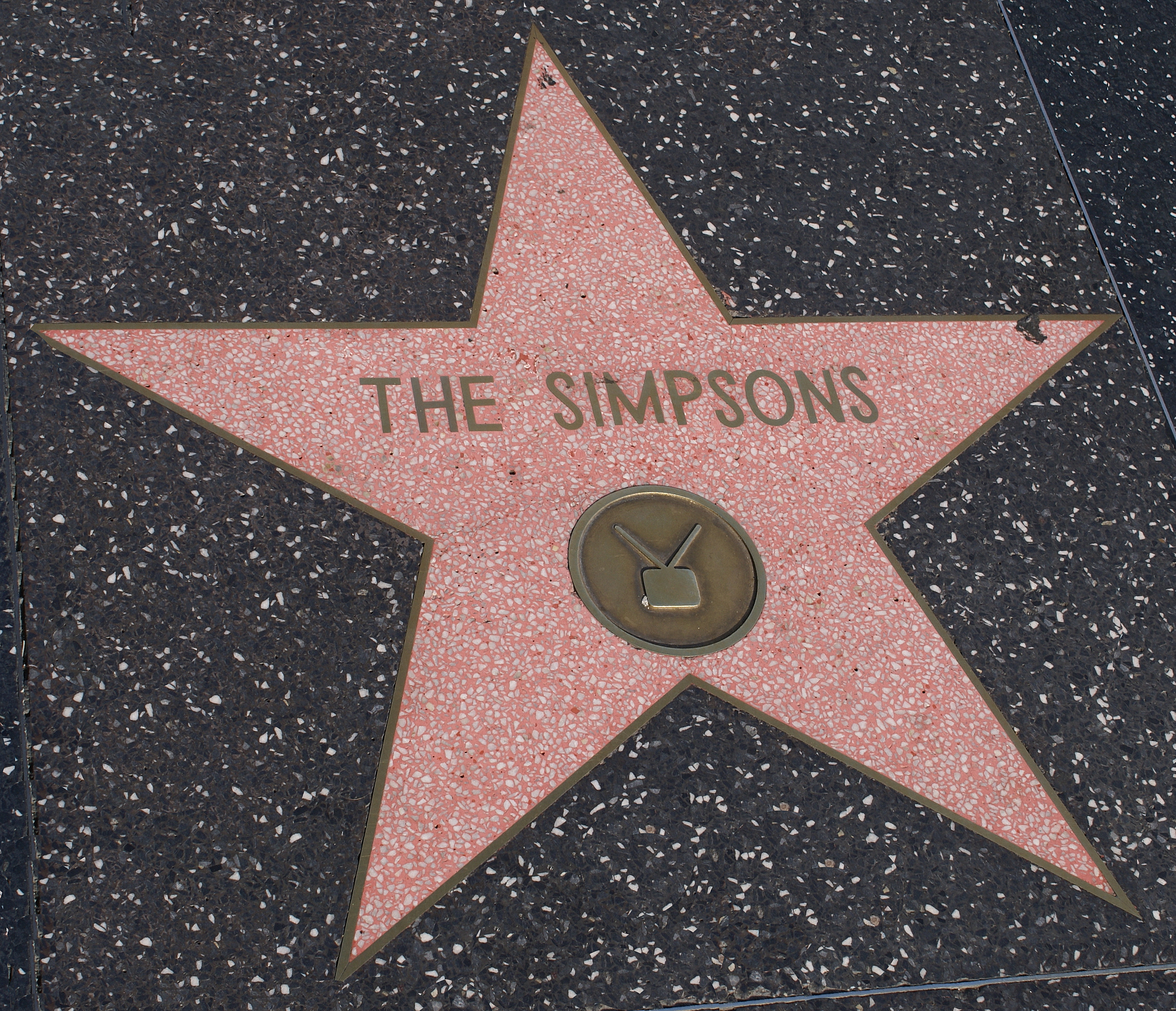
Cartwright has received a number of awards for her performance. At the 44th Primetime Emmy Awards in 1992, she received a Primetime Emmy Award for Outstanding Voice-Over Performance for her portrayal of Bart in the season-three episode "Separate Vocations", sharing the award with five other voice actors from The Simpsons. Episodes featuring Bart have been nominated for the Primetime Emmy Award for Outstanding Animated Program, including "Radio Bart" in 1992, "Future-Drama" in 2005, and "Homer's Phobia" in 1997. Cartwright received an Annie Award for Voice Acting in the Field of Animation in 1995 for her work as Bart. In 2000, Bart and the rest of the Simpson family were recognized with a star on the Hollywood Walk of Fame at 7021 Hollywood Boulevard.
Negative influence on children
Bart's rebellious nature, often accompanied by a lack of consequences for his actions, led some parents, educators, and conservative groups to view him as a negative influence on children. Critics said that Bart's behavior made him a poor role model, with Robert Bianco of the Pittsburgh Post-Gazette describing him as a character who "outwits his parents and outtalks his teachers; in short, he's the child we wish we'd been, and fear our children will become". Educators expressed concern that Bart's "underachiever and proud of it" attitude and disdain for education posed a "threat to learning", and others called him "egotistical, aggressive, and mean-spirited". In response to criticism, producer James L. Brooks defended the character: "I'm very wary of television where everybody is supposed to be a role model. You don't run across that many role models in real life. Why should television be full of them?"
U.S. drug czar William Bennett visited a Pittsburgh drug treatment center in 1990 and saw a poster of Bart. Bennett said, "You guys aren't watching The Simpsons, are you? That's not going to help you any". Bennett later apologized, saying that he was "just kidding": "I'll sit down with the little spike head. We'll straighten this thing out." Bill Cosby called Bart a poor role model in a 1991 interview, describing him as "angry, confused, [and] frustrated". Groening responded, "That sums up Bart, all right. Most people are in a struggle to be normal. He thinks normal is very boring and does things that others just wished they dare do". U.S. president George H. W. Bush said in 1992, "We are going to keep on trying to strengthen the American family, to make American families a lot more like the Waltons and a lot less like the Simpsons". The show's writers then produced a short segment that aired three days later (before a rerun of "Stark Raving Dad"), in which Bart says: "Hey, we're just like the Waltons. We're praying for an end to the Depression, too."
Merchandising
In addition to T-shirts, Bart has been featured in a variety of The Simpsons-related merchandise which includes dolls, napkins, air fresheners, cups, chewing gum, beach towels, sleeping bags, snow boots, rubber sponge balls, license-plate frames, scratch paper, laminated magnets, and handheld pinball games. Two books have been published about the character: Bart Simpson's Guide to Life (1993) and The Bart Book (2004), both primarily by Groening. The Simpsons and Philosophy: The D'oh! of Homer (2001) contains a chapter analyzing Bart's character and comparing him to the "Nietzschean ideal". Bart has appeared in media related to The Simpsons. He is featured in most of The Simpsons video games, such as Bart vs. the World (1991), Bart Simpson's Escape from Camp Deadly (1991), Bart vs. the Space Mutants (1991), Bart's House of Weirdness (1992), and The Simpsons Game (2007). Bart was a recurring character in the Bongo Comics-distributed Simpsons Comics, which debuted in November 1993 and was published until October 2018. He headlined his eponymous comic-book series, which was distributed by Bongo Comics from 2000 to 2016. Bart plays a role in The Simpsons Ride, a motion-simulator ride launched in 2008 at Universal Studios Florida and Universal Studios Hollywood. On December 9, 2024, Monday Night Football hosted an animated Simpsons version of the Cincinnati Bengals-Dallas Cowboys game which paralleled the events on the field.
Bart and other Simpsons characters appeared in television commercials for Nestlé's Butterfinger candy bars from 1988 to 2001, using the slogan "Nobody better lay a finger on my Butterfinger!". Groening later noted that the success of the Butterfinger commercials played a significant role in Fox's decision to greenlight the half-hour series. Bart has also appeared in commercials for the fast-food Burger King chain. In 2001, Kellogg's introduced the limited-edition Bart Simpson Peanut Butter Chocolate Crunch cereal. Groening pitched Bart as a spokesperson for Jell-O before the launch of the half-hour series, suggesting a commercial in which Bart would sing "J-E-L-L-O" and burp the letter "O". He believed that kids would try to mimic it, but the idea was rejected. On April 9, 2009, the United States Postal Service introduced a series of five 44-cent stamps commemorating Bart and the other members of the Simpson family. The stamps were the first since Sesame Street which were issued while their show was still in production. Designed by Groening, they became available for purchase on May 7, 2009.
Notes
References
Bibliography
References
- Bernhardt, Jack. (October 20, 2020). "Ay Caramba! I Watched 50 Hours of New ''Simpsons'' So You Don't Have To".
- "I Married Marge".
- "Simpsorama".
- "Bart's Birthday".
- "Lisa's First Word".
- "Lisa's Sax".
- "That '90s Show".
- McWhertor, Michael. (March 15, 2019). "Bart Simpson Becomes an Esports Star in Next Episode of ''The Simpsons''".
- (February 4, 2021). "''The Simpsons'': Bart's 20 Best Prank Calls To Moe's Tavern, Ranked".
- Kosmala, Karina. (October 2, 2022). "10 ''The Simpsons'' Episodes That Made Us Shed a Tear".
- "Bart the Murderer".
- "Bart Gets Famous".
- "Bart After Dark".
- "Homer's Enemy".
- Thielman, Sam. (April 19, 2017). "Happy Birthd'oh!: ''The Simpsons'' Celebrates 30 Years of Cultural Milestones".
- Bianculli, David. (February 14, 2003). "''Simpson''{{'}}s Creator Matt Groening". [[NPR]].
- Cohen, Ivan. (November 29, 2016). "The 12 Most Unexpected Spinoffs in TV History".
- (July 1990). "It's a Family Affair?".
- Day, Patrick Kevin. (May 7, 2013). "Matt Groening's mom dies; maiden name Wiggum, she inspired Marge Simpson".
- (May 7, 2013). "Marge Simpson's Namesake Has Died".
- Blackall, Luke. (May 7, 2013). "From the Wiggums to Chain-Smoking Aunt Patty: The Real-Life Groening".
- Bibby, Daniel. (February 11, 2024). "Bart & Homer Simpson's Names Subtly Honor Another Classic Cartoon".
- Stransky, Tanner. (November 19, 2009). "'Rocky & Bullwinkle': Happy 50th Birthday to the Sweet Duo! (And Boris and Natasha, too!)".
- Farrell, Peter. (December 17, 1989). "Christmans Is 'Life in Hell' for ''The Simpsons''". [[The Oregonian]].
- Paul, Alan. (September 30, 1995). "Life in Hell". [[Flux (magazine).
- Kolbert, Elizabeth. (March 11, 1993). "With Spirit of Youthful Rebellion, ''Simpsons'' Creator Takes on Success". [[Orlando Sentinel]].
- Groening, Matt. (2005). "Commentary for "[[Two Bad Neighbors]]", In ''The Simpsons: The Complete Seventh Season''". [[20th Century Home Entertainment]].
- Tallerico, Brian. (September 28, 2018). "''The Simpsons'' at 30: Six Era-Defining Episodes".
- Ortved, John. (July 5, 2007). "''The Simpsons'' Family Values: How the Cartoon Took Over TV".
- Tyler, Adrienne. (April 7, 2020). "''The Simpsons'' Opening Sequence Had A Continuity Error For 20 Years".
- Gunning, Cathal. (October 9, 2023). "''The Simpsons'' Season 35 Finally Addressed One Of The Show's Biggest Mysteries".
- Hogan, Michael. (December 15, 2014). "25 Things You Never Knew About ''The Simpsons''".
- Hogan, Michael. (December 27, 2014). "21 Things You Never Knew About ''The Simpsons''".
- (August 21, 2014). "The 30 Best Celebrity Cameos on ''The Simpsons''".
- (2004). "Illustrated Commentary for "[[Treehouse of Horror IV]]", In ''The Simpsons: The Complete Fifth Season''". [[20th Century Home Entertainment]].
- (2006). ""A Bit From the Animators", Illustrated Commentary for "[[All Singing, All Dancing]]", In ''The Simpsons: The Complete Ninth Season''". [[20th Century Home Entertainment]].
- (2002). "Commentary for "[[Principal Charming]]", In ''The Simpsons: The Complete Second Season''". [[20th Century Home Entertainment]].
- (2005). ""A Bit From the Animators", Illustrated Commentary for "[[Summer of 4 Ft. 2]]", In ''The Simpsons: The Complete Seventh Season''". [[20th Century Home Entertainment]].
- ""Homer in the Third Dimension" (2005), In ''The Simpsons: The Complete Seventh Season''". [[20th Century Home Entertainment]].
- (January 29, 2009). "Bart Simpson Voice Used to Promote Scientology".
- Boardman, Madeline. (April 29, 2016). "''The Simpsons'': See the Voice Actors Behind Your Favorite Characters".
- Aubrey, Elizabeth. (July 10, 2024). "Sabrina Carpenter Fans Shocked to Discover Her Aunt is the Voice of Bart Simpson". [[NME]].
- (February 27, 2003). "D'oh, You're the Voice".
- Carroll, Larry. (July 26, 2007). "''Simpsons'' Trivia, From Swearing Lisa To 'Burns-Sexual' Smithers". [[MTV News]].
- King, Darryn. (February 26, 2018). "Why Lisa Simpson Matters".
- (January 3, 2001). "Bart Simpson: The Shorts That Ate the World".
- (November 10, 2000). "Bart's Voice Tells All".
- Brockes, Emma. (August 1, 2004). "That's My Boy".
- (November 4, 2004). "That's My Boy".
- Mirkin, David. (2005). "Commentary for "[[Lisa's Wedding]]", In ''The Simpsons: The Complete Sixth Season''". [[20th Century Home Entertainment]].
- Brockes, Emma. (August 2, 2004). "Bart's Big Mouth".
- Bark, Ed. (July 15, 1990). "Bart Simpson's Secret: He's a Woman". [[Ottawa Citizen]].
- Hontz, Jenny. (March 26, 1998). "Cartwright's Vox to Pop for ''Simpsons''".
- (October 7, 2011). "'Simpsons' Cast Blinks in Salary Showdown With Fox (Exclusive)".
- Glaister, Dan. (April 3, 2004). "''Simpsons'' Actors Demand Bigger Share". [[The Age]].
- Snierson, Dan. (May 8, 2015). "Harry Shearer to Exit 'The Simpsons'?".
- Barrett, Patrick. (April 1, 2004). "D'oh! ''Simpsons'' Go On Strike".
- Stowe, Dusty. (October 2, 2017). "How Much Does The Cast Of ''The Simpsons'' Get Paid?".
- Weinraub, Bernard. (April 14, 2004). "D'oh! Am I Underpaid?; Negotiations Are Stalled for Voice Actors in ''The Simpsons''".
- Block, Alex Ben. (October 11, 2011). "''The Simpsons'' Pay Disputes".
- Collins, Scott. (May 1, 2004). "''Simpsons'' Cast, Fox Reach Deal".
- Schneider, Michael. (May 2, 2004). "Voices Carry at Fox".
- Byrne, Ciar. (June 3, 2008). "Homer's No Loser with a Voice Worth $400,000 Per Show".
- Wortham, Jenna. (June 3, 2008). "''Simpsons'' Ink Deal for 20th Season, Score More D'Oh".
- Block, Alex Ben. (October 7, 2011). "''The Simpsons'' Renewed for Two More Seasons". [[The Hollywood Reporter]].
- Bryant, Jacob. (October 4, 2016). "Highest-Paid TV Comedy Stars".
- "Lemon of Troy".
- (November 28, 1999). "Take My Wife, Sleaze".
- Tsang, Christopher. (March 19, 2021). "''The Simpsons'' Video Reveals 700th Episode Couch Gag".
- Kurland, Daniel. (September 3, 2017). "''The Simpsons'': 15 Episodes That Were Censored".
- Vrabel, Jeff. (October 21, 2014). "FXX's "''Simpsons World''" App: Here's Your Comprehensive A to Z".
- Kaulessar, Ricardo. (August 10, 2005). "Joke on ''Simpsons'' Started in JC". [[Jersey City Reporter]].
- Gornael, J.S.. (May 12, 2024). "The 10 Best Running Gags in ''The Simpsons''".
- Reiss, Mike. (2001). "Commentary for "[[Moaning Lisa (The Simpsons)". [[20th Century Home Entertainment]].
- (2001). "Commentary for "[[Some Enchanted Evening (The Simpsons)". [[20th Century Home Entertainment]].
- Canning, Robert. (October 6, 2005). "''The Simpsons'': "Lost Verizon" Review".
- Welsh, Daniel. (July 9, 2024). "''The Simpsons'' Voice Actor Reveals Surprising Origin Story Of 1 Of The Show's Most Iconic Catchphrases".
- Hewitt, Scott. (September 22, 2017). "Voice of TV's ''Simpsons'' character shares a more personal tale".
- Curovic, Irina. (May 17, 2019). "10 Best Pop Culture References Created By The Breakfast Club".
- (November 7, 2023). "Ay caramba! Homer Simpson Stops Throttling Bart".
- Hughes, Jason. (November 25, 2013). "''The Simpsons'': Bart Finally Learns Meaning Of 'Ay Caramba!'".
- Harmon, Steph. (April 10, 2018). "'Don't have a cow': ''The Simpsons'' Response to Apu Racism Row Criticised as 'Toothless'".
- (June 8, 1998). "Bart Simpson".
- Epstein, Leonora. (June 21, 2013). "What The Hell Does 'Cowabunga' Mean, Anyhow?".
- Graham, Adam. (June 16, 2017). "Movie Review: Weird Prevails in 'Once Upon a Time in Venice'".
- Collett-White, Mike. (July 6, 2007). "Early Peek at ''Simpsons Movie'': Lisa Goes Green, Bart Goes Nude".
- Snierson, Dan. (July 27, 2017). "''The Simpsons Movie'': 10 Stories on the 10th Anniversary".
- (July 25, 2007). "Simpsonania". [[CBS News]].
- Chocano, Carina. (July 27, 2007). "Where's the Fire?".
- Raphael, Lisa. (2008). "Bodies of Work: 30 Unforgettable Nude Scenes".
- Smith, Gus. (July 1, 2000). "Brilliant, and We Saw You Do it All, Bart".
- Heritage, Stuart. (October 28, 2013). "Marcia Wallace: Edna Krabappel's Best ''Simpsons'' Episodes".
- Littlechild, Chris. (November 29, 2019). "''The Simpsons'': 10 Worst Things Bart Ever Did To Principal Skinner".
- Gunning, Cathal. (May 10, 2022). "''The Simpsons'' Just Retconned Bart's Controversial Origin Story".
- "'Round Springfield".
- "Lemon of Troy".
- Madarang, Charisma. (December 17, 2019). "150 Best ''Simpsons'' Episodes of All Time".
- "Lisa the Simpson".
- "Grade School Confidential".
- "Sweet Seymour Skinner's Baadasssss Song".
- Moore, Roger. (July 25, 2007). "Nancy Cartwright, Voice of Bart Simpson, Has Personal Theme: ''Simpsons'' Forever". [[Orlando Sentinel]].
- Heritage, Stuart. (November 7, 2023). "Homer Has Stopped Strangling Bart in ''The Simpsons'' and it's About Time".
- Deb, Sopan. (November 7, 2023). "Is Homer Simpson a Good Dad Now?".
- (September 26, 2014). "Ever Wonder What an Interview with Homer Simpson Will Be Like? Read on".
- (November 12, 2023). "Homer Will Continue to Strangle Bart on ''The Simpsons'', Says Co-Creator: 'Nothing's Changing' (Exclusive)".
- Gornael, J.S.. (November 26, 2023). "The 10 Best Homer Episodes in ''The Simpsons'', Ranked".
- (December 9, 2021). "''The Simpsons'' 13 Funniest Christmas Specials, Ranked".
- "Homer Defined".
- "Marge Be Not Proud".
- "Marge's Son Poisoning".
- Sherlock, Ben. (August 22, 2019). "''The Simpsons'': 10 Bart And Marge Moments That Broke Our Hearts".
- Sherlock, Ben. (July 3, 2023). "10 ''The Simpsons'' Episodes That Went Too Far".
- Sherlock, Ben. (April 26, 2021). "''The Simpsons'': 10 Best Bart & Lisa Episodes".
- "Lisa's First Word".
- "Duffless".
- "Summer of 4 Ft. 2".
- Peeke, Dan. (June 29, 2020). "''The Simpsons'': 5 Reasons Bart Was The Best Main Character (& 5 Reasons It Was Homer)".
- Sanders, Hank. (November 21, 2024). "Pamela Hayden, the Voice of Bart's Friend Milhouse, Retires From ''The Simpsons''".
- Banks, Kayleigh. (July 16, 2020). "''The Simpsons'': 5 Times Bart Was A Terrible Friend To Milhouse (& 5 Times He Was Great)".
- "Krusty Gets Busted".
- "Like Father, Like Clown".
- "Krusty Gets Kancelled".
- Jean, Al. (2003). "Commentary for "[[Black Widower]]", In ''The Simpsons: The Complete Eighth Season''". [[20th Century Home Entertainment]].
- (July 15, 2007). "''Simpsons'' Set for Big Screen". [[The Daily Telegraph (Sydney).
- Kleinfield, N.R.. (April 29, 1990). "Cashing in on a Hot New Brand Name". [[The New York Times]].
- Barmash, Isadore. (December 30, 1990). "The T-Shirt Industry Sweats It Out".
- Rohter, Larry. (December 30, 1990). "Overacheiver – And Learning to Deal With It, Man". [[The New York Times]].
- Robinson, Gaile. (May 3, 1990). "Schools, Penney's Having a Cow About Bart Simpson T-Shirt".
- "Bart Simpson "Underachiever and Proud of it, Man!" t-shirt". [[Smithsonian Institution]].
- (February 18, 2009). "''Simpsons'' Couch on the Run".
- Svetkey, Benjamin. (July 27, 1990). "But Is It Bart?".
- Kelly, Kevin. (1999). "One-Eyed Aliens! Suicide Booths! Mom's Old-Fashioned Robot Oil!".
- (June 4, 1991). "Metzger Stops 'Nazi Bart' T-Shirt Sales". [[Houston Chronicle]].
- McDaniel, Mike. (December 30, 1990). "Television in 1990 – Among Bright Spots: 'Civil War,' CBS, 'Simpsons'". The Sunday Times.
- Boone, Mike. (December 30, 1990). "Bart Simpson Was Ray of Hope in a Year of Generally Drab Television". [[The Gazette (Montreal).
- (December 31, 1990). "Bart Simpson–Defiant, Saw-Topped And Cheeky—the Brat Terrible Gave Underachievers a Good Name".
- Potter, Bruce. (December 30, 1990). "Write-Ins Galore: Cast of Ballot Characters Widens". [[Richmond Times-Dispatch]].
- Stromberg, Amy. (November 9, 1990). "Mickey, Bart Fit Write-In At Ballot Box". [[Sun-Sentinel.
- Stromberg, Amy. (November 23, 1990). "Bart Simpson, 'Falloon' Floats Debut at Macy's N.Y. Thanksgiving Parade". [[The Press of Atlantic City]].
- "Bart Vs. Thanksgiving".
- (2000). "Bart Vs. Thanksgiving".
- "Artist Chart History – ''The Simpsons''".
- "RIAA Searchable Database – Gold and Platinum". [[Recording Industry Association of America]].
- (July 22, 2015). "Michael Jackson Didn't Write 'Do The Bartman' After All".
- Rincón, Alessandra. (August 30, 2018). "Matt Groening Confirms Michael Jackson Was On ''The Simpsons'': 'We Really Did Have Him'".
- (2000). "Stark Raving Dad". [[BBC]].
- (May 21, 2021). "Official Top 40 best-selling songs of 1991".
- "Certified Awards". [[British Phonographic Industry]].
- Parker, Jake. (May 11, 2024). "The 10 Best Characters in ''The Simpsons'', Ranked".
- Sargeant, Rebecca. (May 25, 2024). "10 Iconic TV Characters That Defined The 1990s".
- Rosenberg, Howard. (December 23, 1990). "Dude of the Year: Bart Simpson was TV's Bitingly Funny Anti-Hero in a Year That Saw Both Ambitious Flameouts and Eloquent Triumphs".
- Hajek, Danny. (February 28, 2015). "'Whoa, Mama!': A Voice Actress's Road To Fame As A 10-Year-Old Boy". [[NPR]].
- Cheng, Susan. (January 23, 2014). "Emmanuel Mauleón's Illustrations of Black Bart Simpson Ev...".
- (November 10, 2000). "Bart's Voice Tells All".
- (November 6, 2008). "Flashback! EW's Entertainers of the Year Since 1990".
- Corliss, Richard. (June 8, 1998). "The Cartoon Character Bart Simpson".
- Amlen, Deb. (July 24, 2020). "Stock Character".
- (December 31, 1990). "Time Magazine Cover: Bart Simpson".
- (1997). "Beyond Our 50 Greatest Stars".
- (July 30, 2002). "TV Guide's 50 Greatest Cartoon Characters of All Time". [[CNN]].
- (May 10, 2010). "The 50 Best Cartoon Characters of All Time".
- King, Darryn. (December 17, 2024). "What the Hell Was Bartmania?".
- Williamson, Samuel. (November 12, 2023). "''The Simpsons'' Episode That Changed Bart Forever".
- Bombeck, Erma. (May 27, 1990). "Children's TV role models stand tall".
- (April 24, 2003). "Bart Simpson Is Your Top Role Model". [[CBBC Newsround]].
- (August 3, 1992). "Briefing–'Simpsons' Score Big in Prime-Time Emmys". [[Daily News of Los Angeles]].
- Sherlock, Ben. (January 16, 2020). "''The Simpsons'': Every Emmy-Nominated Episode, Ranked".
- "Nancy Cartwright - ''The Simpsons''". [[Fox Broadcasting Company]].
- (October 25, 2019). "Matt Groening". [[Hollywood Walk of Fame]].
- Rosenbaum, Martin. (June 29, 2007). "Is ''The Simpsons'' Still Subversive?".
- Bianco, Robert. (June 28, 1990). "Weekend TV: Beer'N' Bart Giving Parents Prime-Time Hangover". [[Pittsburgh Post-Gazette]].
- Freedman, Donna. (June 2, 1990). "Is Bart a Brat? Popular Cartoon Kid as Annoying to Some as He Is Funny to Others". [[Anchorage Daily News]].
- Dunne, Mike. (June 1, 1990). "Bart Simpson: Cool Dude or Smart-Aleck Menace?". [[The Sacramento Bee]].
- Shales, Tom. (October 11, 1990). "''The Simpsons''". [[Washington Post]].
- (May 29, 1990). "You guys aren't watching ''The Simpsons'', are...".
- (May 17, 1990). "Names in the News: Drug Czar Snipes at 'Simpsons'".
- (May 27, 1990). "'Just kidding' About Bart, Drug Czar Bennett Says".
- (May 26, 1990). "Drug Czar Says He'd Like to Have a Talk with Bart Simpson".
- (September 23, 1991). "Bart Simpson a Role Model? No Way, Man, Groening Says". [[Orange County Register]].
- Snierson, Dan. (April 18, 2018). "Read the Apology Letter Barbara Bush Once Wrote to Marge Simpson".
- Blair, Jayson. (September 9, 2001). "The Aristotelian Logic of Bart And Homer". [[The New York Times]].
- Kesten, Lou. (April 21, 1991). "''The Simpsons: Bart Vs. The Space Mutants''".
- (July 22, 2022). "''The Simpsons: Bart's House of Weirdness''".
- Stedman, Alex. (September 26, 2024). "EA Will Be Sunsetting ''The Simpsons'': Tapped Out After 12 Years".
- Shutt, Craig. "Sundays with ''The Simpsons''". [[MSNBC]].
- Radford, Bill. (November 19, 2000). "Groening Launches Futurama Comics". [[The Gazette (Colorado Springs).
- (February 22, 2016). "In Stores 2-24-16". [[Bongo Comics]].
- Bieler, Des. (December 9, 2024). "Cowboys, Bengals to enter 'Simpsons' universe in alternate 'MNF' telecast". [[Washington Post]].
- Schultz., E.J.. (January 7, 2013). "Rewind: Butterfinger at 90".
- (May 13, 1995). "A Portrait of the Bartist – ''The Simpsons'' Matt Groening Has Fulfilled His Dream of Invading Mainstream U.S. Pop Culture". [[Star Tribune]].
- Schiller, Gail. (July 20, 2007). "''Simpsons'' Fans Have it Their Way".
- Collins, Tim. (December 15, 2021). "Bernie Sanders Coming To Battle Creek To Support Striking Kellogg Employees". [[WBCK-FM]].
- Groening, Matt. (2001a). "Commentary for "[[There's No Disgrace Like Home]]", In ''The Simpsons: The Complete First Season''". [[20th Century Home Entertainment]].
- Szalai, George. (April 1, 2009). "Postal Service Launching 'Simpsons' Stamps".
- (May 7, 2009). "''The Simpsons'' Get 'Stamping Ovation' To Tune of 1 Billion Stamps". [[United States Postal Service]].
This article was imported from Wikipedia and is available under the Creative Commons Attribution-ShareAlike 4.0 License. Content has been adapted to SurfDoc format. Original contributors can be found on the article history page.
Ask Mako anything about Bart Simpson — get instant answers, deeper analysis, and related topics.
Research with MakoFree with your Surf account
Create a free account to save articles, ask Mako questions, and organize your research.
Sign up freeThis content may have been generated or modified by AI. CloudSurf Software LLC is not responsible for the accuracy, completeness, or reliability of AI-generated content. Always verify important information from primary sources.
Report