From Surf Wiki (app.surf) — the open knowledge base
Barnard College
Private women's college in New York City
.jpg)
Private women's college in New York City
| Field | Value |
|---|---|
| name | Barnard College |
| image | Formal Seal of Barnard College, New York City, USA.svg |
| image_upright | .6 |
| latin_name | Barnardi Collegium |
| motto | Ἑπομένη τῷ λογισμῷ (Greek) |
| mottoeng | Following the Way of Reason |
| established | |
| type | Private women's liberal arts college |
| endowment | $503.4 million (2024) |
| president | Laura Rosenbury |
| provost | Rebecca L. Walkowitz |
| faculty | 388 (fall 2022) |
| undergrad | 3,442 (fall 2022) |
| city | New York City |
| state | New York |
| country | United States |
| campus | Urban |
| sporting_affiliations | NCAA Division I – Ivy League |
| (consortium with Columbia University) | |
| mascot | Millie the Bear |
| website | |
| coordinates | |
| parent | Columbia University |
| academic_affiliations | |
| colors | Blue and white |
| logo | Barnard College logo.jpeg |
(consortium with Columbia University)
Barnard College is a private women's liberal arts college in New York City, New York, U.S., affiliated with Columbia University. It was founded in 1889 by a group of women led by young student activist Annie Nathan Meyer, who petitioned Columbia University's trustees to create an affiliated college named after university president Frederick A. P. Barnard. The college is one of the original Seven Sisters—seven liberal arts colleges in the Northeastern United States that were historically women's colleges.
Barnard College has independent admission, curricula, and finances separate from Columbia. It shares sports teams with Columbia through the Columbia–Barnard Athletic Consortium, an agreement that makes Barnard the only women's college to compete in NCAA Division I athletics.
Barnard offers B.A. degree programs in about 50 areas of study. In addition to Columbia, students may also pursue elements of their education at the Juilliard School, the Manhattan School of Music, and the Jewish Theological Seminary which are also based in New York City. Its 4 acre campus is located in the Upper Manhattan neighborhood of Morningside Heights, stretching along Broadway between 116th and 120th Streets. It is directly across from Columbia's main campus.
Barnard College alumnae include leaders in science, religion, politics, the Peace Corps, medicine, law, education, communications, theater, and business. Barnard graduates have been recipients of Emmy, Tony, Grammy, Academy, and Peabody awards, Guggenheim Fellowships, MacArthur Fellowships, the Presidential Medal of Freedom, the National Medal of Science, and the Pulitzer Prize.
History
Founding
From its founding in 1754 until the mid-1980s, Columbia College of Columbia University admitted only men for undergraduate study. Barnard College was founded in 1889 as a response to Columbia's refusal to admit women. Classes took place in a rented brownstone at 343 Madison Avenue, where a faculty of six offered instruction to 36 students.
The college was named after Frederick Augustus Porter Barnard, a deaf American educator and mathematician who later served as Columbia's president for over twenty years. He advocated for coeducational settings and proposed in 1879 that Columbia admit women. Columbia's Board of Trustees repeatedly rejected Barnard's suggestion, but in 1883 agreed to create a syllabus that would allow the college's students to receive degrees. The first such graduate received her bachelor's degree in 1887. A former student of the program, Annie Meyer, and other prominent New York women persuaded the board in 1889 to create a women's college connected to Columbia. Men and women were evenly represented among the founding trustees of Barnard College.
Morningside campus
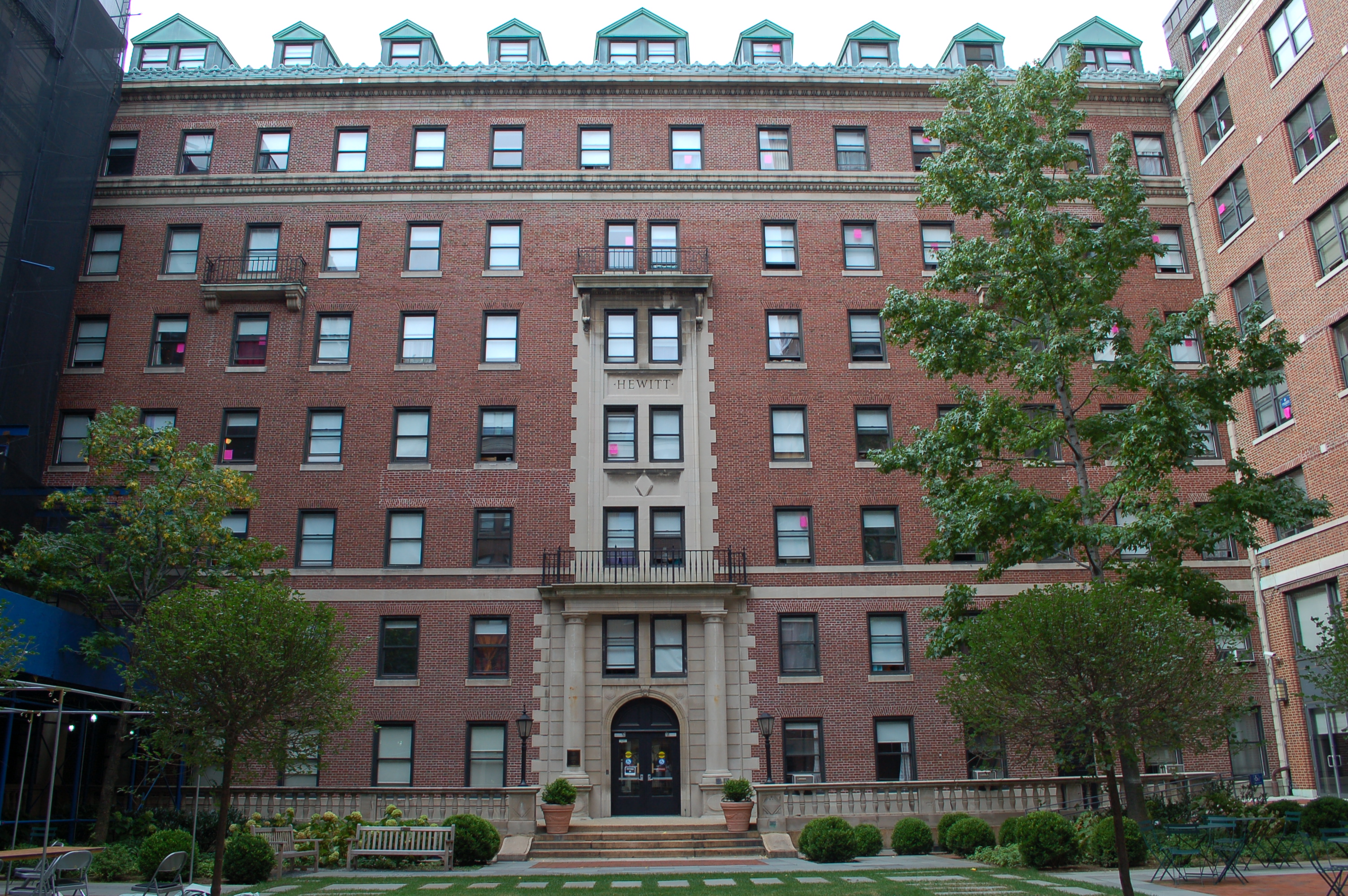
When Columbia University announced in 1892 its impending move to Morningside Heights, Barnard built a new campus nearby with gifts from Mary E. Brinckerhoff, Elizabeth Milbank Anderson and Martha Fiske. Two of these gifts were made with several stipulations attached. Brinckerhoff insisted that Barnard acquire land within 1,000 feet of the Columbia campus within the next four years. The Barnard trustees purchased land between 119th–120th Streets after receiving funds for that purpose in 1895. Anderson requested that Charles A. Rich be hired. Rich designed the Milbank, Brinckerhoff, and Fiske Halls, built in 1897–1898; these were listed on the National Register of Historic Places in 2003. The first classes at the new campus were held in 1897. Despite Brinckerhoff's, Anderson's, and Fiske's gifts, Barnard remained in debt.
Ella Weed supervised the college in its first four years; Emily James Smith succeeded her as Barnard's first dean. Jessica Finch is credited with coining the phrase current events while teaching at Barnard College in the 1890s.
The college received the three blocks south of 119th Street from Anderson in 1903. Rich provided a master plan for the campus, but only Brooks Hall was built, being constructed between 1906 and 1908. None of Rich's other plans was carried out. Students' Hall, now known as Barnard Hall, was built in 1916 to a design by Arnold Brunner. Hewitt Hall was the last structure to be erected, in 1926–1927. All three buildings were listed on the National Register of Historic Places in 2003.
By the mid-20th century, Barnard had succeeded in its original goal of providing a top-tier education to women. Between 1920 and 1974, only the much larger Hunter College and University of California, Berkeley produced more women graduates who later received doctorates. In the 1970s, Barnard faced considerable pressure to merge with male only Columbia College, which was fiercely resisted by its president, Jacquelyn Mattfeld.
Presidents
List of presidents and deans of Barnard College from 1889 to present:
| Image | President | Term started | Term ended | Refs. | |
|---|---|---|---|---|---|
| No. | |||||
| Chair of the academic committee of Barnard College (1889–1894) | |||||
| 1 | Ella Weed | 1889 | January 10, 1894 | ||
| Deans of Barnard College (1894–1952) | |||||
| 2 | Emily James Smith Putnam | May 11, 1894 | February 1, 1900 | ||
| 3 | [[File:Laura Drake Gill, President of Barnard College.jpg | 70px]] | Laura Drake Gill | January 1901 | June 1907 |
| interim | Willian Tenney Brewster | 1907 | 1911 | ||
| 4 | [[File:Virginia C. Gildersleeve.jpg | 70px]] | Virginia Gildersleeve | February 1911 | 1947 |
| Presidents of Barnard College (1952–present) | |||||
| 5 | [[File:Millicent Carey McIntosh ca56 1.tif | 70px]] | Millicent McIntosh | 1947 | June 1962 |
| 6 | [[File:RosemaryPark1964.png | 70px]] | Rosemary Park | July 1962 | June 1967 |
| interim | Henry Boorse | July 1967 | November 1967 | ||
| 7 | Martha Peterson | November 1967 | May 1975 | ||
| interim | Leroy Breunig | May 1975 | June 1976 | ||
| 8 | Jacquelyn Mattfeld | June 1976 | May 29, 1980 | ||
| acting | [[File:Ellen Futter, President of Barnard College.jpg | 70px]] | Ellen V. Futter | 1980 | April 1981 |
| 9 | April 1981 | October 1993 | |||
| interim | Kathryn Rodgers | July 1993 | April 1994 | ||
| 10 | [[File:Judith Shapiro at Women's eNews Leadership Awards.jpg | 70px]] | Judith R. Shapiro | July 1, 1994 | June 30, 2008 |
| 11 | [[File:DeboraSpar03.JPG | 70px]] | Debora L. Spar | July 1, 2008 | March 5, 2017 |
| interim | Robert Goldberg | March 6, 2017 | June 30, 2017 | ||
| 12 | [[File:Sian Beilock headshot.jpg | 70px]] | Sian Beilock | July 1, 2017 | June 11, 2023 |
| 13 | Laura Rosenbury | June 12, 2023 | present |
Table notes:
Academics
Barnard students are able to pursue a bachelor of arts degree in about 50 areas of study. Joint programs for the bachelor of science and other degrees exist with Columbia University, Juilliard School, and the Jewish Theological Seminary. The most popular majors at the college by 2021 graduates were:
The liberal arts general education requirements are collectively called Foundations. Students must take two courses in the sciences (one of which must be accompanied by a laboratory course), study a single foreign language for two semesters, and take two courses in the arts/humanities as well as two in the social sciences. In addition, students must complete at least one three-credit course in the so-called "Modes of Thinking" series, and fulfill other requirements.
Admissions
| title=Barnard College Admits 1,084 To the Class of 2025 | url=https://barnard.edu/news/barnard-college-admits-1084-class-2025 | access-date=March 30, 2020 | publisher=Barnard College | language=en | archive-date=April 1, 2021 | archive-url=https://web.archive.org/web/20210401195555/https://barnard.edu/news/barnard-college-admits-1084-class-2025 | url-status=live}} | 2021 | 2020 | title=Barnard College Common Data Set 2019–2020, Part C | url=https://barnard.edu/sites/default/files/inline-files/CDS_2019-2020_completed.pdf | access-date=April 29, 2020 | publisher=Barnard College | archive-date=October 1, 2020 | archive-url=https://web.archive.org/web/20201001134326/https://barnard.edu/sites/default/files/inline-files/CDS_2019-2020_completed.pdf | url-status=live}} | 2018 | |
|---|---|---|---|---|---|---|---|---|---|---|---|---|---|---|---|---|---|---|
| Applicants | 12,009 | 10,395 | 9,411 | 9,320 | 7,897 | |||||||||||||
| Admits | NA | 1,084 | 1,022 | 1,097 | 1,099 | |||||||||||||
| Admit rate | 6% | 10% | 10.8% | 11.8% | 13.9% | |||||||||||||
| Enrolled | N/A | N/A | N/A | 632 | 605 | |||||||||||||
| SAT mid-50% range | N/A | N/A | N/A | 1360–1500 | 1330–1500 | |||||||||||||
| ACT mid-50% range | N/A | N/A | N/A | 31–34 | 30–33 |
Admissions to Barnard are considered "most selective" by U.S. News & World Report. It is the most selective women's college in the nation; in 2017, Barnard had the lowest acceptance rate of the five Seven Sisters that remain single-sex in admissions.
The class of 2026's admission rate was 8% of the 12,009 applicants, the lowest acceptance rate in the institution's history. The median SAT composite score of enrolled students was 1440, with median subscores of 720 in Math and 715 in Evidence-Based Reading and Writing. The median ACT Composite score was 33.
In 2015, Barnard announced that it would admit transgender women who "consistently live and identify as women, regardless of the gender assigned to them at birth" and would continue to support and enroll those students who transitioned to male after they had already been admitted.
The college practices need-blind admission for domestic first-year applicants.
Rankings
In 2025, U.S. News & World Report ranked Barnard as tied at 13th of 211 U.S. liberal arts colleges overall. Barnard was tied for 30th for "Best Undergraduate Teaching," among U.S. liberal arts colleges by U.S. News & World Report. Forbes ranked Barnard 73rd of 500 colleges in 2023. In 2024, Washington Monthly ranked Barnard 63rd among 194 liberal arts colleges in the U.S. based on its contribution to the public good, as measured by social mobility, research, and promoting public service.
Campus
Library
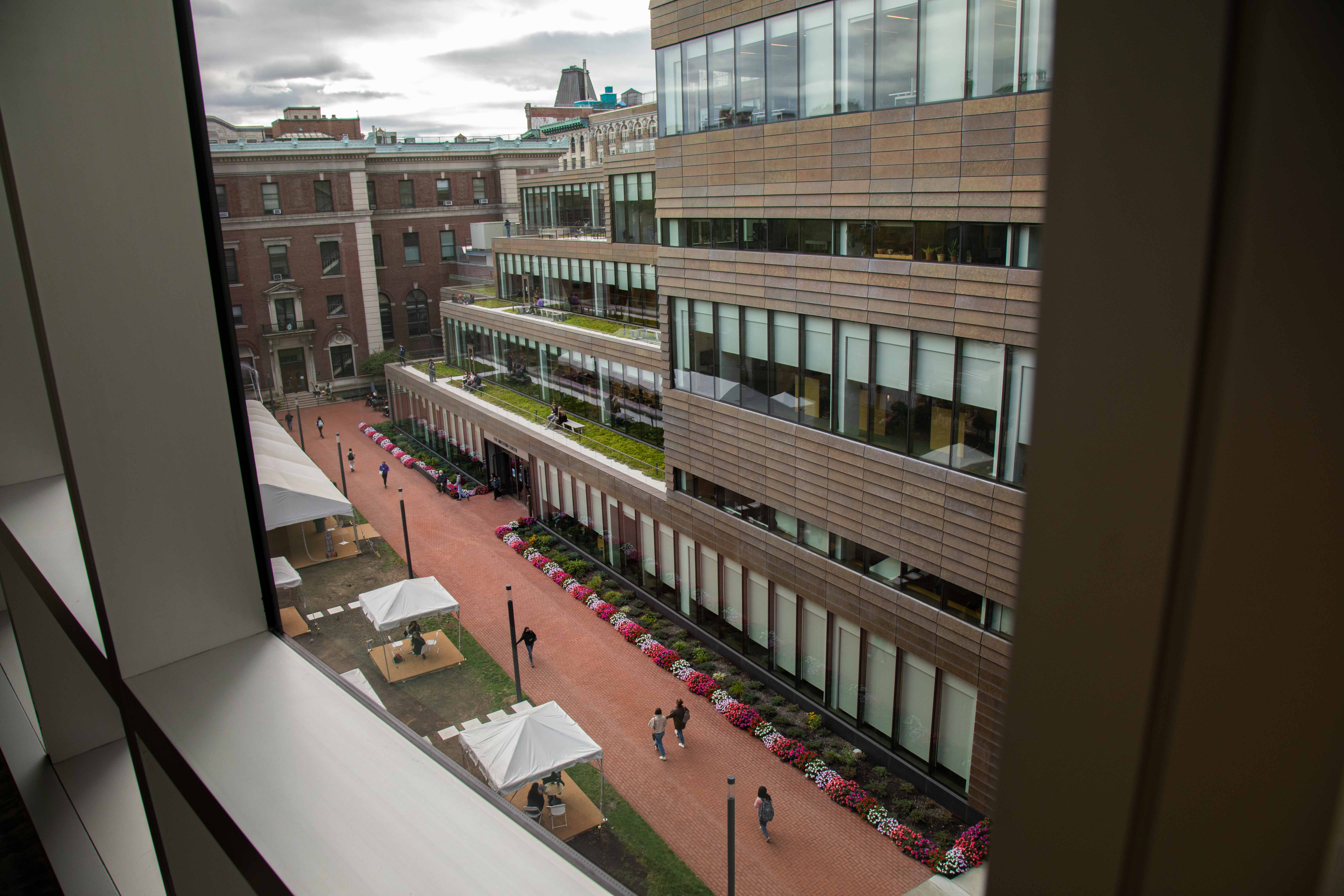
While Barnard students have access to the libraries at Columbia University, the college has always maintained a library of its own. The Barnard Library also encompasses the Archives and Special Collections, with material that documents Barnard's history from its founding to the present day. Among the collections are the Ntozake Shange papers.
Zine collection
The Barnard Zine Library is a unit of the Barnard Library and Academic Information Systems (BLAIS). Zine collections target primarily female, default queer, intentionally of color, and gender expansive topics. In 2004, it became the first zine library in the United States to be fully cataloged in the OCLC. It opened for circulation in 2008, and holds roughly 5,000 processed zines as of 2018. The library supports the student-run Barnard Zine Club.
Student life
Student organizations
Every Barnard student is part of the Student Government Association (SGA), which elects a representative student government. SGA aims to facilitate the expression of opinions on matters that directly affect the Barnard community.
Student groups include theater and vocal music groups, language clubs, literary magazines, a freeform radio station called WBAR, a biweekly magazine called the Barnard Bulletin, Club Q, community service groups, and others.
Barnard students can join extracurricular activities or organizations at Columbia University, while Columbia University students are allowed in most, but not all, Barnard organizations. Barnard's McIntosh Activities Council organizes various community focused events on campus, such as Big Sub and Midnight Breakfast. There are sub-committees focussed on cultural events (Mosaic), health and wellness (Wellness), networking (Network), event-planning (Community), and service (Action).
Sororities
Barnard students participate in various sororities. , Barnard does not fully recognize the National Panhellenic Conference sororities at Columbia, despite it being home to the Alpha chapter of Alpha Omicron Pi which was founded at Barnard in 1897, but it does provide some funding to account for Barnard students living in Columbia housing through these organizations.
Traditions
Barnard Greek Games: One of Barnard's oldest traditions, the Barnard Greek Games were first held in 1903, and occurred annually until the Columbia University protests in 1968. Since then they have been sporadically revived. The games consist of competitions between each graduating class at Barnard, and events have traditionally included Greek poetry recitation, dance, chariot racing, and a torch race.
Take Back the Night: Each April, Barnard and Columbia students participate in the Take Back the Night march and speak-out. This annual event grew out of a 1988 Seven Sisters conference. The march grew from less than 200 participants in 1988 to more than 2,500 in 2007.
Midnight breakfast marks the beginning of finals week. As a highly popular event and long-standing college tradition, Midnight Breakfast is hosted by the student-run activities council, McAC (McIntosh Activities Council). In addition to providing standard breakfast foods, each year's theme is also incorporated into the menu. Past themes have included "I YUMM the 90s," "Grease," and "Take Me Out to the Ballgame." The event is a school-wide affair as college deans, trustees and the president serve food to about a thousand students. It takes place the night before finals begin every semester.
Big Sub: Toward the beginning of each fall semester, Barnard College supplies a 700+ feet long subway sandwich. Students from the college can take as much of the sub as they can carry. The sub has kosher, dairy free, vegetarian, and vegan sections. This event is organized by the student-run activities council, McAC.
Academic affiliations
Relationship with Columbia University
The Barnard Bulletin in 1976 described the relationship between the college and Columbia University as "intricate and ambiguous". Barnard president Debora Spar said in 2012 that "the relationship is admittedly a complicated one, a unique one and one that may take a few sentences to explain to the outside community". Outside sources often describe Barnard as part of Columbia; The New York Times in 2013, for example, called Barnard "an undergraduate women's college of Columbia University". Its front gates read "Barnard College of Columbia University."
Barnard describes itself as "both an independently incorporated educational institution and an official college of Columbia University" that is "one of the University's four colleges, but we're largely autonomous, with our own leadership and purse strings", and advises students to state "Barnard College, Columbia University" or "Barnard College of Columbia University" on résumés.
Columbia refers to Barnard as one of its schools and an affiliated institution that is a faculty of the university. Both the college and Columbia evaluate Barnard faculty for tenure; in other words, a Barnard tenured professor is a Columbia tenured professor.
Barnard graduates receive Columbia diplomas signed by the Barnard and the Columbia presidents; both diplomas are titled Cvratores Vniversitatis Colvmbiae ('Trustees of Columbia University'). According to the university, the Barnard College degree is held to the same standard as the Columbia College degree. Additionally, both—Barnard College and Columbia College—Columbia University diplomas are written in Latin.
Barnard graduates are also considered members of the Columbia Alumni Association (CAA), and are eligible to receive honors such as the annual Columbia Alumni Medal.
Barnard students wear the same graduation gown as undergraduates from Columbia College, the School of Engineering and Applied Science, and the School of General Studies, and their degrees are conferred during the University Commencement ceremony.
Before coeducation at Columbia
Smith and Columbia president Seth Low worked to open Columbia classes to Barnard students. By 1900 they could attend Columbia classes in philosophy, political science, and several scientific fields. That year, Barnard formalized an affiliation with the university that made available to its students the instruction and facilities of Columbia. Franz Boas, who taught at both Columbia and Barnard in the early 1900s, was among those faculty members who reportedly found Barnard students superior to their male Columbia counterparts. From 1955, Columbia and Barnard students could register for the other school's classes with the permission of the instructor; from 1973 no permission was needed.
Except for Columbia College, by the 1940s, other undergraduate and graduate divisions of Columbia University admitted women. Columbia president William J. McGill predicted in 1970, that Barnard College and Columbia College would merge within five years. In 1973, Columbia and Barnard signed a three-year agreement to increase sharing classrooms, facilities, and housing, and cooperation in faculty appointments, which they described as "integration without assimilation"; by the mid-1970s, most Columbia dormitories were coed. The university's financial difficulties during the decade increased its desire to merge to end what Columbia described as the "anachronism" of single-sex education, but Barnard resisted doing so because of Columbia's large debt, rejecting in 1975 Columbia dean Peter Pouncey's proposal to merge Barnard and the three Columbia undergraduate schools. The college's marketing emphasized the Columbia relationship, however; the Bulletin in 1976 said that Barnard described it as identical to the one between Harvard College and Radcliffe College ("who are merged in practically everything but name at this point").
After Barnard rejected later merger proposals from Columbia and a one-year extension to the 1973 agreement expired, in 1977, the two schools began discussing their future relationship. By 1979, the relationship had so deteriorated that Barnard officials stopped attending meetings. Because of an expected decline in enrollment, in 1980 a Columbia committee recommended that Columbia College begin admitting women without Barnard's cooperation. A 1981 committee found that Columbia was no longer competitive with other Ivy League universities without women, and that admitting women would not affect Barnard's applicant pool. That year Columbia president Michael Sovern agreed for the two schools to cooperate in admitting women to Columbia, but Barnard faculty's opposition caused president Ellen Futter to reject the agreement.
A decade of negotiations for a Columbia-Barnard merger akin to Harvard and Radcliffe had failed. In January 1982, the two schools instead announced that Columbia College would begin admitting women in 1983, and Barnard's control over tenure for its faculty would increase; Within a few years, however, selectivity rose at both schools as they received more women applicants than expected.
After coeducation
The Columbia-Barnard affiliation continued. , Barnard paid Columbia about $5 million a year under the terms of the "interoperate relationship", which the two schools renegotiate every 15 years. Despite the affiliation, Barnard is legally and financially separate from Columbia with an independent faculty and board of trustees. It is responsible for its own separate admissions, health, security, guidance and placement services, and has its own alumnae association. Nonetheless, Barnard students participate in the academic, social, athletic and extracurricular life of the broader university community on a reciprocal basis. The affiliation permits the two schools to share some academic resources; for example, only Barnard has an urban studies and dance department and only Columbia has a computer science department. Most Columbia classes are open to Barnard students and vice versa. Barnard students and faculty are represented in the University Senate, and student organizations such as the Columbia Daily Spectator are open to all students. Barnard students play on Columbia athletics teams, including the Ivy League Consortium, and Barnard uses Columbia email, telephone, and network services.
Barnard athletes compete in the Ivy League (NCAA Division I) through the Columbia-Barnard Athletic Consortium, which was established in 1983. Through the arrangement, Barnard is the only women's college offering DivisionI athletics. There are 15 intercollegiate teams, and students also compete at the intramural and club levels. From 1975 to 1983, before the establishment of the Columbia-Barnard Athletic Consortium, Barnard students competed as the "Barnard Bears". Prior to 1975, students referred to themselves as the "Barnard honeybears".
Controversies
In the spring of 1960, Columbia University president Grayson Kirk complained to the president of Barnard that Barnard students were wearing inappropriate clothing. The garments in question were pants and Bermuda shorts. The administration forced the student council to institute a dress code. Students would be allowed to wear shorts and pants only at Barnard and only if the shorts were no more than two inches above the knee and the pants were not tight. Barnard women crossing the street to enter the Columbia campus wearing shorts or pants were required to cover themselves with a long coat.
In March 1968, The New York Times ran an article on students who cohabited, identifying one of the persons they interviewed as a student at Barnard College from New Hampshire named "Susan". Barnard officials searched their records for women from New Hampshire and were able to determine that "Susan" was the pseudonym of a student (Linda LeClair) who was living with her boyfriend, a student at Columbia University. She was called before Barnard's student-faculty administration judicial committee, where she faced the possibility of expulsion. A student protest included a petition signed by 300 other Barnard women, admitting that they too had broken the regulations against cohabitating. The judicial committee reached a compromise and the student was allowed to remain in school, but was denied use of the college cafeteria and barred from all social activities. The student briefly became a focus of intense national attention. Barnard president Martha Peterson overruled the committee and expelled LeClair.
In February 2025, Barnard College expelled two students following their disruption of a "History of Modern Israel" class at Columbia University on January 21, 2025. The students interrupted the lecture taught by Professor Avi Shilon, a lecturer with Columbia University's Institute for Israel and Jewish Studies, and distributed materials which condemned the course as "Zionist propaganda". In response to these expulsions, on February 26, 2025, several dozen pro-Palestinian student protesters staged a sit-in at Barnard's Milbank Hall, outside the office of Dean Leslie Grinage. The protesters demanded the reversal of the expulsions, amnesty for students disciplined for pro-Palestinian actions, and a public meeting with college administrators. During the protest, a Barnard employee was physically assaulted and required hospitalization. Barnard's faculty members Nara Milanich, professor of history, and Severin Fowles, professor of anthropology and American studies, served as mediators between the protesters and the administration. The sit-in lasted for over six hours before an agreement was reached to disperse, with a private meeting between the protesters and administrators scheduled for the following day. In July, Barnard College settled its lawsuit Students Against Antisemitism, Inc. et al v. The Trustees of Columbia University in the City of New York et al which accused Barnard of not taking enough measures to combat campus antisemitism.
Notable people
Main article: List of Barnard College people
Barnard College has graduated many prominent leaders in science, religion, politics, the Peace Corps, medicine, law, education, communications, theater, and business as well as acclaimed actors, architects, artists, astronauts, engineers, human rights activists, inventors, musicians, philanthropists, and writers. Graduates include academic Louise Holland (1914), author Zora Neale Hurston (1928), Grace Lee Boggs, author and political activist (1935), author Patricia Highsmith (1942), television host Ronnie Eldridge (1952), Phyllis E. Grann, CEO of Penguin Putnam, U.S. Representative Helen Gahagan (1924), author Erica Jong (1963), Helene D. Gayle, Spelman College's 11th President and former chair of the Presidential Advisory Council on HIV/AIDS (1970), Susan N. Herman, president of the American Civil Liberties Union (1968), Judith Kaye, Chief Judge of the New York Court of Appeals (1958), Wilma B. Liebman, chair of the National Labor Relations Board (1971), Laurie Anderson, musician and performance artist (1969), Cynthia Nixon, actress, activist, and gubernatorial candidate (1988), author Jhumpa Lahiri (1989), Ann Brashares, author of The Sisterhood of the Traveling Pants (1989), Amy Hwang, The New Yorker cartoonist (2000), Kelly McCreary, actress from Grey's Anatomy (2003), Greta Gerwig, writer and director (2004), and Christy Carlson Romano, Disney Channel actress (2015). File:Martha Stewart 2011 Shankbone.JPG|alt=Martha Stewart, businesswoman, author, television personality|Martha Stewart 1963, businesswoman, author, television personality File:Lauren Graham August 2014.jpg|alt=Lauren Graham, actress, author|Lauren Graham 1988, actress, author File:Joan Rivers 2010 - David Shankbone.jpg|alt=Joan Rivers, comedian, actress|Joan Rivers 1955, comedian, actress File:Greta Gerwig Berlinale 2018.jpg|Greta Gerwig 2006, filmmaker File:Norma Sklarek public domain.jpg|Norma Merrick Sklarek 1950, architect File:Grace Lee Boggs 2012.jpg|Grace Lee Boggs 1935, author, social activist, philosopher File:Maria Hinojosa.jpg|Maria Hinojosa 1985, journalist, activist File:Helene D. Gayle - World Economic Forum on East Asia 2012 crop.jpg|Helene D. Gayle 1976, physician, public health official File:Ntozake Shange, Reid Lecture, Women Issues Luncheon, Women's Center, November 1978 Crisco edit.jpg|Ntozake Shange 1970, playwright, poet, author File:Laurie Anderson Homeland 3.jpg|Laurie Anderson 1969, performance artist, NASA's first Artist-in-Residence File:Jacqueline K. Barton.jpg|Jacqueline K. Barton 1974, chemist, pioneer in the study of DNA structure File:Jhumpa Lahiri (2015).png|Jhumpa Lahiri 1989, author, Pulitzer Prize winner File:Margaret Mead, AMNH.jpg|Margaret Mead 1923, anthropologist File:Cynthia Nixon - Grand Central Terminal 100 Years (cropped).jpg|Cynthia Nixon 1988, actor, political candidate File:Twyla Tharp.jpg|Twyla Tharp 1963, choreographer File:Zora Neale Hurston.jpg|Zora Neale Hurston 1928, author File:Katherine boo 4180009.jpg|Katherine Boo 1988, journalist, recipient of the Pulitzer and MacArthur Foundation prizes
References
Citations
Sources
- Horowitz, Helen Lefkowitz (1993). Alma Mater: Design and Experience in the Women's Colleges from Their Nineteenth-Century Beginnings to the 1930s (2nd edition). Amherst: University of Massachusetts Press.
References
- (February 12, 2025). "U.S. and Canadian 2024 NCSE Participating Institutions Listed by Fiscal Year 2024 Endowment Market Value, Change in Market Value from FY23 to FY24, and FY24 Endowment Market Values Per Full-time Equivalent Student". National Association of College and University Business Officers (NACUBO).
- "The College < Barnard College {{!}} Columbia University".
- "Athletics". Barnard College.
- "Small-School Support, Big-School Athletics". Barnard College.
- "College Marks 25 Years of Coeducation".
- "Barnard College: An Early Timeline, To 1939 {{!}} Barnard 125".
- Weneck, Bette. (Spring 1991). "Social and Cultural Stratification in Women's Higher Education: Barnard College and Teachers College, 1898–1912". History of Education Quarterly.
- "First Barnard Board of Trustees, 1889".
- (1900). "The Rise of Barnard College". Columbia University Quarterly.
- {{harvnb. Dolkart. 1998
- {{harvnb. Dolkart. 1998
- {{harvnb. Dolkart. 1998
- (February 19, 1895). "GIFTS TO BARNARD COLLEGE; TWO HUNDRED THOUSAND DOLLARS FOR A BUILDING FUND. Money Needed for Land on Morningside Heights – Money Guaranteed for Post-Graduate Professors.". The New York Times.
- {{harvnb. Dolkart. 1998
- {{NRISref
- (November 1, 1949). "Mrs. John Cosgrave Is Dead Founded Finch Junior College: Was Institution's President Nearly 50 Years; Coined 'Current Events' Phrase". New York Herald Tribune.
- Plimpton Papers, Barnard College Archives
- {{harvnb. Dolkart. 1998
- {{harvnb. Dolkart. 1998
- Kathleen A. Howe. (June 2003). "National Register of Historic Places Registration: Brooks and Hewitt Halls". [[New York State Office of Parks, Recreation and Historic Preservation]].
- {{harvnb. Dolkart. 1998
- {{harvnb. Dolkart. 1998
- (May 30, 1980). "Tie to Columbia Called Big Issue In Mattfeld Shift; Barnard President Seen as Too Intensely Opposed Areas of Disagreement Autonomy and Affiliation Turnover in Personnel". [[The New York Times]].
- "Past Presidents".
- Harris, Elizabeth A.. (May 22, 2017). "Barnard Chooses a Leader Whose Research Focuses on Women". The New York Times.
- "Past Leaders of the College". Barnard College.
- "Notes on the Barnard Presidency". Columbia University.
- Richardson, Lynda. (March 22, 1994). "New President Is Appointed At Barnard". [[The New York Times]].
- Goldenberg, Kira. (April 10, 2007). "Head of College to Step Down After Marathon Tenure". [[Columbia Daily Spectator]].
- (March–April 2008). "Barnard Names Spar 11th President".
- (November 16, 2016). "Barnard President Debora Spar To Step Down In March". Bwog.
- (May 22, 2017). "Leading Cognitive Scientist Sian Beilock Named 8th President of Barnard College". Barnard College.
- (April 17, 2023). "Barnard Bids a Fond Farewell to President Sian Leah Beilock". Barnard College.
- (March 10, 2023). "UF Law's Laura Rosenbury Named President of Barnard College".
- (February 1, 2024). "Columbia Celebrates the Inauguration of Barnard President Laura Rosenbury". Columbia University.
- "Barnard at a Glance". Barnard College.
- "Barnard College". U.S. Dept of Education.
- "Foundations {{!}} Barnard College".
- "Barnard College Admits 1,084 To the Class of 2025". Barnard College.
- "Barnard College Common Data Set 2019–2020, Part C". Barnard College.
- "Barnard College Common Data Set 2018–2019, Part C". Barnard College.
- "Barnard College – Profile, Rankings and Data". [[U.S. News & World Report]].
- (March 23, 2017). "Nation's Top Women's College Admits Most Selective Class in 127 Year History". Barnard College.
- "Rankingsandreviews.com". Colleges.usnews.rankingsandreviews.com.
- Sentner, Irie. "Barnard Accepts Record-Low 8 Percent of Applicants to Its Most Diverse Class Ever – Columbia Spectator".
- (June 4, 2015). "Barnard College Will Now Accept Transgender Women". CNN.
- "Barnard Fin Aid". Barnard College.
- (2024). "Barnard College Rankings".
- (August 15, 2019). "America's Top Colleges".
- "2024 Liberal Arts Colleges Ranking".
- "About Us". barnard.edu.
- (April 15, 2016). "Ntozake Shange Archive Goes to Barnard". New York Times.
- (February 2008). "Press Release {{!}} Barnard Zine Library".
- "About the Collection {{!}} Barnard Zine Library".
- Freedman, Jenna. "The Barnard Zine Library: The Controlled and the Wild." In ''Zines in Libraries: Selecting, Purchasing, and Processing'', by Lauren DeVoe and Sara Duff, 85–100. Chicago: American Library Association, 2022. {{doi. 10.7916/wb68-r187.
- "Student Government Association {{!}} Barnard College".
- [http://www.columbiaspectator.com/2010/04/27/barnard-funding-sororities-not-recognition Barnard funding for sororities, but not recognition. Columbia Daily Spectator] {{Webarchive. link. (February 7, 2013 . Columbiaspectator.com. Retrieved on September 7, 2013.)
- Bandrowski, Ainsley. (April 20, 2017). "Barnard Greek Games to Return After Four Years". [[Columbia Daily Spectator]].
- Nicholas Bergson-Shilcock. (March 16, 2007). "Take Back the Night". Columbia.edu.
- "A Barnard Tradition: Midnight Breakfast {{!}} Barnard College".
- "Community-Student Life".
- (February 1, 1976). "Is the Customer Always Right?". Barnard Bulletin.
- (May 9, 2013). "Reports of Cheating at Barnard Cause a Stir". The New York Times.
- Teichman, Alysa. (October 29, 2008). "50 Most Expensive Colleges / Barnard College". Bloomberg Businessweek.
- "Barnard College Course Catalogue". Barnard.edu.
- "Our Partnership with Columbia University".
- "Resume and Cover Letter Samples". Beyond Barnard Online Career Resources.
- "List of Schools". Columbia University.
- [http://www.columbia.edu/home/academic_programs/index.html] {{Webarchive. link. (January 30, 2011 "Undergraduate education at Columbia is offered through Columbia College, the Fu Foundation School of Engineering and Applied Science, and the School of General Studies. Undergraduate programs are offered by two affiliated institutions, Barnard College and Jewish Theological Seminary.")
- (November 2008). "Organization and Governance of the University". Columbia University.
- [http://www.columbia.edu/cu/vpaa/docs/tenframe.html Principles and Customs Governing the Procedures of Ad Hoc Committees and University-Wide Tenure Review] {{Webarchive. link. (February 17, 2015 . Retrieved November 27, 2009.)
- "Charters and Statutes".
- (2011). "About the College: Partnership with Columbia".
- (January 2022). "Columbia University Statutes". Columbia University.
- Sentner, Irie. "'Overwhelming majority' of GS students support changing diplomas from English to Latin, according to GSSC referendum".
- "Columbia Alumni Medal Recipients {{!}} Columbia Alumni Association".
- Zimmerman, Jonathan. (March 14, 2012). "Barnard College Flap: Competition Among Women Shouldn't Be over Men". Christian Science Monitor.
- (August 29, 1983). "The Road to Coeducation". Columbia Spectator.
- Hartocollis, Anemona. (September 24, 1975). "Financial Difficulties Prompt Columbia Report on Merger". Harvard Crimson.
- (October 4, 1974). "A Survey of Co-Education In The Ivies". Harvard Crimson.
- (December 6, 2006). "Eleanor Thomas Elliott, 80, Barnard Figure". The New York Times.
- (February 1, 1982). "Columbia Decides to Go Coed".
- Stallone, Jessica. "Barnard, CU Legally Bound, But Relationship Not Always Certain for Students". Columbia Spectator.
- "Athletics".
- (May 18, 2009). "Magazine-Spring09/6". Issuu.com.
- "Columbia Daily Spectator 21 February 1964 — Columbia Spectator".
- (April 28, 1960). "Ban on Shorts Threatens Classic Barnard Couture". The New York Times.
- "Barnard College Blue Book".
- Klemesrud, Judy. (March 4, 1968). "An Arrangement: Living Together for Convenience, Security, Sex". [[The New York Times]].
- Rosenberg, Rosalind. (September 21, 1999). "The Woman Question". Barnard College.
- ''Newsweek'', April 8, 1968, p. 85 and ''Newsweek'', April 29, 1968, p. 79–80.{{title missing. (April 2025)
- (1999). "Sex in the Heartland". [[Harvard University Press]].
- Cheng, Annie. (September 7, 2022). "Getting a Room: How a Barnard Student Transformed Columbia's Dorms". [[Columbia Daily Spectator]].
- Yang, Maya. (February 27, 2025). "Students chant support for Palestinians at Barnard College protest in New York". The Guardian.
- Otterman, Sharon. (February 27, 2025). "Pro-Palestinian Demonstrators Stage Sit-in at Barnard Over Expulsions". The New York Times.
- Oladipo, Gloria. (February 27, 2025). "Pro-Palestinian students stage sit-in at Barnard College to protest expulsions". The Guardian.
- Harvey, Emma Tucker, Lex. (February 27, 2025). "Pro-Palestinian student protesters clash with Barnard College staff during sit-in to protest student expulsions".
- Ragas, Stella. "In Focus: Six and a half hours in the Milbank Hall sit-in".
- Oftenhartz, Jake. "Barnard settles lawsuit brought by Jewish students, agreeing not to meet with pro-Palestinian group".
- "History of the Latin Department {{!}} Bryn Mawr College".
- "Hurston, Zora Neale".
- (October 19, 2016). "Grace Lee Boggs (June 27, 1915 – October 5, 2015)".
- Burks, Edward C.. (April 4, 1970). "Woman of Influence in City Hall". The New York Times.
- Maneker, Marion. (January 1, 2002). "Now for the Grann Finale".
- "DOUGLAS, Helen Gahagan {{!}} US House of Representatives: History, Art & Archives".
- (April 26, 2022). "Dr. Helene D. Gayle Selected As Spelman College's 11th President".
- "Susan Herman".
- "Judith Kaye".
- "Wilma B. Liebman {{!}} National Labor Relations Board".
- "Laurie Anderson".
- (June 19, 1986). "To a Degree, Nixon's a Success".
- "3 Willows – From the Author – About Ann Brashares".
- "Amy Hwang, New Yorker Cartoon Originals".
- "Kelly McCreary".
- (March 2, 2018). "Barnard Alumna Greta Gerwig Exemplifies Why We Need More Women Writing Movies {{!}} Her Campus".
- (28 May 2019). "'Even Stevens' Star Christy Carlson Romano Details Her Battle With Depression and Self-Harm".
This article was imported from Wikipedia and is available under the Creative Commons Attribution-ShareAlike 4.0 License. Content has been adapted to SurfDoc format. Original contributors can be found on the article history page.
Ask Mako anything about Barnard College — get instant answers, deeper analysis, and related topics.
Research with MakoFree with your Surf account
Create a free account to save articles, ask Mako questions, and organize your research.
Sign up freeThis content may have been generated or modified by AI. CloudSurf Software LLC is not responsible for the accuracy, completeness, or reliability of AI-generated content. Always verify important information from primary sources.
Report