From Surf Wiki (app.surf) — the open knowledge base
Banking in the United States
none
none
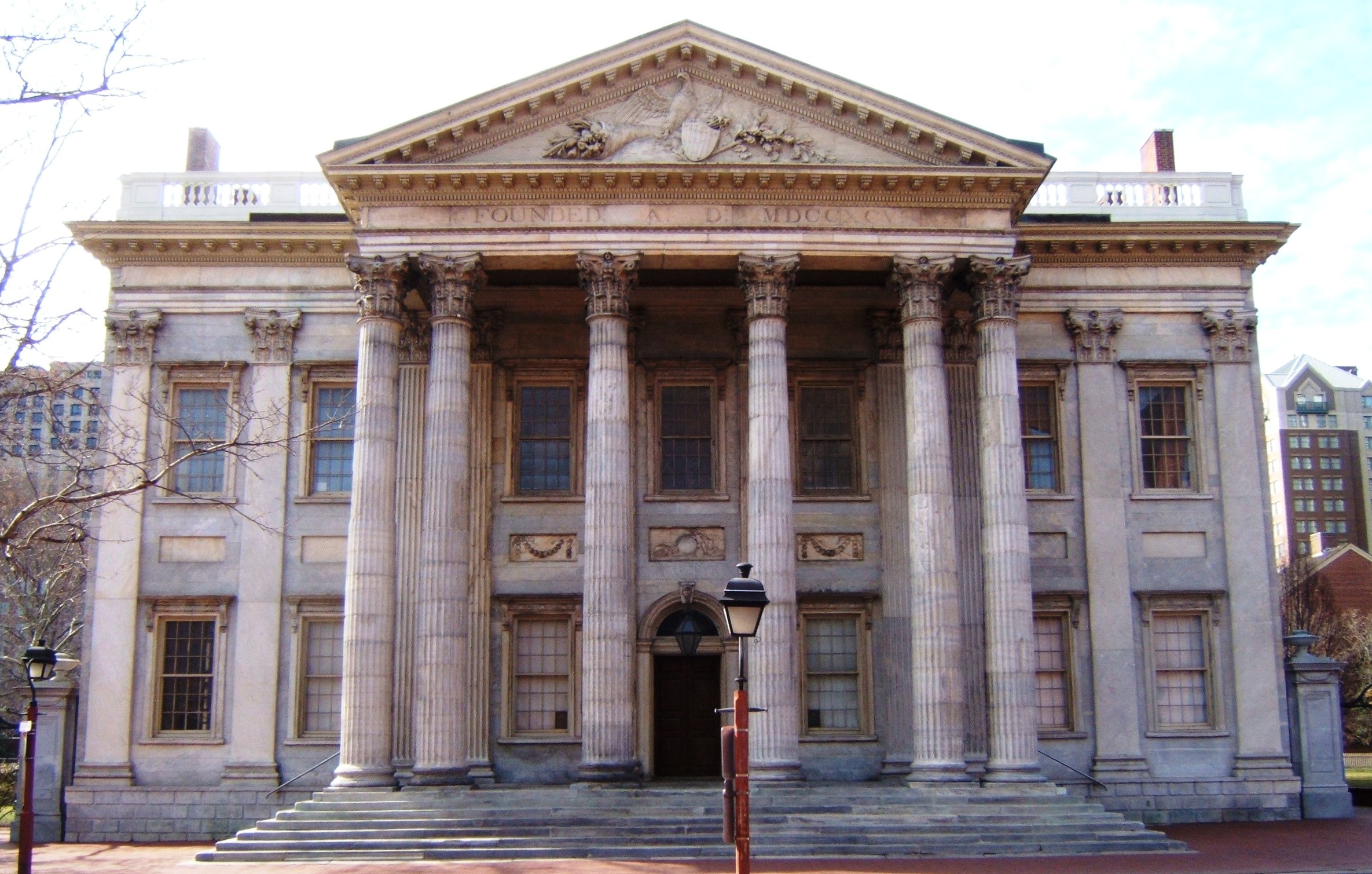
In the United States, banking had begun by the 1780s, along with the country's founding. It has developed into a highly influential and complex system of banking and financial services. Anchored by New York City and Wall Street, it is centered on various financial services, such as private banking, asset management, and deposit security.
The beginnings of the banking industry can be traced to 1780 when the Bank of Pennsylvania was founded to fund the American Revolutionary War. After merchants in the Thirteen Colonies needed a currency as a medium of exchange, the Bank of North America was opened to facilitate more advanced financial transactions.
, the largest banks in the United States were JPMorgan Chase, Bank of America, Wells Fargo, Citigroup, and Goldman Sachs. , there were 4,587 FDIC insured commercial banks and savings institutions in the U.S.
History
Investment banking began in the 1860s with the establishment of Jay Cooke & Company, one of the first selling agents for government bonds. In 1863, the National Bank Act was passed to create a national currency and a federal banking system, and to make public loans. But at that time not all parts of the country had become states. In Oklahoma Territory, which did not become a state until 1907, Muskogee mayor H.B. Spaulding resigned in 1902 from his position as vice-president of the Territorial Trust and Surety Company, after his Spaulding Mercantile Company was given a charter to found a private bank. Similarly in 1903 several more private banks were founded. One contemporary banker from Oklahoma defending the vitality of these private non-US banks did note that a small number of bank failures had resulted from a "dip in deposits due to partial crop failure".
In 1913 the Federal Reserve System was established and began executing monetary policy. The Great Depression led to the separation between investment and commercial banking known as the "Glass-Steagall Act", but the Act was repealed in 1999, leading to the 2008 financial crisis.
Regulatory agencies
Main article: Bank regulation in the United States

]] While most countries have only one bank regulator, in the U.S., banking is regulated at both the federal and state levels in an arrangement known as a dual banking system. Depending on its type of charter and organizational structure, a banking organization may be subject to numerous federal and state banking regulations. Unlike Switzerland and the United Kingdom (where regulatory authority over the banking, securities and insurance industries is combined into one single financial service agency), the U.S. maintains separate securities, commodities, and insurance regulatory agencies—separate from the bank regulatory agencies—at the federal and state levels. U.S. banking regulations address privacy, disclosure, fraud prevention, anti-money laundering, anti-terrorism, anti-usury lending, and the promotion of lending to lower-income populations. Some individual cities also enact their own financial regulation laws (for example, defining what constitutes usurious lending).
Federal Reserve System
Main article: Federal Reserve
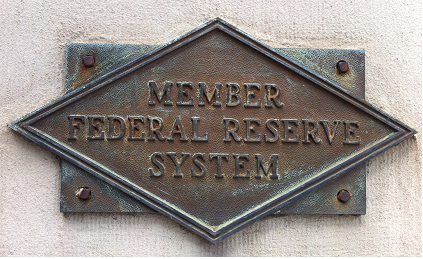
The central banking system of the United States, called the Federal Reserve System, was created in 1913 by the enactment of the Federal Reserve Act, largely in response to a series of financial panics, particularly a severe panic in 1907. Over time, the roles and responsibilities of the Federal Reserve System have expanded and its structure has evolved. Events such as the Great Depression were major factors leading to changes in the system. Its duties today, according to official Federal Reserve documentation, are to conduct the nation's monetary policy, supervise and regulate banking institutions, maintain the stability of the financial system and provide financial services to depository institutions, the U.S. government, and foreign official institutions.
Federal Deposit Insurance Corporation
Main article: Federal Deposit Insurance Corporation}}The Federal Deposit Insurance Corporation (FDIC) is a [:Government-owned corporation#United States, [United States government corporation]] created by the [[Glass–Steagall Act]] of 1933. It provides [[deposit insurance]], which guarantees the safety of deposits in member banks, up to $250,000 per [deposit account, [depositor]] per bank. {{As of, 2010, 11, 18
Office of the Comptroller of the Currency
Main article: Office of the Comptroller of the Currency
The Office of the Comptroller of the Currency (OCC) is a U.S. federal agency established by the National Currency Act of 1863 and serves to charter, regulate, and supervise all national banks and the federal branches and agencies of foreign banks in the United States. The current comptroller of the currency is Rodney E. Hood, who took office on February 10, 2025.
Office of Thrift Supervision
Main article: Office of Thrift Supervision
The Office of Thrift Supervision is a U.S. federal agency under the Department of the Treasury. It was created in 1989 as a renamed version of another federal agency (that was faulted for its role in the Savings and loan crisis). Like other U.S. federal bank regulators, it is paid by the banks it regulates. On July 21, 2011, the Office of Thrift Supervision became part of the Office of the Comptroller of the Currency.
Consumer Financial Protection Bureau
Main article: Consumer Financial Protection Bureau
Bank classification
There are various classifications and charters that a bank can obtain in the United States. Depending on their classification, they may be overseen by the Federal Reserve and supervised by either the FDIC or OCC.
National bank
Main article: National bank (United States)
A national bank is a bank that is nationally or federally chartered and is allowed to operate throughout the country in any state. An advantage of holding a National Bank Act charter is that a national bank is not subject to state usury laws intended to prevent predatory lending. (However, see also Cuomo v. Clearing House Association, L. L. C., stating that federal banking regulations do not preempt the ability of states to enforce their own fair-lending laws.) There is currently no federal cap on rates. The federal government only requires that whatever rates, fees, or terms are set by issuers be disclosed to the consumer in accordance with the Truth in Lending Act. A national bank must have "National" or "N.A." in its corporate name.
State bank
Main article: State bank (United States)
A state bank is a bank that is state chartered, meaning that it has been formed under the laws of a specific state government and not the federal government. Although historically state banks could only operate within the state where it was chartered, this distinction slowly eroded. In 2010, this distinction was eliminated with the passage of the Dodd-Frank Act. Now state chartered banks may operate branches in any other state. A state chartered bank cannot have "National" or "Federal" in its name.
State non-member bank
These are the similar to state chartered banks but are not members of the federal reserve. They are still overseen by the FDIC.
Federal savings association
Main article: Federal savings association
Federal savings associations (FSAs), including federal savings banks (FSBs), are chartered under the Homeowners Refinancing Act of 1933. Although originally focused on residential mortgage lending, they have expanded their business across the range of banking activities. They operate under a distinct regulatory framework from national banks that allows them, for example, to invest directly in real estate development companies. FSAs were originally overseen by the Office of Thrift Supervision, but the Dodd–Frank Act transferred most regulatory jurisdiction to the Office of the Comptroller of the Currency.
State savings association
This is similar to a federal savings association but is registered under state law. They are overseen by the FDIC.
FDIC charter class table
| Code | Description of class of bank |
|---|---|
| N | Commercial bank, national (federal) charter and Fed member, supervised by the Office of the Comptroller of the Currency (OCC) |
| SM | Commercial or savings bank, state charter and Fed member, supervised by the Federal Reserve (FRB) |
| NM | Commercial bank, state charter and Fed nonmember, supervised by the FDIC or OCC |
| SB | Savings banks, state charter, supervised by the FDIC |
| SA | As of July 21, 2011, FDIC supervised state chartered thrifts and OCC supervised federally chartered thrifts. Before that date, state or federally chartered savings associations supervised by the Office of Thrift Supervision (OTS). |
| OI | Insured U.S. branch of a foreign chartered institution (IBA) |
Bank mergers and closures
Bank mergers can happen for many reasons in normal business: for example, to create a single larger bank in which operations of both banks can be streamlined; to acquire another bank's brands; or due to regulators closing the institution due to unsafe and unsound business practices or inadequate capitalization and liquidity. Banks may not go bankrupt in the United States. As of October 2008, depositor accounts are insured by the FDIC up to $250,000 per individual per bank. Banks that are in danger of failing are either taken over by the FDIC, or administered temporarily, then sold or merged with other banks. The FDIC maintains a list of banks showing institutions seized by regulators and the assuming institutions.
Banking privacy
In the United States, banking privacy and information security is not protected through a singular law nor is it an unalienable right. The regulation of banking privacy is typically undertaken by a sector-by-sector basis. The most prominent federal law governing banking privacy in the U.S. is the Gramm-Leach-Bliley Act (GLB). This regulates the disclosure, collection, and use of non-public information by banking institutions. Additionally, the Federal Trade Commission (FTC) serves as the primary protector of banking privacy by fining violators of federal and state banking privacy laws. Unlike banking in Switzerland or other European countries, violations of banking privacy are usually a civil offense not a criminal one. However, the Financial Industry Regulatory Authority (FINRA) offers numerous banking privacy provisions within its statutes.
List of banks
Main article: List of largest banks in the United States
According to the FDIC, there were 6,799 FDIC-insured commercial banks in the United States as of February 11, 2014. Every member of the Federal Reserve System is listed along with non-members who are also insured by the FDIC. The five largest banks by assets in 2011 were JPMorgan Chase, Bank of America, Citigroup, Wells Fargo, and Goldman Sachs.
References
References
- "FDIC-Insured Institutions Reported Full-Year 2023 Net Income of $256.9 Billion and Fourth Quarter 2023 Net Income of $38.4 Billion {{!}} FDIC".
- Gordon, John Steele. (October 8, 2008). "A Short Banking History of the United States". Wall Street Journal.
- (2011). "Banking in Oklahoma Before Statehood". University of Oklahoma Press.
- "BankFind Suite".
- Sotto (2014), p. 191
- (September 2003). "National Banks and The Dual Banking System".
- (September 1, 2013). "Financial Services Agency". [[Government of Japan]] [[Financial Services Agency]].
- (August 1, 1988). "Born of a panic: Forming the Federal Reserve System". [[Federal Reserve Bank of Minneapolis]].
- Rothbard, Murray. (2002). "A History of Money and Banking in the United States: The Colonial Era to World War II". Ludwig von Mises Institute.
- Rothbard, Murray. "A History of Money and Banking in the United States: The Colonial Era to World War II".
- Patrick, Sue C.. (1993). "Reform of the Federal Reserve System in the Early 1930s: The Politics of Money and Banking". Garland Press.
- (November 6, 2009). "Mission". Board of Governors of the Federal Reserve System.
- (February 11, 2014). "Institution Directory". FDIC.
- (January 18, 2013). "FDIC: Who is the FDIC?". FDIC.
- "OCC: About the OCC". Department of the Treasury.
- ''Beneficial National Bank v. Anderson'', {{ussc. 539. 1. 2003.
- {{cite court. (2009). [link]({{SCOTUS URL Slip). 08. 08-453
- "SR 11-3: De Novo Interstate Branching by State Member Banks". Federal Reserve.
- "What Are Non-Member Banks?".
- "Customer Information Protection".
- "Protecting Personal Confidential Information".
- Lynch, David J.. (April 19, 2012). "Big Banks: Now Even Too Bigger to Fail". [[Bloomberg Businessweek]].
This article was imported from Wikipedia and is available under the Creative Commons Attribution-ShareAlike 4.0 License. Content has been adapted to SurfDoc format. Original contributors can be found on the article history page.
Ask Mako anything about Banking in the United States — get instant answers, deeper analysis, and related topics.
Research with MakoFree with your Surf account
Create a free account to save articles, ask Mako questions, and organize your research.
Sign up freeThis content may have been generated or modified by AI. CloudSurf Software LLC is not responsible for the accuracy, completeness, or reliability of AI-generated content. Always verify important information from primary sources.
Report