From Surf Wiki (app.surf) — the open knowledge base
Bank failure
Insolvency or illiquidity of a bank
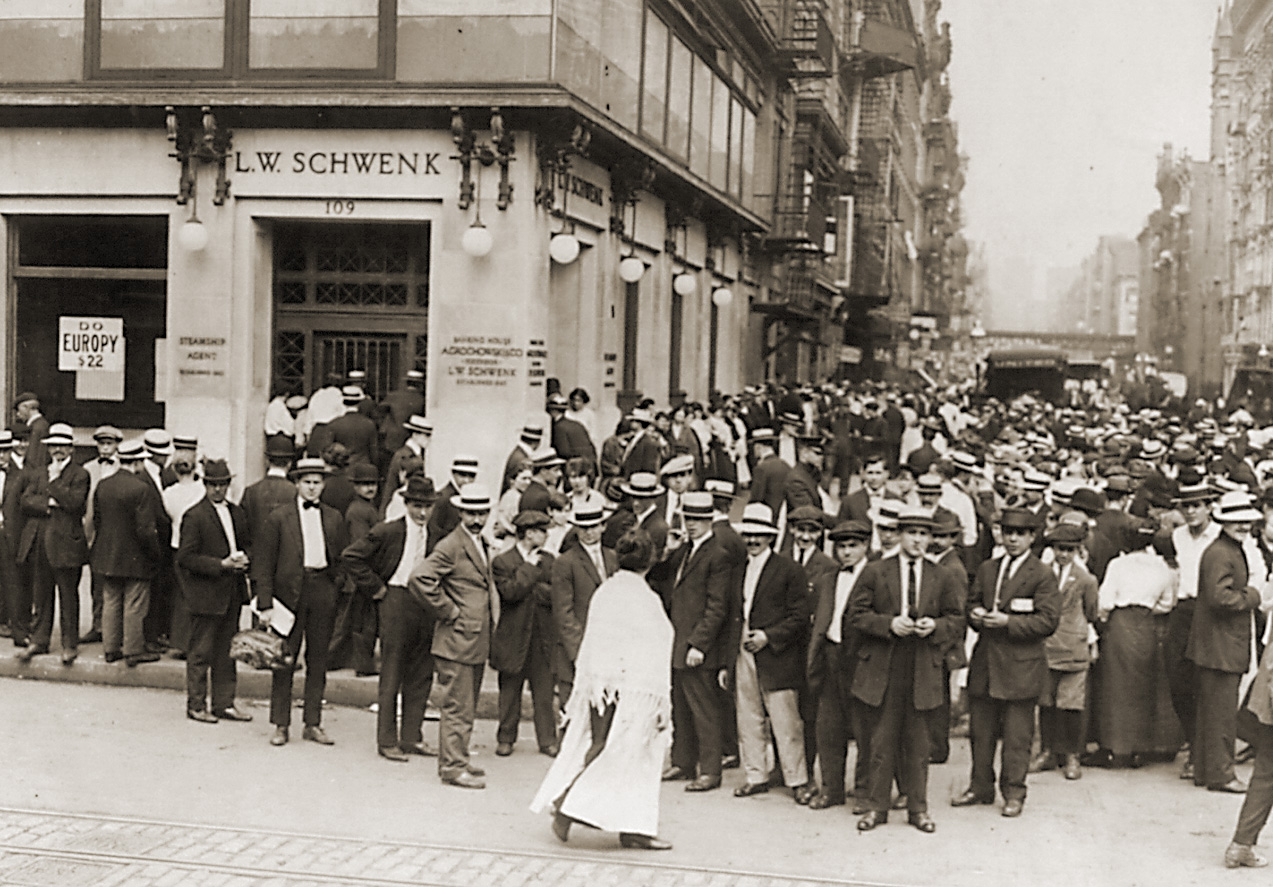
Insolvency or illiquidity of a bank
A bank failure occurs when a bank is unable to meet its obligations to its depositors or other creditors because it has become insolvent or too illiquid to meet its liabilities. Failing banks share commonalities: rising asset losses, deteriorating solvency, and an increasing reliance on expensive noncore funding.
A bank typically fails economically when the market value of its assets falls below the market value of its liabilities. The insolvent bank either borrows from other solvent banks or sells its assets at a lower price than its market value to generate liquid money to pay its depositors on demand. The inability of the solvent banks to lend liquid money to the insolvent bank creates a bank panic among the depositors as more depositors try to take out cash deposits from the bank. As such, the bank is unable to fulfill the demands of all of its depositors on time. A bank may be taken over by the regulating government agency if its shareholders' equity are below the regulatory minimum.
The failure of a bank is generally considered to be of more importance than the failure of other types of business firms because of the interconnectedness and fragility of banking institutions. Research has shown that the market value of customers of the failed banks is adversely affected at the date of the failure announcements. It is often feared that the spill over effects of a failure of one bank can quickly spread throughout the economy and possibly result in the failure of other banks, whether or not those banks were solvent at the time as the marginal depositors try to take out cash deposits from these banks to avoid from suffering losses. Thereby, the spill over effect of bank panic or systemic risk has a multiplier effect on all banks and financial institutions leading to a greater effect of bank failure in the economy. As a result, banking institutions are typically subjected to rigorous regulation, and bank failures are of major public policy concern in countries across the world.
Notable acquisitions of failed banks
The following table lists significant acquisitions of failed banks, illustrating the scale and impact of major bank failures. It does not include partial purchases by governments to prevent bank or banking system failures, such as government intervention during the subprime mortgage crisis:
| Announcement date | Target | Acquirer | Transaction value | |
|---|---|---|---|---|
| (US$ billion) | Type | |||
| 1999-11-29 | United Kingdom National Westminster Bank Plc | Scotland Royal Bank of Scotland | 42.5 | |
| 2003-10-27 | United States FleetBoston Financial | United States Bank of America | 47 | |
| 2004-01-15 | United States Bank One Corporation | United States JPMorgan Chase | 58 | |
| 2006-01-01 | United States MBNA | United States Bank of America | 34.2 | |
| 2007-05-20 | Italy Capitalia | Italy UniCredit | 29.47 | |
| 2007-09-28 | United States NetBank | Netherlands ING Group | 0.014 | |
| 2008-02-22 | United Kingdom Northern Rock | United Kingdom Government of the United Kingdom | 41.213 | |
| 2008-04-01 | United States Bear Stearns | United States JPMorgan | 2.2 | |
| 2008-07-01 | United States Countrywide Financial | United States Bank of America | 4 | |
| 2008-07-10 | Denmark Roskilde Bank | Denmark Nationalbanken (Centralbank of Denmark) | 15 | |
| 2008-07-14 | United Kingdom Alliance & Leicester | Spain Santander | 1.93 | |
| 2008-08-31 | Germany Dresdner Kleinwort | Germany Commerzbank | 10.812 | |
| 2008-09-07 | United States Fannie Mae and Freddie Mac | United States Federal Housing Finance Agency | 5,000 | Federal conservatorship with expected return to independent management |
| 2008-09-14 | United States Merrill Lynch | United States Bank of America | 44 | |
| 2008-09-17 | United States Lehman Brothers | United Kingdom Barclays | 1.3 | |
| 2008-09-18 | United Kingdom HBOS | United Kingdom Lloyds TSB | 33.475 | |
| 2008-09-26 | United States Lehman Brothers | Japan Nomura Holdings | 1.3 | |
| 2008-09-26 | United States Washington Mutual | United States JPMorgan | 1.9 | |
| 2008-09-28 | United Kingdom Bradford & Bingley | United Kingdom Government of the United Kingdom Spain Santander | 1.838 | |
| 2008-09-28 | Belgium Luxembourg Netherlands Fortis | France BNP Paribas | 12.356 | |
| 2008-09-29 | United Kingdom Abbey National | United Kingdom Government of the United Kingdom Spain Santander | 2.298 | |
| 2008-09-30 | Belgium Dexia | Belgium France Luxembourg The Governments of Belgium, France and Luxembourg | 7.06 | |
| 2008-10-03 | United States Wachovia | United States Wells Fargo | 15 | |
| 2008-10-03 | Netherlands ABN AMRO | Netherlands (Ministry of Finance ) | 23.3 | Breakup, nationalization of some components with return to publicly traded company |
| 2008-10-07 | Iceland Landsbanki | Iceland Icelandic Financial Supervisory Authority | 4.192 | UK assets seized by UK government; bad assets nationalized by Iceland and retail operations reorganized as Landsbankinn |
| 2008-10-08 | Iceland Glitnir | Iceland Icelandic Financial Supervisory Authority | 3.254 | |
| 2008-10-09 | Iceland Kaupthing Bank | Iceland Icelandic Financial Supervisory Authority | 1.257 | |
| 2008-10-13 | United Kingdom Lloyds Banking Group | United Kingdom Government of the United Kingdom | 26.045 | |
| 2008-10-13 | Scotland Royal Bank of Scotland Group | United Kingdom Government of the United Kingdom | 30.641 | |
| 2008-10-14 | United States Bank of America | United States United States Federal Government | 45 | |
| 2008-10-14 | United States Bank of New York Mellon | United States United States Federal Government | 3 | |
| 2008-10-14 | United States Goldman Sachs | United States United States Federal Government | 10 | |
| 2008-10-14 | United States JP Morgan | United States United States Federal Government | 25 | |
| 2008-10-14 | United States Morgan Stanley | United States United States Federal Government | 10 | |
| 2008-10-14 | United States State Street | United States United States Federal Government | 2 | |
| 2008-10-14 | United States Wells Fargo | United States United States Federal Government | 25 | |
| 2009-02-11 | Republic of Ireland Allied Irish Bank | Republic of Ireland Government of the Republic of Ireland | 3.861 | |
| 2009-02-11 | Republic of Ireland Anglo Irish Bank | Republic of Ireland Government of the Republic of Ireland | 13.57 | |
| 2009-02-11 | Republic of Ireland Bank of Ireland | Republic of Ireland Government of the Republic of Ireland | 3.861 | |
| 2009-03-19 | United States IndyMac | United States OneWest Bank | unknown | |
| 2012-03-13 | Greece Alpha Bank | Greece Government of Greece | 2.096 | |
| 2012-03-13 | Greece Eurobank | Greece Government of Greece | 4.633 | |
| 2012-03-13 | Greece National Bank of Greece | Greece Government of Greece | 7.612 | |
| 2012-03-13 | Greece Piraeus Bank | Greece Government of Greece | 5.516 | |
| 2012-03-25 | Cyprus Laiki Bank | Cyprus Bank of Cyprus | 10.812 | |
| 2012-05-25 | Spain Bankia | Spain Government of Spain | 20.962 | |
| 2012-06-07 | Portugal Caixa Geral de Depositos | Portugal Government of Portugal | 1.78 | |
| 2012-06-07 | Portugal Millennium BCP | Portugal Government of Portugal | 3.3 |
Bank failures in the U.S.
In the U.S., deposits in savings and checking accounts are backed by the FDIC. As of 1933, each account owner is insured up to $250,000 in the event of a bank failure. When a bank fails, in addition to insuring the deposits, the FDIC acts as the receiver of the failed bank, taking control of the bank's assets and deciding how to settle its debts. The number of bank failures has been tracked and published by the FDIC since 1934, and has decreased after a peak in 2010 due to the 2008 financial crisis.
Since the year 2000, over 500 banks have failed. The 2010s saw the most bank failures in recent memory, with 367 banks collapsing over that decade. However, while the 2010s saw the most banks fail, it wasn't the worst decade in terms of the value of the banks going under. The 2000s saw 192 banks go under with $533 billion in assets ($749 billion in 2023 dollars) compared to the $273 billion ($354 billion) lost in the 2010s.
No advance notice is given to the public when a bank fails. Under ideal circumstances, a bank failure can occur without customers losing access to their funds at any point. For example, in the 2008 failure of Washington Mutual the FDIC was able to broker a deal in which JP Morgan Chase bought the assets of Washington Mutual for $1.9 billion. Existing customers were immediately turned into JP Morgan Chase customers, without disruption in their ability to use their ATM cards or do banking at branches. Such policies are designed to discourage bank runs that might cause economic damage on a wider scale.
Global failure
The failure of a bank is relevant not only to the country in which it is headquartered, but for all other nations with which it conducts business. This dynamic was highlighted during the 2008 financial crisis, when the failures of major bulge bracket investment banks affected local economies globally. This interconnectedness was manifested not on a high level, with respect to deals negotiated between major companies from different parts of the world, but also to the global nature of any one company's makeup. Outsourcing is a key example of this makeup; as major banks such as Lehman Brothers and Bear Stearns failed, the employees from countries other than the United States suffered in turn. A 2015 analysis by the Bank of England found greater interconnectedness between banks has led to a greater transmission of stresses during a time of recession.
References
References
- "When a Bank Fails – Facts for Depositors, Creditors, and Borrowers". [[Federal Deposit Insurance Corporation]].
- Correia, Sergio. (2025). "Failing Banks". The Quarterly Journal of Economics.
- (August 26, 2002). "The Value of Banking Relationships During a Financial Crisis: Evidence from Failures of Japanese Banks".
- (Spring 1996). "Bank Failures, Systemic Risk, and Bank Regulation". [[The Cato Institute]].
- "RBS launches $43B bid for NatWest – Nov. 29, 1999".
- (October 27, 2003). "Bank of America to acquire FleetBoston for $47B – Oct. 27, 2003". [[CNN]].
- (January 15, 2004). "J.P. Morgan to buy Bank One for $58 billion – Jan. 15, 2004". [[CNN]].
- (January 1, 2006). "Bank Of America Acquires MBNA". [[CBS News]].
- (May 20, 2007). "UniCredit agrees to buy Capitalia in $29 bln deal". Reuters.
- Wilchins, Dan. (September 28, 2007). "ING Bank to acquire NetBank deposits". Reuters.
- Schwartz, Nelson D.. (2008-10-03). "Dutch government nationalizes Fortis' operations in the Netherlands". The New York Times.
- (2015-05-22). "Het einde voor ABN Amro als staatsbank is in zicht".
- (March 20, 2009). "OneWest completes acquisition of Indymac Assets". Reuters.
- "Deposit Insurance FAQs". [[Federal Deposit Insurance Corporation]].
- "FDIC {{!}} Failed Bank List". [[Federal Deposit Insurance Corporation]].
- Laycock, Richard. (May 11, 2023). "List of bank failures: 2000 to 2023 {{!}} Finder".
- (September 26, 2008). "JPMorgan buys WaMu". [[CNN]].
- (September 25, 2008). "OTS 08-046 – Washington Mutual Acquired by JPMorgan Chase". [[Office of Thrift Supervision]].
- (2015). "Banking sector interconnectedness: what is it, how can we measure it and why does it matter?".
This article was imported from Wikipedia and is available under the Creative Commons Attribution-ShareAlike 4.0 License. Content has been adapted to SurfDoc format. Original contributors can be found on the article history page.
Ask Mako anything about Bank failure — get instant answers, deeper analysis, and related topics.
Research with MakoFree with your Surf account
Create a free account to save articles, ask Mako questions, and organize your research.
Sign up freeThis content may have been generated or modified by AI. CloudSurf Software LLC is not responsible for the accuracy, completeness, or reliability of AI-generated content. Always verify important information from primary sources.
Report