From Surf Wiki (app.surf) — the open knowledge base
Banja Luka
City in Republika Srpska, Bosnia and Herzegovina

City in Republika Srpska, Bosnia and Herzegovina
| Field | Value |
|---|---|
| name | Banja Luka |
| official_name | Grad Banja Luka |
| Град Бања Лука | |
| City of Banja Luka | |
| native_name | Бања Лука |
| settlement_type | City |
| image_skyline | {{multiple image |
| border | infobox |
| perrow | 1/2/2/1 |
| total_width | 260 |
| align | center |
| caption_align | center |
| image1 | NKD115 Saborna crkva Hrista spasitelja Banja Luka RS BiH.jpg |
| caption1 | Banja Luka centre with Cathedral of Christ the Saviour |
| image2 | Ферхад-пашина (Ферхадија) џамијa 2.jpg |
| caption2 | Ferhat Pasha Mosque |
| image3 | Palata Republike Banja Luka.jpg |
| caption3 | Palace of the Republic |
| image4 | NKD 006 Banova palata.jpg |
| caption4 | Banski dvor |
| image5 | Бањ Брдо споменик 1.jpg |
| caption5 | Banj brdo |
| image6 | NKD136 Tvrđava Kastel Banja Luka.jpg |
| caption6 | Kastel Fortress |
| image_flag | Flag of Banja Luka, Bosnia and Herzegovina.svg |
| image_shield | Veliki grb Banja Luke.svg |
| mapframe | yes |
| image_map | Banja Luka municipality.svg |
| map_caption | Location within Republika Srpska / Bosnia and Herzegovina |
| pushpin_map_caption | Location within Bosnia and Herzegovina##Location within Europe |
| pushpin_relief | 1 |
| pushpin_map | Bosnia and Herzegovina#Europe |
| coordinates | |
| subdivision_type | Country |
| subdivision_name | Bosnia and Herzegovina |
| subdivision_type1 | Entity |
| subdivision_name1 | Republika Srpska |
| subdivision_type2 | Geographical region |
| subdivision_name2 | Bosanska Krajina |
| governing_body | City Assembly of Banja Luka |
| leader_title | Mayor |
| leader_name | Draško Stanivuković |
| leader_party | PDP |
| area_total_km2 | 1,238.91 |
| elevation_m | 163 |
| population_footnotes | |
| population_urban | 138,963 |
| population_total | 185,042 |
| postal_code_type | Postal code |
| postal_code | 78000 |
| area_code | +387 51 |
| website | |
| timezone | CET |
| utc_offset | +1 |
| timezone_DST | CEST |
| utc_offset_DST | +2 |
Banja Luka
Град Бања Лука City of Banja Luka
Banja Luka (Бања Лука, ) or Banjaluka (Бањалука, ) is the second largest city in Bosnia and Herzegovina, and the most populous in Republika Srpska. It is Republika Srpska‘s main economic, political, and administrative center. Banja Luka is the traditional centre of the densely forested Bosanska Krajina region of northwestern Bosnia & Herzegovina. , the city proper has a population of 138,963, while its administrative area comprises a total of 185,042 inhabitants.
The city is home to the University of Banja Luka and the University Clinical Center of the Republika Srpska, as well as numerous entities and state institutions for the Republika Srpska and Bosnia and Herzegovina, respectively. The city is located on the Vrbas river. Banja Luka was designated a European city of Sport in 2018.
Name
The name Banja Luka was first mentioned in a document dated 6 February 1494 by Ladislaus II of Hungary. The name is interpreted as the 'Ban's meadow', from the words ban (a medieval noble title), and luka ('valley' or 'meadow'). The identity of the ban and the meadow in question remains uncertain, and popular etymology combines the modern words banja ('bath' or 'spa'), or bajna ('marvelous'), and luka ('port'). A different interpretation is suggested by the Hungarian name Lukácsbánya, in English 'Luke's Mine'. In modern usage, the name is pronounced and occasionally written as one word (Banjaluka).
Geography
Overview
Banja Luka covers some 96.2 km2 of land in Bosnia and Herzegovina and is situated on both banks of the Vrbas in the Banja Luka valley, which is characteristically flat within the otherwise hilly region. Banja Luka's centre lies 163 m above sea level.
The source of the Vrbas River is about 90 km to the south at the Vranica mountain. Its tributaries — the Suturlija, the Crkvena, and the Vrbanja — flow into the Vrbas at various points in the city. Numerous springs can be found nearby.
The area around Banja Luka consists mostly of woodland and acre fields, although there are many mountains further from the city, especially south of the city. The most notable of these mountains are Ponir (743 m), Osmača (950 m), Manjača (1,214 m), Čemernica (1,338 m), and Tisovac (1,173 m). These are all part of the Dinaric Alps mountain range.
Settlements
The city of Banja Luka (aside from the city proper) includes the following settlements:
- Agino Selo
- Barlovci
- Bastasi
- Bistrica
- Bočac
- Borkovići
- Bronzani Majdan
- Cerici
- Čokori
- Debeljaci
- Dobrnja
- Dragočaj
- Drakulić
- Dujakovci
- Goleši
- Jagare
- Kmećani
- Kola
- Kola Donja
- Krmine
- Krupa na Vrbasu
- Kuljani
- Lokvari
- Lusići
- Ljubačevo
- Melina
- Motike
- Obrovac
- Pavići
- Pavlovac
- Pervan Donji
- Pervan Gornji
- Piskavica
- Ponir
- Potkozarje
- Prijakovci
- Priječani
- Prnjavor Mali
- Radmanići
- Radosavska
- Ramići
- Rekavice
- Slavićka
- Stratinska
- Stričići
- Subotica
- Šargovac
- Šimići
- Šljivno
- Verići
- Vilusi
- Zalužani
- Zelenci
Climate
Banja Luka has a moderate humid subtropical climate with mild winters, infrequent frosts, and warm summers. The warmest month of the year is July, with an average temperature of 22.5 C. The coldest month of the year is January, when temperatures average around 1.3 C.
The annual precipitation for the city is about 1047.5 mm. Banja Luka has an average of 104 rainy days a year. Due to the city's relatively high latitude and inland location, it snows in Banja Luka almost every year during the winter period. Strong winds can come from the north and northeast. Sometimes, southern winds bring hot air from the Adriatic sea.
Highest recorded temperature: 41.8 C on 10 August 2017
Lowest recorded temperature: -23.5 C on 15 January 2003
|Jan record high C = 22.3 |Feb record high C = 25.2 |Mar record high C = 29.0 |Apr record high C = 31.8 |May record high C = 35.2 |Jun record high C = 37.9 |Jul record high C = 41.6 |Aug record high C = 41.8 |Sep record high C = 40.2 |Oct record high C = 30.9 |Nov record high C = 29.1 |Dec record high C = 23.2 |year record high C = |Jan record low C = -23.5 |Feb record low C = -21.5 |Mar record low C = -18.2 |Apr record low C = -5.9 |May record low C = -0.4 |Jun record low C = 3.0 |Jul record low C = 6.2 |Aug record low C = 5.6 |Sep record low C = 0.0 |Oct record low C = -6.0 |Nov record low C = -11.0 |Dec record low C = -18.8 |year record low C =
History
Roman times
The history of inhabitation of the area of Banja Luka dates back to ancient times. There is substantial evidence of Roman presence in the region during the first few centuries A.D., including the "Kastel" () fort in the centre of the city. The area comprising Banja Luka was entirely in the kingdom of Illyria and then a part of the Roman province of Illyricum, which was split into the provinces of Pannonia and Dalmatia, of which Castra became a part. Ancient Illyrian maps refer to the settlement in Banja Luka's present-day location as Ad Ladios, a settlement located on the river Vrbas.
Middle Ages
Slavs settled in the Balkans in the 6th century. Mediaeval fortresses in the vicinity of Banja Luka include Vrbas (1224), Župa Zemljanik (1287), Kotor Varoš (1323), Zvečaj (1404), and Bočac (1446). In one document written by King Vladislav II on 6 February 1494, Juraj Mikulasić was mentioned as castellan of Banja Luka. Below the town was a smaller settlement with one Catholic monastery.HAMDIJA KREŠEVLJAKOVIĆ STARI BOSANSKI GRADOVI (VIEUX BOURGS BOSNIAQUES) https://www.fmks.gov.ba/download/zzs/1953/1-1953.pdf #page=26
Ottoman rule
.jpg)
Banja Luka fell to the Ottomans in 1527. It became the seat of the Sanjak of Bosnia sometime before 1554, until 1580 when the Bosnia Eyalet was established. Bosnian beylerbeys were seated in Banja Luka until 1639. Ferhad Pasha Sokolović, a relative of Grand Vizier Mehmed-pasha Sokolović, had, upon his return to Bosnia in 1574, begun the building of over 200 buildings ranging from artisan and sales shops to wheat warehouses, baths, and mosques. Among the more important commissions were the Ferhadija and Arnaudija mosques, during whose construction plumbing infrastructure was laid out, which served the surrounding residential areas. This stimulated the economic and urban development of Banja Luka, which soon became one of the leading commercial and political centres in Bosnia. It was also the central sanjak in the Bosnia Eyalet. In 1688, the city was burned down by the Austrian army, but it quickly recovered. Later periodic intrusions by the Austrian army stimulated military developments in Banja Luka, which made it into a strategic military centre. Orthodox churches and monasteries near Banja Luka were built in the 19th century.
In the 19th century, Sephardic Jews and Trappists migrated to the city and contributed to the early industrialization of the region by building mills, breweries, brick factories, textile factories, and other important structures. The Trappist monastery built in the 19th century lent its name to the neighbourhood of Trappisti and has left a significant legacy in the area through its Trappist cheese and its beer production. In 1835 and 1836, during Ottoman administration, numerous people from Banja Luka emigrated to Lešnica, Lipnica, and Loznica, the villages around Loznica, and to Šabac.
The Ferhadija Mosque, built in 1579, was demolished in 1993 during the Bosnian War. It was rebuilt in 2016.
Austro-Hungarian rule
Despite its leading position in the region, Banja Luka as a city was not modernised until the Austro-Hungarian occupation in the late 19th century. Railroads, schools, factories, and infrastructure were constructed and developed, which turned Banja Luka into a modern city.
Yugoslavia

After World War I, the town became the capital of the Vrbas Banovina, a province of the Kingdom of Yugoslavia. The provincial capital owed its rapid progress to the first Ban Svetislav Milosavljević. During that time, the Banski dvor and its twin sister, the Administration building, the Serbian Orthodox Church of the Holy Trinity, a theatre and a museum were built, the Grammar School was renovated, the Teachers College enlarged, a city bridge was constructed, and the park renovated. 125 elementary schools were functioning in Banja Luka in 1930. The revolutionary ideas of the time were incubated by the "Pelagić" association and the Students' Club. Banja Luka naturally became the organisational centre of anti-fascist work in the region.
World War II
Main article: Genocide of Serbs in the Independent State of Croatia
During World War II, Banja Luka was occupied by Axis troops and was included in the Independent State of Croatia, a Nazi puppet-state led by Pavelić's Ustaše. Most of Banja Luka's Serbs and Jews were deported to concentration camps such as Jasenovac and Stara Gradiška. The Jasenovac camp was one of the largest extermination camps in Europe, which was notorious for its high mortality rate and the barbaric practices that occurred in it. On 7 February 1942, Ustaše paramilitaries, led by a Franciscan friar, Miroslav Filipović (aka Tomislav Filipović-Majstorović), killed more than 2,300 Serbs (among them 500 children) in Drakulić, Motike, and Šargovac (a part of the Banja Luka municipality).
The city's Cathedral of Christ the Saviour and Orthodox church of the Holy Trinity were totally demolished by the Ustaše, as was the Church of St. George in Petrićevac. The Bishop of Banja Luka, Platon Jovanović, was arrested by the Ustaše on 5 May 1941 and was tortured and killed afterwards. His body was thrown into the Vrbanja river. The city was liberated by the Yugoslav Partisans on 22 April 1945.
1969 earthquake
Main article: 1969 Banja Luka earthquake
On 26 and 27 October 1969, two devastating earthquakes (6.0 and 6.4 on the Richter scale) damaged many buildings in Banja Luka. Around 20 to 23 people were killed, and over a thousand were injured.NOAA National Geographical Data Center, Significant Earthquake Database states that the 15:36 26 October 1969 earthquake was 6.0 magnitude (intensity 8 Mercalli scale) and killed 14 people and causing $50 million damage, whilst the 08:10 27 October 1969 earthquake was 6.4 magnitude (intensity 9 Mercalli scale) and killed 9 people. The earthquake location was 44.9 Lat 17.3 Long on 26 October, and 44.9 Lat 17.2 Long on 27 October. Both had a focal depth of 33.
Observing our environment from space: new solutions for a new millennium, proceedings of the 21st EARSeL Symposium, Paris, France, 14–16 May 2001, edited by Gérard Bégni, pub Taylor & Francis, 2002, p267 claims that the earthquake in the vicinity of Banja Luka in 1969 had a magnitude of 6.4. (Comparison of other earthquakes mentioned shows that this is 6.4 on the Richter scale.) Chronology of Extreme Weather, by Ken Polsson, claims: "magnitude 6.4 earthquake occurs. 20 killed, 150 seriously injured, and 65,000 left homeless."
Sarajevo Rocked by Two Earthquakes BalkanInsight.com 31 March 2009 , which claims that: "The biggest earthquake in Bosnia and Herzegovina's history took place in 26 and 27 October 1969... That tremor measured 5.4 on the Richter scale and between 7 and 8 on the Mercalli scale." Gymnasium Banja Luka History claims that the 26 October 1969 earthquake had an intensity of 7.5 on the Mercalli intensity scale, whilst the 27 October 1969 earthquake had an intensity of 8.5 on the Mercalli scale. A large building called Titanik in the centre of the town was razed to the ground, and the area was later turned into a central public square. With contributions from all over Yugoslavia, Banja Luka was repaired and rebuilt. During this period, a large Serb population moved to the city from the surrounding villages and from more distant areas in Herzegovina.
Bosnian War
Even though there were no open hostilities between the warring sides in Banja Luka, the city's Bosniak and Croat populations were systematically intimidated, harassed, tortured, their property was seized, and the city was ethnically cleansed.
1994 Banja Luka incident
Main article: Banja Luka incident
On 28 February 1994, an incident occurred in which four Republika Srpska Air Force aircraft, which had violated Bosnia's no-fly zone and bombed a factory, were shot down southwest of Banja Luka by planes from the United States Air Force on behalf of NATO, marking the first active combat action in the alliance's history.
Demographics
Main article: Demographics of Banja Luka

The 2013 census in Bosnia indicated a population of 185,042, overwhelmingly Serbs.
Population
| Population of settlements – Banja Luka municipality |
|---|
| Total |
| Agino Selo |
| Banja Luka |
| Barlovci |
| Bistrica |
| Bočac |
| Borkovići |
| Bronzani Majdan |
| Debeljaci |
| Dragočaj |
| Drakulić |
| Goleši |
| Jagare |
| Kmećani |
| Kola |
| Kola Donja |
| Krmine |
| Krupa na Vrbasu |
| Kuljani |
| Ljubačevo |
| Melina |
| Motike |
| Obrovac |
| Pavići |
| Pavlovac |
| Pervan Donji |
| Piskavica |
| Potkozarje [Ivanjska] |
| Prijakovci |
| Priječani |
| Prnjavor Mali |
| Radosavska |
| Ramići |
| Rekavice |
| Šargovac |
| Slavićka |
| Stričići |
| Verići |
| Zalužani |
Ethnic composition
| Ethnic composition – Banja Luka city |
|---|
| Total |
| Serbs |
| Bosniaks |
| Croats |
| Unaffiliated |
| Jews |
| Others |
| Yugoslavs |
| Ukrainians |
| Montenegrins |
| Unknown |
| Slovenes |
| Roma |
| Macedonians |
| Albanians |
| Ethnic composition – Banja Luka municipality |
|---|
| Total |
| Serbs |
| Bosniaks |
| Croats |
| Unaffiliated |
| Others |
| Yugoslavs |
| Ukrainians |
| Unknown |
| Montenegrins |
| Slovenes |
| Roma |
| Macedonians |
| Albanians |
Government

Banja Luka plays an important role on different levels of Bosnia and Herzegovina's government structures. Banja Luka is the centre of the government for the Municipality of Banja Luka. A number of entity and state institutions are seated in the city. The Government of Republika Srpska and its National Assembly are based in Banja Luka.
The Bosnia and Herzegovina State Agencies based in the city include the Indirect Taxation Authority, the Deposit Insurance Agency, as well as a branch of the Central Bank of Bosnia and Herzegovina (formerly the National Bank of Republika Srpska). Austria, Croatia, France, Germany, Serbia, the United Kingdom, and the United States maintain diplomatic representation through consulates-general in Banja Luka.
As of 2021, the mayor of the city is Draško Stanivuković of the Party of Democratic Progress, who was elected in 2020.
Economy
In 1981, Banja Luka's GDP per capita was 97% of the Yugoslav average.
Although the city itself was not directly affected by the Bosnian war in the early 1990s, its economy was. During this period, Banja Luka fell behind the world in key areas such as technology, with socially owned technology firms such as SOUR Rudi Čajavec collapsing, resulting in a rather stagnant economy. However, in recent years, the financial services sector has gained in importance in the city. In 2002, trading began on the newly established Banja Luka Stock Exchange. The number of companies listed, the trading volume, and the number of investors have increased significantly. A number of big companies, such as Telekom Srpske, Rafinerija ulja Modriča, Banjalučka Pivara, and Vitaminka, are all listed on the exchange and are traded regularly. Investors, apart from those from Slovenia, Croatia, and Serbia, now include a number of investment funds from the EU, and from Norway, the United States, Japan, and China.
Numerous financial services regulators, such as the Republika Srpska Securities Commission and the RS Banking Agency, are headquartered in Banja Luka. This, along with the fact that some of the major banks in Bosnia, the Deposit Insurance Agency, and the value-added tax (VAT) authority are all based in the city, has helped Banja Luka establish itself as a major financial centre in the country.
Economic summary
The following table gives a summary of the total number of registered people employed in legal entities per their core activity (as of 2018):
| Activity | Total | % |
|---|---|---|
| Wholesale and retail trade, repair of motor vehicles and motorcycles | 12,579 | 18% |
| Water supply; sewerage, waste management and remediation activities | 788 | 1% |
| Transportation and storage | 2,747 | 4% |
| Real estate activities | 318 | 0% |
| Public administration and defense; compulsory social security | 9,162 | 13% |
| Professional, scientific and technical activities | 3,900 | 6% |
| Other service activities | 1,968 | 3% |
| Mining and quarrying | 25 | 0% |
| Manufacturing | 8,972 | 13% |
| Information and communication | 3,567 | 5% |
| Human health and social work activities | 5,948 | 9% |
| Financial and insurance activities | 3,212 | 5% |
| Electricity, gas, steam and air conditioning supply | 817 | 1% |
| Education | 5,301 | 8% |
| Construction | 3,241 | 5% |
| Arts, entertainment and recreation | 1,760 | 3% |
| Agriculture, forestry and fishing | 586 | 1% |
| Administrative and support service activities | 1,368 | 2% |
| Accommodation and food services | 3,564 | 5% |
| Total | 69,283 | 100% |
Culture
,_Делибашино_село.jpg)
The Museum of Republika Srpska inherited the Ethnographic Museum established in 1930, and broadened its setting with collections of archeology, history, art history and nature. The Museum of Modern Art of Republika Srpska, also called MSURS, the Museum of Contemporary Art, displays exhibitions of both domestic and worldwide artists.
Banja Luka is home to the National Theatre and National Library, both dating from the first half of the 20th century, and of numerous other theatres. The headquarters of the Archives of Republika Srpska is situated in the building known as Carska kuća or Imperial House, built around 1880. It has been in continuous public use longer than any other structure in Banja Luka.
One of the best-known cultural sites in Banja Luka is the cultural centre of "Banski Dvor" (Halls of the Ban), built in the 1930s as the residence for the Bans of the Vrbas Banovina.
There is a number of Cultural Artistic Associations in the city. The oldest is CAA "Pelagić" (founded 1927), one of the oldest institutions of this kind in Bosnia and Herzegovina.
Sport

Banja Luka has one major football stadium and several indoor sports halls. The local handball, basketball, and football teams all bear the traditional name Borac (fighter). There are sixteen football clubs in the city, with the most notable being Borac Banja Luka, BSK Banja Luka, and Omladinac Banja Luka (both in the First League of the Republika Srpska), FK Naprijed Banja Luka, and FK Vrbas Banja Luka.
FK Borac Banja Luka is one of the most popular football clubs in Republika Srpska. The club has won several major trophies in its history, such as trophies as a champion of the Mitropa Cup, Yugoslav Cup, Premier League of Bosnia and Herzegovina, Bosnia and Herzegovina Football Cup, First League of Republika Srpska, and the Republika Srpska Cup. The club has participated in the UEFA Champions League as well as the UEFA Europa League.
The city has a long tradition of handball. RK Borac Banja Luka was the European champion in 1976, the runner-up in the 1975 European Cup, and the winner of the IHF Cup in 1991.
The local tennis tournament, "Memorijal Trive Vujića", has become professional and has been awarded ATP status in 2001, with the rank of a Challenger. The Banja Luka Challenger takes place in September each year. In 2006, the Davis Cup matches of the Europe/Africa Zone Group III took place in the city. In April 2023, Banja Luka was host to the 2023 Srpska Open tournament, as part of the 2023 ATP Tour.
Since 2015, the city has hosted the Banja Luka Half-marathon.
In 2005 and 2019, the European Championships in rafting were held on the Vrbas river.
Banja Luka was designated a European City of Sport in 2018.
Transport
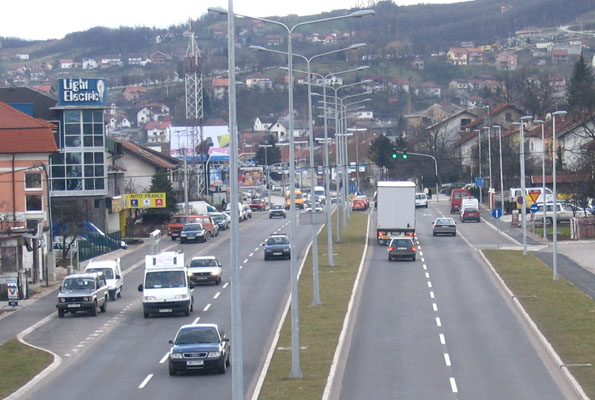
Public transportation within Banja Luka is exclusively operated by the bus services. 23 bus lines stretch across the city, connecting the downtown to the rest of the city and its suburbs. The oldest bus link in the city is line No. 1. Taxis are also readily available. The expressway E-661 (locally known as M-16) leads north to Croatia from Banja Luka by way of Gradiška, near the Bosnian/Croatian border. A wide range of bus services are available to most neighbouring and larger towns in Bosnia and Herzegovina, as well as to regional and European destinations such as Austria, Belgium, Croatia, Germany, France, Italy, Montenegro, the Netherlands, Serbia, Sweden, Switzerland, Hungary, and Slovakia.

Banja Luka is a minor hub of the railway services of Željeznice Republike Srpske, which comprises one half of the railway network of Bosnia and Herzegovina. Services operate to most northern Bosnian towns, and two modern air-conditioned 'Talgo' trains run to Sarajevo every day. However, services are relatively slow and infrequent compared with neighbouring countries.
Banja Luka International Airport (IATA: BNX, ICAO: LQBK) is located 23 km north of Banja Luka. The airport is served by Air Serbia, which operates flights to Belgrade and summer charters to Antalya and Athens, while Ryanair operates flights to Milan Bergamo Airport, Berlin, Brussels, Gothenburg, Stockholm Arlanda Airport, Memmingen, Frankfurt-Hahn Airport, and Vienna. Moreover, there is also Banja Luka Zalužani Airfield, a small airstrip.
Public transport
Banja Luka overwhelmingly relies on a network of buses for its public transport. The following bus lines exist in the city:
- 1 - Mađir – Ortopedija – Nova bolnica
- 3 - Centar (Vodovod) – Vrbanja – Zeleni vir
- 3B - Centar (Vodovod) – Debeljaci
- 6 - Autobuska stanica – Lauš - Saračica
- 7 - Lauš - Paprikovac – Centar – Obilićevo (TO Bema)
- 8 - Autobuska stanica – Podgora
- 9 - Česma – Centar – Desna novoselija
- 9B - Česma – Medeno polje – Centar
- 10 - Autobuska stanica – Obilićevo
- 12 - Centar – Paprikovac (vidik)
- 13 - Lazarevo – Obilićevo
- 13A - Nova bolnica – Centar – Zalužani
- 13B - Novo groblje – Lazarevo (Poslovna škola)
- 13C - Centar – Tunjice – Zalužani
- 13P - Obilićevo (Krfska ulica) – Petrićevac
- 14 - Starčevica – Centar – Starčevica
- 14B - Autobuska stanica – Borik – Starčevica
- 17 - Obilićevo – Nova bolnica
- 17A - Starčevica – Nova bolnica
- 19 - Šargovac – Centar (Vidovdanska)
- 20 - Autobuska stanica – Centar – Paprikovac (Ul. Ranka Šipke)
- 39 - Drakulić (Vrtače) – Centar
- 39A - Drakulić (avion) – Rakovačke bare – Centar
In addition to those, there are 34 suburban lines. A single-use bus ticket costs 2.3 convertible marks, while a day ticket that allows unlimited transfers costs 7.1 marks. Pensioners and citizens older than 65 enjoy free transit. The bus system faces several challenges, including the city government's debt to the private carriers and the vehicles' advanced age.
International relations
Twin towns – Sister cities
Banja Luka is twinned with the following cities:
- SRB Belgrade, Serbia, since 2020
- SRB Sremska Mitrovica, Serbia
- GRE Patras, Greece, since 1995
- RUS Moscow, Russia, since 2003
- GER Kaiserslautern, Germany, since 2003
- UKR Lviv, Ukraine
- SVN Kranj, Slovenia, since 1965
- ITA Campobasso, Italy
- ITA Bari, Italy
- ITA Bitonto, Italy
- ISR Modi'in-Maccabim-Re'ut, Israel, since 2010
- AUT Graz, Austria
- SWE Västerås, Sweden, since 1969
- SRB Zemun, Serbia
- ROU Focșani, Romania, since 2012
Partner cities
- SRB Novi Sad, Serbia, since 2006 Kosovo Mitrovica, Kosovo,
Notable people

- Gorica Aćimović, Serbian-Austrian handballer
- Srđan Babić, Serbian footballer, World U-20 champion
- Marijan Beneš, Yugoslav boxer and poet, European amateur and professional champion, Yugoslav Boxer of the 20th century
- Mladen Bojinović, Serbian handball player, World Championship bronze medalist
- Nikola Ćaćić, Serbian tennis player
- Saša Čađo, Serbian basketball player, Olympic bronze medalist and European champion
- Adem Čejvan, Bosnian actor
- Radenko Dobraš (born 1968), Serbian basketball player
- Nela Eržišnik, Croatian actress and comedian
- Muhamed Filipović, Bosnian academic, philosopher and writer
- Slađana Golić, Serbian basketball player, Olympic and World Championships silver medalist
- Srđan Grahovac, Serbian footballer
- Anton Josipović, Yugoslav boxer, Olympic champion
- Božidar Jović, Serbian handball player
- Ivan Franjo Jukić, Bosnian writer
- Ibrahim Maglajlić, Grand Mufti of Yugoslavia (1930 to 1936)
- Nasiha Kapidžić-Hadžić, Bosnian writer and poet
- Osman Karabegović, Bosnian politician
- Milorad Karalić, Serbian handball player, Olympic champion
- Tomislav Knez, football player, Olympic champion and European Championship silver medalist
- Aleksandar Knežević, Serbian handball player, European Championship bronze medalist
- Petar Kočić, Bosnian Serb writer
- Franjo Komarica, Roman Catholic Bishop of Banja Luka
- Abid Kovačević, retired footballer
- Vladan Kovačević, footballer
- DJ Krmak, Bosnian singer
- Ivan Ljubičić, Croatian tennis player, World No. 3 and Olympic bronze medalist
- Saša Lošić, Bosnian singer and composer
- Darko Maletić, Serbian footballer
- Draženko Mitrović, Serbian athlete, two-time Paralympic silver medalist and European champion
- Ivan Merz, Catholic lay academic; beatified by Pope John Paul II
- Zlatan Muslimović, Bosnian footballer
- Mustafa Nadarević, Bosnian actor
- Romana Panić, Bosnian Serb singer
- Nikola Pejaković, Serbian actor and musician
- Zlatko Saračević, Croatian handball player, Olympic and World champion
- Marija Šestić, Serbian singer
- Velimir Sombolac, Serbian football player and manager, Olympic champion
- Neven Subotić, Serbian footballer
- Ognjen Vranješ, Serbian footballer
- Oto Rebula, athlete
- Srđan Vujmilović, photographer
- Sredoje Zekanović, director of Bokserski klub Slavija Banja Luka, director of Yugoslavia national boxing team
References
References
- "Banja Luka Population 2025".
- (2020). "Spatial Conflicts and Divisions in Post-socialist Cities". [[Springer Verlag]].
- "АСБЛ >> GeFEneral information".
- link. (28 September 2007 , BH Dani, 20 July 2001)
- "World Meteorological Organization Climate Normals for 1991-2020: Banja Luka-14542". [[NOAA.
- "Klimatafel von Banja Luka/Bosnien und Herzegowina". Deutscher Wetterdienst.
- (23 October 2012). "Ad Ladios: a Pleiades place resource".
- Društvo istoričara Bosne i Hercegovine. (1952). "Godišnjak: Annuaire".
- Kolovos, Elias. (2007). "The Ottoman Empire, the Balkans, the Greek lands: toward a social and economic history: studies in honor of John C. Alexander". Isis Press.
- (2018). "Trapisti u Banjoj Luci – Europa u Bosni i Hercegovini". Croatian Institute of History.
- (2020). "Trapistička opatija Marija Zvijezda. Prosvjetno–kulturni svjetionik Banjaluke i Bosanske Krajine (1869–1946)". Bosna Franciscana.
- (1 January 2017). "Privredna oaza banjalučkih trapista (1869/1878–1941.)/Oasis économique de Banja Luka trappiste (1869/78-1941)". Cleuna 2, Muzej I Galerija Gorica–Livno, Livno.
- Jovan Cvijić, Balkansko poluostrvo i južnoslovenske zemlje /Balkan Peninsula and South Slav Countries/ (Belgrade: Zavod za izdavanje udžbenika, 1966), pp. 151-152.
- (30 September 2008). "Urbicide: The Politics of Urban Destruction". Routledge.
- (2016-05-07). "Razed ancient Bosnian mosque re-opens". BBC News.
- Pavlowitch, Stevan K.. (2008). "Hitler's New Disorder: The Second World War in Yugoslavia". Columbia University Press.
- Levy, Michele Frucht. (2009). ""The Last Bullet for the Last Serb": The Ustaša Genocide against Serbs: 1941–1945". Nationalities Papers.
- (29 August 2011). "Radio-Televizija Republike Srpske". Rtrs.tv.
- "Svestenomucenik Platon".
- Milojević, Milkica. (27 October 2016). "UKLETO IME Kako je potonuo banjalučki TITANIK".
- Banjaluka.com. (2016-10-28). "Kako je potonuo banjalučki Titanik (Foto) (Video)".
- "War Crimes in Bosnia-Hercegovina: U.N. Cease-Fire Won't Help Banja Luka".
- "First NATO Military Action".
- "Popis 2013.".
- United Nations High Commissioner for Refugees. "War Crimes in Bosnia-Hercegovina: U.N. Cease-Fire Won't Help Banja Luka". UNHCR.
- "OSCE Regional Centre Banja Luka: Fact Sheet".
- "Popis 2013 u BiH".
- "nacion po mjesnim.xls".
- (28 January 2015). "About National Assembly {{!}} NSRS".
- "Konzulati".
- (2020-11-16). "Izbori u Bosni - kad ne dobiješ glas ni od sebe".
- (1984). "Atlas svijeta: Novi pogled na Zemlju". Sveučilišna naklada Liber.
- (25 December 2019). "Cities and Municipalities of Republika Srpska". Republika Srspka Institute of Statistics.
- "Музеј Републике Српске – Бања Лука".
- "Музеј РС".
- "O muzeju".
- "Историјат".
- www.meliorsoft.com. "Biblioteka u Banjoj Luci".
- "Историјски преглед".
- (2019-07-26). "Novo ruho za simbol Banjaluke".
- (July 2017). "Banski Dvor - Nekad banov dom, danas dom kulture grada Banja Luka".
- (13 August 2012). "RKUD "Pelagić", Banja Luka". Rkud-pelagic.org.
- "Sportske organizacije i klubovi u Banjaluci - Banjalukasport.com".
- "EVROPA NAKON 18 GODINA!".
- "FINALE KUPA I PRVI EVROPSKI NASTUPI".
- (30 October 2022). "Serbia Open finds replacement location for 2023, Novak Djokovic intends to play". .tennisworldusa.org.
- "Vodič za učesnike – Participants Guide {{!}} Polumaraton - polumaraton".
- "BANJALUKA IS READY FOR THE EUROPEAN RAFTING CHAMPIONSHIP 2015 {{!}} Rafting klub Kanjon – Banja Luka".
- Srdić, Sanja. (17 May 2009). "Banjaluka svjetski rafting centar".
- (September 2017). "European Cities of Sport".
- "Red vožnje gradskog prevoza".
- "Republika Srpska rail investment plan". Railway Gazette.
- (9 April 2024). "Stanivuković najavio besplatan prevoz za sve penzionere u Banjaluci, evo kako da se prijavite (VIDEO)".
- (7 November 2023). "Grad duguje dva miliona KM banjalučkim prevoznicima".
- (19 January 2024). "Banjalučani se voze autobusima starim 16 godina: Ne zna se ni koliko ih ima klimu".
- link. Administrative Office of the City of Banja Luka
- В, А.. "Београд се побратимио са Бањалуком".
- "e-patras.gr - Διεθνείς Σχέσεις".
- "Међународна сарадња".
- Srna. (2014-04-22). "Sporazum o saradnji Banjaluke i Kosovske Mitrovice".
- "Bokserski šampioni izabrali najuspešnije (AUDIO)".
- (27 July 2014). "Istaknute istorijske ličnosti Banjaluke (XVI): Sredoje Zekanović".
This article was imported from Wikipedia and is available under the Creative Commons Attribution-ShareAlike 4.0 License. Content has been adapted to SurfDoc format. Original contributors can be found on the article history page.
Ask Mako anything about Banja Luka — get instant answers, deeper analysis, and related topics.
Research with MakoFree with your Surf account
Create a free account to save articles, ask Mako questions, and organize your research.
Sign up freeThis content may have been generated or modified by AI. CloudSurf Software LLC is not responsible for the accuracy, completeness, or reliability of AI-generated content. Always verify important information from primary sources.
Report