From Surf Wiki (app.surf) — the open knowledge base
Bangladeshis
People of Bangladesh

People of Bangladesh
| Field | Value | ||||
|---|---|---|---|---|---|
| group | Bangladeshis | ||||
| native_name | বাংলাদেশী | ||||
| native_name_lang | bn | ||||
| flag | Flag of Bangladesh.svg | ||||
| population | 190 million | ||||
| popplace | Bangladesh 174,000,000 | ||||
| region1 | Diaspora: | ||||
| pop1 | 13 million+ | ||||
| region2 | India | ||||
| pop2 | 2,300,000–3,700,000 (2011 census) | ||||
| region3 | Pakistan | ||||
| pop3 | 3,000,000 | ||||
| ref3 | |||||
| region4 | Saudi Arabia | ||||
| pop4 | 2,116,192 | ||||
| ref4 | |||||
| region5 | United Arab Emirates | ||||
| pop5 | 1,090,000 | ||||
| ref5 | |||||
| region6 | Malaysia | ||||
| pop6 | 898,970 | ||||
| ref6 | |||||
| region7 | Oman | ||||
| pop7 | 680,242 | ||||
| ref7 | |||||
| region8 | United Kingdom | ||||
| pop8 | 652,535~1,000,000 | ||||
| ref8 | |||||
| region9 | Qatar | ||||
| pop9 | 400,000 | ||||
| ref9 | |||||
| region10 | Italy | ||||
| pop10 | 400,000 | ||||
| ref10 | |||||
| region11 | Kuwait | ||||
| pop11 | 350,000 | ||||
| ref11 | |||||
| region12 | United States | ||||
| pop12 | 304,245 | ||||
| ref12 | |||||
| region13 | South Africa | ||||
| pop13 | 300,000 | ||||
| ref13 | |||||
| region14 | Bahrain | ||||
| pop14 | 180,000 | ||||
| ref14 | |||||
| region15 | Lebanon | ||||
| pop15 | 160,000 | ||||
| ref15 | |||||
| region16 | Jordan | ||||
| pop16 | 150,000 | ||||
| ref16 | |||||
| region17 | Singapore | ||||
| pop17 | 150,000 | ||||
| ref17 | |||||
| region18 | Maldives | ||||
| pop18 | 150,000 | ||||
| ref18 | |||||
| region19 | Greece | ||||
| pop19 | 80,000 | ||||
| ref19 | |||||
| region20 | Canada | ||||
| pop20 | 75,425 | ||||
| ref20 | |||||
| region21 | Portugal | ||||
| pop21 | 70,000 (2024) | ||||
| ref21 | |||||
| region22 | Australia | ||||
| pop22 | 51,491 | ||||
| ref22 | |||||
| region23 | Spain | ||||
| pop23 | 50,000 | ||||
| ref23 | |||||
| region24 | Japan | ||||
| pop24 | 40,045 | ||||
| ref24 | {{Cite web | url=https://www.moj.go.jp/isa/publications/press/13_00057.html | title= | ||
| 令和7年6月末現在における在留外国人数について | access-date | 31 October 2025 | archive-date=16 October 2021 | archive-url=https://web.archive.org/web/20211016135802/https://www.moj.go.jp/isa/content/001415139.pdf | url-status=live}} |
| region25 | Brunei | ||||
| pop25 | 30,000–40,000 | ||||
| ref25 | |||||
| region26 | Mauritius | ||||
| pop26 | 25,000 | ||||
| ref26 | |||||
| region27 | South Korea | ||||
| pop27 | 22,000 | ||||
| ref27 | |||||
| region28 | Libya | ||||
| pop28 | 20,000 | ||||
| ref28 | |||||
| region29 | Poland | ||||
| pop29 | 18,000 | ||||
| ref29 | |||||
| region30 | Germany | ||||
| pop30 | 16,410 | ||||
| ref30 | |||||
| region31 | Egypt | ||||
| pop31 | 15,000 | ||||
| ref31 | |||||
| region32 | France | ||||
| pop32 | 15,000 | ||||
| ref32 | |||||
| region33 | Sweden | ||||
| pop33 | 10,000 | ||||
| ref33 | |||||
| region34 | Vietnam | ||||
| pop34 | 8,000 | ||||
| ref34 | |||||
| region35 | Finland | ||||
| pop35 | 7,000 | ||||
| ref35 | |||||
| region36 | Brazil | ||||
| pop36 | 6,000 | ||||
| ref36 | |||||
| region37 | Netherlands | ||||
| pop37 | 6,000 | ||||
| ref37 | |||||
| region38 | Belgium | ||||
| pop38 | 5,000 | ||||
| ref38 | |||||
| region39 | Ireland | ||||
| pop39 | 4,000 | ||||
| ref39 | |||||
| region40 | Austria | ||||
| pop40 | 3,300 | ||||
| ref40 | |||||
| region41 | Switzerland | ||||
| pop41 | 3,000 | ||||
| ref41 | |||||
| region42 | China | ||||
| pop42 | 3,000 | ||||
| ref42 | |||||
| region43 | New Zealand | ||||
| pop43 | 2,337 | ||||
| ref43 | |||||
| region44 | Denmark | ||||
| pop44 | 2,000 | ||||
| ref44 | |||||
| region45 | Russia | ||||
| pop45 | 2,000 | ||||
| ref45 | |||||
| region46 | Cyprus | ||||
| pop46 | 2,000 | ||||
| ref46 | |||||
| region47 | Norway | ||||
| pop47 | 1,696 | ||||
| ref47 | |||||
| region48 | Turkey | ||||
| pop48 | 1,513 | ||||
| ref48 | |||||
| region49 | Czechia | ||||
| pop49 | 1,000 | ||||
| ref49 | |||||
| region50 | Bulgaria | ||||
| pop50 | 1,000 | ||||
| ref50 | |||||
| region51 | Thailand | ||||
| pop51 | 1,000 | ||||
| ref51 | |||||
| langs | Bengali, various languages of Bangladesh | ||||
| English | |||||
| rels | Majority: | ||||
| [[File:Star and Crescent.svg | 15px]] Islam | ||||
| Minority: | |||||
| [[File:Om.svg | 15px]] Hinduism, [[File:Dharma Wheel.svg | 15px]] Buddhism, [[File:Christian cross.svg | 12px]] Christianity and others (including atheism, agnosticism and unaffiliated) | ||
| related_groups | other Indo-Aryan peoples |
Bangladeshi people
令和7年6月末現在における在留外国人数について |access-date=31 October 2025 |archive-date=16 October 2021 |archive-url=https://web.archive.org/web/20211016135802/https://www.moj.go.jp/isa/content/001415139.pdf |url-status=live}} English Minority: Bangladeshis ( ) are the citizens and nationals of Bangladesh, a South Asian country centred on the transnational historical region of Bengal along the eponymous bay.
Bangladeshi citizenship was formed in 1971, when the permanent residents of the former East Pakistan were transformed into citizens of a new republic. Bangladesh is the world's eighth most populous nation. The vast majority of Bangladeshis are ethnolinguistically Bengalis. The population of Bangladesh is concentrated in the fertile Bengal delta, which has been the centre of urban and agrarian civilizations for millennia. The country's highlands, including the Chittagong Hill Tracts and parts of the Sylhet Division, are home to various tribal minorities.
Bengali Muslims are the predominant ethnoreligious group of Bangladesh, with a population of 150.36 million, which makes up 91.04% of the country's population as of 2022. The minority Bengali Hindu population made up approximately 7.95% of the population of the country according to the 2022 Census Non-Bengali Muslims make up the largest immigrant community; while the Tibeto-Burman Chakmas, who speak the Indo-Aryan Chakma language, are the largest indigenous ethnic group after Bengalis. The Austroasiatic Santhals are the largest aboriginal community.
The Bangladeshi diaspora is concentrated in the Arab world, North America and the United Kingdom. A significant number of Non-Resident Bangladeshis (NRBs) have dual citizenship in different countries.
Terminology
After Independence of Bangladesh in 1971, Bangladeshis, as a nationality, have been referred to by various terms:
- Bangladeshis, the most widely used term to refer to the citizens of Bangladesh, comes from Bangladesh (meaning "Country of Bengal"), and can be traced to the early 20th century. Then, the term was used by Bengali patriotic songs like Namo Namo Namo Bangladesh Momo, by Kazi Nazrul Islam, and Aaji Bangladesher Hridoy, by Rabindranath Tagore.
- Bangalees, an exonym for Bengalis, was used between 1972 and 1978 by the Constitution of Bangladesh for all citizens of Bangladesh, despite 2% of the population being indigenous and immigrant non-Bengalis. Under President Ziaur Rahman, the constitutional term was changed to Bangladeshi, as part of efforts to promote Bangladeshi nationalism. The term "Bangalee" is still used to denote people of Bangladesh as a nation.
None of these terms should be conflated with Bengalis, the name of the predominant ethnic group in the country who make up the bulk of all Bangladeshis.
Demographics
The region of Bengal was settled by people of diverse origins, including Indo-Aryan, Dravidian, Tibeto-Burman and Austroasiatic ancestry, with the most ancient settlements traced back to 4000 BCE.
Religious demographics
Bangladesh has a 2024 population of 174 million according to United Nations projections. As per as 2020 estimation research, around 13 million Bangladeshis live abroad in various foreign nations. The estimated total population of all Bangladeshis including the ones who are living in their country and abroad is about 187 million as per 2020–21 estimation.
| Religion | Population | % | |
|---|---|---|---|
| Muslims ([[File:Star and Crescent.svg | 18px]]) | 150,360,404 | 91.04% |
| Hindus ([[File:Om.svg | 15px]]) | 13,130,109 | 7.95% |
| Buddhists ([[File:Dharma Wheel.svg | 18px]]) | 1,007,467 | 0.61% |
| Christians ([[File:ChristianitySymbol.svg | 17px]]) | 495,475 | 0.30% |
| Others | 198,190 | 0.12% | |
| Total | 165,158,616 | 100% |
Bengalis
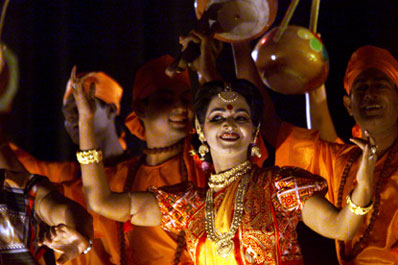
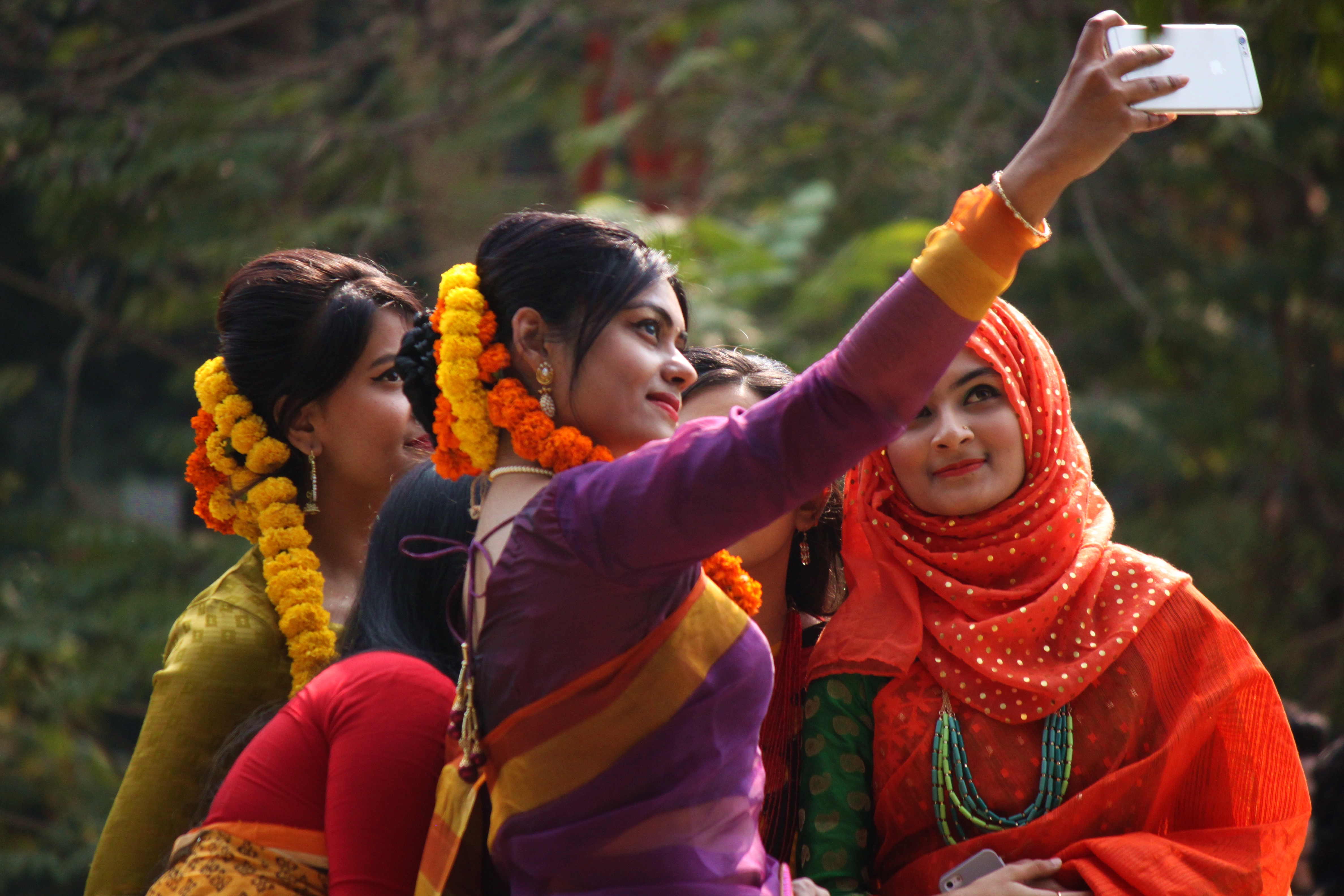
Approximately 99% of the Bangladeshis are Bengalis. East Bengal was a prosperous melting pot for centuries. It witnessed a synthesis of Islamic, North Indian and indigenous Bengali cultures. Today, Bengalis enjoy strong cultural homogeneity with a common standardized language and a variety of dialects.
Over 91.04% of the population are Bengali Muslims (150.36 million) as of 2022. This makes Bangladesh the world's third largest Muslim majority country after Indonesia and Pakistan. Bengali Muslims also make up the world's second largest Muslim ethnic group after Arab Muslims. Most Bangladeshi Muslims are member of the Sunni branch of Islam. There are significant minorities of the Shia and Ahmadiya branches. Bengali Hindus are the largest minority of Bangladesh, with a population between 13.1 million constituting 7.95% as per 2022 Census. Bangladesh has the third largest Hindu population in the world after India and Nepal. There are an estimated 400,000 Bengali Christians and 500,000 Bengali Buddhists.
The Bengali population is concentrated in Bengal delta, the coastal areas of Chittagong Division and the river valleys of Sylhet-Division.
Non-Bengali Muslims
An estimated 3 million Bangladeshi citizens are non-Bengali Muslim immigrants from different parts of South Asia. They include affluent sections of the country's merchant and business class, particularly Nizari Ismailism adherents. They also include former Stranded Pakistanis and their descendants. Bangladesh's non-Bengali Muslims are usually fluent in both Bengali and Hindustani. Also there are over 1 million Rohingya Muslim refugees living in Bangladesh who came here during the period of (2016–17) crisis. On 28 September 2018, at the 73rd United Nations General Assembly, Bangladeshi Prime Minister Sheikh Hasina said there are 1.1–1.3 million Rohingya refugees now settled in Bangladesh.
Tribes of the Chittagong Hill Tracts

In southeastern Bangladesh, the Chittagong Hill Tracts frontier has a district history. It was an exclusive zone for Tibeto-Burman tribes in Bengal during the British Raj. Today, the area makes up 10% of Bangladesh's territory. It is home to several indigenous ethnic groups in the three hill districts of Rangamati, Bandarban and Khagrachari. The three largest communities in the region have a Raja as their tribal chief who is recognized by the Government of Bangladesh.
- The Chakma people are the largest tribe of the Chittagong Hill Tracts and the second largest indigenous ethnic group of Bangladesh after Bengalis. A Tibeto-Burman community, have been greatly influenced by Bengali culture, including in their native Chakma language, a branch of the Bengali-Assamese languages. Most Chakmas are concentrated in Rangamati District. The community is headed by the Chakma Raja. The majority of Chakmas are Therevada Buddhists, with a minority being Hindu.
- The Marma people are second largest community in the Chittagong Hill Tracts. They have a Raja and are concentrated in the districts of Bandarban and Khagrachari. The Marmas are originally Arakanese people who moved to the territory in the 17th century in order to escape Burmese persecution.
- The Mro people are the third largest community in the region and have a Raja. Buddhism, Christianity and animist beliefs are among the chief faiths of the Mros. Their population is concentrated in Bandarban District. Mros are originally related to the Chin people of Myanmar.
- The Tanchangya people are among the oldest native indigenous tribes of the region. They speak the Indo-Aryan Tanchangya language and adhere to Therevada Buddhism.
- The Bawm people are a Tibeto-Burman Christian community. They are among the oldest inhabitants of the region.
- The Tripuri people inhabit much of Khagrachhari District. Their population is divided between Bangladesh and their larger indigenous homeland in the Indian state of Tripura.
- The Khumi people are one of the poorest and smallest tribes of the region. They originate from the Arakan region.
- The Kuki people are Bangladeshi counterparts of Chins in northern Myanmar and Mizos in northeast India.
Ethnic groups of North and Northeast Bangladesh
There are several Austroasiatic, Tibeto-Burman and Indo-Aryan ethnic groups which inhabit parts of northern and northeastern Bangladesh.
- The Manipuri people (also called as Meitei people) speak Meitei language (better known as "Manipuri language"), write in Manipuri script (Meitei script), besides the Eastern Nagari script and are known for the Manipuri classical dance, developed by the Meitei king Rajarshi Bhagyachandra (), the Maharajah of erstwhile Manipur Kingdom.
- The Santhal people are the largest aboriginal community of the country. They speak the Austroasiatic Santhali language. Their culture is noted for martial dance traditions. Their population is most concentrated in Rajshahi Division and Rangpur Division. The Santhals have been the focal point of land rights controversies as the Bangladeshi government seeks to develop open pit coal mining in their tribal hinterlands.
- The Garo people inhabit the Haluaghat Upazila of Mymensingh District. They have high literacy rates and are adherents of Christianity.
- The Bisnupriya Manipuri people speaks Bishnupriya, a creole of Bengali language and Meitei language (officially known as "Manipuri language") and it still retains its pre-Bengali features.
- A negligible small minority of Marwari people live in various cities and towns of the country such as Dinajpur, Kushtia and Narayanganj. Although many of them have been assimilated into the larger Hindu Bengali demographics, they still use the marwari surnames such as Agarwal, Singhania etc. They are among the affluent sections of the country's merchant and business class.
Tribes of Southern Bangladesh
- An Arakanese Rakhine community has resided in Barisal Division for three centuries. They arrived by the sea after escaping Burmese conquests in the 17th century.
Rural society
The basic social unit in a village is the family (poribar or gushti), generally consisting of a complete or incomplete patrilineally extended household (chula) and residing in a homestead (bari). The individual nuclear family often is submerged in the larger unit and might be known as the house (ghor). Above the bari level, patrilineal kin ties are linked into sequentially larger groups based on real, fictional, or assumed relationships.
A significant unit larger than that of close kin is the voluntary religious and mutual benefit association known as "the society" (shomaj or milat). Among the functions of a shomaj might be the maintenance of a Mosque and support of a mullah. An informal council of shomaj elders (matabdars or shordars) settles disputes taking place in the village . Factional competition between the motobdars is a major dynamic of social and political interaction.
Groups of homes in a village are called Paras, and each para has its own name. Several paras constitute a mauza, the basic revenue and census survey unit. The traditional character of rural villages was changing in the latter half of the 20th century with the addition of brick structures of one or more stories scattered among the more common thatched bamboo huts.
Although farming has traditionally been ranked among the most desirable occupations, villagers in the 1980s began to encourage their children to leave the increasingly overcrowded countryside to seek more secure employment in the towns. Traditional sources of prestige, such as landholding, distinguished lineage, and religious piety were beginning to be replaced by modern education, higher income, and steadier work. These changes, however, did not prevent rural poverty from increasing greatly.
Urban society

In 2015, 34% of Bangladeshis lived in cities. Dhaka is the largest city in Bangladesh and one of the world's most populous megacities. Other important cities include Chittagong, Sylhet, Khulna, Rajshahi, Bogura, Jessore, Barisal, Comilla, Narayanganj and Mymensingh. Most urban centres are rural administrative towns. Urban centres grew in number and population during the 1980s as a result of an administrative decentralization program that featured the creation of upazilas.
Identity
Bangladesh is noted for cultural pluralism within a Bengali Muslim majority. Secularism has been an important contributor to the nation's society and ethos. The Bengali language is a fundamental element of Bangladeshi identity. It is a secular language which evolved between the 7th and 10th centuries, with an indigenous alphabet, and unites people of different faiths and regions. The Bengali language movement sowed the seeds of East Pakistani nationalism, ultimately culminating in the Bangladesh Liberation War in 1971. Since independence, the relationship between religion and the state has been controversial. Between 1972 and 1975, Bangladesh experienced socialism under a secular parliamentary system. Military coups ushered a sixteen-year presidential regime, which restored the free market and promoted moderate Islamism. In 1988, Islam was made the state religion. In 2010, the Bangladesh Supreme Court reaffirmed the principle of separation of mosque and state in the constitution. The government generally respects freedom of religion and ensures protection for minorities. Another debate on national identity concerns attitudes towards the Chittagong Hill Tracts. A low-level insurgency took place in the region to demand constitutional autonomy against Bengali settlements. Despite a peace treaty in 1997, the Bangladeshi government is yet to implement many of its commitments to protect adibashi land rights. However, the deletion in 1977 of Bangalee as the nationality term for the country's citizens, in order to be inclusive of non-Bengali minorities, also reflects attempts to build a more cosmopolitan Bangladeshi society.
Culture
The culture of Bangladesh has evolved with influences from diverse social societies. Bangladesh's main religion is Islam, which has played a critical part in influencing the country's culture.
Languages
Main article: Languages of Bangladesh

The official language of Bangladesh is Bengali, which is shared with the neighbouring Indian states of West Bengal, Assam, and Tripura. Bengali dialects vary between different regions of Bangladesh but Standard Bengali is the most widely used.
According to the Ethnologue, there are 36 indigenous living languages, which include 17 Sino-Tibetan, 10 Indo-European, 7 Austro-Asiatic and 2 Dravidian languages.
The oldest literary inscription in Bangladesh dates back to the 3rd century BCE. It was found at Mahasthangarh and is written in the Brahmi script. The language is Magadhi Prakrit. The Bengali language developed from Magadhi Prakrit, and it's written from Apabhramsa, between the 7th and 10th centuries. It once formed a single eastern Indo-Aryan language with Assamese and Odia, but later became distinct. It became an official language of the Sultanate of Bengal, where it was spoken as the main vernacular language. It absorbed vocabulary from Arabic, Persian and Sanskrit. Bengali is the 6th most spoken first language in the world. The language was modernized during the Bengali Renaissance in the 19th century. It has influenced other languages in the region, including Chakma, Rohingya, Assamese, Odia and Nepali. The indigenous Bengali alphabets descended from Brahmi serves as the Bengali script.
The Bengali language movement in East Pakistan was a key catalyst for forming Bangladeshi identity. It is commemorated by UNESCO as International Mother Language Day, as part of worldwide efforts to preserve linguistic heritage.
Bangladesh is also home to number of minority indigenous languages, including Santhali, Garo, Marma, Manipuri language (Meitei language), Chakma and Bisnupriya Manipuri.
Surnames
Main article: Bengali name
Bangladeshi Muslims typically carry surnames that have Arabic, Persian and Sanskrit origins. Bangladeshi Hindus have Sanskritized Bengali surnames. Many Bangladeshi Christians have Portuguese surnames. Buddhists have a mixture of Bengali and Tibeto-Burman surnames.
Notes
References
References
- "Total population by sex". United Nations Population Division.
- ["India: Female Immigrant Entrepreneurship in New Delhi". In Daphne Halkias; Paul Thurman; et al. (eds.). Female Immigrant Entrepreneurs: The Economic and Social Impact of a Global Phenomenon. Gower. p. 25]
- "Indian govt data proves number of Bangladeshi immigrants on the decline".
- (22 July 2023). "The Bengalis Of Karachi Are Losing Their Distinct Cultural Identity". The Friday Times.
- Ammar Shahbazi. "Bangladeshi immigrants in Pakistan find it hard to go home". Nikkei Asia.
- "Non-Saudi Population".
- "Migration Profile – UAE".
- (7 February 2025). "Bangladeshis make up largest group of foreign workers in Malaysia".
- (12 July 2018). "Bangladeshis top expatriate force in Oman". Gulf News.
- "Ethnic group, England and Wales: Census 2021". Office for National Statistics.
- . (21 May 2024). ["Scotland's Census 2022 - Ethnic group, national identity, language and religion - Chart data"](https://www.scotlandscensus.gov.uk/media/trbdxzme/scotland-s-census-2022-ethnic-group-national-identity-language-and-religion-chart-data.xlsx). *[[National Records of Scotland]]*.
- "Census 2021 Ethnic group - full detail MS-B02". Northern Ireland Statistics and Research Agency.
- "1 Million: UK's Booming Bangladeshi Community Revealed".
- (15 August 2019). "Population of Qatar by nationality - 2019 report".
- Monem, Mobasser. (November 2017). "Engagement of Non-resident Bangladeshis (NRBs) in National Development: Strategies, Challenges and Way Forward".
- (15 July 2020). "Bangladeshi Workers: Around 2 lakh may have to leave Kuwait". The Daily Star.
- "US Census Data". U.S. Census Bureau.
- (1 October 2019). "Over 400 Bangladeshis murdered in South Africa in 4yrs". Dhaka Tribune.
- (12 March 2017). "More illegal Bangladeshi workers enter Bahraini labor market". Xinhua News Agency.
- (8 February 2020). "Economic crisis in Lebanon: job losses, low pay hit expats". The Daily Star.
- (11 April 2020). "Help at hand for Bangladeshi workers in Middle East". Arab News.
- (15 February 2020). "Bangladeshis in Singapore". The Straits Times.
- (December 2015). "Lifestyle of Bangladeshi Workers in Maldives".
- Monem, Mobasser. (July 2018). "Engagement of Nonresident Bangladeshis in National Development: Strategies, Challenges and Way Forward".
- (26 October 2022). "Ethnic or cultural origin by gender and age: Canada, provinces and territories, census metropolitan areas and census agglomerations with parts".
- "Bangladeshi immigrants now at forefront at Portugal's Lisbon neighbourhood".
- "Momen urges Portugal to open mission in Dhaka".
- "Imigrantes da Índia e Bangladesh contestam alterações à lei de estrangeiros".
- "Comunidade do Bangladesh em Portugal: três décadas de luta pela integração".
- "2021 People in Australia who were born in Bangladesh, Census Country of birth QuickStats | Australian Bureau of Statistics".
- Mahmud, Jamil. (3 April 2020). "Bangladeshis in Spain suffering". The Daily Star.
- (16 May 2016). "Brunei, a destination for Bangladeshi migrant workers". The Financial Express.
- (4 May 2021). "Bangladeshi workers facing difficulty in sending money from Mauritius". The Daily Star.
- Mahmud, Ezaz. (17 April 2021). "South Korea bans issuing visas for Bangladeshis". The Daily Star.
- (19 November 2019). "Fighting in Libya: Condition of thousands of Bangladeshis gets worse, says Bangladesh ambassador". Dhaka Tribune.
- (22 February 2020). "Poland is cocking up migration in a very European way". The Economist.
- "Bevölkerung und Erwerbstätigkeit".
- (17 August 2013). "Stay in safer places". The Daily Star.
- "Étrangers – Immigrés : pays de naissance et nationalités détaillés".
- (10 February 2014). "Immigrant and Emigrant Populations by Country of Origin and Destination".
- (14 October 2016). "Finland – A country of curiosity". The Daily Star.
- (19 May 2021). "Livelihoods of Bangladeshis at stake in Covid-19 hit Brazil". The Daily Star.
- "Bangladeshi Migrants in Europe 2020".
- "2018 Census ethnic group summaries | Stats NZ".
- (1995). "Socio-economic life style of Bangladeshi man married to Russian girl: An analysis of migration and integration perspective".
- "05183: Immigrants and Norwegian-born to immigrant parents, by sex and country background 1970 - 2022.". Statbank Norway.
- "Tabiiyete Göre Yabancı Nüfus". [[Turkish Statistical Institute]].
- Ethnologue. "Bangladesh". Ethnologue.
- "Chapter 1: Religious Affiliation". The World's Muslims: Unity and Diversity. Pew Research Center's Religion & Public Life Project. 9 August 2012.
- "Bangladesh". Central Intelligence Agency.
- [http://www.banbeis.gov.bd/bd_pro.htm Bangladesh: Country profile]. {{webarchive. link. (6 July 2011. Bangladesh Bureau of Educational Information and Statistics (BANBEIS).)
- link
- "UNHCR | Bangladesh Citizenship (Temporary Provisions) Order, 1972".
- (27 July 2022). "Census 2022: Bangladesh population now 165 million". Dhaka Tribune.
- (2 April 2015). "Projected Changes in the Global Muslim Population".
- "Bangladesh 2015 International Religiou Freedom Report".
- (27 July 2022). "Census 2022: Bangladesh population now 165 million". Dhaka Tribune.
- "Chakmas, the".
- "Lyric aaji bangladesher hridoy".
- Murshid, Tazeen M.. (2001). "The Post-Colonial States of South Asia: Political and Constitutional Problems". Curzon Press.
- (2010). "Part I ¶ The Republic ¶ The Constitution of the People's Republic of Bangladesh". [[Ministry of Law, Justice and Parliamentary Affairs]].
- (2012). "Ethnic Groups of South Asia and the Pacific: An Encyclopedia". ABC-CLIO.
- (27 July 2022). "Census 2022: Bangladesh population now 165 million". Dhaka Tribune.
- (26 March 2021). "Migrants' contribution to the 50-year journey of Bangladesh". The Daily Star.
- (18 August 2020). "US overtakes UAE as second biggest remittance hotspot for Bangladeshis". The Financial Express.
- (27 July 2022). "Census 2022: Bangladesh population now 165 million". Dhaka Tribune.
- [[Bangladesh Bureau of Statistics]]. (2011). "Population & Housing Census". Bangladesh Government.
- Data Archived 4 September 2011 at the Wayback Machine. Census – Bangladesh Bureau of Statistics
- "New Dhaka Jamatkhana seen as a symbol of confidence in Bangladesh".
- "Bangladesh is now home to almost 1 million Rohingya refugees". The Washington Post.
- (27 September 2018). "Bangladesh point finger at Myanmar for Rohingya 'genocide'". Fox News.
- (29 March 2018). "WHO appeals for international community support; warns of grave health risks to Rohingya refugees in rainy season - Bangladesh".
- "Chakma {{!}} people".
- "Marma {{!}} people".
- (13 April 2017). "Hill people ready to welcome Boisabi". The Daily Star.
- (23 February 2007). "Banglapedia baffles all with wrong information about small nationalities". bdnews24.com.
- "Tanchangya People".
- (9 December 2015). "Cultural exchange programme held in port city". The Daily Star.
- (17 September 2016). "Coffee from the Hill Tracts". Dhaka Tribune.
- Chakravarty, Ipsita. "Tripura vs Twipra: An old identity politics may feed into new political rivalries". Scroll.in.
- "Tripuri, the son of the soil of Tripura state".
- (25 August 2008). "Indigenous culture needs a shot in the arm". The Daily Star.
- (21 February 2016). "In the land of the Bangalis". The Daily Star.
- (14 April 2017). "The many shades of Boisabi". The Daily Star.
- "Kuki {{!}} people".
- "Meitei {{!}} people".
- "Manipuri language".
- "Meitei {{!}} Ethnologue".
- "Manipuri {{!}} History, Characteristics, & Facts".
- (2022-03-14). "Classical Dances: Manipuri Raas Leela, and its exploration of love — both romantic and spiritual-Art-and-culture".
- Singh, Sinam Basu. (2020). "Pre-Vaishnavite and Post-Vaishnavite Dance Forms of Manipur". Himalayan Bridge.
- "Santhal {{!}} people".
- "Santals, The".
- "Garo {{!}} people".
- "Garo, The".
- Moseley, Christopher. (2010-01-01). "Atlas of the World's Languages in Danger". [[UNESCO]].
- (19 April 2018). "Atlas of the World's Languages". [[Routledge]].
- (7 August 2015). "'Sakhina' set to become a mum". The Daily Star.
- "Far from madding crowd on Pahela Baishakh". Prothom Alo.
- Rahim, Enayetur. "Rural Society". In Heitzman & Worden.
- "The World Factbook". Central Intelligence Agency.
- Rahim, Enayetur. "Urban Society". In Heitzman & Worden.
- "United States Department of State".
- "Bangladesh".
- "Mahasthan Brahmi Inscription".
- "Manipuri language".
This article was imported from Wikipedia and is available under the Creative Commons Attribution-ShareAlike 4.0 License. Content has been adapted to SurfDoc format. Original contributors can be found on the article history page.
Ask Mako anything about Bangladeshis — get instant answers, deeper analysis, and related topics.
Research with MakoFree with your Surf account
Create a free account to save articles, ask Mako questions, and organize your research.
Sign up freeThis content may have been generated or modified by AI. CloudSurf Software LLC is not responsible for the accuracy, completeness, or reliability of AI-generated content. Always verify important information from primary sources.
Report