From Surf Wiki (app.surf) — the open knowledge base
Balance disorder
Physiological disturbance of perception
Physiological disturbance of perception
| Field | Value |
|---|---|
| name | Balance disorder |
| image | Balance Disorder Illustration B.png |
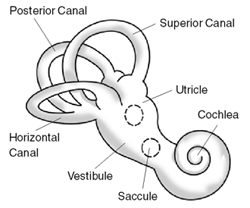
| caption | The image shows the function of the otolith organs of the inner ear in sensing balance. |
| specialty | Neurology, Otolaryngology |
| symptoms | Unsteadiness, wooziness, dizziness, giddiness, sense of floating, vertigo, nausea |
| diagnosis | Hearing and vision tests, ENG, VNG, rotary chair test, computerized dynamic posturography |
| treatment | Vestibular rehabilitation, medication, surgery, Tai chi |
Signs and symptoms
Cognitive dysfunction (disorientation) may occur with vestibular disorders. Cognitive deficits are not just spatial in nature, but also include non-spatial functions such as object recognition memory. Vestibular dysfunction has been shown to adversely affect processes of attention and increased demands of attention can worsen the postural sway associated with vestibular disorders. Recent MRI studies also show that humans with bilateral vestibular damage (damage to both inner ears) undergo atrophy of the hippocampus which correlates with their degree of impairment on spatial memory tasks.
Causes
Problems with balance can occur when there is a disruption in any of the vestibular, visual, or proprioceptive systems. Abnormalities in balance function may indicate a wide range of pathologies from causes like inner ear disorders, low blood pressure, brain tumors, and brain injury including stroke.
Related to the ear
Causes of dizziness related to the ear are often characterized by vertigo (spinning) and nausea. Nystagmus (flickering of the eye, related to the Vestibulo-ocular reflex [VOR]) is often seen in patients with an acute peripheral cause of dizziness.
- Benign paroxysmal positional vertigo (BPPV) – The most common cause of vertigo. It is typically described as a brief, intense sensation of spinning that occurs when there are changes in the position of the head with respect to gravity. An individual may experience BPPV when rolling over to the left or right, upon getting out of bed in the morning, or when looking up for an object on a high shelf.
- The cause of BPPV is the presence of normal but misplaced calcium crystals called otoconia, which are normally found in the utricle and saccule (the otolith organs) and are used to sense movement. If they fall from the utricle and become loose in the semicircular canals, they can distort the sense of movement and cause a mismatch between actual head movement and the information sent to the brain by the inner ear, causing a spinning sensation.
Migraine
Migraine headaches are a common neurological disease. Although typical migraines are characterized by moderate to severe throbbing headaches, vestibular migraines may be accompanied by symptoms of vestibular disorders such as dizziness, disequilibrium, nausea, and vomiting.
Presyncope
Presyncope is a feeling of lightheadedness or simply feeling faint. Syncope, by contrast, is actually fainting. A circulatory system deficiency, such as low blood pressure, can contribute to a feeling of dizziness when one suddenly stands up.
Diagnosis
The difficulty of making the right vestibular diagnosis is reflected in the fact that in some populations, more than one-third of the patients with a vestibular disease consult more than one physician – in some cases up to more than fifteen.
Treatment
There are various options for treating balance disorders. One option includes treatment for a disease or disorder that may be contributing to the balance problem, such as ear infection, stroke, multiple sclerosis, spinal cord injury, Parkinson's, neuromuscular conditions, acquired brain injury, cerebellar dysfunctions and/or ataxia, or some tumors, such as acoustic neuroma. Individual treatment will vary and will be based upon assessment results including symptoms, medical history, general health, and the results of medical tests. Additionally, tai chi may be a cost-effective method to prevent falls in the elderly.
Vestibular rehabilitation
Many types of balance disorders will require balance training, prescribed by an occupational therapist or physiotherapist. Physiotherapists often administer standardized outcome measures as part of their assessment in order to gain useful information and data about a patient's current status. Some standardized balance assessments or outcome measures include but are not limited to the Functional Reach Test, Clinical Test for Sensory Integration in Balance (CTSIB), Berg Balance Scale and/or Timed Up and Go The data and information collected can further help the physiotherapist develop an intervention program that is specific to the individual assessed. Intervention programs may include training activities that can be used to improve static and dynamic postural control, body alignment, weight distribution, ambulation, fall prevention and sensory function.
Bilateral vestibular loss
Dysequilibrium arising from bilateral loss of vestibular function – such as can occur from ototoxic drugs such as gentamicin – can also be treated with balance retraining exercises (vestibular rehabilitation) although the improvement is not likely to be full recovery.
Research
Scientists at the National Institute on Deafness and Other Communication Disorders (NIDCD) are working to understand the various balance disorders and the complex interactions between the labyrinth, other balance-sensing organs, and the brain. NIDCD scientists are studying eye movement to understand the changes that occur in aging, disease, and injury, as well as collecting data about eye movement and posture to improve diagnosis and treatment of balance disorders. They are also studying the effectiveness of certain exercises as a treatment option. Recently, a study published in JAMA Otolaryngology-Head & Neck Surgery found that balance problems are an indicator of mortality potentially due to altered metabolism of vestibular system.
References
References
- (December 2008). "Balance disorders in the elderly". Neurophysiol Clin.
- (2005). "Does vestibular damage cause cognitive dysfunction in humans?". J Vestib Res.
- (November 2005). "Vestibular loss causes hippocampal atrophy and impaired spatial memory in humans". Brain.
- (August 2023). "Balance disorders and migraine". Musculoskeletal Science & Practice.
- "Balance Disorders Symptoms, Causes, Treatment – What are the symptoms of a balance disorder?". MedicineNet.
- (2015). "Bilateral Vestibular Hypofunction: Challenges in Establishing the Diagnosis in Adults". ORL J Otorhinolaryngol Relat Spec.
- (May 2008). "Practice parameter: therapies for benign paroxysmal positional vertigo (an evidence-based review): report of the Quality Standards Subcommittee of the American Academy of Neurology". Neurology.
- "Clinical Test of Sensory Interaction on Balance (CTSIB) {{!}} Interacoustics".
- (August 2006). "Physical Rehabilitation". F.A. Davis.
- (August 2006). "Physical Rehabilitation".
- Horak FB. (2010). "Postural compensation for vestibular loss and implications for rehabilitation". Restor Neurol Neurosci.
- (2011). "Vestibular rehabilitation of older adults with dizziness". Otolaryngologic Clinics of North America.
- "Balance Disorders".
- (May 2021). "Association of Balance Function With All-Cause and Cause-Specific Mortality Among US Adults". JAMA Otolaryngol Head Neck Surg.
This article was imported from Wikipedia and is available under the Creative Commons Attribution-ShareAlike 4.0 License. Content has been adapted to SurfDoc format. Original contributors can be found on the article history page.
Ask Mako anything about Balance disorder — get instant answers, deeper analysis, and related topics.
Research with MakoFree with your Surf account
Create a free account to save articles, ask Mako questions, and organize your research.
Sign up freeThis content may have been generated or modified by AI. CloudSurf Software LLC is not responsible for the accuracy, completeness, or reliability of AI-generated content. Always verify important information from primary sources.
Report