From Surf Wiki (app.surf) — the open knowledge base
Bakery
Type of business that sells bread-based food
.jpg)
Type of business that sells bread-based food

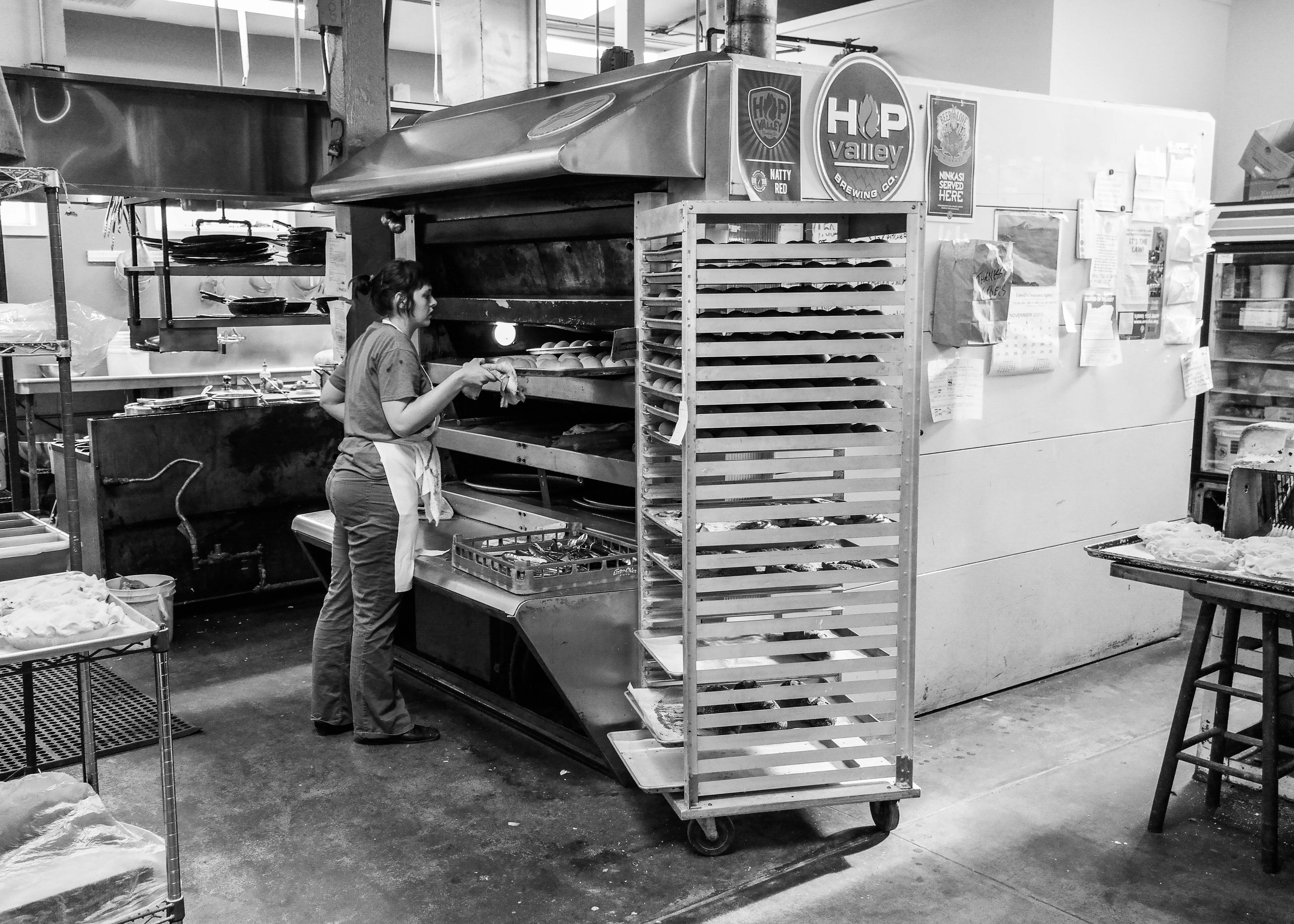
A bakery (also bakehouse, baker's shop or bake shop) is an establishment that produces and sells flour-based baked goods made in an oven such as bread, cookies, cakes, doughnuts, bagels, pastries, and pies. Some retail bakeries are also categorized as cafés, serving coffee and tea to customers who wish to consume the baked goods on the premises. In some countries, a distinction is made between bakeries, which primarily sell breads, and pâtisseries, which primarily sell sweet baked goods.
History
In the Roman Empire, baking was a highly esteemed profession, as Roman citizens used them frequently for important occasions such as feasts and weddings. Around 300 BCE, baking was introduced as an occupation and respectable profession for the Romans. Bakers began to prepare bread at home in an oven, using grist mills to grind grain into flour for their breads. The demand for baked goods grew in tandem with the empire, and the first bakers' guild was established in 168 BCE in Rome. The desire for baked goods promoted baking throughout Europe and expanded into eastern parts of Asia. Bakers started baking bread and other goods at home and selling them on the streets.

This trend became common, and soon, baked products were sold on the streets of Rome, Germany, London, and other European cities. A system for delivering baked goods to households arose as the demand increased significantly. This prompted bakers to establish places where people could purchase baked goods. The first open-air market for baked goods in Europe was established in Paris; since then, bakeries have become popular places to socialize.
On July 7, 1928, Otto Frederick Rohwedder invented an automatic bread-slicing machine, in a bakery in Chillicothe, Missouri. While the bread initially failed to sell, due to a perceived "sloppy" appearance of the loaves and the fact that it went stale faster, it later became popular. In World War II, bread slicing machines became rare, as the metal in them was required for wartime use. When they were requisitioned, creating 100 tons of metal alloy, the decision proved very unpopular with housewives.
World War II had a profound impact on the bread industry in the United Kingdom. When the war began, baking schools closed due to food rationing, manpower shortage, and other material factors. Once WWII came to a close, there was a lack of skilled bakers in the UK. This baker shortage resulted in new methods being developed to satisfy the world's desire for bread, including chemical additives, premixes, and specialized machinery. Old methods of baking were almost completely eradicated when these new, mechanized processes were introduced, and the industry became industrialized and dominated by large commercial firms. The older, more labor-intensive methods were, by and large, seen as burdensome, out-of-date, and commercially unprofitable. As a result, few traditional bakeries were left open by the end of the twentieth century.
Specialities
.jpg)
Some bakeries provide services for special occasions (such as weddings, anniversaries, birthday parties, business networking events, etc.) or customized baked products for people who have allergies or sensitivities to certain foods (such as nuts, peanuts, dairy or gluten, etc.). Bakeries can provide a wide range of cake designs such as sheet cakes, layer cakes, wedding cakes, tiered cakes, etc. Other bakeries may specialize in traditional or hand-made types of baked products made with locally milled flour, without flour bleaching agents or flour treatment agents, baking what is sometimes referred to as artisan bread.
In many countries, many grocery stores and supermarkets sell cakes, sliced bread (sometimes prepackaged or presliced) and other pastries. They may also offer in-store baking, with products either fully baked on site or part-baked prior to delivery to store, and some offer cake decoration.
Products
- Bagels
- Barmbrack
- Biscotti
- Biscuits (unleavened)
- Biscuits (quick bread)
- Bread roll
- Bread
- Buns
- Cakes
- Brownies
- Cookies
- Cornbread
- Crackers
- Croissants
- Crumpets
- Cupcakes
- Donuts
- Flatbreads
- Kalakukko
- Muffins
- Pandesal
- Pastries
- Pasties
- Pies
- Pita
- Pizzas
- Pretzels
- Puff pastry
- Pumpkin bread
- Sausage rolls
- Scones
- Soda bread
- Sourdough
- Tarts
- Waffles
References
References
- Sivalingam, Yogambal. (2023). "Textbook of Bakery and Confectionery". PHI Learning.
- Latson, Jennifer. (7 July 2015). "How Sliced Bread Became the 'Greatest Thing'".
- . (1 February 1943). ["U.S. At War: Trouble on the Bread Line"](https://time.com/archive/6781620/u-s-at-war-trouble-on-the-bread-line/).
- (28 April 2021). "How do UK supermarkets operate their in-store bakeries?". [[William Reed Ltd.
- Rush, Morgan. (n.d.). "About the Bakery Business". [[Hearst Communications]].
This article was imported from Wikipedia and is available under the Creative Commons Attribution-ShareAlike 4.0 License. Content has been adapted to SurfDoc format. Original contributors can be found on the article history page.
Ask Mako anything about Bakery — get instant answers, deeper analysis, and related topics.
Research with MakoFree with your Surf account
Create a free account to save articles, ask Mako questions, and organize your research.
Sign up freeThis content may have been generated or modified by AI. CloudSurf Software LLC is not responsible for the accuracy, completeness, or reliability of AI-generated content. Always verify important information from primary sources.
Report