From Surf Wiki (app.surf) — the open knowledge base
Bais, Negros Oriental
Component city in Negros Oriental, Philippines
Component city in Negros Oriental, Philippines
| Field | Value | |
|---|---|---|
| name | ||
| image_skyline | {{Photomontage | |
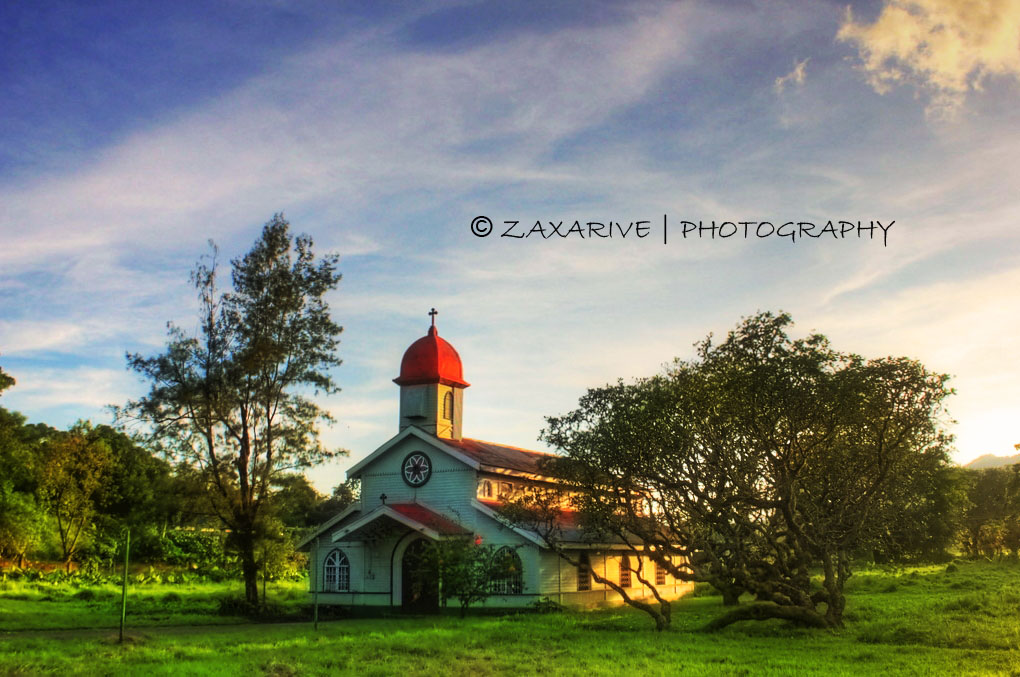
| photo1a | Bais City Church, Negros Oriental.jpg | |
| photo2a | IFIBaisCityParish.png | |
| size | 250 | |
| spacing | 2 | |
| color | transparent | |
| border | 0 | |
| image_caption | San Nicolas de Tolentino Roman Catholic Parish Church of Bais (top), Iglesia Filipina Independiente Parish Church of St. Nicholas de Tolentino, Bais (bottom) | |
| image_flag | Flag_of_Bais,_Negros_Oriental.png | |
| flag_size | 120x80px | |
| image_seal | Bais Negros Oriental.png | |
| seal_size | 100x80px | |
| image_map | ||
| map_caption | ||
| mapframe | yes | |
| pushpin_map | Philippines | |
| pushpin_label_position | left | |
| pushpin_map_caption | Location within the | |
| coordinates | ||
| settlement_type | ||
| subdivision_type | Country | |
| subdivision_name | Philippines | |
| subdivision_type1 | Region | |
| subdivision_name1 | ||
| subdivision_type2 | Province | |
| subdivision_name2 | ||
| official_name | ||
| subdivision_type3 | District | |
| subdivision_name3 | ||
| established_title | Founded | |
| established_date | ||
| established_title1 | Cityhood | |
| established_date1 | September 7, 1968 | |
| parts_type | Barangays | |
| parts_style | para | |
| p1 | (see Barangays) | |
| leader_title | Mayor | |
| leader_name | Luigi Marcel T. Goñi | |
| leader_title1 | Vice Mayor | |
| leader_name1 | Mercedes T. Goñi (NPC) | |
| leader_title2 | Representative | |
| leader_name2 | Ma. Isabel L. Sagarbarria (Lakas) | |
| leader_title3 | City Council | |
| leader_name3 | {{PH Town Council | |
| 1 | Bruno "Thirdy" G. Bouffard | |
| 2 | Bimbong O. Megio | |
| 3 | Catherine D. Goñi | |
| 4 | Emilio Manuel S. Yoldi | |
| 5 | Joemarie T. Badoy | |
| 6 | Arsenio C. Adana, Sr. | |
| 7 | Crisline M. Repollo | |
| 8 | Kyla D. Jimenez | |
| 9 | Ingrid S. Villanueva | |
| 10 | Anthony John V. De Guia | |
| abc | Teofe Zamora | |
| sk | Danika Kaye J. Ferraren | |
| leader_title4 | Electorate | |
| leader_name4 | voters (electorate_point_in_time}} | ) |
| government_type | ||
| government_footnotes | ||
| elevation_m | ||
| elevation_max_m | 926 | |
| elevation_min_m | 0 | |
| elevation_footnotes | ||
| area_footnotes | ||
| area_total_km2 | ||
| population_footnotes | ||
| population_total | ||
| population_as_of | ||
| population_density_km2 | auto | |
| population_blank1_title | Households | |
| population_blank1 | ||
| timezone | PST | |
| utc_offset | +8 | |
| postal_code_type | ZIP code | |
| postal_code | ||
| postal2_code_type | ||
| postal2_code | ||
| area_code_type | ||
| area_code | ||
| demographics_type1 | Economy | |
| demographics1_title1 | ||
| demographics1_info1 | ||
| demographics1_title2 | Poverty incidence | |
| demographics1_info2 | % () | |
| demographics1_title3 | Revenue | |
| demographics1_info3 | ||
| demographics1_title4 | Revenue rank | |
| demographics1_title5 | Assets | |
| demographics1_info5 | ||
| demographics1_title6 | Assets rank | |
| demographics1_title7 | IRA | |
| demographics1_title8 | IRA rank | |
| demographics1_title9 | Expenditure | |
| demographics1_info9 | ||
| demographics1_title10 | Liabilities | |
| demographics1_info10 | ||
| demographics_type2 | Service provider | |
| demographics2_title1 | Electricity | |
| demographics2_info1 | ||
| demographics2_title2 | Water | |
| demographics2_title3 | Telecommunications | |
| demographics2_title4 | Cable TV | |
| blank_name_sec1 | ||
| blank_info_sec1 | ||
| blank1_name_sec1 | Native languages | |
| blank1_info_sec1 | ||
| blank2_name_sec1 | Crime index | |
| blank1_name_sec2 | Major religions | |
| blank2_name_sec2 | Feast date | |
| blank3_name_sec2 | Catholic diocese | |
| blank4_name_sec2 | Patron saint |
Bais, officially the City of Bais (; ), is a component city in the province of Negros Oriental, Philippines. According to the 2024 census, it has a population of 88,050 people.
Etymology
In the early days of Spanish exploration, some Spaniards came upon a swampy land and docked their boats at the vicinity of the two small islets that guarded the village. While exploring the place, they saw natives fishing along the coast. The Spaniards approached the natives and asked for the name of the place. The natives could not understand Spanish, and believing that the Spaniards were asking for the name of their catch, the natives answered saying "Ba-is"; from that day on, this swampy valley of the Old Panlabangan and Talamban Hills became known as Bais.
Another explanation of the origin of the name Bais is that it was derived from the Visayan word "ba-is" for brackish-water eel – a fish species native to the city and one which has become the city's delicacy.
History
Pioneer in the sugar industry
Negros Oriental's economy was far from progressive, and its rich soil was not utilized to its full capacity in the 1850s. During those years, people in Negros Island are depicted as having a life of content for they tended to produce only enough goods to meet their daily needs. Even before the sugar boom of the 1850s, Negros was already producing cash crops. The transport of most of its product was mainly done from the ports of Iloilo, which explains the fast moving pace of development of the sugar industry in Negros Occidental, primarily due to its proximity to Iloilo. This situation was a disadvantage on the movement of sugar from the oriental plantations further away to the east.
The pioneer agricultores and adventurers include Rodrigo Rubio y Pérez, Diego Baena y García-Gil, and José Romero Moreno, from Cádiz, Agustín de Sandes of Mexico City, Juan José de Altónaga of Erandio, Hermenegildo Villanueva Dee y Regis, a chino cristiano from Parián, Cebu. Many more agricultural titans of the time came and went until the decline of the industry in the 80s and 90s when the town was beset by low international commodity prices.
A wide array of difficulties barred the development of the sugar industry in the Oriental part of the island. After hearing about the fertility of the flatland of Bais, these aforementioned individuals carved away the virgin forests of the eastern side of the island. Many came and settled in the area and planted fragrant rice, native coffee, and sugar cane. The small-scale production of muscovado sugar is attributed to Dumaguete chino cristiano rice merchant Vicente Anunciación Teves Tan Ing-Lai from their mills which was then exported to Spain via Iloilo, the principal shipping point in the Visayas. This was loaded in large sailboats called lorchas or batél built by Aniceto Villanueva Dee and marketed Joaquín Montenegro Mascato since the ships of YCO have not plied the Tañón Strait yet.
Bais credits much of its progress to the Central Azucarera de Báis y Tanjay, the largest producer of raw sugar in Negros Oriental. It was established by the Compañía-General de Tabacos de Filipinas, S.A. of Spain around 1917 ( Baisanon Historian Prof. Penn T. Larena )
The sugarcane industry reached its peak in the 1930s, and again in the 1950s and 1960s, bringing affluence to the Negrenses and enabling them to build stately fincas and to acquire properties all over the province, and even as far as Makati's posh neighbourhoods, rivalling that of the Iloilo sugar barons.

The Central Azucarera de Báis itself is an old foreboding structure of metal and hard wood. The offices may have seen better days, the dank smell of nostalgia hang heavy in the air, but are still functional. Nearby is the Casa Grande, an equally old residential compound surrounded by tall acacia trees, which was built for the use of the employees of the Azucarera. The two-storey wooden houses are greatly influenced by old Spanish design and architecture. Much of the houses have undergone restoration and continue to be used as homes of the representatives of the executives of the new management.
In 1959, President Carlos P. Garcia signed Republic Act No. 2469, where fourteen of the municipality's sitios seceded to form the municipality of Mabinay. Trinidad seceded before the war to form its own municipality. Bais officially became a city on the 9th of September, 1968 (R.A. No. 5444). Currently, there have been calls for the charter to be amended to bring back the seceded cities back into the fold since the population has exploded. The latest development is attributed to the Cebuana Lhuillier Group which owns half of the prime real estate, and a third of the whole city.
Geography
.jpg)
Located 45 km from the provincial capital Dumaguete and 170 km from Bacolod, it has a land area of 31964 ha. There are two bays in the area, hence the name "Bais." The shore line is mostly mangroves, which are in danger of destruction due to the increasing population. The richness of marine life in the bays is because of these mangroves.
The city is characterized by widespread lowlands that are ideal for sugar planting because of the city's naturally fertile soil. At least 73% of the city's total land area is devoted primarily to agriculture, primarily to creating sugar plantations.
The territorial jurisdiction of Bais includes two islets (Olympia and Dewey) and the Bais Bay. The Bais Bay area holds a diversity of animal life and is a rich breeding and fishing ground for demersal and other fish species, and also invertebrates. North Bais Bay is also famous for dolphin watching.
The Pelarta River runs beside the city center. The river has been the source of irrigation water for the nearby sugar farms, making it vital in the success of sugar plantations in this area. This river also has a big influence on the city's geography, as it deposits sediments in the former mangrove areas during the (formerly annual) flood season. These former mangrove swamps have now dried out and become populated with residents. In the late 1970s, under the Genaro Goñi administration, a river control system stretching from the city center toward the low-lying areas was established in order to lessen flooding during the rainy season.
Further south are the stately plantation houses owned by sugar planters, mostly standing on one of the lots in the family hacienda. Inside the haciendas are chapels whose altar and icons date back to 1917. Educational visits to these places may be arranged at the Bais City Tourism Office. Visitors get to tour via the old railroad trams used by the milling companies to hasten sugar cane transport.
Barangays
Bais is politically subdivided into 35 barangays. Each barangay consists of puroks and some have sitios.
Climate
| access-date = May 6, 2020 }}
Demographics
.jpg)
Economy

Sugar is the major commercial crop in the city. Bais is the largest producer of raw sugar in Negros Oriental. There are two sugar mills in the city. The Central Azucarera de Bais was established by Tabacalera of Spain in the early 1918 and is the oldest in the country. The other mill is URSUMCO (Universal Robina Sugar Milling Corporation) which was formerly known as UPSUMCO (United Planters Milling Corporation) and constructed in the mid-1970s by Marubeni Corporation of Japan as a project of Ignacio Longa Vicente (also of Spanish roots). An ethanol plant of the Universal Robina Corporation (URC) that produces bioethanol for the local market was inaugurated.
The local economy is dominated by agricultural activities and output. Seventy-three percent of the city's total land area is devoted to agriculture. The existing urban area in the city covers only 109.12 hectares. About 36% of the city's agricultural land is planted in sugarcane, yielding 1.16 million gross kilograms annually for the domestic and foreign markets.
Fish production is the city's second income earner, with about 428 hectares of the land area devoted to fishpond development and operation and fish culture. Bangus (milkfish) culture is the dominant activity. In 2000, the bangus yield in the city was at 722 tons.
Culture

An annual fiesta is held each year on September 10 in honor of the city's patron saint San Nicolás de Tolentino, a celebration inherited from the Spanish era. On this occasion, most of the residents prepare food for anyone who visits - a tradition practiced not only in Bais but also in most towns and cities in the Philippines. Lately, the celebration has included mardigras and parades.

The government of Bais operates ecotourism activities in the city, highlighted by whale and dolphin watching and nature treks. Two annual Bais festivals have also become tourism events: the Hudyaka sa Bais Mardigras (which was changed to Sipong Festival and later on changed back to Hudyaka) and the Christmas Festival (which showcases the city's, perhaps the province's only, giant rotating Christmas tree and colorful decors) since 1950.
A concern of the city is its liquid and solid waste management. At present, liquid wastes are emptied directly without treatment into the Bais basin. The current dump site for solid waste is due for closure, and site development for a new 12.5-hectare sanitary landfill is being finalized.
Bais is reported to be the last stronghold of the Spanish language in the Philippines, since some of the Spaniards are in the first settlement area of Negros, (and southeast of Bais) Tanjay.
Education
The public schools in Bais are administered by the Schools Division of Bais City.
High schools
- Bais City National High School — Tavera Street, Hangyad
- Bais City National Science High School — Maria Longa Drive, Hangyad
- Cabugan National High School — Sitio Cabugan, Sab-ahan
- Cambagahan National High School — Sitio Lomboy, Cambagahan
- Dodong Escaño Memorial High School — Sitio Cantugot, Sab-ahan
- Governor Julian L. Teves Memorial High School — Calasga-an
- Javier Laxina I Memorial High School — Cabanlutan
- Josefina T. Valencia National High School (formerly Panala-an HS) — Panala-an
- Lonoy National High School — Lonoy
- Lucila C. Yared National High School — Sitio Caluy-ahan, Cambagahan
- Mansangaban National High School — Mansangaban
- Manuel L. Teves Memorial High School — Canlargo
- Mayor Praxedes P. Villanueva II Memorial High School — Tamisu
- Okiot National High School — Okiot
- Sto. Tomas National High School — Sitio Candigumon, Manlipac
- Tagpo National High School — Tagpo
- Tangculogan High School — Tangculogan
Integrated schools:
- Mabunao Integrated School (formerly Mabunao ES) — Mabunao
- Mangganay Integrated School (formerly Mangganay ES) — Sitio Mangganay, Panala-an
- Olympia Island Integrated School (formerly Olympia ES & Bais City Olympia NHS) — Olympia
- Palaypay Integrated School (formerly Palaypay ES) — Sitio Palaypay, Lonoy
Colleges and universities
- Negros Oriental State University Bais Campus 1 – Sitio San Jose, Barangay II
- Negros Oriental State University Bais Campus 2 – Quezon Street, Barangay I
- La Consolacion College Bais (formerly Sacred Heart Academy) – E.C. Villanueva St., Barangay II
Transportation
Accredited Transport Cooperative as of January 2021:
- Bindoy-Mabinay Bais Transport Cooperative
Notable personalities
- Demetrio Larena Sr. – first Governor of Negros Oriental
- Chanda Romero – Actress, TV Personality
- Valeen Montenegro Vicente – Actress TV Personality
- Eddie Romero – National Artist for Film and Broadcast Arts
- Jose Mari Chan – Singer, Songwriter and Businessman in the sugar industry
- Chaco Sagarbarria – current Governor of Negros Oriental
References
References
- {{DILG detail
- (July 17, 2024). "2024 Census of Population (POPCEN) Population Counts Declared Official by the President".
- Perez Villanueva, Josefa History of Bais 1979 Teves Press
- "REPUBLIC ACT NO. 2496, June 21, 1959 - AN ACT CREATING THE MUNICIPALITY OF MABINAY IN THE PROVINCE OF NEGROS ORIENTAL".
- "URC starts taking fuel ethanol orders".
- (January 2021). "Accredited Transport Cooperatives as of January 2021".
This article was imported from Wikipedia and is available under the Creative Commons Attribution-ShareAlike 4.0 License. Content has been adapted to SurfDoc format. Original contributors can be found on the article history page.
Ask Mako anything about Bais, Negros Oriental — get instant answers, deeper analysis, and related topics.
Research with MakoFree with your Surf account
Create a free account to save articles, ask Mako questions, and organize your research.
Sign up freeThis content may have been generated or modified by AI. CloudSurf Software LLC is not responsible for the accuracy, completeness, or reliability of AI-generated content. Always verify important information from primary sources.
Report