From Surf Wiki (app.surf) — the open knowledge base
Bagrationovsk
Town in Kaliningrad Oblast, Russia
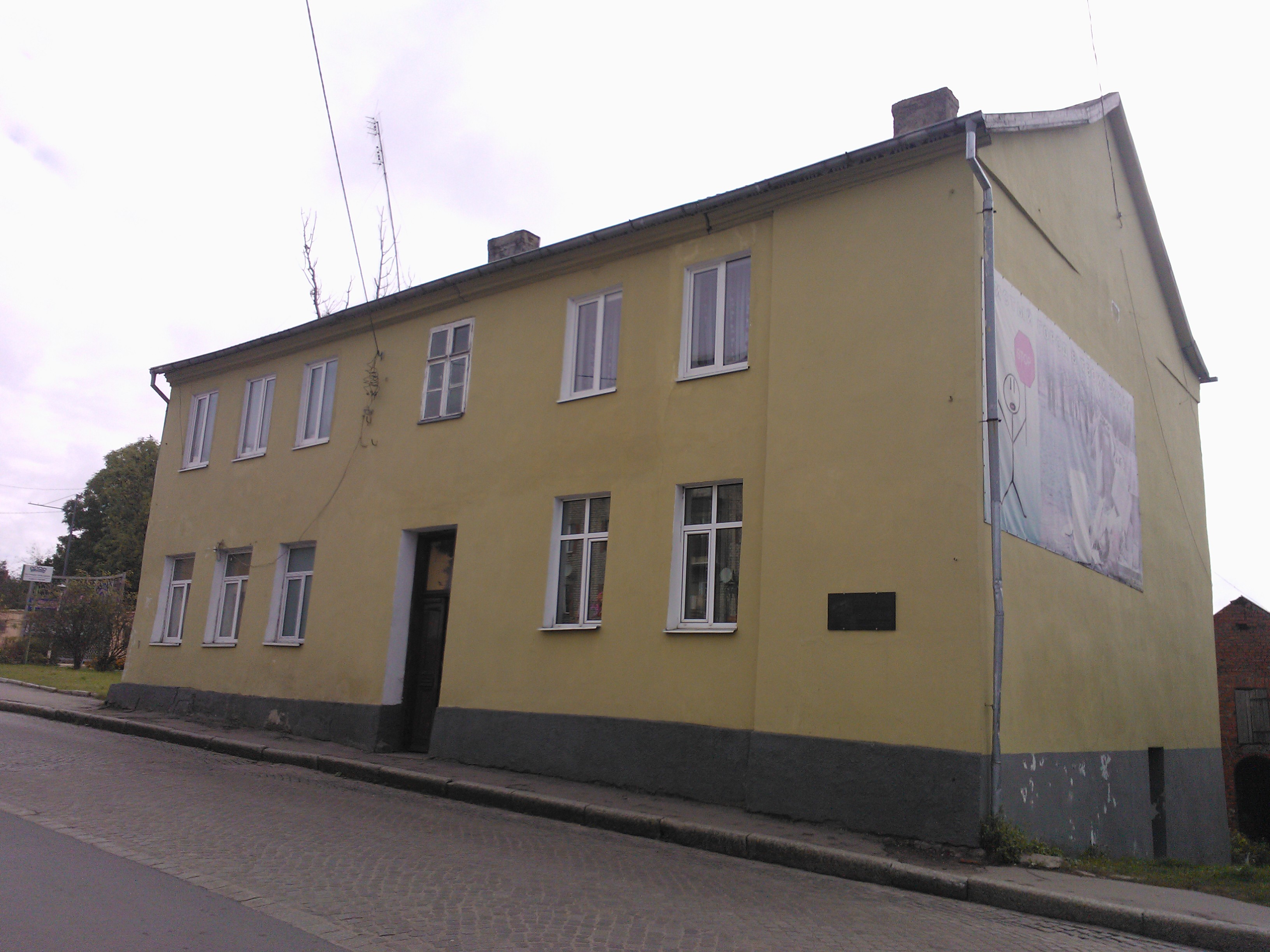
Town in Kaliningrad Oblast, Russia
| Field | Value |
|---|---|
| en_name | Bagrationovsk |
| ru_name | Багратионовск |
| image_skyline | Рыцарский замок Пройсиш-Эйлау (XIV век)..JPG |
| image_caption | Remains of the Teutonic Castle |
| pushpin_map | Russia Kaliningrad Oblast#European Russia#Baltic Sea |
| coordinates | |
| image_coa | Coat of Arms of Bagrationovsk (Kaliningrad oblast).png |
| federal_subject | Kaliningrad Oblast |
| federal_subject_ref | |
| adm_district_jur | Bagrationovsky District |
| adm_district_jur_ref | |
| adm_selsoviet_jur | Bagrationovsk |
| adm_selsoviet_type | Town of district significance |
| adm_selsoviet_jur_ref | |
| adm_ctr_of1 | Bagrationovsky District |
| adm_ctr_of1_ref | |
| adm_ctr_of2 | town of district significance of Bagrationovsk |
| adm_ctr_of2_ref | |
| inhabloc_cat | Town |
| inhabloc_cat_ref | |
| mun_district_jur | Bagrationovsky Municipal District |
| mun_district_jur_ref | |
| urban_settlement_jur | Bagrationovskoye Urban Settlement |
| urban_settlement_jur_ref | |
| mun_admctr_of1 | Bagrationovsky Municipal District |
| mun_admctr_of1_ref | |
| mun_admctr_of2 | Bagrationovskoye Urban Settlement |
| mun_admctr_of2_ref | |
| pop_2010census | 6400 |
| pop_2010census_ref | |
| established_date | 1325 |
| established_date_ref | |
| current_cat_date | 1585 |
| current_cat_date_ref | |
| postal_codes | 238420 |
| website | http://gorod-bagrat.ru |
Bagrationovsk (; , ; or Iławka; or Prūsų Ylava) is a town and the administrative center of Bagrationovsky District in Kaliningrad Oblast, Russia, located close to the border with Poland, 37 km south of Kaliningrad, the administrative center of the oblast. It has a population of
History
Early history
Kingdom of Poland-flag.svg Kingdom of Poland 1454–1455
Flag of the Teutonic Order.svg Teutonic Order 1455–1466
Kingdom of Poland-flag.svg Kingdom of Poland 1466–1657
∟ Flag of the Teutonic Order.svg Teutonic Order 1466–1525
∟ Flag of Ducal Prussia.svg Duchy of Prussia 1525–1657
Flag of Ducal Prussia.svg Duchy of Prussia 1657–1701
Kingdom of Prussia 1701–1758
Russian Empire 1758–1762
Kingdom of Prussia 1762–1871
German Empire 1871–1918
∟ Kingdom of Prussia 1871–1918
Weimar Republic 1918–1933
Nazi Germany 1933–1945
Poland 1945
Soviet Union 1946–1991
Russian Federation 1991-present In 1325, the Teutonic Knights built an Ordensburg castle called "Yladia" or "Ilaw", later known as "Preussisch Eylau", in the center of the Old Prussian region Natangia. 'Ylow' is the Old Prussian term for 'mud' or 'swamp'. The settlement nearby developed in 1336, but in 1348 the Teutonic Order gave the privilege to establish twelve pubs in the area around the castle. Although the settlement had only a few inhabitants, due to its central position it was often used as meeting place for officials of the Order.
In 1454, King Casimir IV Jagiellon incorporated the region to the Kingdom of Poland upon the request of the anti-Teutonic Prussian Confederation. During the subsequent Thirteen Years' War, in 1455, Teutonic Knights regained control of the settlement. The castle was besieged on 24 May 1455 by troops of the Prussian Confederation under the command of Remschel von Krixen, but the garrison repulsed the attack. After the war, in 1466, the settlement became a part of Poland as a fief held by the Teutonic Knights. During the Horsemen's War in 1520, the castle was unsuccessfully besieged by troops of the Polish Kingdom, who devastated the settlement. Following the war, it remained a part of Poland, now as a fief held by newly established secular Ducal Prussia. Preußisch Eylau received its civic charter in 1585.
18th–19th centuries
In 1709–1711, the bubonic plague killed 2,212 inhabitants of the Eylau area. The town was under Russian occupation from 1758 to 1762 during the Seven Years' War.
The Battle of Eylau (7–8 February 1807) during the Napoleonic Wars involved the French troops of Napoleon Bonaparte, the Russian troops of General Bennigsen, and the Prussian troops of General Anton Wilhelm von L'Estocq. Only 3 inhabitants of Eylau died in the battle, but 605 persons died due to hunger and diseases in 1807 (with the average death rate in "normal" years being around 80–90). Napoleon used the local courthouse as his headquarters in Eylau on 7–17 February 1807.
On 1 April 1819, the town became the seat of the administrative district Preußisch Eylau (Kreis Pr. Eylau). In 1834, a Teachers' Seminary was founded, educating every East Prussian teacher until it was closed down in 1924. The town was connected to the railway on 2 September 1866. In the late 19th century, four annual fairs and two weekly markets were held in the town.
20th–21st centuries
During World War I, the town was occupied without a struggle by Russian troops on 27 August 1914, but these troops left on 3 September 1914.
After 1933, large barracks were built by the Wehrmacht, and in 1935 Infantry and Artillery units were stationed there.
On 10 February 1945, during the Soviet Red Army's East Prussian Offensive, the town was occupied by troops of the 55th Guards "Irkutsk-Pinsk" Division commanded by Major General Adam Turchinsky.
In June 1945, the town was handed over to Poland, and Polish officials took over the administrative power. The county seat was then moved to Górowo Iławeckie (now a twin town of Bagrationovsk), however it retained the name of Iławka County until 1958.
In January 1946, the town became a part of the newly established Kaliningrad Oblast within the Russian SFSR and the town was given its present name, honoring General Pyotr Bagration, who was one of the senior Russian leaders in the Napoleonic Wars and is also the namesake of the 1944 Operation Bagration offensive. The German population that had not already fled during the evacuation of East Prussia during the war was subsequently expelled in accordance with the Potsdam Agreement, with the last transport leaving on 23 November 1947. The NKVD established a prison camp for German civilians inside the former Wehrmacht barracks in 1945–1949. It held an estimated 13,000 inmates, of whom some 6,000 people died.
Today the main border crossing point between Russia and Poland (Bezledy/Bagrationovsk) is 2 km south of the town. Since April 2007, government restrictions on visits to border areas have been tightened and travel to Sovetsk and Bagrationovsk is only allowed with special permission, unless in transit.
Administrative and municipal status
Within the framework of administrative divisions, Bagrationovsk serves as the administrative center of Bagrationovsky District. As an administrative division, it is incorporated within Bagrationovsky District as the town of district significance of Bagrationovsk. As a municipal division, the town of district significance of Bagrationovsk is incorporated within Bagrationovsky Municipal District as Bagrationovskoye Urban Settlement.
Population
|1925|3787|1933|4123|1939|7485|1946|2275|1968|4300|1989|6728 |2002|7216 |2010|6400|2018|6482|2021|6579
Notable people
- Hugo Falkenheim (1856–1945), medical doctor and last Chairman of the Jewish parish of Königsberg
- Konrad Theodor Preuss (1869–1938), ethnologist
- Robert Kudicke (1876-1961), physician and epidemiologist specializing in tropical medicine, university lecturer in Guangdong and Frankfurt am Main
Twin towns and sister cities
Bagrationovsk is twinned with:
- Germany Verden an der Aller, Lower Saxony, Germany
- Poland Górowo Iławeckie, Poland
- Poland Bartoszyce, Poland
- Lithuania Jonava, Lithuania
References
Notes
Sources
- Horst Schulz. Preußisch Eylau — eine Kreisstadt in Ostpreußen. Lübeck, 1998
- Horst Schulz. Der Kreis Preußisch Eylau. Verden, 1983
- Wolf, Dr. Horst. Ich sage die Wahrheit oder ich schweige. Leer, 1983
References
- {{ru-pop-ref. 2010Census
- M. Kaemmerer. (2004). "Ortsnamenverzeichnis der Ortschaften jenseits von Oder u. Neiße". G. Rautenberg.
- Schulz 1998
- (2003). "Энциклопедия Города России". Большая Российская Энциклопедия.
- Górski, Karol. (1949). "Związek Pruski i poddanie się Prus Polsce: zbiór tekstów źródłowych". Instytut Zachodni.
- Górski, pp. 96–97, 214–215
- . (1882). "Słownik geograficzny Królestwa Polskiego i innych krajów słowiańskich, Tom III".
- Eberhardt, Piotr. (2018). "Kwestia podziału Prus Wschodnich w okresie II wojny światowej". Przegląd Geograficzny.
- "Archived copy".
- Resolution #640
- Law #253
- {{ru-pop-ref. 1989Census
- {{ru-pop-ref. 2002Census
This article was imported from Wikipedia and is available under the Creative Commons Attribution-ShareAlike 4.0 License. Content has been adapted to SurfDoc format. Original contributors can be found on the article history page.
Ask Mako anything about Bagrationovsk — get instant answers, deeper analysis, and related topics.
Research with MakoFree with your Surf account
Create a free account to save articles, ask Mako questions, and organize your research.
Sign up freeThis content may have been generated or modified by AI. CloudSurf Software LLC is not responsible for the accuracy, completeness, or reliability of AI-generated content. Always verify important information from primary sources.
Report