From Surf Wiki (app.surf) — the open knowledge base
Ave Maria (Schubert)
1825 song by Franz Schubert
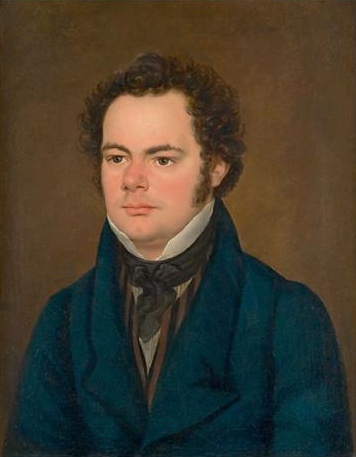
1825 song by Franz Schubert

"Ellens dritter Gesang" ("Ellens Gesang III", D. 839, Op. 52, No. 6, 1825), in English: "Ellen's Third Song", was composed by Franz Schubert in 1825 as part of his Op. 52, a setting of seven songs from Walter Scott's 1810 popular narrative poem The Lady of the Lake, loosely translated into German.
It is one of Schubert's most popular works. Beyond the song as originally composed by Schubert, it is often performed and recorded by many singers under the title "Ave Maria" (the Latin name of the prayer Hail Mary, and also the opening words and refrain of Ellen's song, a song which is itself a prayer to the Virgin Mary), in musically simplified arrangements and with various lyrics that commonly differ from the original context of the poem. It was arranged in three versions for piano by Franz Liszt.
''The Lady of the Lake'' and the "Ave Maria"

The piece was composed as a setting of a song (verse XXIX from Canto Three) from Walter Scott's popular narrative poem The Lady of the Lake, in a German translation by Adam Storck (1780–1822), and thus forms part of Schubert's Liederzyklus vom Fräulein vom See. In Scott's poem, the character Ellen Douglas, the Lady of the Lake (Loch Katrine in the Scottish Highlands), has gone with her exiled father to stay in the Goblin's cave as he has declined to join their previous host, Roderick Dhu, in rebellion against King James. Roderick Dhu, the chieftain of Clan Alpine, sets off up the mountain with his warriors, but lingers and hears the distant sound of the harpist Allan-bane, accompanying Ellen who sings a prayer addressed to the Virgin Mary, calling upon her for help. Roderick Dhu pauses, then goes on to battle.
Schubert's setting is said to have first been performed at the castle of Countess Sophie Weissenwolff in the little Austrian town of Steyregg and dedicated to her, which led to her becoming known as "the lady of the lake" herself.
The opening words and refrain of Ellen's song, namely "Ave Maria" (Latin for "Hail Mary"), may have led to the idea of adapting Schubert's melody as a setting for the full text of the traditional Roman Catholic prayer, "Ave Maria". The Latin version of the "Ave Maria" is now so frequently used with Schubert's melody that it has led to the impression that he originally wrote the melody as a setting for the "Ave Maria" prayer.
Position within the cycle
In 1825, Schubert composed a selection of seven songs from Scott's The Lady of the Lake. They were published in 1826 as his Opus 52.
The songs are not intended for a single performer: the three songs of Ellen are for a woman's voice with piano accompaniment, while the songs for Norman and Malcolm Graeme were intended for the baritone Johann Michael Vogl. Of the remaining two songs, one was for a male ensemble and the other for a female ensemble.
- "Ellens Gesang I", D. 837, Raste Krieger, Krieg ist aus / "Soldier rest! the warfare o'er"
- "Ellens Gesang II", D. 838, Jäger, ruhe von der Jagd / "Huntsman, rest! thy chase is done"
- "Bootgesang" (Hail to the Chief), D. 835, Triumph, er naht / "who in triumph approaches", for male voice quartet
- "Coronach" (Deathsong of the women and girls), D. 836, Er ist uns geschieden / "He is gone to the mountain", for female choir
- "Normans Gesang", D. 846, Die Nacht bricht bald herein ("Night will soon be falling")
- "Ellens Gesang III" (Hymne an die Jungfrau / Hymn to the Virgin), D. 839, Ave Maria! Jungfrau mild / "Ave Maria! maiden mild!"
- "Lied des gefangenen Jägers", D. 843, Mein Roß so müd / "My steed is tired"
Schubert composed the songs to the German texts. However, with the exception of No. 5, the songs were clearly intended to be published with the original English texts as well. This meant finding correspondences to Storck's sometimes quite free translations, which entailed significant difficulties.
Lyrics
| Storck's translation used by Schubert | "Hymn to the Virgin" by Sir Walter Scott | ||
|---|---|---|---|
| {{Lang | de | Ave Maria! Jungfrau mild, |
| Latin Catholic prayer version | |||
|---|---|---|---|
| {{Lang | la | Ave Maria, gratia plena, |
The Schubert version repeats words and phrases to get them to fit into his melody. Here is the actual prayer in Latin and in English.
AVE MARIA
Ave, María, grátia plena,
Dóminus tecum.
Benedicta tu in muliéribus,
et benedíctus fructus ventris
tui, Iesus.
Sancta María, Mater Dei,
ora pro nobis peccatoribus
nunc et in hora mortis nostrae.
Amen.
HAIL MARY
Hail Mary, full of grace,
the Lord is with thee.
Blessed art thou among women
and blessed is the fruit of thy womb, Jesus.
Holy Mary, Mother of God,
pray for us sinners now
and at the hour of our death. Amen.
Use in ''Fantasia'' (1940)
Walt Disney used Schubert's song in the final part of his 1940 film Fantasia, where he linked it to Modest Mussorgsky's Night on Bald Mountain in one of his most famous pastiches. The end of Mussorgsky's work blends with almost no break into the beginning of Schubert's song, and as Deems Taylor remarked, the bells in Night on Bald Mountain, originally meant to signal the coming of dawn, which cause the demon Chernabog to stop his dark worship and the ghosts to return to the grave, now seem to be church bells signalling the beginning of religious services. A procession of monks is shown walking along. The text for this version is sung in English, and was written by Rachel Field. This version also had three stanzas, like Schubert's original, but only the third stanza made it into the film (one line in the last stanza is partially repeated to show how it is sung in the film):
| Ave Maria! | Ave Maria! | Ave Maria! |
|---|
The version heard in Fantasia was arranged by Leopold Stokowski especially for the film, and unlike the original, which is for a solo voice, is scored for soprano and mixed chorus, accompanied by the string section of the Philadelphia Orchestra. The soloist is Julietta Novis.
References
References
- (8 December 2015). "Liszt and the Ave Maria : Interlude.hk".
- [[Sigmund Spaeth. Spaeth, Sigmund]] (2005). Whitefish, Montana ''Stories Behind the World's Great Music'', p. 114, Kessinger Publishing
- Storck, Adam. (1819). "Das Fräulein vom See: Ein Gedicht in sechs Gesängen von Walter Scott. Aus dem Englischen, und mit einer historischen Einleitung und Anmerkungen von D. Adam Storck, Professor in Bremen". G. D. Baedeker.
- Verses XXVIII–XXX, [[s:The Lady of the Lake/Canto Three. ''The Lady of the Lake'', Canto Three]]
- "cf. The Schubert Institute (UK)".
- [[s:The Lady of the Lake/Canto Three. ''The Lady of the Lake'', Canto Three]], verse XXIX.
- "Ave Maria Press {{!}} Catholic Publisher of Catholic Books, Spiritual Book".
- Taylor, Deems. (1940). "Fantasia". Simon & Schuster.
- Horan, Tom. (2008-11-08). "Beyoncé: dream girl". [[The Daily Telegraph]].
This article was imported from Wikipedia and is available under the Creative Commons Attribution-ShareAlike 4.0 License. Content has been adapted to SurfDoc format. Original contributors can be found on the article history page.
Ask Mako anything about Ave Maria (Schubert) — get instant answers, deeper analysis, and related topics.
Research with MakoFree with your Surf account
Create a free account to save articles, ask Mako questions, and organize your research.
Sign up freeThis content may have been generated or modified by AI. CloudSurf Software LLC is not responsible for the accuracy, completeness, or reliability of AI-generated content. Always verify important information from primary sources.
Report