From Surf Wiki (app.surf) — the open knowledge base
Autonomous Region of Bougainville
Autonomous region of Papua New Guinea

Autonomous region of Papua New Guinea
| Field | Value |
|---|---|
| official_name | Autonomous Region of Bougainville |
| Otonomos Region bilong Bogenvil | |
| native_name | Bogenvil |
| name | Bougainville |
| image_flag | Flag of Bougainville.svg |
| flag_link | Flag of Bougainville |
| image_seal | Emblem of Autonomous region of Bougainville.svg |
| seal_type | Emblem |
| seal_size | 125px |
| settlement_type | Autonomous region of Papua New Guinea |
| seal_link | Emblem of Bougainville |
| subdivision_type | Country |
| subdivision_name | Papua New Guinea |
| motto | "Peace, Unity, Prosperity" |
| anthem | "My Bougainville"file:My Bougainville, or The Song of Australia.ogg |
| image_map | Bougainville in Papua New Guinea (special marker).svg |
| map_caption | Location within Papua New Guinea |
| languages_type | Official languages |
| official_languages | English, Tok Pisin |
| {{Collapsible list | |
| framestyle | border:none; padding:0; |
| title | Regional languages |
| demonym | Bougainvillean |
| capital | Buka |
| coordinates | |
| largest_city | Arawa |
| leader_title1 | President |
| leader_name1 | Ishmael Toroama |
| leader_title2 | Vice-President |
| leader_name2 | Patrick Nisira |
| legislature | House of Representatives |
| established_title | Autonomy |
| established_date | 25 June 2002 |
| established_title2 | Voted for independence |
| established_date2 | 7 December 2019 |
| area_rank | |
| area_km2 | 9384 |
| population_estimate | |
| population_estimate_year | 2019 |
| population_census | |
| population_census_year | 2024 |
| population_density_km2 | 26.5 |
| Gini_change | |
| Gini | |
| HDI_year | 2019 |
| HDI_change | increase |
| HDI | 0.595 |
| HDI_ref | |
| currency | Papua New Guinean kina |
| currency_code | PGK |
| timezone | Bougainville Standard Time |
| utc_offset | +11:00 |
| drives_on | left |
| iso_code | PG-NSB |
| calling_code | +675 |
| other_name | North Solomon Islands |
Otonomos Region bilong Bogenvil {{Collapsible list | Askopan | Bannoni | Daantanaiʼ | Hahon | Hakö | Halia | Koromira | Lawunuia | Naasioi | Nagovisi | Nehan | Nukumanu | Nukuria | Ounge | Papapana | Petats | Ramopa | Rapoisi | Rotokas | Saposa | Simeku | Siwai | Solos | Takuu | Teop | Terei | Tinputz | Torau | Uisai
Bougainville ( ; Tok Pisin: Bogenvil), officially the Autonomous Region of Bougainville (Tok Pisin: Otonomos Region bilong Bogenvil), is an autonomous region in Papua New Guinea. The largest island is Bougainville Island, while the region also includes Buka Island and a number of outlying islands and atolls. The provisional capital is Buka, on Buka Island.
In 2024, the region had a population of 367,093 people. The lingua franca of Bougainville is Tok Pisin, while a variety of Austronesian and non-Austronesian languages are also spoken. The region includes several Polynesian outliers where Polynesian languages are spoken. Geographically, the islands of Bougainville and Buka form part of the Solomon Islands archipelago, but they are politically separate from the independent country of Solomon Islands. Historically, Bougainville and Buka, together with the islands of Choiseul, Santa Isabel, the Shortlands, and Ontong Java, which are all now part of the country of Solomon Islands, formed the German Solomon Islands Protectorate, the geographical area later being referred to as the North Solomon Islands.
Bougainville has been inhabited by humans for at least 29,000 years. During the colonial period, the region was occupied and administered by the Germans, Australians, Japanese, and Americans for various periods. The name of the region originates from French admiral Louis Antoine de Bougainville, who reached it in 1768.
Bougainvillean separatism dates to the 1960s, and the Republic of the North Solomons was declared shortly before the independence of Papua New Guinea in 1975; it was subsumed into Papua New Guinea the following year. Conflict over the Panguna mine became the primary trigger for the Bougainville Civil War (1988–1998), which resulted in the deaths of up to 20,000 people. A peace agreement resulted in the creation of the Autonomous Bougainville Government.
In late 2019, a non-binding independence referendum was held with 98% voting for independence rather than continued autonomy within Papua New Guinea. As a result, the regional authorities intend to become independent between 2025 and 2027, pending ratification by the Papua New Guinean government. If ratified, the capital may relocate from Buka back to the previous location of Arawa. In March 2025, the Bougainville Independence Leaders Consultation Forum recommended 1 September 2027 as the date of independence.
History
Main article: History of Bougainville
Prehistory
Bougainville has been inhabited by humans for at least 29,000 years, according to evidence obtained from Kilu Cave on Buka Island. Until about 10,000 years ago, during the Last Glacial Maximum, there was a single island referred to as "Greater Bougainville" that spanned from the northern tip of Buka Island to the Nggela Islands north of Guadalcanal.
The first inhabitants of Bougainville were Australo-Melanesians who presumably arrived from the Bismarck Archipelago. Around 3000 years ago, Austronesian peoples brought the Lapita culture to the islands, introducing pottery, agriculture, and domesticated animals such as pigs, dogs, and chickens. Both Austronesian and non-Austronesian languages are spoken on the islands to this day, however, there has been significant mixing between the populations to the point that cultural and genetic differences are no longer correlated with language.
Colonial history

The first Europeans to sight present-day Bougainville were the Dutch explorers Willem Schouten and Jacob Le Maire, who glimpsed Takuu Atoll and Nissan Island in 1616. British naval officer Philip Carteret saw Buka Island in 1767 and also visited the islands that were later named in his honour. In 1768, French admiral Louis Antoine de Bougainville sailed along the east coast of the island that now bears his name.
German administration
The German Empire, which had already begun operations in New Guinea, annexed present-day Bougainville in 1886, after agreeing with the United Kingdom to divide the Solomon Islands archipelago between them. A German protectorate over the northern islands was established later that year, but the British Solomon Islands Protectorate was not established until 1893. The initial boundary between the two territories was much more southerly, with Choiseul Island, Santa Isabel Island, Ontong Java, the Shortland Islands, and part of the Florida Islands included in the German section. The current boundary between PNG and Solomon Islands is derived from the Tripartite Convention of 1899, which saw those islands ceded to the United Kingdom.
The German Solomon Islands were administered through German New Guinea, although it took almost two decades for an administrative presence to be established. The German administrative station at Kieta, established in 1905, was preceded by a Marist mission, which succeeded in converting a majority of the islanders to Catholicism. The first fully commercial plantation was established in 1908, but German annexation had little economic impact.
Australian administration
The Australian Naval and Military Expeditionary Force occupied Bougainville in December 1914, as part of the Australian occupation of German New Guinea. The 1919 Treaty of Versailles established the former colony as a League of Nations mandate, administered by Australia as the Territory of New Guinea. A civilian administration was established in 1920, after which German nationals were deported and their property expropriated. A number of punitive expeditions took place during both the German and Australian administrations, as part of "pacification" programs. The colonial period saw significant changes in the culture of the islanders.

In 1942, Bougainville was invaded by the Japanese in order to provide a support base for the operations elsewhere in the South-West Pacific. The Allied counter-invasion resulted in heavy casualties, beginning in 1943, with full control of the islands not re-established until 1945. After the war the Australian government incorporated Bougainville and the rest of the mandate into the Territory of Papua and New Guinea, the immediate predecessor of present-day Papua New Guinea.
Modern history
Papua New Guinea gained its independence from Australia in 1975. As Bougainville is rich in copper and gold, a large mine had been established at Panguna in the early 1970s by Bougainville Copper Limited, a subsidiary of Rio Tinto. Disputes by regional residents with the company over adverse environmental impacts, failure to share financial benefits, and negative social changes brought by the mine resulted in a local revival for a secessionist movement that had been dormant. Activists proclaimed the independence of Bougainville (Republic of North Solomons) in 1975 and in 1990, but both times central government forces suppressed the democratic independence movement.
Civil war
Main article: Bougainville conflict
In 1988, the Bougainville Revolutionary Army (BRA) increased their activity significantly. Prime Minister Sir Rabbie Namaliu ordered the Papua New Guinea Defence Force (PNGDF) to put down the rebellion, and the conflict escalated into a civil war. The PNGDF retreated from permanent positions on Bougainville in 1990 but continued military action. The conflict involved pro-independence and loyalist Bougainvillean groups as well as the PNGDF. The war claimed an estimated to lives.{{cite journal |access-date = 2007-10-11 |archive-url = https://web.archive.org/web/20070829115822/http://devnet.anu.edu.au/GenderPacific/pdfs/15_gen_gov_saovanaspriggs.pdf |archive-date = 2007-08-29 |access-date=2007-10-11 | archive-url= https://web.archive.org/web/20071009214716/http://ec.europa.eu/development/Geographical/RegionsCountries/Countries/Papua%20New%20Guinea.htm | archive-date= 9 October 2007 | url-status= live
In 1996, Prime Minister Sir Julius Chan made the controversial move to hire Sandline International, a private military company previously involved in supplying mercenaries in the civil war in Sierra Leone, to put down the rebellion.
Peace agreement and autonomy

The Bougainville conflict ended in 1997 after negotiations brokered by New Zealand. In 2000, A peace agreement was completed and, together with disarmament, provided for the establishment of an Autonomous Bougainville Government. The parties agreed to have a referendum in the future on whether the island should become politically independent.
On 25 July 2005, rebel leader Francis Ona died after a short illness. A former surveyor with Bougainville Copper, Ona was a key figure in the secessionist conflict and had refused to formally join the island's peace process.
In 2015, Australia announced it would establish a diplomatic post in Bougainville for the first time. In 2016, it cancelled those plans acknowledging that it had not obtained the PNG government's approval.
Independence referendum
In 2019, a non-binding independence referendum was held with 98.3% voting for independence rather than continued autonomy within Papua New Guinea. As a result, the regional authorities intend to become independent between 2025 and 2027. A draft constitution for a "Republic of Bougainville" was published by the Autonomous Bougainville Government in May 2024. In March 2025, the Bougainville Independence Leaders Consultation Forum recommended 1 September 2027 as the date of independence. Prime Minister James Marape cautioned that Bougainville's economy is not sustainable enough for independence.
Geography
The Bougainville region occupies the north of the Solomon archipelago with Bougainville Island, which is the largest island of this group. The border between Papua New Guinea and the nation of Solomon Islands lies just south in the middle of a 9 km strait that separates it from the Shortland Islands.
The island of Buka is north of Bougainville, separated by a narrow strait. The region includes other more or less remote islands and atolls:

- the Green Islands with its main island Nissan;
- the Carteret Islands;
- Takuu Atoll, a Polynesian outlier;
- Nukumanu Atoll, a Polynesian outlier;
- the Nuguria Islands, a Polynesian outlier.
The territory constitutes an archipelago in the Pacific Ocean that has an area of 9384 square kilometres.
Government and politics
Main article: Autonomous Bougainville Government
Elections for the first autonomous government were held in May and June 2005; Joseph Kabui, an independence leader, was elected president. He died in office on 6 June 2008. After interim elections to fill the remainder of his term, John Momis was elected as president in 2010 for a five-year term. He supports autonomy within a relationship with the national government of Papua New Guinea.
The Constitution of Bougainville specifies that the Autonomous Bougainville Government shall consist of three branches:
- Executive: the President of the Autonomous Region of Bougainville who chairs the Bougainville Executive Council.
- Legislative: the Bougainville House of Representatives (39 elected members and two ex officio members).
- Judicial: the Bougainville Courts including a Supreme Court and High Court.
The capital city is Buka, which became the centre of government after Arawa was damaged during the Bougainville Civil War. The status of Buka is considered temporary, and the government is deciding on the location of a permanent capital.
2019 independence referendum
Main article: 2019 Bougainvillean independence referendum
President John Momis confirmed that Bougainville would hold a non-binding independence referendum in 2019. The governments of both Bougainville and Papua New Guinea held a two-week referendum period which began on 23 November 2019 and closed on 7 December 2019, which is the final step in the Bougainville Peace Agreement. The referendum question was a choice between greater autonomy within Papua New Guinea, or full independence. Over 98% of the valid ballots were cast for independence.
Ishmael Toroama, a former rebel leader, was elected president of Bougainville on 23 September 2020.
Negotiations between Papua New Guinea and Bougainville began on 17 May 2021. While Toroama stated a desire to see Bougainville become independent by June 2025, Papua New Guinea Prime Minister James Marape cautioned against setting a specific timetable. On 7 July 2021, it was announced that Bougainville will become independent by the end of 2027 pending approval of the PNG parliament. In March 2025, the Bougainville Independence Leaders Consultation Forum recommended 1 September 2027 as the date of independence.
Districts and Local Level Government Areas


The region is divided into three districts, which are further divided into Local Level Government (LLGs) areas. For census purposes, the LLGAs are subdivided into wards, and those into census units.
| District | District Capital | LLGA Name | Central Bougainville District | Arawa-Kieta | North Bougainville District | Buka | South Bougainville District | Buin | ||
|---|---|---|---|---|---|---|---|---|---|---|
| Arawa Rural | ||||||||||
| Wakunai Rural | ||||||||||
| Atolls Rural | ||||||||||
| Buka Rural | ||||||||||
| Kunua Rural | ||||||||||
| Nissan Rural | ||||||||||
| Selau-Suir Rural | ||||||||||
| Tinputz Rural | ||||||||||
| Bana Rural | ||||||||||
| Buin Rural | ||||||||||
| Siwai Rural | ||||||||||
| Torokina Rural |
Demographics
Religion
The great majority of Bougainville residents are Christian, with an estimated 70% being Roman Catholic and a substantial minority being of the Protestant United Church of Papua New Guinea since 1968. The Catholic Church has its own diocese in the region (Diocese of Bougainville or Dioecesis Buganvillensis). The cathedral and main church is dedicated to Our Lady of the Assumption, and can be found on Buka Island. It was formerly the Church of St. Michael the Archangel in the former mission of Tubiana. There are a total of 33 Catholic parishes and one mission in the region.
Languages
Bougainville's constitution, written in English, does not specify an official language, but calls for constitutional literature to be translated into Tok Pisin and as many local languages as possible, while also encouraging the "development, preservation, and enrichment of all Bougainville languages".
The most widely spoken Austronesian language is Halia and its dialects, spoken in the island of Buka and the Selau peninsula of Northern Bougainville. Other Austronesian languages include Nehan, Petats, Solos, Saposa (Taiof), Hahon and Tinputz, all spoken in the northern quarter of Bougainville, Buka and surrounding islands. These languages are closely related. Bannoni and Torau are Austronesian languages not closely related to the former, which are spoken in the coastal areas of central and south Bougainville. On the nearby Takuu Atoll a Polynesian language is spoken, Takuu.
Economy
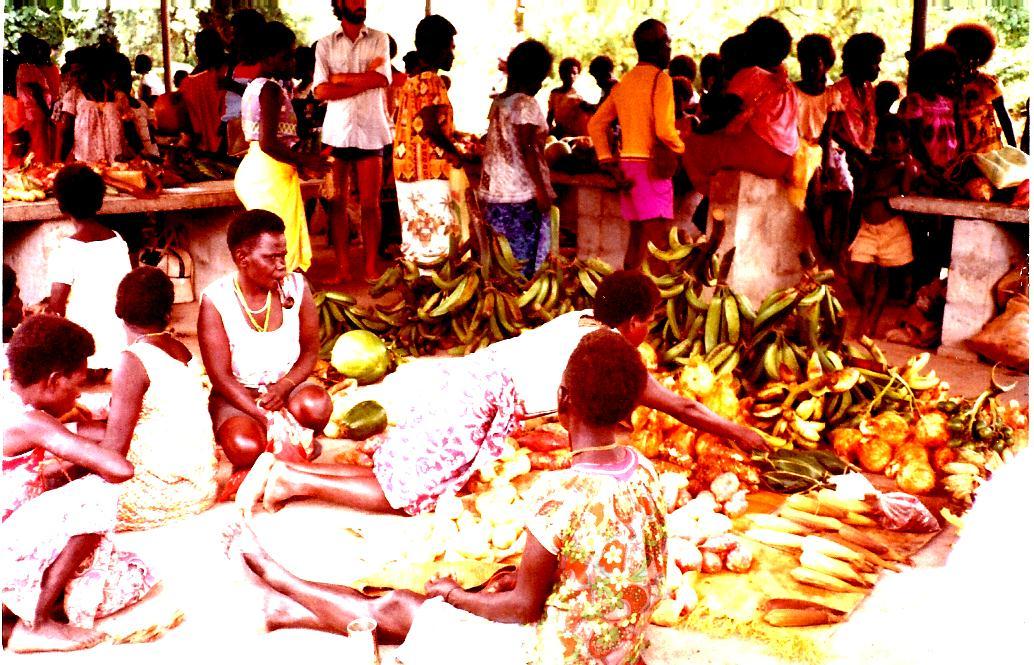
Official statistics about Bougainville's economy are not available. The PNG National Research Institute estimates its GDP per capita at $1100
A small percentage of the region's economy is from mining. The majority of economic growth comes from agriculture and aquaculture. The region's biodiversity, which is one of the most important in Oceania, is heavily threatened by mining activities. Mining activities have caused civil unrest in the region many times. In January 2018, a moratorium on one mine was imposed by the Papua New Guinea government, in a bid to calm civil unrest against mining in the region.
Bougainville had one of the world's largest open-pit copper mines, the Pangunamine, from 1972 to 1989, which for many years generated a large part of Papua New Guinea's gross national product. The mine was operated by the Australian company Bougainville Copper (BLC), a subsidiary of the British-Australian mining company Rio Tinto/CRA, which had majority control of the company. The state of Papua New Guinea (PNG) holds a 19.1% stake in Bougainville Copper.
As a result of the civil war and the rebel-forced closure of the mine, Papua New Guinea's government revenues fell by 20%. Some hope for the eventual reopening of the Panguna mine. Negotiations to reopen the Panguna mine began in early March 2006 with talks between former PNG Mines Minister Sam Akoitai and the Rio Tinto corporation in London. Some representatives of landowners in the Panguna area have repeatedly agreed to resume mining operations, albeit in conjunction with demands for large compensation payments from the mine operator BCL.
Yields from the two main exports, cocoa and copra, returned to pre-civil war levels in 2007. Largely operated by Europeans, Asians, churches and corporations, large-scale commercial plantations, which were responsible for a significant share of production before the civil war, are now used by smaller local operators. Further processing is done by small cocoa dryers promoted by AusAid.
Bougainville Region is the most productive in all of PNG for cocoa. Omuru et al., 2001 find households farming cacao (Theobroma cacao) average an income of US$215/year. The Cocoa Pod Borer (Conopomorpha cramerella) was considered a large risk for invasion here due to its invasion of nearby areas of Southeast Asia | | | | including East New Britain. There was great interest in modelling and phytosanitation practices to forestall its introduction. Unfortunately CPB did arrive here and in 2011 the World Bank's Productive Partnerships in Agriculture Project was created to help farmers control the insect. From the 2009 production level, bean tonnage fell by over 41% by 2014 (although this also includes trees aging out). The Tinputz area including Namatoa had been the highest-producing part of the region and has seen many farms be abandoned and return to jungle. PPAP hopes to revive the industry around Namatoa. Cryptolaemus sinestria is a mealybug of cacao trees here, observed at a Buka agricultural station.
Termites are common agricultural pests in Bougainville. Microcerotermes biroi and Nasutitermes novanimhebridarum are pests of coconut (Cocos nucifera). N. novanimhebridarum is also a pest of cacao (Theobroma cacao) here. Termite pests found here tend to be shared with many of the nearby islands.
Culture

National symbols
A law passed by the provincial assembly — the Bougainville Flag, Emblem and Anthem (Protection) Act 2018 — affirmed the existing official status of the flag of Bougainville and emblem of Bougainville. Both the flag and emblem feature stylised depictions of the upe, a traditional headdress worn by men in parts of Bougainville to symbolise their transition to adulthood. The law also established "My Bougainville" as the region's anthem.
Sport
Rugby league in Bougainville is administered by the Bougainville Rugby Football League (BRFL), which is affiliated with the Papua New Guinea Rugby Football League (PNGRFL). A number of Bougainvilleans have played for the Papua New Guinea national rugby league team, including Bernard Wakatsi, Joe Katsi, Lauta Atoi, and Chris Siriosi.
F.C. Bougainville has played in the National Soccer League since 2019, although it is based in Port Moresby rather than in Bougainville itself. Previously, a team from Bougainville won the national soccer championships in 1977, defeating Rabaul. Historically the Bougainville Soccer Association came into conflict with the Papua New Guinea Football Association over various matters.
During the 1970s and 1980s, teams from Bougainville played against other regions in the PNG national championships for Australian rules football, cricket, and field hockey.
Boxing is popular in Bougainville. The region won the 2017 National Boxing Championships, which were hosted in Arawa. Notable boxers from the region include Commonwealth Boxing Council titleholder Johnny Aba and Pacific Games gold medalist Thadius Katua.
Bougainvillean netball player Maleta Roberts has played professionally in Australia and represented the Papua New Guinea national netball team at the Commonwealth Games.
References
References
- "AUTONOMOUS REGION OF BOUGAINVILLE: Bougainville Flag, Emblem and Anthem (Protection) Bill 2018". Abg.gov.pg.
- "Sub-national HDI - Area Database - Global Data Lab".
- (21 November 2019). "Bougainville: a vote for independence". [[ABC News (Australia).
- "Bogenvil". Tok Pisin English Dictionary.
- (6 June 2019). "K20 milien bilong Bogenvil referendem". Loop PNG.
- "The Constitution of the Autonomous Region of Bougainville". Autonomous Bougainville Government.
- "Bougainville (Province, Papua New Guinea) - Population Statistics, Charts, Map and Location".
- Dunmore, John. (2005-03-01). "Storms and Dreams: Louis de Bougainville: Soldier, Navigator, Statesmen". Exisle Publishing.
- (2021-07-06). "Bougainville sets 2027 deadline for independence from Papua New Guinea".
- (2021-07-07). "PNG, B'ville agree on latter's independence".
- (19 November 2021). "Bougainville independence: recalling promises of international help".
- Waide, Scott. (12 March 2025). "Bougainville Leaders Forum recommends September 2027 for independence". [[Radio New Zealand]].
- Spriggs, Matthew. (2005). "Bougainville Before the Conflict". Stranger Journalism.
- Sack, Peter. (2005). "Bougainville Before the Conflict". Stranger Journalism.
- Griffin, James. (2005). "Bougainville Before the Conflict". Stranger Journalism.
- Elder, Peter. (2005). "Bougainville Before the Conflict". Stranger Journalism.
- [https://www.wsws.org/articles/2001/may2001/png-m23.shtml Will Marshall, "Papua New Guinea government obtains shaky weapons disposal pact in Bougainville"], ''World Socialist Web Site'', May 23, 2001. Accessed on line March 4, 2008.
- (3 June 2015). "Papua New Guinea not told of Australia's plans for new diplomatic post there".
- [https://www.rnz.co.nz/international/pacific-news/303341/canberra-abandons-bougainville-mission-plan Canberra abandons Bougainville mission plan], [[Radio New Zealand]], 8 May 2016
- (27 September 2021). "Bougainvilleans consulted on location for new capital". [[RNZ]].
- (24 January 2013). "Bougainville confirms independence referendum before 2020".
- (22 May 2016). "Ball rolling on Bougainville referendum". [[Radio New Zealand]].
- (11 December 2019). "Bougainville voters back independence by landslide". [[The Standard (Kenya).
- (11 December 2019). "Bougainville independence vote delivers emphatic demand to become world's newest nation". [[CNN]].
- Barrett, Jonathan. (23 September 2020). "Bougainville elects former rebel commander as next president". [[Reuters]].
- Mercer, Phil. (17 May 2021). "Papua New Guinea Begins Breakaway Talks with Bougainville Leader". [[Voice of America]].
- (19 May 2021). "Bougainville president wants independence from PNG by 2025". [[ABC Online]].
- (19 May 2021). "Bougainville's president seeks independence by 2025". [[Radio New Zealand]].
- (2021-07-07). "PNG, B'ville agree on latter's independence".
- "Pacific Regional Statistics – Secretariat of the Pacific Community".
- "Bougainville (Diocese) [Catholic-Hierarchy]".
- "Diocese of Bougainville, Papua New Guinea".
- Irwin, H. (1980). Takuu Dictionary. : A Polynesian language of the South Pacific. Canberra: Pacific Linguistics. 428pp. {{ISBN. 978-0858836372.
- "Trying To Form The World's Newest Country, Bougainville Has A Road Ahead".
- Davidson, Helen. (10 January 2018). "Bougainville imposes moratorium on Panguna mine over fears of civil unrest".
- (2019). "Soil security for developing and sustaining cocoa production in Papua New Guinea". [[Elsevier]].
- (June 26, 2013). "Restoring Livelihoods for Cocoa Farmers in Papua New Guinea after Widespread Crop Disease".
- (September 17, 2014). "Papua New Guinea: Restoring the 'Stream of Cocoa' to Bougainville".
- (1986). "A review of the genus ''Cryptolaemus'' (Coleoptera: Coccinellidae) with particular reference to the species resembling ''C. montrouzieri'' Mulsant". [[Cambridge University Press]] (CUP).
- Gray, B.. (20 August 1968). "Forest tree and timber insect pests in the Territory of Papua and New Guinea". [[Pacific Insects]].
- "BOUGAINVILLE FLAG, EMBLEM AND ANTHEM (PROTECTION) ACT 2018". Autonomous Bougainville Government.
- "Bougainville Flag, Emblem and Anthem (Protection) Bill 2018: Explanatory Note". Autonomous Bougainville Government.
- (12 June 2018). "New Executives Set To Revive Rugby League". [[Papua New Guinea Post-Courier]].
- (23 March 2015). "League Bilong Laif program commences in Bougainville". [[National Rugby League]].
- (24 January 2019). "Sport: Bougainville to make PNG National Soccer League debut". [[Radio New Zealand]].
- (14 April 1977). "A soccer lesson from Bougainville". Papua New Guinea Post-Courier.
- (10 August 1973). "Bougainville soccer issues a challenge". Papua New Guinea Post-Courier.
- (21 May 1975). "Rabaul too fit for Bougainville". Papua New Guinea Post-Courier.
- (15 February 1980). "Shield match in doubt". Papua New Guinea Post-Courier.
- (27 April 1971). "Hockey booming in Bougainville". Papua New Guinea Post-Courier.
- (18 September 2017). "Bougainville wins boxing title". The National.
- Belu, Simon. "Katua in Rio to chase Olympic dream". Bougainville.
- (27 December 2013). "Pride of a nation". [[Bendigo Advertiser]].
This article was imported from Wikipedia and is available under the Creative Commons Attribution-ShareAlike 4.0 License. Content has been adapted to SurfDoc format. Original contributors can be found on the article history page.
Ask Mako anything about Autonomous Region of Bougainville — get instant answers, deeper analysis, and related topics.
Research with MakoFree with your Surf account
Create a free account to save articles, ask Mako questions, and organize your research.
Sign up freeThis content may have been generated or modified by AI. CloudSurf Software LLC is not responsible for the accuracy, completeness, or reliability of AI-generated content. Always verify important information from primary sources.
Report