From Surf Wiki (app.surf) — the open knowledge base
Autonomous Region in Muslim Mindanao
1989–2019 autonomous region of the Philippines

1989–2019 autonomous region of the Philippines
| Field | Value |
|---|---|
| conventional_long_name | Autonomous Region in Muslim Mindanao |
| native_name | fil |
| ar | |
| common_name | ARMM |
| nation | Philippines |
| status_text | Former autonomous region of the Philippines |
| subdivision | Region |
| date_start | 17 November |
| year_start | 1989 |
| event_start | Creation plebiscite |
| event1 | Inauguration |
| date_event1 | 6 November 1990 |
| event_end | Turnover of ARMM to BARMM |
| date_end | 26 February |
| year_end | 2019 |
| Government | Autonomous government |
| legislature | Regional Legislative Assembly |
| title_leader | Regional governor |
| leader1 | Zacaria Candao (first) |
| year_leader1 | 1990–1993 |
| leader2 | Mujiv Hataman (last) |
| year_leader2 | 2011–2019 |
| p1 | Zamboanga PeninsulaWestern Mindanao |
| flag_p1 | No flag.svg |
| p2 | SoccsksargenCentral Mindanao |
| flag_p2 | No flag.svg |
| s1 | Bangsamoro |
| flag_s1 | Flag of Bangsamoro.svg |
| image_flag | Flag of ARMM.svg |
| image_coat | ARMM seal.svg |
| image_map | |
| symbol_type | Seal |
| image_map_caption | Location within the Philippines |
| stat_area1 | 12,535.79 |
| stat_year1 | 2015 |
| stat_pop1 | 3,781,387 |
| capital | Cotabato City (provisional and de facto seat of government) |
| Parang (de jure seat of government, 1995–2001) | |
| political_subdiv | {{Collapsible list |
| titlestyle | padding-right:3em;font-weight:normal;text-align:left;background-color:WhiteSmoke; |
| title | 5 provinces |
| bullets | true |
ar Parang (de jure seat of government, 1995–2001) | Basilan (except Isabela City) | Lanao del Sur | Maguindanao | Sulu | Tawi-Tawi
The Autonomous Region in Muslim Mindanao (; Al-ḥukm adh-dhātī al-'iqlīmī li-muslimī Mindanāu; ARMM) was an autonomous region of the Philippines, located in the Mindanao island group of the Philippines, that consisted of five predominantly Muslim provinces: Basilan (except Isabela City), Lanao del Sur, Maguindanao, Sulu, and Tawi-Tawi. It was the only region that had its own government. The region's de facto seat of government was Cotabato City, although this self-governing city was outside its jurisdiction.
The ARMM included the province of Shariff Kabunsuan from its creation in 2006 until July 16, 2008, when Shariff Kabunsuan ceased to exist as a province after the Supreme Court of the Philippines declared the "Muslim Mindanao Autonomy Act 201", which created it, unconstitutional in Sema v. COMELEC and Dilangalen.
On October 7, 2012, President Benigno Aquino III said that the government aimed to have peace in the autonomous region and that it would become known as the Bangsamoro Autonomous Region, a compound of bangsa (nation) and Moro. On July 26, 2018, Aquino's successor, President Rodrigo Duterte, signed the Bangsamoro Organic Law (BOL), which paved the way for the establishment of a new autonomous political entity in the area, the Bangsamoro Autonomous Region in Muslim Mindanao (BARMM).
ARMM was nominally disestablished after the ratification of BOL and will be effectively replaced by the BARMM upon the constitution of the Bangsamoro Transition Authority, an interim government for the region. The law was "deemed ratified" on January 25, 2019, following the plebiscite.
Geography
The Autonomous Region in Muslim Mindanao (ARMM) was situated in mainland Mindanao in the southern Philippines and was created by virtue of the Republic Act No. 6734 which signed into law by President Corazon Aquino on August 1, 1989. The plebiscite was conducted in the proposed area of ARMM on November 17, 1989, in the provinces of Maguindanao, Lanao del Sur, Sulu, and Tawi-Tawi.
The region was strengthened and expanded through the ratification of Republic Act No. 9054, amending for the purpose of Republic Act No. 6734, entitled "An Act Providing for the ARMM" as amended in September 2001. The plebiscite paved the way for the inclusion of the province of Basilan and the city of Marawi as part of ARMM.
History
For the most part of Philippines' history, the region and most of Mindanao have been a separate territory, which enabled it to develop its own culture and identity. The region has been the traditional homeland of Muslim Filipinos since the 15th century, even before the arrival of the Spanish, who began to colonize most of the Philippines in 1565. Muslim missionaries arrived in Tawi-Tawi in 1380 and started living in the area and the conversion of the native population to Islam. In 1457, the Sultanate of Sulu was founded, and not long after that, the sultanates of Maguindanao and Buayan were also established. At the time when most of the Philippines was under Spanish rule, these sultanates maintained their independence and regularly challenged Spanish domination of the Philippines by conducting raids on Spanish coastal towns in the north and repulsing repeated Spanish incursions in their territory. It was not until the last quarter of the 19th century that the Sultanate of Sulu formally recognized Spanish suzerainty, but these areas remained loosely controlled by the Spanish as their sovereignty was limited to military stations and garrisons and pockets of civilian settlements in Zamboanga and Cotabato, until they had to abandon the region as a consequence of their defeat in the Spanish–American War.
The Moros had a history of resistance against Spanish, American, and Japanese rule for over 400 years. The violent armed struggle against the Japanese, Filipinos, Spanish, and Americans is considered by current Moro Muslim leaders as part of the four centuries long "national liberation movement" of the Bangsamoro (Moro Nation). The 400-year-long resistance against the Japanese, Americans, and Spanish by the Moro Muslims persisted and morphed into their current war for independence against the Philippine state.
In 1942, during the early stages of the Pacific War of the Second World War, troops of the Japanese Imperial Forces invaded and overran Mindanao, and the native Moro Muslims waged an insurgency against the Japanese. Three years later, in 1945, combined United States and Philippine Commonwealth Army troops liberated Mindanao, and with the help of local guerrilla units, ultimately defeated the Japanese forces occupying the region.
Precursors
Main article: Moro conflict
In the 1970s, escalating hostilities between government forces and the Moro National Liberation Front (MNLF) prompted President Ferdinand Marcos to issue a proclamation forming an Autonomous Region in the Southern Philippines. This was, however, turned down by a plebiscite. In 1979, Batas Pambansa No. 20 created a Regional Autonomous Government in the Western and Central Mindanao regions.
Establishment of the ARMM
Main article: 1989 Autonomous Region in Muslim Mindanao creation plebiscite
The Autonomous Region in Muslim Mindanao region was first created on August 1, 1989, through Republic Act No. 6734 (otherwise known as the Organic Act), primarily authored by Aquilino Pimentel Jr., in pursuance with a constitutional mandate to provide for an autonomous area in Muslim Mindanao. A plebiscite was held in the provinces of Basilan, Cotabato, Davao del Sur, Davao Occidental, Lanao del Norte, Lanao del Sur, Maguindanao, Palawan, Sarangani, South Cotabato, Sultan Kudarat, Sulu, Tawi-Tawi, Zamboanga del Norte, Zamboanga del Sur and Zamboanga Sibugay; and in the cities of Cotabato, Dapitan, Dipolog, General Santos, Isabela, Koronadal, Iligan, Marawi, Pagadian, Puerto Princesa, and Zamboanga to determine if their residents wished to be part of the ARMM. Of these areas, only six provinces — Basilan (including Isabela City), Lanao del Sur (including Marawi City), Maguindanao (including Cotabato City), Sulu, and Tawi-Tawi — voted in favor of inclusion in the new autonomous region. The ARMM was officially inaugurated on November 6, 1990 in Cotabato City, which was designated as its provisional capital. Muslim Mindanao Autonomy Act No. 42, enacted on September 22, 1995, sought to permanently fix the seat of regional government at Parang in Maguindanao (now in Maguindanao del Norte), pending the completion of required buildings and infrastructure. However, the move to Parang was never made. Until the passage of Republic Act No. 9054 in 2001, which directed the ARMM Regional Government to once again fix a new permanent seat of government in an area within its jurisdiction, Cotabato City remained the de facto seat of ARMM's government.
2001 expansion of the ARMM
Main article: 2001 Autonomous Region in Muslim Mindanao expansion and inclusion plebiscite
A new law, Republic Act No. 9054, was passed by Congress on February 7, 2001, with a view to expand the territory and powers of the ARMM by amending the original Organic Act (R.A. No. 6734) and calling for a plebiscite to ratify the amendments and confirm which other provinces and cities would like to join the region. RA 9054 lapsed into law on March 31, 2001, without the signature of President Gloria Macapagal Arroyo. A plebiscite was held on August 14 in the provinces of Basilan, Cotabato, Davao del Sur, Davao Occidental, Lanao del Norte, Lanao del Sur, Maguindanao, Palawan, Sarangani, South Cotabato, Sultan Kudarat, Sulu, Tawi-Tawi, Zamboanga del Norte, Zamboanga del Sur, and Zamboanga Sibugay, and the cities of Cotabato, Dapitan, Dipolog, General Santos, Iligan, Kidapawan, Marawi, Pagadian, Puerto Princesa, Digos, Koronadal, Tacurong, and Zamboanga. In the plebiscite, a majority of votes cast in the original four provinces were in favor of the amendments; outside these areas, only Marawi and the province of Basilan (excluding Isabela City) opted to be included in the ARMM.
Creation and disestablishment of Shariff Kabunsuan
Main article: Shariff Kabunsuan, Sema v. COMELEC and Dilangalen
The ARMM's sixth province, Shariff Kabunsuan, was carved out of Maguindanao on October 28, 2006. However, on July 16, 2008, the Supreme Court of the Philippines voided the creation of Shariff Kabunsuan, declaring unconstitutional Section 19 in RA 9054 which granted the ARMM Regional Assembly the power to create provinces and cities. The Supreme Court held that only Congress was empowered to create provinces and cities because the creation of such necessarily included the power to create legislative districts, which explicitly under the Philippine Constitution was within the sole prerogative of Congress to establish.
Memorandum of Agreement on Ancestral Domain
On July 18, 2008, Hermogenes Esperon, peace advisor to then President Gloria Macapagal Arroyo, in his talks with Moro Islamic Liberation Front (MILF) rebels in Malaysia, revealed the planned expansion of the region.
Massive protests, however, greeted the move of the Philippine government and MILF panels in signing a Memorandum of Agreement on Ancestral Domain as a majority of the local government units where these barangays are connected have already opted not to join the ARMM in two instances, 1989 and 2001.
On August 4, 2008, after local officials from Cotabato asked the Supreme Court to block the signing of the agreement between the Philippine government and MILF, the Court issued a temporary restraining order against the signing of the Memorandum of Agreement on Ancestral Domain (MOA-AD) between the Philippine government and the MILF rebels in Malaysia. Several lawmakers had filed petitions with the Supreme Court to stop the Philippine government from concluding the MOA-AD due to lack of transparency and for MILF's failure to cut ties with the al-Qaeda-linked terrorist network Jemaah Islamiyah, which aims to establish a pan-Islamic state in Southeast Asia using MILF camps in southwestern Mindanao as training grounds and staging points for attacks.
On October 14, 2008, the Supreme Court of the Philippines, by a vote of 8–7, declared “contrary to law and the Constitution” the Ancestral Domain Aspect (MOA-AD) of the Tripoli Agreement on Peace of 2001 between the Philippine government and the MILF. The 89-page decision, written by Associate Justice Conchita Carpio-Morales ruled: “In sum, the Presidential Adviser on the Peace Process committed grave abuse of discretion when he failed to carry out the pertinent consultation process, as mandated by EO No. 3, RA 7160, and RA 8371. The furtive process by which the MOA-AD was designed and crafted runs contrary to and in excess of the legal authority, and amounts to a whimsical, capricious, oppressive, arbitrary and despotic exercise thereof. It illustrates a gross evasion of positive duty and a virtual refusal to perform the duty enjoined.”
Bangsamoro state
Due to the challenges in establishing the Bangsamoro entity in the previous administrations, then Mayor Rodrigo Duterte of Davao City announced his intent to establish a federal form of government which would replace the unitary form of government in his campaign speeches for the 2016 Philippine presidential election, which he subsequently won. In his plan, ARMM, along with the areas that voted to be included in ARMM in 2001, plus Isabela City and Cotabato City, will become part of a federal state. Aquilino Pimentel Jr., a Duterte ally and advocate for federalism, said in an interview that Isabela City, Basilan, Lamitan, Sulu, and Tawi-tawi may become a single federal state, while Lanao del Sur, Marawi, Cotabato City, and Maguindanao may become a single federal state as well because the Muslims of the Sulu archipelago have a different heritage from the Muslims in mainland Mindanao.
Creation of Bangsamoro
Main article: 2019 Bangsamoro autonomy plebiscite
Under the presidency of Aquino's successor, Rodrigo Duterte, a new draft for the BBL was made and became legislated into law as the Bangsamoro Organic Law (BOL) in 2018. A plebiscite to ratify the BOL was held on January 21, 2019, with a majority of ARMM voters deciding for the ratification of the law. Voters in Cotabato City voted to join the new autonomous region, while voters in Isabela City voted against inclusion. The Commission on Elections proclaimed that the BOL was "deemed ratified" on January 25, 2019. The provincial government of Sulu, where majority voted against inclusion, was also not in favor of the law, with its governor challenging the constitutionality of the law before the Supreme Court. Despite voting against inclusion, Sulu was still included in the Bangsamoro region due to rules stated in the BOL, sparking outrage from residents.
In February 2019, the second round of the plebiscite was held in the province of Lanao del Norte and some towns in Cotabato. The plebiscite resulted in the inclusion of 63 of 67 barangays in Cotabato that participated. It also resulted in the rejection from the province of Lanao del Norte against the bid of six of its Muslim-majority towns to join the Bangsamoro, despite the six towns (Balo-i, Munai, Nunungan, Pantar, Tagoloan and Tangcal) opting to join the Bangsamoro by a sheer majority, with one town even voting for inclusion by 100%. A major camp of the MILF was within the Muslim areas of Lanao del Norte.
Transition process
Main article: Bangsamoro transition period

With the ratification of the BOL following the plebiscite on January 21, 2019, the abolition process of the ARMM began, paving way for the setting up of the Bangsamoro autonomous region. Under the BOL, a transitional body, the Bangsamoro Transition Authority (BTA), was organized pending the election of the new region's government officials in 2022. The second part of the plebiscite held on February 6, 2019, expanded the scope of the future Bangsamoro region to include 63 barangays in Cotabato. The members of the BTA took their oaths on February 22, 2019, along with the ceremonial confirmation of the plebiscite results of both the January 21, and February 6, 2019, votes. The official turnover from the ARMM to BARMM took place on February 26, 2019, which meant the full abolition of the former.
Demographics

Administrative divisions
The Autonomous Region in Muslim Mindanao consisted of 5 provinces, 2 component cities, 116 municipalities and 2,490 barangays. The cities of Isabela and Cotabato were not under the administrative jurisdiction of the ARMM despite the former being part of Basilan and the latter geographically considered but not politically part of Maguindanao province.
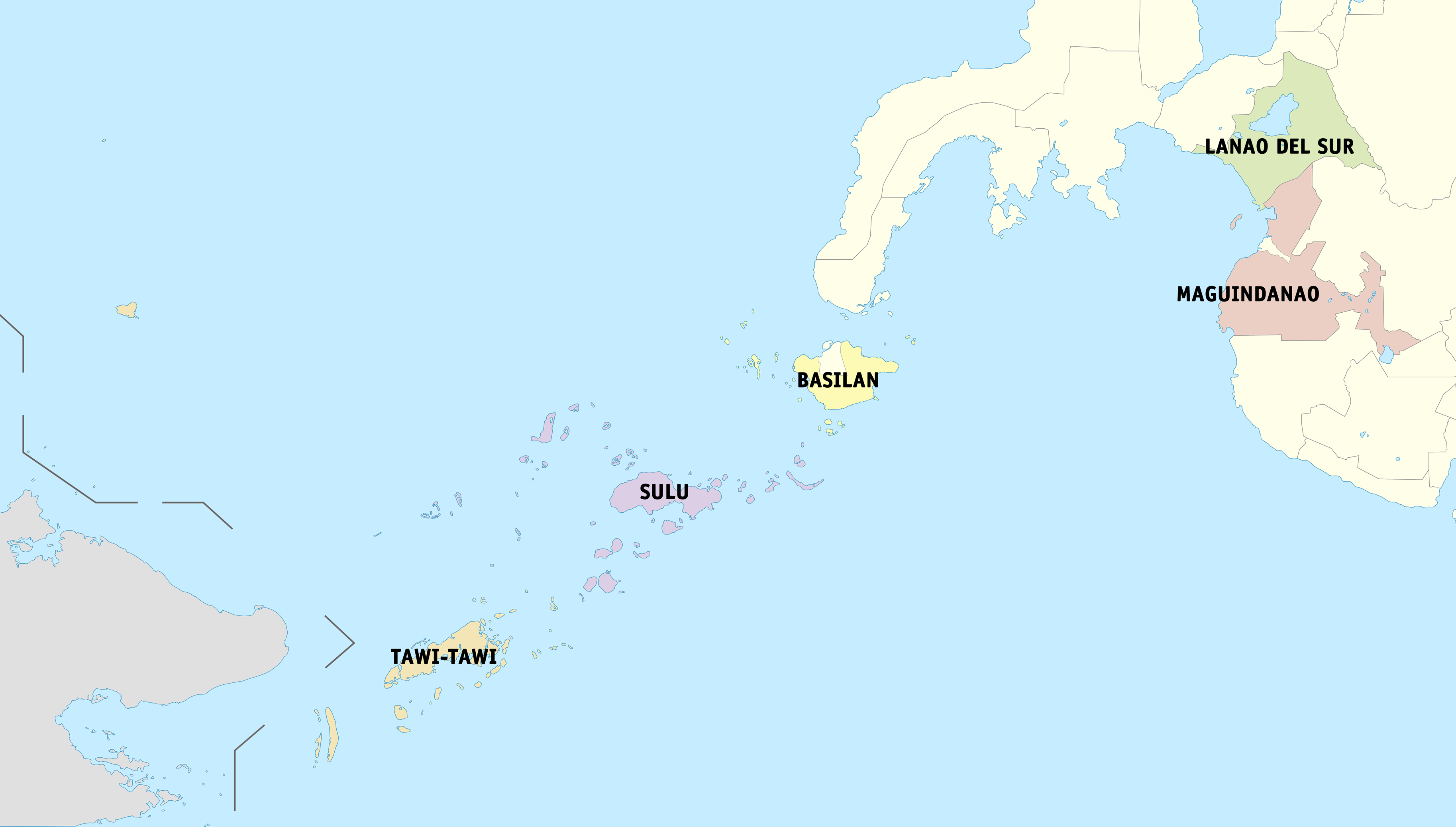
| Province | Capital | Population (2015) | Area | Density | Cities | Muni. | Bgy. | km2 | sq mi | /km2 | /sq mi | Basilan | Lanao del Sur | Maguindanao | Sulu | Tawi-Tawi | Total | 3,781,387 | 12,535.79 | 12535.79 km2 | {{sigfig | 3781387/12535.79 | 2}} PD/km2 | 2 | 116 | 2,490 |
|---|---|---|---|---|---|---|---|---|---|---|---|---|---|---|---|---|---|---|---|---|---|---|---|---|---|---|
| Lamitan | 1103.50 km2 | {{sigfig | 346579/1103.5 | 2}} PD/km2 | 1 | 11 | 210 | |||||||||||||||||||
| Marawi | 3872.89 km2 | {{sigfig | 1045429/3872.89 | 2}} PD/km2 | 1 | 39 | 1,159 | |||||||||||||||||||
| Buluan | 4871.60 km2 | {{sigfig | 1173933/4871.6 | 2}} PD/km2 | 0 | 36 | 508 | |||||||||||||||||||
| Jolo | 1600.40 km2 | {{sigfig | 824731/1600.4 | 2}} PD/km2 | 0 | 19 | 410 | |||||||||||||||||||
| Bongao | 1087.40 km2 | {{sigfig | 390715/1087.4 | 2}} PD/km2 | 0 | 11 | 203 | |||||||||||||||||||
| list_style_type=lower-alpha | Figures exclude the independent component city of Cotabato, which is under the jurisdiction of Soccsksargen. |
Government
ARMM organizational structure
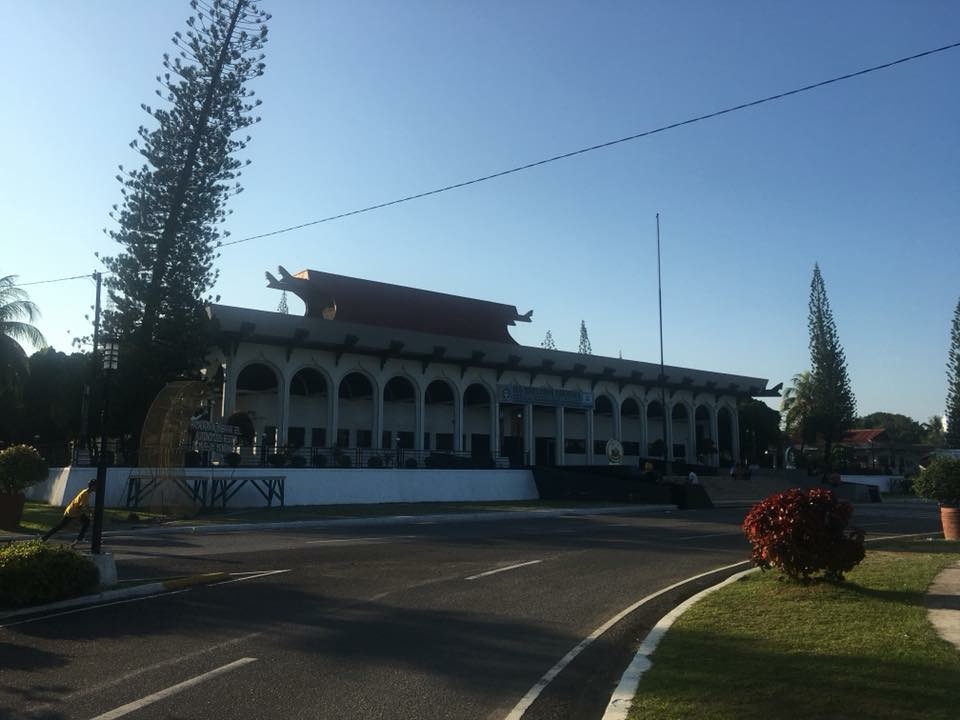
Executive
The region was headed by a Regional Governor. The Regional Governor and Regional Vice Governor were elected directly like regular local executives. Regional ordinances were created by the Regional Assembly, composed of Assemblymen, also elected by direct vote. Regional elections were usually held one year after general elections (national and local) depending on legislation from Congress. Regional officials had a fixed term of three years, which could be extended by an act of Congress.
The Regional Governor was the chief executive of the regional government, and was assisted by a cabinet not exceeding 10 members. The top official was tasked to appoint the members of the cabinet, subject to confirmation by the Regional Legislative Assembly and also had control of all the regional executive commissions, agencies, boards, bureaus, and offices.
Executive council
The executive council advises the Regional Governor on matters of governance of the autonomous region. It was composed of the regional governor, 1 regional vice governor, and 3 deputy regional governors (each representing the Christians, the Muslims, and the indigenous cultural communities). The regional governor and regional vice governor had a 3-year term, maximum of 3 terms; deputies' terms are coterminous with the term of the regional governor who appointed them.
| Term | Governor | Party | Vice Governor | Party | 1990–1993 | 1993–1996 | 1996–2001 | 2001 | 2001–2005 | 2005–2009 | 2009–2011 | 2011–2019 |
|---|---|---|---|---|---|---|---|---|---|---|---|---|
| Zacaria Candao | Lakas-NUCD | Benjamin Loong | Lakas-NUCD | |||||||||
| Lininding Pangandaman | Lakas-NUCD-UMDP | Nabil Tan | Lakas-NUCD-UMDP | |||||||||
| Nurallaj Misuari | Lakas-NUCD-UMDP | Guimid P. Matalam | Lakas-NUCD-UMDP | |||||||||
| Alvarez Isnaji | Lakas-NUCD-UMDP | |||||||||||
| Parouk S. Hussin | Lakas-NUCD-UMDP | Mahid Miraato Mutilan | Lakas-NUCD-UMDP | |||||||||
| Zaldy Ampatuan | Lakas Kampi CMD | Ansaruddin-Abdulmalik A. Adiong | Lakas Kampi CMD | |||||||||
| Ansaruddin-Abdulmalik A. Adiong | Lakas Kampi CMD | Reggie M. Sahali-Generale | Lakas Kampi CMD | |||||||||
| Mujiv S. Hataman | Liberal | Haroun Al-Rashid Lucman II | Liberal | |||||||||
| {{Ordered list | list_style_type=lower-alpha | Acting capacity | Officer-in-charge until June 30, 2013. |
Legislative
The ARMM had a unicameral Regional Legislative Assembly headed by a Speaker. It was composed of three members for every congressional district. The membership at the time of ARMM's abolition was 24, where 6 are from Lanao del Sur including Marawi City, 6 from Maguindanao, 6 from Sulu, 3 from Basilan, and 3 from Tawi-Tawi.
The Regional Legislative Assembly was the legislative branch of the ARMM government. The regular members (3 members/district) and sectoral representatives, had three-year terms; maximum of three consecutive terms. It exercised legislative power in the autonomous region, except on the following matters: foreign affairs, national defense and security, postal service, coinage and fiscal and monetary policies, administration of justice, quarantine, customs and tariff, citizenship, naturalization, immigration and deportation, general auditing, national elections, maritime, land, and air transportation, communications, patents, trademarks, trade names, and copyrights, foreign trade, and may legislate on matters covered by the Sharia, the law governing Muslims.
ARMM powers and basic principles
RA 9054 provided that ARMM "shall remain an integral and inseparable part of the national territory of the Republic." The President exercised general supervision over the Regional Governor. The Regional Government had the power to create its own sources of revenues and to levy taxes, fees, and charges, subject to Constitutional provisions and the provisions of RA 9054. The Sharia applied only to Muslims; its applications are limited by pertinent constitutional provisions (prohibition against cruel and unusual punishment).https://web.archive.org/web/20190314185204/http://www.armm.gov.ph/
Cultural heritage
Main article: Music of the Philippines, Kulintang, List of mosques in the Philippines, Spanish Colonial Fortifications of the Philippines
The people of the Bangsamoro region, including Muslims and non-Muslims, have a culture that revolves around kulintang music, a specific type of gong music, found among both Muslim and non-Muslim groups of the Southern Philippines. Each ethnic group in ARMM also has their own distinct architectures, intangible heritage, and craft arts. A fine example of a distinct architectural style in the region is the Royal Sulu architecture which was used to make the Daru Jambangan (Palace of Flowers) in Maimbung, Sulu. The palace was destroyed during the American period due to a typhoon in 1932, and was never rebuilt. It used to be the largest royal palace built in the Philippines. A campaign to faithfully re-establish it in Maimbung town has been ongoing since 1933. A very small replica of the palace was made in a nearby town in the 2010s, but it was noted that the replica does not mean that the campaign to reconstruct the palace in Maimbung has stopped as the replica does not manifest the true essence of a Sulu royal palace. In 2013, Maimbung was officially designated as the royal capital of the Sultanate of Sulu by the remaining members of the Sulu royal family.
File:Shariff Kabunsuan Festival 2016 Guinakit Fluvial Parade 4.jpg|Ginakit boat of the Maguindanaon people File:Masjid Bacolod.jpg|Bacolod-Kalawi, Lanao del Sur File:Daru Jambangan.jpg|Daru Jambangan (Palace of Flowers) in Maimbung, Sulu before it was destroyed by a typhoon in 1932. File:Tulay Mosque.jpg|Jolo, Sulu File:US Navy 060614-N-6501M-015 The U.S. Military Sealift Command (MSC) Hospital Ship USNS Mercy (T-AH 19) is anchored off of the coast of Tawi Tawi.jpg|Bongao, Tawi-Tawi File:Moro cannon or swivel gun (lantaka) from the Sulu Archipelago, brass, Honolulu Museum of Art.jpg|A Moro brass lantaka or swivel gun. File:Iranun lanong warship by Rafael Monleón (1890).jpg|19th century illustration of a lanong, the main warships used by the Iranun and Banguingui people File:Tausūg horsemen in Sulu, taken on 30 December 1899 from issue of Leslie s Weekly.jpg|Tausūg horsemen in Sulu, taken on December 30, 1899. File:0045MuseumFilipinojf 08.JPG|Sarimanok statue of the Maranao File:Yakan cloth.jpg|Yards of Yakan people's cloths File:Old Moro Sailing Boat (A Bajau lepa houseboat).jpg|A Sama-Bajau lepa houseboat () File:Pis siyabit (headscarf), Tausug people, Philippines, Honolulu Museum of Art 14451.1.JPG|Pis siyabit (headscarf) of the Tausūgs File:Palapa (Philippines).jpg|Palapa, a culturally important spicy condiment of the Maranao people File:Kinding-sindaw1.jpg|Tausūg dancers in traditional attire. File:Lute (kutyapi), Mindanao, wood, Honolulu Museum of Art.jpg|A kutiyapi of the Maguindanao people File:Malong1.jpg|A malong bearing okir designs. File:Basih weapons.jpg|Moro blades made from Basilan "basih" (iron) File:Pastil (Philippines) 01.jpg|Pastil, a traditional Maguindanaon food. File:Lami-Lamihan Festival.jpg|Lami-Lamihan Festival File:Mindanao Bangsamoro Islamic Musical Instruments.jpg|A Maranao kulintang ensemble with okir carvings
Comparisons
| Body | Flag of ARMM.svg Autonomous Region in Muslim Mindanao | Republic of the Philippines | |||||||||||||||||||
|---|---|---|---|---|---|---|---|---|---|---|---|---|---|---|---|---|---|---|---|---|---|
| (Central Government only) | Constitutional Document | Head of State / Territory | Head of Government | Executive | Legislative | Judiciary | Legal Supervisory | ||||||||||||||
| or Prosecution | Police Force(s) | Military | Currency | Language(s) | Foreign relations | Shariah law application | |||||||||||||||
| ARMM Organic Act (Republic Act No. 6734) | Constitution of the Philippines | ||||||||||||||||||||
| Regional Governor of the ARMM | President of the Philippines | ||||||||||||||||||||
| Executive Departments of the ARMM | Executive Departments of the Philippines | ||||||||||||||||||||
| Unicameral: Regional Legislative Assembly | Bicameral: Senate and Congress | ||||||||||||||||||||
| None (under Philippine government) | Supreme Court | ||||||||||||||||||||
| None (under Philippine government) | Department of Justice | ||||||||||||||||||||
| None (under Philippine government) | Philippine National Police | ||||||||||||||||||||
| None (under Philippine government) | Armed Forces of the Philippines (AFP) | ||||||||||||||||||||
| Philippine peso | Philippine peso | ||||||||||||||||||||
| Official: English, Filipino | |||||||||||||||||||||
| Auxiliary: Arabic, Tausug, Maranao, Zamboangueño, Yakan, Sama, Badjao, Maguindanaoan, Iranun, Manobo, Bagobo, Tiruray, T'boli | Official: Filipino, English | ||||||||||||||||||||
| Auxiliary: Spanish, Arabic | |||||||||||||||||||||
| None (under Philippine government) | full rights | ||||||||||||||||||||
| url=http://www.lawphil.net/statutes/presdecs/pd1977/pd_1083_1977.html | website=The LawPhil Project | date=February 4, 1977 | title=Presidential Decree No. 1083 – A DECREE TO ORDAIN AND PROMULGATE A CODE RECOGNIZING THE SYSTEM OF FILIPINO MUSLIM LAWS, CODIFYING MUSLIM PERSONAL LAWS, AND PROVIDING FOR ITS ADMINISTRATION AND FOR OTHER PURPOSES | first=Ferdinand E. | last=Marcos | access-date=November 18, 2017}} | Yes, for Muslims only |
References
References
- Regional Legislative Assembly of the Autonomous Region in Muslim Mindanao. (September 22, 1995). "An Act Fixing the Permanent Seat of Government for the Autonomous Region in Muslim Mindanao at the Municipality of Parang, Province of Maguindanao".
- "Official Issuances". Autonomous Region in Muslim Mindanao.
- (2013). "Mga Pangalan ng Tanggapan ng Pamahalaan sa Filipino – Edisyong 2013". [[Komisyon ng Wikang Filipino]].
- Llanto, Jesus F.. (July 17, 2008). "Supreme Court voids creation of Shariff Kabunsuan". ABS-CBN News.
- Pedrasa, Ira. (October 7, 2012). "Govt reaches deal with MILF to end rebellion". ABS-CBN News.
- Oliveros, Renato T.. (February 8, 2013). "The Bangsamoro reframes the Muslim-Filipino identity".
- (July 26, 2018). "Duterte signs Bangsamoro law". ABS-CBN News.
- (July 26, 2018). "Duterte signs Bangsamoro Organic Law". CNN Philippines.
- (February 2, 2019). "Appointments to Bangsamoro transition body out after Feb. 6 plebiscite". MindaNews.
- (January 26, 2019). "Comelec ratifies Bangsamoro Organic Law".
- (January 23, 2019). "'Yes' vote prevails in 4 of 5 provinces". The Manila Times.
- Galvez, Daphne. (January 22, 2019). "Zubiri: Overwhelming 'yes' vote for BOL shows Mindanao shedding its history of conflict". Philippine Daily Inquirer.
- [http://www.philippineupdate.com/frjun.htm Mindanao Peace Process], Fr. Eliseo R. Mercado, Jr., OMI.
- [https://www.academia.edu/1921767/Al_Harakatul_Al_Islamiyyah_Essays_on_the_Abu_Sayyaf_Group_by_Rommel_Banlaoi Banlaoi 2012], p. 24.
- [https://www.usnwc.edu/getattachment/f54ece77-3d67-4c32-bfaa-02b476a569d8/Maritime-Terrorism-in-Southeast-Asia--The-Abu-Sayy Banlaoi 2005] {{webarchive. link. (February 10, 2016 , p. 68.)
- "ARMM history and organization". GMA News Online.
- (September 26, 1989). "Non-voting campaigner". Kagitingan Publications, Inc..
- (August 1, 1989). "Republic Act No. 6734". Republic of the Philippines.
- "Autonomous Region in Muslim Mindanao". [[United Nations]].
- Congress of the Philippines. (March 31, 2001). "Republic Act No. 9054 – An Act to Strengthen and Expand the Organic Act for the Autonomous Region in Muslim Mindanao, Amending for the Purpose Republic Act No. 6734, entitled "An Act Providing for the Autonomous Region in Muslim Mindanao," as Amended".
- (March 26, 2007). "Did you know that… ARMM now has Six Provinces". Philippine Statistics Authority.
- (July 16, 2008). "Supreme Court voids creation of Shariff Kabunsuan". ABS-CBN News.
- (July 17, 2008). "Philippines Muslim area to expand". BBC News.
- Chavez, Lei. (August 15, 2008). "Timeline: GRP-MILF peace process".
- [http://www.newsflash.org/2004/02/hl/hl107814.htm SENATORS: GOVT FAILED TO CUT TIES OF MILF W/ TERROR NETWORK JI] {{webarchive. link. (June 7, 2011 (August 26, 2008))
- [http://www.c-r.org/our-work/accord/philippines-mindanao/tripoli-agreement-peace.php Agreement on peace between the government of the Republic of the Philippines and the Moro Islamic Liberation Front], June 22, 2001.
- [http://findarticles.com/p/news-articles/manila-bulletin/mi_7968/is_2008_Oct_15/moa-milf-unconstitutional-sc/ai_n35386521/ MoA with MILF unconstitutional – SC], Manila Bulletin, October 15, 2008.
- [http://findarticles.com/p/news-articles/manila-bulletin/mi_7968/is_2008_Oct_15/moa-milf-unconstitutional-sc/ai_n35386521/ SC Declares MOA-AD Unconstitutional], Manila Bulletin, October 15, 2008.
- Rufo, Aries. (October 14, 2008). "Palace loses ancestral domain case with 8-7 SC vote". ABS-CBN News.
- Torres, Tetch. (October 14, 2008). "SC: MILF deal unconstitutional". Inquirer.net.
- (January 27, 2019). "Plebiscite in Mindanao: Will it be the last?". The Philippine Star.
- (January 20, 2019). "Sulu, cities of Isabela, Cotabato to reject BOL".
- Ranada, Pia. (January 25, 2019). "Comelec: Bangsamoro Organic Law 'deemed ratified'".
- (January 23, 2019). "Sulu voters reject BOL".
- Tomacruz, Sofia. (January 24, 2019). "Sulu rejects Bangsamoro law".
- (February 14, 2019). "Key rebel stronghold left out of Bangsamoro territory".
- (February 15, 2019). "Excluded Lanao del Norte towns may still benefit from new Bangsamoro region - transition body member".
- "Bangsamoro law ratified; how soon can transition from ARMM to BARMM begin?". MindaNews.
- (February 27, 2019). "ARMM turns over power to Bangsamoro authority". The Philippine Star.
- (February 18, 2019). "Bangsamoro Transition Authority to take oath February 20; ARMM to BARMM turnover on February 25". MindaNews.
- "Population and Annual Growth Rates for The Philippines and Its Regions, Provinces, and Highly Urbanized Cities". Philippine Statistics Authority.
- (2015). "Bangsamoro Development Plan Integrative Report, Chapter 10". Bangsamoro Development Agency.
- (August 1, 2014). "Office of the Bangsamoro People inaugurated". The Manila Times.
- Ramos, Marlon. (October 20, 2013). "Before his death, Kiram III tells family to continue fight to re-possess Sabah". Philippine Daily Inquirer.
- (September 20, 2015). "Sulu Sultan dies from kidney failure". The Manila Times.
- Whaley, Floyd. (September 21, 2015). "Esmail Kiram II, Self-Proclaimed Sultan of Sulu, Dies at 75". The New York Times.
- Marcos, Ferdinand E.. (February 4, 1977). "Presidential Decree No. 1083 – A DECREE TO ORDAIN AND PROMULGATE A CODE RECOGNIZING THE SYSTEM OF FILIPINO MUSLIM LAWS, CODIFYING MUSLIM PERSONAL LAWS, AND PROVIDING FOR ITS ADMINISTRATION AND FOR OTHER PURPOSES".

This article was imported from Wikipedia and is available under the Creative Commons Attribution-ShareAlike 4.0 License. Content has been adapted to SurfDoc format. Original contributors can be found on the article history page.
Ask Mako anything about Autonomous Region in Muslim Mindanao — get instant answers, deeper analysis, and related topics.
Research with MakoFree with your Surf account
Create a free account to save articles, ask Mako questions, and organize your research.
Sign up freeThis content may have been generated or modified by AI. CloudSurf Software LLC is not responsible for the accuracy, completeness, or reliability of AI-generated content. Always verify important information from primary sources.
Report