From Surf Wiki (app.surf) — the open knowledge base
Australian Sports Commission
Australian government body
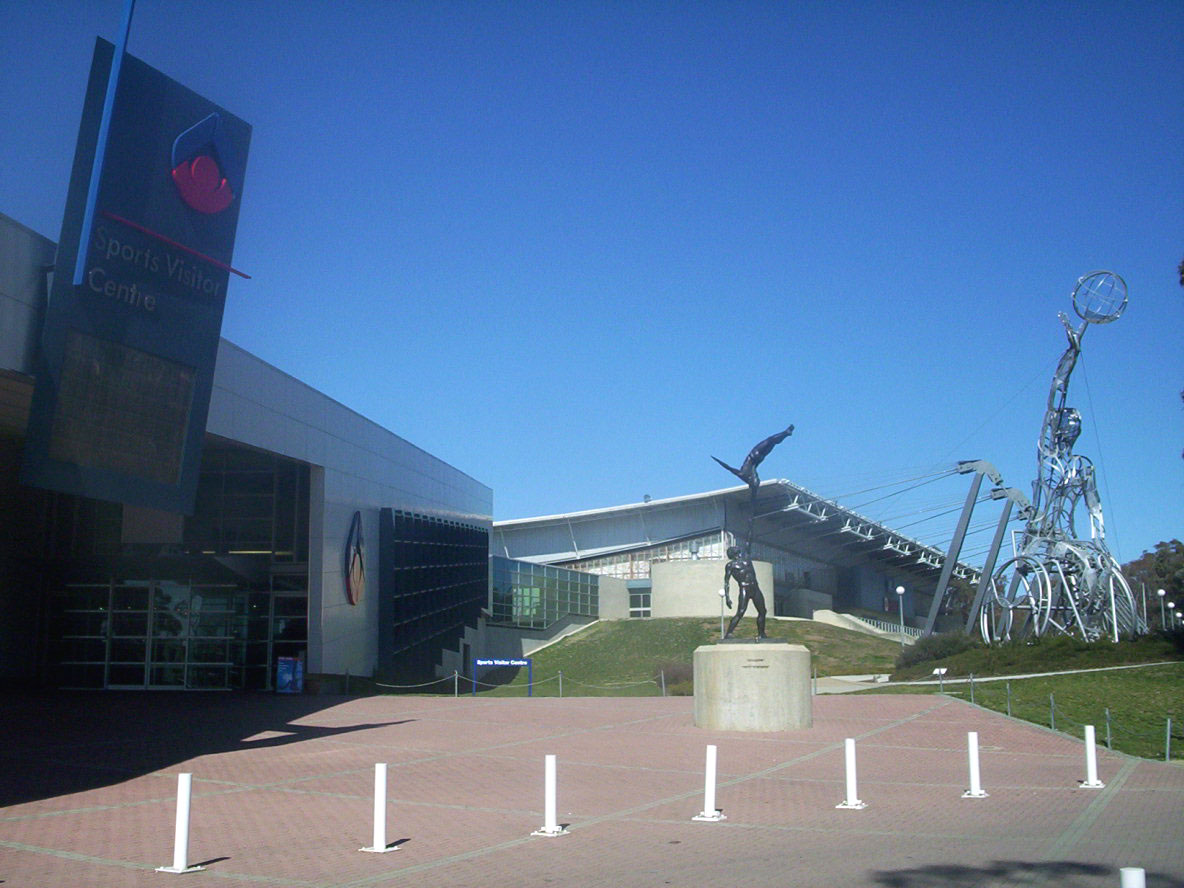
Australian government body
| Field | Value |
|---|---|
| name | Australian Sports Commission |
| logo | Australian Sports Commission logo.svg |
| formed | |
| jurisdiction | Australian Government |
| employees | 428 |
| budget | (201819) |
| minister1_name | Anika Wells |
| minister1_pfo | Minister for Sport |
| chief1_name | Kate Jenkins |
| chief1_position | Chair |
| chief2_name | Kieren Perkins |
| chief2_position | CEO |
| parent_department | Department of Health and Aged Care |
| child1_agency | Australian Institute of Sport |
| keydocument1 | Australian Sports Commission Act 1989 |
| website |
the federal sport promotion agency
The Australian Sports Commission (ASC) is the Australian Government commission responsible for supporting and investing in sport in Australia. The Commission incorporates the Australian Institute of Sport. From 2018 to 2022, it was known as Sport Australia.
Although it is commonly believed that the Australian Government's initial involvement in sports was prompted by the country's poor performance at the 1976 Montreal Olympic Games in which Australia failed to win a gold medal, the Government actually began initial investigations into its potential role in sports in 1973. It was at this time that the Government commissioned professor John Bloomfield to prepare a sports plan for the country. His report, "The Role, Scope and Development of Recreation in Australia", was based on studies of sports institutes in Europe and their success in developing elite athletes. Bloomfield suggested to the Government that it should establish a national institute of sport similar to those operating in European countries.
Following receipt of the report, the Minister for Tourism and Recreation, Frank Stewart, appointed a study group (chaired by Dr Allan Coles) to report on the feasibility of establishing a sports institute in Australia. The Coles Report was released in 1975 and recommended the establishment of the institute.
Although the recommendation to establish the institute was made in 1975, it was not until 1981 that the institute was established. The delay in establishing the institute is commonly considered to be a combination of poor support for Australian sport following the 1976 Montreal Olympics and the uneasiness between the Australian Olympic Federation (now the Australian Olympic Committee) and the Government. This uneasiness was caused over the Federation ignoring the Government's request to boycott the 1980 Moscow Olympic Games because of Russia's invasion of Afghanistan.
The Bloomfield and Coles reports, however, were not lost on Bob Ellicott, the Minister for Home Affairs and Environment. Buoyed by the concept of a national sports institute during a trip to China and keen to bridge the gap between government and sport, in 1980 Ellicott and his staff offered the Coles Report as a model plan for Australia. The plan would allow athletes to train and develop in Australia rather than be forced overseas. Ellicott's vision was well received and on Australia Day, 26 January 1981, the AIS was officially opened by Prime Minister Malcolm Fraser. Renowned swim coach, Don Talbot was appointed as the institute's first director. With the Institute established, the Commonwealth Government had begun its significant involvement in Australian sport.
The Australian Labor Party in its 1983 election sport policy recommended the establishment of a sports commission to provide a more co-ordinated approach to sport. In 1984, an Interim Committee report recommended its establishment. The Australian Sports Commission was formally established by the Australian Sports Commission Act 1985. In August 1987, the Australian Government formalised their decision to rationalise federal assistance to Australian sport and the Australian Institute of Sport merged with the Australian Sports Commission, which was to be the agency responsible for general sports participation as well as high performance sport.
Since its establishment, the ASC has implemented several major Australian Government sports policies:
- 1989 – Australian Sports Kit
- 1992 – Maintain the Momentum
- 1994 – Olympic Athlete Program
- 2001 – Backing Australia's Sporting Ability
- 2010 – Australian Sport: the Pathway to Success
- 2012 – Australia's Winning Edge
- 2018 – Sport 2030 – National Sport Plan
Administration
The ASC is a statutory authority of the Australian Government, that is governed by a board of Commissioners appointed by the Minister for Sport. The ASC's roles and responsibilities are prescribed in the Australian Sports Commission Act 1989.
The ASC attempts to promote an effective national sports system that offers improved participation in quality sports by all Australians. In addition, the ASC helps those who are talented and motivated to reach their potential excellence in sports performance. The ASC achieves these objectives by administering and funding national sporting programs on behalf of the Government and providing leadership, co-ordination and support for the sport sector.
The ASC works closely with a range of national sporting organisations, state and local governments, schools and community organisations to ensure sport is well run and accessible so that everyone can participate and enjoy the benefits. The ASC supports participation in sport, from grass roots participation to participation at the elite level.
Chairman of the ASC Board
- Ted Harris 1984–1994
- Mike Fitzpatrick 1994–1997
- Peter Bartels 1997–2008
- Greg Hartung 2008–2010
- Warwick Smith 2010–2012
- John Wylie 2012–2020
- Josephine Sukkar 2021–2024
- Kate Jenkins 2024- Chief executive officers
- Greg Hartung 1984–1988
- Ronald Harvey 1989
- Perry Crosswhite – acting (1988–1990)
- Jim Ferguson 1990–2000
- Mark Peters 2001-2008
- Matt Miller 2009-2011
- Simon Hollingsworth 2012–2016
- Kate Palmer 2017–2020
- Kieren Perkins 2021-
Organisational structure
The organisational structure of the Australian Sports Commission has changed many times since its establishment as can be seen through its annual reports. The structure has generally represented the areas of high performance sport, sports participation, sport management and corporate/commercial services. The AIS has been an elite sport flagship program of the ASC since its merger in 1989.
Australian Institute of Sport
The Australian Institute of Sport (AIS) is the best known division of the ASC. In 2011, Minister for Sport Mark Arbib announced the AIS would take responsibility for the strategic direction of high performance sport in Australia. In November 2012, the ASC released "Australia's Winning Edge 2012–2022", a high performance sport plan, which highlighted a new role for the AIS particularly in terms of developing coaches and talent identification but not directly managing national sports organisations elite athlete programs as it had done since 1981.
References
References
- (18 November 2009). "Australian Sports Commission Act 1989".
- (27 September 2021). "Annual Report 2020{{ndash}}21".
- Wylie, John. (2 October 2019). "Annual Report 2018{{ndash}}2019".
- (5 October 2022). "Kieren Perkins delivers National Press Club address".
- (15 September 1994). "Oxford Companion to Australian Sport". Oxford University Press.
- Bloomfield, John. (2003). "Australia's sporting success : the inside story". University of New South Wales Press.
- (1989). "Australian Sports Kit". Australian Sports Commission.
- (1992). "Maintain the momentum : Australian government sports policy 1992 to 1996". Australian Sports Commission.
- (1994). "Olympic athlete program : making great Australians : Australian Government sports policy". Dept. of the Environment, Sport and Territories.
- (2001). "Backing Australia's Sporting Ability – A More Active Australia".
- (2010). "Australian Sport : the Pathway to Success.". Dept. of Health and Ageing.
- "Australia's Winning Edge targets world best results". Australian Sports Commission News.
- "The Winning Edge". Australian Sports Commission.
- "National Sport Plan".
- "Australian Sports Commission Act 1989". Australian Government Com Law Website.
- (2009). "Australian Sports Commission Annual Report 2008-2009". Australian Sports Commission.
- "Thanks to a leader of Australian sport". Minister for Sport Press Release, 1 April 2010.
- "Resignation of The Hon Warwick Smith AM". Kate Lundy Website, 19 April 2012.
- "MCG Trust's Wylie named new ASC". Sports Business Insider, 12 September 2012.
- Le Grand, Chip. (6 November 2020). "Wylie departs Sport Australia, having forced lasting change". Sydney Morning Herald.
- "Australian Sports Commission welcomes new Chair, Josephine Sukkar".
- Commission, Australian Sports Commission; jurisdiction=Commonwealth of Australia; corporateName=Australian Sports. "ASC welcomes new Chair".
- Ferguson, Jim. (2007). "More than sunshine & vegemite : success the Australian way". Halstead Press.
- "Message from ASC Chairman". Australian Sports Commission News, 30 March 2011.
- "Australian Sports Commission welcomes new chief". Australasian Leisure Management Latest News, 27 September 2011.
- (29 August 2016). "Australian Sports Commission's CEO Simon Hollingsworth resigns". The Sydney Morning Herald.
- (13 December 2016). "Kate Palmer appointed CEO of the Australian Sports Commission".
- Lutton, Phil. (28 October 2019). "Kate Palmer steps down as CEO of Sport Australia". Sydney Morning Herald.
- (20 December 2021). "Heading the Australian Sports Commission a dream role for Kieren Perkins".
- "Australian Sports Commission Annual Reports 1984/85-2010/11". Australian Sports Commission Website.
- "AIS to take charge of high performance sport". Australian Sports Commission, Ministerial News, 28 January 2011.
- "AIS gains $20m in sports shake-up". Australian Broadcasting Corporation News, 30 November 2012.
This article was imported from Wikipedia and is available under the Creative Commons Attribution-ShareAlike 4.0 License. Content has been adapted to SurfDoc format. Original contributors can be found on the article history page.
Ask Mako anything about Australian Sports Commission — get instant answers, deeper analysis, and related topics.
Research with MakoFree with your Surf account
Create a free account to save articles, ask Mako questions, and organize your research.
Sign up freeThis content may have been generated or modified by AI. CloudSurf Software LLC is not responsible for the accuracy, completeness, or reliability of AI-generated content. Always verify important information from primary sources.
Report