From Surf Wiki (app.surf) — the open knowledge base
Australia men's national soccer team
none

none
| Field | Value |
|---|---|
| Name | Australia |
| Badge | Australia national football team badge.svg |
| Badge_size | 190px |
| Nickname | Socceroos |
| Association | Football Australia |
| Sub-confederation | AFF (Southeast Asia) |
| Confederation | AFC (Asia; 1973–1978, 2006–present) |
| OFC (Oceania; 1966–1972, 1979–2005) | |
| Coach | Tony Popovic |
| Captain | Mathew Ryan |
| Most caps | Mark Schwarzer (109) |
| Top scorer | Tim Cahill (50) |
| Home Stadium | Various |
| FIFA Trigramme | AUS |
| FIFA Rank | |
| FIFA max | 14 |
| FIFA max date | September 2009 |
| FIFA min | 102 |
| FIFA min date | November 2014 |
| Elo Rank | |
| Elo max | 9 |
| Elo max date | 14 August 2001 |
| Elo min | 75 |
| Elo min date | November 1965 |
| pattern_la1 | _aus25h |
| pattern_b1 | _aus25h |
| pattern_ra1 | _aus25h |
| pattern_sh1 | _aus25h |
| pattern_so1 | _aus25hl |
| leftarm1 | FFFF00 |
| body1 | FFFF00 |
| rightarm1 | FFFF00 |
| shorts1 | 16321f |
| socks1 | FFFFFF |
| pattern_la2 | _aus25a |
| pattern_b2 | _aus25a |
| pattern_ra2 | _aus25a |
| pattern_sh2 | _aus25a |
| pattern_so2 | _aus25al |
| leftarm2 | 000000 |
| body2 | 000000 |
| rightarm2 | 000000 |
| shorts2 | 000000 |
| socks2 | 000000 |
| First game | 3–1 |
| (Dunedin, New Zealand; 17 June 1922) | |
| Largest win | 31–0 |
| (Coffs Harbour, Australia; 11 April 2001) | |
| (World record for senior international matches) | |
| Largest loss | 0–8 |
| (Adelaide, Australia; 17 September 1955) | |
| World cup apps | 7 |
| World cup first | 1974 |
| World cup best | Round of 16 (2006, 2022) |
| Regional name | Asian Cup |
| Regional cup apps | 5 |
| Regional cup first | 2007 |
| Regional cup best | Champions (2015) |
| 2ndRegional name | OFC Nations Cup |
| 2ndRegional cup apps | 6 |
| 2ndRegional cup first | 1980 |
| 2ndRegional cup best | Champions (1980, 1996, 2000, 2004) |
| Confederations cup apps | 4 |
| Confederations cup first | 1997 |
| Confederations cup best | Runners-up (1997) |
| website |
the men's team
| Sub-confederation = AFF (Southeast Asia) OFC (Oceania; 1966–1972, 1979–2005) (Dunedin, New Zealand; 17 June 1922) (Coffs Harbour, Australia; 11 April 2001) (World record for senior international matches) (Adelaide, Australia; 17 September 1955)
The Australia men's national soccer team represents Australia in international men's soccer. Officially nicknamed the Socceroos, the team is controlled by the governing body for soccer in Australia, Football Australia, which is affiliated with the Asian Football Confederation (AFC) and the regional ASEAN Football Federation (AFF).
The team played its first match in 1922 and originally participated in the Oceania Football Confederation (OFC). In this confederation, Australia won the OFC Nations Cup four times between 1980 and 2004, and dominated many FIFA World Cup qualification campaigns during earlier rounds. The team won 31–0 against American Samoa in a FIFA World Cup qualification match, achieving the world record for the largest victory in a senior international match. Despite this, the team only managed to qualify for the FIFA World Cup twice in 11 attempts while in this confederation, due to Oceania's single qualification berth always leading to an intercontinental playoff, and thus, not guaranteeing straight qualification.
The team moved to the AFC in 2006, winning the AFC Asian Cup once in 2015 (as hosts) and finishing runners-up in 2011. By winning this competition, Australia became the only team in the world to have won two different confederation cups. Since moving confederations, the team has also qualified for the World Cup in every attempt, qualifying five additional times for an overall seven qualifications. Australia has made appearances in the World Cup knockout stages twice, having progressed to this stage in 2006 and 2022. Despite being part of the AFF, Australia has not joined the ASEAN Championship due to mutual agreement.
The team additionally represented Australia at the now-defunct FIFA Confederations Cup four times, winning a silver and bronze medal in 1997 and 2001 respectively. Mark Schwarzer has the most caps for Australia, with 109 to his name, while Tim Cahill has the most goals scored, with 50. Australia initially developed a rivalry with New Zealand and a rivalry with Uruguay, and, after joining the AFC, has developed a fierce rivalry with Japan.
History
Main article: History of the Australia men's national soccer team
Early years
The first Australia national team was constituted in 1922 for a tour of New Zealand, which included two defeats and a draw. For the next 36 years, Australia, New Zealand and South Africa became regular opponents in tour (exhibition) matches. During that period, Australia also competed against Canada and India during their tours of Australia in 1924 and 1938 respectively. Australia recorded their worst ever defeat on 30 June 1951 as they lost 17–0 in a match to a touring England side. The country had a rare opportunity to compete on the world's stage during the team's first major international tournament as hosts of the 1956 Melbourne Olympics. However, an inexperienced squad proved to be reason for the team's disappointing performance, including a 4–2 loss to India in the quarterfinals. With the advent of cheap air travel, Australia began to diversify its range of opponents, but its geographical isolation continued to play a role in its destiny for the next 30 years. Australia won the 1967 South Vietnam Independence Cup against seven other nations, but this gained little recognition domestically.
After failing to qualify for the FIFA World Cup in 1966 and 1970, losing in play-offs to North Korea and Israel respectively, Australia finally appeared at their first World Cup in West Germany in 1974. After managing only a draw from Chile and losses from East Germany and West Germany, the team, which was made up of mostly amateur players, was eliminated at the end of the first round, finishing last in their group without scoring a goal. It would prove to be the only appearance for the Australian team until the World Cup returned to Germany more than three decades later in 2006. Over a 40-year period, the Australian team was known for its near misses in its attempts to qualify for the World Cup; they lost play-offs in 1966 to North Korea, 1970 to Israel, 1986 to Scotland, 1994 to Argentina, 1998 to Iran and 2002 to Uruguay.
First successes and "golden generation"
The team's previously poor record in World Cup competition was not reflected in their reasonable performances against strong European and South American sides. In 1988, Australia defeated reigning world champions Argentina 4–1 in the Australian Bicentennial Gold Cup. In 1997, Australia drew with reigning world champions Brazil 0–0 in the group stage and then defeated Uruguay 1–0 in the semi-finals to reach the 1997 FIFA Confederations Cup final.
In 2001, after a victory against reigning world champions France in the group stage, Australia finished the 2001 FIFA Confederations Cup in third place after defeating Brazil 1–0 in the third-place match. Australia defeated England 3–1 at West Ham United's Boleyn Ground in 2003 as Wayne Rooney made his international debut.
In early 2005, it was reported that Football Australia had entered into discussions to join the Asian Football Confederation (AFC) and end an almost 40-year association with the Oceania Football Confederation (OFC). Many commentators and fans, including soccer broadcaster and former Australian captain Johnny Warren, felt that the only way for Australia to progress was to abandon Oceania. On 13 March, the AFC executive committee made a unanimous decision to invite Australia to join the AFC. After the OFC executive committee unanimously endorsed Australia's proposed move, FIFA approved the move on 30 June 2005. Australia joined Asia, with the move taking effect on 1 January 2006, though until then, Australia had to compete for a 2006 FIFA World Cup position as an OFC member country.
After a successful campaign, the team took the first steps towards qualification for the 2006 World Cup. After coach Frank Farina stood down from the position after Australia's dismal performance at the 2005 FIFA Confederations Cup, Guus Hiddink was announced as the new national coach. Australia, ranked 49th, would then have to play the 18th ranked Uruguay in a rematch of the 2001 qualification play-off for a spot in the 2006 FIFA World Cup. After a 5–0 friendly win against Jamaica, the first leg of the play-off tournament was lost (1–0), with the return leg still to be played in Australia four days later in Sydney on 16 November 2005.

The second leg of the qualifying play-off was played in front of a crowd of 82,698 at Stadium Australia. Australia led Uruguay 1–0 after 90 minutes following a goal by Mark Bresciano in the first half. The aggregate was tied, and extra time was played. Neither team scored after two periods of extra time, bringing the game to a penalty shootout. Australia won the penalty shootout 4–2, making Australia the first ever team to qualify for a World Cup via a penalty shootout. Australian goalkeeper Mark Schwarzer made two saves, with John Aloisi scoring the winning penalty for a place in the World Cup, Australia's first qualification in 32 years.
Australia went into the 2006 World Cup as the second lowest-ranked side. Although their ranking vastly improved in subsequent months after a series of exhibition matches against high-profile teams, including a 1–1 draw against the Netherlands, and a 1–0 win at the sold-out 100,000 capacity Melbourne Cricket Ground against the then European champions Greece for the 2006 World Cup, Australia was placed into Group F, along with Japan, Croatia and defending champions Brazil. In their opening group game, Australia defeated Japan 3–1, with Tim Cahill scoring two goals (84', 89') and John Aloisi scoring one (90+2') in the last eight minutes. The goals were the first ever scored by Australia's men's soccer team in a World Cup and it was also the first victory of an Oceanian team in the tournament's history, as well as all three goals being scored in the last seven minutes of the game, which was never before done in a World Cup match. Australia met Brazil in their second group game, which Australia lost to Brazil 2–0. The Socceroos faced Croatia in their third match. The final score (2–2) was enough to see Australia proceed to the round of 16, where they were eliminated from the competition after a 1–0 defeat by the eventual champions Italy after conceding a controversial penalty in the 93rd minute. The loss marked the official end of Hiddink's tenure as Australia's national coach. The success achieved at the 2006 World Cup later saw the team named AFC National Team of the Year, as well as being dubbed the "golden generation" in the history of the Socceroos.
Later success
Led by coach Graham Arnold, Australia went to their first AFC Asian Cup in 2007, sending a strong squad which included 15 players from the previous year's World Cup team. In Group A they played against Oman (a 1–1 draw), Thailand (a 4–0 win) and eventual champions Iraq (a 3–1 loss), assuring Australia's progression to the quarter-final stage of the tournament. After drawing 1–1 with Japan with 120 minutes played, Australia exited the tournament on penalties at the quarter-final stage. An international friendly on 11 September 2007 against Argentina (a 1–0 loss) was Graham Arnold's last game as head coach, with the position eventually being filled by Pim Verbeek on 6 December 2007.
Australia began their 2010 FIFA World Cup campaign in the third round of qualification, drawn into a group consisting of Qatar, Iraq and China PR, in which Australia finished first. Australia eventually saw progression through to the tournament in South Africa after comfortably winning the fourth round of qualification in a group consisting of Japan, Bahrain, Qatar and Uzbekistan. Australia's qualification was already assured before the final two games, finally topping its group ahead of Japan by five points.
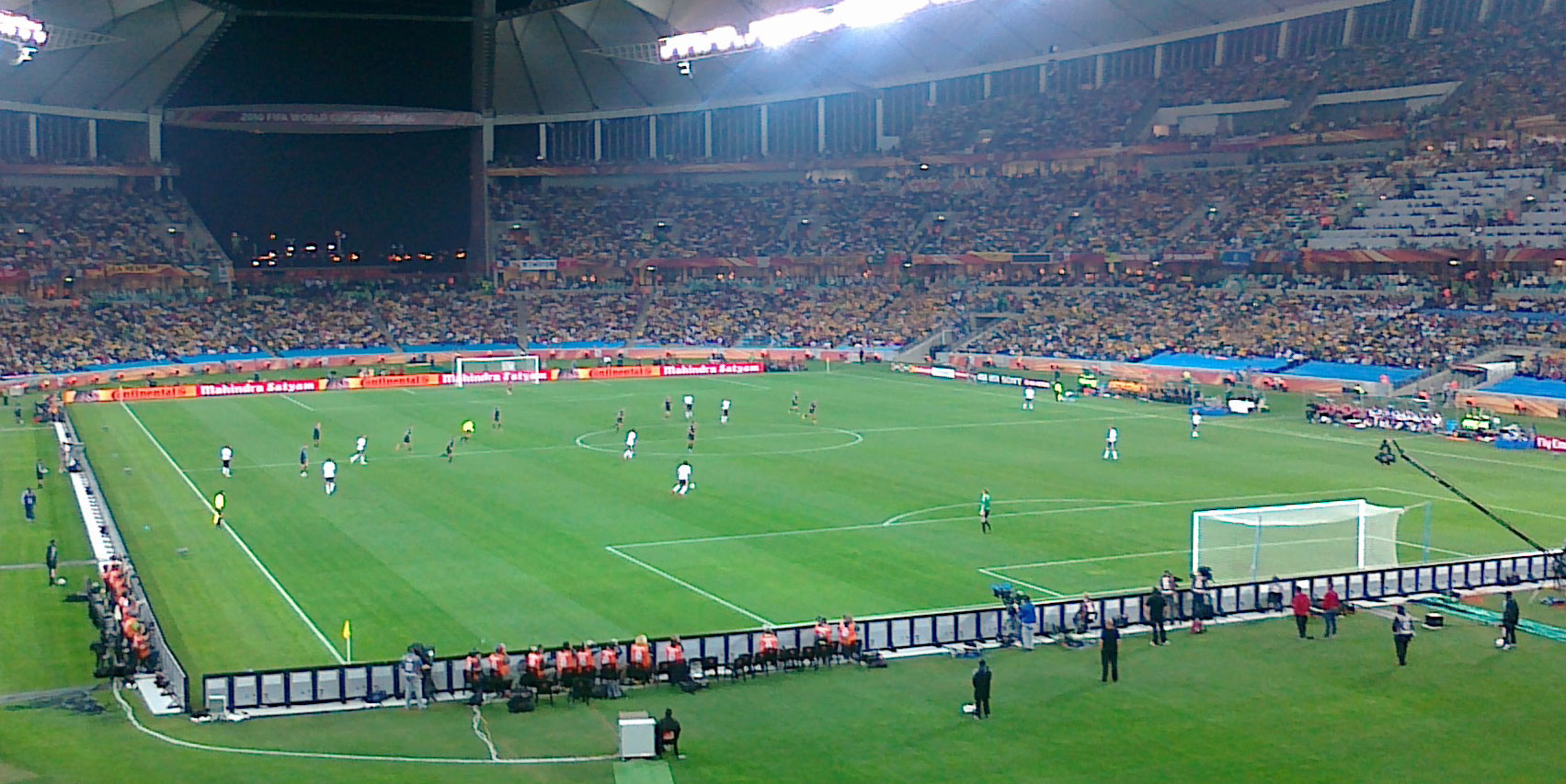
Australia was drawn into Group D in the World Cup, which featured three-time world champion Germany, Ghana and Serbia. On 14 June, Australia faced Germany. Pim Verbeek's surprising decision to play without a recognised striker saw Australia comprehensively defeated 4–0. Verbeek received heavy criticism for his tactics, with SBS (Australia's World Cup broadcaster) chief soccer analyst Craig Foster calling for his immediate sacking. Australia's second group match against Ghana resulted in a 1–1 draw, and their third and final group match against Serbia resulted in a 2–1 win. Ultimately, Australia were eliminated on goal difference behind Ghana. Pim Verbeek completed his term as Australian coach at the end of the 2010 World Cup and was soon replaced by Holger Osieck.
In 2010, Australia qualified for their second AFC Asian Cup, topping their qualification group. A successful campaign at the 2011 Asian Cup saw Australia become runners-up to Japan, after losing in the Final 1–0 in extra time.
In 2012, Australia agreed to compete in the East Asian Cup. Australia travelled to Hong Kong to compete in a series of qualification matches with the hopes of qualifying for the 2013 East Asian Cup. Despite handing several debuts and fielding an in-experienced squad, Australia was successful, finishing ahead of Hong Kong, North Korea, Guam and Chinese Taipei to progress to the 2013 East Asian Cup, where Australia eventually finished last behind Japan, South Korea and China PR. On 26 August 2013, Australia became full members of the ASEAN Football Federation but as part of their entrance agreement with the sub-confederation, their national team is barred from participating in the AFF Championship due to their perceived wide gap in playing standards between Australia and the rest of the region.

Shortly after achieving qualification to the World Cup, Australia played a series of friendly matches against Brazil and France, suffering consecutive 6–0 defeats. This along with previous poor performances during the 2014 World Cup qualification campaign resulted in manager Holger Osieck's sacking, bringing his four-year tenure as Australia's manager to an end.
New generation: the 2015 AFC Asian Cup triumph
.jpg)
At the World Cup, Australia were drawn in Group B alongside defending world champions Spain, 2010 runners-up Netherlands and Chile. Their first match was off to a lacklustre start, having conceded two goals in the opening 15 minutes from Alexis Sánchez and Jorge Valdivia. Despite a goal from Tim Cahill that inspired a late resurgence from Postecoglou's team, they ultimately lost to Chile 3–1. Their second match against the Netherlands was a close one, with the Socceroos giving up a 2–1 lead, eventually resulting in a 3–2 loss, thus earning their early exit along with the Spanish. In the end, Australia finished Group B with a third consecutive defeat to Spain, 3–0. Australia's competitive World Cup performances in a difficult group led to believe that a new Golden Generation was about to begin.
In their first international match after the World Cup, Australia played 2014 quarter-finalists Belgium in Liège, with Australia going down 2–0. Four days later, Australia achieved their first international win in ten months, and just their second win under Ange Postecoglou, with a 3–2 victory over Saudi Arabia in London. After drawing against the United Arab Emirates, and suffering successive losses against Qatar and Japan, combined with previous poor results earlier in the year, Australia slipped to 94 and 102 in the FIFA World Rankings, their lowest-ever ranking.
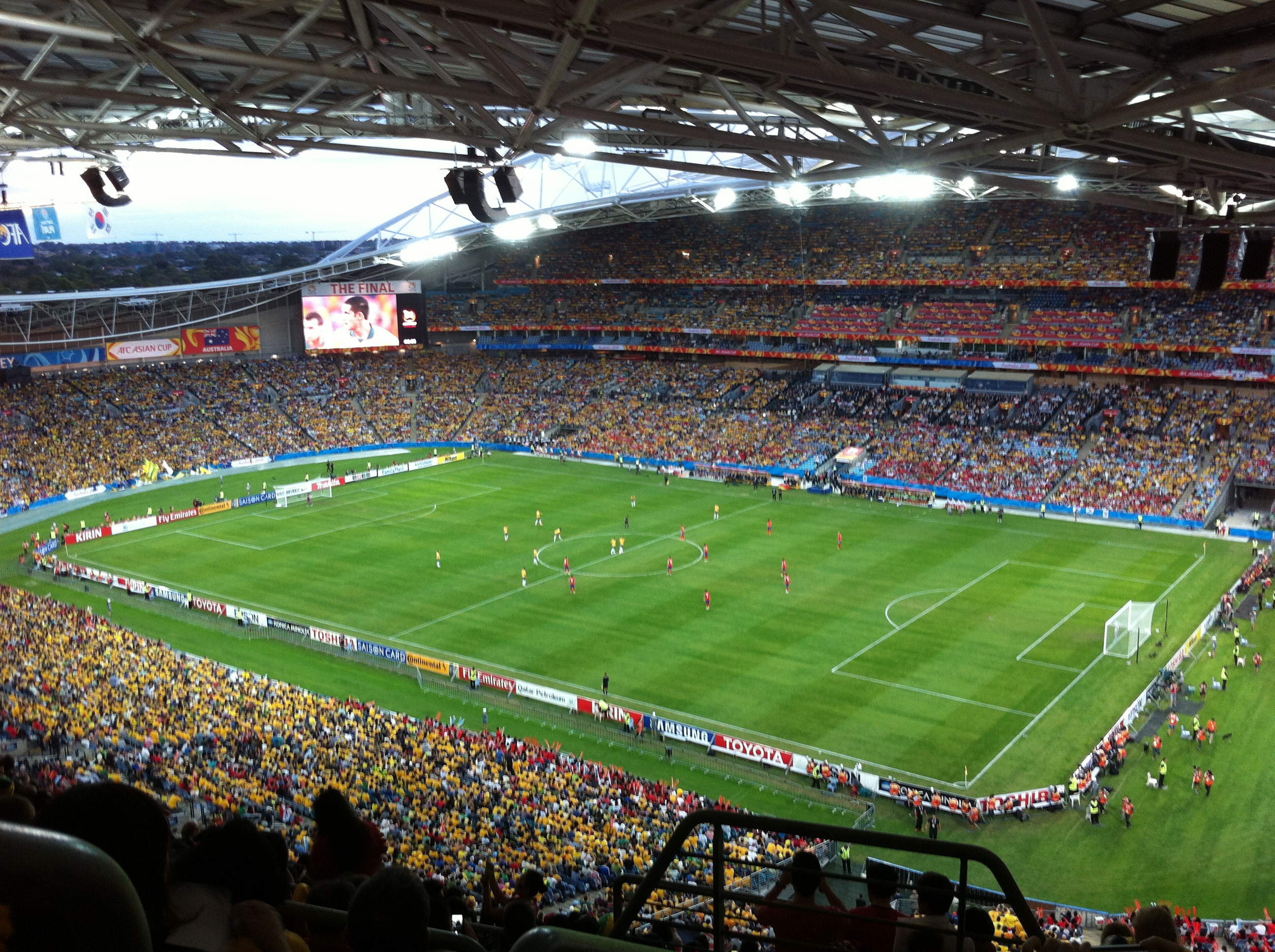
The new year saw Australia host the 2015 AFC Asian Cup, with the team making their third consecutive appearance in the tournament. Australia won their first two group matches against Kuwait and Oman comfortably, with scorelines of 4–1 and 4–0 respectively. This guaranteed their qualification for the knockout stage, despite losing their final group match against South Korea in Brisbane 1–0. They faced China PR in the quarter-finals and won 2–0, courtesy of a second-half brace from Tim Cahill. In the semi-finals, Australia won 2–0 over the United Arab Emirates and advanced to the final for the second time in a row. They faced South Korea in the final on 31 January at Stadium Australia, winning 2–1 after extra time to claim their first Asian title and qualify for the 2017 FIFA Confederations Cup.
After Australia qualified for the 2018 FIFA World Cup in November 2017, Ange Postecoglou resigned from his position as coach; and former manager of the Netherlands national team, Bert van Marwijk, was subsequently appointed as his replacement. On 8 March 2018, after van Marwijk's first squad announcement, the FFA announced that Graham Arnold will take the coaching role from after the 2018 World Cup until the 2022 World Cup.
With van Marwijk, Australia was grouped with Denmark, France and Peru. The Socceroos' first group match against eventual world champions France was praised by a valiant effort, in which Australia only lost 1–2 by a virtual own goal from Aziz Behich. After the defeat to France, Australia produced another outstanding performance, drawing Denmark 1–1. However, in the crucial match against already eliminated Peru, Australia lost 0–2 and crashed out from the World Cup with only a point, becoming the only team from the AFC to be winless in the 2018 World Cup. Subsequently, van Marwijk left his post and Arnold replaced him as the new coach of the Socceroos.
Under Graham Arnold, Australia started their 2019 AFC Asian Cup in hope of defending the title, being grouped with Jordan, Syria and Palestine, but their hope was shattered by a shocking 0–1 defeat to Jordan. Australia soon returned to the race by beating Palestine 3–0 before winning an important encounter with a hard-fought 3–2 win over Syria, eliminating both Palestine and Syria in the process. The win gave Australia to qualify for the round of sixteen, where they overcame Uzbekistan after winning on penalties 4–2, having drawn 0–0 for 120 minutes. In the quarter-finals, however, in the Hazza bin Zayed Stadium, where Australia had lost their opening match against Jordan, Australia once again failed to register a win in the same ground, losing to the host United Arab Emirates 0–1 due to a mistake from Miloš Degenek, eventually failing to defend the title.
2022 FIFA World Cup resurgence
Australia took part in the 2022 FIFA World Cup qualification, which they entered in the second round, in which they faced Kuwait, Jordan, Nepal and Chinese Taipei. Australia dominated the group with eight wins out of eight to reach the third round, where it faced Saudi Arabia, Japan, China, Oman and Vietnam. After a start with three straight wins over China, Vietnam and Oman, Australia then won only one game, against Vietnam, in their final seven matches, being held thrice and losing three more, finishing third in the group. It then had to rely on fourth round playoffs. Due to the COVID-19 pandemic, all of Australia's playoffs were centralised in Doha. The Socceroos began their quest with a 2–1 win over the United Arab Emirates, to face fifth place CONMEBOL qualification finisher Peru, a rematch of the 2018 FIFA World Cup. This time around, Australia held Peru goalless, before winning on penalties to qualify for the FIFA World Cup in Qatar.
Australia was drawn in group D along with France, Denmark and Tunisia. Australia's qualification also meant that the Asian confederation had the largest number of teams in their FIFA World Cup history, with six countries qualifying.
.jpg)
As preparation for the 2022 FIFA World Cup, Australia played two friendlies against neighbouring New Zealand, winning both games. It began its World Cup quest on 23 November against France, losing 4–1 after initially taking the lead with goal from Craig Goodwin. Three days later Australia registered its first World Cup win since 2010, overcoming Tunisia with a header from Mitchell Duke to seal a 1–0 win, sending Australia from bottom to second place. Four days later, against UEFA Euro 2020 semi-finalists Denmark, Australia won 1–0, thanks to a Mathew Leckie goal. Australia finished the group stage in second place behind France on goal difference, making Australia the first Asian representative to reach the knockout stage in Qatar 2022. Australia's resurgence in the group stage was widely watched and followed by Australian supporters. Mass celebrations occurred after the upsets over Tunisia and Denmark, and Prime Minister Anthony Albanese called the achievement "magnificent". In the round of 16, Australia lost 2–1 to Argentina, with Lionel Messi opening the scoring and Julián Álvarez getting the second after dispossessing Mathew Ryan. Australia pulled one back when Goodwin's shot deflected into goal off Enzo Fernández and Garang Kuol almost scored the equaliser in injury time, but his shot was smothered by Argentinian goalkeeper Emiliano Martínez.
2026 World Cup qualification
On 20 September 2024, Graham Arnold announced he was stepping down as head coach, two games into the third round of 2026 FIFA World Cup qualifying. The Socceroos had only picked up one point from two matches. On 23 September 2024, James Johnson announced that Football Australia had appointed Tony Popovic as head coach. Popovic led the Socceroos to wins over Japan and Saudi Arabia, and Australia eventually ensured direct qualification to the FIFA World Cup for the first time since 2014, and their sixth consecutive World Cup appearance.
Team image
Media coverage
Australian matches are broadcast by Paramount+ and on free-to-air by Network 10 until 2028, with the exception during the FIFA World Cup finals tournament matches that still aired live and free on SBS.
Previous coverage has been provided by Fox Sports until 2021.
The national team has set multiple ratings records for both subscription and free-to-air television. Australia's final 2006 FIFA World Cup qualifying match against Uruguay was the highest rating program in SBS history with an audience of 3.4 million viewers, while a 2010 World Cup qualifying match against Uzbekistan set a record for the highest subscription television audience, with an average of 431,000 viewers. The 2015 AFC Asian Cup final against South Korea had a total reach of 5.3 million Australians overall.
Kit
Australia's first kit was sky blue with a maroon hoop on the socks, the colours representing the states of New South Wales and Queensland, a look that was reminiscent of the Australian national rugby league team's strips of the period. They wore the predominantly light blue kit until 1924 when they changed to green and gold, Australia's national colours.
Australia has worn a yellow jersey, usually accompanied by green shorts, and yellow socks since the 1960s. The colour of the socks altered throughout the 1970s, 1980s, and 1990s from white to the same green as the shorts to the same yellow colour as the jersey.
Rather than displaying the logo of Football Australia, Australia's jersey traditionally features the coat of arms of Australia over the left breast. The team first wore the traditional green and yellow colours in 1924.
Australia's kits have been produced by manufacturers including Umbro, Adidas, KingRoo, and since 2004 by Nike. Australia's 1974 World Cup kits were produced by Adidas as were all other national team kits in the tournament, with Adidas sponsoring the event. The kits, however, contained Umbro branding, due to the manufacturer's Australian partnership at the time. Nike renewed the kit manufacturer deal with FFA for another 11 years in 2012, handing them the rights to make national team kits until 2022. In the lead-up to the 2014 World Cup, the new kits to be worn by the team were revealed. The design of the new kits included a plain yellow shirt with a green collar, plain dark green shorts and white socks, a tribute to the 1974 Socceroos. Inside the back of the neck also had woven the quote, "We Socceroos can do the impossible", from Peter Wilson, the captain of the 1974 Australian team. This kit was well received. In March 2016, FFA revealed the new Socceroos kit, which featured a yellow jersey, yellow shorts and green socks. This was reportedly in accordance with a FIFA directive, instructing all national teams to have matching shirts and shorts. This kit was met with wide public contention, primarily due to the colour change of the shorts from the traditional green to yellow.
Kit suppliers
| a | #008751 | 2px}}" | Kit supplier | a | #008751 | 2px}}" | Period | a | #008751 | 2px}}" | Notes |
|---|---|---|---|---|---|---|---|---|---|---|---|
| UK Umbro | 1974–1983 | 1974 FIFA World Cup jerseys were manufactured by Adidasbut featured an Umbro logo. | |||||||||
| GER Adidas | 1983–1989 | ||||||||||
| AUS Kingroo | 1990–1993 | ||||||||||
| FRA Patrick | 1993 | ||||||||||
| GER Adidas | 1993–2004 | ||||||||||
| US Nike | 2004–present | Current deal runs until 2033 after extending for another 10 years in 2023. |
Nickname

Australia's nickname, "Socceroos", was coined in 1967 by Sydney journalist Tony Horstead in his coverage of the team on a goodwill tour to South Vietnam during the Vietnam War. It is commonly used by both the Australian people and the governing body, the FFA. The nickname represents a cultural propensity for the use of colloquialisms in the country. It also represents the Australian English use of the sport's name.
The name itself is similar to most other Australian national representative sporting team nicknames; used informally when referring to the team, in the media or in conversation. Similarly, the name is derived from a well-known symbol of Australia, in this case, the kangaroo. The words soccer and kangaroo are combined into a portmanteau word as soccer-roo; such as Olyroos for the Australia Olympic soccer team or Hockeyroos for the Australian national women's hockey team.
Naming rights and sponsorship
The team has been branded the "CommBank Socceroos" since 1 September 2025, after Commonwealth Bank (who also have the naming rights for the women's national team) took over the naming rights from restaurant chain Subway, whose previous deal started in 2022.
Previously, they were known as the "Caltex Socceroos" under the sponsorship of Caltex Australia from 2017 to 2019. During the 2018 FIFA World Cup, some of Caltex's service stations were re-branded as "Cahilltex" as a nod to Socceroos player Tim Cahill.
Football Australia has been sponsored by Qantas as its official airline since 2004.
Rivalries

New Zealand
Main article: Australia–New Zealand soccer rivalry
Australia's longtime rivals are trans-Tasman neighbours New Zealand. The two teams' history dates back to 1922, where they first met in both their international debuts. The rivalry between the Socceroos and the All Whites (New Zealand) is part of a wider friendly rivalry between the neighbours Australia and New Zealand, which applies not only to sport but to the culture of the two countries. The rivalry was intensified when Australia and New Zealand were both members of the OFC, regularly competing in OFC Nations Cup finals and in FIFA World Cup qualifications, where only one team from the OFC progressed to the World Cup. Since Australia joined the AFC in 2006, competition between the two teams has been infrequent, with the occasional match still receiving much media and public attention.
Japan
Main article: Australia–Japan football rivalry
After joining the AFC, Australia began to develop a fierce rivalry with fellow Asian powerhouse Japan. The rivalry began at the 2006 FIFA World Cup, where the two countries were grouped together. The rivalry continued with the two countries meeting regularly in various AFC competitions, including the 2011 Asian Cup final and qualification for the 2010, 2014, 2018, 2022, and 2026 World Cups.
South Korea
Main article: Australia–South Korea football rivalry
Another major rival within Asia is South Korea, who Australia came up against in three World Cup qualification campaigns in the 1970s and, since joining the AFC, have met regularly, including the 2015 Asian Cup final.
Uruguay
Main article: Australia–Uruguay football rivalry
A rivalry exists with Uruguay since their first meeting on the eve of the 1974 FIFA World Cup. Both nations have faced each other in consecutive FIFA World Cup play-offs in 2001 and 2005 with each nation winning a playoff final each to progress through to the World Cup. Australia and Uruguay also faced off in the 1997 Confederations Cup in Saudi Arabia, with Australia progressing through to the final against Brazil via a golden goal winner from Harry Kewell.
Supporters
The main supporter group of the Australian national team is Australian Active Support (AAS). AAS, then known as Socceroos Active Support (SAS), was founded in January 2015 as an independent group, who uses social media to organise and keep in touch. This replaced the former active support group Terrace Australis, who were founded by Football Federation Australia and fans in 2013, during Australia's 2014 World Cup qualification campaign. Its establishment came in the wake of poor off-field action and minimal community engagement. Previously, the emergence of Terrace Australis saw the Green and Gold Army relinquish its role as a hub for active support, which it had claimed since its establishment in 2001. Since the 2015 AFC Asian Cup triumph, the supporters had encouraged people in Australia to focus more on the national team, and the nation's soccer pride.
Home stadium
Australia does not have a dedicated national stadium; instead, the team plays at different venues throughout the country for exhibition or tournament purposes. In recent years, major international matches have usually been rotated around various large grounds, including Stadium Australia in Sydney, Hunter Stadium in Newcastle and Docklands Stadium in Melbourne. International matches have also been played at the Melbourne Cricket Ground and Melbourne Rectangular Stadium in Melbourne and Canberra Stadium in Canberra.
Australia has played at the Gabba in Brisbane, which hosted Australia's first international match on home soil in 1923, a 2–1 win over New Zealand. It was the fourth Australian team match overall, with the first three internationals played in New Zealand. Other venues which regularly hosted international home matches included Olympic Park Stadium in Melbourne, the Sydney Cricket Ground, Sydney Sports Ground, Sydney Showground, and Sydney Football Stadium in Sydney, and Subiaco Oval in Perth.
Games in England
Since the 2003 friendly against England, the Socceroos have also played a significant number of games in England, especially London, since a high proportion of the senior team play in European leagues. This includes games at Madejski Stadium in Reading (Reading Football Club's home ground in 2003 against Jamaica, Loftus Road in Shepherd's Bush (Queens Park Rangers' home ground) in 2004 and 2008 against South Africa, 2006 against Ghana, and 2007 against Denmark.
Craven Cottage in Fulham (Fulham Football Club's home ground) hosted Australia's matches against Norway in 2004, New Zealand and Jamaica in 2005. Craven Cottage also hosted Australia's matches against Jamaica in 2007, 2013 against Canada, 2014 against Saudi Arabia, and 2018 against Colombia, while Australia played at The Den in Bermondsey (Millwall Football Club's home ground) in 2014 against Ecuador, and Brentford Community Stadium in Brentford (Brentford Football Club's home ground) in 2023 against New Zealand.
Results and fixtures
Main article: 2024 Australia national soccer team season, , 2025 Australia national soccer team season
The following is a list of match results in the last 12 months, as well as any future matches that have been scheduled.
2025
- Boyle
- Velupillay
- Irvine
- Miller
- Romeny
- Irvine
- Velupillay
- Behich
- Al-Aboud
- Metcalfe
- Duke
- Balard
- Wood
- Toure
- Irankunda
- Irankunda
- Wright
- Bos
- Ramírez
- Rodríguez
- Díaz
- Lerma
2026
Coaching staff
Current coaching staff
Current squad
The following players were called up for friendlies against Venezuela and Colombia on 14 and 18 November 2025, respectively.
Caps and goals correct as of 19 November 2025, after the match against Colombia.
Recent call-ups
The following players have also been called up within the last 12 months. ;Notes
- INJ = Injured WD = Player withdrew from the squad due to non-injury issue
- PRE = Preliminary squad / standby
- RET = Retired from the national team
- SUS = Serving suspension. --
Individual records
Main article: Australia men's national soccer team records and statistics
Australia currently hold the world record for the largest win and the most goals scored by a player in an international match. Both records were achieved during the 2002 FIFA World Cup qualification match against American Samoa on 11 April 2001. Australia won 31–0 with Archie Thompson scoring 13 goals and David Zdrilic scoring eight. Two days before the 31–0 win, Australia broke the record for largest win with a 22–0 win over Tonga. With 13 and 8 goals respectively, both Thompson and Zdrilic broke the previous record jointly held by another Australian, Gary Cole, who scored seven goals against Fiji in 1981, and Iranian Karim Bagheri, who also scored seven goals against Maldives in 1997.
| 2004–2018 |
|---|
| 2 |
| 29 |
| 45 |
|
| 1992–2002 |
|---|
| 3 |
| 28 |
| 54 |
|
| 2001–2013 |
|---|
| 4 |
| 27 |
| 55 |
|
| 1993–2008 |
|---|
| 25 |
| 60 |
|
| 1977–1988 |
|---|
| 25 |
| 61 |
|
| 1967–1977 |
|---|
| 20 |
| 31 |
|
| 1997–2010 |
|---|
| 20 |
| 79 |
|
| 2008–2018 |
|---|
| 20 |
| 95 |
|
| 1998–2012 |
|---|
| 10 |
| 19 |
| 56 |
| | 1985–1997 |}
Most clean sheets
| a | #008751 | 2px}}" width="25" | Rank | a | #008751 | 2px}}" width="150" | Name | a | #008751 | 2px}}" width="50" | Clean sheets | a | #008751 | 2px}}" width="50" | Caps | a | #008751 | 2px}}" width="50" | Ratio | a | #008751 | 2px}}" width="100" | Career |
|---|---|---|---|---|---|---|---|---|---|---|---|---|---|---|---|---|---|---|---|---|---|---|---|
| 1 | Mark Schwarzer | 44 | 109 | 1993–2013 | |||||||||||||||||||
| 2 | Mathew Ryan | 38 | 101 | 2012–present | |||||||||||||||||||
| 3 | Zeljko Kalac | 24 | 54 | 1992–2006 | |||||||||||||||||||
| 4 | Jeff Olver | 13 | 37 | 1985–1989 | |||||||||||||||||||
| 5 | Robert Zabica | 12 | 27 | 1990–1994 |
Competitive record
FIFA World Cup
Main article: Australia at the FIFA World Cup
AFC Asian Cup
Main article: Australia at the AFC Asian Cup
FIFA Confederations Cup
Main article: Australia at the FIFA Confederations Cup
| a | #008751 | 2px}}" | FIFA Confederations Cup record | a | #008751 | 2px}}" | Year | a | #008751 | 2px}}" | Round | a | #008751 | 2px}}" | Pos. | a | #008751 | 2px}}" | Pld | a | #008751 | 2px}}" | W | a | #008751 | 2px}}" | D | a | #008751 | 2px}}" | L | a | #008751 | 2px}}" | GF | a | #008751 | 2px}}" | GA | a | #008751 | 2px}}" | Squad | a | #008751 | 2px}}" | Total | a | #008751 | 2px}}" | Runners-up | a | #008751 | 2px}}" | 4/10 | a | #008751 | 2px}}" | 16 | a | #008751 | 2px}}" | 5 | a | #008751 | 2px}}" | 3 | a | #008751 | 2px}}" | 8 | a | #008751 | 2px}}" | 17 | a | #008751 | 2px}}" | 25 | a | #008751 | 2px}}" | — |
|---|---|---|---|---|---|---|---|---|---|---|---|---|---|---|---|---|---|---|---|---|---|---|---|---|---|---|---|---|---|---|---|---|---|---|---|---|---|---|---|---|---|---|---|---|---|---|---|---|---|---|---|---|---|---|---|---|---|---|---|---|---|---|---|---|---|---|---|---|---|---|---|---|---|---|---|---|---|---|---|---|---|---|---|
| Saudi Arabia 1992 | No OFC representative invited | ||||||||||||||||||||||||||||||||||||||||||||||||||||||||||||||||||||||||||||||||||
| Saudi Arabia 1995 | |||||||||||||||||||||||||||||||||||||||||||||||||||||||||||||||||||||||||||||||||||
| Saudi Arabia 1997 | Runners-up | 2nd | 5 | 2 | 1 | 2 | 4 | 8 | Squad | ||||||||||||||||||||||||||||||||||||||||||||||||||||||||||||||||||||||||||
| Mexico 1999 | Did not qualify | ||||||||||||||||||||||||||||||||||||||||||||||||||||||||||||||||||||||||||||||||||
| South Korea Japan 2001 | Third place | 3rd | 5 | 3 | 0 | 2 | 4 | 2 | Squad | ||||||||||||||||||||||||||||||||||||||||||||||||||||||||||||||||||||||||||
| France 2003 | Did not qualify | ||||||||||||||||||||||||||||||||||||||||||||||||||||||||||||||||||||||||||||||||||
| Germany 2005 | Group stage | 8th | 3 | 0 | 0 | 3 | 5 | 10 | Squad | ||||||||||||||||||||||||||||||||||||||||||||||||||||||||||||||||||||||||||
| South Africa 2009 | Did not qualify | ||||||||||||||||||||||||||||||||||||||||||||||||||||||||||||||||||||||||||||||||||
| Brazil 2013 | |||||||||||||||||||||||||||||||||||||||||||||||||||||||||||||||||||||||||||||||||||
| Russia 2017 | Group stage | 6th | 3 | 0 | 2 | 1 | 4 | 5 | Squad |
OFC Nations Cup
Main article: Australia at the OFC Nations Cup
| a | #008751 | 2px}}" | OFC Nations Cup record | a | #008751 | 2px}}" | Year | a | #008751 | 2px}}" | Round | a | #008751 | 2px}}" | Pos. | a | #008751 | 2px}}" | Pld | a | #008751 | 2px}}" | W | a | #008751 | 2px}}" | D | a | #008751 | 2px}}" | L | a | #008751 | 2px}}" | GF | a | #008751 | 2px}}" | GA | a | #008751 | 2px}}" | Squad | a | #008751 | 2px}}" | Total | a | #008751 | 2px}}" | 4 Titles | a | #008751 | 2px}}" | 6/7 | a | #008751 | 2px}}" | 28 | a | #008751 | 2px}}" | 24 | a | #008751 | 2px}}" | 2 | a | #008751 | 2px}}" | 2 | a | #008751 | 2px}}" | 142 | a | #008751 | 2px}}" | 13 | a | #008751 | 2px}}" | — |
|---|---|---|---|---|---|---|---|---|---|---|---|---|---|---|---|---|---|---|---|---|---|---|---|---|---|---|---|---|---|---|---|---|---|---|---|---|---|---|---|---|---|---|---|---|---|---|---|---|---|---|---|---|---|---|---|---|---|---|---|---|---|---|---|---|---|---|---|---|---|---|---|---|---|---|---|---|---|---|---|---|---|---|---|
| New Zealand 1973 | Did not participate | ||||||||||||||||||||||||||||||||||||||||||||||||||||||||||||||||||||||||||||||||||
| New Caledonia 1980 | Champions | 1st | 4 | 4 | 0 | 0 | 24 | 4 | |||||||||||||||||||||||||||||||||||||||||||||||||||||||||||||||||||||||||||
| 1996 | Champions | 1st | 4 | 3 | 1 | 0 | 14 | 0 | |||||||||||||||||||||||||||||||||||||||||||||||||||||||||||||||||||||||||||
| Australia 1998 | Runners-up | 2nd | 4 | 3 | 0 | 1 | 23 | 3 | Squad | ||||||||||||||||||||||||||||||||||||||||||||||||||||||||||||||||||||||||||
| Tahiti 2000 | Champions | 1st | 4 | 4 | 0 | 0 | 26 | 0 | Squad | ||||||||||||||||||||||||||||||||||||||||||||||||||||||||||||||||||||||||||
| New Zealand 2002 | Runners-up | 2nd | 5 | 4 | 0 | 1 | 23 | 2 | Squad | ||||||||||||||||||||||||||||||||||||||||||||||||||||||||||||||||||||||||||
| Australia 2004 | Champions | 1st | 7 | 6 | 1 | 0 | 32 | 4 | Squad | ||||||||||||||||||||||||||||||||||||||||||||||||||||||||||||||||||||||||||
| 2008–present | Not OFC member |
Summer Olympics
| a | #008751 | 2px}}" | Summer Olympics record | a | #008751 | 2px}}" | Qualification record | a | #008751 | 2px}}" | Year | a | #008751 | 2px}}" | Round | a | #008751 | 2px}}" | Pos. | a | #008751 | 2px}}" | Pld | a | #008751 | 2px}}" | W | a | #008751 | 2px}}" | D | a | #008751 | 2px}}" | L | a | #008751 | 2px}}" | GF | a | #008751 | 2px}}" | GA | a | #008751 | 2px}}" | Squad | a | #008751 | 2px}}" | Pld | a | #008751 | 2px}}" | W | a | #008751 | 2px}}" | D | a | #008751 | 2px}}" | L | a | #008751 | 2px}}" | GF | a | #008751 | 2px}}" | GA | a | #008751 | 2px}}" | Total | a | #008751 | 2px}}" | Quarter-finals | a | #008751 | 2px}}" | 2/17 | a | #008751 | 2px}}" | 6 | a | #008751 | 2px}}" | 3 | a | #008751 | 2px}}" | 0 | a | #008751 | 2px}}" | 3 | a | #008751 | 2px}}" | 6 | a | #008751 | 2px}}" | 10 | a | #008751 | 2px}}" | — | a | #008751 | 2px}}" | 8 | a | #008751 | 2px}}" | 6 | a | #008751 | 2px}}" | 2 | a | #008751 | 2px}}" | 0 | a | #008751 | 2px}}" | 18 | a | #008751 | 2px}}" | 4 |
|---|---|---|---|---|---|---|---|---|---|---|---|---|---|---|---|---|---|---|---|---|---|---|---|---|---|---|---|---|---|---|---|---|---|---|---|---|---|---|---|---|---|---|---|---|---|---|---|---|---|---|---|---|---|---|---|---|---|---|---|---|---|---|---|---|---|---|---|---|---|---|---|---|---|---|---|---|---|---|---|---|---|---|---|---|---|---|---|---|---|---|---|---|---|---|---|---|---|---|---|---|---|---|---|---|---|---|---|---|---|---|---|---|---|---|---|---|---|---|---|---|---|---|---|---|---|---|---|---|---|---|---|---|---|---|---|
| United Kingdom 1908 | Did not participate | Did not participate | |||||||||||||||||||||||||||||||||||||||||||||||||||||||||||||||||||||||||||||||||||||||||||||||||||||||||||||||||||||||||||||||||||||
| Sweden 1912 | |||||||||||||||||||||||||||||||||||||||||||||||||||||||||||||||||||||||||||||||||||||||||||||||||||||||||||||||||||||||||||||||||||||||
| Belgium 1920 | |||||||||||||||||||||||||||||||||||||||||||||||||||||||||||||||||||||||||||||||||||||||||||||||||||||||||||||||||||||||||||||||||||||||
| France 1924 | |||||||||||||||||||||||||||||||||||||||||||||||||||||||||||||||||||||||||||||||||||||||||||||||||||||||||||||||||||||||||||||||||||||||
| Netherlands 1928 | |||||||||||||||||||||||||||||||||||||||||||||||||||||||||||||||||||||||||||||||||||||||||||||||||||||||||||||||||||||||||||||||||||||||
| Germany 1936 | |||||||||||||||||||||||||||||||||||||||||||||||||||||||||||||||||||||||||||||||||||||||||||||||||||||||||||||||||||||||||||||||||||||||
| United Kingdom 1948 | |||||||||||||||||||||||||||||||||||||||||||||||||||||||||||||||||||||||||||||||||||||||||||||||||||||||||||||||||||||||||||||||||||||||
| Finland 1952 | |||||||||||||||||||||||||||||||||||||||||||||||||||||||||||||||||||||||||||||||||||||||||||||||||||||||||||||||||||||||||||||||||||||||
| Australia 1956 | Quarter-finals | 5th | 2 | 1 | 0 | 1 | 4 | 4 | Squad | Qualified as host | |||||||||||||||||||||||||||||||||||||||||||||||||||||||||||||||||||||||||||||||||||||||||||||||||||||||||||||||||||||||||||||
| Italy 1960 | Withdrew | Withdrew | |||||||||||||||||||||||||||||||||||||||||||||||||||||||||||||||||||||||||||||||||||||||||||||||||||||||||||||||||||||||||||||||||||||
| Japan 1964 | Did not enter | Did not enter | |||||||||||||||||||||||||||||||||||||||||||||||||||||||||||||||||||||||||||||||||||||||||||||||||||||||||||||||||||||||||||||||||||||
| Mexico 1968 | |||||||||||||||||||||||||||||||||||||||||||||||||||||||||||||||||||||||||||||||||||||||||||||||||||||||||||||||||||||||||||||||||||||||
| West Germany 1972 | |||||||||||||||||||||||||||||||||||||||||||||||||||||||||||||||||||||||||||||||||||||||||||||||||||||||||||||||||||||||||||||||||||||||
| Canada 1976 | |||||||||||||||||||||||||||||||||||||||||||||||||||||||||||||||||||||||||||||||||||||||||||||||||||||||||||||||||||||||||||||||||||||||
| Soviet Union 1980 | |||||||||||||||||||||||||||||||||||||||||||||||||||||||||||||||||||||||||||||||||||||||||||||||||||||||||||||||||||||||||||||||||||||||
| United States 1984 | |||||||||||||||||||||||||||||||||||||||||||||||||||||||||||||||||||||||||||||||||||||||||||||||||||||||||||||||||||||||||||||||||||||||
| South Korea 1988 | Quarter-finals | 7th | 4 | 2 | 0 | 2 | 2 | 6 | Squad | 8 | 6 | 2 | 0 | 18 | 4 | ||||||||||||||||||||||||||||||||||||||||||||||||||||||||||||||||||||||||||||||||||||||||||||||||||||||||||||||||||||||||
| 1992 to present | See Australia men's national under-23 soccer team |
Minor tournaments
| a | #008751 | 2px}}" | Year | a | #008751 | 2px}}" | Pos. | a | #008751 | 2px}}" | Pld | a | #008751 | 2px}}" | W | a | #008751 | 2px}}" | D | a | #008751 | 2px}}" | L | a | #008751 | 2px}}" | GF | a | #008751 | 2px}}" | GA | a | #008751 | 2px}}" | Total | a | #008751 | 2px}}" | 14 Titles | a | #008751 | 2px}}" | 69 | a | #008751 | 2px}}" | 42 | a | #008751 | 2px}}" | 9 | a | #008751 | 2px}}" | 17 | a | #008751 | 2px}}" | 150 | a | #008751 | 2px}}" | 75 |
|---|---|---|---|---|---|---|---|---|---|---|---|---|---|---|---|---|---|---|---|---|---|---|---|---|---|---|---|---|---|---|---|---|---|---|---|---|---|---|---|---|---|---|---|---|---|---|---|---|---|---|---|---|---|---|---|---|---|---|---|---|---|---|---|
| New Zealand 1922 Soccer Ashes | 2nd | 3 | 0 | 1 | 2 | 3 | 7 | ||||||||||||||||||||||||||||||||||||||||||||||||||||||||
| Australia 1923 Soccer Ashes | 2nd | 3 | 1 | 0 | 2 | 5 | 8 | ||||||||||||||||||||||||||||||||||||||||||||||||||||||||
| Australia 1933 Soccer Ashes | 1st | 3 | 3 | 0 | 0 | 14 | 8 | ||||||||||||||||||||||||||||||||||||||||||||||||||||||||
| New Zealand 1936 Soccer Ashes | 1st | 3 | 3 | 0 | 0 | 21 | 2 | ||||||||||||||||||||||||||||||||||||||||||||||||||||||||
| New Zealand 1948 Soccer Ashes | 1st | 4 | 4 | 0 | 0 | 17 | 0 | ||||||||||||||||||||||||||||||||||||||||||||||||||||||||
| Australia 1954 Soccer Ashes | 1st | 3 | 2 | 0 | 1 | 9 | 4 | ||||||||||||||||||||||||||||||||||||||||||||||||||||||||
| South Vietnam 1967 South Vietnam Independence Cup | 1st | 5 | 5 | 0 | 0 | 15 | 6 | ||||||||||||||||||||||||||||||||||||||||||||||||||||||||
| Singapore 1982 Merlion Cup | 1st | 4 | 4 | 0 | 0 | 14 | 2 | ||||||||||||||||||||||||||||||||||||||||||||||||||||||||
| Australia New Zealand 1983 Trans-Tasman Trophy | 2nd | 2 | 0 | 0 | 2 | 1 | 4 | ||||||||||||||||||||||||||||||||||||||||||||||||||||||||
| Singapore 1983 Merlion Cup | 1st | 4 | 3 | 0 | 1 | 10 | 5 | ||||||||||||||||||||||||||||||||||||||||||||||||||||||||
| China 1984 China–Australia Ampol Cup | 2nd | 1 | 0 | 0 | 1 | 2 | 3 | ||||||||||||||||||||||||||||||||||||||||||||||||||||||||
| China 1985 China–Australia Ampol Cup | 1st | 1 | 1 | 0 | 0 | 3 | 0 | ||||||||||||||||||||||||||||||||||||||||||||||||||||||||
| Australia New Zealand 1986 Trans-Tasman Trophy | 1st | 2 | 1 | 1 | 0 | 3 | 2 | ||||||||||||||||||||||||||||||||||||||||||||||||||||||||
| China 1986 China–Australia Ampol Cup | 1st | 1 | 1 | 0 | 0 | 2 | 0 | ||||||||||||||||||||||||||||||||||||||||||||||||||||||||
| South Korea 1987 President's Cup | 2nd | 3 | 2 | 1 | 0 | 2 | 1 | ||||||||||||||||||||||||||||||||||||||||||||||||||||||||
| Australia New Zealand 1987 Trans-Tasman Trophy | 2nd | 2 | 0 | 1 | 1 | 1 | 2 | ||||||||||||||||||||||||||||||||||||||||||||||||||||||||
| Australia 1988 Australia Bicentenary Gold Cup | 2nd | 4 | 2 | 0 | 2 | 7 | 4 | ||||||||||||||||||||||||||||||||||||||||||||||||||||||||
| Australia New Zealand 1988 Trans-Tasman Trophy | 1st | 2 | 2 | 0 | 0 | 4 | 1 | ||||||||||||||||||||||||||||||||||||||||||||||||||||||||
| Indonesia 1990 Independence Cup | 1st | 1 | 1 | 0 | 0 | 3 | 0 | ||||||||||||||||||||||||||||||||||||||||||||||||||||||||
| Australia New Zealand 1991 Trans-Tasman Trophy | 1st | 2 | 2 | 0 | 0 | 3 | 1 | ||||||||||||||||||||||||||||||||||||||||||||||||||||||||
| South Korea 1991 President's Cup | 2nd | 1 | 0 | 1 | 0 | 0 | 0 | ||||||||||||||||||||||||||||||||||||||||||||||||||||||||
| Indonesia 1992 Independence Cup | 3rd | 2 | 1 | 0 | 1 | 3 | 1 | ||||||||||||||||||||||||||||||||||||||||||||||||||||||||
| Japan 1994 Kirin Cup | 2nd | 2 | 0 | 1 | 1 | 1 | 2 | ||||||||||||||||||||||||||||||||||||||||||||||||||||||||
| Australia New Zealand 1995 Trans-Tasman Trophy | 1st | 2 | 1 | 1 | 0 | 3 | 0 | ||||||||||||||||||||||||||||||||||||||||||||||||||||||||
| South Africa 1996 Simba Cup | 2nd | 3 | 2 | 0 | 1 | 6 | 2 | ||||||||||||||||||||||||||||||||||||||||||||||||||||||||
| Chile 2000 Copa Ciudad de Valparaíso | 4th | 3 | 0 | 2 | 1 | 2 | 3 | ||||||||||||||||||||||||||||||||||||||||||||||||||||||||
| United Arab Emirates 2000 LG Cup (UAE) | 3rd | 2 | 1 | 0 | 1 | 3 | 4 | ||||||||||||||||||||||||||||||||||||||||||||||||||||||||
| Japan 2001 AFC–OFC Challenge Cup | 2nd | 1 | 0 | 0 | 1 | 0 | 3 |
All-time record
Main article: Australia national soccer team all-time record
FIFA Rankings
Last update was on 22 December 2025 Source:
Best Ranking Worst Ranking Best Mover Worst Mover
| a | #008751 | 2px}}" | [](fifa-world-rankings) | a | #008751 | 2px}}" | a | #008751 | 2px}}" | Rank | a | #008751 | 2px}}" | Year | a | #008751 | 2px}}" | Games | ||||||
|---|---|---|---|---|---|---|---|---|---|---|---|---|---|---|---|---|---|---|---|---|---|---|---|---|
| Played | a | #008751 | 2px}}" | Best | a | #008751 | 2px}}" | Worst | a | #008751 | 2px}}" | Rank | a | #008751 | 2px}}" | Move | a | #008751 | 2px}}" | Rank | a | #008751 | 2px}}" | Move |
| 26 | 2025 | 10 | 24 | 2 | 26 | 1 | ||||||||||||||||||
| 26 | 2024 | 16 | 23 | 2 | 26 | 2 | ||||||||||||||||||
| 25 | 2023 | 8 | 25 | 2 | 29 | 2 | ||||||||||||||||||
| 27 | 2022 | 13 | 27 | 8 | 42 | 6 | ||||||||||||||||||
| 35 | 2021 | 10 | 32 | 6 | 41 | 2 | ||||||||||||||||||
| 41 | 2020 | 0 | 41 | 1 | 42 | 1 | ||||||||||||||||||
| 42 | 2019 | 10 | 41 | 2 | 46 | 3 | ||||||||||||||||||
| 41 | 2018 | 11 | 32 | 4 | 43 | 7 | ||||||||||||||||||
| 38 | 2017 | 13 | 38 | 7 | 55 | 10 | ||||||||||||||||||
| 47 | 2016 | 10 | 40 | 17 | 68 | 9 | ||||||||||||||||||
| 57 | 2015 | 14 | 57 | 37 | 100 | 2 | ||||||||||||||||||
| 100 | 2014 | 11 | 53 | 4 | 102 | 14 | ||||||||||||||||||
| 58 | 2013 | 12 | 36 | 7 | 59 | 7 | ||||||||||||||||||
| 36 | 2012 | 13 | 20 | 2 | 36 | 9 | ||||||||||||||||||
| 23 | 2011 | 17 | 19 | 5 | 26 | 2 | ||||||||||||||||||
| 26 | 2010 | 13 | 19 | 4 | 26 | 6 | ||||||||||||||||||
| 21 | 2009 | 12 | 14 | 13 | 32 | 10 | ||||||||||||||||||
| 28 | 2008 | 13 | 28 | 10 | 48 | 5 | ||||||||||||||||||
| 48 | 2007 | 10 | 39 | 4 | 52 | 6 | ||||||||||||||||||
| 39 | 2006 | 13 | 33 | 9 | 48 | 4 | ||||||||||||||||||
| 48 | 2005 | 12 | 48 | 9 | 60 | 4 | ||||||||||||||||||
| 58 | 2004 | 12 | 49 | 40 | 89 | 9 | ||||||||||||||||||
| 82 | 2003 | 3 | 45 | 6 | 82 | 13 | ||||||||||||||||||
| 50 | 2002 | 4 | 43 | 4 | 50 | 3 | ||||||||||||||||||
| 48 | 2001 | 16 | 46 | 18 | 77 | 5 | ||||||||||||||||||
| 73 | 2000 | 15 | 63 | 29 | 92 | 6 | ||||||||||||||||||
| 89 | 1999 | 0 | 50 | 89 | 11 | |||||||||||||||||||
| 39 | 1998 | 9 | 32 | 3 | 39 | 6 | ||||||||||||||||||
| 35 | 1997 | 19 | 31 | 17 | 36 | 4 | ||||||||||||||||||
| 50 | 1996 | 12 | 48 | 9 | 61 | 9 | ||||||||||||||||||
| 51 | 1995 | 9 | 47 | 11 | 58 | 8 | ||||||||||||||||||
| 58 | 1994 | 6 | 44 | 2 | 58 | 6 | ||||||||||||||||||
| 49 | 1993 | 10 | 49 | 12 | 65 | 13 |
Honours
Global
Intercontinental
- AFC-OFC Challenge Cup
- Runners-up (1): 2001
Continental
- AFC Asian Cup
- OFC Nations Cup
Friendly
- Trans-Tasman Cup (4): 1986, 1988, 1991, 1995
- Soccer Ashes (6): 1933, 1936, 1948, 1954, 2023, 2025
- Indonesian Independence Cup (1): 1990
- South Vietnam Independence Cup (1): 1967
- Australia Bicentenary Gold Cup (1): 1988
- Merlion Cup (2): 1982, 1983
Awards
- AFC Men's Team of the Year (2): 2006, 2015
- AFC Asian Cup Fair Play Award (1): 2015
Summary
| Competition | Total | Total | 5 | 5 | 1 | 11 |
|---|---|---|---|---|---|---|
| FIFA Confederations Cup | 0 | 1 | 1 | 2 | ||
| AFC Asian Cup | 1 | 1 | 0 | 2 | ||
| OFC Nations Cup | 4 | 2 | 0 | 6 | ||
| AFC–OFC Challenge Cup | 0 | 1 | 0 | 1 |
Notes
References
References
- (2006-03-18). "OFC History".
- "World Football Elo Ratings".
- (11 April 2001). "Aussie footballers smash world record". BBC Sport.
- Rugari, Vince. (22 September 2022). "Fresh deal: Socceroos ink record-breaking sponsorship deal". [[The Sydney Morning Herald]].
- (31 January 2015). "Socceroos lift Asian Cup after dramatic extra-time win over South Korea". [[The Guardian]].
- "Australia Vs New Zealand 1922". OzFootball.
- "Australian Socceroos". australiansocceroos.com.
- "1924 Matches". OzFootball.
- "1938 Matches". OzFootball.
- "Australia Vs England 1951". ozfootball.net.
- "1956 Olympics". OzFootball.
- Hay, Roy. (9 November 2017). "As Socceroos face moment of truth, let's remember our football triumph of 1967". The Conversation.
- "Timeline of Australian Football". NSW Migration Heritage Centre and Powerhouse Museum.
- (10 November 2014). "The Forgotten Story of ... Australia's defeat to Fiji – Vince Rugari". The Guardian.
- "Socceroo Internationals for 1988". OzFootball.
- "Socceroo Internationals for 1997". OzFootball.
- "Socceroo Internationals for 2001". OzFootball.
- Dan Silkstone. (14 February 2013). "Socceroos win 3–1 against England". The Age.
- (11 March 2005). "Goal at last: Australia joining Asia". The Sydney Morning Herald.
- "Johnny Warren". worldwardiary.com.
- "Goodbye Oceania, Hallo Asia Australia FINALLY gets its wish". Socceroo Realm.
- "Hope hinges on Guus Hiddink". People's Daily Online.
- (10 October 2005). "Australia crushes Jamaica". The Age.
- "Aloisi ends Aussie wait". FIFA.
- (17 November 2005). "Uruguay 0, Australia 82,698". The Age.
- "From the Terraces: It's Us Against The World". homepagedaily.com.
- (5 April 2006). "G, it's a sellout for World Cup send-off". [[Herald Sun]].
- (12 June 2006). "Australia 3–1 Japan". BBC Sport.
- Landler, Mark. (27 June 2006). "A Tumble, a Whistle and a Controversial Victory for Italy". [[The New York Times]].
- Tongue, Steve. (1 April 2009). "Italy 1 Australia 0: Totti makes most of referee's penalty present". [[The Independent]].
- "A Beautiful Mind". The Sydney Morning Herald.
- "Australia Wins AFC Men's Team of the Year". refsroom.ausref.com.
- (21 July 2012). "Socceroos' golden generation has much to teach our youth". The Sydney Morning Herald.
- (6 December 2007). "Verbeek is new Socceroos coach". The Sydney Morning Herald.
- (24 March 2010). "2010 World Cup Qualification History: Group D". soccerlens.com.
- (14 June 2010). "Verbeek takes blame for Socceroos defeat". The Sydney Morning Herald.
- Hilferty, Tim. (16 June 2010). "Craig Foster – sack Pim Verbeek immediately". The Australian.
- "Holger Osieck named Socceroos coach". Fox Sports Australia.
- (29 January 2011). "Australia 0–1 Japan (AET)". Daily Telegraph.
- "Australia sets sights on East Asia Cup". Special Broadcasting Service.
- "Rookie Socceroos selected for East Asian Cup". Australian Broadcasting Corporation.
- "Osieck: East Asian Cup was valuable". Special Broadcasting Service.
- (27 August 2013). "Australia joins ASEAN Football Federation". Goal Ghana.
- (31 January 2019). "Socceroos seeking entrance into 2020 Suzuki Cup". The Sydney Morning Herald.
- "Socceroo Internationals for 2011". OzFootball.
- "Super-sub Kennedy sends Australia to Brazil". Special Broadcasting Service.
- "Holger Osieck's contract terminated". Football Federation Australia.
- "Ange Postecoglou appointed Socceroos coach". Football Federation Australia.
- Andrew Webster. (12 June 2014). "World Cup 2014: Ange Postecoglou's Socceroos regeneration has FFA backing". Smh.com.au.
- (19 November 2013). "Positive signs emerge for Socceroos as bold new era begins in earnest". The Sydney Morning Herald.
- (6 December 2013). "Australia in a nightmare 'Group of Death' for Brazil World Cup". The Sydney Morning Herald.
- "Exciting times for new golden generation: Milligan | Football Federation Australia". Footballaustralia.com.au.
- "Welcome our new 'Golden Generation' | Football Federation Australia". Footballaustralia.com.au.
- "FIFA rankings: Socceroos hit their first century as Japan emerges as Asia's top side". foxsports.com.au.
- (13 January 2015). "Asian Cup 2015: Outstanding Australia beats Oman 4–0 to secure quarter-final place – Asian Cup 2015 (Australian Broadcasting Corporation)". Abc.net.au.
- (31 January 2015). "Asian Cup: Australia wins first title with 2–1 extra-time win over South Korea". [[Australian Broadcasting Corporation]].
- (31 January 2015). "Australia beat South Korea after extra time". BBC Sport.
- (22 November 2017). "Ange Postecoglou quits as Socceroos coach". [[The Guardian]].
- (25 January 2018). "Van Marwijk appointed new Socceroos coach". The World Game.
- (25 January 2018). "Socceroos name former Netherlands boss Bert Van Marwijk as coach for 2018 World Cup". [[ABC News (Australia).
- Bossi, Dominic. (25 January 2018). "FIFA World Cup 2018: Bert van Marwijk appointed new Socceroos coach". [[Sydney Morning Herald]].
- Howcroft, Jonathan. (8 March 2018). "No surprises as Graham Arnold takes on impossible Socceroos job". [[The Guardian]].
- (16 June 2018). "France 2–1 Australia: World Cup 2018 – as it happened". The Guardian.
- (21 June 2018). "Denmark vs. Australia 2018 World Cup: A 1–1 tie keeps the Socceroos alive". The Washington Post.
- "Football news: Andre Carrillo and Luis Advíncula both get an 8 as Peru cruise past Australia 2–0 on World Cup bow – Article – Sport360".
- (6 January 2019). "AFC Asian Cup 2019: Australia 0 Jordan 1: Champions stunned in Group B opener".
- (17 January 2019). "Australia bounce back from opening loss with easy victory".
- Butterworth, Liam. (16 January 2019). "Socceroos hold out spirited Syria 3–2 to progress in Asian Cup".
- (21 January 2019). "Australia 0 Uzbekistan 0 (aet, 4–2 on penalties): Ryan heroics see holders hobble onwards".
- (25 January 2019). "Asian Cup 2019: UAE v Australia as it happened – UAE win 1–0 thanks to Ali Mabkhout strike".
- (2019-07-17). "Australia to face Jordan, Chinese Taipei, Kuwait, and Nepal in combined qualifiers".
- (2021-07-01). "Soccer-China handed tough draw in World Cup preliminaries". Reuters.
- (2022-02-01). "Australia's World Cup road now rocky after dispiriting draw at Oman".
- "United Arab Emirates 1–2 Australia: Australians set up Peru clash for place at World Cup finals".
- "Australia book World Cup place on penalties". BBC Sport.
- (14 June 2022). "Australia edge Peru on penalties for historical sixth Qatar 2022 spot". Asian Football Confederation.
- (2022-09-22). "Mabil on target as Socceroos defeat NZ in friendly international in Brisbane". ABC News.
- (2022-09-25). "Garang Kuol and Jason Cummings shine on debut as Socceroos beat New Zealand".
- "France 4–1 Australia: Olivier Giroud scores record-equalling goal as Kylian Mbappe helps holders shrug off early scare in World Cup Group D".
- (2022-11-26). "Tunisia 0–1 Australia: Mitchell Duke header boosts Socceroos' knockout hopes at World Cup in Qatar".
- (6 December 2022). "More than outsiders: AFC shines at the 2022 FIFA World Cup with unprecedented achivements". [[FIFA]].
- (26 November 2022). "'The best game of football': Fans react as Socceroos win first World Cup game in 12 years".
- (2022-11-30). "Wild scenes erupt as sensational Socceroos break 16-year World Cup drought".
- (2022-11-30). "'A magnificent win': Australia's World Cup victory sparks wild celebrations back home".
- Rugari, Vince. (4 December 2022). "Messi genius and a Ryan mistake: Argentina end Socceroos' World Cup". [[The Sydney Morning Herald]].
- Rugari, Vince. (2024-09-20). "Muscat out of the running as Socceroos begin hunt for Arnold's replacement".
- (2024-09-23). "Popovic named as new Socceroos coach ahead of crucial World Cup qualifiers". ABC News.
- (10 June 2025). "World Cup 2026: Australia qualify with win over Saudi Arabia". ESPN.
- (15 June 2021). "Football Australia reaches landmark media rights agreement with 10 ViacomCBS".
- "Socceroos score record television audience". Australian Broadcasting Corporation.
- "FOX SPORTS SETS NEW SUBSCRIPTION TV RECORD WITH SOCCEROOS LAST NIGHT". Fox Sports Australia.
- "Socceroos score for ABC and Foxtel".
- (2025-02-24). "Meet the Kamilaroi artist behind the national soccer teams' new jerseys".
- (2025-02-21). "Nike and Football Australia unveil first Australian National Football Team Collection designed by a First Nations artist {{!}} Socceroos".
- "Wanganui – Birthplace of the Socceroos". austadiums.com.
- (10 May 1924). "Fashion and the game". [[The Evening News (Sydney).
- (10 May 1924). "To-day's Diary – Fashion and the Game". [[The Evening News (Sydney).
- "Nike's New 11-Year Socceroo Deal". Australian FourFourTwo.
- "FIFA World Cup 1974 Group 1". historicalkits.co.uk.
- (15 October 2012). "Nike renewed as FFA kit manufacturer".
- "Nike reveals Socceroos World Cup kit".
- James Matthey. "People weren't impressed with the new Socceroos kit". news.com.au.
- James McGrath. (31 March 2016). "Why everybody lost their minds over a pair of yellow shorts". theturf.com.
- James Maasdorp. (22 March 2016). "Socceroos, Matildas release new kit: looking back at Australia's best and worst kits". abc.net.au.
- Michael Lynch. (22 March 2016). "Socceroos, Matildas unveil new kits". smh.com.au.
- Mike Hytner. (22 March 2016). "New Socceroos and Matildas strips unveiled to mixed reviews". theguardian.com.
- (17 November 2023). "Football Australia and Nike unveil ten-year partnership extension". [[Football Australia]].
- "Origins of the Socceroos". [[Football Federation Australia]].
- (14 January 2005). "O'Neill wants to lose Roos in the name of progress". The Sydney Morning Herald.
- (16 December 2004). "Soccer's Australian name change". The Age.
- Hill, Simon. (1 October 2012). "Mainstream Aussie press finally adopting the term football as soccer seen as thing of the past". News.com.au.
- "National Teams". [[Football Federation Australia]].
- (2025-06-19). "CommBank and Football Australia sign landmark deal to lift Australia's biggest game to new heights {{!}} Socceroos".
- (2025-06-15). "Football Australia and Subway® Australia announce Socceroos naming rights sponsorship agreement to conclude {{!}} Football Australia".
- (2019-12-26). "Socceroos on the hunt for new naming rights sponsor".
- (2016-03-03). "Caltex Australia with the Socceroos all the way {{!}} Socceroos".
- (2018-05-15). "Caltex turns into Cahilltex to mark Tim Cahill / World Cup partnership via TLA Worldwide".
- (2018-05-15). "Caltex honours Tim Cahill transforming into 'Cahilltex' ahead of FIFA World Cup {{!}} Socceroos".
- (2023-03-27). "Football Australia renews partnership with Qantas {{!}} Socceroos".
- "All Whites backing derby rivalry to get them through". nzfootball.co.nz.
- "Tell us your top Socceroos-All Whites games as a precursor to another trans-Tasman showdown". Fox Sports Australia.
- "Australia, Japan rivalry hits new heights". Football Federation Australia.
- (26 June 2024). "Titanic tussles teed up by Asia’s third-round draw". FIFA.
- John Greco. (21 August 2018). "A long standing rivalry: Caltex Socceroos' history against Korea Republic". Football Federation Australia.
- (19 December 2022). "From the Archives, 1997: Socceroos storm into Confederation Cup final".
- "Australian Active Support". Australian Active Support.
- (31 January 2015). "About Socceroos News". Australia Football.
- (5 February 2012). "Support new Active Support Group". Terrace Australis.
- "Super winter for Australian football". [[Football Federation Australia]].
- "Introducing Terrace Australis, the new active support group trying to re-build Socceroos atmosphere". Fox Sports Australia.
- "Terrace Australis is born...". Australian FourFourTwo.
- "About". Green & Gold Army Pty Ltd.
- "Socceroo Internationals for 1923". OzFootball.
- (8 August 2024). "Luke Wilkshire joins Subway Socceroos coaching staff". Football Australia.
- "Teams".
- (20 September 2024). "Arnold resigns as Socceroos coach, saying it's 'best for the nation'".
- (20 January 2026). "CommBank Socceroos great Mile Jedinak joins Head Coach Tony Popovic’s coaching staff". [[Football Australia]].
- (6 November 2025). "Eleven changes for CommBank Socceroos' November matches". [[Football Australia]].
- (13 November 2025). "CommBank Socceroos Squad Update for November Matches". [[Football Australia]].
- Davies, Christopher. (11 April 2001). "Australia score 31 without loss in record win". Telegraph Media Group Limited.
- (11 April 2001). "Samoans lose 31–0 – or was it 32–0?". The Guardian.
- (9 April 2001). "Tonga routed as Socceroos hit 22". The Telegraph.
- Lynch, Michael. (12 December 2004). "The all-important Cole difference". The Age.
- (30 December 2000). "Iran fanatics keep close eye on the Valley". Guardian News and Media Limited.
- "Appearances for Australia National Team".
- (27 May 2021). "Socceroos Honours Board". Socceroos.
- "Australia Men's Ranking".
This article was imported from Wikipedia and is available under the Creative Commons Attribution-ShareAlike 4.0 License. Content has been adapted to SurfDoc format. Original contributors can be found on the article history page.
Ask Mako anything about Australia men's national soccer team — get instant answers, deeper analysis, and related topics.
Research with MakoFree with your Surf account
Create a free account to save articles, ask Mako questions, and organize your research.
Sign up freeThis content may have been generated or modified by AI. CloudSurf Software LLC is not responsible for the accuracy, completeness, or reliability of AI-generated content. Always verify important information from primary sources.
Report