From Surf Wiki (app.surf) — the open knowledge base
Augusta, Georgia
City in the United States

City in the United States
| Field | Value |
|---|---|
| name | Augusta, Georgia |
| nickname | "The Garden City" |
| settlement_type | City |
| motto | "We Feel Good" |
| image_skyline | {{multiple image |
| total_width | 280 |
| border | infobox |
| perrow | 1/2/2/2 |
| caption_align | center |
| image1 | Augusta, GA Downtown Skyline 2017.jpg |
| alt1 | Downtown Augusta |
| caption1 | Downtown Augusta |
| image2 | Augusta National Golf Club, Hole 10 (Camellia).jpg |
| alt2 | Augusta National Golf Club |
| caption2 | Augusta National Golf Club |
| image3 | Riverwalk Amphitheater, Augusta, Georgia (7652257250).jpg |
| alt3 | Riverwalk Augusta on the Savannah River |
| caption3 | Riverwalk Augusta on the Savannah River |
| image4 | Georgia Regents University, University Hall side view.jpg |
| alt4 | The University Hall at Augusta University |
| caption4 | The University Hall at Augusta University |
| image5 | Sacred Heart Cultural Center front gates.jpg |
| alt5 | Sacred Heart Cultural Center |
| caption5 | Sacred Heart Cultural Center |
| image6 | Augusta Canal tour departs from Enterprise Mill.jpg |
| alt6 | Augusta Canal with Enterprise Mill in the background |
| caption6 | Augusta Canal with Enterprise Mill in the background |
| image7 | Old Richmond County Courthouse, Front.JPG |
| alt7 | Old Government House |
| caption7 | Old Government House |
| mapsize | 250px |
| map_caption | Augusta's location in Georgia |
| mapframe | yes |
| subdivision_type | Country |
| subdivision_name | |
| subdivision_type1 | State |
| subdivision_name1 | Georgia (U.S. state) |
| subdivision_type2 | County |
| subdivision_name2 | Richmond |
| image_blank_emblem | AugustaGAlogo.png |
| blank_emblem_type | Logo |
| blank_emblem_size | 200px |
| government_type | Council–manager government |
| governing_body | Augusta Commission |
| leader_party | D |
| leader_title | Mayor |
| leader_name | Garnett Johnson |
| established_title | Established |
| established_date | |
| established_title1 | Consolidated |
| established_date1 | |
| unit_pref | Imperial |
| area_footnotes | |
| area_total_sq_mi | 306.44 |
| area_total_km2 | 797.70 |
| area_land_sq_mi | 302.28 |
| area_land_km2 | 782.90 |
| area_water_sq_mi | 4.17 |
| area_water_km2 | 10.80 |
| population_total | 202081 |
| population_as_of | 2020 |
| population_footnotes | |
| population_rank | 124th in the United States |
| 3rd in Georgia | |
| population_density_sq_mi | 668.52 |
| population_density_km2 | 258.12 |
| population_urban | 431,480 (US: 95th) |
| population_density_urban_km2 | 609.6 |
| population_density_urban_sq_mi | 1,578.8 |
| population_metro_footnotes | |
| population_metro | 611000 (US: 95th) |
| timezone | EST |
| utc_offset | −5 |
| timezone_DST | EDT |
| utc_offset_DST | −4 |
| coordinates | |
| elevation_footnotes | |
| elevation_m | 45 |
| elevation_ft | 136 |
| postal_code_type | ZIP codes |
| postal_code | 30901, 30904, 30906, 30907, 30909, 30912, 30815 |
| area_codes | 706, 762 |
| website | |
| founder | James Oglethorpe |
| named_for | Princess Augusta of Saxe-Gotha |
the city
3rd in Georgia
Augusta is a city on the central eastern border of the U.S. state of Georgia and the county seat of Richmond County. The city lies directly across the Savannah River from North Augusta, South Carolina at the head of its navigable portion. Augusta, the third most populous city in Georgia (following Columbus), is situated in the Fall Line region of the state.
According to the U.S. Census Bureau, Augusta had a 2020 population of 202,081, not counting the independent cities of Blythe and Hephzibah located within the boundaries of Augusta-Richmond County. It is the 124th most populous city in the United States and the 92nd-largest metropolitan area. The process of consolidation between the city of Augusta and Richmond County began with a 1995 referendum in the two jurisdictions. The merger was completed on July 1, 1996, but it excluded the municipalities of Blythe and Hephzibah. Augusta is the principal city of the Augusta metropolitan area. In 2020 the metro area had a population of 611,000, making it the second-largest in the state (after Atlanta) and the ninth most populous urban center in the Deep South.
Augusta was established in 1736 and is named in honor of Princess Augusta of Saxe-Gotha (1719–1772), the bride of Frederick, Prince of Wales and the mother of the British monarch George III. During the American Civil War, Augusta housed the principal Confederate Powderworks. Augusta's warm climate made it a major resort town of the Eastern United States in the early and mid-20th century. Internationally, Augusta is best known for hosting the Masters golf tournament each spring. The Masters brings over 200,000 visitors from around the world to the Augusta National Golf Club.
Augusta lies approximately two hours away from downtown Atlanta by car via I-20. The city is home to Fort Gordon, a major U.S. Army base formerly known as Fort Eisenhower. In 2016, it was announced that the new National Cyber Security Headquarters would be based in Augusta.
History
Main article: History of Augusta, Georgia, Timeline of Augusta, Georgia
Establishment
In 1735, two years after James Oglethorpe founded Savannah, he sent a detachment of troops to explore the upper Savannah River. He gave them an order to build a fort at the head of the navigable part of the river. The expedition was led by Noble Jones, who the following year created a settlement as a first line of defense for coastal areas against potential Spanish or French invasion from the interior. Oglethorpe named the town in honor of Princess Augusta, the mother of King George III and the wife of Frederick, Prince of Wales.
Oglethorpe visited Augusta in September 1739 on his return to Savannah from a perilous visit to Coweta Town, near present-day Phenix City, Alabama. There, he had met with a convention of 7,000 Native American warriors and concluded a peace treaty with them in their territories in northern and western Georgia. During the American Revolutionary War, the Siege of Augusta resulted in the retaking the city from the British by the Americans. Augusta was the second state capital of Georgia from 1785 until 1795 (alternating for a period with Savannah, the first).
Development
Augusta developed rapidly as a market town as the Black Belt in the Piedmont was developed for cotton cultivation. Invention of the cotton gin made processing of short-staple cotton profitable, and this type of cotton was well-suited to the upland areas. Cotton plantations were worked by slave labor, with hundreds of thousands of slaves shipped from the Upper South to the Deep South in the domestic slave trade. Many of the slaves were brought from the Lowcountry, where their Gullah culture had developed on the large Sea Island cotton and rice plantations.
During the American Civil War, Augusta was home to many war industries including powder-works facilities. After the war, Augusta had a booming textile industry leading to the construction of many mills along the Augusta Canal to include Enterprise Mill, Sibley Mill, and King Mill.
The city experienced the Augusta Fire of 1916, which damaged 25 blocks of the town and many buildings of historical significance.
As a major city in the area, Augusta was a center of activities during Reconstruction and after. In the mid-20th century, it was a site of civil rights demonstrations. In 1970, Charles Oatman, a mentally disabled teenager, was killed by his cellmates in an Augusta jail. A protest against his death broke out in a riot involving 500 people, after six black men were killed by police, each found to have been shot in the back. The noted singer and entertainer James Brown was called in to help quell lingering tensions, which he succeeded in doing.
Hyde Park contamination
Main article: Hyde Park, Georgia
In 1993, an area known as Hyde Park in Augusta, Georgia, was investigated by the EPA for contamination. The investigation totaled $1.2 million. Air, groundwater, and soil were all believed to be contaminated, and people living in the area were hoping for government assistance to move away from Hyde Park. Two of five neighborhoods in Hyde Park appeared to have arsenic, chromium, and dioxin, while all five were found to have PCBs and lead. However, residents were told it was not a risk to their health unless they somehow ingested it on a regular basis. At the time the article was written, the citizens still questioned why the EPA and ATSDR (Agency for Toxic Disease Registry) did not consider these chemicals as a threat to them. Hyde Park also has higher rates of certain illnesses (such as cancer, infections, rashes) than the average in America, and the citizens question why that is not considered.
Geography
Augusta is located along the Georgia/South Carolina border, about 150 mi east of Atlanta and 74 mi west of Columbia.
According to the United States Census Bureau, the Augusta–Richmond County balance has a total area of 306.5 sqmi, of which 302.1 sqmi is land and 4.3 sqmi (1.42%) is water.
Augusta is located about halfway up the Savannah River on the fall line, which creates a number of small falls on the river. The city marks the end of a navigable waterway for the river and the entry to the Georgia Piedmont area.
The Clarks Hill Dam is built on the fall line near Augusta, forming Clarks Hill Lake. Farther downstream, near the border of Columbia County, is the Stevens Creek Dam, which generates hydroelectric power. Even farther downstream is the Augusta Diversion Dam, which marks the beginning of the Augusta Canal and channels Savannah River waters into the canal.
Climate
As with the rest of the state, Augusta has a humid subtropical climate (Köppen Cfa), with short, mild winters, very hot, humid summers, and a wide diurnal temperature variation throughout much of the year, despite its low elevation and humidity. The monthly daily average temperature ranges from 45.4 °F in January to 81.6 °F in July; there are 53 nights with the low reaching the freezing mark, 82 days reaching or exceeding 90 °F, and 5.5 days reaching 100 °F annually. Extreme temperatures range from −1 °F on January 21, 1985 up to 108 °F on August 10, 2007, and August 21, 1983. Snowfall is not nearly as common as in Atlanta, due largely to Augusta's elevation, with downtown Augusta being about 900 ft lower than downtown Atlanta. The heaviest recorded snowfall was in February 1973 with 14.0 in Freezing rain is also a threat in wintertime.
|Jan record high F = 84 |Feb record high F = 88 |Mar record high F = 93 |Apr record high F = 96 |May record high F = 101 |Jun record high F = 106 |Jul record high F = 107 |Aug record high F = 108 |Sep record high F = 106 |Oct record high F = 101 |Nov record high F = 90 |Dec record high F = 84 |year record high F = 108 |Jan avg record high F = 75.6 |Feb avg record high F = 78.8 |Mar avg record high F = 84.9 |Apr avg record high F = 88.7 |May avg record high F = 94.3 |Jun avg record high F = 98.1 |Jul avg record high F = 99.8 |Aug avg record high F = 99.1 |Sep avg record high F = 95.1 |Oct avg record high F = 89.0 |Nov avg record high F = 82.1 |Dec avg record high F = 76.9 |year avg record high F = 100.8 |Jan avg record low F = 17.9 |Feb avg record low F = 21.0 |Mar avg record low F = 25.8 |Apr avg record low F = 33.7 |May avg record low F = 44.1 |Jun avg record low F = 56.5 |Jul avg record low F = 63.1 |Aug avg record low F = 61.5 |Sep avg record low F = 50.4 |Oct avg record low F = 35.1 |Nov avg record low F = 25.4 |Dec avg record low F = 20.6 |year avg record low F = 15.9 |Jan record low F = −1 |Feb record low F = 3 |Mar record low F = 12 |Apr record low F = 26 |May record low F = 35 |Jun record low F = 46 |Jul record low F = 54 |Aug record low F = 52 |Sep record low F = 36 |Oct record low F = 22 |Nov record low F = 11 |Dec record low F = 5 |year record low F = -1
Demographics
1850-1870 1870-1880 1890-1910 1920-1930 1940 1950 1960 1970 1980 1990 2000 2010 2020
| Race / Ethnicity (NH = Non-Hispanic) | title=P004 Hispanic or Latino, and Not Hispanic or Latino by Race – 2000: DEC Summary File 1 – Augusta Richmond consolidated government (balance), Georgia | url=https://data.census.gov/table/DECENNIALSF12000.P004?g=160XX00US1304204 | website=United States Census Bureau}} | title=P2 Hispanic or Latino, and Not Hispanic or Latino by Race – 2010: DEC Redistricting Data (PL 94-171) – Augusta Richmond consolidated government (balance), Georgia | url=https://data.census.gov/table?q=p2&g=160XX00US1304204&tid=DECENNIALPL2010.P2 | website=United States Census Bureau}} | % 2000 | % 2010 |
|---|---|---|---|---|---|---|---|---|
| White alone (NH) | 85,340 | 73,277 | 65,721 | 43.72% | ||||
| Black or African American alone (NH) | 97,517 | 105,921 | 111,535 | 49.96% | ||||
| Native American or Alaska Native alone (NH) | 491 | 557 | 480 | 0.25% | ||||
| Asian alone (NH) | 2,925 | 3,259 | 3,898 | 1.50% | ||||
| Native Hawaiian or Pacific Islander alone (NH) | 222 | 370 | 386 | 0.11% | ||||
| Other race alone (NH) | 359 | 305 | 880 | 0.18% | ||||
| Mixed race or Multiracial (NH) | 2,881 | 4,102 | 7,910 | 1.48% | ||||
| Hispanic or Latino (any race) | 5,447 | 8,053 | 11,271 | 2.79% | ||||
| Total | 195,182 | 195,844 | 202,081 | 100.00% |
At the 2020 United States census, there were 202,081 people, 66,838 households, and 41,517 families residing in the city. During the 2010 U.S. census, the city's population was 195,844, up from 195,182 at the 2000 United States census.
In 2000, the city's racial and ethnic composition was 43.72% non-Hispanic white, 49.96% African American, 0.25% Native American, 1.50% Asian, 0.11% Pacific Islander, 0.18% some other race, 1.48% multiracial, and 2.79% Hispanic or Latino of any race. By the 2020 census, its racial and ethnic makeup was 35.52% non-Hispanic white, 55.19% African American, 0.24% Asian, 1.93% Asian, 0.19% Pacific Islander, 0.44% some other race, 3.91% multiracial, and 5.58% Hispanic or Latino of any race. This reflected nationwide trends of greater diversification since the beginning of the 21st century.
Economy

Augusta is a regional center of medicine, biotechnology, and cyber security. Augusta University, the state's only public health sciences graduate university, employs over 7,000 people. Along with Piedmont Augusta, the Medical District of Augusta employs over 25,000 people and has an economic impact of over $1.8 billion.
The city's three largest employers are Augusta University, the Savannah River Site (a Department of Energy nuclear facility) and the U.S. Army Cyber Center of Excellence at Fort Gordon, which oversees training for Cyber, Signal Corps, and Electronic Warfare.
With the establishment of the Georgia Cyber Center in Downtown Augusta, the Augusta metro region has become a hub for cyber security based companies looking to locate to the area in part as well to the establishment of the U.S. Army Cyber Command relocating to Fort Gordon from Fort Meade. Augusta plays host to TechNet on a yearly basis which brings in various military, government, and private sector leaders to the area to showcase new cyber related products as well as discussions on cyber based collaboration efforts between the public and private sectors.
As of February 2025, the metro area unemployment rate is 4.5%, slightly above the national average.
Companies that have facilities, headquarters or distribution centers in the Augusta metro area include CareSouth, NutraSweet, T-Mobile, Covidien, Solo Cup Company, Automatic Data Processing, Clearwater Paper, Solvay S.A., Bridgestone, Teleperformance, Olin Corporation, Sitel, E-Z-GO, Taxslayer, Elanco, KSB Company (Georgia Iron Works), Club Car (Worldwide Headquarters), Halocarbon, MTU Friedrichshafen (subsidiary of Tognum), Kimberly Clark Corporation, Nutrien (formerly PotashCorp), John Deere, Kellogg's and Delta Air Lines' baggage call center.
Top employers
According to the Augusta Economic Development Authority as of 2013, the top manufacturing employers in the city were:
| # | Employer | # of employees |
|---|---|---|
| 1 | Textron Specialized Vehicles | 1,350 |
| 2 | Graphic Packaging International | 963 |
| 3 | Ferrara USA | 900 |
| 4 | FPL Food | 660 |
| 5 | Thermal Ceramics | 400 |
| 6 | Cardinal Health | 390 |
| 7 | Nutrien | 390 |
| 8 | Augusta Coca-Cola | 300 |
| 9 | Solvay Advanced Partners | 300 |
| 10 | Starbucks | 260 |
The top public sector employers were:
| # | Employer | # of employees |
|---|---|---|
| 1 | Fort Gordon | 29,252 |
| 2 | Augusta University | 6,775 |
| 3 | NSA Georgia | 6,000 |
| 4 | Augusta University Health System | 5,341 |
| 5 | Richmond County School System | 4,418 |
| 6 | Piedmont Augusta | 3,000 |
| 7 | Augusta–Richmond County | 2,840 |
| 8 | Charlie Norwood VA Medical Center | 2,082 |
| 9 | Doctors Hospital | 1,837 |
| 10 | East Central Regional Hospital | 1,400 |
Arts and culture
Historic districts
Main article: Augusta Downtown Historic District

There are 10 historic districts throughout the city of Augusta. The most prominent, Augusta Downtown Historic District, encompasses most of downtown Augusta and its pre-Civil War area. The Augusta Downtown Historic District was listed on the National Register of Historic Places in 2004.
Augusta also includes the:
- Bethlehem Historic District
- Broad Street Historic District
- Greene Street Historic District
- Harrisburg–West End Historic District
- Laney–Walker North Historic District
- Paine College Historic District
- Pinched Gut Historic District
- Sand Hills Historic District
- Summerville Historic District
Tallest buildings
The tallest buildings in Augusta include the Lamar Building, River Place Condominiums, and Augusta University Building.
Sports
Teams
Current
The Augusta GreenJackets minor league baseball club, formerly located at Lake Olmstead Stadium in Augusta, now play at SRP Park along the Savannah River in North Augusta, South Carolina. The team began to play in 1988 as the Augusta Pirates, affiliated with the Pittsburgh Pirates. Later affiliated with the Boston Red Sox and the San Francisco Giants, the GreenJackets are now the Class A affiliate of the Atlanta Braves.
The Augusta Rugby Football Club (ARFC) is a division 2 men's club competing in the Palmetto Rugby Union, part of the USA Rugby South Conference.
Augusta has an all-female flat track roller derby team, the Soul City Sirens. Founded in 2008, this league is all-volunteer, and skater owned.
Former
The Augusta Lynx were a minor-league professional ice hockey team based in Augusta, Georgia. The Lynx played their home games at the James Brown Arena from 1998 until 2008. The Lynx, who played in the ECHL, had affiliations with the Tampa Bay Lightning of the NHL and the Norfolk Admirals of the AHL.
The Augusta RiverHawks were a professional minor league ice hockey team. They played in the Southern Professional Hockey League (SPHL) from 2010 to 2013. They played their home games at the James Brown Arena.
The Augusta Stallions were a professional Arena football team founded in 1999. They were one of the 15 original teams to join the inaugural 2000 AF2 season. They started off in the American Conference, before switching to the Southeast Division in 2001, and then the Eastern Division in 2002. The team folded in 2002.
Augusta was also home to the former Augusta 706ers, a minor league professional basketball team in the American Basketball Association. The team was founded in 2017 and stopped operations in December 2018 because of a lack of funds. The team played all home games at the James Brown Arena.
| Club | Sport | League | Venue |
|---|---|---|---|
| Augusta GreenJackets | Baseball | Carolina League | SRP Park |
| Augusta Mad Dogs | Rugby | Palmetto Rugby Union | Larry Bray Memorial Pitch |
| Augusta Furies | Women's Rugby | Carolinas Geographic Union | Larry Bray Memorial Pitch |
| Soul City Sirens | Roller derby | WFTDA | Red Wing Rollerway |
| Georgia Soul | Basketball | Women's American Basketball Association | Butler High School Gymnasium |
| Georgia Soul | Basketball | The Basketball League | H.E.A.L. Complex at Paine College |
Tournaments

.jpg)
Augusta National Golf Club hosts the first major golf tournament of each year, The Masters.
The Augusta Top Gun Series is a series of tournaments sanctioned by the Professional Disc Golf Association, held at various venues in Augusta, including Pendleton King Park and Lake Olmstead.
Augusta hosted the Augusta Southern Nationals drag boat Race for 30 consecutive years. Held on the Savannah River until 2016, the race was part of the Lucas Oil Drag Boat Racing Series.
Augusta hosts one of the largest Ironman 70.3 competitions, which includes cycling around Augusta, running through Downtown Augusta, and swimming on the Savannah River.
Parks and recreation
- Riverwalk Augusta – riverfront park along and on top of the city's levee
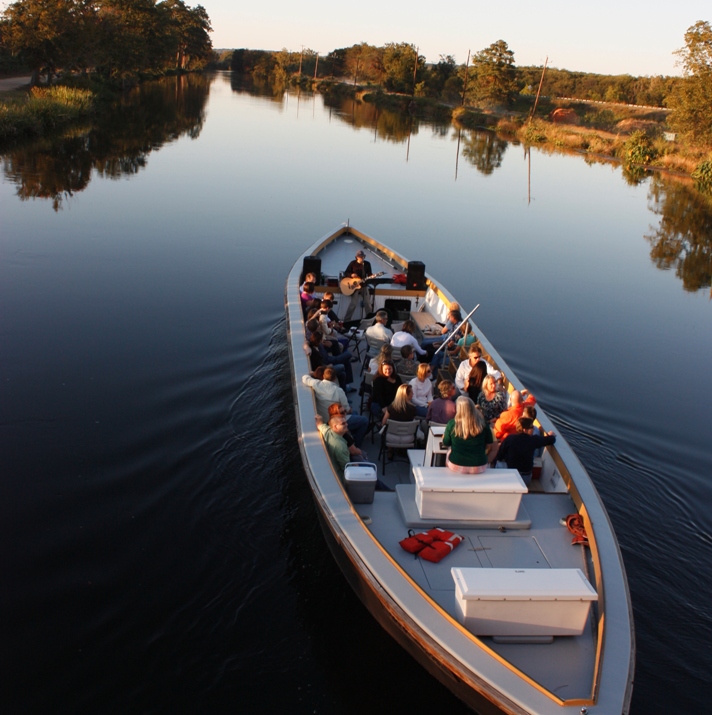
- Augusta Canal – historic canal with bike/pedestrian path
- Phinizy Swamp Nature Park – wetlands park with pedestrian/bike paths and boardwalks
Government
In 1995, citizens of Augusta and unincorporated parts of Richmond County voted to consolidate their city and county governments. Citizens of Hephzibah and Blythe, also located in Richmond County, voted against joining in the merger, which took effect January 1, 1996. The unified government consists of a mayor and ten commissioners. Eight commissioners represent single-member districts, while two are elected at-large, each to represent a super district that encompasses half of Augusta-Richmond's population. A May 2024 referendum, giving the mayor full voting powers on the Augusta Commission, was approved by Augusta voters by 74%, with the mayor previously being allowed to vote only in the case of a tie on the commission. The government is a Council–manager government, with the commission appointing a County Administrator to carry out ordinances and directives of the government.
| Year | Democrat | Republican | Other |
|---|---|---|---|
| 2024 | 67.79% | 31.67% | 0.53% |
| 2020 | 67.89% | 30.75% | 1.36% |
| 2016 | 65.00% | 32.60% | 1.40% |
| 2012 | 66.39% | 32.64% | 0.97% |
| 2008 | 65.60% | 33.80% | 0.60% |
| 2004 | 56.60% | 42.90% | 0.50% |
| 2000 | 54.77% | 44.43% | 0.80% |
| 1996 | 54.05% | 41.62% | 4.33% |
Education

Colleges and universities
Main campuses
- Augusta Technical College (state technical college)
- Augusta University (public research university)
- Paine College (private, Methodist historically black college)
Satellite campuses
- East Georgia State College (state four-year college), main campus located in Swainsboro
- Georgia Military College (state funded military college), main campus located in Milledgeville
- Brenau University (private, not-for-profit, undergraduate and graduate-level higher education), main campus located in Gainesville, Georgia
K–12 schools

Private schools in Augusta include Aquinas High School, Curtis Baptist High School, and Westminster Schools of Augusta.
Media
The daily newspaper in the city is The Augusta Chronicle. Television stations serving Augusta and its metropolitan market are WJBF, channel 6 (ABC, with The CW Plus on DT2); WRDW, channel 12, (CBS); WCES, channel 20 (PBS); WAGT, channel 26 (NBC); and WFXG, channel 54 (Fox). Augusta's large medical community and patient population is served by the Medical Examiner (www.AugustaRx.com), a twice-monthly newspaper published since 2006.
Infrastructure
Transportation
Main article: Transportation in Augusta, Georgia
Major roads and expressways
- (follows US 1 from Jefferson County line to Gordon Highway; leaves Georgia at James U. Jackson Memorial Bridge)
- (various roads, including John C. Calhoun Expressway and Washington Road)
- in southern Richmond County
Parts of Augusta are served by city transit service Augusta Public Transit (APT), but the main mode of transportation within the city is by car. Augusta is also served by a number of taxi companies.
Airports
The city has two airports: Augusta Regional Airport and Daniel Field. Augusta Regional Airport is served by two passenger airlines, including Delta Connection, which offers service to Atlanta, and American Eagle, which offers service to Charlotte, Dallas-Ft. Worth, and Washington D.C.
Rail
Until the 1960s, the city's Augusta Union Station was a passenger rail hub, with trains arriving from the Atlantic Coast Line (as spur sections from Florence, South Carolina, from trains such as the Champion, Everglades and Palmetto), Georgia Railroad and Southern Railway (for example, the Aiken-Augusta Special from New York City). The last Seaboard Coast Line (the successor to the Atlantic Coast Line) train was a Florence-Augusta section of the Champion; this section ended in 1970. The last train to the city was the unnamed daily in-state Georgia Railroad train between Atlanta and Augusta. This latter train, unofficially called the Georgia Cannonball, ran as a mixed train, until May 6, 1983. Most trains went to the Union Station at Barrett Square. The Southern Railway trains went to the Southern Railway depot at Fifth and Reynolds Street. Today, freight service is handled by Norfolk Southern Railway's Georgia Division and Piedmont Division through their Augusta Yard and Nixon Yard located near the city. Norfolk Southern Trains such as the NS 191 and 192 pass through Augusta's downtown as they "street run" at 5 mph down 6th street. They also cross the old Trestle over the Savannah River entering and leaving South Carolina. CSX Transportation Atlanta Division and Florence Division Trains also serve the Augusta, Georgia, area from the CSX Augusta Yard near Gordon Highway southwest of the city.
Pedestrians and cycling
- Augusta Canal Historic Trail
- Riverwalk Augusta, a trail
Law enforcement
Law enforcement in Augusta is handled by the Richmond County Sheriff's Office.
Notable people
Main article: List of people from Augusta, Georgia
Sister cities
Augusta is twinned with:
- France Biarritz, Pyrénées-Atlantiques, France
- Japan Takarazuka, Hyōgo, Japan
Notes
References
References
- "History".
- "2021 U.S. Gazetteer Files". United States Census Bureau.
- "QuickFacts: Augusta-Richmond County consolidated government (balance), Georgia". United States Census Bureau.
- "2020 Population and Housing State Data". United States Census Bureau.
- "Augusta Facts".
- "USPS.com® – ZIP Code Lookup".
- "Get your digits straight - chronicle.augusta.com".
- "762 on way to phone near you".
- "2017 U.S. Census Estimates–List of Places". U.S. Census Bureau.
- "Augusta", in ''The Concise Columbia Encyclopedia'' (New York: Columbia Univ. Press, 1994), p. 56.
- Johnson, Bianca Cain. "Ground broken on new cyber command headquarters at Fort Gordon".
- (2002). "The Colonial Plan of Augusta". Georgia Historical Quarterly.
- "Coweta Town historical marker". KVWE-TV.
- ''Memorial History of Augusta, Georgia: from Its Settlement in 1735 to the Close of the Eighteenth Century'' by Charles Colcock Jones, Salem Dutcher (Augusta, GA: D. Mason, 1890) page 31
- "Civil War History in Augusta {{!}} Historic Landmarks & Sites".
- "Freedom On Film: Civil Rights In Georgia".
- "Baltimore is Everywhere," ''[[New York Magazine]],'' May 18–31, 2015, p. 33.
- Checker, Melissa. (2007). ""But I Know It's True" Environmental Risk, Assessment, Justice, and Anthropology". Human Organization.
- [http://chronicle.augusta.com/stories/2003/06/29/pav_379852.shtml "Officials consider relicensing Augusta Canal"] {{Webarchive. link. (October 17, 2015 , ''Augusta Chronicle'', June 29, 2003)
- "Is It True that Snow is Rare in Augusta, Georgia?".
- "NowData – NOAA Online Weather Data". [[National Oceanic and Atmospheric Administration]].
- "Station: August Bush Fld AP, GA". National Oceanic and Atmospheric Administration.
- "WMO Climate Normals for COLUMBIA/METRO ARPT SC 1961–1990". National Oceanic and Atmospheric Administration.
- "Decennial Census of Population and Housing by Decade". [[US Census Bureau]].
- (1870). "1870 Census of Population - Georgia - Population of Civil Divisions less than Counties".
- (1880). "1880 Census of Population - Georgia - Population of Civil Divisions less than Counties".
- (1930). "1910 Census of Population - Georgia".
- (1930). "1930 Census of Population - Georgia".
- (1940). "1940 Census of Population - Georgia".
- (1980). "1950 Census of Population - Georgia".
- (1960). "1960 Census of Population - Population of County Subdivisions - Georgia".
- (1970). "1970 Census of Population - Population of County Subdivisions - Georgia".
- (1980). "1980 Census of Population - Number of Inhabitants - Georgia".
- (1990). "1990 Census of Population - Summary Social, Economic, and Housing Characteristics - Georgia".
- (2000). "2000 Census of Population - General Population Characteristics - Georgia".
- "P004 Hispanic or Latino, and Not Hispanic or Latino by Race – 2000: DEC Summary File 1 – Augusta Richmond consolidated government (balance), Georgia".
- "P2 Hispanic or Latino, and Not Hispanic or Latino by Race – 2010: DEC Redistricting Data (PL 94-171) – Augusta Richmond consolidated government (balance), Georgia".
- "P2 Hispanic or Latino, and Not Hispanic or Latino by Race – 2020: DEC Redistricting Data (PL 94-171) – Augusta Richmond consolidated government (balance), Georgia".
- Schneider, Mike. (August 13, 2021). "Census shows US is diversifying, white population shrinking".
- (August 12, 2021). "America is becoming more urban, more diverse and less white, 2020 Census reveals".
- (http://powerserve.net), Powerserve. "Augusta Tomorrow".
- (May 4, 2018). "Georgia's Little Secret Cybersecurity Hub: Enter Augusta...".
- Headlee, Celeste. (2016-12-19). "Is Augusta The Future 'Silicon Valley' Of Cyber Security?".
- (2025-04-09). "Unemployment Rate in Augusta-Richmond County, GA-SC (MSA)".
- (September 8, 2010). "Delta closing two U.S. call centers". [[USA Today]].
- [http://www.augustaeda.org/LargestEmployers.html City of Augusta Largest Employers] {{Webarchive. link. (November 24, 2013 Retrieved November 14, 2013)
- {{NRISref
- "Lamar Building".
- "River Place Condominiums".
- "Wells Fargo Building".
- "About Greenjackets Baseball". The official site of the Augusta Greenjackets.
- "Augusta Rugby Football Club (ARFC)".
- "Palmetto Rugby Union Homepage".
- "USA Rugby South Conference".
- [http://thesphl.com/view/thesphl/news/news_11400 Fans Vote Augusta River Hawks As Hockey Team's Name] {{Webarchive. link. (March 17, 2010 . Thesphl.com (March 13, 2010). Retrieved on August 9, 2013.)
- [http://www.worldgolf.com/column/masters-most-prestigious-sporting-event-in-america-6559.htm Super Bowl, World Series, NBA Finals: None say 'class' like the Masters] {{Webarchive. link. (May 26, 2011 . Worldgolf.com (February 25, 2008). Retrieved on August 9, 2013.)
- [http://www.augustadiscgolf.com/courses.html Augusta Disc Golf] {{Webarchive. link. (September 4, 2011 ''Augusta Disc Golf Association'')
- Lenon, Rakiyah. (September 26, 2025). "IRONMAN 70.3 Augusta to continue through 2030".
- (June 19, 2020). "June 20, 1995: Voters agree to consolidate Augusta and Richmond County government".
- "Maps".
- Owens, Liz. (2024-05-20). "Augustans decide to give mayor a full vote on commission".
- "Election Results".
- (July 26, 2016). "2016 Georgia Presidential Election Results".
- "2020 CENSUS - SCHOOL DISTRICT REFERENCE MAP: Richmond County, GA". [[U.S. Census Bureau]].
- "Fall Line Freeway".
- Seaboard Coast Line timetable, April 26, 1970, Table 3
- Seaboard Coast Line timetable, December 1, 1970, Table 4
- Cox, Jim. (2011). "Rails across dixie : a history of passenger trains in the American South". McFarland.
- "Sheriff {{!}} Augusta, GA - Official Website".
- "Twin towns, Biarritz official website". Biarritz.fr.
- "Sister Cities International Alliances {{!}} Georgia.org".
- "国際交流のページ". Takarazuka.
This article was imported from Wikipedia and is available under the Creative Commons Attribution-ShareAlike 4.0 License. Content has been adapted to SurfDoc format. Original contributors can be found on the article history page.
Ask Mako anything about Augusta, Georgia — get instant answers, deeper analysis, and related topics.
Research with MakoFree with your Surf account
Create a free account to save articles, ask Mako questions, and organize your research.
Sign up freeThis content may have been generated or modified by AI. CloudSurf Software LLC is not responsible for the accuracy, completeness, or reliability of AI-generated content. Always verify important information from primary sources.
Report