From Surf Wiki (app.surf) — the open knowledge base
Audi R8 (LMP)
Le Mans Prototype race car
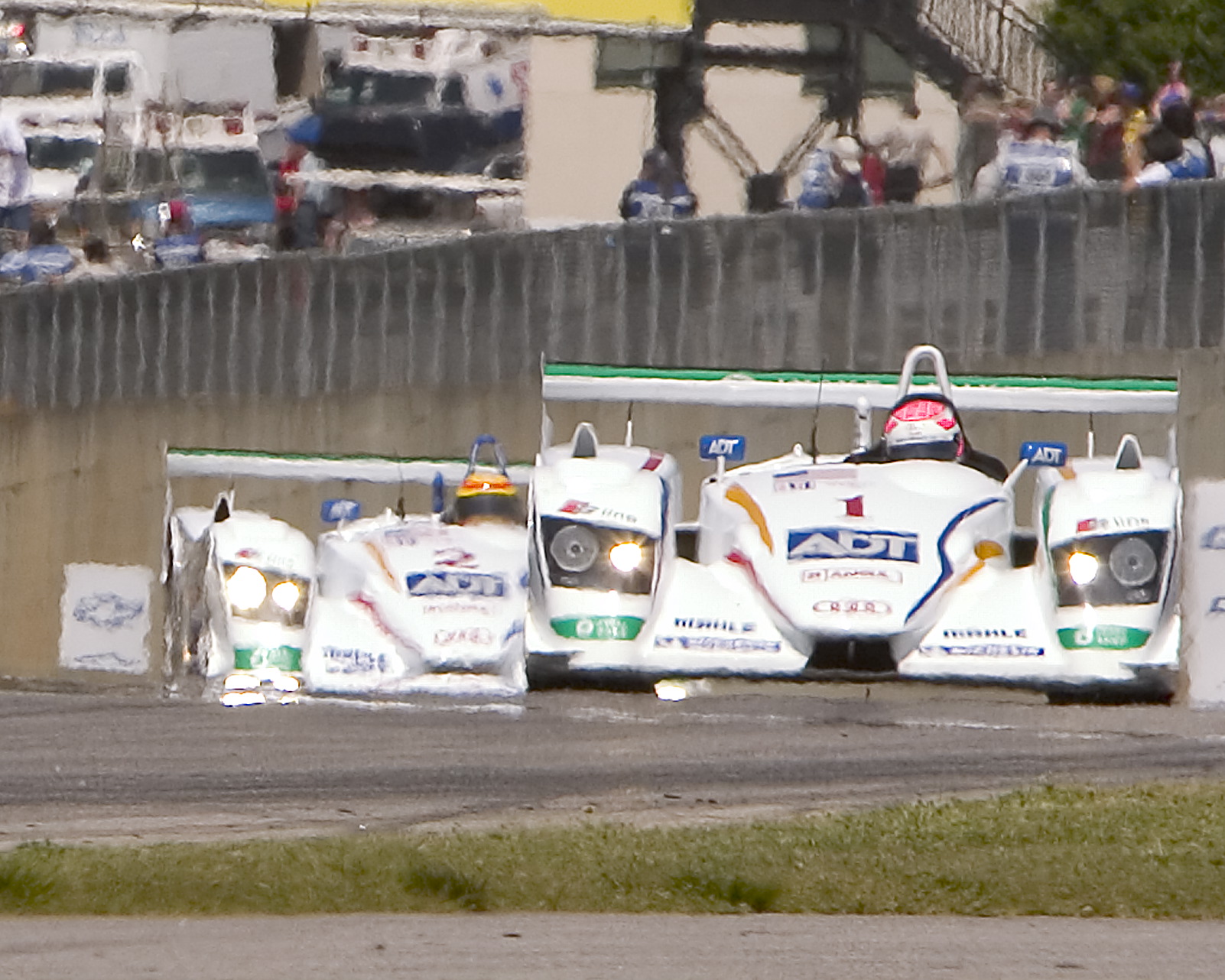
Le Mans Prototype race car
the 1999–2006 race car used in sports car racing
Wolfgang Appel (chassis) Ulrich Baretzky (engine) GBR Audi Sport UK GBR Audi Sport UK Team Veloqx JPN Audi Sport Japan Team Goh USA Champion Racing GBR Johansson Motorsport FRA Audi PlayStation Team Oreca GER Marco Werner ITA Rinaldo Capello ITA Michele Alboreto GBR Allan McNish ITA Emanuele Pirro GER Frank Biela FRA Laurent Aïello MON Stéphane Ortelli SWE Stefan Johansson FIN JJ Lehto GBR Johnny Herbert |Turbo/NA=twin-turbo,
The Audi R8 is a Le Mans Prototype sports-prototype race car introduced in 2000 for sports car racing as a redevelopment of their Audi R8R (open-top LMP) and Audi R8C (closed-top LMGTP) used in 1999. In its class, it is one of the most successful racing sports cars having won the 24 Hours of Le Mans race in 2000, 2001, 2002, 2004, and 2005, five of the six years it competed in total. Its streak of Le Mans victories between 2000 and 2005 was broken only in 2003 by the Bentley Speed 8, another race car fielded that year by Volkswagen Group.{{cite web
The petrol-powered Audi R8 race car was in 2006 replaced by the new Audi R10 TDI Diesel; however, the need to further develop the R10 meant that the R8 saw action in a few races leading up to the 24 Hours of Le Mans.
A total of 16 chassis were built.
History
1998: The challenge
In 1997, sports car racing and especially the Le Mans 24 Hours was popular among factories such as BMW, Mercedes-Benz, Porsche, Toyota, Nissan Motors, and others. At that time, Audi Sport boss Wolfgang Ullrich started to evaluate the options of joining.
With the upcoming American Le Mans Series also providing a stage for the US market, Audi announced plans in 1998 to compete in 1999, with the Audi R8R powered by a 550 hp V8 turbo. As it was considered the better choice for a whole race due to less weight and wider tires, Audi ordered an open-top roadster from Dallara to be developed and run by Joest Racing.
Yet, during the autumn of 1998, after the necessity of GT1 homologation was dropped in favour of LM-GTP prototypes, closed GT coupés like the Porsche 911 GT1, Mercedes-Benz CLK-GTR, and the Toyota GT-One proved successful. In response, Audi also ordered their newly acquired Norfolk-based Racing Technology Norfolk, led by Tony Southgate, to build a closed-cockpit car using the same drivetrain.
The ACO rules for closed-top prototypes allowed cars to run with larger air restrictors, resulting in more power (about 600 hp), which resulted in a higher top speed in combination with the lower drag. To compensate this advantage over the duration of a race, the LMGTPs were limited to smaller tyres and smaller fuel tanks.
1999: The R8R and R8C
Main article: Audi R8R, Audi R8C
Following a period of testing, two R8Rs debuted at the 1999 12 Hours of Sebring. The hich was a strong sign towards the race in France. The already tested open-top Audi R8R, entered by Joest Racing, was not fast enough to challenge for a win, finishing third.
After further tests and modifications, the Audis returned for Le Mans. The new debuting R8Cs lacked pace and unfortunately suffered mechanical gearbox woes. Lap times were 10 seconds down from the leading LMP and LMGTP competitors. Joest's R8Rs ran steady, yet still were too slow to run for pole position. After a race that had the spectacular flights of the Mercedes-Benz CLR and leading cars of Toyota and BMW crashing out, the Audi R8Rs took third and fourth behind the surviving #15 BMW V12 LMR and the Japanese-driven Toyota.
Based on the experiences, Audi decided to regroup for 2000, and built a new R8 spyder together with Joest and Dallara. The British-built R8C coupe was retired, but Audi-owned Bentley developed the concept of the R8C closed-cockpit LMGTP and entered the Bentley EXP Speed 8 in 2001, winning the race with the Bentley Speed 8 in 2003.
1999: Retiring competitors
After the 1999 Le Mans shame, Mercedes retired from GTs to focus on the return of the DTM touring cars in 2000, as well as on F1. Toyota and BMW also went to F1, with BMW at least continuing to race for two years in the ALMS, where the open roadster of Bill Auberlen also suffered a "back flip" during the Petit Le Mans at Road Atlanta in 2000, as the closed-cockpit Porsche of Yannick Dalmas had done in 1998. Despite the BMW V12 LMR not receiving further development, the German team Schnitzer Motorsport was almost as effective as Joest. Still, the BMW V12 LMR could not match the Audi R8's might in the championship and lost almost every race against it. BMW quit the top class to race the BMW M3 in the GT class since, dominating in the ALMS and in WTCC, as well as at the 24 Hours Nürburgring.
This left only Porsche as a major possible challenger for 2000; however, the Porsche LMP project was scrapped before it had a chance to race. Rumours at that time said that Ferdinand Piech himself made them stay away, using his influence as a co-owner of Porsche, as well as his management role at Volkswagen, which would develop the upcoming SUV VW Touareg in cooperation with the Porsche Cayenne. The Porsche V10 racer was turned into the Porsche Carrera GT instead.
2000: The R8

The Audi R8 is a sports-racing car prepared for the LMP900 class at Le Mans and in the American Le Mans Series. The car was developed by Audi Motorsport and Joest Racing, and debuted in 2000, winning the 12 Hours of Sebring.
The R8 won Le Mans five times (2000, 2001, 2002, 2004, and 2005) and the overall season championship in the American Le Mans Series six times in a row (from 2000 to 2005).
The R8 won a hat trick at Le Mans in 2000–2002, campaigned by Audi Sport Infineon Team Joest and driven by Tom Kristensen, Emanuele Pirro, and Frank Biela. First time out in 2000, the team won a 1-2-3 finish. Since then, the Audi R8 has won numerous championships and races, including further wins for "privateer" teams at Le Mans in 2004 and 2005.
The R8 is powered by a 3.6 L Audi V8 with Fuel Stratified Injection (FSI), which is a variation on the concept of gasoline direct injection developed by VW; it maximizes both power and fuel economy at the same time. FSI technology can be found in products available to the public, across all brands in the Volkswagen Group.
The power supplied by the R8, officially listed at about 610 hp in 2000, 2001, and 2002, 550 hp in 2003 and 2004, and 520 hp in 2005, is sent to the rear wheels via a Ricardo six-speed sequential transmission with an electropneumatic paddle shift. Unofficially, the works team Audi R8 for Le Mans (2000, 2001, and 2002) is said to have had around 670 hp instead of the quoted 610 hp. The numbers were quoted at speed, and were due to the car making 50 extra horsepower due to twin ram-air intakes at speeds over 150 mi/h. Official torque numbers were quoted for this version of the engine at 516 lbft at 6500 rpm. The equation for horsepower (torque divided by 5250, multiplied by rpm) for these numbers produces a horsepower rating of 638 hp at the same 6500 rpm (516/5250*6500=638). The Audi R8's structure was designed from the beginning to expedite parts changes during the race. The car's chassis has been likened to a Lego model — anything on the car can be changed and changed quickly. During its campaign, the Joest pit crew was able to change the entire rear transaxle of a damaged R8 — a process which usually takes between one and three hours — in as low as three minutes and 16 seconds. The reason for this was that the transmission, rear suspension, and rear subframe were built as one unit. The car had numerous quick-connect hoses and easily removable bolts. The whole rear section of the car could be removed as a whole and a new back half installed with the help of a crane. The Automobile Club de l'Ouest (ACO), organizers of the 24 Hours of Le Mans and the American Le Mans Series, acted quickly to void this advantage by mandating the gearbox casing be the same item through the duration of the race, with only the internals being allowed to be changed. However, the R8 still had quicker access to the gearbox internals than any other car due to its quick-change construction . This was critical as the gearbox was the weak link in the car.
The R8's structure and body are both composed of carbon fibre, a strong, lightweight polymer material.
Performance from top speed to acceleration was, as in most race car cases, variable depending on the car's setup. The highest speed of the R8 at Le Mans was 338 km/h in the practice sessions of the 2002 Le Mans 24 Hours Race. A low downforce setup could reach about 350 km/h.
Audi Sport's program saw tragedy in 2001 when on April 25, popular ex-F1 driver Michele Alboreto died in an accident after suffering a high-speed tyre failure during an R8 test session at the Lausitzring in eastern Germany.
2003: Bentley breaks the streak
The Bentley Speed 8, which was somewhat based on the R8 ran at Le Mans from 2001 to 2003, winning in 2003, used a heavily modified 4.0-L version of the V8 engine from the Audi R8 . The Bentley racing effort was campaigned by Team Bentley (Apex Motorsport) with assistance from longtime R8 competitor Joest Racing and Audi Sport UK. After 2002, the Joest factory team dropped its R8 campaign and left it to the privateers. Restrictor changes brought the power down to 550 bhp for anyone still racing with the R8, but the maximum torque hardly changed. Tom Kristensen, who won the previous three 24 Hours of Le Mans races in an R8, was assigned to drive the Bentley Speed 8, and helped guide the team to victory. (Kristensen went on to win the 2004 and 2005 races in an Audi R8). Some similarity exists between the Bentley Speed 8 and the Audi R8's successor, the R10 TDI.
2005: End of active competition
During the 2005 season, its time at the front of the pack evidently was drawing to a close. Audi had made the development of the Audi R10 TDI diesel public, and cars from other manufacturers and teams started to catch up in terms of on-the-track speed. The ACO still felt that the R8 needed to be kept in check, so they reduced the restrictor size on the R8's engine, due to the car not meeting new hybrid regulations, and stipulated the car shall carry ballast weight in an attempt to make the races more competitive. The R8 was restricted even further to only 520 bhp. At the 2005 Le Mans, the Audis failed to qualify on pole position; the fastest R8 started the race in third position. However, the car was able to outlast all other competitors to eventually take its fifth checkered flag at the Circuit de la Sarthe and the 24 Hours of Le Mans. This victory was also notable since it was Tom Kristensen's sixth straight 24 Hours of Le Mans victory, and a record seventh overall, beating legendary driver Jacky Ickx's previous record of six career 24 Hours of Le Mans victories. To date, the R8 remains one of the fastest petrol-powered LMPs, setting a 3:29 at Le Mans, which was beaten only by the Lola-Aston Martins. However, the R8's best finish was at 379 laps, which is more than the Lola-Aston Martin's best at 373 laps.
List of records
Legacy
2006: The R10 TDI
Main article: Audi R10 TDI
In response to the new level of competition, Audi developed a successor known as the Audi R10 TDI. The V12 engined turbodiesel won at its race debut at the 2006 12 Hours of Sebring with both cars starting on the front row. However, the pole-sitting R10 had to start from the pit lane due to the need to rectify heat exchanger issues.
Emanuele Pirro, Frank Biela, and Marco Werner made history by becoming the first drivers to win the Le Mans 24-hour race in a diesel-powered car. The Audi R10 TDI completed a record 380 laps of the La Sarthe circuit, with Pirro at the wheel for the finish. French trio Sébastien Loeb, Éric Hélary, and Franck Montagny took second in the Pescarolo Judd No 17, four laps back. Scotsman Allan McNish was third in the other Audi, which came in 13 laps down after suffering mechanical problems.
The R8 continued to campaign the American Le Mans Series through the first half of the 2006 season, and made its final US appearance on July 1, 2006, at Lime Rock Park, Connecticut, piloted by McNish and Capello. The R8 ended its career in style by winning the race, marking the 50th American Le Mans Series victory for the Audi R8. The R10s participated in the rest of the ALMS season, beginning with the race at Miller Motorsports Park, Utah.
2007: R8 road car
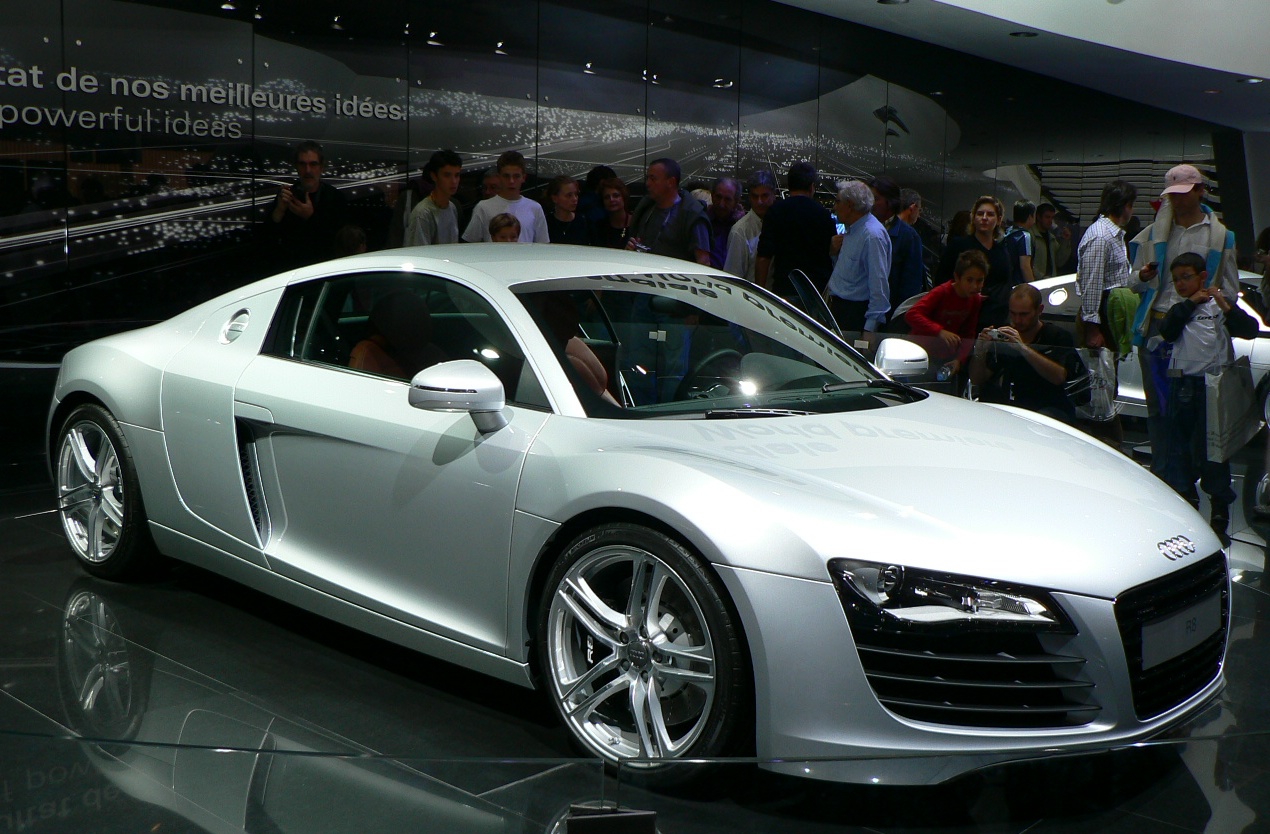
The name Audi R8 also is used by the production road sports car Audi R8, which is based on the 2003 Audi Le Mans quattro concept car. Production started in 2007.
24 Hours of Le Mans results
| Year | Team | No | Drivers | Pole | Fastest | |||||||
|---|---|---|---|---|---|---|---|---|---|---|---|---|
| lap | Laps | Overall | ||||||||||
| Position | 2000 | 2001 | 2002 | 2003 | 2004 | 2005 | ||||||
| DEU Audi Sport Team Joest | 7 | DEU Christian Abt | ||||||||||
| ITA Michele Alboreto | ||||||||||||
| ITA Rinaldo Capello | no | no | 365 | 3rd | ||||||||
| 8 | DEU Frank Biela | |||||||||||
| DNK Tom Kristensen | ||||||||||||
| ITA Emanuele Pirro | no | no | 368 | 1st | ||||||||
| 9 | FRA Laurent Aïello | |||||||||||
| GBR Allan McNish | ||||||||||||
| MCO Stéphane Ortelli | yes | yes | 367 | 2nd | ||||||||
| DEU Audi Sport Team Joest | 1 | DEU Frank Biela | ||||||||||
| DNK Tom Kristensen | ||||||||||||
| ITA Emanuele Pirro | no | no | 321 | 1st | ||||||||
| DEU Audi Sport North America | 2 | FRA Laurent Aïello | ||||||||||
| ITA Rinaldo Capello | ||||||||||||
| ITA Christian Pescatori | yes | yes | 320 | 2nd | ||||||||
| USA Champion Racing | 3 | GBR Johnny Herbert | ||||||||||
| BEL Didier Theys | ||||||||||||
| DEU Ralf Kelleners | no | no | 81 | DNF | ||||||||
| GBR Johansson Motorsport | 4 | SWE Stefan Johansson | ||||||||||
| NLD Tom Coronel | ||||||||||||
| FRA Patrick Lemarié | no | no | 35 | DNF | ||||||||
| DEU Audi Sport Team Joest | 1 | DEU Frank Biela | ||||||||||
| DNK Tom Kristensen | ||||||||||||
| ITA Emanuele Pirro | no | yes | 375 | 1st | ||||||||
| DEU Audi Sport North America | 2 | GBR Johnny Herbert | ||||||||||
| ITA Rinaldo Capello | ||||||||||||
| ITA Christian Pescatori | yes | no | 374 | 2nd | ||||||||
| DEU Audi Sport Team Joest | 3 | DEU Marco Werner | ||||||||||
| DEU Michael Krumm | ||||||||||||
| AUT Philipp Peter | no | no | 372 | 3rd | ||||||||
| JPN Audi Sport Japan Team Goh | 5 | JPN Hiroki Katoh | ||||||||||
| FRA Yannick Dalmas | ||||||||||||
| JPN Seiji Ara | no | no | 358 | 7th | ||||||||
| JPN Audi Sport Japan Team Goh | 5 | JPN Seiji Ara | ||||||||||
| DNK Jan Magnussen | ||||||||||||
| DEU Marco Werner | no | no | 370 | 4th | ||||||||
| USA Champion Racing | 6 | FIN JJ Lehto | ||||||||||
| ITA Emanuele Pirro | ||||||||||||
| SWE Stefan Johansson | no | no | 372 | 3rd | ||||||||
| GBR Audi Sport UK | ||||||||||||
| GBR Arena Motorsport | 10 | DEU Frank Biela | ||||||||||
| GBR Perry McCarthy | ||||||||||||
| FIN Mika Salo | no | no | 28 | DNF | ||||||||
| USA ADT Champion Racing | 2 | FIN JJ Lehto | ||||||||||
| DEU Marco Werner | ||||||||||||
| ITA Emanuele Pirro | no | no | 368 | 3rd | ||||||||
| JPN Audi Sport Japan Team Goh | 5 | JPN Seiji Ara | ||||||||||
| ITA Rinaldo Capello | ||||||||||||
| DNK Tom Kristensen | no | no | 379 | 1st | ||||||||
| GBR Audi Sport UK Team Veloqx | 8 | GBR Allan McNish | ||||||||||
| DEU Frank Biela | ||||||||||||
| DEU Pierre Kaffer | no | no | 350 | 5th | ||||||||
| 88 | GBR Jamie Davies | |||||||||||
| GBR Johnny Herbert | ||||||||||||
| GBR Guy Smith | yes | yes | 379 | 2nd | ||||||||
| USA ADT Champion Racing | 2 | DEU Frank Biela | ||||||||||
| GBR Allan McNish | ||||||||||||
| ITA Emanuele Pirro | no | no | 364 | 3rd | ||||||||
| 3 | FIN JJ Lehto | |||||||||||
| DNK Tom Kristensen | ||||||||||||
| DEU Marco Werner | no | no | 370 | 1st | ||||||||
| FRA Audi PlayStation Team Oreca | 4 | FRA Franck Montagny | ||||||||||
| FRA Jean-Marc Gounon | ||||||||||||
| MCO Stéphane Ortelli | no | no | 362 | 4th |
References
References
- Michael J. Fuller. "Mulsanne's Corner: 1999-2000 Porsche LMP1". Mulsannescorner.com.
- Bornhop, Andrew. (August 2012). "Ode to an R8". [[Road & Track]].
- ''Alboreto Is Killed Testing Audi R8'', ''[[The New York Times]]'', April 26, 2001, Page D7.
This article was imported from Wikipedia and is available under the Creative Commons Attribution-ShareAlike 4.0 License. Content has been adapted to SurfDoc format. Original contributors can be found on the article history page.
Ask Mako anything about Audi R8 (LMP) — get instant answers, deeper analysis, and related topics.
Research with MakoFree with your Surf account
Create a free account to save articles, ask Mako questions, and organize your research.
Sign up freeThis content may have been generated or modified by AI. CloudSurf Software LLC is not responsible for the accuracy, completeness, or reliability of AI-generated content. Always verify important information from primary sources.
Report