From Surf Wiki (app.surf) — the open knowledge base
Attalla, Alabama
City in Alabama, United States
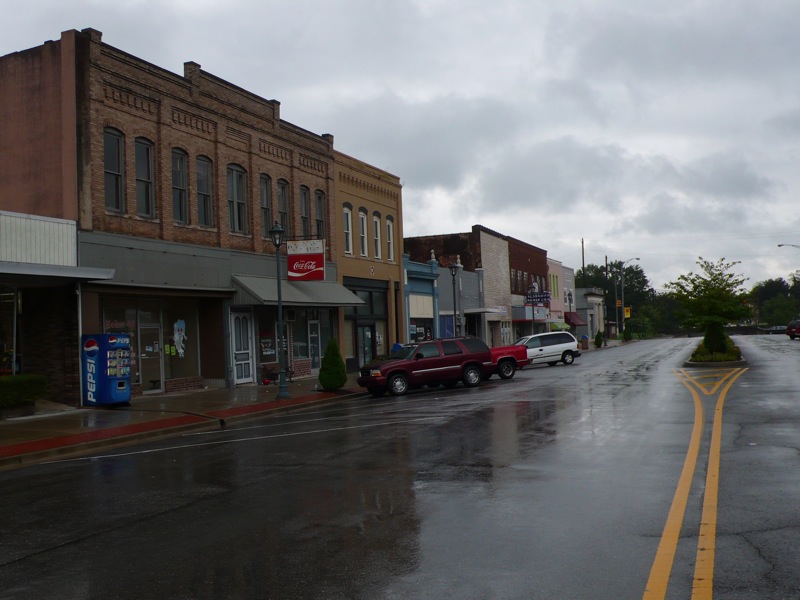
City in Alabama, United States
| Field | Value |
|---|---|
| official_name | Attalla |
| settlement_type | City |
| motto | "Gateway to Northeast Alabama" |
| image_skyline | Atalla, Alabama - Aerial (51157940034).jpg |
| image_caption | Aerial view of Attalla |
| image_blank_emblem | Logo of Attalla, Alabama.png |
| blank_emblem_type | Logo |
| image_map | File:Etowah County Alabama Incorporated and Unincorporated areas Attalla Highlighted 0103028.svg |
| mapsize | 250px |
| map_caption | Location of Attalla in Etowah County, Alabama. |
| pushpin_label | Attalla |
| subdivision_type | Country |
| subdivision_type1 | State |
| subdivision_type2 | County |
| subdivision_name | United States |
| subdivision_name1 | Alabama |
| subdivision_name2 | Etowah |
| government_type | Mayor-Council |
| leader_title | Mayor |
| leader_name | Larry Means |
| area_total_km2 | 18.13 |
| area_total_sq_mi | 7.00 |
| area_land_km2 | 18.13 |
| area_land_sq_mi | 7.00 |
| area_water_km2 | 0.00 |
| area_water_sq_mi | 0.00 |
| elevation_footnotes | |
| elevation_ft | 558 |
| population_as_of | 2020 |
| population_total | 5827 |
| population_density_km2 | 321.46 |
| population_density_sq_mi | 832.55 |
| timezone | Central (CST) |
| utc_offset | -6 |
| coordinates | |
| timezone_DST | CDT |
| utc_offset_DST | -5 |
| postal_code_type | ZIP code |
| postal_code | 35954 |
| area_code | 256 |
| blank_name | FIPS code |
| blank_info | 01-03028 |
| blank1_name | GNIS feature ID |
| blank1_info | 2403130 |
| website | |
| unit_pref | Imperial |
| area_footnotes |
Attalla is a city in Etowah County, Alabama, United States. As of the 2010 census, the population was 6,048.
History

The town developed on the area of a former Muscogee (Creek) village that was important during the Creek War. Most of the Creek people were forced out under the Indian Removal Act of 1830. White European migrants from the coastal areas came into this area to acquire land. The wealthier ones developed cotton plantations based on the labor of enslaved African Americans.
Cherokee people had also lived in this area, after being encroached on in Tennessee and western North Carolina. David Brown (Cherokee) was assisted by the Rev. D. S. Butterick in preparing the Cherokee Spelling Book while he lived here.
Attalla was not founded until 1870; it was established on land donated by W. C. Hammond, a plantation owner. It was incorporated as a city government on February 5, 1872. The town was officially named "Attalla" in 1893, derived from the Cherokee language word otali meaning "mountain".
Railroads served the town and connected it to other markets. When the railroads went into bankruptcy, Attalla's prosperity declined in the late 19th century financial troubles.
Attalla is the site of the first hydroelectric dam constructed to provide electricity for a city; it was built in 1887.
20th century to present
William Lewis Moore, a white U.S. postman and civil rights activist, was murdered here on April 23, 1963. He was walking from Chattanooga, Tennessee, to Jackson, Mississippi to publicize his support of civil rights with a letter for Mississippi Governor Ross Barnett. The suspected killer, Floyd Simpson, was never charged with the crime.
Geography
Attalla is in Etowah County and is bordered to the east by the city of Gadsden, the county seat, and at its southernmost point by Rainbow City.
Interstate 59 runs along the eastern edge of the city, with access from Exits 181 and 183. U.S. Route 11 passes through the center of town as Third Street and runs generally parallel to I59, leading northeast 36 mi to Fort Payne and southwest 58 mi to Birmingham. U.S. Routes 278 and 431 also pass through the center of Attalla, leading east 5 mi to downtown Gadsden. US 431 runs north 20 mi to Albertville, while US 278 leads west 47 mi to Cullman. Alabama State Route 77 passes through the southern section of Attalla, leading north 3 mi to US 431 and southeast 6 mi to Rainbow City.
According to the U.S. Census Bureau, the city has a total area of 18.1 km2, all of it land. Big Wills Creek, a tributary of the Coosa River, flows southeasterly through the city. The southern end of Lookout Mountain rises to the east overlooking the city.
Demographics
|align-fn=center
2000 census
At the 2000 census there were 6,795 people, 2,672 households, and 1,976 families living in the city. The population density was 988.0 PD/sqmi. There were 2,914 housing units at an average density of 436.7 /sqmi. The racial makeup of the city was 78.42% White, 13.5% Black or African American, 1.5% Native American, 0.08% Asian, 1.64% from other races, and 0.67% from two or more races. 2.22% of the population were Hispanic or Latino of any race. Of the 2,620 households 30.2% had children under the age of 18 living with them, 47.6% were married couples living together, 16.4% had a female householder with no husband present, and 31.5% were non-families. 29.0% of households were one person and 13.9% were one person aged 65 or older. The average household size was 2.45 and the average family size was 3.00.
The age distribution was 23.7% under the age of 18, 8.9% from 18 to 24, 27.3% from 25 to 44, 22.4% from 45 to 64, and 17.7% 65 or older. The median age was 38 years. For every 100 females, there were 90.2 males. For every 100 females age 18 and over, there were 86.5 males.
The median household income was $27,444 and the median family income was $39,549. Males had a median income of $30,605 versus $19,693 for females. The per capita income for the city was $15,727. About 16.4% of families and 18.6% of the population were below the poverty line, including 22.5% of those under age 18 and 22.0% of those age 65 or over.
2010 census
At the 2010 census there were 6,048 people, 2,442 households, and 1,627 families living in the city. The population density was 983.9 PD/sqmi. There were 2,841 housing units at an average density of 424 /sqmi. The racial makeup of the city was 81.5% White, 12.7% Black or African American, .4% Native American, 0.5% Asian, 2.9% from other races, and 2.0% from two or more races. 4.7% of the population were Hispanic or Latino of any race. Of the 2,442 households 27.0% had children under the age of 18 living with them, 42.5% were married couples living together, 18.1% had a female householder with no husband present, and 33.4% were non-families. 29.8% of households were one person and 13.0% were one person aged 65 or older. The average household size was 2.41 and the average family size was 2.07.
The age distribution was 22.7% under the age of 18, 8.9% from 18 to 24, 25.0% from 25 to 44, 26.3% from 45 to 64, and 17.2% 65 or older. The median age was 39.8 years. For every 100 females, there were 89.3 males. For every 100 females age 18 and over, there were 94.9 males.
The median household income was $32,426 and the median family income was $35,934. Males had a median income of $33,428 versus $25,441 for females. The per capita income for the city was $16,457. About 13.9% of families and 18.2% of the population were below the poverty line, including 27.5% of those under age 18 and 13.9% of those age 65 or over.
2020 census
| Race | Num. | Perc. |
|---|---|---|
| White (non-Hispanic) | 4,337 | 74.43% |
| Black or African American (non-Hispanic) | 774 | 13.28% |
| Native American | 13 | 0.22% |
| Asian | 33 | 0.57% |
| Other/Mixed | 333 | 5.71% |
| Hispanic or Latino | 337 | 5.78% |
As of the 2020 United States census, there were 5,827 people, 2,151 households, and 1,364 families residing in the city.
Attalla Precinct/Division (1880–1970)
The Attalla Beat (Etowah County 17th Beat) first appeared on the 1880 U.S. Census. In 1890, "beat" was changed to "precinct". In 1960, the precinct was changed to "census division" as part of a general reorganization of counties. In 1980, Attalla census division was consolidated with Gadsden census division.
Education
The Attalla City School System is the public school district. As of 2006, it has some 1,823 students.
The district includes the following schools:
- Attalla Elementary School (Grades Pk–5)
- Etowah Middle School (Grades 6–8)
- Etowah High School (Grades 9–12)
The system formerly had Alma Hinson Junior High School. In 1962, the editor of The Etowah News Journal described the school as having a "nothing short of excellent" curricula and "a bright exception" to problems in other schools in the system.
Transportation
Etowah County Rural Transportation provides dial-a-ride bus service throughout the city and county.
Notable people
- Gerald William Barrax (1933–2019), poet and educator
- Betty Kelly (born September 16, 1944), member of Motown girl group Martha and the Vandellas
- Larry Means (born April 20, 1947), former member of the Alabama Senate and current mayor
- Derrick Nix (born February 22, 1980), defensive coordinator for the Auburn Tigers
- Patrick Nix (born April 7, 1972), former Auburn University quarterback
- Tyrone Nix (born September 30, 1972), defensive coordinator for the Ole Miss Rebels
- B. L. Noojin (1885–1950), athlete, educator, and politician
- Albert Staton (1899–1980), basketball and football player for Georgia Institute of Technology
Gallery
File:4th Street Attalla Oct 2014.jpg|4th Street, Attalla File:Bank of Attalla Oct 2014.jpg|Bank of Attalla File:Historic Alabama Power Company sign, Attalla, Alabama LCCN2010640595.tif|Historic Alabama Power Company sign, Attalla File:5th Avenue Attalla Oct 2014 1.jpg|5th Avenue, Attalla File:5th Avenue Attalla Oct 2014 2.jpg|5th Avenue, Attalla File:Country Music Opera House Oct 2014.jpg|Country Music Opera House, Attalla File:First United Methodist Church Attalla Oct 2014.jpg|First United Methodist Church, Attalla File:Seven Cedars Attalla Oct 2014.jpg|Seven Cedars, Attalla File:Houses on 5th Avenue Attalla Oct 2014.jpg|Houses on 5th Avenue, Attalla File:Walker's Drug Store building Attalla Oct 2014.jpg|Walker's Drug Store building, Attalla File:Old Attalla Elementary School Oct 2014 2.jpg|Old Attalla Elementary School
References
Notes
References
References
- [http://www.attallacity.com City of Attalla official website]
- https://attallacity.org/city-council
- {{GNIS. 2403130
- "2020 U.S. Gazetteer Files". United States Census Bureau.
- "Geographic Identifiers: 2010 Demographic Profile Data (G001): Attalla city, Alabama". U.S. Census Bureau.
- (August 29, 1990). "The Names Stayed". Calhoun Times and Gordon County News.
- (1984). "Indian Places Names in Alabama". [[University of Alabama Press]].
- "Historic Attalla Alabama". City of Attalla.
- "A Postman's 1963 Walk For Justice, Cut Short On An Alabama Road". National Public Radio.
- "U.S. Decennial Census". Census.gov.
- "U.S. Census website". [[United States Census Bureau]].
- "U.S. Census website". [[United States Census Bureau]].
- "Explore Census Data".
- http://www2.census.gov/prod2/decennial/documents/37721510v1p2ch2.pdf, 1960 AL Census
- [http://www.attalla.k12.al.us/ Attalla City Schools]
- (November 22, 1962). "Hinson Junior High: A Bright Exception". [[The Etowah News-Journal]].
- "Etowah County Rural Transportation".
This article was imported from Wikipedia and is available under the Creative Commons Attribution-ShareAlike 4.0 License. Content has been adapted to SurfDoc format. Original contributors can be found on the article history page.
Ask Mako anything about Attalla, Alabama — get instant answers, deeper analysis, and related topics.
Research with MakoFree with your Surf account
Create a free account to save articles, ask Mako questions, and organize your research.
Sign up freeThis content may have been generated or modified by AI. CloudSurf Software LLC is not responsible for the accuracy, completeness, or reliability of AI-generated content. Always verify important information from primary sources.
Report