From Surf Wiki (app.surf) — the open knowledge base
Atlantic Northeast

| Field | Value | ||||||||||
|---|---|---|---|---|---|---|---|---|---|---|---|
| name | Atlantic Northeast | ||||||||||
| settlement_type | Region | ||||||||||
| image_skyline | {{Photomontage | ||||||||||
| photo1a | Boston skyline from Longfellow Bridge September 2017 panorama 2.jpg | ||||||||||
| photo2a | Bass Harbor Lighthouse.jpg | ||||||||||
| photo2b | Western Brook Pond Newfoundland Canada DSC 6405.jpg | ||||||||||
| photo3a | Montreal August 2017 05.jpg | ||||||||||
| photo4a | NB Fundy3 tango7174.jpg | ||||||||||
| photo4b | WinterWashington.jpg | ||||||||||
| photo5a | Halifax Harbour Sunset Skyline, Nova Scotia (24237034620).jpg | ||||||||||
| size | 280 | ||||||||||
| spacing | 1 | ||||||||||
| color | Transparent | ||||||||||
| border | 0 | ||||||||||
| foot_montage | Left-right from top: Boston skyline, Bass Harbor Head Light, Western Brook Pond, Montreal skyline, Fundy National Park, Mount Washington, Halifax skyline | ||||||||||
| nickname | Atlantica | ||||||||||
| image_map | New England Governors and Eastern Canadian Premiers Conference members.svg | ||||||||||
| coordinates | |||||||||||
| subdivision_type | Countries | ||||||||||
| subdivision_name | Canada and United States | ||||||||||
| subdivision_type1 | States/Provinces | ||||||||||
| subdivision_name1 | {{Plainlist | ||||||||||
| subdivision_type2 | Territories | ||||||||||
| subdivision_name2 | {{Plainlist | ||||||||||
| subdivision_type3 | Largest metropolitan areas | ||||||||||
| subdivision_name3 | {{Plainlist | ||||||||||
| unit_pref | Metric | ||||||||||
| area_urban_footnotes | |||||||||||
| area_rural_footnotes | |||||||||||
| area_metro_footnotes | |||||||||||
| population_density_km2 | auto | ||||||||||
| blank_name_sec1 | Languages | ||||||||||
| framestyle | border:none; padding:0; | ||||||||||
| title | Indigenous languages | ||||||||||
| bullets | on | ||||||||||
| 1 | Abenaki | 2=Algonquin | 3=East Cree | 4=Innu-aimun | 5=Kanienʼkéha | 6=Mi'kawi'simk | 7=Naskapi | 8=New Massachusett | 9=Passamaquoddy | 10=Wəlastəkwey | 11=Wendat}} |
| framestyle | border:none; padding:0; | ||||||||||
| title | English dialects | ||||||||||
| bullets | on | ||||||||||
| 1 | Aboriginal English | 2= Afro-Nova Scotian English | 3=Atlantic Canadian English | 4=Black English | 5=Lunenburg English | 6=Newfoundland English | 7=New England English | 8=Quebec English}} | |||
| framestyle | border:none; padding:0; | ||||||||||
| title | French dialects | ||||||||||
| bullets | on | ||||||||||
| 1 | Acadian French | 2= Brayon French | 3=Chaouin | 4=Chiac | 5=Joual | 6=Màgoua | 7=New England French | 8=Newfoundland French | 9=Quebec French}} | ||
| framestyle | border:none; padding:0; | ||||||||||
| title | Manual languages | ||||||||||
| bullets | on | ||||||||||
| 1 | American Sign Language (ASL) | 2=Langue des signes québécoise (LSQ) | 3=Maritime Sign Language (MSL) | 4=Black American Sign Language (BASL) | 5=Protactile}} | ||||||
| framestyle | border:none; padding:0; | ||||||||||
| title | Other languages | ||||||||||
| bullets | on | ||||||||||
| 1 | Canadian Gaelic | 2=Newfoundland Irish}} | |||||||||
| area_codes | |||||||||||
| website |
- Connecticut
- Maine
- Massachusetts
- New Brunswick
- New Hampshire
- Newfoundland and Labrador
- Nova Scotia
- Prince Edward Island
- Quebec
- Rhode Island
- Vermont
- Wabanaki Confederacy
- Mi'kma'ki
- Wolastokuk
- Ndakinna
- Peskotomuhkatik
- Pαnawαhpskewahki
- Greater Boston
- Greater Montreal
- Greater Providence tags --
The Atlantic Northeast () is a geographic and cultural region of eastern North America bounded by the Atlantic Ocean to the east and (loosely) by the Saint Lawrence River to the northwest. Though no official boundary exists, the most common conception includes the Maritime provinces, southern Quebec, and the island of Newfoundland in Canada, and the New England region of the United States. Broader conceptions reach further north into Canada, including Labrador and the Côte-Nord region of Quebec. Narrower conceptions may be limited to the coastal areas east of the Appalachian Mountains. The variety of definitions can be attributed to overlapping commonalities of the region's history, culture, geography, ecology, society, and other factors.
Definition
The term "Atlantic Northeast" should not be confused with Atlantic Canada, which includes the entirety of New Brunswick, Newfoundland and Labrador, Nova Scotia, and Prince Edward Island, but excludes Quebec. It should also not be confused with the northeastern portion of the Atlantic Ocean.
History
The predominant nations in the region over the course of the estimated last 11,000 years have been the Abenaki, Penobscot, Mi'kmaq, Maliseet, and Passamaquoddy, all of whom were later associated with the Wabanaki Confederacy. These nations' countries mainly overlapped the soon-to-be Maritime provinces, such as Mi'kma'ki and Wolastokuk with New Brunswick, Nova Scotia, and Prince Edward Island, as well as Ndakinna, Peskotomuhkatik, and Pαnawαhpskewahki with Vermont, New Hampshire, and Massachusetts.
Before 1620 the conflicts between First Nations and English settlers started due to the alienation of tribes; they also kidnapped members of the tribes through violence. The violence confused many Indigenous nations because they also traded with proper settlers, but this left the First Nations resentful of the European nations.The presence of the French and English in the Atlantic Northeast attracted the Dutch to begin trading on the Hudson River with different peoples. The new presence of these traders also brought unwanted microbes, viruses, and bacteria that took a disastrous toll on the Indigenous populations. When smallpox swept the New England area in 1610, the native population hit an all-time low, since they were trying to fight off a virus that was not indigenous to the area. Eventually the population recovered but not completely. After the outbreak settlers became highly interested in the Wabanaki beaver pelts, which they would trade for glass, metal, and weapons.
During the period of the expulsion of the Acadians, thousands were deported from the present-day Canadian provinces of Nova Scotia, New Brunswick, and PEI, as well as from northern Maine — parts of the French region called Acadie — into the Thirteen Colonies, from 1755 until 1758. Large parts of Nova Scotia were subsequently resettled by new arrivals from New England before 1775. At the end of the American Revolution, nearly 75,000 Loyalists resettled in Nova Scotia, New Brunswick and Québec. Close to 3,500 free African Americans went to Nova Scotia. Before 1860, about 30,000–40,000 black people entered Canada, many of them joining the previous group in Nova Scotia, either free or as escaped slaves through the Underground Railroad. From the mid-19th century until the Great Depression in the 1930s, nearly 900,000 French Canadians emigrated from Québec to the U.S. Two-thirds went into New England mill towns.
Geography
Major geographical features of the Atlantic Northeast include the Appalachian Mountains, the Green Mountains, the Atlantic Ocean, Long Island Sound, the Gulf of Maine, the Gulf of Saint Lawrence, the Bay of Fundy, the Merrimack River, the Boston Harbor, the Taunton River, the Blackstone River, the Connecticut River, the Housatonic River, and the Hoosic River.
Border disputes
The "Gray Zone" is an area of land and sea which is claimed by both Canada and the United States. It is located off the coasts of New Brunswick and Maine. The only land within this area are two islands, Machias Seal Island and North Rock. The "Gray Zone" is one of four areas between the two countries whose sovereignty is still in dispute, but is the only one of the disputed areas containing land. In 1979, both countries filed a joint application to the International Court of Justice to avoid having the dispute settled when oceanic boundaries in the area were set for mineral and fishing rights. Canadians have had a continuous presence in the area since 1832 when a lighthouse was built.
Places of interest
Northeast Canyons and Seamounts Marine National Monument is located 150 mi off the shore of Cape Cod. The national monument comprises 4900 sqmi of underwater canyons carved into the continental shelf, and has an underwater mountain rising 7000 ft above the ocean floor. This monument is home to many marine species, fish, whales, and dolphins. The monument was formed by a declaration by President Barack Obama.
Salem, Massachusetts, is a famous location in New England known primarily for the Salem witch trials. It was also one of Massachusetts' wealthiest ports for trading in the late 18th century.
Acadia National Park is on Mount Desert Island in Maine, with 47000 acre of woodlands, rocky shoreline, trails, camping, and wildlife. The park is home to Cadillac Mountain, the highest mountain on the east coast of the United States.
Climate
The Atlantic Northeast region has a four-season climate. In the New England region of the United States, summers are hot with an average temperature of 80 - in late June through August. In the fall the air is cool, with temperatures from 45 to, and in the spring it tends to be rainy, with temperatures from 40 to. In the winter there tends to be a lot of snowfall averaging around 35 in per year. The typical temperature in this area during the winter is around 25 F. The Canadian Maritimes have seasons very similar to the New England areas. New Brunswick has cold winters ranging from approximately 19 - and hot summers with temperatures from 72 to. Prince Edward Island has a climate similar to New Brunswick with temperatures ranging from 46 to in the summer and 11 to in the winter. In the summer in Nova Scotia temperatures will reach around 75 F, and in the winter temperatures will drop as low as 24 F.
Demographics
Most of the region's population is concentrated in southwestern New England and the Saint Lawrence Lowlands of Quebec, both of which form the northern part of their respective country's largest megalopolises. The region's largest metropolitan areas are Greater Boston, Massachusetts, with 4.8 million people; Greater Montreal, Quebec, with 4.1 million people; Greater Providence, Rhode Island, with 1.62 million people; and Greater Hartford, Connecticut, with 1.21 million people.
Largest cities and metropolitan areas
This is a list of the most populous cities and metropolitan areas in the Atlantic Northeast based on the 2016 Canadian census and United States Census Bureau population estimates as of July 1, 2019.
| City | State/Province | Population | Metropolitan area |
|---|---|---|---|
| Montreal | Quebec | 1,704,694 | 4,098,927 |
| Boston | Massachusetts | 692,600 | 4,875,390 |
| Quebec City | Quebec | 531,902 | 800,296 |
| Laval | Quebec | 422,993 | |
| Halifax | Nova Scotia | 316,701 | 403,131 |
| Longueuil | Quebec | 239,700 | |
| Worcester | Massachusetts | 185,428 | 923,672 |
| Providence | Rhode Island | 179,883 | 1,609,359 |
| St. John's | Newfoundland and Labrador | 178,427 | 205,955 |
| Sherbrooke | Quebec | 161,323 | 212,105 |
| Springfield | Massachusetts | 153,606 | 692,942 |
| Saguenay | Quebec | 145,949 | 160,980 |
| Bridgeport | Connecticut | 144,399 | 939,904 |
| Lévis | Quebec | 143,414 | |
| Trois-Rivières | Quebec | 134,413 | 156,042 |
| New Haven | Connecticut | 130,250 | 862,477 |
| Stamford | Connecticut | 129,638 | |
| Hartford | Connecticut | 122,105 | 1,214,295 |
| Cambridge | Massachusetts | 118,927 | |
| Manchester | New Hampshire | 112,673 | 406,678 |
| Terrebonne | Quebec | 111,575 | |
| Lowell | Massachusetts | 110,997 | |
| Moncton | New Brunswick | 108,620 | 144,810 |
| Waterbury | Connecticut | 107,568 |
Notes
| Vermont | 608,449 | 9,525 | 7,503 | 10,530 | 476 | 626,042 |
|---|
| No religious affiliation | 7% | 12% | 8% |
|---|
--
Culture
Sports
| New England Patriots | New England Revolution | Boston Celtics | Boston Bruins | Boston Red Sox | Halifax Hurricanes | Montreal Canadiens |
|---|---|---|---|---|---|---|
| Home stadium | Gillette Stadium | Gillette Stadium | TD Garden | TD Garden | Fenway Park | Scotiabank Centre |
| Home location | Foxboro, Massachusetts | Foxboro, Massachusetts | Boston, Massachusetts | Boston, Massachusetts | Boston, Massachusetts | Halifax, Nova Scotia |
| Championships won | 6 | 1 | 17 | 6 | 9 | 1 |
| Sports league | National Football League | Major League Soccer | National Basketball Association | National Hockey League | Major League Baseball | National Basketball League |
| Year established | 1960 | 1995 | 1946 | 1924 | 1901 | 2007 |
Historical landmarks
Alexander Graham Bell National Historic Site in Baddeck, Cape Breton Island, Nova Scotia, commemorates Alexander Graham Bell, a remarkable inventor who created Canada's first engine-powered airplane, the world's fastest boat, and the world's first telephone, along with many other achievements.
Halifax Citadel National Historic Site is the site of Fort George in Halifax, Nova Scotia. Visitors can take tours of the fort, learning about its soldiers, its legends and ghost stories, and even become a soldier for the day.
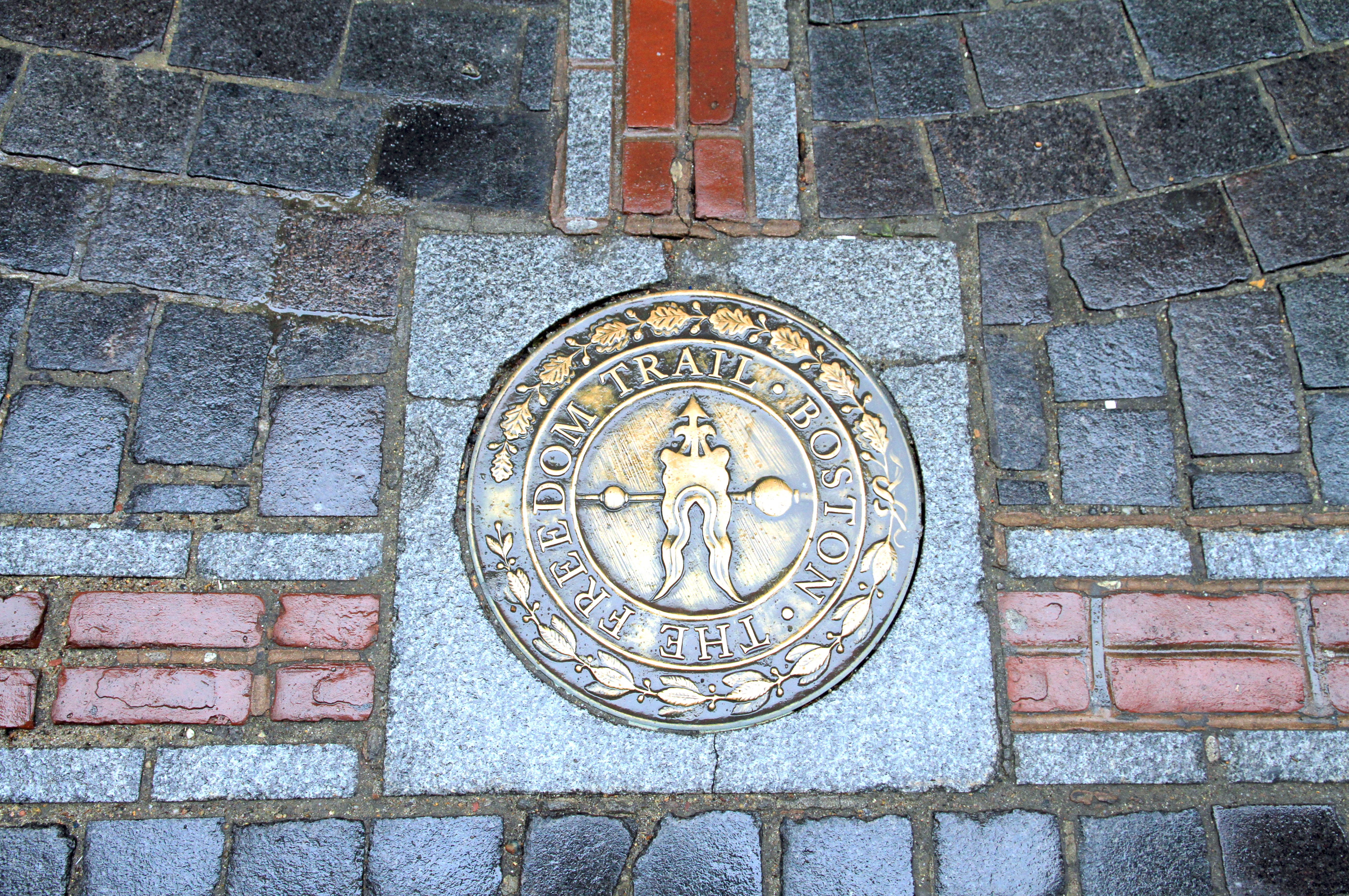
The Freedom Trail is a two and a half mile walking trail through the city of Boston that takes visitors past sixteen historic sites that led to the American Revolution, including the Boston Common, the Park Street Church, the Granary Burying Ground, King's Chapel, the Old Corner Bookstore, the Old State House, the site of the Boston Massacre, Faneuil Hall, the Paul Revere House, the Old North Church, the USS Constitution, and the Bunker Hill Monument.
The Salem Witch Museum describes the history of the Salem witch trials of 1692 through life-size figures and narrations.
The First Baptist Church in America was founded in Providence, Rhode Island, in 1638 by William Vincent Carpenter and Roger Williams and was later rebuilt in 1774. Guided tours are available from Memorial Day through Labor Day on weekdays, and self tours of the landmark are available all year round.
The Lake Champlain Maritime Museum, in Vergennes, Vermont, open from May to October, houses historic schooners, steamboats, wooden boats, shipwrecks, and even a Revolutionary War gunboat replica. Visitors can learn about the history of the lake's role in commerce, communication, transportation, and war, as well as its natural history above and below sea level.
Charlottetown City Hall is the oldest municipal building on Prince Edward Island, built in 1888. Visitors can tour the City Hall to learn about the history and present day of Prince Edward Island and the city of Charlottetown.
Birds

In the Atlantic Northeast it is common to see many birds living in the region, including bald eagles (Haliaeetus leucocephalus), piping plovers (Atlantic coast) (Charadrius melodus), the red-cockaded woodpecker (Picoides borealis), the red knot (Calidris canutus rufa), the North American subspecies of the roseate tern (Sterna dougallii dougallii), and shorebirds.
Aquatic life
.jpg)
The aquatic life in the Atlantic Northeast is quite extensive. The more common animals that are found in the area include the American eel (Anguilla rostrata), Appalachian monkey-face pearly mussel (Theliderma sparsa), dwarf wedgemussel (Alasmidonta heterodon), Atlantic horseshoe crab (Limulus polyphemus), Kenk's amphipod (Stygobromus kenki), and northern red-bellied cooter (Pseudemys rubriventris).
Plants
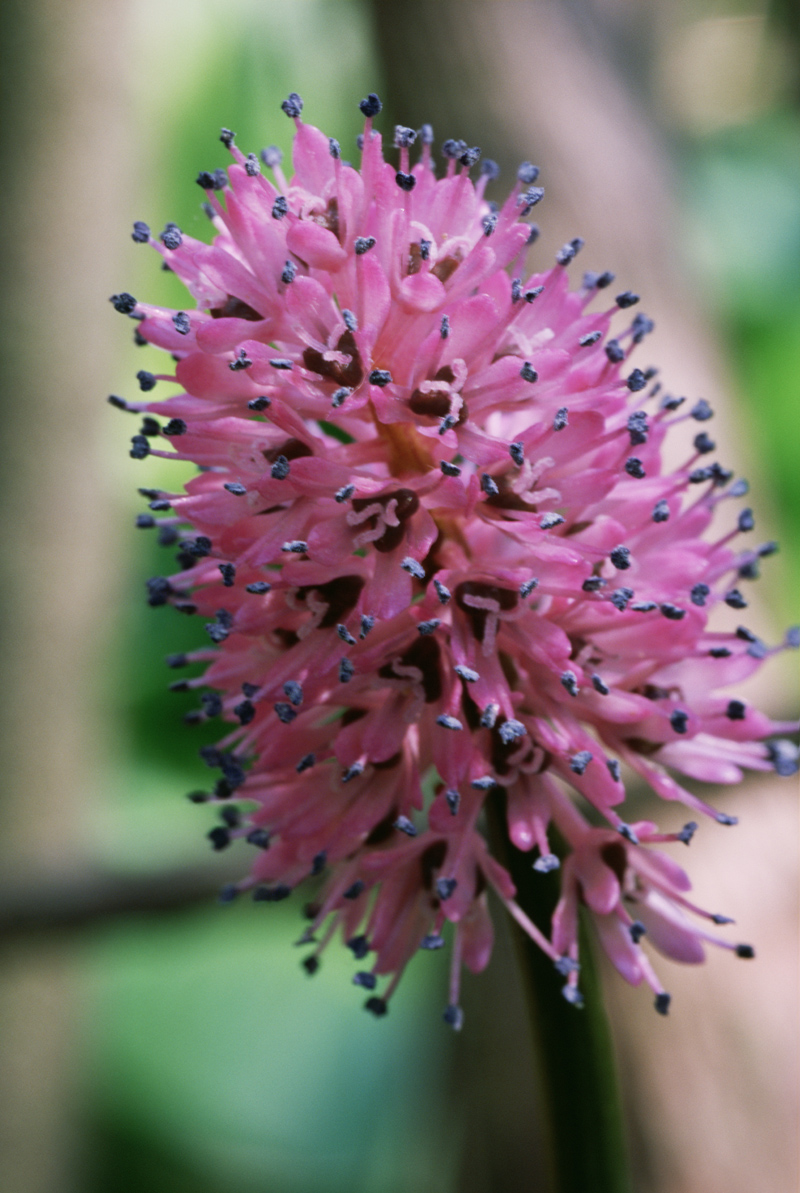
The plant life in the Atlantic Northeast is quite varied due to the turbulent climate in that area, but some of the more common plant life includes such species as Furbish lousewort (Pedicularis furbishiae), Jesup's milk-vetch (Astragalus robbinsii var. jesupii), and Northeastern bulrush (Scirpus ancistrochaetus).
References
References
- (2016). "The Oxford Handbook of American Indian History". Oxford University Press.
- Hoxie, F.E.. (2016). "The Oxford Handbook of American Indian History". Oxford University Press.
- Pestana, C.G.. (2015). "Inequality in Early America". Dartmouth College Press.
- American Friends Service Committee. (1989). "The Wabanakis of Maine and the Maritimes: A Resource Book about Penobscot, Passamaquoddy, Maliseet, Micmac and Abenaki Indians; with Lesson Plans for Grades 4 Through 8". The Program.
- John Brebner, ''The Neutral Yankees of Nova Scotia: A Marginal Colony During the Revolutionary Years'' (1937)
- Patrick Bode, "Upper Canada, 1793: Simcoe and the Slaves," ''Beaver'' 1993 73(3): 17–19; Paul Robert Magocsi, ed. ''Encyclopedia of Canada's Peoples'' (1999) p 142–3
- David Vermette, ''A Distinct Alien Race: The Untold Story of Franco-Americans: Industrialization, Immigration, Religious Strife'' (2018)
- "Discover New England". Nancy Marshall Communications..
- (2012-12-23). "The Border Isn't As Clear As You Think".
- (2018-10-30). "U.S.-Canada Border: History, Disputes & More".
- "Letter-writers make history: President Obama declares first Atlantic Ocean National Monument".
- "The First Eastern National Park". American government.
- "Facts About New England, USA {{!}} Discover New England".
- Canada, Province of Prince Edward Island. "Government of PEI: What's the weather like?".
- "Average Temperature in Nova Scotia".
- "County Population Totals and Components of Change: 2010-2018". United States Census Bureau.
- (February 8, 2017). "Population and dwelling counts, for census metropolitan areas, 2016 and 2011 censuses – 100% data". Government of Canada.
- (April 2, 2020). "Annual Estimates of the Resident Population: April 1, 2010 to July 1, 2019". United States Census Bureau.
- "2019 U.S. Gazetteer Files". United States Census Bureau.
- (February 8, 2017). "Population counts, for census metropolitan areas, census agglomerations, population centres and rural areas, 2016 Census". Statistics Canada.
- (February 8, 2017). "Population and dwelling counts, for Canada, provinces and territories, census metropolitan areas and census agglomerations, 2016 and 2011 censuses – 100% data". Statistics Canada.
- "Connecticut Subcounty Resident Population Estimates: April 1, 2010 to July 1, 2019". U.S. Census Bureau.
- "Massachusetts Subcounty Resident Population Estimates: April 1, 2010 to July 1, 2019". U.S. Census Bureau.
- "New Hampshire Subcounty Resident Population Estimates: April 1, 2010 to July 1, 2019". U.S. Census Bureau.
- "Rhode Island Subcounty Resident Population Estimates: April 1, 2010 to July 1, 2019". U.S. Census Bureau.
- "Massachusetts Sports Teams {{!}} Boston Sports Teams".
- "Home".
- "Alexander Graham Bell National Historic Site". Tourism Nova Scotia.
- "Halifax Citadel National Historic Site". Tourism Nova Scotia.
- "Colonial New England {{!}} Tours of Cities, Parks, Museums, Architecture".
- "Discover Charlottetown - See map".
- (December 7, 2020). "North Atlantic - Appalachian Region". Northeast Region, U.S. Fish and Wildlife Service.
- "Energy and Environmental affairs". Massachusetts Division of Fisheries and Wildlife.
- "Energy and Environmental Affairs". American government.
This article was imported from Wikipedia and is available under the Creative Commons Attribution-ShareAlike 4.0 License. Content has been adapted to SurfDoc format. Original contributors can be found on the article history page.
Ask Mako anything about Atlantic Northeast — get instant answers, deeper analysis, and related topics.
Research with MakoFree with your Surf account
Create a free account to save articles, ask Mako questions, and organize your research.
Sign up freeThis content may have been generated or modified by AI. CloudSurf Software LLC is not responsible for the accuracy, completeness, or reliability of AI-generated content. Always verify important information from primary sources.
Report