From Surf Wiki (app.surf) — the open knowledge base
Atacamatitan
Extinct genus of dinosaurs

Extinct genus of dinosaurs
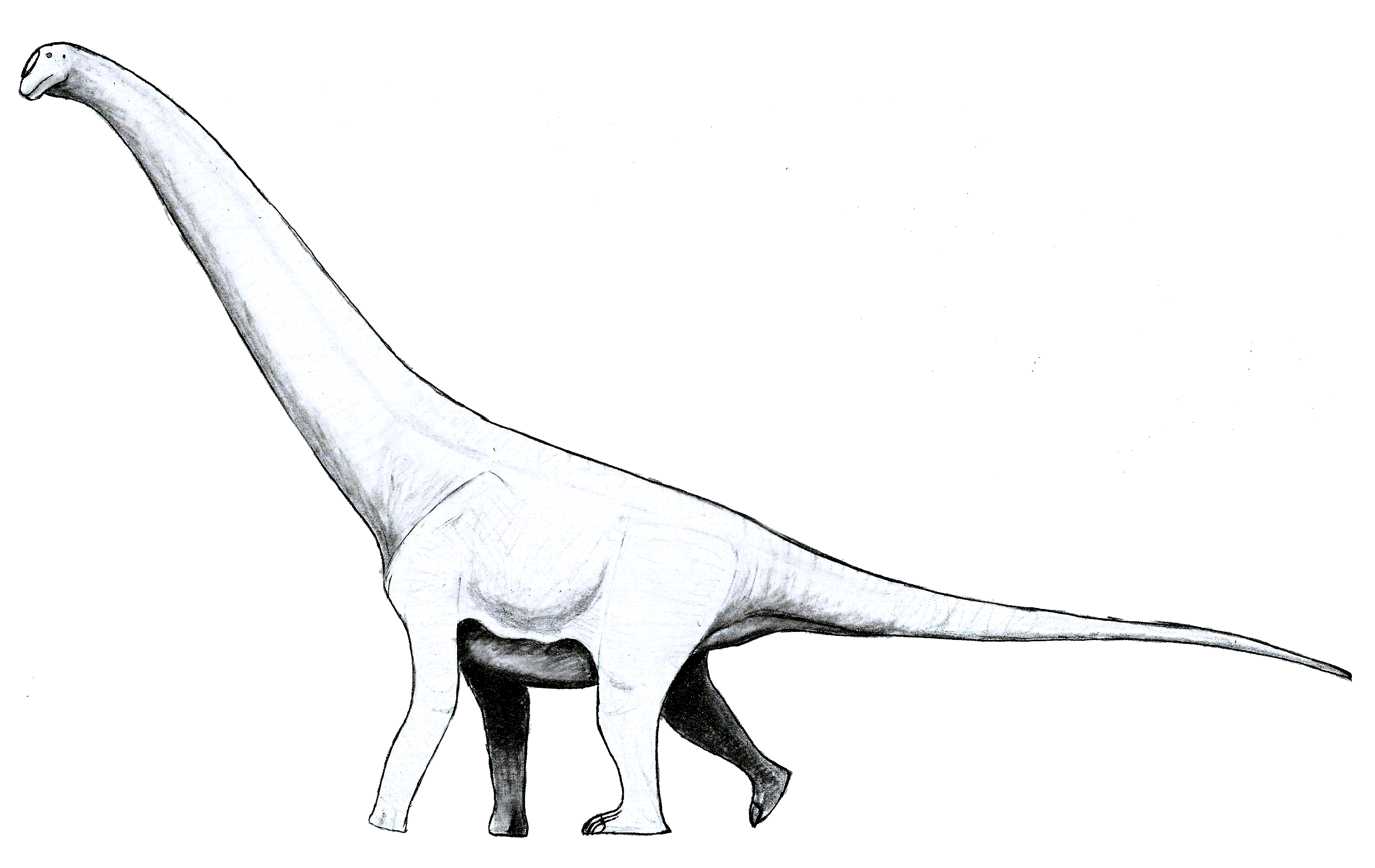
Atacamatitan (meaning "Atacama Desert titan") is a genus of titanosaurian sauropod dinosaurs from the Late Cretaceous Tolar Formation of Chile.
Discovery and naming
In February 2000, with the purpose of looking for Mesozoic fossils in Chile, Chilean and Brazilian researchers mounted a preliminary expedition that was organized by the Chilean National Museum of Natural History and the National Museum of Brazil heading to Antofagasta Region. During the expedition, they discovered the deposits of the Tolar Formation, located about 150 km north of Calama town and 50 km east from El Abra copper mine.
The deposits of this formation consists of well-stratified, red succession of breccias, conglomerates and sandstones. In July 2001, a second expedition was organized and with this, the excavation of the formation. The results ended on the discovery of the holotype of Atacamatitan: SGO-PV-961. The fossil remains were found in an outcrop surface of 2 m2 near Conchi Viejo town, Atacama Desert in Antofagasta Region, and they were associated to a single individual.
Description
The holotype, SGO-PV-961, consists of a right femur, the proximal end of a humerus, two dorsal vertebrae, posterior caudal vertebrae, dorsal ribs and a possibly fragmentary element of the sternum, other fragmented caudal vertebrae and indeterminate bones. Most elements are slightly distorted, have a reddish coloration and are quite ponderous, due to extensive permineralization.
According to Kellner et al. 2011, Atacamatitan can be recognised in having dorsal centra with pleurocoels that are curved and do not point posteriorly, dorsal vertebrae with concave ventral surface, posterior caudal vertebrae with laterally compressed neural spine having a blade-like anterior margin, femur with the proximal end getting gradually reduced until two thirds of its total length.
Vertebrae
The two preserved dorsal vertebrae are fragmented, with partial neural arches. Both vertebrae are opisthocoelic. Dorsal vertebra SGO-PV-961a features an elongated centrum, with pleurocoels in the lateral sides that are rounded and less elongated compared to other titanosaurs. The neural arch is missing, and due to the preserverd dimensions, it is likely that it was wider than high. The second dorsal vertebra SGO-PV-961b is antero-posteriorly compressed with the neural arch partially preserved. These dorsal vertebrae differ from other titanosaurs such as Gondwanatitan, Saltasaurus, Trigonosaurus and Uberabatitan, due to the strongly concave ventral margin of the centrum. By taking into account all the characteristics of the dorsal vertebrae, Atacamatitan differs from other titanosaurs by having pleurocoels rounded and less elongated not pointing posteriorly.
Although some caudal vertebrae were discovered, only two are well preserved. Both vertebrae came from the middle and posterior end of the tail. Caudal vertebra SGO-PV-961c was preserved only the centrum, it is dorsoventrally compressed and lacking pleurocoels. The centrum preserve two processes to attach chevrons, and the ventral and lateral surfaces are curved. Second caudal vertebra SGO-PV-961h is nearly complete, only lacking right prezygapophysis. The centrum is similar to SGO-PV-961c, only being smaller and posteriorly oriented. The prezygapophyses are elongated and reach nearly 30% of the anterior centrum. Postzygapophyses are reduced and positioned at the ventral margin of the neural spine. The neural arch is preserved in the anterior half of the centrum.
Forelimb and hindlimb
Ribs were unearthed too, the most complete is SGO-PV-961d, though it is unknown if the ribs of Atacamatitan had pneumatic foramina as evidenced in other titanosaurs. It is anteroposteriorly compressed with the dorsoventral diameter longer than the anteroposterior one. Capitulum and tuberculum are fragmented. The fragmentary sternal plate is thin and has a smooth border; due to its fragmentary nature, it is unclear the form. The right humerus is very fragmented, only preserving the proximal end and although the distal expansion is missing, it has a notable reduced distal end. Anteriorly, it preserves a developed depression for muscular attachment.
The preserved right femur is more gracile compared to other elements, indicating that the animal had stronger forelimbs. This is seen as a possible and potential autapomorphy for this species. It measures 1.10 m, the femoral head is missing and posteriorly, it preserves a well developed fourth trochanter, extending to the proximal quarter.
Classification
In the original description, Atacamatitan was placed in the Titanosauridae.
References
References
- (2000). "New sauropod dinosaur from the Atacama desert, northern Chile". Journal of Vertebrate Paleontology.
- (1978). "Cuadrángulo Chitigua y sector occidental del cuadrángulo Cerro Palpana, Región de Antofagasta". Carta Geológica de Chile.
- (2011). "A new titanosaur sauropod from the Atacama Desert, Chile". Anais da Academia Brasileira de Ciências.
- (2007). "Dinosaurs: The Most Complete, Up-to-Date Encyclopedia for Dinosaur Lovers of All Ages". Random House.
This article was imported from Wikipedia and is available under the Creative Commons Attribution-ShareAlike 4.0 License. Content has been adapted to SurfDoc format. Original contributors can be found on the article history page.
Ask Mako anything about Atacamatitan — get instant answers, deeper analysis, and related topics.
Research with MakoFree with your Surf account
Create a free account to save articles, ask Mako questions, and organize your research.
Sign up freeThis content may have been generated or modified by AI. CloudSurf Software LLC is not responsible for the accuracy, completeness, or reliability of AI-generated content. Always verify important information from primary sources.
Report