From Surf Wiki (app.surf) — the open knowledge base
Asthma-related microbes
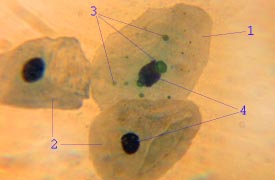
Chronic Mycoplasma pneumonia and Chlamydia pneumonia infections are associated with the onset and exacerbation of asthma. These microbial infections result in chronic lower airway inflammation, impaired mucociliary clearance, an increase in mucous production and eventually asthma. Furthermore, children who experience severe viral respiratory infections early in life have a high possibility of having asthma later in their childhood. These viral respiratory infections are mostly caused by respiratory syncytial virus (RSV) and human rhinovirus (HRV). Although RSV infections increase the risk of asthma in early childhood, the association between asthma and RSV decreases with increasing age. HRV on the other hand is an important cause of bronchiolitis and is strongly associated with asthma development. In children and adults with established asthma, viral upper respiratory tract infections (URIs), especially HRVs infections, can produce acute exacerbations of asthma. Thus, Chlamydia pneumoniae, Mycoplasma pneumoniae and human rhinoviruses are microbes that play a major role in non-atopic asthma.
Asthma
According to Hertzen (2002), a common characteristic of asthmatic patients is to have epithelial cells that respond to injury by enhancing the capability of producing proinflammatory and profibrogenic cytokines, instead of repairing the injured epithelial layer. As a result, inflammation and associated healing process leads to scar formation and tissue remodelling, which are symptoms that can be found in almost all asthmatics patients. Thus, asthma is a chronic inflammatory disorder of the airways. Asthma is divided into two subgroups: atopic (extrinsic) and non-atopic (intrinsic). The atopic subgroup is closely associated with family history of the disease, whereas the non-atopic subgroup has its onset in adulthood and it is not caused by inheritance. It is known that non-atopic asthma has a more severe clinical course than atopic asthma. Non-atopic asthma may be caused by chronic viral, bacterial infections, or colonization with pathogenic bacteria.
The distinction between atopic and non-atopic asthma is nuanced. "Atopic" is defined as having one or more positive skin tests to a battery of common aeroallergens, however, compared to people without asthma both atopic and non-atopic asthmatics have elevated levels of serum IgE (the "allergic" antibody) that is believed to be more directly responsible for asthma symptoms. A recent meta-analysis reported that the overall population attributable risk for C. pneumoniae-specific IgE in chronic asthma was 47% and was strongly and positively associated with disease severity. Population-attributable risk is the proportion of disease that is potentially attributable to the risk factor under investigation, indicating the potential for infection with this "stealth pathogen" as a significant contributor to asthma incidence and prevalence.
Associated microorganisms
''Chlamydia pneumoniae''
Main article: Chlamydophila pneumoniae
General descriptions
Chlamydia pneumoniae, formerly known as Chlamydophila pneumoniae, is a bacterium that belongs to the phylum Chlamydiae, order Chlamydiales, and genus Chlamydia. It is rod-shaped and Gram-negative. C. pneumoniae is non-motile and utilizes aerobic respiration. As an obligate intracellular bacterium, C. pneumoniae is both parasitic and mesophilic.
Biological interactions with host
C. pneumoniae is able to grow in monocytes, macrophages, endothelial and smooth muscle cells. Reinfection of the host with C. pneumoniae is common because the memory immunity elicited by C. pneumoniae is short-lived and partial. These deficiencies prevent C. pneumoniae from completing their normal developmental cycle, leading to the formation of aberrant, noninfectious C. pneumoniae that persist in the human host. C. pneumoniae infection may not only be persistent and chronic, but it also has irreversible tissue injury and scarring processes, which are symptoms in asthma patients. Infection with C. pneumoniae induces both humoral and cell-mediated immune responses. Among the two immune responses, cell-mediated immune response that involves CD8+ T cells in particular is crucial to eradicate C. pneumoniae, whereas the humoral immune response appears to be rather ineffective in protection against C. pneumoniae infection. In fact, CD8+ T cells are so important that if it is absent in the host, the C. pneumoniae infection would progress rapidly. Although cell-mediated immune response is responsible for the clearance of C. pneumoniae, this response can be harmful to the host because it favours the development of inflammation that can lead to asthma.
Roles in asthma
There is a strong association of C. pneumoniae with long-standing asthma among the non-atopic asthma in comparison to atopic asthma.
''Mycoplasma pneumoniae''
Main article: Mycoplasma pneumoniae
General descriptions
Mycoplasma pneumoniae is a bacterium that belongs to the phylum Firmicutes, class Mollicutes, order Mycoplasmatales and family Mycoplasmataceae. It is either filamentous or spherical. Individual spindle-shaped cells of M. pneumoniae are 1 to 2 μm long and 0.1 to 0.2 μm wide. and is unable to survive outside of a host due to osmotic instability in the environment.
Biological interactions with host
M. pneumoniae can cause infections in humans, animals, plants, and cell cultures. It is a parasitic bacterium that invades the mucosal membranes of the upper and lower respiratory tract, including nasopharynx, throat, trachea, bronchi, bronchioles, and alveoli. In fact, M. pneumoniae can be cultured from respiratory secretions even after the pneumonia patients are treated with effective antibiotics. Thus, M. pneumoniae infection is chronic and persistent. Besides, Nisar et al. (2007) also adds that M. pneumoniae infection causes pulmonary structural abnormalities, resulting in a decrease in expiratory flow rates and an increase in airways hyper-responsiveness in non-asthmatic individuals.
Roles in asthma
M. pneumoniae infection is responsible for triggering exacerbation of asthma in 3.3 to 50% in such cases. On top of that, M. pneumoniae induces the activation of mast cells by releasing serotonin and hexosaminidase. By producing antigen, M. pneumoniae is capable of initiating an antibody response. Its antigen interacts with IgE that attaches to mast cells, leading to the stimulation of histamine release followed by airway obstruction.
Human rhinoviruses (HRVs)
Main article: Human rhinovirus
General descriptions

Rhinoviruses are known to be the most important common cold viruses. They are ssRNA positive-strand viruses with no DNA stage, and are classified within the family Picornaviridae. While sharing basic properties with enteroviruses, such as size, shape, nucleic acid composition, and ether-resistance, rhinoviruses are distinguished from enteroviruses by having a greater buoyant density and a susceptibility to inactivation if they are exposed to an acidic environment. Nevertheless, they share a common ancestor with enteroviruses.
Biological interactions with host
The optimal temperature for rhinovirus replication is 33-35 °C, which corresponds to the temperature of nasal mucosa. At 37 °C virus replication rate falls to 10% to 50% of optimum. Most of the rhinovirus serotypes bind to intercellular adhesion molecule (ICAM), whereas approximately 10% of the serotypes bind to the low-density lipoprotein receptor. Normally, rhinoviruses would infect small clusters of cells in the epithelial layer with little cellular cytotoxicity. Although an increase in polymorphonuclear neutrophils are shown in infected nasal epithelium, little or no mucosal damage occurs from the infection. Nevertheless, rhinovirus infection leads to symptoms of the common cold, which is primarily an upper airway illness. Rhinovirus receptors are insensitive to neuraminidase but are sensitive to proteolytic enzymes.
Roles in asthma
Asthmatic subjects in 9 to 11 years old, 80% to 85% of asthma exacerbations that were associated with reduced peak expiratory flow rates and wheezing were due to viral upper respiratory tract infections (URIs). High rates of asthma attacks due to rhinovirus infection are also found in adults. It turns out that rhinovirus are capable of inducing epithelial cells to produce proinflammatory cytokines that result in airway hyperresponsiveness, neurogenic inflammatory responses, mucous secretion, inflammatory cell recruitment and activation, and plasma leakage. To support this statement, asthmatic subjects that are infected with rhinovirus have demonstrated an increase in airway hyperresponsiveness, airway obstruction, and inflammation. Similarly, rhinovirus infection has caused subjects with allergic rhinitis but no history of asthma to have a significantly increased airway hyperreactivity as well as a significantly increased incidence of late asthmatic reactions. This shows that in addition to causing airway hyperreactivity, rhinovirus also promotes the onset of non-atopic asthma. Furthermore, rhinovirus infection also promotes eosinophil recruitment to airway segments after antigen challenges, and thus intensifies airway inflammatory response to antigens, leading to the development of asthma.
References
References
- Guilbert, T.W. (2010). "Role of infection in the development and exacerbation of asthma". Expert Rev. Respir. Med..
- Hertzen, L.V.. (2002). "Role of persistent infection in the control and severity of asthma: focus on Chlamydia pneumoniae". European Respiratory Journal.
- (1989). "Association of asthma with serum IgE levels and skin-test reactivity to allergens". N Engl J Med.
- (1995). "Linkage of high-affinity IgE receptor gene with bronchial hyperreactivity, even in absence of atopy". Lancet.
- (2021). "Chlamydia pneumoniae and chronic asthma: Updated systematic review and meta-analysis of population attributable risk". PLOS ONE.
- Coombes, B.K.. (2002). "Cellular and Molecular Host-pathogen Interactions during ''Chlamydia Pneumoniae'' Infection". McMaster University.
- Kou, C.C. (1995). "Chlamydia pneumoniae". Clinical Microbiology Reviews.
- Larsen, R., Pogliano, K.. "Chlamydophila pneumoniae". Microbe Wiki.
- Pasternak, Y.. "Mycoplasma pneumoniae". Microbe Wiki.
- Waites, K.B.. (2004). "Mycoplasma pneumoniae and Its Role as a Human Pathogen". Clinical Microbiology Reviews.
- Nisar, N.. (2007). "Mycoplasma pneumoniae and its role in asthma". Postgraduate Medical Journal.
- Laitinen, LA. (1976). "Changes in bronchial reactivity after administration of live attenuated influenza virus". Am. Rev. Respir. Dis..
- Jack Merrit Gwaltney, J.. (1975). "Medical Reviews Rhinoviruses". The Yale Journal of Biology and Medicine.
- Friedlander, S. L.. (2005). "The role of rhinovirus in asthma exacerbations". J. Allergy Clin. Immunol..
This article was imported from Wikipedia and is available under the Creative Commons Attribution-ShareAlike 4.0 License. Content has been adapted to SurfDoc format. Original contributors can be found on the article history page.
Ask Mako anything about Asthma-related microbes — get instant answers, deeper analysis, and related topics.
Research with MakoFree with your Surf account
Create a free account to save articles, ask Mako questions, and organize your research.
Sign up freeThis content may have been generated or modified by AI. CloudSurf Software LLC is not responsible for the accuracy, completeness, or reliability of AI-generated content. Always verify important information from primary sources.
Report