From Surf Wiki (app.surf) — the open knowledge base
Assembly (programming)
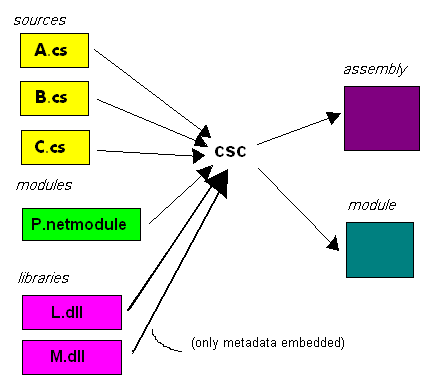
In computer programming, an assembly is a runtime unit consisting of types (such as classes and interfaces) and other resources. All types in an assembly share the same version number. An assembly typically corresponds to a single file (such as a .dll or .exe), but can consist of multiple files linked together by a manifest that serves as a table of contents describing the assembly's metadata and structure.
While an assembly often contains types from a single namespace and serves one program, it can span multiple namespaces. Conversely, a single namespace can be distributed across multiple assemblies, providing flexibility in code organization and deployment.
In C#, an assembly is the smallest deployment unit used, and is a component in .NET. In Java, it is a JAR file.
Creation of an assembly
Every compilation creates either an assembly or a module in C#. It is possible to add other modules with the assembly linker (al). A speciality of Java is to create a *.class file for each class, which is not the case in C#. The creation can be activated by compiler switches, like csc /addmodule:Y.netmodule A.cs that yields a new A.exe with Y added to this assembly.
References
This article was imported from Wikipedia and is available under the Creative Commons Attribution-ShareAlike 4.0 License. Content has been adapted to SurfDoc format. Original contributors can be found on the article history page.
Ask Mako anything about Assembly (programming) — get instant answers, deeper analysis, and related topics.
Research with MakoFree with your Surf account
Create a free account to save articles, ask Mako questions, and organize your research.
Sign up freeThis content may have been generated or modified by AI. CloudSurf Software LLC is not responsible for the accuracy, completeness, or reliability of AI-generated content. Always verify important information from primary sources.
Report