From Surf Wiki (app.surf) — the open knowledge base
Asian koel
Species of bird

Species of bird
- Cuculus honoratus Linnaeus, 1766
The Asian koel (Eudynamys scolopaceus) is a member of the cuckoo family of birds, the Cuculidae. It is found in the Indian subcontinent, China, and Southeast Asia. It forms a superspecies with the closely related black-billed koels, and Pacific koels which are sometimes treated as subspecies. The Asian koel, like many of its related cuckoo kin, is a brood parasite that lays its eggs in the nests of crows and other hosts, who raise its young. They are unusual among the cuckoos in being largely frugivorous as adults. The name koel is echoic in origin with several language variants. The bird is a widely used symbol in Indian, Pakistani and Nepali poetry.
Taxonomy
In 1747, the English naturalist George Edwards included an illustration and a description of an Asian koel in the second volume of his A Natural History of Uncommon Birds book. He used the English name "The Brown and Spotted Indian Cuckow". Edwards based his hand-coloured etching on a specimen from Bengal that belonged to the London silk-pattern designer and naturalist Joseph Dandridge. When in 1758 the Swedish naturalist Carl Linnaeus updated his Systema Naturae for the tenth edition, he placed the Asian koel with the other cuckoos in the genus Cuculus. Linnaeus included a brief description, coined the binomial name Cuculus scolopaceus and cited Edwards' work. The Asian koel is now placed in the genus Eudynamys that was introduced in 1827 by the English naturalists Nicholas Vigors and Thomas Horsfield. The genus name Eudynamys combines the Ancient Greek eu meaning "fine" with dunamis meaning "power" or "strength". The specific epithet scolopaceus is Modern Latin meaning "snipe-like" from Latin scolopax meaning "snipe" or "woodcock".
The species has variations within its wide range with several island populations and a number of taxonomic variations have been suggested. The black-billed koel (E. melanorhynchus) of the Sulawesi region and the Pacific koel of Australasia are sometimes considered conspecific with the Asian koel in which case the "combined" species is known as the common koel. Due to differences in plumage, colour of bill and voice, the three are increasingly treated as separate species. Alternatively, only the black-billed koel has been considered as a separate species, or the Asian koel has included all subspecies otherwise included in the Pacific koel, except for the subspecies breeding in Australia, which then has the name Australian koel (E. cyanocephalus).
The Asian koel has several geographic forms that have well marked plumage differences or have been geographically isolated with little gene flow. The following is a list of named subspecies with their distributions and synonyms as given by Payne:
- E. s. scolopaceus (Linnaeus, 1758) – Pakistan, India, Nepal, Bangladesh, Sri Lanka, Laccadives and Maldives
- E. s. chinensis Cabanis and Heine, 1863 – Southern China and Indochina, except the Thai-Malay Peninsula
- E. s. harterti Ingram, C 1912 – Hainan
- E. s. malayana Cabanis and Heine, 1863 – Thai-Malay Peninsula, Lesser Sundas and Greater Sundas, except Sulawesi. May include the race dolosa described from the Andaman and Nicobar Islands
- E. s. mindanensis (Linnaeus, 1766) – (includes E. s. paraguena) (Hachisuka, 1934) from Palawan, and E. s. corvina (Stresemann, 1931) from Halmahera, the Philippines (including Palawan and the Babuyan Islands), islands between Mindanao and Sulawesi, and North Maluku, except the Sula Islands
Description
The Asian koel is a large and long-tailed cuckoo measuring 39 - and weighing 190 -. The male of the nominate race is glossy bluish-black, with a pale greenish grey bill, the iris is crimson, and it has grey legs and feet. The female of the nominate race is brownish on the crown and has rufous streaks on the head. The back, rump and wing coverts are dark brown with white and buff spots. The underparts are whitish, but is heavily striped. The other subspecies differ in colouration and size. The upper plumage of young birds is more like that of the male and they have a black beak. They are very vocal during the breeding season (March to August in the Indian Subcontinent), with a range of different calls. The familiar song of the male is a repeated koo-Ooo. The female makes a shrill kik-kik-kik... call. Calls vary across populations.
They show a pattern of moult that differs from those of other parasitic cuckoos. The outer primaries show a transilient (alternating) ascending moult (P9-7-5-10-8-6) while the inner primaries are moulted in stepwise descending order (1-2-3-4).(Payne citing Stresemann and Stresemann 1961)
Distribution and habitat
-_Male_close_up_in_Kolkata_I_IMG_7568.jpg)
The Asian koel is a bird of light woodland and cultivation. It is a mainly resident breeder in tropical southern Asia from Iran, Pakistan, India, Bangladesh, Maldives, and Sri Lanka to southern China and the Greater Sundas. They have great potential in colonizing new areas, and were among the pioneer birds to colonize the volcanic island of Krakatau. They first arrived in Singapore in the 1980s and became very common birds.
Some populations may make long-distance movements being found in places like Australia.
Behaviour

The Asian koel is a brood parasite, and lays its single egg in the nests of a variety of birds, including the jungle crow, and house crow. In Sri Lanka before 1880 it was only known to parasitize the jungle crow, later shifting to the house crow. A study in India found 5% of Corvus splendens and 0.5% of Corvus macrorhynchos nests parasitized.
.jpg)
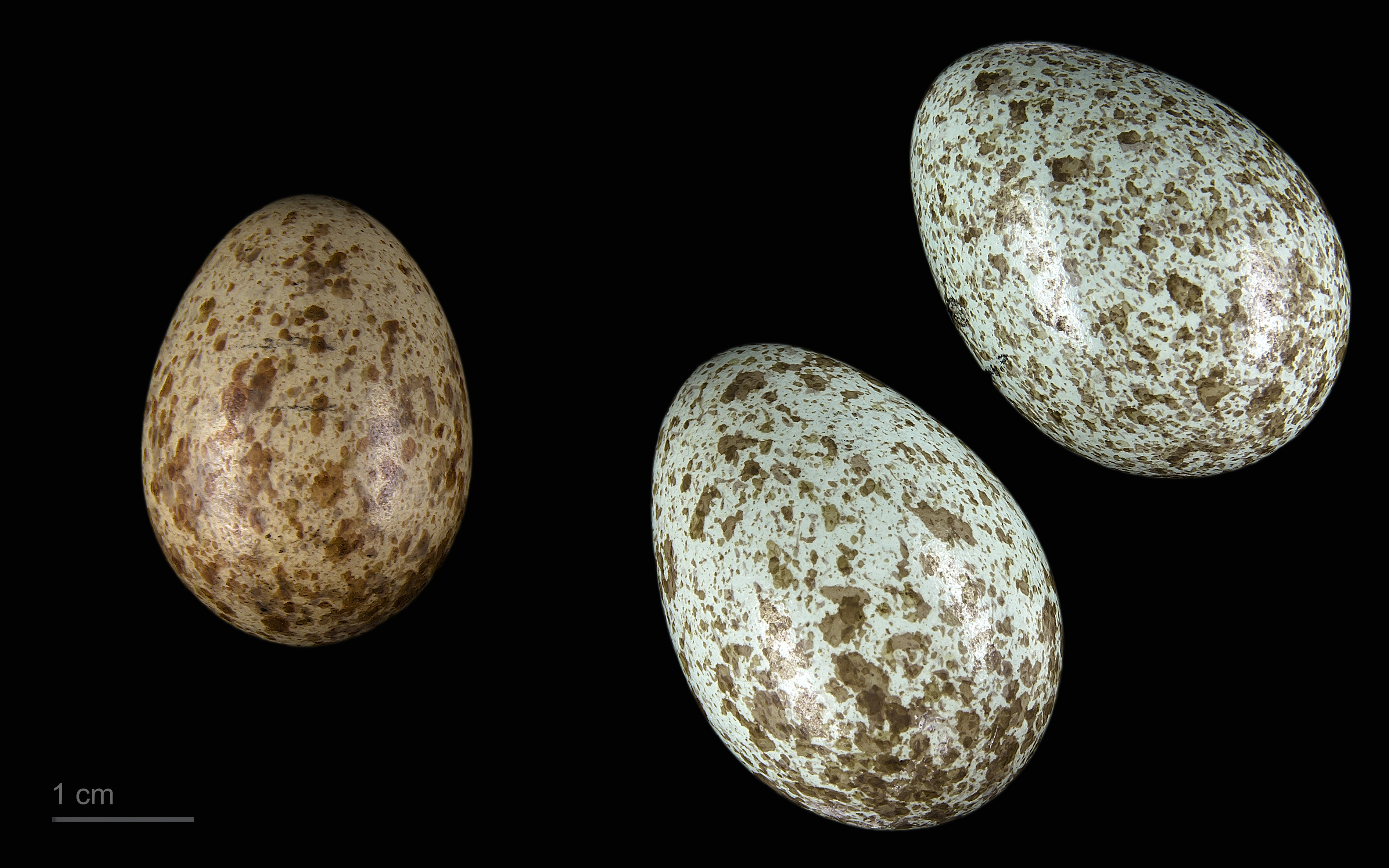
In Bangladesh, they parasitise long-tailed shrike (Lanius schach), common myna (Acridotheres tristis) and house crows (Corvus splendens) at about 35.7, 31.2 and 10.8% rates respectively. Host nests at low heights and nearer to fruit trees tended to be preferred by koels. In Southern Thailand and the Malay Peninsula, koels have shifted host from crows to mynas (Acridotheres sp.) as the latter became more common in the late 1900s. and other hosts recorded include the European magpie and possibly the black-headed oriole. In the Philippines, Asian Koels have been found to parasitize the cavity nest of Coletos (Sarcops calvus). Males may distract the hosts so that the female gets a chance to lay an egg in the nest. More often however, the female visits the nest of the host alone. The chicks of the koel hatched about 3 days ahead of the host chicks. Koels usually lay only an egg or two in a single nest but as many as seven to eleven eggs have been reported from some host nests. A female may remove a host egg before laying. Eggs hatch in 12 to 14 days. The young koel does not always push out eggs or evict the host chicks, and initially calls like a crow. The young fledge in 20 to 28 days. Some scholars, Rebecca Kilner in particular, have suggested that koels, like some other brood parasites, do not evict the host chicks as a result of higher costs which might outweigh the benefits of evicting nestmates. A small parasite may not be able to evict large host eggs or chicks from a deep Corvid nest without risking starvation and possibly accidental self-eviction. An alternative hypothesis that retaining host chicks might benefit the koel chicks did not gain much support. Adult female parents have been known to feed young koels in the nests of the hosts, a behaviour seen in some other brood parasitic species as well. Adult males have however not been noted to feed fledglings.
The Asian koel is omnivorous, consuming a variety of insects, caterpillars, eggs and small vertebrates. Adults feed mainly on fruit. They will sometimes defend fruiting trees that they forage in and chase away other frugivores. They have been noted to be especially important in the dispersal of the sandalwood tree (Santalum album) in India. Large seeded fruits are sometimes quickly regurgitated near the parent tree while small seeded fruits are ingested and are likely to be deposited at greater distances from the parent tree. They have a large gape and are capable of swallowing large fruits including the hard fruit of palms such as Arenga and Livistona.
They feed on the fruits of Cascabela thevetia which are known to be toxic to mammals.
A number of parasites of the species have been described, including malaria-like protozoa, lice and nematodes.


In culture
The word "koel" is onomatopoeic in origin. The Sanskrit name of "Kokila" and words in several Indian languages are similarly echoic. Being familiar birds with loud calls, references to them are common in folklore, myth and poetry. It is traditionally held in high regard for its song and revered in the Manusmriti, with a decree protecting them from harm. The Vedas, Sanskrit literature dated to about 2000 BC referred to it as Anya-Vapa which has been translated as "that which was raised by others" (or "sown for others to reap"). This has been interpreted as the earliest written reference to brood parasitism. It has been chosen as the state bird by the Indian union territory of Puducherry.
These birds were once very popular in India as cagebirds. Feeding even on boiled rice, these hardy birds lived in captivity for as long as 14 years.
In Sri Lanka, Koel has an unbreakable bond with the Sinhalese New Year as according to the beliefs, the call of koels signify the arrival of the new year in the month of April.
References
References
- BirdLife International. (2016). "''Eudynamys scolopaceus''".
- Johnsgard, PA. (1997). "The avian brood parasites: deception at the nest". Oxford University Press.
- (2002). "The grammatical gender of avian genera". Bull. B.O.C..
- Penard, TE. (1919). "The name of the black cuckoo". Auk.
- (1995). "Frugivory by Koels in Hong Kong". Mem. Hong Kong Nat. Hist. Soc..
- Farooqi, Mehr Afshan. (2022-04-10). "COLUMN: THE BIRDS OF URDU POETRY".
- Edwards, George. (1747). "A Natural History of Uncommon Birds". Printed for the author at the College of Physicians.
- Linnaeus, Carl. (1758). "Systema Naturae per regna tria naturae, secundum classes, ordines, genera, species, cum characteribus, differentiis, synonymis, locis". Laurentii Salvii.
- (1827). "Australian birds in the collection of the Linnean Society; with an attempt at arranging them according to their natural affinities". Transactions of the Linnean Society of London.
- (July 2021). "Turacos, bustards, cuckoos, mesites, sandgrouse". International Ornithologists' Union.
- Jobling, James A.. (2010). "The Helm Dictionary of Scientific Bird Names". Christopher Helm.
- Gill, F.. (2009). "IOC World Bird Names version 2.0".
- (2008). "Systematics and Taxonomy of Australian Birds". CSIRO Publishing.
- Clements, JF. (2007). "The Clements Checklist of the Birds of the World.". Christopher Helm.
- Penart TE. (1919). "The name of the Black Cuckoo". Auk.
- Ripley, SD. (1946). "The Koels of the Bay of Bengal.". The Auk.
- ''CRC Handbook of Avian Body Masses'' by John B. Dunning Jr. (ed.). CRC Press (1992), {{ISBN. 978-0-8493-4258-5.
- [http://www.oiseaux-birds.com/card-asian-koel.html Asian Koel]. oiseaux-birds.com
- Payne, RB. (2005). "The Cuckoos". Oxford University Press.
- (1981). "Handbook of the birds of India and Pakistan. Volume 3". Oxford University Press.
- Daniels, RJR. (1984). "Eye color in koels". [[Newsletter for Birdwatchers]].
- (1992). "Colonization of the Krakatau islands by vertebrates". GeoJournal.
- Goodwin D.. (1983). "Crows of the World". Queensland University Press, St Lucia, Qld.
- Phillips, WWA. (1948). "Cuckoo problems of Ceylon". Spolia Zeylanica.
- Lamba, BS. (1976). "The Indian crows: a contribution to their breeding biology, with notes on brood parasitism on them by the Indian Koel". Records of the Zoological Survey of India.
- (2011). "Interactions between the Asian koel (Eudynamys scolopacea) and its hosts". Behaviour.
- (2011). "Factors influencing host nest use by the brood parasitic Asian Koel (''Eudynamys scolopacea'')". Journal of Ornithology.
- Smith, TEH. (1950). "Black drongos fostering a koel". Journal of the Bombay Natural History Society.
- Harington, HH. (1904). "The Koels laying in the nest of ''Pica rustica'', the Magpie". Journal of the Bombay Natural History Society.
- (2006). "An instance of the Asian Koel ''Eudynamys scolopacea'' destroying the nest of a Black-headed Oriole ''Oriolus xanthornus''". Indian Birds.
- Lowther, Peter E. (2007). "Host list of avian brood parasites −2 – Cuculiformes; Cuculidae".
- (2023). "Brood Parasitism of the Asian Koel Eudynamys scolopaceus on the Tree Cavity-Nesting Coleto Sarcops calvus: First Record in the Philippines". Ornithological Science.
- Dewar, D. (1907). "An enquiry into the parasitic habits of the Indian koel". Journal of the Bombay Natural History Society.
- Raju, K.S.R. Krishna. (1968). "Intelligence of a pair of Koels ''Eudynamys scolopacea''". Newsletter for Birdwatchers.
- Ali, H. (2007). "Brood parasitism of Asian koel (''Eudynamys scolopacea'') on the house crow (''Corvus splendens'') in Pothwar region of Pakistan". Pakistan Journal of Agricultural Sciences.
- Jacob, JR. (1915). "Seven Koel's eggs in one nest". Journal of the Bombay Natural History Society.
- Jones, AE. (1916). "Number of Koel's ''E. honorata'' eggs found in one nest". Journal of the Bombay Natural History Society.
- Abdulali, H. (1931). "Eleven Koel eggs in a Crow's nest". Journal of the Bombay Natural History Society.
- Grim, T. (2006). "Low virulence of brood parasitic chicks: adaptation or constraint". Ornithological Science.
- Lydekker, R. (1895). "The Royal Natural History. Volume 4.".
- Dixit, Dhruv. (1968). "Parental instincts in Koel ''Eudynamys scolopacea'' (Linnaeus)". Journal of the Bombay Natural History Society.
- Fulton, R.. (1904). "The Kohoperoa or Koekoea, Long-tailed Cuckoo (''Urodynamis taitensis''): an account of its habits, description of a nest containing its (supposed) egg, and a suggestion as to how the parasitic habit in birds has become established". Transactions and Proceedings of the New Zealand Institute.
- Pratt, Thane K.. (1 May 1984). "Examples of tropical frugivores defending fruit-bearing plants". The Condor.
- Hegde, S G. (1991). "Evolution of seed size in the bird-dispersed tree ''Santalum album'' L.: a trade off between seedling establishment and dispersal efficiency". Evol. Trends. Plants.
- Uttangi, JC. (2004). "Robbing of eggs by female Koel, from the nest of Red-whiskered Bulbul (''Pycnonotus jocosus'')". [[Newsletter for Birdwatchers]].
- Purefoy, A.E. Bagwell. (1947). "The koel as an egg-stealer". Journal of the Bombay Natural History Society.
- Kannan, R. (1991). "Koels feeding on the yellow oleander". Blackbuck.
- Krishnan, M. (1952). "Koels (''Eudynamis scolopaceus'') eating the poisonous fruit of the Yellow Oleander". Journal of the Bombay Natural History Society.
- (1958). "Observations on ''Plasmodium circumflexum'' Kikuth and ''P. vaughani'' Novy and Macneal from East Pakistan". The Journal of Parasitology.
- (2005). "The haemoproteids of the Cuculidae". Journal of Natural History.
- Sharma RK. (1971). "On a new nematode ''Spirocaudata bispiculatum'' gen.nov. sp.nov. (Ancyracanthidae) from the koel, Eudynamys scolopacea". Parasitology.
- Yule, Henry. (1903). "Hobson-Jobson: A glossary of colloquial Anglo-Indian words and phrases, and of kindred terms, etymological, historical, geographical and discursive.". John Murray, London..
- Archer, William George. (1972). "The blue grove: the poetry of the Uraons.". Ayer Publishing.
- Fuchs, Stephen. (2000). "Thirty Korku Dancing Songs". Asian Folklore Studies.
- Beveridge, Annette. (1922). "The Babur-nama in English". Luzac, London.
- (2006). "Environmental Laws of Manu: A Concise Review". J. Hum. Ecol..
- (1912). "Vedic index of names and subjects. Volume 1.". John Murray.
- Dave, K.N.. (2005). "Birds in Sanskrit literature". Motilal Banarsidass.
- Ramakrishnan, Deepa. (April 21, 2007). "Puducherry comes out with list of State symbols". [[The Hindu]].
- Anonymous. (1998). "Vernacular Names of the Birds of the Indian Subcontinent". Buceros.
- Law, Satya Churn. (1923). "Pet birds of Bengal. Vol. 1". Thacker and Spink.
This article was imported from Wikipedia and is available under the Creative Commons Attribution-ShareAlike 4.0 License. Content has been adapted to SurfDoc format. Original contributors can be found on the article history page.
Ask Mako anything about Asian koel — get instant answers, deeper analysis, and related topics.
Research with MakoFree with your Surf account
Create a free account to save articles, ask Mako questions, and organize your research.
Sign up freeThis content may have been generated or modified by AI. CloudSurf Software LLC is not responsible for the accuracy, completeness, or reliability of AI-generated content. Always verify important information from primary sources.
Report