From Surf Wiki (app.surf) — the open knowledge base
Ash'arism
Sunni school of Islamic theology
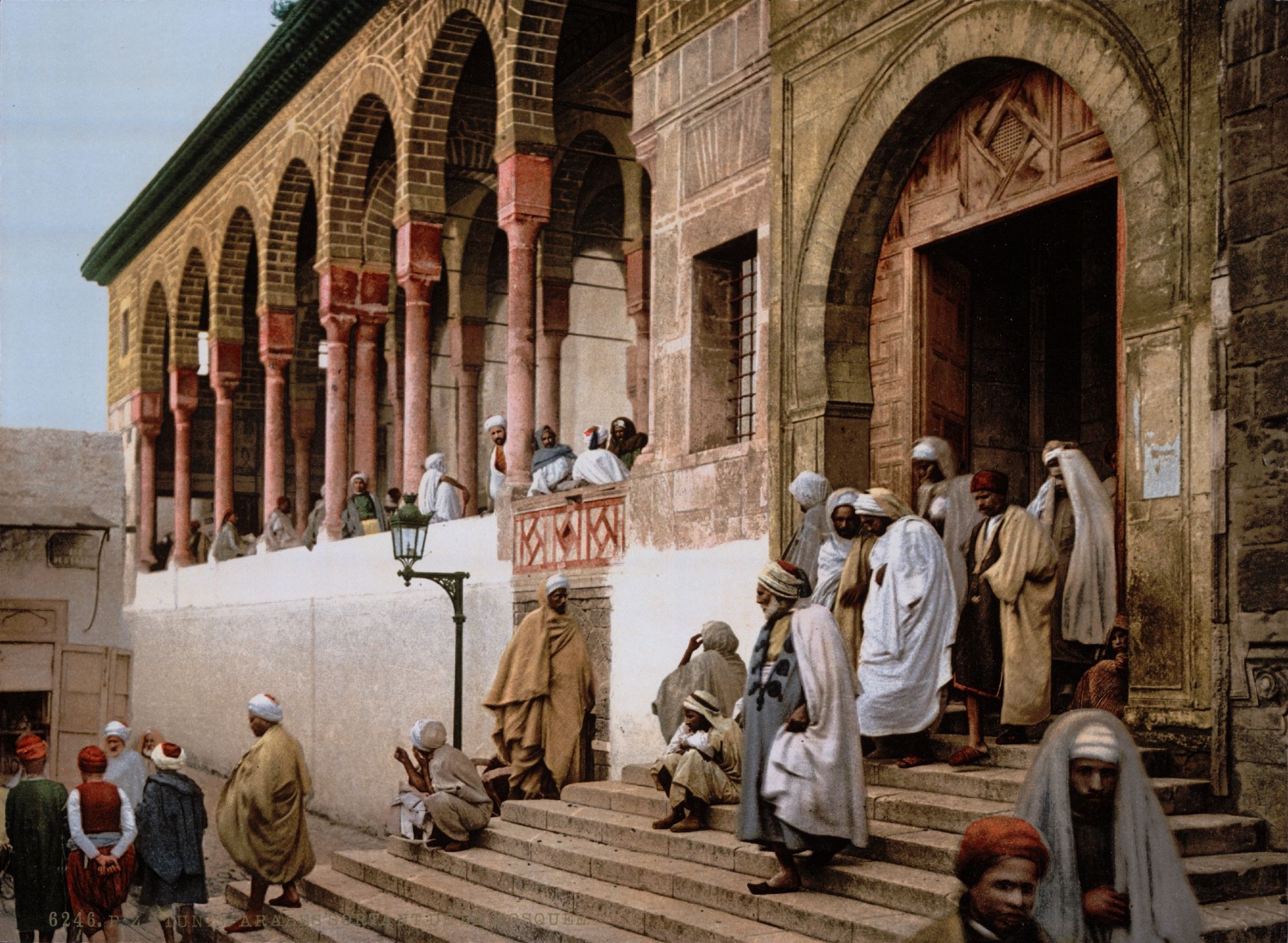
Sunni school of Islamic theology
Ash'arism () is a school of theology in Sunni Islam named after Abu al-Hasan al-Ash'ari, a Sunni jurist, reformer (mujaddid), and scholastic theologian, in the 9th–10th century. It established an orthodox guideline, based on scriptural authority, rationality, and theological rationalism. It is one of the three main schools alongside Maturidism and Atharism.
Al-Ash'ari established a middle way between the doctrines of the Atharī and Muʿtazila schools of Islamic theology, based both on reliance on the sacred scriptures of Islam and theological rationalism concerning the agency and attributes of God. Ashʿarism eventually became the predominant school of theological thought within Sunnī Islam, and is regarded as the single most important school of Islamic theology in the history of Islam.
The disciples of the Ash'ari school are known as Ashʿarites, and the school is also referred to as the Ashʿarite school, which became one of the dominant theological schools within Sunnī Islam. Ash'ari theology is considered one of the orthodox creeds of Sunnī Islam, alongside the Atharī and Māturīdī.
Amongst the most famous Ashʿarite theologians are al-Nawawi, Ibn Hajar al-Asqalani, Ibn al-Jawzi, al-Ghazali, al-Suyuti, Izz al-Din ibn 'Abd al-Salam, Fakhr al-Din al-Razi, Ibn 'Asakir, al-Subki, al-Taftazani, al-Baqillani, and al-Bayhaqi. Scholars and scientists who were affiliated with the Ash'ari school included al-Biruni, Ibn al-Haytham, Ibn al-Nafis, Ibn Battuta, and Ibn Khaldun. An Islamic philosopher who was particularly attacked by the Ashʿari school is Avicenna, on various accounts, notably his philosophical theology, his logic and his physics.
History
Founder
Abū al-Ḥasan al-Ashʿarī was born in Basra, Iraq, and was a descendant of Abū Mūsa al-Ashʿarī, which belonged to the first generation of Muhammad's closest companions (ṣaḥāba). As a young man he studied under al-Jubba'i, a renowned teacher of Muʿtazilite theology and philosophy. He was noted for his teachings on atomism, among the earliest Islamic philosophies, and for al-Ashʿarī this was the basis for propagating the view that God created every moment in time and every particle of matter. He nonetheless believed in free will and predestination, elaborating the thoughts of Dirar ibn 'Amr and Abu Hanifa into a "dual agent" or "acquisition" (iktisab) account of free will.
While Al-Ashʿarī opposed the views of the rival Muʿtazilite school, he was also opposed to the view which rejected all debate, held by certain schools such as the Zahiri ("literalist"), Mujassimite (anthropotheist), schools for their over-emphasis on taqlid (imitation) in his Istihsan al‑Khaud: But instead, Imam Al-Ash'ari affirmed the ambiguous verses in the Qur'an (such as those about the hand and eyes) without a "how" (modality) and without a meaning (meaning, he consigned the meaning to God), a practice known as tafwid. He also allowed another orthodox way of dealing with the ambiguous verses in the Qur'an called ta'wil (interpretation based on the Arabic language and revelation).
Development
Ashʿarism became the main school of early Islamic philosophy whereby it was initially based on the foundations laid down by al-Ashʿarī, who founded the Ashʿarite school in the 10th century based on the methodology taught to him by the Kullabi movement that used rational argumentation to defend Sunni creed. However, the Ashʿarite school underwent many developments throughout history, resulting in the term Ashʿarī being extremely broad in its modern usage (e.g., differences between Ibn Furak (d. AH 406) and al-Bayhaqi (d. AH 384)).
For example, the Ashʿarite view was that comprehension of the unique nature and characteristics of God were beyond human capability. The solution proposed by al-Ashʿarī to solve the problems of tashbih and ta'til concedes that the Supreme Being possesses in a real sense the divine attributes and names mentioned in the Quran. In so far as these names and attributes have a positive reality, they are distinct from the essence, but nevertheless they don't have either existence or reality apart from it.
The inspiration of al-Ashʿarī in this matter was on the one hand to distinguish essence and attribute as concepts, and on the other hand to see that the duality between essence and attribute should be situated not on the quantitative but on the qualitative level—something which Muʿtazilite thinking had failed to grasp. Ashʿarite theologians were referred to as the muthbita ("those who make firm") by the Muʿtazilites.
Beliefs
Two popular sources for Ash'ari creeds are Maqalat al-Islamiyyin and Ibana'an Usul al-Diyana.
God and God's attributes
Ashʿarites also hold beliefs about God's attributes that are unique to them, such as:
- Existence;
- Permanence without beginning;
- Endurance without end;
- Absoluteness and independence;
- Dissimilarity to created things;
- Oneness;
- God is all-powerful, willful, knowing, living, seeing, hearing, and speaking (signifying attributes).
- Belief in the visibility of God on Judgment Day is an obligatory Ashʿarī belief. The Ashʿarī Creed further states that "God will be seen without resemblance [to anything else]"
God and relationship with humans
The Ashʿarī school of Islamic theology holds that:
- God is all-powerful (omnipotent).
- Good is what God commands—as revealed in the Quran and the ḥadīth—and is by definition just; evil is what God forbids and is likewise unjust. Right and wrong are in no way determined intuitively or naturally, they are not objective realities. (Divine command theory)
- Because of Divine omnipotence, there are no "natural laws" (of things like thermodynamics or gravity), because such laws would put limitations on His actions. There are, however, Divine "customs", whereby "certain so-called 'effects usually follow certain "causes" in the natural world.
- Also because of Divine power, all human acts—even the decision to raise a finger—are created by God. This had caused controversy earlier in Islamic history because human acts are what humans are judged for when being sent to heaven (jannah) or hell (jahannam). Ashʿaris reconciled the doctrines of free will, justice, and divine omnipotence, with their own doctrine of kasb ("acquisition"), by which human beings "acquire" responsibility for their actions, although these "actions are willed and created by God". Humans still possess free will (or, more accurately, freedom of intention) under this doctrine, although their freedom is limited to the power to decide between the given possibilities God has created. (This doctrine is now known in Western philosophy as occasionalism.)
- God has created time as a framework for the creation of other things, but He is not limited by it. Duration is dependent on God, yet it is independent and subsists by itself. God is exalted above space and time, and both space and time originate from God.
- The Quran is the uncreated word of God, that is, it was not created by God, but like God has always been. It can also be said to be created when it takes on a form in letters or sound.
- The unique nature and attributes of God cannot be understood fully by human reason and the physical senses.
- Reason is God-given and must be employed over the source of knowledge.
- Intellectual inquiry is decreed by the Quran and the Islamic prophet Muhammad, therefore the interpretation (tafsīr) of the Quran and the ḥadīth should keep developing with the aid of older interpretations.
- Only God knows the heart, who belongs to the faithful and who does not.
- God has "absolute freedom" to "punish or reward as He wills", and so may forgive the sins of those in Hell.
- Support of kalām (rationalistic Islamic theology).
Prophets and ''the unseen''
Ashʿarites further affirm that Muslims beliefs include:
- In all the prophets and messengers of Islam, from Adam to Muhammad.
- Jesus will return to earth and defeat the Dajjal.
- Belief in the angels.
- Including the angels of the grave (Munkar and Nakir).
- That Satan tempts man, contrarily to the Mu'tazila and Jahmiyya (the mention of the latter two branches only appears in Ibana).
- The reality of Paradise and Hell.
- That prayers for dead Muslims and almsgiving reach them.
- During sleep, visions can be seen and they have an interpretation ("interpretation" only found in Ibana).
- The existence of sorcerers and that magic is a reality in the world.
- That jinn are real and able to physically possess people, although not mentioned in the works above, many Ash'arites consider this as part of the aqida.
Ashʿarism and reason
It is said that in the early period, Ash'arites followed a method that combined reason and revelation. This is in contrast to the assertion by some Ash'arites that those who believe without thinking (muqallidoon) cannot be true believers. This view indicates that believing in religion without using reason and thought is considered invalid according to them.
Contrary to this, some within the school, such as al-Taftazani, have sometimes stated that revelation also represents knowledge, while Ibn al-Tilimsanī criticized al-Razī, asking what grounds legal rulings if all revelation were mere conjecture, stating that revelation cannot entirely be based on conjecture.
Later Ashʿarism

Nicholas Heer writes that later Ashʿarite theologians "increasingly attempted to rationalize Islamic doctrine" from about the 12th century onwards. Theologians such as al-Taftāzānī and al-Jurjānī argued that the Islamic sacred scriptures (the Quran and the ḥadīth) "must be proven to be true by rational arguments" before being "accepted as the basis of the religion". Educated Muslims "must be convinced on the basis of rational arguments". A series of rational proofs were developed by these Ashʿarite theologians, including proofs for "the following doctrines or propositions":
- The universe is originated;
- The universe has an originator or creator;
- The creator of the universe is knowing, powerful and willing;
- Prophecy is possible;
- Miracles are possible;
- Miracles indicate the truthfulness of one who claims to be a prophet;
- Muhammad claimed to be a prophet and performed miracles.
Criticism
The medieval Muslim scholar Ibn Taymiyyah criticised the Ashʿarī theology as (in the words of one historian, Jonathan A. C. Brown) "a Greek solution to Greek problems" that should "never" have concerned Muslims. Both Ibn Taymiyyah and Shah Waliullah Dehlawi rejected the lack of literalism in Ashʿarī but later Ibn Taymiyya wrote in his book Majmu' Al-Fatawa that Abu al-Hasan al-Ash'ari turned away from the Mu'tazzili creed and came back to the creed of Ahlus Sunnah which shows the unity in Ahlus Sunnah Wal Jammah." In contrast, German orientalist scholar Eduard Sachau says that the Ashʿarī theology and its biggest defender, al-Ghazali, was too literal and responsible for the decline of Islamic science starting in the 10th century. Sachau stated that the two clerics were the only obstacle to the Muslim world becoming a nation of "Galileos, Keplers, and Newtons".
Ziauddin Sardar states that some of the greatest Muslim scientists of the Islamic Golden Age, such as Ibn al-Haytham and Abū Rayhān al-Bīrūnī, who were pioneers of the scientific method, were themselves followers of the Ashʿarī school of Islamic theology. Like other Ashʿarites who believed that faith or taqlid should be applied only to Islam and not to any ancient Hellenistic authorities, Ibn al-Haytham's view that taqlid should be applied only to the prophets and messengers of Islam and not to any other authorities formed the basis for much of his scientific skepticism and criticism against Ptolemy and other ancient authorities in his Doubts Concerning Ptolemy and Book of Optics.
References
Bibliography
References
- (2006). "[[Islamic Philosophy from its Origin to the Present: Philosophy in the Land of Prophecy". [[SUNY Press]].
- (2016). "The Oxford Handbook of Islamic Theology". [[Oxford University Press]].
- Frank, Richard M.. (January–March 1989). "Knowledge and Taqlîd: The Foundations of Religious Belief in Classical Ashʿarism". [[American Oriental Society]].
- (2003). "[[The New Encyclopedia of Islam]]". [[AltaMira Press]].
- (2020). "Early Islamic Theology: The Muʿtazilites and al-Ashʿarī". [[Routledge]].
- (2020). "Philosophical Theology in Islam: Later Ashʿarism East and West". [[Brill Publishers]].
- Weeks, Douglas. "The Ideology of Al Muhajiroun." Al Muhajiroun. Palgrave Macmillan, Cham, 2020. 103-140.
- Gyekye, Kwame. "Theology and Law in Islam." (1976): 304-306.
- Fah̲rī, Mağīd. Ethical theories in Islam. Vol. 8. Brill, 1991.
- Hashas, Mohammed. "Is European Islam Experiencing an Ontological Revolution for an Epistemological Awakening?." American Journal of Islamic Social Sciences 31: 4 (2014): 14.
- (2015). "al-Ashʿarī". [[Brill Publishers]].
- Henderson, John B.. (1998). "The Construction of Orthodoxy and Heresy: Neo-Confucian, Islamic, Jewish, and Early Christian Patterns". [[SUNY Press]].
- Abdullah Saeed ''Islamic Thought: An Introduction'' Routledge 2006 {{ISBN. 978-1-134-22564-4 chapter 5
- Juan Eduardo Campo ''Encyclopedia of Islam'' New York, NY 2009 {{ISBN. 978-1-438-12696-8 page 66
- (31 January 2013). "Lebanese Salafis Between the Gulf and Europe". Amsterdam University Press.
- Hamad al-Sanan, Fawziy al-'Anjariy, ''Ahl al-Sunnah al-Asha'irah'', pp.248-258. Dar al-Diya'.
- (27 November 2017). "The Myth of Intellectual Decline: A Response to Shaykh Hamza Yusuf".
- [[Ziauddin Sardar. Sardar, Ziauddin]] (1998), "Science in Islamic philosophy", ''Islamic Philosophy'', [[Routledge Encyclopedia of Philosophy]], retrieved 2008-02-03
- Peter Adamson and Andreas Lammer (2020). "Fakhr al-Dīn al-Rāzī’s Platonist Account of the Essence of Time" In: Ayman Shihadeh and Jan Thiele (eds.) ''Philosophical Theology in Islam . Later Ashʿarism East and West''. Leiden - Boston: Brill, p. 95
- (2015). "Ashʿarīs: the dissemination of Ashʿarī theology". [[Brill Publishers]].
- John L. Esposito, The Islamic World: Abbasid-Historian, p 54. {{ISBN. 0195165209
- I.M.N. Al-Jubouri, History of Islamic Philosophy: With View of Greek Philosophy and Early History of Islam, p 182. {{ISBN. 0755210115
- Marshall Cavendish Reference, Illustrated Dictionary of the Muslim World, p 87. {{ISBN. 0761479295
- Allard, Michel. "Abū al-Ḥasan al-Ashʿarī, Muslim theologian".
- M. Abdul Hye. "Ash'arism".
- Watt, Montgomery. Free-Will and Predestination in Early Islam. Luzac & Co.: London 1948.
- "Imam Bayhaqi".
- "Imam Abu Bakr Al-Bayhaqi | Shafii Fiqh.com | Shafii Institute".
- "Fatawa – Who are the Ash'arites?".
- Richard McCarthy ''The theology of al-ash'ari'' 1953 Appendix IV
- Al Numan ibn Thabit, Abu Hanifa. "Al-Fiqh-Al-Akbar-An-Accurate-Translation". SunnahMuakada.com.
- Ashʿarī creed in D. MacDonald, ''Development of Muslim Theology'' New York: Russell and Russell, 1965 p. 295
- John L. Esposito ''The Oxford History of Islam'' Oxford University Press 2000 {{ISBN. 978-0-199-88041-6 p. 281
- (2014). "Misquoting Muhammad: The Challenge and Choices of Interpreting the Prophet's Legacy". [[Oneworld Publications]].
- (1953). "Mohammedanism". Oxford University Press.
- Peter Adamson and Andreas Lammer (2020). "Fakhr al-Dīn al-Rāzī’s Platonist Account of the Essence of Time" In: Ayman Shihadeh and Jan Thiele (eds.) ''Philosophical Theology in Islam. Later Ashʿarism East and West''. Leiden - Boston: Brill, p. 118-119
- Cyril Glassé, Huston Smith ''The New Encyclopedia of Islam'' Rowman Altamira 2003 {{ISBN. 978-0-759-10190-6 page 62-3
- Alexander Knysh ''Islam in Historical Perspective'' Taylor & Francis 2016 {{ISBN. 978-1-317-27339-4 page 163
- Ron Geaves ''Islam Today: An Introduction'' A&C Black 2010 {{ISBN. 978-1-847-06478-3 page 21
- Ian Richard Netton ''Encyclopaedia of Islam'' Routledge 2013 {{ISBN. 978-1-135-17960-1 page 183
- Richard McCarthy ''The theology of al-ash'ari'' 1953 p. 250
- Richard McCarthy ''The theology of al-ash'ari'' 1953 p. 252
- Richard McCarthy ''The theology of al-ash'ari'' 1953 p. 251
- Islam, Migration and Jinn: Spiritual Medicine in Muslim Health Management. (2021). Deutschland: Springer International Publishing.
- YAVUZ, Yusuf Şevki. Eş'ariyye. TDV İslam Ansiklopedisi, İstanbul 1995. c.XI p. 449
- BAĞDÂDÎ, Abdulkâhir. Kitabu Usuli'd-Dîn. Çvr. Ömer AYDIN. İşaret Yayınları, İstanbul 2016. p. 291
- İBNÜ't-TİLİMSÂNÎ, Abdullah: Nşr. Mahmud Avvad SALİM: Şerhu Me'âlimi Usûli'd-Dîn, Daru'l-Kütübi'l-Mısriyye, Kahire, 2011. p. 125-26.
- See the article “al-Taftāzānī” by W. Madelung in ''The Encyclopaedia of Islam'', vol. X, pp. 88-89
- See the article “al-Djurdjānī” by A.S. Tritton in ''The Encyclopaedia of Islam'', vol. II, pp. 602-603
- (n.d.). "A LECTURE ON ISLAMIC THEOLOGY".
- (2014). "Misquoting Muhammad: The Challenge and Choices of Interpreting the Prophet's Legacy". [[Oneworld Publications]].
- [[Muzaffar Iqbal]], ''Science and Islam'', p. 120. From the Greenwood Guides to Science and Religion Series. [[Westport, Connecticut. Westport]]: [[Greenwood Publishing Group]], 2007. {{ISBN. 9780313335761
- Sardar, Ziauddin. (1998). "Islamic Philosophy". [[Routledge Encyclopedia of Philosophy]].
- Anwar, Sabieh. (October 2008). "Is Ghazālī really the Halagu of Science in Islam?". [[Al-Mawrid.
- Rashed, Roshdi. (2007). "The Celestial Kinematics of Ibn al-Haytham". [[Cambridge University Press]].
This article was imported from Wikipedia and is available under the Creative Commons Attribution-ShareAlike 4.0 License. Content has been adapted to SurfDoc format. Original contributors can be found on the article history page.
Ask Mako anything about Ash'arism — get instant answers, deeper analysis, and related topics.
Research with MakoFree with your Surf account
Create a free account to save articles, ask Mako questions, and organize your research.
Sign up freeThis content may have been generated or modified by AI. CloudSurf Software LLC is not responsible for the accuracy, completeness, or reliability of AI-generated content. Always verify important information from primary sources.
Report