From Surf Wiki (app.surf) — the open knowledge base
ASEAN Agreement on Transboundary Haze Pollution
ASEAN environment agreement

ASEAN environment agreement
| Field | Value |
|---|---|
| name | ASEAN Agreement on Transboundary Haze Pollution |
| image | |
| image_width | |
| image_alt | |
| caption | |
| type | Environmental protocol |
| date_signed | 2002 |
| date_expiration | |
| date_expiry | |
| mediators | |
| negotiators | |
| original_signatories | |
| parties | |
| ratifiers | |
| depositor | Secretary General of ASEAN |
| citations | |
| language | English |
| wikisource | |
| wikisource1 |
- All ASEAN member states

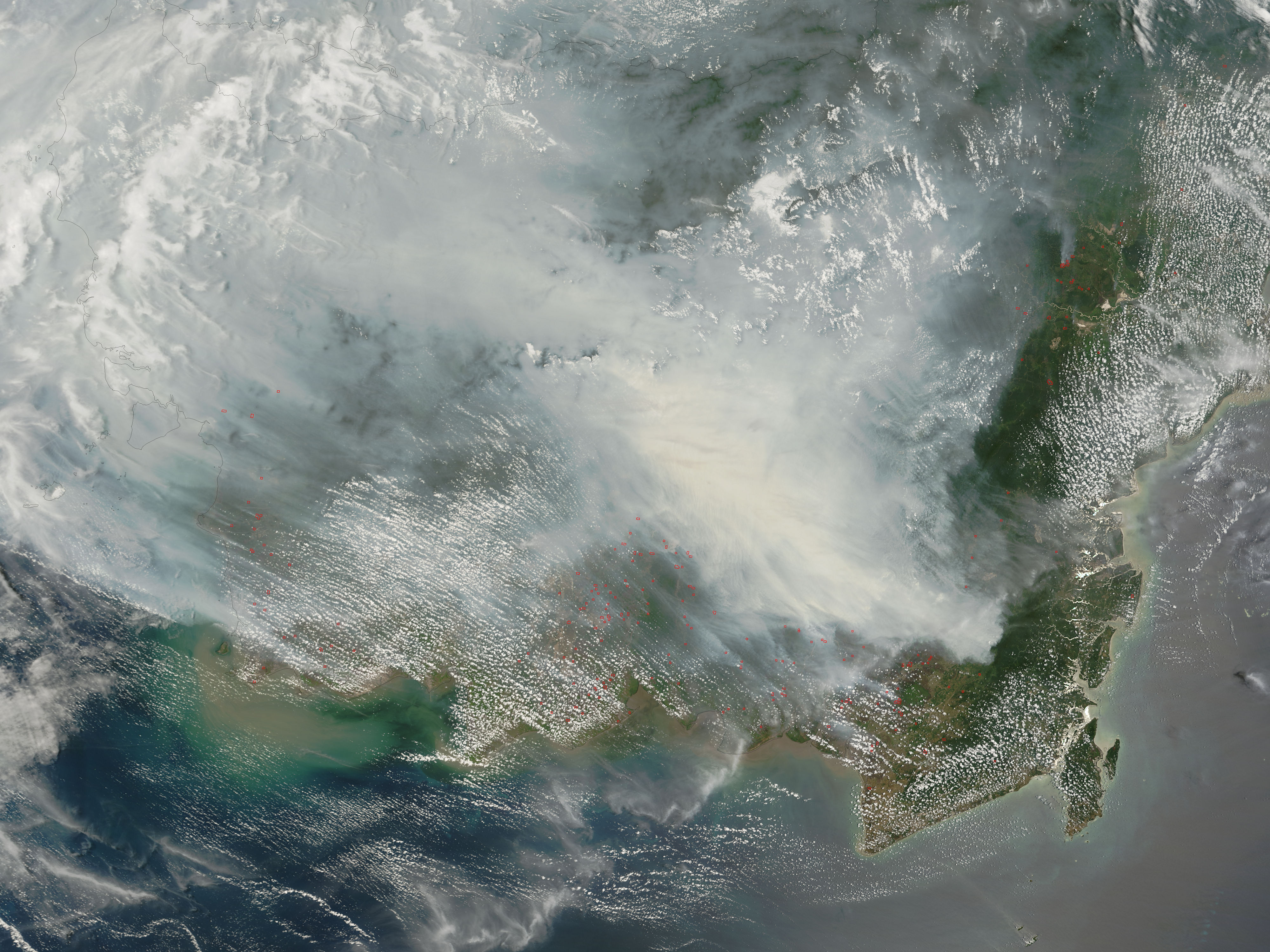

The ASEAN Agreement on Transboundary Haze Pollution is a legally binding environmental agreement signed in 2002 by the member states of the Association of Southeast Asian Nations to reduce haze pollution in Southeast Asia. The Agreement recognises that transboundary haze pollution which results from land and/or forest fires should be mitigated through concerted national efforts and international co-operation.
As of September 2014, all ten ASEAN countries have ratified the haze agreement.
History
The agreement is a reaction to an environmental crisis that hit Southeast Asia in the late 1990s. The crisis was mainly caused by land clearing for agricultural uses via open burning on the Indonesian island of Sumatra. Satellite images confirmed the presence of hot spots throughout Kalimantan/Borneo, Sumatra, the Malay Peninsula and several other places, with an estimated 45,000 square kilometres of forest and land burnt. Malaysia, Singapore and, to a certain extent, Thailand and Brunei were particularly badly affected.
The haze is nearly an annual occurrence in some ASEAN nations. Dangerous levels of haze usually coincide with the dry season from June to September when the southwest monsoon is in progress. Southwest monsoon winds shift the haze from Sumatra, Indonesia towards the Malay Peninsula and Singapore, sometimes creating a thick haze that can last for weeks.
Negotiation history
The agreement was established in 2002, though has some foundation in a 1990 agreement made among ASEAN Ministers of Environment which called for efforts leading to the harmonisation of transboundary pollution prevention and abatement practices.
The treaty also builds on the 1995 ASEAN Cooperation Plan on Transboundary Pollution and the 1997 Regional Haze Action Plan. This treaty is an attempt to bring the action plan into function.
Parties to the agreement
| Member state | Date of ratification/approval | Date of deposit of |
|---|---|---|
| instrument of ratification/approval | ||
| with the Secretary-General of ASEAN | ||
| Malaysia | 3 December 2002 | 18 February 2003 |
| Singapore | 13 January 2003 | 14 January 2003 |
| Brunei | 27 February 2003 | 23 April 2003 |
| Myanmar | 5 March 2003 | 17 March 2003 |
| Vietnam | 24 March 2003 | 29 May 2003 |
| Thailand | 10 September 2003 | 26 September 2003 |
| Laos | 19 December 2004 | 13 July 2005 |
| Cambodia | 24 April 2006 | 9 November 2006 |
| Philippines | 1 February 2010 | 4 March 2010 |
| Indonesia | 16 September 2014 | 20 January 2015 |
Institutional structure
The agreement is managed by the Ministers of Environment and other representatives from the respective ASEAN countries. Meetings are coordinated under the ASEAN Socio-Cultural Community Council (ASCC), one of three councils, subsidiary to the ASEAN summit and its chair.
Activities
The treaty calls for haze to be mitigated through concerted national efforts and intensified regional and international co-operation in the context of sustainable development. This is to be done through monitoring and prevention activities.
Protocols
The official procedure or system of rules that informs this agreement is the 'ASEAN Way' set of region norms and codes of diplomatic conduct characterised by principles of non-interference, consultation, consensus, quiet diplomacy, symbolism, and organisational minimalism.
Achievements
In October 2013 ASEAN leaders approved a joint haze monitoring system at a cost of US$100,000. Additionally, Singapore has offered to start working directly with Indonesian farmers to encourage sustainable practices and minimise the problem over time by "tackling the haze issue at its root". Singapore has worked with farmers in this way in Indonesia's Jambi province in the past.
Shortcomings
Indonesia, as the primary haze producing party to the problem, was the last ASEAN country to ratify the agreement in 2014, 12 years after it was first signed in 2002. Concerns remain over the ability of the Indonesian government to monitor and effect changes to the problem.
The treaty did not prevent the annual return of the haze between 2004 and 2010, and again in 2013, 2014 and 2015. Recently Indonesia has ranked among the world's largest greenhouse gas emitters, with an estimated 75% of its emissions stemming from deforestation.
Key debates in literature and policy community
The 'haze treaty' is accused of being vague and lacking enforcement mechanisms or strong instruments for dispute-resolution. However, ASEAN has made attempts to depart from its institutional culture in attempt to achieve deeper co-operation on this issue. This is evident in that this is a legally binding treaty, something ASEAN has vehemently opposed in the past.
The treaty is ill-served by the ASEAN style of regional engagement which adamantly protects national sovereignty. The result is that states are compelled to act in their own self-interest rather than regional interests. Additionally, the close relationships between key economic actors and political elites have meant maintenance of the status quo.
In 2014, Singapore enacted the Transboundary Haze Pollution Act to penalise emissions that cause harm across national boundaries.
References
References
- link. (3 June 2021 . Extracted 12 October 2006)
- Indonesia Ministry of Environment.[http://www.menlh.go.id/indonesia-meratifikasi-undang-undang-tentang-pengesahan-asean-agreement-on-transboundary-haze-pollution-persetujuan-asean-tentang-pencemaran-asap-lintas-batas/] {{Webarchive. link. (20 September 2015. Extracted 23 September 2014)
- Global Fire Monitoring Center. [http://www.fire.uni-freiburg.de/iffn/country/id/id_32.htm The 1997-98 Air Pollution Episode in Southeast Asia Generated by Vegetation Fires in Indonesia] {{Webarchive. link. (5 February 2012 . Extracted 7 February 2014)
- Jakarta Globe. [http://www.thejakartaglobe.com/news/riau-haze-back-again-as-dry-season-sets-in/ The 1997-98 Riau Haze Back Again as Dry Season Sets In] {{Webarchive. link. (6 February 2014 . Extracted 7 February 2014)
- link. (3 June 2021 . Extracted 7 February 2014)
- Asia One News. [https://www.asiaone.com/singapore/chan-chun-sing-attend-asean-socio-cultural-community-council-meeting Chan Chun Sing to attend Asean Socio-Cultural Community council meeting] {{Webarchive. link. (23 February 2014 . Extracted 7 February 2014)
- Nguitragool, Paruedee. "Negotiating the Haze Treaty: Rationality and Institutions in the Negotiations for the ASEAN Agreement on Transboundary Haze Pollution (2002)." Asian Survey, 2011: 356-378. 356.
- Straits Times. [http://www.straitstimes.com/breaking-news/singapore/story/asean-leaders-approve-haze-monitoring-system-20131009?itemid=771 Asean leaders approve haze monitoring system]. Extracted 7 February 2014
- Straits Times. [http://www.straitstimes.com/breaking-news/singapore/story/singapore-willing-work-indonesia-malaysia-tackle-causes-haze-20131009 Singapore willing to work with Indonesia, Malaysia to tackle causes of haze]. Extracted 7 February 2014
- "Indonesia finally ratifies the ASEAN agreement on transboundary haze pollution".
- Time World. [https://world.time.com/2013/07/30/the-southeast-asian-haze-is-back-and-worse-may-follow/ The Southeast Asian Haze Is Back and Worse May Follow]. Extracted 7 February 2014
- Nguitragool, Paruedee. "Negotiating the Haze Treaty: Rationality and Institutions in the Negotiations for the ASEAN Agreement on Transboundary Haze Pollution (2002)." Asian Survey, 2011: 356-378. 357.
- Nguitragool, Paruedee. "Negotiating the Haze Treaty: Rationality and Institutions in the Negotiations for the ASEAN Agreement on Transboundary Haze Pollution (2002)." Asian Survey, 2011: 356-378. 358.
- Varkkey, Helena Muhamad. "The Asean Way and Haze Mitigation Efforts." Journal of International Studies, 2012: 1823-691X. 77.
This article was imported from Wikipedia and is available under the Creative Commons Attribution-ShareAlike 4.0 License. Content has been adapted to SurfDoc format. Original contributors can be found on the article history page.
Ask Mako anything about ASEAN Agreement on Transboundary Haze Pollution — get instant answers, deeper analysis, and related topics.
Research with MakoFree with your Surf account
Create a free account to save articles, ask Mako questions, and organize your research.
Sign up freeThis content may have been generated or modified by AI. CloudSurf Software LLC is not responsible for the accuracy, completeness, or reliability of AI-generated content. Always verify important information from primary sources.
Report