From Surf Wiki (app.surf) — the open knowledge base
Artifact (error)
Any error in the perception or representation of information
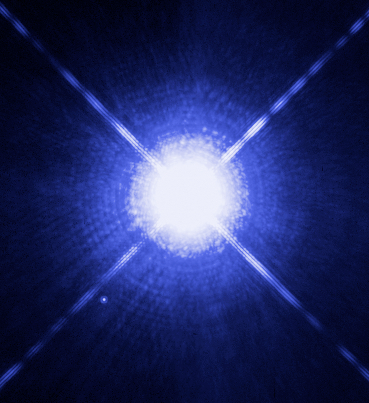
Any error in the perception or representation of information
In natural science and signal processing, an artifact or artefact is any error in the perception or representation of any information introduced by the involved equipment or technique(s).
Statistics
In statistics, statistical artifacts are apparent effects that are introduced inadvertently by methods of data analysis rather than by the process being studied.
Computer science
In computer science, digital artifacts are anomalies introduced into digital signals as a result of digital signal processing.
Microscopy
In microscopy, visual artifacts are sometimes introduced during the processing of samples into slide form.
Econometrics
In econometrics, which focuses on computing relationships between related variables, an artifact is a spurious finding, such as one based on either a faulty choice of variables or an over-extension of the computed relationship. Such an artifact may be called a statistical artifact. For instance, imagine a hypothetical finding that presidential approval rating is approximately equal to twice the percentage of citizens making more than $50,000 annually; if 60% of citizens make more than $50,000 annually, this would predict that the approval rating will be 120%. This prediction is a statistical artifact, since it is spurious to use the model when the percentage of citizens making over $50,000 is so high, and gross error to predict an approval rating greater than 100%.
Remote sensing
Medical imaging
In medical imaging, artifacts are misrepresentations of tissue structures produced by imaging techniques such as ultrasound, X-ray, CT scan, and magnetic resonance imaging (MRI). These artifacts may be caused by a variety of phenomena such as the underlying physics of the energy-tissue interaction as between ultrasound and air, susceptibility artifacts, data acquisition errors (such as patient motion), or a reconstruction algorithm's inability to represent the anatomy. Physicians typically learn to recognize some of these artifacts to avoid mistaking them for actual pathology.
In ultrasound imaging, several assumptions are made from the computer system to interpret the returning echoes. These are: echoes originate only from the main ultrasound beam (while there are side lobes and grating lobes apart from the main ultrasound beam); echoes returns to transducer after a single reflection (while an echo can be reflected several times before reaching the transducer); depth of an object relates directly to the amount of time for an echo to reach the transducer (while an echo may reflect several times, delaying the time for the echo return to the transducer); speed of ultrasound in human tissue is constant, echoes travel in a straight path. and acoustic energy of an echo is uniformly attenuated. When these assumptions are not maintained, artifacts occur.
Medical electrophysiological monitoring
In medical electrophysiological monitoring, artifacts are anomalous (interfering) signals that originate from some source other than the electrophysiological structure being studied. These artifact signals may stem from, but are not limited to: light sources; monitoring equipment issues; utility frequency (50 Hz and 60 Hz); or undesired electrophysiological signals such as EMG presenting on an EEG-, EP-, ECG-, or EOG- signal. Offending artifacts may obscure, distort, or completely misrepresent the true underlying electrophysiological signal sought.
Radar
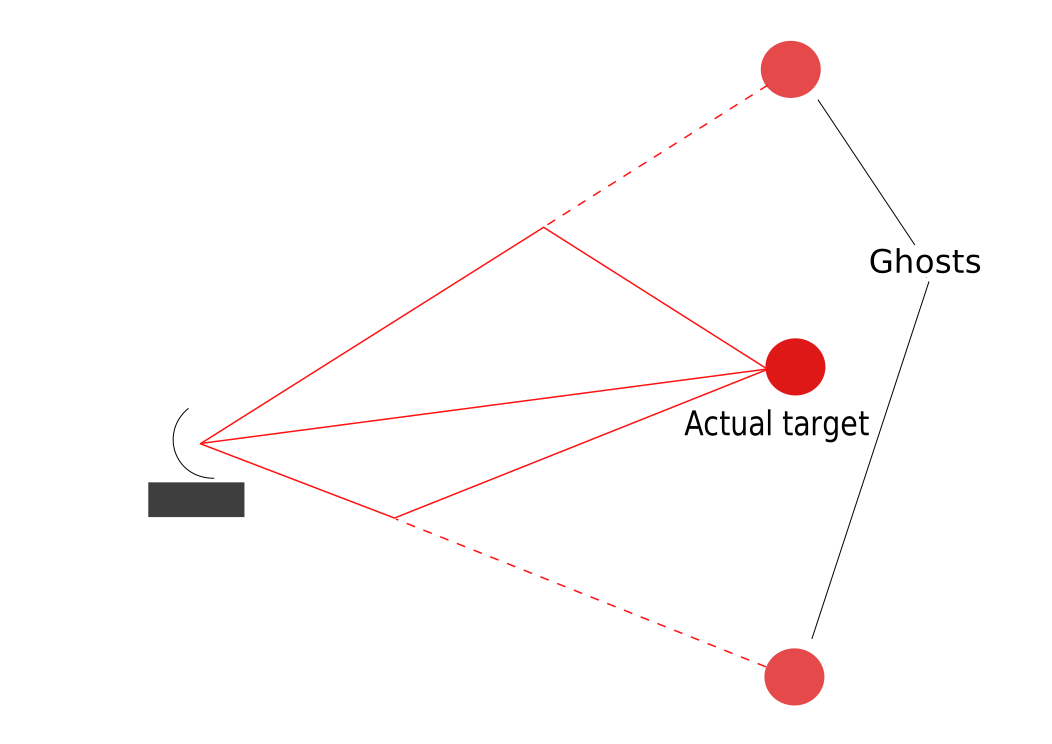
In radar signal processing, some echoes can be related to fixed objects (clutter), multipath returns, jamming, atmospheric effect (brightband or attenuation), anomalous propagation, and many other effects. All those echoes must be filtered in order to obtain the position, velocity and type of the real targets that may include aircraft, and weather.
References
References
- "Oxford Languages | the Home of Language Data".
- See [http://dictionary.reference.com/browse/artifact Dictionary.com], definitions 4, 5, and 6. Accessed 2010.05.20.
- (2009). "statistical artefact". Oxford University Press.
- (July 2009). "US Artifacts". RadioGraphics.
This article was imported from Wikipedia and is available under the Creative Commons Attribution-ShareAlike 4.0 License. Content has been adapted to SurfDoc format. Original contributors can be found on the article history page.
Ask Mako anything about Artifact (error) — get instant answers, deeper analysis, and related topics.
Research with MakoFree with your Surf account
Create a free account to save articles, ask Mako questions, and organize your research.
Sign up freeThis content may have been generated or modified by AI. CloudSurf Software LLC is not responsible for the accuracy, completeness, or reliability of AI-generated content. Always verify important information from primary sources.
Report