From Surf Wiki (app.surf) — the open knowledge base
Arthur Tedder, 1st Baron Tedder
Royal Air Force officer (1890-1967)
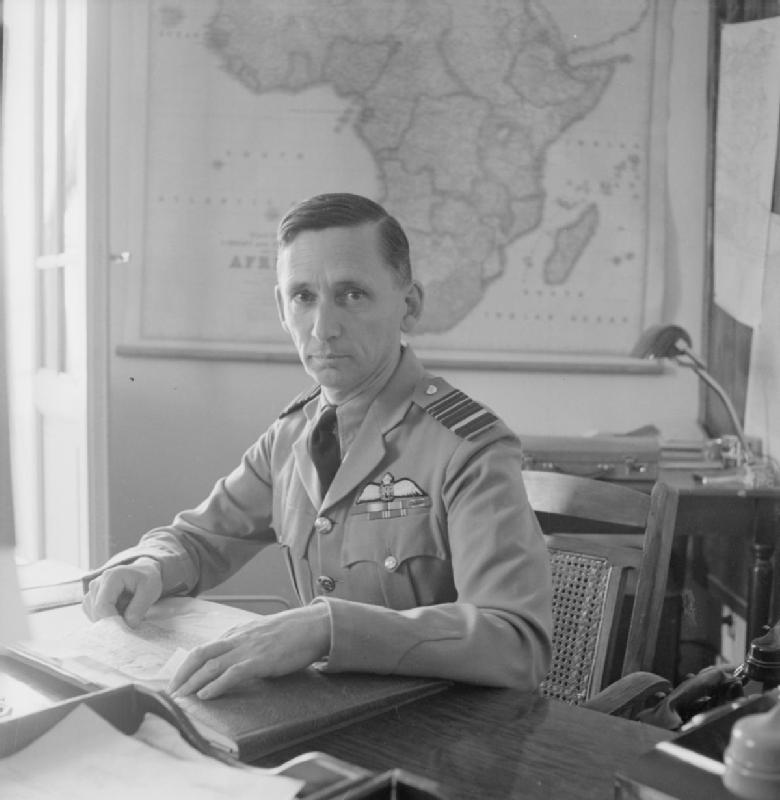
Royal Air Force officer (1890-1967)
| Field | Value |
|---|---|
| honorific_prefix | Marshal of the Royal Air Force The Right Honourable |
| name | The Lord Tedder |
| honorific_suffix | |
| image | Air Chief Marshal Sir Arthur Tedder on the Italian coast, 17 December 1943 (3x4 cropped).jpg |
| image_size | 300px |
| caption | Tedder on the Italian coast in December 1943 |
| birth_date | |
| death_date | |
| birth_place | Glengoyne, Scotland |
| death_place | Banstead, England |
| allegiance | United Kingdom |
| branch | British Army (1906–1918) |
| Royal Air Force (1918–1951) | |
| serviceyears | 1906–1951 |
| rank | Marshal of the Royal Air Force |
| commands | Chief of the Air Staff (1946–1950) |
| Mediterranean Allied Air Forces (1943–1944) | |
| Mediterranean Air Command (1943) | |
| RAF Middle East Command (1941–1943) | |
| RAF Far East (1936–1938) | |
| No. 2 Flying Training School (1924–1926) | |
| No. 207 Squadron (1920–1923) | |
| No. 274 Squadron (1919–1920) | |
| 38th Wing (1918–1919) | |
| No. 67 Squadron (1917–1918) | |
| No. 70 Squadron (1917) | |
| battles | |
| awards | Knight Grand Cross of the Order of the Bath |
| Mentioned in Despatches (2) | |
| Silver Medal of Military Valor (Italy) | |
| Order of Polonia Restituta (Poland) | |
| Legion of Merit (United States) | |
| Distinguished Service Medal (United States) | |
| Legion of Honour (France) | |
| Croix de guerre (France) | |
| Croix de guerre (Belgium) | |
| Order of Kutuzov 1st Class (Soviet Union) | |
| laterwork | Chancellor, University of Cambridge |
| Vice-Chairman, BBC Board of Governors | |
| President, Standard Triumph Ltd | |
| Deputy President, National Rifle Association | |
| signature | A. W. Tedder - German Instrument of Surrender.png |
Royal Air Force (1918–1951) Mediterranean Allied Air Forces (1943–1944) Mediterranean Air Command (1943) RAF Middle East Command (1941–1943) RAF Far East (1936–1938) No. 2 Flying Training School (1924–1926) No. 207 Squadron (1920–1923) No. 274 Squadron (1919–1920) 38th Wing (1918–1919) No. 67 Squadron (1917–1918) No. 70 Squadron (1917)
- World War I
- Western Front
- Middle Eastern theatre
- World War II
- North African campaign
- Allied invasion of Sicily
- Operation Overlord Mentioned in Despatches (2) Silver Medal of Military Valor (Italy) Order of Polonia Restituta (Poland) Legion of Merit (United States) Distinguished Service Medal (United States) Legion of Honour (France) Croix de guerre (France) Croix de guerre (Belgium) Order of Kutuzov 1st Class (Soviet Union) Vice-Chairman, BBC Board of Governors President, Standard Triumph Ltd Deputy President, National Rifle Association
President of Surrey County Cricket Club 1953–58
Marshal of the Royal Air Force Arthur William Tedder, 1st Baron Tedder, (11 July 1890 – 3 June 1967) was a Royal Air Force officer. He was a pilot and squadron commander in the Royal Flying Corps in the First World War and he went on to serve as a senior officer in the Royal Air Force (RAF) during the inter-war years when he served in Turkey, Great Britain and the Far East.
During World War II, as Air Officer Commanding of the RAF Middle East Command, Tedder directed RAF air operations in the Mediterranean and North Africa, including the evacuation of Crete and Operation Crusader in North Africa. His bombing tactics became known as the "Tedder Carpet". Later in the war Tedder took command of the Mediterranean Air Command and in that role was closely involved in the planning of the Allied invasion of Sicily and the Allied invasion of Italy. When Operation Overlord—the invasion of France—came to be planned, Tedder was appointed Deputy Supreme Commander at Supreme Headquarters Allied Expeditionary Force under General Dwight D. Eisenhower.
Tedder signed the German Instrument of Surrender on behalf of the Western Allies, officially ending World War II in Europe. After the war, Tedder served as Chief of the Air Staff, in which role he advocated increased recruitment in the face of many airmen leaving the RAF, doubled the size of RAF Fighter Command and implemented arrangements for the Berlin Airlift in 1948. He also held senior positions in business and academia.
Early life
Tedder was born the son of Sir Arthur John Tedder and Emily Charlotte Tedder (née Bryson) at the Glenguin Distillery (now Glengoyne) in the Campsie Fells, north of Glasgow. His father was distinguished as the Commissioner of the Board of Customs who devised the old age pension scheme. His father's occupation meant that the young Tedder saw different parts of the British Isles, spending 1895 to 1898 in Lerwick in the Shetland Isles and 1899–1901 in Elgin, in the County of Moray. In 1902 the family moved to Croydon in Surrey where Tedder attended Whitgift School until 1909, when he went up to the University of Cambridge. Tedder spent his university years (1909–13) at Magdalene College, where he read history. He was awarded a lower second class honours degree in June 1912.
Tedder spent the summer of 1912 in Berlin studying German. With the start of a new academic year, he decided to return to Magdalene for a fourth year in order that he might prepare himself for a career as a diplomat. On 2 September 1913, during his last year at Magdalene, Tedder gained a reserve commission as a second lieutenant in the Dorsetshire Regiment.
After university, Tedder joined the Colonial Service as a cadet and departed Britain in February 1914, serving in the administration in Fiji. He did not find colonial life in Fiji to his liking, and when war was declared, he returned to Britain so that he could join the regular Army.
Military career
First World War
Tedder was promoted to lieutenant in the Dorset Regiment on 14 October 1914, and arrived back in Britain in December. He was posted to a reserve unit at Wyke Regis on the Dorset coast where he seriously injured his knee in February. Following his injury Tedder was unable to carry out full infantry service and, although he briefly carried out duties at a base camp in Calais, he pressed for a transfer to the Royal Flying Corps (RFC).
In January 1916, Tedder was accepted into the RFC and he was asked to attend the No. 1 School of Aeronautics In April he attended the Central Flying School where he learned to fly and gained his 'wings'. In June 1916, Tedder served as a pilot with No. 25 Squadron RFC flying the Bristol Scout C on the Western Front. with 25 Squadron. and appointed officer commanding No. 70 Squadron RFC.
Tedder was appointed officer commanding No. 67 Squadron at RFC Shawbury on 25 June 1917 (rank relinquished on 2 April 1919).
Inter-war years
Tedder was given command of No. 274 Squadron, equipped with the Handley Page V/1500, the largest RAF bomber of its time, at RAF Bircham Newton in May 1919. Renamed No. 207 Squadron in February 1920 and equipped with DH9a bombers, the squadron was briefly deployed to Turkey in 1922–23 during the Chanak Crisis. Tedder attended the RN Staff College in late 1923 and through the spring of 1924.
Promoted to wing commander on 1 January 1924, gaining promotion to air commodore on 1 July 1934.
In November 1936, Tedder was appointed Air Officer Commanding (AOC) RAF Far Eastern Forces he was promoted to air vice marshal on 1 July 1937 and became Director General for Research in the Air Ministry in July 1938.
Second World War
At the outbreak of war in 1939, Tedder's department was transferred to the newly created Ministry of Aircraft Production, but Tedder was unable to form a good working relationship with the minister, Lord Beaverbrook and consequently with Prime Minister Churchill and on 29 November 1940, he became Deputy Air Officer Commanding in Chief, RAF Middle East Command Shortly thereafter, Tedder was ordered by Churchill to resurrect the Takoradi air route.
Tedder was appointed as Air Officer Commanding in Chief, RAF Middle East Command on 1 June 1941, (made permanent in April 1942). He had not been Churchill's first choice for the role but when the preferred choice (Air Vice-Marshal O T Boyd) was captured, Tedder was appointed. mentioned in despatches for his services in the Middle East on 30 June 1942 and promoted to the temporary rank of air chief marshal on 3 July 1942.

Tedder oversaw the buildup of the air arm in the Western Desert and, more importantly, the development of new more effective operational and administrative policies which turned it into a highly effective force which was key to the Allied victory at the decisive Battle of El Alamein in October 1942. One of his bombing tactics became known as the "Tedder Carpet". He was advanced to Knight Grand Cross of the Order of the Bath on 27 November 1942 in recognition of his services in the Middle East.
In February 1943 Tedder took command of Mediterranean Air Command, He was awarded the American Legion of Merit on 27 August 1943 and awarded the Grand Cross of the Polish Order of Polonia Restituta on 1 October 1943. He went on to be Commander of Mediterranean Allied Air Forces, which took in an expanded group of air forces, in December 1943.
When Operation Overlord—the invasion of France—came to be planned, Tedder was appointed Deputy Supreme Commander at SHAEF beneath General Eisenhower, taking up the role in January 1944. Tedder was awarded the Soviet Order of Kutuzov (1st Class) on 28 August 1945 and promoted to Marshal of the Royal Air Force on 12 September 1945. File:Meeting of the Supreme Command.jpg|Supreme Command, Allied Expeditionary Force (SHAEF), London, 1 February 1944. Tedder sits to Eisenhower's right as Deputy Supreme Allied Commander File:Zhukov reads capitulation act.jpg|Arthur Tedder (centre left) at the ceremony of the German unconditional surrender (May 1945). Standing is Soviet Marshal Zhukov reading the act of surrender.
After the war
Tedder took over from Charles Portal as Chief of the Air Staff on 1 January 1946. He was granted a peerage as Baron Tedder, of Glenguin in the County of Stirling on 8 February 1946 and received the American Distinguished Service Medal on 14 June 1946. In 1947 he delivered the Lees Knowles Lecture, which was then published as Air Power in War. He moved on to become chairman, British Joint Services Mission in Washington in January 1950 before retiring in May 1951. His son John would later be a professor at both the University of Dundee (as Queen's College eventually became) and at St Andrews.
Later life
Tedder was the author of a highly regarded essay on the history of the Royal Navy and also composed his war memoirs. and vice-chairman of the Board of Governors of the BBC. In his later years he developed Parkinson's disease and died at his home at Banstead in Surrey on 3 June 1967.
His ashes are buried in St Clement Danes in London, the RAF church. His name can be seen on a memorial in Westminster Abbey.
Family life
In 1915 Tedder married Rosalinde Maclardy; they had two sons and a daughter. Following the death of his first wife in an aircraft crash in Egypt in January 1943, Tedder married Marie Black (née Seton) in October 1943. Tedder was the father of: Dick (killed in France 1940), John Michael, Richard and Mena.
Arms
References
Sources
References
- (2004). "Arthur William Tedder".
- Probert, p. 36
- {{London Gazette. (27 August 1915)
- in Reading. He was promoted to [[Captain (British Army and Royal Marines). captain]] on 21 March 1916.{{London Gazette. (2 May 1916)
- "Marshal of the Royal Air Force Lord Tedder". Air of Authority: A History of RAF Organisation.
- On 9 August 1916, Tedder was given additional responsibilities as he was made a flight commander{{London Gazette. (22 August 1916)
- {{London Gazette. (15 April 1919)
- [[The National Archives (United Kingdom). The National Archives]] AIR 8/59
- {{London Gazette. (3 July 1934)
- {{London Gazette. (2 July 1937)
- (June 2012). ""WAR PLAN JUAN" The Strategy of Juan Trippe and Pan Am in Latin America and Africa Before and During World War II". SCHOOL OF ADVANCED AIR AND SPACE STUDIES AIR UNIVERSITY MAXWELL AIR FORCE BASE, ALABAMA.
- {{London Gazette. (14 April 1942)
- {{London Gazette. (26 June 1942)
- {{London Gazette. (3 July 1942)
- Probert, p. 37
- "Bomber tactics". Century of Flight.
- {{London Gazette. (24 November 1942)
- {{London Gazette. (24 August 1943)
- {{London Gazette. (28 September 1943)
- {{London Gazette. (24 August 1945)
- {{London Gazette. (11 September 1945)
- {{London Gazette. (8 February 1946)
- {{London Gazette. (11 June 1946)
- Tedder (1947)
- "Arthur, Baron Tedder". Westminster Abbey.
- (2019). "Debrett's Peerage".
This article was imported from Wikipedia and is available under the Creative Commons Attribution-ShareAlike 4.0 License. Content has been adapted to SurfDoc format. Original contributors can be found on the article history page.
Ask Mako anything about Arthur Tedder, 1st Baron Tedder — get instant answers, deeper analysis, and related topics.
Research with MakoFree with your Surf account
Create a free account to save articles, ask Mako questions, and organize your research.
Sign up freeThis content may have been generated or modified by AI. CloudSurf Software LLC is not responsible for the accuracy, completeness, or reliability of AI-generated content. Always verify important information from primary sources.
Report