From Surf Wiki (app.surf) — the open knowledge base
Army of Republika Srpska
Bosnian Serb military force, 1992–2006

Bosnian Serb military force, 1992–2006
| Field | Value | |
|---|---|---|
| name | Army of Republika Srpska | |
| native_name | Војска Републике Српске | |
| Vojska Republike Srpske | ||
| native_name_lang | sr | |
| war | the Bosnian War and the Croatian War | |
| image | [[File:Emblem of the Army of Republika Srpska.svg | 115px]] |
| active | 1992–2006 | |
| motives | Independence of Republika Srpska (until 1995) | |
| allegiance | Republika Srpska | |
| leader1_title | Military leader | |
| leader1_name | Ratko Mladić | |
| leader2_title | Political leader | |
| leader2_name | Radovan Karadžić | |
| headquarters | Pale, Bijeljina, Banja Luka | |
| size | 250,000 by formation | |
| 155,000 (1995) | ||
| colours | Red | |
| Blue | ||
| White | ||
| split_from | [[File:Logo of the JNA.svg | 22px]] Yugoslav People's Army |
| merged_into | [[File:AFBIH Coat of Arms 021-001.png | 22px]] |
| allies | * [[File:Seal of the Yugoslav Army (1992–2003).svg | 22px]] VJ |
| opponents | * [[File:Logo of the Army of the Republic of Bosnia and Herzegovina.svg | 22px]] ARBiH (until 1995) |
| battles | Bosnian War: | |
| identification_symbol_label | Patch | |
| identification_symbol | [[File:Patch of the Army of Republika Srpska.svg | 95px]] |
| identification_symbol_2_label | Helmet decal | |
| identification_symbol_2 | [[File:Army of Republika Srpska (helmet decal).svg | 80px]] |
Vojska Republike Srpske 155,000 (1995) Blue White Armed Forces of Bosnia and Herzegovina
- [[File:Srpska vojska Krajine, oficirski emblem. 1993-1995.png|22px]] RSK (until 1995)
- [[File:Logo of the National Defense Of Western Bosnia.png|22px]] NOZB (until 1995)
- [[File:Logo of Croatian Defence Council.svg|22px]] HVO (until 1995)
- [[File:Seal of the Armed Forces of Croatia.png|22px]] HV (until 1995)
- [[File:Patch of the Croatian Defence Forces.svg|22px]] HOS (until 1993)
- NATO
- Operation Corridor 92
- Operation Vrbas 92
- Operation Sadejstvo
- Operation Lukavac '93
- Operation Star '94
- Operation Shield '94
- Operation Spider
- Operation Tekbir '95
- Operation Una
- Siege of Sarajevo
- Siege of Srebrenica The Army of Republika Srpska (, VRS), commonly referred to in English as the Bosnian Serb Army, was the military of Republika Srpska, the self-proclaimed secessionist republic, a territory within the newly independent Bosnia and Herzegovina (formerly part of Yugoslavia), which it defied and fought against. Active during the Bosnian War from 1992 to 1995, the Bosnian Serb Army under General Ratko Mladić became the most proficient military force in the Balkans, as well as one of the most reviled armies in the world. After the war it continued to exist as the armed forces of Republika Srpska, one of two entities making up Bosnia and Herzegovina, until 2006 when it was integrated into the Armed Forces of Bosnia and Herzegovina. During the conflict, the Bosnian Serb Army conducted several major operations, including Operation Corridor 92, Operation Vrbas '92, Operation Lukavac, Operation Shield '94, and Operation Spider; The army also took part in the Siege of Sarajevo, the longest siege in the history of modern warfare, as well as in the Srebrenica massacre.
Personnel
The Army of the Republika Srpska (VRS) was founded on 12 May 1992 from the remnants of the Yugoslav People's Army (JNA) of the former Socialist Federal Republic of Yugoslavia from which Bosnia and Herzegovina had seceded earlier in 1992. When the Bosnian War erupted, the JNA formally discharged 80,000 Bosnian Serb troops. These troops, who were allowed to keep their heavy weapons, formed the core of what would become the Army of the Republika Srpska, benefiting from access to significant JNA stockpiles and infrastructure.
The VRS was made up largely of ethnic Serbs from Bosnia and Herzegovina, but also attracted around 4,000 foreign Orthodox Christian fighters, many of whom were drawn by nationalist or religious motivations. 700 such fighters came from Russia, and 300–800 from Bulgaria. 100 Greeks also volunteered to fight on the side of the Bosnian Serbs, forming the Greek Volunteer Guard which allegedly participated in the Srebrenica massacre. A number of Romanians and Ukrainians fought as well on the Bosnian Serb side.
Post-war status and abolishment
After the war, the country of Bosnia and Herzegovina had two armies, that of the VRS and the Army of the Federation of Bosnia and Herzegovina (VFBiH). VFBiH was itself composed of two elements, the ARBiH and HVO. The two armies functioned without a common command, on the principle of "non-intervention in the affairs of the other". Bisera Turković noted that it was 'therefore questionable whether in say a foreign attack on Sarajevo [...the VRS] would defend this capital city'. The existence of the two separate armies was one of the factors impeding civil-military relations development. The VRS conducted demining.
In 2003 the army began to integrate into the Armed Forces of Bosnia and Herzegovina. In 2005 a fully integrated unit of Serbs, Bosniaks, and Croats was deployed to augment the US-led coalition forces in Iraq. On 6 June 2006, it was fully integrated into the Armed Forces of Bosnia and Herzegovina controlled by the Ministry of Defence of Bosnia and Herzegovina.
Leadership
Main article: General Staff of the Army of Republika Srpska
The supreme commander of the VRS was General Ratko Mladić.The Command of the Army of Republika Srpska was organized into several key sectors and departments:
- Staff for operational and educative affairs – Major general Manojlo Milovanović (also deputy commander)
- Sector for intelligence and security affairs – Colonel Zdravko Tolimir
- Sector for morale, religious and legal affairs – Major general Milan Gvero
- Sector for rear services – Major general Đorđe Đukić
Closest advisors to General Mladić were Milovanović (operations and planning), Tolimir (intelligence), Gvero (political affairs), and Đukić (logistics). According to opinion of some experts who studied the course of the Bosnian War, the Command of the Main Staff of the Army of Republika Srpska proved to be the most capable military leadership among the participants in the war:
**
Military operations
_–_Serbian_Militia.svg)
- 1992 Yugoslav campaign in Bosnia (3 April – 19 May 1992) – Victory
- Battle of Kupres (1992) (3–11 Apr 1992) against HVO, HOS, HV – Victory
- Operation Jackal (7 – 26 June 1992) against HVO, HV – Defeat
- Operation Corridor 92 (24 Jun – 6 Oct 1992) against HVO, HOS, HV – Victory
- Operation Vrbas '92 (Jun–Oct 1992) against ARBiH, HVO – Victory
- Operation Bura (8–13 Nov 1992) against HVO, HOS, HV – Victory
- Operation Corridor '93 (1–12 Jan 1993) against ARBiH, HVO – Victory
- Operation Cerska '93 (10 Feb – 17 Apr 1993) against ARBiH – Victory
- Operation Sadejstvo (20–27 Jul 1993) against ARBiH – Victory
- Operation Lukavac '93 (2 Jul – 19 Aug 1993) against ARBiH – Victory
- Operation Star '94 (6–18 Apr 1994) against ARBiH, NATO – Victory
- Operation Brana '94 (1 Jun – 5 Jul 1994) against ARBiH – Victory
- Operation Breza '94 (4–12 Sept 1994) against ARBiH – Defeat
- Battle of Kupres (1994) (3 Nov 1994) against ARBiH, HVO – Defeat
- Operation Autumn '94 (11–20 Nov 1994) against ARBiH – Victory
- Operation Shield '94 (4–20 Nov 1994) against ARBiH – Victory
- Operation Spider (16 Nov – 17 Dec 1994) against ARBiH – Victory
- Operation Tekbir '95 (15–28 Jun 1995) against ARBiH – Victory
- Operation Krivaja '95 (6–11 Jul 1995) against ARBiH – Victory
- Operation Stupčanica '95 (25-26 July 1995) against ARBiH – Victory
- Operation Summer '95 (25–29 Jul 1995) against HV, HVO – Defeat
- Operation Mistral 2 (8–15 Sep 1995) against HV, HVO – Defeat
- Operation Sana (13 Sep – 13 Oct 1995) against ARBiH – Defeat
- Operation Una (18–19 Sep) against HV – Victory
- Operation Southern Move (8–11 Oct 1995) against HV, HVO – Defeat
- Operation Prijedor '95 (12–20 Oct 1995) against ARBiH – Victory
Special units
- 1st Guards Motorized Brigade (Прва гардијска моторизована бригада), General Staff
- 65th Protection Motorized Regiment (65. заштитни моторизовани пук), General Staff
- "Panthers" Special Guards Brigade (Garda Panteri) (Специјална бригада Гарда Пантери), East-Bosnian Corps
- Wolves of the Drina, or Drina Wolves (Вукови са Дрине), Drina Corps
- Special Unit "Peša" (Специјална Јединица "Пеша"), East-Bosnian Corps
- Special Unit "Mando" (Специјална Јединица "Мандо"), East-Bosnian Corps
- Special Unit "Osmaci" (Специјална Јединица "Осмаци"), Drina Corps
- Serb Guard Ilidža (Српска Гарда Илиџа), Sarajevo-Romanija Corps
- White Wolves (Бели Вукови), Sarajevo-Romanija Corps
Organization

The International Criminal Tribunal for the former Yugoslavia stated that:
"In July 1995, the Armed Forces of the Republika Srpska were under the command and control of the Commander-in-Chief, Radovan Karadžić. His headquarters was in Pale. Within the framework of the VRS, immediately subordinate to the Commander-in-Chief, was the Main Staff of the VRS, headquartered in Han Pijesak and commanded by General Ratko Mladić. It was the responsibility of the Commander of the Main Staff to issue regulations, orders and instructions regarding the implementation of orders by the Commander-in-Chief, and to discharge the command duties delegated to him by the Commander-in-Chief. The Main Staff of the VRS consisted of staff officers and staff support personnel, as well as some specialised military units such as the 65th Protection Regiment, designed to provide protection and combat services for the Main Staff; and the 10th Sabotage Detachment, a unit trained for operations behind enemy lines and other special combat assignments. The vast majority of the fighting force of the VRS itself was divided into six geographically-based Corps, all subordinate to, and under the command of, General Mladić and, in turn, the Commander-in-Chief, Radovan Karadzic. In July 1995, the six Corps were the Drina Corps, the 1st Krajina Corps, the 2nd Krajina Corps, the Sarajevo-Romanija Corps, the Hercegovina Corps and the East Bosnia Corps."
1993
- 1st Krajina Corps – Banja Luka
- 2nd Krajina Corps – Drvar
- 3rd Corps – Bijeljina
- East Bosnia Corps – Han Pijesak
- Herzegovina Corps – Bileća
1995
- 1st Krajina Corps – Banja Luka
- 2nd Krajina Corps – Drvar
- East Bosnia Corps – Bijeljina
- Sarajevo-Romanija Corps – Pale
- Drina Corps – Vlasenica
- Herzegovina Corps – Bileća
2001
- 1st Corps – Banja Luka
- 3rd Corps – Bijeljina
- 5th Corps – Sokolac
- 7th Corps – Bileća
Equipment
Tanks and armoured vehicles

- M-84 — 200
- T-54/T-55 — 55
- T-34 — 45
- BVP M-80
- OT M-60
- BTR-50
- BOV
Towed artillery

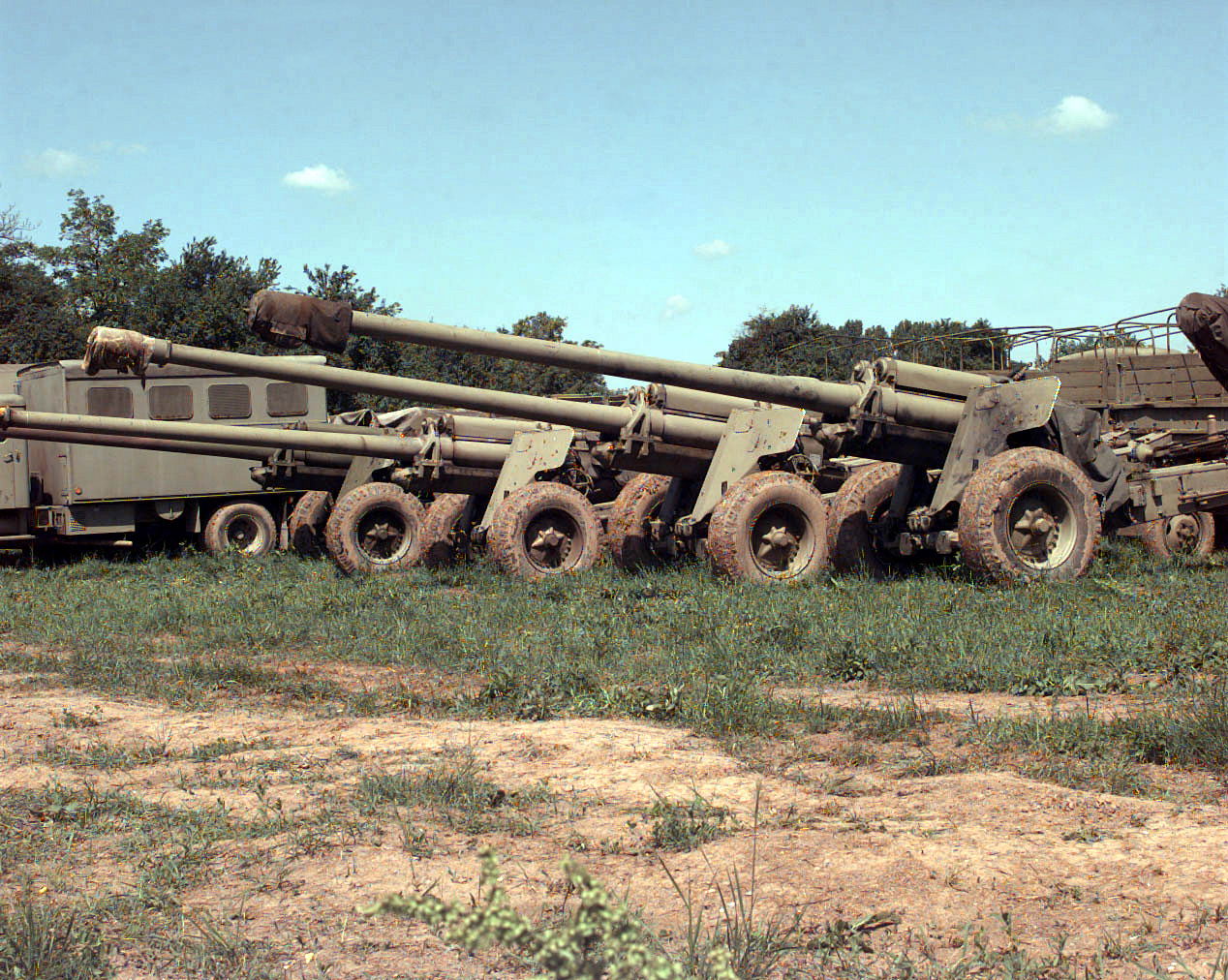
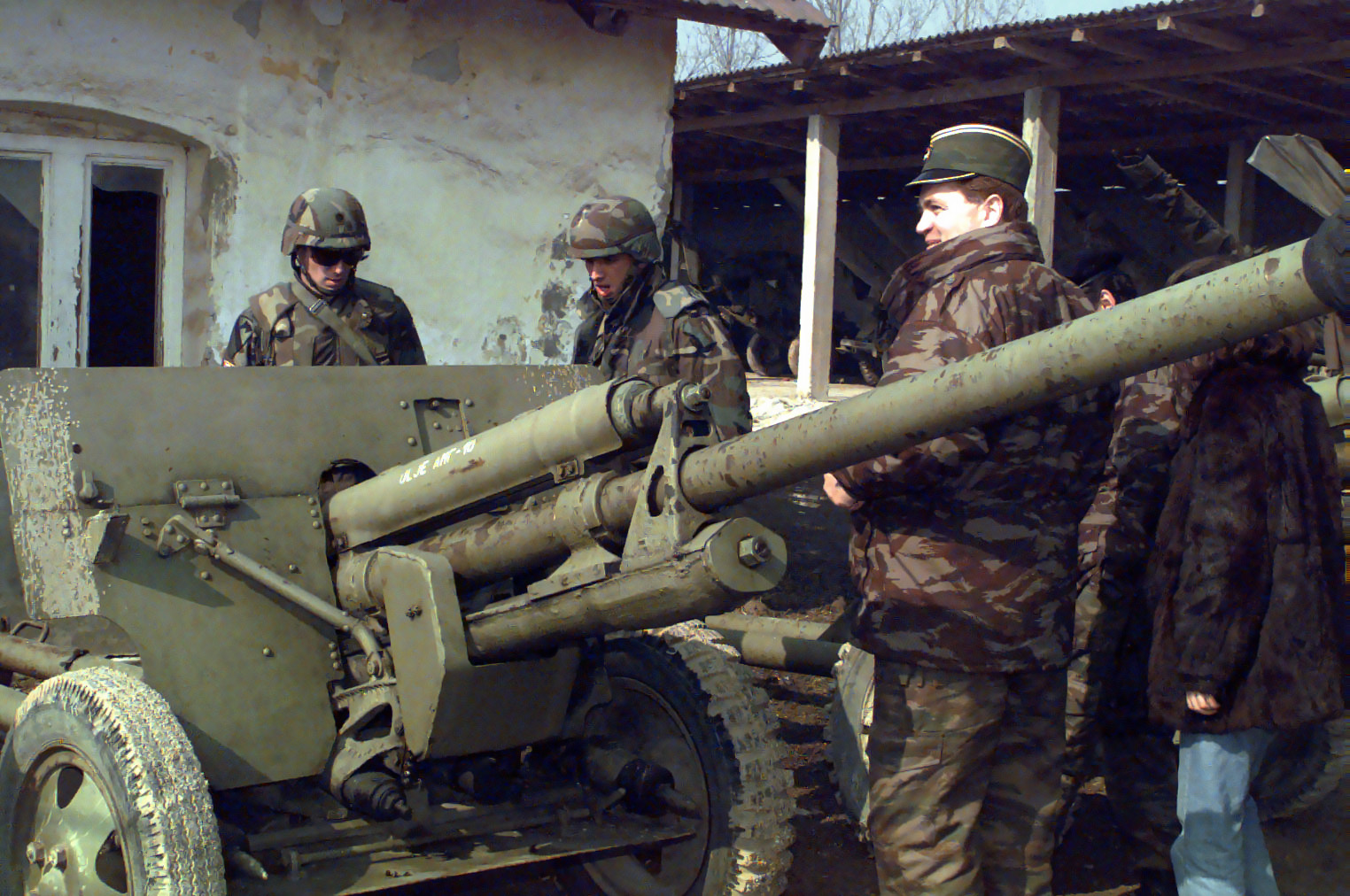
Self-propelled artillery
MLRS
- M-63 Plamen
- M-77 Oganj
- M-87 Orkan
ATGM
Antitank guns
Self-Propelled Anti-Aircraft Guns (SPAAG)
.JPG)
- ZSU-57-2
- M53/59 Praga
- BOV-3
- ZU-23-2
MANPADs and SAMs
Infantry weapons
Pistols
- Zastava M88
- Zastava M57
- CZ99
Assault rifles
- Zastava M70
- Zastava M80
- Zastava M90
Battle rifles
- Zastava M77 B1
Submachine guns
- Zastava M56
- Zastava M85
- Zastava M92
- Heckler & Koch MP5
Machine guns
- Zastava M53
- Zastava M77
- Zastava M72
- Zastava M84
- Zastava M87
- PKM
- M2 Browning
Sniper rifles
- Zastava M76
- Zastava M91
Anti-tank weapons
- M79 Osa
- M80 Zolja
Republika Srpska Air Force
Main article: Republika Srpska Air Force
Formerly known as Ratno Vazduhoplovstva i Protiv Vazdušna Odbrana Vojske Republike Srpske or RV i PVO RS. Beginning on 1 June 2004, the Republika Srpska Air Force was officially called, Prvi Puk Vazduhoplovstva i Protiv Vazdušna Odbrana Vojske Republike Srpske, also known as 1st Aviation Regiment and Air Defence Force of the Republic of Srpska's Army.
References
Bibliography
References
- (until 1995)
- (until 1995)
- [[Central Intelligence Agency]], Office of Russian and European Analysis. (2002). "Balkan Battlegrounds: A Military History of the Yugoslav Conflict, 1990–1995, Volume 2". Central Intelligence Agency.
- [[Central Intelligence Agency]], Office of Russian and European Analysis. (2002). "Balkan Battlegrounds: A Military History of the Yugoslav Conflict, 1990–1995, Volume 2". Central Intelligence Agency.
- AP Archive. (21 July 2015). "Bosnia - Bosnian Serbs Launch Counter-Attack".
- Balkan Battlegrounds Vol.1, page. 141
- "A City that Doesn't Forget: Sarajevo Thirty Years after the War".
- John Kifner. (27 January 1994). "Yugoslav Army Reported Fighting In Bosnia to Help Serbian Forces". The New York Times.
- [[#Innes. Innes 2006]], p. 157
- [[#Thomas. Thomas 2006]], p. 13
- Helena Smith. (5 January 2003). "Greece faces shame of role in Serb massacre". The Guardian.
- (27 December 2005). "The Evolution of Civil-Military Relations in South East Europe: Continuing Democratic Reform and Adapting to the Needs of Fighting Terrorism". Springer Science & Business Media.
- (2002). "Landmine Monitor Report 2002: Toward a Mine-free World". Human Rights Watch.
- Nedim Dervisbegovic. (2005-06-02). "Bosnia's first unified army platoon deployed to Iraq". The San Diego Union-Tribune.
- (2011). "Military Integration after Civil Wars: Multiethnic Armies, Identity and Post Conflict Reconstruction". Routledge.
- (2007). "The International Criminal Tribunal for the former Yugoslavia – Case No. IT-95-5/18-I". UN – ICTY.
- Balkan Battlegrounds Vol.2, p. 269
- International Criminal Tribunal for the former Yugoslavia, [http://www.icty.org/x/cases/borovcanin/ind/en/bor-annexA020906.htm Military Structure of the Army of the Republika Srpska]
- (17 August 2015). "Roki Vulovic - Panteri / Mauzer, English Lyrics".
This article was imported from Wikipedia and is available under the Creative Commons Attribution-ShareAlike 4.0 License. Content has been adapted to SurfDoc format. Original contributors can be found on the article history page.
Ask Mako anything about Army of Republika Srpska — get instant answers, deeper analysis, and related topics.
Research with MakoFree with your Surf account
Create a free account to save articles, ask Mako questions, and organize your research.
Sign up freeThis content may have been generated or modified by AI. CloudSurf Software LLC is not responsible for the accuracy, completeness, or reliability of AI-generated content. Always verify important information from primary sources.
Report