From Surf Wiki (app.surf) — the open knowledge base
Army Medical School
School of public health and preventive medicine

School of public health and preventive medicine
The Army Medical School (AMS) was founded by U.S. Army Brigadier General George Miller Sternberg. According to some, it was the world's first school of public health and preventive medicine. (The other institution vying for this distinction is the Johns Hopkins School of Public Health (1916).) The AMS ultimately became the Army Medical Center (1923), then the Walter Reed Army Institute of Research (1953).
History
Sternberg created the Army Medical School by issuing "General Order 51" on June 24, 1893. The School was housed, along with the Army Medical Library in the building of the Army Medical Museum and Library (affectionately known as the "Old Pickle Factory" or "Old Red") at 7th Street and South B Street (now Independence Avenue), SW, Washington, D.C. (This site is on the National Mall where the Smithsonian's Hirshhorn Museum now stands.)
In 1910, the AMS relocated to 721 13th Street, NW and in 1916 to 604 Louisiana Avenue.
In 1923, the "Army Medical Center" (AMC) was created when (1) the AMS became the "Medical Department Professional Service School" (MDPSS) and (2) the MDPSS moved into "Building #40" on the grounds of the Walter Reed General Hospital (WRGH) in northern Washington, D.C.
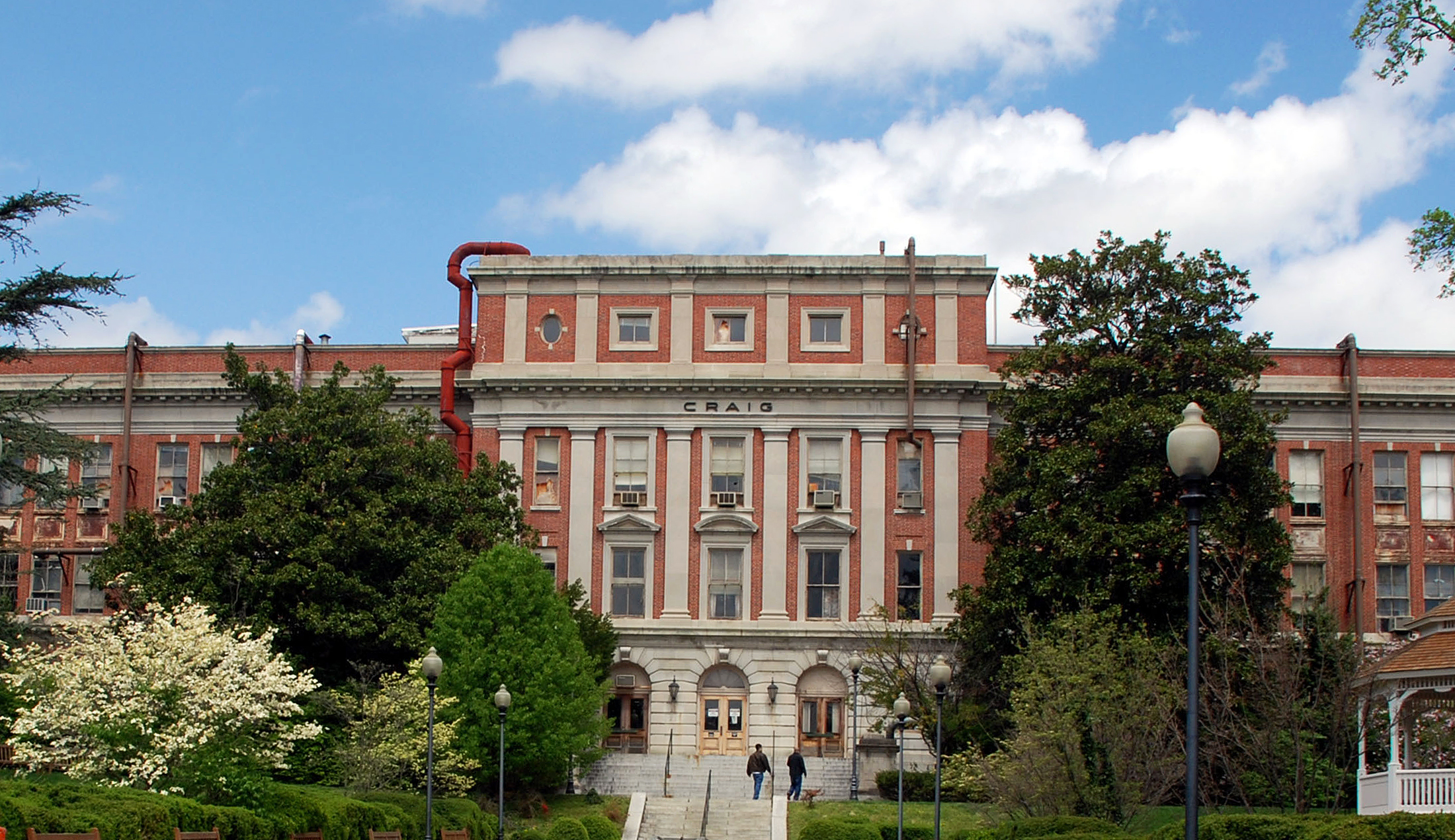
The historic edifice known as Building #40 was constructed at 14th and Dahlia Streets beginning in 1922 and reached completion in 1932. This facility consists of four "Pavilions":
- The North or "Vedder Pavilion" (named for Col. Edward Bright Vedder (1878–1952) who established polished rice extract as the proper treatment for beri-beri);
- The South or "Craig Pavilion" (named for Col. Charles Franklin Craig (1872–1950) who in the Philippines proved (1907; with Percy M. Ashburn) dengue to be a filterable agent (virus) and later showed the mosquito Aedes aegypti responsible for dengue transmission);
- The East or "Sternberg Pavilion" (named for Gen. Sternberg (1838–1915), the U.S. Army Surgeon General and co-discoverer of the pneumococcus, known as the "Father of American Bacteriology");
- The West or "Siler Pavilion" (named for Col. Joseph Franklin Siler (1875–1960), who in 1925 first injected dengue virus in serum into humans producing disease and "closing the loop" on dengue transmissibility).
In 1947, the MDPSS became the "Army Medical Department Research and Graduate School" (AMDRGS), which in turn became the "Army Medical Service Graduate School" (AMSGS) in 1950.
In September 1951, "General Order Number 8" combined the WRGH & AMC into the present-day Walter Reed Army Medical Center (WRAMC). Three years later, the research elements of this facility became the present-day Walter Reed Army Institute of Research (WRAIR).
List of presidents and commandants
| President | Tenure | Ref(s) |
|---|---|---|
| Col. Charles Henry Alden | 1893 | 1898 |
| CLOSED DURING SPANISH-AMERICAN WAR | 1898 | 1901 |
| Col. William Henry Forwood | 1901 | 1902 |
| Brig. Gen. Calvin DeWitt | 1902 | 1903 |
| Col. Charles Lawrence Heizmann | 1903 | 1906 |
| Col. Valery Havard | 1906 | 1909 |
| Col. Louis Anatole LaGarde | 1909 | 1912 |
| Col. Charles Richard | 1912 | 1915 |
| Brig. Gen. William Hempel Arthur | 1915 | 1918 |
| Col. Weston Percival Chamberlain | 1918 | 1918 |
| Brig. Gen. Francis Anderson Winter | 1918 | 1919 |
| Brig. Gen. Walter Drew McCaw | 1919 | 1923 |
| Col. Weston Percival Chamberlain | 1923 | 1924 |
| Brig. Gen. Henry Clay Fisher | 1924 | 1929 |
| Col. Christopher Clark Collins | 1929 | 1930 |
| Col. Charles Franklin Craig | 1930 | 1931 |
| Col. Jay Ralph Shook | 1931 | 1931 |
| Col. Edward Bright Vedder | 1931 | 1932 |
| Col. Philip Weatherly Huntington | 1932 | 1935 |
| Col. Joseph Franklin Siler | 1935 | 1939 |
| Col. George Russell Callender | 1940 | 1946 |
| Rufus Holt | 1946 | 1949 |
| Elbert De Coursey | 1949 | 1950 |
| William S. Stone | 1950 | 1953 |
References
References
- (1952). "Borden's dream: The Walter Reed Army Medical Center in Washington, DC". Government Printing Office.
This article was imported from Wikipedia and is available under the Creative Commons Attribution-ShareAlike 4.0 License. Content has been adapted to SurfDoc format. Original contributors can be found on the article history page.
Ask Mako anything about Army Medical School — get instant answers, deeper analysis, and related topics.
Research with MakoFree with your Surf account
Create a free account to save articles, ask Mako questions, and organize your research.
Sign up freeThis content may have been generated or modified by AI. CloudSurf Software LLC is not responsible for the accuracy, completeness, or reliability of AI-generated content. Always verify important information from primary sources.
Report