From Surf Wiki (app.surf) — the open knowledge base
Armor-piercing bullet
Type of ammunition
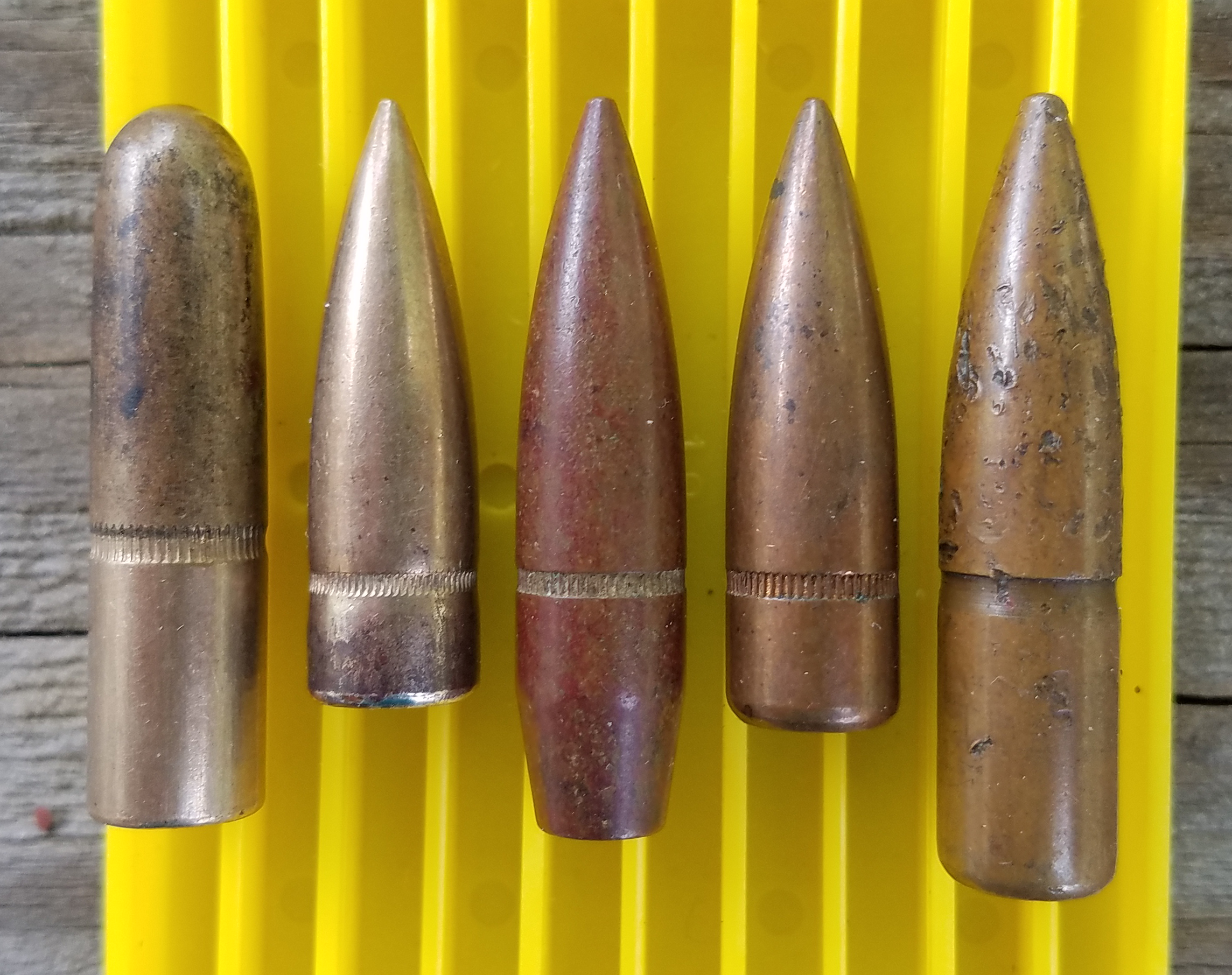
Type of ammunition
Armor-piercing bullets for rifle and handgun cartridges are designed to penetrate ballistic armor and protective shields intended to stop or deflect conventional bullets. Although bullet design is an important factor with regard to armor penetration, the ability of any given projectile to penetrate ballistic armor increases with increasing velocity. Rifle cartridges typically discharge bullets at higher muzzle velocity than handgun cartridges due to larger propellant charge. However, even the same cartridge (one that is interchangeable between specific rifles and handguns) fired from a rifle will, in almost all common cases, have a higher velocity than when fired from a handgun. This is due to the longer period of acceleration available within the longer gun barrel of rifles, which allow adequate time for the propellant to fully ignite before the projectile exits the barrel. For this reason, bullets fired from rifles may be more capable of piercing armor than similar or identical bullets fired from handguns. In addition, a small-caliber bullet has higher sectional density than a larger-caliber bullet of the same weight, and thus is more capable of defeating body armor.
Design
Rifle bullets
Armor-piercing bullets typically contain a hardened steel, tungsten, or tungsten carbide penetrator encased within a copper or cupronickel jacket, similar to the jacket which would surround lead in a conventional projectile. The penetrator is a pointed mass of high-density material designed to retain its shape and carry the maximum possible amount of energy as deeply as possible into the target. The entire projectile is not normally made of the same material as the penetrator because the hard metals of good penetrators would damage the barrel of the gun firing the bullet. Impact velocity of the copper jacket may temporarily soften the face of the armor and cushion the impact to avoid breaking the brittle penetrator. The penetrator then slides out of the jacket to continue forward through the armor.
Examples
Handgun bullets
Handgun bullets made entirely of lead have less penetration ability than jacketed bullets at similar velocity. In the 1930s, Western Cartridge Company introduced .38 Special ammunition capable of firing a 158 gr copper-tipped lead-alloy bullet at 1125 ft per second to penetrate sheet-metal automobile doors. As higher velocity handgun cartridges became available and jacketed bullets became more common in handgun cartridges, armor penetration was improved with thicker bullet jackets or bullets made entirely of jacket material like copper or brass. Later designs used penetrator cores similar to rifle designs.
United States
In 1986 United States law initially defined armor-piercing bullets to exempt rifle ammunition:
- A projectile or projectile core which may be used in a handgun and which is constructed entirely (excluding the presence of traces of other substances) from one or a combination of tungsten alloys, steel, iron, brass, bronze, beryllium copper, or depleted uranium; or
- A full jacketed projectile larger than .22 caliber designed and intended for use in a handgun and whose jacket has a weight of more than 25 percent of the total weight of the projectile.
Subsequent regulations requiring green bullets encouraged replacing lead core bullets with M855A1 military bullets with a copper jacket over a steel core, or hunting bullets of solid copper or brass.
Sources
References
- Fitchett, Bev. "Armor Piercing Bullets".
- "Ballistics Chart for Military Ammunition". Gun Shots.
- "Lapua Special Purpose brochure". Lapua.
- "Western Ammunition Handbook". Western Cartridge Company.
- Kopsch, Paul. "Interview with an inventor of the KTW bullet". NRAction newsletter, Volume 4, Issue 5 (May 1990).
- 18 United States Code, § 921(a)(17)(B)
- (1 July 2013). "Picatinny ammo goes from regular to unleaded". Army.mil.
- "Certified Nonlead Ammunition". California Department of Fish and Wildlife.
This article was imported from Wikipedia and is available under the Creative Commons Attribution-ShareAlike 4.0 License. Content has been adapted to SurfDoc format. Original contributors can be found on the article history page.
Ask Mako anything about Armor-piercing bullet — get instant answers, deeper analysis, and related topics.
Research with MakoFree with your Surf account
Create a free account to save articles, ask Mako questions, and organize your research.
Sign up freeThis content may have been generated or modified by AI. CloudSurf Software LLC is not responsible for the accuracy, completeness, or reliability of AI-generated content. Always verify important information from primary sources.
Report