From Surf Wiki (app.surf) — the open knowledge base
Arkansas River
Major tributary of the Mississippi River, United States

Major tributary of the Mississippi River, United States
| Field | Value |
|---|---|
| name | Arkansas River |
| image | Arkansas River (2020).jpg |
| image_caption | Arkansas River headwaters in Colorado |
| map | Arkansas river basin map.png |
| map_caption | The Arkansas River flows through Colorado, Kansas, Oklahoma, and Arkansas, and its watershed also drains parts of Texas, New Mexico and Missouri. |
| mapframe | yes |
| mapframe-zoom | 4 |
| subdivision_type1 | Country |
| subdivision_name1 | United States |
| subdivision_type2 | State |
| subdivision_name2 | Colorado, Kansas, Oklahoma, Arkansas |
| subdivision_type3 | Region |
| subdivision_name3 | Great Plains |
| subdivision_type5 | Cities |
| subdivision_name5 | Pueblo, CO, Wichita, KS, Tulsa, OK, Muskogee, OK, Fort Smith, AR, Little Rock, AR, Pine Bluff, AR |
| length | 1469 mi, West-east |
| discharge1_location | Little Rock, AR |
| discharge1_min | 1141 cuft/s |
| discharge1_avg | 39850 cuft/s |
| discharge1_max | 536000 cuft/s |
| source1 | Confluence of East Fork Arkansas River and Tennessee Creek |
| source1_location | Near Leadville, Rocky Mountains, Colorado |
| source1_coordinates | |
| source1_elevation | 9728 ft |
| mouth | Mississippi River |
| mouth_location | Franklin Township, Desha County, near Napoleon, Arkansas |
| mouth_coordinates | |
| mouth_elevation | 108 ft |
| river_system | Mississippi River watershed |
| basin_size | 168000 sqmi |
| tributaries_left | Fountain Creek, Pawnee River, Little Arkansas River, Walnut River, Verdigris River, Neosho River |
| tributaries_right | Cimarron River, Salt Fork Arkansas River, La Flecha, Canadian River, Poteau River |
| mapframe-zoom = 4
The Arkansas River is a major tributary of the Mississippi River. It generally flows to the east and southeast as it traverses the U.S. states of Colorado, Kansas, Oklahoma, and Arkansas. The river's source basin lies in Colorado, specifically the Arkansas River Valley. The headwaters derive from the snowpack in the Sawatch and Mosquito mountain ranges. It flows east into Kansas and finally through Oklahoma and Arkansas, where it meets the Mississippi River.
At 1469 mi, it is the sixth-longest river in the United States, the second-longest tributary in the Mississippi–Missouri system, and the 47th longest river in the world. Its origin is in the Rocky Mountains in Lake County, Colorado, near Leadville. In 1859, placer gold discovered in the Leadville area brought thousands seeking to strike it rich, but the easily recovered placer gold was quickly exhausted. The Arkansas River's mouth is at Napoleon, Arkansas, and its drainage basin covers nearly 170000 sqmi. Its volume is much smaller than the Missouri and Ohio rivers, with a mean discharge of about 40000 cuft/s.
The Arkansas from its headwaters to the 100th meridian west formed part of the U.S.–Mexico border from the Adams–Onís Treaty (in force 1821) until the Texas Annexation or Treaty of Guadalupe Hidalgo.
Pronunciations
The river is pronounced in Kansas, and in the other three states that it crosses.
Physical geography
Course changes
The path of the Arkansas River has changed over time. Sediments from the river found in a palaeochannel next to Nolan, a site in the Tensas Basin, show that part of the river's meander belt flowed through that area up to 3200 BCE. While it was previously thought that this relict channel was active at the same time as another relict of the Mississippi River's meander belt, it has been shown that this channel of the Arkansas was inactive approximately 400 years before the Mississippi channel was active.
Hydrography
The Arkansas has three distinct sections in its long path through central North America. At its headwaters beginning near Leadville, Colorado, the Arkansas runs as a steep fast-flowing mountain river through the Rockies in its narrow valley, dropping 4600 ft in 120 mi. This section supports extensive whitewater rafting, including The Numbers (near Granite, Colorado), Brown's Canyon, and the Royal Gorge.
At Cañon City, Colorado, the Arkansas River valley widens and flattens markedly. Just west of Pueblo, Colorado, the river enters the Great Plains. Through the rest of Colorado, Kansas, and much of Oklahoma, it is a typical Great Plains riverway, with wide, shallow banks subject to seasonal flooding and periods of dwindling flow. Tributaries include the Cimarron and the Salt Fork Arkansas rivers.
In eastern Oklahoma, the river begins to widen further into a more contained consistent channel. To maintain more reliable flow rates, a series of dams and large reservoir lakes have been built on the Arkansas and its intersecting tributaries, including the Canadian, Verdigris, Neosho (Grand), Illinois, and Poteau rivers. These locks and dams enable the river to be navigable by barges and large river craft downriver of Muskogee, Oklahoma, where the McClellan-Kerr Arkansas River Navigation System joins the Verdigris River.
Into western Arkansas, the river path works between the encroaching Boston and Ouachita mountains, including many isolated, flat-topped mesas, buttes, or monadnocks such as Mount Nebo, Petit Jean Mountain, and Mount Magazine, the highest point in the state. The river valley expands as it encounters much flatter land beginning just west of Little Rock, Arkansas. It continues eastward across the plains and forests of eastern Arkansas until it flows into the Mississippi River near Napoleon, Arkansas.
Water flow in the Arkansas River (as measured in central Kansas) has dropped from approximately 248 cuft/s average from 1944–1963 to 53 cuft/s average from 1984–2003, largely because of the pumping of groundwater for irrigation in eastern Colorado and western Kansas.
Important cities along the Arkansas River include Canon City, Pueblo, La Junta, and Lamar, Colorado; Garden City, Dodge City, Hutchinson, and Wichita, Kansas; Tulsa, Oklahoma; and Fort Smith and Little Rock, Arkansas.
The May 2002 I-40 bridge disaster took place on I-40's crossing of Kerr Reservoir on the Arkansas River near Webbers Falls, Oklahoma.
Table of primary tributaries
| Waterway | Orientation | Length | Mouth | ||||||||||||||||||||||||||||||||||||
|---|---|---|---|---|---|---|---|---|---|---|---|---|---|---|---|---|---|---|---|---|---|---|---|---|---|---|---|---|---|---|---|---|---|---|---|---|---|---|---|
| coordinates | Mouth | ||||||||||||||||||||||||||||||||||||||
| altitude | Mouth location | Source | |||||||||||||||||||||||||||||||||||||
| coordinates | Source location | East Fork Arkansas River | Lake Creek | Chalk Creek | South Arkansas River | Hardscrabble Creek | Fountain Creek | Saint Charles River | Chico Creek | Huerfano River | Apishapa River | Horse Creek | Purgatoire River | Two Butte Creek | Bear Creek | Pawnee River | Rattlesnake Creek | Cow Creek | Little Arkansas River | Ninnescah River | Walnut River | Grouse Creek | Salt Fork Arkansas River | Cimarron River | Neosho River | Verdigris River | Canadian River | Illinois River | Poteau River | Mulberry River | Big Piney Creek | Fourche La Fave River | Bayou Meto | ||||||
| left | 33 km | 9718 ft | Leadville, Colorado | Lake County, Colorado | |||||||||||||||||||||||||||||||||||
| right | 23 km | 9036 ft | Lake County, Colorado | Chaffee County, Colorado | |||||||||||||||||||||||||||||||||||
| right | 44 km | 7605 ft | Chaffee County, Colorado | Gunnison County, Colorado | |||||||||||||||||||||||||||||||||||
| right | 39 km | 6989 ft | Chaffee County, Colorado | Chaffee County, Colorado | |||||||||||||||||||||||||||||||||||
| right | 30 km | 5046 ft | Fremont County, Colorado | Custer County, Colorado | |||||||||||||||||||||||||||||||||||
| left | 120 km | 4636 ft | Pueblo, Colorado | El Paso County, Colorado | |||||||||||||||||||||||||||||||||||
| right | 104 km | 4551 ft | Custer County, Colorado | Pueblo County, Colorado | |||||||||||||||||||||||||||||||||||
| left | 87 km | 4505 ft | Pueblo County, Colorado | El Paso County, Colorado | |||||||||||||||||||||||||||||||||||
| right | 182 km | 4442 ft | Pueblo County, Colorado | Huerfano County, Colorado | |||||||||||||||||||||||||||||||||||
| right | 224 km | 4269 ft | Olney Springs, Colorado | Huerfano County, Colorado | |||||||||||||||||||||||||||||||||||
| left | 208 km | 3944 ft | Otero County, Colorado | El Paso County, Colorado | |||||||||||||||||||||||||||||||||||
| right | 315 km | 3862 ft | Bent County, Colorado | Las Animas County, Colorado | |||||||||||||||||||||||||||||||||||
| right | 245 km | 3389 ft | Prowers County, Colorado | Las Animas County, Colorado | |||||||||||||||||||||||||||||||||||
| right | 260 km | 3038 ft | Kearny County, Kansas | Baca County, Colorado | |||||||||||||||||||||||||||||||||||
| left | 319 km | 1988 ft | Larned, Kansas | Gray County, Kansas | |||||||||||||||||||||||||||||||||||
| right | 153 km | 1732 ft | Stafford County, Kansas | Ford County, Kansas | |||||||||||||||||||||||||||||||||||
| left | 180 km | 1480 ft | Hutchinson, Kansas | Barton County, Kansas | |||||||||||||||||||||||||||||||||||
| left | 206 km | 1283 ft | Sedgwick County, Kansas | Rice County, Kansas | |||||||||||||||||||||||||||||||||||
| right | 91 km | 1152 ft | Sumner County, Kansas | Sedgwick County, Kansas | |||||||||||||||||||||||||||||||||||
| left | 248 km | 1043 ft | Cowley County, Kansas | Butler County, Kansas | |||||||||||||||||||||||||||||||||||
| left | 120 km | 1027 ft | Cowley County, Kansas | Butler County, Kansas | |||||||||||||||||||||||||||||||||||
| right | 385 km | 896 ft | Kay County, Oklahoma | Comanche County, Kansas | |||||||||||||||||||||||||||||||||||
| right | 1123 km | 722 ft | Pawnee County, Oklahoma | Cimarron County, Oklahoma | |||||||||||||||||||||||||||||||||||
| left | 745 km | 489 ft | Muskogee County, Oklahoma | Morris County, Kansas | |||||||||||||||||||||||||||||||||||
| left | 500 km | 489 ft | Muskogee County, Oklahoma | Madison, Kansas | |||||||||||||||||||||||||||||||||||
| right | 1458 km | 459 ft | Haskell County, Oklahoma | Las Animas County, Colorado | |||||||||||||||||||||||||||||||||||
| left | 159 km | 459 ft | Sequoyah County, Oklahoma | Pope County, Arkansas | |||||||||||||||||||||||||||||||||||
| right | 227 km | 407 ft | Le Flore County, Oklahoma | Izard County, Arkansas | |||||||||||||||||||||||||||||||||||
| left | 112 km | 371 ft | Franklin County, Arkansas | Newton County, Arkansas | |||||||||||||||||||||||||||||||||||
| left | 114 km | 338 ft | Pope County, Arkansas | Newton County, Arkansas | |||||||||||||||||||||||||||||||||||
| right | 225 km | 249 ft | Bigelow, Arkansas | Scott County, Arkansas | |||||||||||||||||||||||||||||||||||
| left | 240 km | 161 ft | Arkansas County, Arkansas | Faulkner County, Arkansas |
Allocation problems
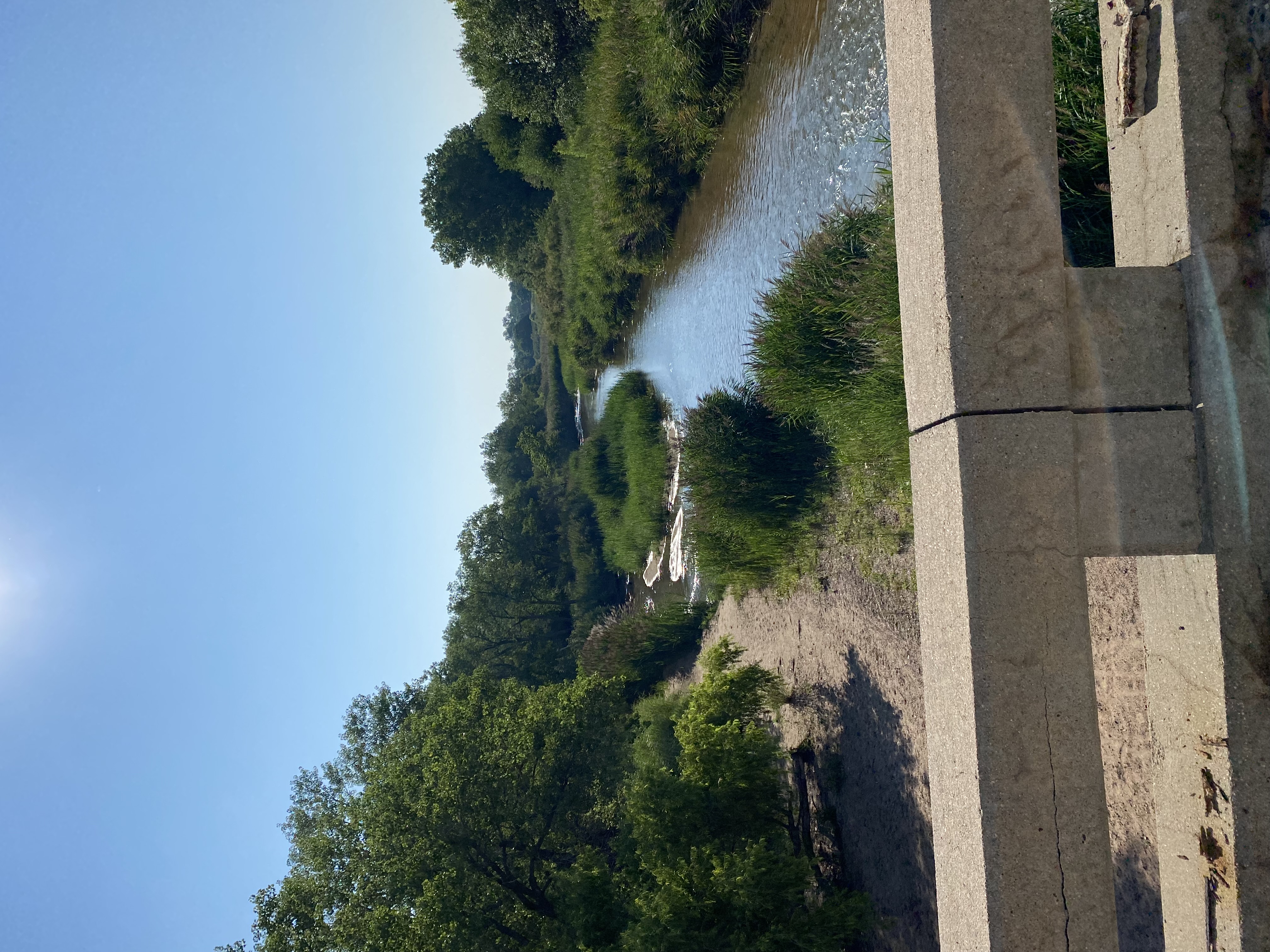
Since 1902, Kansas has claimed that Colorado takes too much of the river's water; it has filed numerous lawsuits over this issue in the U.S. Supreme Court that continue to this day, generally under the name of Kansas v. Colorado. The problems over the possession and use of Arkansas River water by Colorado and Kansas led to the creation of an interstate compact or agreement between the two states. While Congress approved the Arkansas River Compact in 1949, the compact did not stop further disputes by the two states over water rights to the river.
The Kansas–Oklahoma Arkansas River Basin Compact was created in 1965 to promote mutual consideration and equity over water use in the basin shared by those states. The Kansas–Oklahoma Arkansas River Commission was established, charged with administering the compact and reducing pollution. The compact was approved and implemented by both states in 1970 and has been in force since then.
Riverway commerce
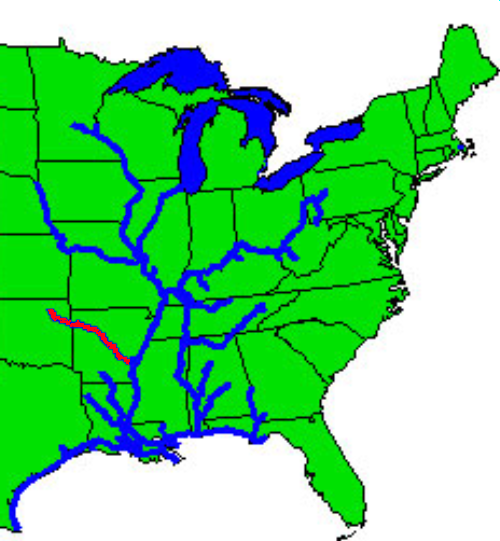
The McClellan–Kerr Arkansas River Navigation System begins at the Tulsa Port of Catoosa on the Verdigris River, enters the Arkansas River near Muskogee, and runs via an extensive lock and dam system to the Mississippi River. Through Oklahoma and Arkansas, dams which artificially deepen and widen the river to sustain commercial barge traffic and recreational use give the river the appearance of a series of reservoirs.
The McClellan–Kerr Arkansas River Navigation System diverts from the Arkansas River 2.5 mi upstream of the Wilbur D. Mills Dam to avoid the long winding route which the lower Arkansas River follows. This circuitous portion of the Arkansas River between the Wilbur D. Mills Dam and the Mississippi River was historically bypassed by river vessels. Early steamboats instead followed a network of rivers—known as the Arkansas Post Canal—which flowed north of the lower Arkansas River and followed a shorter and more direct route to the Mississippi River. When the McClellan–Kerr Arkansas River Navigation System was constructed between 1963 and 1970, the Arkansas Post Canal was significantly improved, while the lower Arkansas River continued to be bypassed by commercial vessels.
In history

Many nations of Native Americans lived near, or along, the 1,450-mile (2,334-km) stretch of the Arkansas River for thousands of years. The first Europeans to see the river were members of the Spanish Coronado expedition on June 29, 1541. Also in the 1540s, Hernando de Soto discovered the junction of the Arkansas with the Mississippi. The Spanish originally called the river Napeste. "The name "Arkansas" was first applied by French Father Jacques Marquette, who called the river Akansa in his journal of 1673, naming it the same name as the French called the tribal people who lived on the Arkansas River. Today this tribe is known as Quapaw. The Joliet-Marquette expedition travelled the Mississippi River from Prairie du Chien, Wisconsin toward the Gulf of Mexico, but turned back at the mouth of the Arkansas River. By that time, they had encountered Native Americans carrying European trinkets and feared confrontation with Spanish conquistadors.
Jean-Baptiste Bénard de la Harpe, a French trader, explorer, and nobleman had led an expedition into what is now Oklahoma in 1718–19. His original objective was to establish a trading post near the present city of Texarkana, Arkansas, but he extended his trip overland as far north as the Arkansas River (which he designated as the Alcansas). The explorer wrote that he and nine other men, including three Caddo guides and 22 horses loaded with trade goods, had come to a native settlement overlooking the river, where there were about 6,000 natives, who gave the strangers a warm welcome. La Harpe's party was honored with the calumet ceremony and spent ten days at this location.
In 1988, evidence of a native village was discovered along the Arkansas River 13 miles south of present-day Tulsa, Oklahoma. By then, the site was known as the Lasley Vore Site.
French traders and trappers who had opened up trade with Indian tribes in Canada and the areas around the Great Lakes began exploring the Mississippi and some of its northern tributaries. They soon learned that the birchbark canoes, which had served them so well on the northern waterways, were too light for use on southern rivers such as the Arkansas. They turned to making and using dugout canoes, which they called pirogues, made by hollowing out the trunks of cottonwood trees. Cottonwoods are plentiful along the streams of the southwest and grow to large sizes. The wood is soft and easily worked with the crude tools carried by both the French and Indians. The pirogues were sturdier and could be more useful for navigating the sandbars and snags of the Southern waterways.
In 1819, the Adams–Onís Treaty set the Arkansas as part of the frontier between the United States and Spanish Mexico. This continued until the United States annexed Texas after the Mexican–American War, in 1846. The treaty was made shortly after the "Old Settler" Cherokee were pushed out of Texas and moved near what became known as Webbers Falls on the Arkansas River. They planned to reunite with the Cherokee who had moved there on the Trail of Tears in 1839. That area, then part of Arkansas Territory, would become Indian Territory and later Oklahoma.

This area had long been the traditional territory of the Osage. They resisted the new Native Americans moving in with armed conflict. The US encouraged a peace treaty made in 1828 but the territory issue was still unresolved by the time thousands of additional Cherokee refugees moved to the area during the Trail of Tears.
By the time Fort Smith was established in 1817, larger capacity watercraft became available to transport goods up and down the Arkansas. These included flatboats (bateaus) and keelboats. Along with the pirogues, they transported piles of deer, bear, otter, beaver, and buffalo skins up and down the river. Agricultural products such as corn, rice, dried peaches, beans, peanuts, snakeroot, sarsaparilla, and ginseng had grown in economic importance.
On March 31, 1820, the Comet became the first steamboat to successfully navigate part of the Arkansas River, reaching a place called Arkansas Post, about 60 miles above the confluence of the Arkansas and the Mississippi rivers. In mid-April 1822, the Robert Thompson, towing a keelboat, was the first steamboat to navigate the Arkansas as far as Fort Smith. For five years, Fort Smith was known as the head of navigation for steamboats on the river. It lost the title to Fort Gibson in April 1832, when three steamboats, Velocipede, Scioto, and Catawba, all arrived at Fort Gibson later that month.
Later, the Santa Fe Trail followed the Arkansas through much of Kansas, picking it up near Great Bend and continuing through to La Junta, Colorado. Some users elected to take the challenging Cimarron Cutoff starting at Cimarron, Kansas.
American Civil War
Main article: Ambush of the steamboat J. R. Williams
During the American Civil War, each side tried to prevent the other from using the Arkansas River and its tributaries as a route for moving reinforcements. Initially, the Union Army abandoned its forts in the Indian Territory, including Fort Gibson and Fort Smith, to maximize its strength for campaigns elsewhere. The Confederate Army sent troops from Texas to support its Native American allies. Union troops returned to the area later in the war, after defeating the Confederates at the Battle of Pea Ridge and the Battle of Fort Smith. They began recovering the position it had previously abandoned, most notably Fort Gibson and reopened the Arkansas River as a supply route. In September 1864, a body of Confederate irregulars led by General Stand Watie (Cherokee) successfully ambushed a Union supply ship bound for Fort Gibson. The vessel was destroyed, and a part of its cargo was looted by the Confederates.
Post Civil War
By 1890, water from the Arkansas River was being used to irrigate more than 20000 acres of farmland in Kansas. By 1910, irrigation projects in Colorado had caused the river to stop flowing in July and August.
Flooding in 1927 severely damaged or destroyed nearly every levee downstream of Fort Smith, and led to the development of the Arkansas River Flood Control Association. It also resulted in the Federal government assigning responsibility for flood control and navigation on the Arkansas River to the U.S. Army Corps of Engineers (USACOE).

Angling
The headwaters of the Arkansas River in central Colorado have been known for exceptional trout fishing, particularly fly fishing, since the 19th century, when greenback cutthroat trout dominated the river. Today, brown trout dominate the river, which also contains rainbow trout. Trout Unlimited considers the Arkansas one of the top 100 trout streams in America, a reputation the river has had since the 1950s. From Leadville to Pueblo, the Arkansas River is serviced by numerous fly shops and guides operating in Buena Vista, Salida, Cañon City, and Pueblo. Colorado Parks and Wildlife provides regular online fishing reports for the river.
A fish kill occurred on December 29, 2010, in which an estimated 100,000 freshwater drum lined the Arkansas River bank. An investigation, conducted by the Arkansas Game and Fish Commission, found the dead fish "... cover 17 mi of the river from the Ozark Lock and Dam downstream to River Mile 240, directly south of Hartman, Arkansas." Tests later indicated the likely cause of the kill was gas bubble trauma caused by opening the spillways on the Ozark Dam.
Image gallery
|File:Arkansas River in downtown Pueblo, CO IMG_5116.JPG|Arkansas River in downtown Pueblo, Colorado |File:Wichitanightskyline.jpg|Downtown Wichita, Kansas, skyline at night from The Keeper of the Plains at the Arkansas River |File:Arkansas River, Looking Across To North Little Rock 423757092.jpg|Arkansas River, looking across to North Little Rock |File:USACE John Martin Dam Arkansas River.jpg|John Martin Dam and Reservoir on the Arkansas River in Bent County, Colorado |File:Arkansas river Tulsa january 2026.png|The Arkansas River in Tulsa, Oklahoma |File:Arkansas River (Royal Gorge).jpg|Royal Gorge |File:Arkansas_river_salida_co.JPG|Arkansas River in Salida, Colorado |File:Natural landing.jpg|The Arkansas River in Natural Steps, Arkansas |File:Arkansas River at Van Buren, AR.jpg|Arkansas River between Van Buren and Fort Smith, Arkansas
Notes
References
References
- "McClellan-Kerr Arkansas River Navigation System (MKARNS)". The Encyclopedia of Arkansas.
- (1927–1970). "USGS Gage #07263500 Arkansas River at Little Rock, AR". U.S. Geological Survey.
- {{cite gnis
- The mouth has changed since plotting by USGS to Mississippi River Mile 580 from Mile 582 in the 1980 survey.
- The mouth has changed since plotting by USGS.
- J.C. Kammerer. (May 1990). "Largest Rivers in the United States". United States Geological Survey.
- (February 13, 2007). "Chaffee County Colorado Gold Production". Westernmininghistory.com.
- See [[drainage basin. link. (October 27, 2004)
- Capote, Truman. "In Cold Blood".
- [http://dictionary.reference.com/browse/Arkansas?r=66 Random House Dictionary]
- "Can you pronounce these 10 city names correctly? If so, there's a good chance you're from Kansas.".
- (2006). "Alluvial Geoarchaeology of a Middle Archaic Mound Complex in the Lower Mississippi Valley, U.S.A.". Geoarchaeology.
- (2017). "Scientific Investigations Map". U.S. Geological Survey.
- O'Dell, Larry. [http://digital.library.okstate.edu/encyclopedia/entries/A/AR010.html ''Encyclopedia of Oklahoma History and Culture''. "Arkansas River.] {{webarchive. link. (May 30, 2013)
- {{cite gnis. (1978-10-13)
- {{cite gnis. (1978-10-13)
- {{cite gnis. (1978-10-13)
- {{cite gnis. (1978-10-13)
- {{cite gnis. (1978-10-13)
- {{cite gnis. (1978-10-31)
- {{cite gnis. (1978-10-13)
- {{cite gnis. (1978-10-13)
- {{cite gnis. (1978-10-13)
- {{cite gnis. (1978-10-13)
- {{cite gnis. (1978-10-13)
- {{cite gnis. (1978-10-13)
- {{cite gnis. (1978-10-13)
- {{cite gnis. (1978-10-13)
- {{cite gnis. (1978-10-13)
- {{cite gnis. (1978-10-13)
- {{cite gnis. (1978-10-13)
- {{cite gnis. (1978-10-13)
- {{cite gnis. (1978-10-13)
- {{cite gnis. (1978-10-13)
- {{cite gnis. (1978-10-13)
- {{cite gnis. (1978-10-13)
- {{cite gnis. (1979-12-18)
- {{cite gnis. (1979-12-18)
- {{cite gnis. (1979-12-18)
- {{cite gnis. (1979-12-18)
- {{cite gnis. (1979-12-18)
- {{cite gnis. (1979-12-18)
- {{cite gnis. (1980-04-30)
- {{cite gnis. (1980-04-30)
- {{cite gnis. (1980-04-30)
- {{cite gnis. (1978-10-13)
- ''[[Kansas v. Colorado]]'' 514 U.S. 673 (1995), 185 U.S. 125 (1902)
- [https://www.ok.gov/odot/documents/2016%20WW%20FACT%20SHEET-revised.pdf "McClellan-Kerr Arkansas River Navigation System 2016 Inland Waterway Fact Sheet"]. Oklahoma Department of Transportation. 2016. Accessed June 16, 2017.
- "Arkansas - Verdigris River Navigation". American Canal Society.
- [http://www.okhistory.org/publications/enc/entry.php?entry=LA024 Odell, George H. "Lasley Vore Site." ''Encyclopedia of Oklahoma History and Culture''.] Accessed January 26, 2017.
- [http://digital.library.okstate.edu/Chronicles/v008/v008p065.html Wright, Muriel H. "Early Navigation and Commerce along the Arkansas and Red Rivers in Oklahoma." ''Chronicles of Oklahoma''. Volume 8, Number 1, March, 1930. p. 65.] Accessed September 29, 2017.
- "Treaty with the Western Cherokee, 1828". Oklahoma State University Library.
- (July 9, 1828). "A New Treaty". University of North Dakota.
- [https://www.swl.usace.army.mil/Missions/Navigation.aspx U.S. Army Corps of Engineers, Little Rock District/ Mission/Navigation.] Accessed June 2, 2017.
- [https://web.archive.org/web/20130319065041/http://www.nps.gov/safe/planyourvisit/upload/SAFEmap1-2.pdf National Park Service]
- (May 2019)
- Harris, William C.. (September 1892). "The Trouts of Colorado and Utah". The American Angler.
- Ross, John. (2005). "Trout Unlimited's Guide to America's 100 Best Trout Streams". Lyons Press.
- Campbell, Duncan. (1960). "88 Top Trout Streams of the West". Western Outdoors.
- Bartholomew, Marty. (1998). "Fly Fisher's Guide to Colorado". Wilderness Adventures Press.
- [http://wildlife.state.co.us/Fishing/Reports/StatewideConditions/ Colorado Division of Wildlife Fishing Reports] {{webarchive. link. (March 7, 2009)
- (January 3, 2011). "Experts Close In On What Killed Fish - NW Arkansas News Story - KHBS NW Arkansas". KHBS.
- (January 3, 2011). "Arkansas River Fish Kill Investigation Continues". Arkansas Game and Fish Commission.
- "Gas Bubble Trauma likely cause of fish kills".
This article was imported from Wikipedia and is available under the Creative Commons Attribution-ShareAlike 4.0 License. Content has been adapted to SurfDoc format. Original contributors can be found on the article history page.
Ask Mako anything about Arkansas River — get instant answers, deeper analysis, and related topics.
Research with MakoFree with your Surf account
Create a free account to save articles, ask Mako questions, and organize your research.
Sign up freeThis content may have been generated or modified by AI. CloudSurf Software LLC is not responsible for the accuracy, completeness, or reliability of AI-generated content. Always verify important information from primary sources.
Report