From Surf Wiki (app.surf) — the open knowledge base
Argentines
People of Argentina

People of Argentina
| Field | Value |
|---|---|
| group | Argentines |
| native_name | es |
| population | 47 million in the world |
| regions | **** 46,044,703 (2022) |
| region2 | Spain |
| pop2 | 415,987 |
| region3 | United States |
| pop3 | 345,919 |
| region4 | Chile |
| pop4 | 83,265 (2023) |
| ref4 | |
| region5 | Brazil |
| pop5 | 78,350 (2025) |
| ref5 | |
| region6 | Paraguay |
| pop6 | 58,535 |
| region7 | Israel |
| pop7 | 48,312 |
| region8 | Bolivia |
| pop8 | 46,609 |
| region9 | Canada |
| pop9 | 23,500 |
| region10 | Uruguay |
| pop10 | 22,743 |
| region11 | France |
| pop11 | 17,999 |
| region12 | Germany |
| pop12 | 17,141 |
| region13 | Italy |
| pop13 | 14,662 |
| region14 | Australia |
| pop14 | 14,190 |
| name | IOM/ |
| region15 | Peru |
| pop15 | 11,444 |
| region16 | Mexico |
| pop16 | 10,214 |
| region17 | UK |
| pop17 | 10,200 |
| region18 | Venezuela |
| pop18 | 9,740 |
| region19 | Switzerland |
| pop19 | 9,391 |
| region20 | Sweden |
| pop20 | 4,502 |
| region21 | Japan |
| pop21 | 3,762 |
| region22 | South Africa |
| pop22 | 3,000 |
| region23 | Austria |
| pop23 | 2,000 |
| region24 | Netherlands |
| pop24 | 2,189 |
| region25 | Denmark |
| pop25 | 1,046 |
| region26 | New Zealand |
| pop26 | 1,824 |
| langs | Majority: |
| Spanish (Rioplatense SpanishCordobés SpanishCuyo SpanishAndean Spanish) | |
| Minority: {{unbulleted list | |
| rels | Predominantly Christianity (mainly Latin Catholicism) |
| related | Other South Americans |
name=IOM/ Spanish (Rioplatense SpanishCordobés SpanishCuyo SpanishAndean Spanish)
Minority: {{unbulleted list |
- German (Argentinien-schwyzertütschRiograndese HunsrikPlautdietsch)
- Guarani (Chiripá GuaraníMbyá GuaraníChawuncu Guaraní)
- Welsh (Patagonian Welsh)
- Quechua (South Bolivian QuechuaSantiagueño Quechua)
- Afrikaans (Patagonian Afrikaans)
Argentines, Argentinians or Argentineans are people from Argentina. This connection may be residential, legal, historical, or cultural. For most Argentines, several (or all) of these connections exist and are collectively the source of their being Argentine.
Argentina is a multiethnic society, home to people of various ethnic, racial, religious, denomination, and national origins, with the majority of the population made up of Old World immigrants and their descendants. As a result, Argentines do not equate their nationality with ethnicity, but with citizenship and allegiance to Argentina. Aside from the indigenous population, nearly all Argentines or their ancestors immigrated within the past five centuries. Among countries in the world that have received the most immigrants in modern history, Argentina, with 6.6 million, ranks second to the United States (27 million), and ahead of other immigrant destinations such as Canada, Brazil and Australia.
Ethnic groups
Main article: Ethnic groups of Argentina, Immigration to Argentina
Overview

Argentina is a multiethnic society, which means that it is home to people of many different ethnic, racial, religious, and denominational backgrounds. Argentina is a melting pot of different peoples.
In the mid-19th century a large wave of immigration started to arrive in Argentina due to new Constitutional policies that encouraged immigration, and issues in the countries the immigrants came from, such as wars, poverty, hunger, and famines. The main immigration sources were from Europe, the countries from the Near and the Middle East, Russia, and Japan. Eventually, Argentina became the country with the second-largest number of immigrants in the period, with 6.6 million, second only to the United States with 27 million.
Therefore, most Argentines are of full or partial European descent (with a significant indigenous component, and a less prominent black component), and are either descendants of colonial-era settlers and/or of the 19th and 20th century immigrants from Europe.
The most common ethnic groups are Europeans (mostly Spanish and Italian descent) and/or Mestizos (mixed European and Native American ancestry). According to Argentine government websites, it is estimated that more than 20 million Argentines, more than 46% of the total population, have Italian ancestry, wholly or in part. Argentines descend mostly from Spaniards, Italians, Native Americans and to a lesser extent from French, Germans, East Asians, and others.
Immigration of recent decades includes mainly Paraguayans, Bolivians, Peruvians, and Brazilians, among other Latin Americans, Eastern Europeans, Africans, Arabs, and Asians.
| Year | White | ||||||
|---|---|---|---|---|---|---|---|
| (Europe, West Asia | |||||||
| and North Africa) | Native | ||||||
| (The Americas) | Mestizo | ||||||
| (Multiracial) | Mulatto | ||||||
| (Multiracial) | Black | ||||||
| (Sub-Sahara) | East Asian | ||||||
| (Far East) | Total | ||||||
| 1778 | 37.54% | 22.33% | 3.31% | ||||
| 2001 | 1.66% | 36,260,130 | |||||
| 2010 | 2.38% | 0.37% | |||||
| 2022 | 2.83% | 0.66% |
- In the 1778 census, mulattoes were included in the "Black" category despite having up to 50% White admixture.
Genetics studies
The average is Castizo (with Spanish and Italian ancestry): Large comprehensive studies across Argentina's many regions in order to characterize the genetic admixture have been lacking. Small sample size studies give the following composition.
- Homburguer et al., 2015, PLOS One Genetics: 67% European, 28% Amerindian, 4% African and 1.4% Asian.
- Olivas et al., 2017, Nature: 84,1% European and 12,8% Amerindian.
- Seldin et al., 2006, American Journal of Physical Anthropology: 78.0% European, 19.4% Amerindian and 2.5% African. Using other methods it was found that it could be: 80.2% European, 18.1% Amerindian and 1.7% African.
- Genera (2022): 85% Caucasian (74% European + 11% Middle East), 13% Amerindian and 1% African.
- According to Caputo et al., 2021, the study of autosomal DIPs show that the genetic contribution is 77.8% European, 17.9% Amerindian and 4.2% African. The X-DIPs matrilineal show 52.9% European, 39.6% Amerindian and 7.5% African.
- Avena et al., 2012, PLOS One Genetics: 65% European, 31% Amerindian, and 4% African.
- Buenos Aires Province: 76% European and 24% others.
- South Zone (Chubut Province): 54% European and 46% others.
- Northeast Zone (Misiones, Corrientes, Chaco & Formosa provinces): 54% European and 46% others.
- Northwest Zone (Salta Province): 33% European and 67% others.
- Other studies indicate that the genetic composition between regions would be:
- Central Zone: 81% European, 15% Amerindian and 4% African
- South Zone: 68% European, 28% Amerindian and 4% African
- Northeast Zone: 79% European, 17% Amerindian and 4% African
- Northwest Zone: 55% European, 35% Amerindian and 10% African
- Corach et al.,. 2010, Annals of Human Genetics: 78.5% European, 17.3% Amerindian, and 4.2% African ancestry.
- Oliveira, 2008, on Universidade de Brasília: 60% European, 31% Amerindian and 9% African.
- National Geographic: 61% Caucasian (52% European + 9% Middle East/North Africa), 27% Amerindian ancestry and 9% African.

A team led by Daniel Corach conducted a study in 2010, analyzing 246 samples from eight provinces and three different regions of the country. The results were as follows: the analysis of Y-Chromosome DNA revealed a 94.1% of European contribution, and only 4.9% and 0.9% of Native American and Black African contribution, respectively. Mitochondrial DNA analysis again showed a great Amerindian contribution by maternal lineage, at 53.7%, with 44.3% of European contribution, and a 2% African contribution. The study of 24 autosomal markers also proved a large European contribution of 78.5%, against 17.3% of Amerindian and 4.2% Black African contributions.
Several studies found out that the European ancestry in Argentina comes mainly from the Iberian Peninsula and Italy with a much lower contribution from Central and Northern Europe. The Italian component appears strongest in the East and Center-West, while the Spanish influence dominates in the North East and North West.
European Argentines
Main article: Argentines of European descent


Argentines of total or partial European descent constitute the majority of Argentina's population. Ethnic Europeans include the Argentine descendants of colonists from Spain during the colonial period prior to 1810, and mainly of immigrants from Europe in the great immigratory wave from the mid 19th century to the mid 20th century. No recent Argentine census has included comprehensive questions on ethnicity, although numerous studies have determined that European Argentines have been a majority in the country since 1914. Some international sources claim the European component of the population to be at around 97%.
The most numerous immigrant European communities are: Spaniards (including Basques, Asturians and Galicians), Italians (62.5% of the population have some degree of Italian descent), Germans, Scandinavians (mainly Danes and Swedes), Slavs (including Russians, Ukrainians, Poles, Czechs, Bulgarians, Slovenes, Serbs and Croats), Finns, the French (including francophone Basques), the Irish, Portuguese, the Dutch, among others in smaller number.
There are approximately 300,000 Romani descendants in Argentina. They belong to the Romani subgroups Greek, Moldavian and Russian Kalderash, some Lovari and some Chilean Xoraxane. There are also Spanish Kalé and Boyash living in Argentina.
Mixed Argentines

Within the population totals, there may be an imprecise amount of mixed population. In one of the most comprehensive genetic studies involving the population of Argentina, 441 Argentines from across the North East, Salta, Chubut and Buenos Aires (especially the urban conglomeration of Buenos Aires) of the country, it was observed that the sample population comprised on average of 65% European, followed by 31% Amerindian, and finally 4% of African ancestry; however, this study was unweighted and meant to be a representation of the diversity of Argentine DNA rather than a demonstration of the average ethnic composition of the country. It was also found there were great differences in the ancestry amongst Argentines as one traveled across the country. A study by Daniel Corach that attempted to find the average Argentine ancestry by weighing the population of various regions gave a significantly higher estimate of European ancestry at 78.5% of the average Argentine's autosomal DNA.
Indigenous Argentines
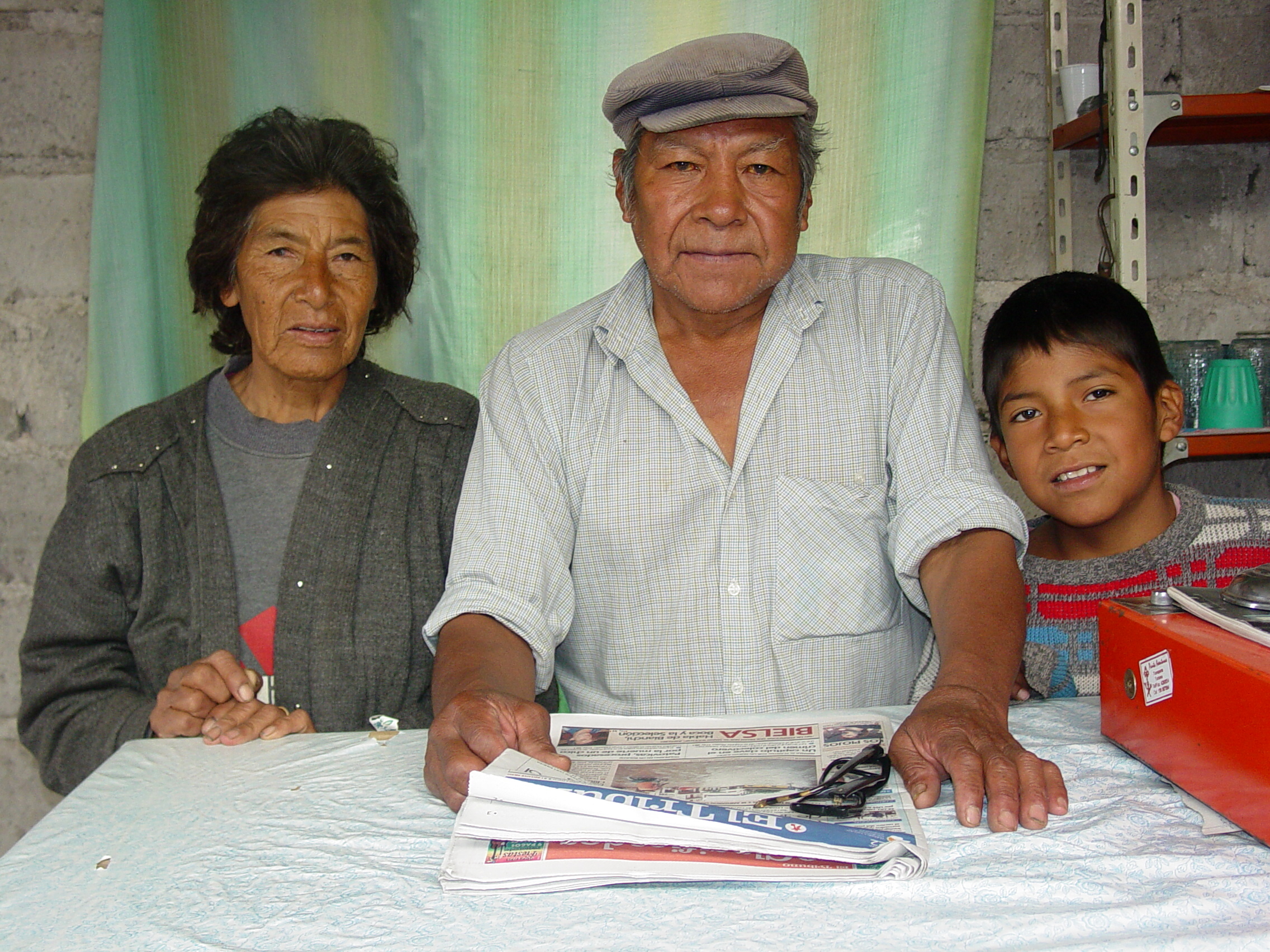
Argentina has 35 officially recognized indigenous people groups. As of the , some 955,032 Argentines (2.38% of the country's population) self-identify as indigenous or first-generation descendants of indigenous peoples.
The most populous indigenous groups were the Aonikenk, Kolla, Qom, Wichí, Diaguita, Mocoví, Huarpe peoples, Mapuche and Guarani Other studies suggest that figure could be 30%.
Jujuy Province, in the Argentine Northwest, is home to the highest percentage of households (15%) with at least one indigenous resident or a direct descendant of an indigenous person; Chubut and Neuquén Provinces, in Patagonia, have upwards of 12%.
Asian Argentines
Argentines of Asian ancestry are defined as either born within Argentina, or born elsewhere and later to become a citizen or resident of Argentina. Asian Argentines settled in Argentina in large numbers during several waves of immigration in the 19th and 20th centuries. In the 19th century, West Asian immigrants, primarily from Lebanon and Syria came as a result of the 1860 Mount Lebanon civil war. In the early 20th century, a small wave of East Asian immigrants, particularly from Japan came to the country.
East Asians Argentines
.jpg)
The first Argentines of East Asian descent were a small group of Japanese immigrants, mainly from the Okinawa prefecture, which came in the period between the early and mid 20th century. In the 1960s, Koreans began to arrive, and in the 1980s, Taiwanese immigrants. The 1990s brought the largest wave of Asian immigration so far to Argentina, from mainland Chinese immigrants, eventually becoming the fourth largest immigrant community in 2013, after Paraguayans, Bolivians, and Peruvians. The small East Asian Argentine population has generally kept a low profile, and is accepted by greater Argentine society. Primarily living in their own neighbourhoods in Buenos Aires, many currently own their own businesses of varying sizes – largely textiles, grocery stores, and buffet-style restaurants.
West Asian Argentines
.jpg)
Arabs and Argentines with partial Arab ancestry represent about 3.2 million people, whose ancestry traces back to any of various waves of immigrants, largely from the Levantine region of Western Asia, from what is now Syria and Lebanon; and from Cilicia and Palestine in a lesser extent. Due to the fact that many Arab countries were under control of the Ottoman Empire by the time the large immigration wave took place, most Arabs entered the country with Turkish passports, and so they are colloquially referred to as los turcos.
There are also 80,000 to 135,000 descendants of Armenians in Argentina, most of them in Buenos Aires, representing one of the largest Armenian diasporas in the world.
Black Argentines

According to the Argentine national census of 2010, 149,493 (0.37% of the country's overall population) identified as Afro-Argentine, although according to gene pools studies, the Argentine population with some degree of Sub-Saharan African descent would be around 7.5%.
Despite the fact that in the 1960s it was calculated that Argentina owed two thirds of the volume of its population to European immigration, over 5% of Argentines state they have at least one black ancestor, and a further 20% state they do not know whether or not they have any black ancestors. Genetic studies carried out in 2005 showed that the average level of African genetic contribution in the population of Buenos Aires is 2.2%, but that this component is concentrated in 10% of the population who display notably higher levels of African ancestry. Today there is still a notable Afro-Argentine community in the Buenos Aires districts of San Telmo and La Boca. There are also quite a few African-descended Argentines in Merlo and Ciudad Evita, in the Buenos Aires metropolitan area.
Immigration from Cape Verde was one of the earliest African migratory flows in the post-colonial era, beginning as early as the late 19th century and well into the 20th century. Today, Cape Verdeans constitute one of the largest African immigrant communities, numbering over 15,000; they mainly live in port cities in Buenos Aires Province, such as Ensenada and Dock Sud. Immigration from Senegal, Nigeria, Sierra Leone, Angola and other African countries in recent decades has caused a surge in the country's black population as well.
Languages
Main article: Languages of Argentina
Although Spanish is dominant, being the national language spoken by virtually all Argentines, at least 40 languages are spoken in Argentina. Languages spoken by at least 100,000 Argentines include Amerindian languages such as Southern Quechua, Guaraní and Mapudungun, and immigrant languages such as German, Italian, English, French or Levantine Arabic.
Two native languages are extinct (Abipón and Chané), while some others are endangered, spoken by elderly people whose descendants do not speak the languages (such as Vilela, Puelche, Tehuelche and Selkʼnam).
There are also other communities of immigrants that speak their native languages, such as the Chinese language spoken by at least half of the over 60,000 Chinese immigrants (mostly in Buenos Aires) and an Occitan-speaking community in Pigüé, Buenos Aires Province. Welsh is also spoken by over 35,000 people in the Chubut Province. This includes a dialect called Patagonian Welsh, which has developed since the start of the Welsh settlement in Argentina in 1865.
A high percentage of Argentines are proficient in the English language since its teaching is included in educational establishments as early as kindergarten. According to the 2023 edition of the English Proficiency Index, Argentines have the highest level of English proficiency in Latin America, ranking 28th worldwide.
Religion
Main article: Religion in Argentina

A majority of the population of Argentina is Christian. According to CONICET survey on creeds, about 76.5% of Argentines are Roman Catholic, 11.3% religiously indifferent, 9% Protestant (with 7.9% in Pentecostal denominations), 1.2% Jehovah's Witnesses, and 0.9% Mormons.
Argentina is home to the largest Jewish population in Latin America and 6th in the world, numbering 182,300 individuals or 0.45% of the population. On a city level, Buenos Aires has the second largest population of Jews in the Americas, second only to New York City.
Argentina is also home to the largest Muslim minority in Latin America (see Islam in Argentina). Although accurate statistics on religion are not available (because the national census does not solicit religious data), the actual size of Argentina's Muslim community is estimated to be around 1% of the total population (400,000 to 500,000 members), according to the International Religious Freedom Report in 2015. Buenos Aires hosts the largest mosque in Latin America.
Buenos Aires also features notable Greek, Armenian and Russian Orthodox churches, Presbyterian Korean and Anglican churches, as well as Buddhist temples, among other minority religions.
Emigration
According to official estimates there are 600,000 Argentines worldwide, and according to estimates by the International Organization for Migration there have been about 806,369 since 2001. The first wave of emigration occurred during the military dictatorship between 1976 and 1983, principally to Spain, the United States, Mexico and Venezuela. During the 1990s, due to the abolition of visas between Argentina and the United States, thousands of Argentines emigrated to North America. The last major wave of emigration occurred during the 2001 crisis, mainly to Europe, especially Spain, although there was also an increase in emigration to neighboring countries, particularly Brazil, Chile and Paraguay.
Europe
The rate of Argentine emigration to Europe (especially to Spain and Italy) peaked in the late 1970s and early 1980s and is noteworthy. Spain and Italy have the largest Argentine communities in Europe, however, there are also important communities in France, the United Kingdom and Germany.
Americas
The most popular immigration destinations in the Americas are: the United States and Brazil, and to a lesser degree, mostly to (Uruguay and Canada): Chile, Paraguay and Bolivia, while other communities settled in Venezuela, Peru, Colombia, Ecuador and Costa Rica.
Middle East
Israel is home to the largest Argentine diaspora in the Middle East.
Oceania
In Oceania, Australia has the largest Argentine community, followed by New Zealand.
Notes
References
References
- "El INDEC difundió los resultados provisionales Censo 2022: 4 datos claves sobre la población argentina".
- "Emigración argentina en España".
- U.S. Census Bureau, U.S. Department of Commerce. "Hispanic or Latino Origin by Specific Origin." ''American Community Survey, ACS 1-Year Estimates Detailed Tables, Table B03001'', 2024, https://data.census.gov/table/ACSDT1Y2024.B03001?q=B03001: HISPANIC OR LATINO ORIGIN BY SPECIFIC ORIGIN. Accessed on September 19, 2025.
- (31 December 2024). "Casi 2 millones de extranjeros en Chile: De dónde vienen y cuáles son los países más recurrentes en cada región". El Mercurio S.A.P.
- [https://app.powerbi.com/view?r=eyJrIjoiZmQ2OTY1OGEtYTY2OS00MzU4LWEyZGItMDU4ZmMyMzZmYjQwIiwidCI6ImViMDkwNDIwLTQ0NGMtNDNmNy05MWYyLTRiOGRhNmJmZThlMSJ9 / Immigrants in Brazil (2025, in Portuguese)]
- (2017). "Emigrantes de Argentina según país de destino (2017)".
- (2012). "Perfil migratorio de Argentina 2012". International Organization for Migration.
- (7 May 2021). "Canada Census Profile 2021". Statistics Canada Statistique Canada.
- "Argentini in Italia - statistiche e distribuzione per regione".
- "Más de 3 millones 400 mil peruanos emigraron al exterior en los últimos 33 años".
- "Folkmängden efter födelseland, ålder och kön. År 2000 - 2020".
- "Argentine ethnic group". [[Stats NZ]].
- (13 November 2014). "Religion in Latin America: Widespread Change in a Historically Catholic Region". Pew Research Center.
- Adams, Fiona. (2011). "CultureShock! Argentina: A Survival Guide to Customs and Etiquette". [[Marshall Cavendish International Asia Pte Ltd]].
- "Argentinian". Oxford University Press.
- "argentinian".
- "Argentina". CIA.
- "Argentinean".
- (16 September 2023). "Argentina: The World Factbook".
- (16 September 2023). "Nationality: The World Factbook".
- "Encuesta Complementaria de Pueblos Indígenas 2004–2005". [[National Institute of Statistics and Census of Argentina]].
- (1994). "Genetic epidemiology of single gene defects in Chile". Journal of Medical Genetics.
- "About Argentina". Government of Argentina.
- (10 June 2007). "Capítulo VII. Inmigrantes".
- (14 August 2011). "European Immigration Into Latin America, 1870-1930".
- "[[Enrique Oteiza]] and [[Susana Novick]] maintain that "Argentina since the 19th century has become, as have New Zealand, Australia, Canada, USA, Brazil, UAE, and Singapore, a "land of immigrants", meaning a society formed by massive immigration from a minute native population". (Oteiza, Enrique; Novick, Susana. [http://www.iigg.fsoc.uba.ar/pobmigra/archivos/rc31.pdf ''Inmigración y derechos humanos. Política y discursos en el tramo final del menemismo''] {{webarchive. link. (31 May 2011. [en línea]. Buenos Aires: Instituto de Investigaciones Gino Germani, Facultad de Ciencias Sociales, [[Universidad de Buenos Aires]], 2000 [Citado FECHA]. (IIGG Documentos de Trabajo, Nº 14). Available on: http://www.iigg.fsoc.uba.ar/docs/dt/dt14.pdf{{dead link). (July 2017). EUDEBA]], pp. 449 ss.); The Argentine historian [[José Luis Romero (historian). José Luis Romero]] defines Argentina as a 'flood country'". (Romero, José Luis. «Indicación sobre la situación de las masas en Argentina (1951)», en ''La experiencia argentina y otros ensayos'', Buenos Aires: [[Universidad de Belgrano]], 1980, p. 64). {{in lang. es
- (2021). "Ancestral genetic legacy of the extant population of Argentina as predicted by autosomal and X-chromosomal DIPs". Molecular Genetics and Genomics.
- "Argentina".
- "Colectividad italiana".
- (2010). "Colectividad italiana".
- (16 September 2014). "En la última década se radicaron en el país 800.000 extranjeros". [[La Nación]].
- "Comisión de apoyo a refugiados y migrantes (CAREF): Los migrantes de Europa del Este y Central en el Área Metropolitana 1999-2002".
- "Censo 1778".
- "Censo 2001–2010". [[National Institute of Statistics and Census of Argentina.
- "Censo 2022".
- (2015). "Genomic Insights into the Ancestry and Demographic History of South America". PLOS Genetics.
- (2017). "Variable frequency of LRRK2 variants in the Latin American research consortium on the genetics of Parkinson's disease (LARGE-PD), a case of ancestry". Nature.
- (2006). "Argentine Population Genetic Structure: Large Variance in Amerindian Contribution". American Journal of Physical Anthropology.
- (15 September 2022). "ADN argentino de donde viene y cuales son sus principales caracteristicas".
- (2012). "Heterogeneity in Genetic Admixture across Different Regions of Argentina". PLOS ONE.
- (2013). "Interethnic admixture and the evolution of Latin American populations". Genetics and Molecular Biology.
- "O impacto das migrações na constituição genética de populações latino-americanas".
- "Reference Populations - Geno 2.0 Next Generation".
- (2010). "Inferring Continental Ancestry of Argentineans from Autosomal, Y-Chromosomal and Mitochondrial DNA". Annals of Human Genetics.
- (16 July 2020). "Fine-scale genomic analyses of admixed individuals reveal unrecognized genetic ancestry components in Argentina". PLOS ONE.
- (4 December 2015). "Genomic Insights into the Ancestry and Demographic History of South America". PLOS Genetics.
- (1 May 2018). "Population structure in Argentina". PLOS ONE.
- ''Historical Dictionary of Argentina''. London: Scarecrow Press, 1978. pp. 239–40.
- (2005). "Acerca de la Argentina: Inmigración". Government of Argentina.
- Francisco Lizcano Fernández. (31 May 2005). "Composición Étnica de las Tres Áreas Culturales del Continente Americano al Comienzo del Siglo XXI". Convergencia.
- "Argentina. The World Factbook. 2008".
- Departamento de Derecho y Ciencias Políticas de la [[National University of La Matanza. (14 November 2011). "Historias de inmigrantes italianos en Argentina". infouniversidades.siu.edu.ar.
- (27 May 2004). "Emerging Romani Voices from Latin America". [[European Roma Rights Centre.
- (January 2010). "Inferring Continental Ancestry of Argentineans from Autosomal, Y-Chromosomal and Mitochondrial DNA". Annals of Human Genetics.
- "Encuesta Complementaria de Pueblos Indígenas".
- "Censo Nacional de Población, Hogares y Viviendas 2010: Pueblos Originarios: Región Noroeste Argentino: Serie D No 1". INDEC.
- "Estructura genética de la Argentina, Impacto de contribuciones genéticas". Ministerio de Educación de Ciencia y Tecnología de la Nación.
- (4 September 2011). "Al final llegamos de los barcos".
- "Por qué los argentinos se consideran a si mismos europeos".
- [http://www.americainvisibleyelbicentenario.ecaths.com/ver-proyectos/723/indecporcentaje-de-hogares-por-provincia-que-se-reconoce-descendiente-de-un-pueblo-indigena/ Indec. Porcentaje de hogares por provincia que se reconoce descendiente de un pueblo indígena] {{Webarchive. link. (8 April 2020 {{in lang). es
- "Sirios, turcos y libaneses". oni.escuelas.edu.ar.
- Barros, Carolina. (23 August 2012). "Argentina's Syrians". buenosairesherald.com.
- [[La Nación (Argentina). (21 August 2014). ""Palermian", una pequeña Armenia dentro de Palermo Soho".
- "Armenios en la Argentina".
- "AGBU: HOME OF THE EXTENDED ARMENIAN FAMILY".
- "Argentina". Office of the High Commissioner for Diaspora Affairs of Armenia.
- "Cuadro P42. Total del país. Población afrodescendiente en viviendas particulares por sexo, según grupo de edad. Año 2010". [[National Institute of Statistics and Census of Argentina.
- "Cuadro P43. Total del país. Población afrodescendiente en viviendas particulares por sexo, según lugar de nacimiento. Año 2010". [[National Institute of Statistics and Census of Argentina.
- "Afrodescendientes y equidad racial. Recursero normativo y políticas públicas para la comunidad afroargentina.". [[INADI]].
- Bachelet, Pablo. (17 June 2007). "Building identity". [[Miami Herald]].
- Zulma Reccini de Lates. "La población de Argentina". CICRED.
- (9 June 2006). "Poblacion: Primer censo sobre pertenencia racial desde 1887: Casi dos millones de argentinos tienen sus raíces en el Africa negra". Clarín.com.
- "Negros en el país: censan cuántos hay y cómo viven". Clarín.com.
- (15 February 2005). "African ancestry of the population of Buenos Aires". American Journal of Physical Anthropology.
- Lahitte, Héctor B.. (January 1987). "A modo de conclusión: los migrantes caboverdeanos, polacos y griegos en la Argentina". Revista Española de Antropología Americana.
- (3 December 2009). "Caboverdianos: vientos de cambio". La Nacion Revista.
- Arach, Evelyn. (29 December 2008). "Los expulsados de la tierra africana". pagina12.com.ar.
- "Argentina Population".
- (1996). "Introduction: "Turco" Immigrants in Latin America". The Americas.
- link. (3 February 2013 , Retrieved on 2 January 2007.)
- (25 October 2018). "The Welsh language in Patagonia: a brief history".
- (15 June 2024). "English Proficiency Index (2023)".
- (26 October 2022). "Infografía: Catolicismo y evangelismo: Las dos religiones más comunes en Latinoamérica".
- "Encuesta CONICET sobre creencias".
- DellaPergola, Sergio. (2 November 2010). "World Jewish Population, 2010". North American Jewish Data Bank.
- "International Religious Freedom Report 2010". [[United States Department of State]].
- (27 January 2011). "Table: Muslim Population by Country". Pewforum.org.
- [http://www.clarin.com/diario/2000/09/25/s-03801.htm Se inaugura la mezquita más grande de Sudamérica]." ''[[Clarín (Argentine newspaper). Clarín]]'' (Monday 25 September 2000) {{in lang. es
- Israely/Feltre, Jeff. (12 January 2003). "Argentine's reclaim Italian roots".
- "Version 1".
- Para ti. "Argentinos en Israel".
This article was imported from Wikipedia and is available under the Creative Commons Attribution-ShareAlike 4.0 License. Content has been adapted to SurfDoc format. Original contributors can be found on the article history page.
Ask Mako anything about Argentines — get instant answers, deeper analysis, and related topics.
Research with MakoFree with your Surf account
Create a free account to save articles, ask Mako questions, and organize your research.
Sign up freeThis content may have been generated or modified by AI. CloudSurf Software LLC is not responsible for the accuracy, completeness, or reliability of AI-generated content. Always verify important information from primary sources.
Report