From Surf Wiki (app.surf) — the open knowledge base
Ardās
Prayer in Sikhism
Prayer in Sikhism
the Sikh prayer
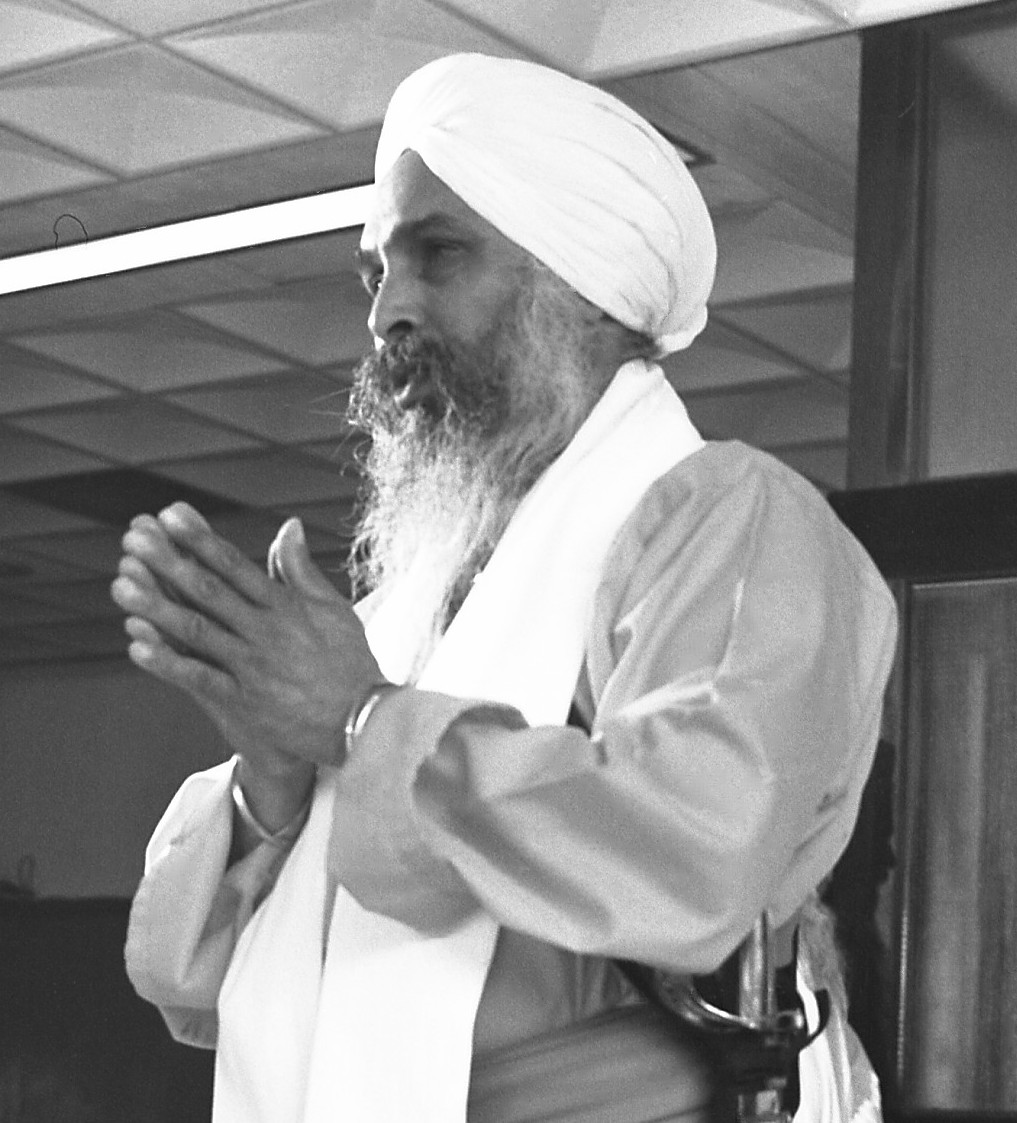
The Ardās (, pronunciation: ) is a set prayer in Sikhism. It is a part of worship service in a Gurdwara (Sikh temple), daily rituals such as the opening the Guru Granth Sahib for prakash (morning light) or closing it for sukhasan (night bedroom) in larger Gurdwaras, closing of congregational worship in smaller Gurdwaras, rites-of-passages such as with the naming of child or the cremation of a loved one, daily prayer by devout Sikhs and any significant Sikh ceremonies.
An Ardas consists of three parts. The first part recites the virtues of the ten Gurus of Sikhism from Guru Nanak to Guru Gobind Singh, starting with lines from Chandi di Var from the Dasam Granth.
Ardas is attributed to Guru Gobind Singh, the founder of the Khalsa and the 10th Guru of Sikhism.
Etymology
The root of the word Ardas is related to the Sanskrit word ard (अर्द) which means "request, ask, beg". It is also related to the Persian word arzdasht which means a written "petition made by an inferior to a superior".
Structure
The Ardās is usually always done standing up with folded hands and is commonly preceded by the eighth stanza of the fourth ashtapadi of the bani Sukhmani, beginning Tu Thakur Tum Peh Ardaas. It consists of three parts:
- The beginning of the Ardās is strictly set by the tenth Sikh Guru, Guru Gobind Singh and may not be altered or omitted. It appears as the opening passage of Var Sri Bhagauti Ji Ki (see Chandi di Var). The first part is an invocation from the Chandi di Var and recites the virtues of the Sikh Gurus.
- The second part is several paragraphs recounting Sikh symbols, places or worship and values significant and related to Khalsa. This may be changed by reciting a "short ardaas". The Sikh devotee may include a personal prayer such as "Waheguru, please bless me in the task that I am about to undertake" when starting a new task, help me with this problem, or add any personal petition for God.
- The third salutes the divine name. This part may also not be altered or omitted.
The end of the Ardaas (Nanak Nam Chardi Kala, Tere Bhane Sarbat Da Bala, "O Nanak, may the Nam (Holy) be ever in ascendance! in Thy will may the good of all prevail!") is also set and may not be altered or omitted.
Origins

The "Ardās" of Sikhism was first composed by Guru Gobind Singh. He fixed the first eight lines and the last section, and these are considered unalterable in Sikhism. The second section has been fluid, revised extensively and particularly by Tat Khalsa in the 20th century. The Sikh Rahit Maryada has published an approved version of the entire Ardas.
Notes
References
- Sikh Rehat Maryada: The code of Sikh conduct & conventions, Dharam Parchar Committee (Shiromani Gurdwara Parbandakh Committee) n.d., Amritsar.
- MacAuliffe, M A 1909, The Sikh religion: its gurus, sacred writings and authors, The Clarendon Press, Oxford.
References
- W. Owen Cole. (September 2023). "Understanding Sikhism". Dunedin Academic Press.
- [https://www.britannica.com/topic/gurdwara Gurdwara], Encyclopaedia Britannica
- ''MacAuliffe, 1909, p. 331''
- Cole, W.Owen. "Six Religions in the Twenty-first Century". Stanley Thomas.
- (2012). "Sikhs Across Borders: Transnational Practices of European Sikhs". Bloomsbury Publishing.
- SRM, p. 9.
This article was imported from Wikipedia and is available under the Creative Commons Attribution-ShareAlike 4.0 License. Content has been adapted to SurfDoc format. Original contributors can be found on the article history page.
Ask Mako anything about Ardās — get instant answers, deeper analysis, and related topics.
Research with MakoFree with your Surf account
Create a free account to save articles, ask Mako questions, and organize your research.
Sign up freeThis content may have been generated or modified by AI. CloudSurf Software LLC is not responsible for the accuracy, completeness, or reliability of AI-generated content. Always verify important information from primary sources.
Report