From Surf Wiki (app.surf) — the open knowledge base
Applications of artificial intelligence
none

none
Artificial intelligence is the capability of the computational systems to perform tasks typically associated with human intelligence, such as learning, reasoning, problem-solving, perception, and decision-making. Artificial intelligence has been used in applications throughout industry and academia. Within the field of Artificial Intelligence, there are multiple subfields. The subfield of Machine learning has been used for various scientific and commercial purposes including language translation, image recognition, decision-making, credit scoring, and e-commerce. In recent years, there have been massive advancements in the field of generative artificial intelligence, which uses generative models to produce text, images, videos or other forms of data. This article describes applications of AI in different sectors.
Agriculture
In agriculture, AI has been proposed as a way for farmers to identify areas that need irrigation, fertilization, or pesticide treatments to increase yields, thereby improving efficiency. AI has been used to attempt to classify livestock pig call emotions, automate greenhouses, detect diseases and pests, and optimize irrigation.
Architecture and design
Business
A 2023 study found that generative AI increased productivity by 15% in contact centers. Another 2023 study found it increased productivity by up to 40% in writing tasks. An August 2025 review by MIT found that of surveyed companies, 95% did not report any improvement in revenue from the use of AI. A September 2025 article by the Harvard Business Review describes how increased use of AI does not automatically lead to increases in revenue or actual productivity. Referring to "AI generated work content that masquerades as good work, but lacks the substance to meaningfully advance a given task" the article coins the term workslop. Per studies done in collaboration with the Stanford Social Media Lab, workslop does not improve productivity and undermines trust and collaboration among colleagues.
Computer science
Programming assistance
AI-assisted software development
AI can be used for real-time code completion, chat, and automated test generation. These tools are typically integrated with editors and IDEs as plugins. AI-assisted software development systems differ in functionality, quality, speed, and approach to privacy. Creating software primarily via AI is known as "vibe coding". Code created or suggested by AI can be incorrect or inefficient. The use of AI-assisted coding can potentially speed-up software development, but can also slow-down the process by creating more work when debugging and testing. The rush to prematurely adopt AI technology can also incur additional technical debt. AI also requires additional consideration and careful review for cybersecurity, since AI coding software is trained on a wide range of code of inconsistent quality and often replicates poor practices.
Neural network design
AI can be used to create other AIs. For example, around November 2017, Google's AutoML project to evolve new neural net topologies created NASNet, a system optimized for ImageNet and POCO F1. NASNet's performance exceeded all previously published performance on ImageNet.
Quantum computing
Research and development of quantum computers has been performed with machine learning algorithms. For example, there is a prototype, photonic, quantum memristive device for neuromorphic computers (NC)/artificial neural networks and NC-using quantum materials with some variety of potential neuromorphic computing-related applications. The use of quantum machine learning for quantum simulators has been proposed for solving physics and chemistry problems.
Historical contributions
AI researchers have created many tools to solve the most difficult problems in computer science. Many of their inventions have been adopted by mainstream computer science and are no longer considered AI. All of the following were originally developed in AI laboratories:
- Time sharing
- Interactive interpreters
- Graphical user interfaces and the computer mouse
- Rapid application development environments
- The linked list data structure
- Automatic storage management
- Symbolic programming
- Functional programming
- Dynamic programming
- Object-oriented programming
- Optical character recognition
- Constraint satisfaction
Customer service
Human resources
Main article: Artificial intelligence in hiring
Another application of AI is in human resources. AI can screen resumes and rank candidates based on their qualifications, predict candidate success in given roles, and automate repetitive communication tasks via chatbots.
Online and telephone customer service
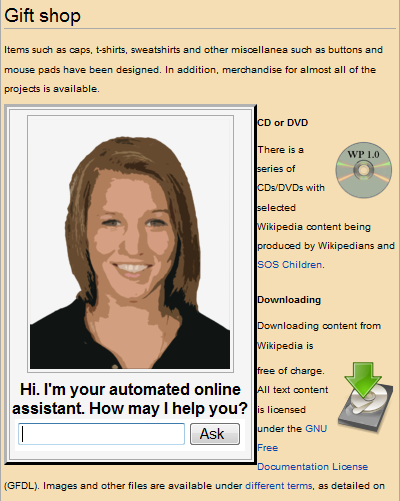
AI underlies avatars (automated online assistants) on web pages. It can reduce operation and training costs. Pypestream automated customer service for its mobile application to streamline communication with customers.
A Google app analyzes language and converts speech into text. The platform can identify angry customers through their language and respond appropriately. Amazon uses a chatbot for customer service that can perform tasks like checking the status of an order, cancelling orders, offering refunds and connecting the customer with a human representative. Generative AI (GenAI), such as ChatGPT, is increasingly used in business to automate tasks and enhance decision-making.
Hospitality
In the hospitality industry, AI is used to reduce repetitive tasks, analyze trends, interact with guests, and predict customer needs. AI hotel services come in the form of a chatbot, application, virtual voice assistant and service robots.
Education
In educational institutions, AI has been used to automate routine tasks like attendance tracking, grading and marking. AI tools have been used to attempt to monitor student progress and analyze learning behaviors, with the intention of facilitating interventions for students facing academic problems.
Energy and environment
Energy system
The U.S. Department of Energy wrote in an April 2024 report that AI may have applications in modeling power grids, reviewing federal permits with large language models, predicting levels of renewable energy production, and improving the planning process for electrical vehicle charging networks. Other studies have suggested that machine learning can be used for energy consumption prediction and scheduling, e.g. to help with renewable energy intermittency management (see also: smart grid and climate change mitigation in the power grid).
Environmental monitoring
Autonomous ships that monitor the ocean, AI-driven satellite data analysis, passive acoustics or remote sensing and other applications of environmental monitoring make use of machine learning.
For example, "Global Plastic Watch" is an AI-based satellite monitoring-platform for analysis/tracking of plastic waste sites to help prevention of plastic pollution – primarily ocean pollution – by helping identify who and where mismanages plastic waste, dumping it into oceans.
Early-warning systems
Machine learning can be used to spot early-warning signs of disasters and environmental issues, possibly including natural pandemics, earthquakes, landslides, heavy rainfall, long-term water supply vulnerability, tipping-points of ecosystem collapse, cyanobacterial bloom outbreaks, and droughts.
Economic and social challenges
The University of Southern California launched the Center for Artificial Intelligence in Society, with the goal of using AI to address problems such as homelessness. Stanford researchers use AI to analyze satellite images to identify high poverty areas.
Entertainment and media
Media

AI applications analyze media content such as movies, TV programs, advertisement videos or user-generated content. The solutions often involve computer vision.
Typical scenarios include the analysis of images using object recognition or face recognition techniques, or the analysis of video for scene recognizing scenes, objects or faces. AI-based media analysis can facilitate media search, the creation of descriptive keywords for content, content policy monitoring (such as verifying the suitability of content for a particular TV viewing time), speech to text for archival or other purposes, and the detection of logos, products or celebrity faces for ad placement.
- Motion interpolation
- Pixel-art scaling algorithms
- Image scaling
- Image restoration
- Photo colorization
- Film restoration and video upscaling
- Photo tagging
- Text-to-image models such as DALL-E, Midjourney and Stable Diffusion
- Image to video
- Text to video such as Make-A-Video from Meta, Imagen video and Phenaki from Google
- Text to music with AI models such as MusicLM
- Text to speech such as ElevenLabs and 15.ai
- Motion capture
Deep-fakes
Deep-fakes can be used for comedic purposes but are better known for fake news and hoaxes.
Deepfakes can portray individuals in harmful or compromising situations, causing significant reputational damage and emotional distress, especially when the content is defamatory or violates personal ethics. While defamation and false light laws offer some recourse, their focus on false statements rather than fabricated images or videos often leaves victims with limited legal protection and a challenging burden of proof.
In January 2016, the Horizon 2020 program financed the InVID Project to help journalists and researchers detect fake documents, made available as browser plugins.
In June 2016, the visual computing group of the Technical University of Munich and from Stanford University developed Face2Face, a program that animates photographs of faces, mimicking the facial expressions of another person.
In September 2018, U.S. Senator Mark Warner proposed to penalize social media companies that allow sharing of deep-fake documents on their platforms.
In 2018, Darius Afchar and Vincent Nozick found a way to detect faked content by analyzing the mesoscopic properties of video frames. DARPA gave 68 million dollars to work on deep-fake detection.
Audio deepfakes and AI software capable of detecting deep-fakes and cloning human voices have been developed.
Video surveillance analysis and manipulated media detection
AI algorithms have been used to detect deepfake videos.
Video production
Artificial intelligence is also starting to be used in video production, with tools and software being developed that utilize generative AI in order to create new video, or alter existing video. Some of the major tools that are being used in these processes currently are DALL-E, Mid-journey, and Runway. Way mark Studios utilized the tools offered by both DALL-E and Mid-journey to create a fully AI generated film called The Frost in the summer of 2023. Way mark Studios is experimenting with using these AI tools to generate advertisements and commercials for companies in mere seconds. Yves Bergquist, a director of the AI & Neuroscience in Media Project at USC's Entertainment Technology Center, says post production crews in Hollywood are already using generative AI, and predicts that in the future more companies will embrace this new technology.
Music
Main article: Music and artificial intelligence
AI has been used to compose music of various genres.
David Cope created an AI called Emily Howell that managed to become well known in the field of algorithmic computer music. The algorithm behind Emily Howell is registered as a US patent.
In 2012, AI Iamus created the first complete classical album.
AIVA (Artificial Intelligence Virtual Artist), composes symphonic music, mainly classical music for film scores. It achieved a world first by becoming the first virtual composer to be recognized by a musical professional association.
Melomics creates computer-generated music for stress and pain relief.
The Watson Beat uses reinforcement learning and deep belief networks to compose music on a simple seed input melody and a select style. The software was open sourced and musicians such as Taryn Southern collaborated with the project to create music.
South Korean singer, Hayeon's, debut song, "Eyes on You" was composed using AI which was supervised by real composers, including NUVO.
Writing and reporting
Narrative Science sells computer-generated news and reports. It summarizes sporting events based on statistical data from the game. It also creates financial reports and real estate analyses. Automated Insights generates personalized recaps and previews for Yahoo Sports Fantasy Football.
Yseop, uses AI to turn structured data into natural language comments and recommendations. Yseop writes financial reports, executive summaries, personalized sales or marketing documents and more in multiple languages, including English, Spanish, French, and German.
TALESPIN made up stories similar to the fables of Aesop. The program started with a set of characters who wanted to achieve certain goals. Mark Riedl and Vadim Bulitko asserted that the essence of storytelling was experience management, or "how to balance the need for a coherent story progression with user agency, which is often at odds".
While AI storytelling focuses on story generation (character and plot), story communication also received attention. In 2002, researchers developed an architectural framework for narrative prose generation. They faithfully reproduced text variety and complexity on stories such as Little Red Riding Hood. In 2016, a Japanese AI co-wrote a short story and almost won a literary prize.
South Korean company Hanteo Global uses a journalism bot to write articles.
Literary authors are also exploring uses of AI. An example is David Jhave Johnston's work ReRites (2017–2019), where the poet created a daily rite of editing the poetic output of a neural network to create a series of performances and publications.
Sports writing
In 2010, artificial intelligence used baseball statistics to automatically generate news articles. This was launched by The Big Ten Network using software from Narrative Science.
After being unable to cover every Minor League Baseball game with a large team, Associated Press collaborated with Automated Insights in 2016 to create game recaps that were automated by artificial intelligence.
UOL in Brazil expanded the use of AI in its writing. Rather than just generating news stories, they programmed the AI to include commonly searched words on Google.
El Pais, a Spanish news site that covers many things including sports, allows users to make comments on each news article. They use the Perspective API to moderate these comments and if the software deems a comment to contain toxic language, the commenter must modify it in order to publish it.
A local Dutch media group used AI to create automatic coverage of amateur soccer, set to cover 60,000 games in just a single season. NDC partnered with United Robots to create this algorithm and cover what would have never been possible before without an extremely large team.
Lede AI has been used in 2023 to take scores from high school football games to generate stories automatically for the local newspaper. This was met with significant criticism from readers for the very robotic diction that was published. With some descriptions of games being a "close encounter of the athletic kind," readers were not pleased and let the publishing company, Gannett, know on social media. Gannett has since halted their used of Lede AI until they come up with a solution for what they call an experiment.
Wikipedia
Millions of its articles have been edited by bots which however are usually not artificial intelligence software. Many AI platforms use Wikipedia data, mainly for training machine learning applications. There is research and development of various artificial intelligence applications for Wikipedia such as for identifying outdated sentences, detecting covert vandalism or recommending articles and tasks to new editors.
Machine translation has also be used for translating Wikipedia articles and could play a larger role in creating, updating, expanding, and generally improving articles in the future. A content translation tool allows editors of some Wikipedias to more easily translate articles across several select languages.
Video games
Main article: Artificial intelligence in video games
In video games, AI is routinely used to generate behavior in non-player characters (NPCs). In addition, AI is used for pathfinding. Games with less typical AI include the AI director of Left 4 Dead (2008) and the neuroevolutionary training of platoons in Supreme Commander 2 (2010). AI is also used in Alien Isolation (2014) as a way to control the actions the Alien will perform next.
Games have been a major application of AI's capabilities since the 1950s. In the 21st century, AIs have beaten human players in many games, including chess (Deep Blue), Jeopardy! (Watson), Go (AlphaGo), poker (Pluribus and Cepheus), E-sports (StarCraft), and general game playing (AlphaZero and MuZero).
Kuki AI is a set of chatbots and other apps which were designed for entertainment and as a marketing tool.
Visual images

Main article: Artificial intelligence art
The first AI art program, called AARON, was developed by Harold Cohen in 1968 with the goal of being able to code the act of drawing. It started by creating simple black and white drawings, and later to painting using special brushes and dyes that were chosen by the program itself without mediation from Cohen.
AI platforms such as DALL-E, Stable Diffusion, Imagen, and Midjourney have been used for generating visual images from inputs such as text or other images. Some AI tools allow users to input images and output changed versions of that image, such as to display an object or product in different environments. AI image models can also attempt to replicate the specific styles of artists, and can add visual complexity to rough sketches.
AI has been used to generate quantitative analysis of existing digital art collections. Two computational methods, close reading and distant viewing, are the typical approaches used to analyze digitized art. While distant viewing includes the analysis of large collections, close reading involves one piece of artwork.
Computer animation
In 2023, Netflix of Japan's usage of AI to generate background images for short The Dog & the Boy was met with backlash online.
Finance
Financial institutions have long used artificial neural network systems to detect charges or claims outside of the norm, flagging these for human investigation. The use of AI in banking began in 1987 when Security Pacific National Bank launched a fraud prevention task-force to counter the unauthorized use of debit cards.
Banks use AI to organize operations for bookkeeping, investing in stocks, and managing properties. AI can adapt to changes during non-business hours. AI is used to combat fraud and financial crimes by monitoring behavioral patterns for any abnormal changes or anomalies.
The use of AI in applications such as online trading and decision-making has changed major economic theories. For example, AI-based buying and selling platforms estimate personalized demand and supply curves, thus enabling individualized pricing. AI systems reduce information asymmetry in the market and thus make markets more efficient. The application of artificial intelligence in the financial industry can alleviate the financing constraints of non-state-owned enterprises, especially for smaller and more innovative enterprises.
Trading and investment
Large financial institutions use AI to assist with their investment practices. BlackRock's AI engine, Aladdin, is used both within the company and by clients to help with investment decisions. Its functions include the use of natural language processing to analyze text such as news, broker reports, and social media feeds. It then gauges the sentiment on the companies mentioned and assigns a score. Banks such as UBS and Deutsche Bank use SQREEM (Sequential Quantum Reduction and Extraction Model) to mine data to develop consumer profiles and match them with wealth management products.
Underwriting
Online lender Upstart uses machine learning for underwriting.
ZestFinance's Zest Automated Machine Learning (ZAML) platform is used for credit underwriting. This platform uses machine learning to analyze data, including purchase transactions and how a customer fills out a form, to score borrowers. The platform is handy for assigning credit scores to those with limited credit histories.
Audit
AI makes continuous auditing possible. Potential benefits include reducing audit risk, increasing the level of assurance, and reducing audit duration.
Continuous auditing with AI allows real-time monitoring and reporting of financial activities and provides businesses with timely insights that can lead to quick decision-making.
Anti–money laundering
AI software, such as LaundroGraph which uses contemporary suboptimal datasets, could be used for anti–money laundering (AML).
History
In the 1980s, AI started to become prominent in finance as expert systems were commercialized. For example, Dupont created 100 expert systems, which helped them to save almost $10 million per year. One of the first systems was the Pro-trader expert system that predicted the 87-point drop in the Dow Jones Industrial Average in 1986. "The major junctions of the system were to monitor premiums in the market, determine the optimum investment strategy, execute transactions when appropriate and modify the knowledge base through a learning mechanism."
One of the first expert systems to help with financial plans was PlanPowerm and Client Profiling System, created by Applied Expert Systems (APEX). It was launched in 1986. It helped create personal financial plans for people.
In the 1990s, AI was applied to fraud detection. In 1993, FinCEN Artificial Intelligence System (FAIS) was launched. It was able to review over 200,000 transactions per week, and over two years, it helped identify 400 potential cases of money laundering equal to $1 billion. These expert systems were later replaced by machine learning systems.
Outside finance, the late 1980s and early 1990s also saw expert systems used in technical and environmental domains. For example, researchers built a fishway design advisor to recommend fish passage structures under varying hydraulic and biological conditions using the VP-Expert shell. Transportation researchers applied the same shell to balance airport capacity with noise-mitigation plans. In agriculture, a potato insect expert system (PIES) supported pest management decisions for Colorado potato beetle. The U.S. Environmental Protection Agency's CORMIX system for modeling pollutant discharges combined rules with Fortran hydrodynamic models.
Regulatory developments in the EU
In the European Union, the Artificial Intelligence Act (Regulation (EU) 2024/1689) classifies several finance‑sector uses of AI as "high‑risk", including systems used to evaluate the creditworthiness of natural persons or to establish a credit score and AI used for risk assessment and pricing in life or health insurance. These systems must meet requirements on risk management, data governance, technical documentation and logging, transparency, and human oversight. The Act's obligations are phased in: prohibitions and AI‑literacy rules apply from 2 February 2025, governance and most GPAI duties from 2 August 2025, the bulk of obligations from 2 August 2026, and certain safety‑component high‑risk obligations from 2 August 2027.
Health{{anchor|Hospitals_and_medicine}}
Healthcare
Main article: Artificial intelligence in healthcare


AI in healthcare is often used for classification, to evaluate a CT scan or electrocardiogram or to identify high-risk patients for population health. AI is helping with the high-cost problem of dosing. One study suggested that AI could save $16 billion. In 2016, a study reported that an AI-derived formula derived the proper dose of immunosuppressant drugs to give to transplant patients. Current research has indicated that non-cardiac vascular illnesses are also being treated with artificial intelligence (AI). For certain disorders, AI algorithms can aid in diagnosis, recommended treatments, outcome prediction, and patient progress tracking. As AI technology advances, it is anticipated that it will become more significant in the healthcare industry.
The early detection of diseases like cancer is made possible by AI algorithms, which diagnose diseases by analyzing complex sets of medical data. For example, the IBM Watson system might be used to comb through massive data such as medical records and clinical trials to help diagnose a problem. Microsoft's AI project Hanover helps doctors choose cancer treatments from among the more than 800 medicines and vaccines. Its goal is to memorize all the relevant papers to predict which (combinations of) drugs will be most effective for each patient. Myeloid leukemia is one target. Another study reported on an AI that was as good as doctors in identifying skin cancers. Another project monitors multiple high-risk patients by asking each patient questions based on data acquired from doctor/patient interactions. In one study done with transfer learning, an AI diagnosed eye conditions similar to an ophthalmologist and recommended treatment referrals.
Another study demonstrated surgery with an autonomous robot. The team supervised the robot while it performed soft-tissue surgery, stitching together a pig's bowel judged better than a surgeon.
Artificial neural networks are used as clinical decision support systems for medical diagnosis, such as in concept processing technology in EMR software.
Other healthcare tasks thought suitable for an AI that are in development include:
- Screening
- News report:
- Companion robots for elder care
- Drug creation (e.g. by identifying candidate drugs and by using existing drug screening data such as in life extension research)
- Clinical training
- Identifying genomic pathogen signatures of novel pathogens or identifying pathogens via physics-based fingerprints (including pandemic pathogens)
- Helping link genes to their functions, otherwise analyzing genes and identification of novel biological targets
- Help development of biomarkers
- Help tailor therapies to individuals in personalized medicine/precision medicine
Workplace health and safety
Main article: Workplace impact of artificial intelligence#Health and safety applications
AI-enabled chatbots decrease the need for humans to perform basic call center tasks, and machine learning in sentiment analysis can spot fatigue in order to prevent overwork.
Decision support systems can potentially prevent industrial disasters and make disaster response more efficient. For manual workers in material handling, predictive analytics has been proposed to reduce musculoskeletal injury.
AI can attempt to process workers' compensation claims. AI has been proposed for detection of accident near misses, which are underreported.
Biochemistry
Machine learning has been used for drug design, drug discovery and development, drug repurposing, improving pharmaceutical productivity, and clinical trials.
Computer-planned syntheses via computational reaction networks, described as a platform that combines "computational synthesis with AI algorithms to predict molecular properties", has been used in drug-syntheses, and developing routes for recycling 200 industrial waste chemicals into important drugs and agrochemicals (chemical synthesis design). It has also been used to explore the origins of life on Earth.
Deep learning has been used with databases for the development of a 46-day process to design, synthesize and test a drug which inhibits enzymes of a particular gene, DDR1. DDR1 is involved in cancers and fibrosis which is one reason for the high-quality datasets that enabled these results.
The AI program AlphaFold 2 can determine the 3D structure of a (folded) protein in hours rather than the months required by earlier automated approaches and was used to provide the likely structures of all proteins in the human body and essentially all proteins known to science (more than 200 million).
Language processing
Language translation
Main article: Machine translation
Speech translation technology attempts to convert one language's spoken words into another language. This potentially reduces language barriers in global commerce and cross-cultural exchange, enabling speakers of various languages to communicate with one another.
AI has been used to automatically translate spoken language and textual content in products such as Microsoft Translator, Google Translate, and DeepL Translator. Additionally, research and development are in progress to decode and conduct animal communication.
Meaning is conveyed not only by text, but also through usage and context (see semantics and pragmatics). As a result, the two primary categorization approaches for machine translations are statistical machine translation (SMT) and neural machine translations (NMTs). The old method of performing translation was to use statistical methodology to forecast the best probable output with specific algorithms. However, with NMT, the approach employs dynamic algorithms to achieve better translations based on context.
Law and government
Government
Main article: Artificial intelligence in government
AI facial recognition systems are used for mass surveillance, notably in China. In 2019, Bengaluru, India deployed AI-managed traffic signals. This system uses cameras to monitor traffic density and adjust signal timing based on the interval needed to clear traffic.
Law
Main article: Legal informatics#Artificial intelligence
Legal analysis
AI is a mainstay of law-related professions. Algorithms and machine learning do some tasks previously done by entry-level lawyers. While its use is common, it is not expected to replace most work done by lawyers in the near future.
The electronic discovery industry uses machine learning to reduce manual searching.
Law enforcement and legal proceedings
Law enforcement has begun using facial recognition systems (FRS) to identify suspects from visual data. FRS results have proven to be more accurate when compared to eyewitness results. Furthermore, FRS has shown to have much a better ability to identify individuals when video clarity and visibility are low in comparison to human participants.
COMPAS is a commercial system used by U.S. courts to assess the likelihood of recidivism.
One concern relates to algorithmic bias, AI programs may become biased after processing data that exhibits bias. ProPublica claims that the average COMPAS-assigned recidivism risk level of black defendants is significantly higher than that of white defendants.
In 2019, the city of Hangzhou, China established a pilot program artificial intelligence-based Internet Court to adjudicate disputes related to ecommerce and internet-related intellectual property claims. Parties appear before the court via videoconference and AI evaluates the evidence presented and applies relevant legal standards.
Manufacturing
Main article: Artificial intelligence in industry, Artificial intelligence in heavy industry
Sensors
Artificial intelligence has been combined with digital spectrometry by IdeaCuria Inc., enable applications such as at-home water quality monitoring.
Toys and games
In the 1990s, early artificial intelligence tools controlled Tamagotchis and Giga Pets, the Internet, and the first widely released robot, Furby. Aibo was a domestic robot in the form of a robotic dog with intelligent features and autonomy.
Mattel created an assortment of AI-enabled toys that "understand" conversations, give intelligent responses, and learn.
Oil and gas
Oil and gas companies have used artificial intelligence tools to automate functions, foresee equipment issues, and increase oil and gas output.
Mathematics
AI tools have been used to translate mathematical proofs into formal proofs in order to automatically verify them.
Automated theorem proving
Computational geometry
Military
Main article: Military applications of artificial intelligence
Various countries are deploying AI military applications. Research is targeting intelligence collection and analysis, logistics, cyber operations, information operations, and semiautonomous and autonomous vehicles.
AI has been used in military operations in Iraq, Syria, Israel and Ukraine.
Internet and e-commerce
Main article: Marketing and artificial intelligence
Procurement and Sourcing
AI has been used in B2B sourcing and procurement. Academic literature and industry reports point out uses of AI for supplier evaluation and selection, predictive demand forecasting, automated contract and invoice processing, and supply-chain risk assessment. Machine learning, natural language processing, and robotic process automation are commonly used in procurement.
Web feeds and posts
Machine learning has been used for recommendation systems in determining which posts should show up in social media feeds. Various types of social media analysis also make use of machine learning and there is research into its use for (semi-)automated tagging/enhancement/correction of online misinformation and related filter bubbles.
AI has been used to customize shopping options and personalize offers. Online gambling companies have used AI for targeting gamblers.
Virtual assistants and search
Main article: Virtual assistant
Intelligent personal assistants use AI to attempt to respond to natural language requests. Siri, released in 2010 for Apple smartphones, popularized the concept.
Bing Chat has used artificial intelligence as part of its search engine.
Spam filtering
Main article: Spam filter
Machine learning can be used to combat spam, scams, and phishing. It can scrutinize the contents of spam and phishing attacks to attempt to identify malicious elements. Some models built via machine learning algorithms have over 90% accuracy in distinguishing between spam and legitimate emails. These models can be refined using new data and evolving spam tactics. Machine learning also analyzes traits such as sender behavior, email header information, and attachment types, potentially enhancing spam detection.
Facial recognition and image labeling
Main article: Automatic image annotation, Artificial intelligence for video surveillance
AI has been used in facial recognition systems. Some examples are Apple's Face ID and Android's Face Unlock, which are used to secure mobile devices.
China has used facial recognition and artificial intelligence technology in Xinjiang. In 2017, reporters visiting the region found surveillance cameras installed every hundred meters or so in several cities, as well as facial recognition checkpoints at areas like gas stations, shopping centers, and mosque entrances. Human rights groups have criticized the Chinese government for using artificial intelligence facial recognition technology for use in political suppression.
The Netherlands has deployed facial recognition and artificial intelligence technology since 2016. The database of the Dutch police currently contains over 2.2 million pictures of 1.3 million Dutch citizens. This accounts for about 8% of the population. In The Netherlands, face recognition is not used by the police on municipal CCTV.
Image labeling has been used by Google Image Labeler to detect products in photos and to allow people to search based on a photo. Image labeling has also been demonstrated to generate speech to describe images to blind people.
Scientific research
Evidence of general impacts
In April 2024, the Scientific Advice Mechanism to the European Commission published advice including a comprehensive evidence review of the opportunities and challenges posed by artificial intelligence in scientific research.
As benefits, the evidence review highlighted:
- its role in accelerating research and innovation
- its capacity to automate workflows
- enhancing dissemination of scientific work
As challenges:
- limitations and risks around transparency, reproducibility and interpretability
- poor performance (inaccuracy)
- risk of harm through misuse or unintended use
- societal concerns including the spread of misinformation and increasing inequalities
Archaeology, history and imaging of sites
Machine learning can help to restore and attribute ancient texts. It can help to index texts for example to enable better and easier searching and classification of fragments.
Artificial intelligence can also be used to investigate genomes to uncover genetic history, such as interbreeding between archaic and modern humans by which for example the past existence of a ghost population, not Neanderthal or Denisovan, was inferred.
It can also be used for "non-invasive and non-destructive access to internal structures of archaeological remains".
Physics
Main article: Machine learning in physics
A deep learning system was reported to learn intuitive physics from visual data (of virtual 3D environments) based on an unpublished approach inspired by studies of visual cognition in infants. Other researchers have developed a machine learning algorithm that could discover sets of basic variables of various physical systems and predict the systems' future dynamics from video recordings of their behavior. In the future, it may be possible that such can be used to automate the discovery of physical laws of complex systems.
Materials science
In November 2023, researchers at Google DeepMind and Lawrence Berkeley National Laboratory announced that the AI system GNoME had documented over 2 million new materials. GNoME uses deep learning techniques to examine potential material structures, and identify stable inorganic crystal structures. The system's predictions were validated through autonomous robotic experiments, with a success rate of 71%. The data of newly discovered materials is publicly available through the Materials Project database.
Reverse engineering
Machine learning is used in diverse types of reverse engineering. For example, machine learning has been used to reverse engineer a composite material part, enabling unauthorized production of high quality parts, and for quickly understanding the behavior of malware. It can be used to reverse engineer artificial intelligence models. It can also design components by engaging in a type of reverse engineering of not-yet existent virtual components such as inverse molecular design for particular desired functionality or protein design for pre-specified functional sites. Biological network reverse engineering could model interactions in a human understandable way, e.g. bas on time series data of gene expression levels.
Astronomy, space activities and ufology
Artificial intelligence is used in astronomy to analyze increasing amounts of available data and applications, mainly for "classification, regression, clustering, forecasting, generation, discovery, and the development of new scientific insights" for example for discovering exoplanets, forecasting solar activity, and distinguishing between signals and instrumental effects in gravitational wave astronomy. It could also be used for activities in space such as space exploration, including analysis of data from space missions, real-time science decisions of spacecraft, space debris avoidance, and more autonomous operation.
In the search for extraterrestrial intelligence (SETI), machine learning has been used in attempts to identify artificially generated electromagnetic waves in available data – such as real-time observations – and other technosignatures, e.g. via anomaly detection. In ufology, the SkyCAM-5 project headed by Prof. Hakan Kayal and the Galileo Project headed by Avi Loeb use machine learning to attempt to detect and classify types of UFOs. The Galileo Project also seeks to detect two further types of potential extraterrestrial technological signatures with the use of AI: 'Oumuamua-like interstellar objects, and non-manmade artificial satellites.
Machine learning can also be used to produce datasets of spectral signatures of molecules that may be involved in the atmospheric production or consumption of particular chemicals – such as phosphine possibly detected on Venus – which could prevent miss assignments and, if accuracy is improved, be used in future detections and identifications of molecules on other planets.
Chemistry and biology
There is research about which types of computer-aided chemistry would benefit from machine learning. A deep learning AI-based process has been developed that uses genome databases to design novel proteins based on evolutionary algorithms. Machine learning has also been used for protein design with pre-specified functional sites, predicting molecular properties, and exploring large chemical/reaction spaces.
Using drug discovery AI algorithms, researchers generated 40,000 potential chemical weapon candidates, helping in the regulation of such chemicals to prevent synthesizing them for real harm.
There are various types of applications for machine learning in decoding human biology, such as helping to map gene expression patterns to functional activation patterns or identifying functional DNA motifs. It is widely used in genetic research. There also is some use of machine learning in synthetic biology, disease biology, nanotechnology (e.g. nanostructured materials and bionanotechnology), and materials science.
Security and surveillance
Cyber security
Cyber security companies are adopting neural networks, machine learning, and natural language processing to improve their systems.
Applications of AI in cyber security include:
- Network protection: Machine learning improves intrusion detection systems by broadening the search beyond previously identified threats.
- Endpoint protection: Attacks such as ransomware can be thwarted by learning typical malware behaviors.
- AI-related cyber security application cases vary in both benefit and complexity. Security features such as Security Orchestration, Automation, and Response (SOAR) and Extended Endpoint Detection and Response (XDR) offer significant benefits for businesses, but require significant integration and adaptation efforts.
- Application security: can help counterattacks such as server-side request forgery, SQL injection, cross-site scripting, and distributed denial-of-service.
- AI technology can also be utilized to improve system security and safeguard our privacy. Randrianasolo (2012) suggested a security system based on artificial intelligence that can recognize intrusions and adapt to perform better. In order to improve cloud computing security, Sahil (2015) created a user profile system for the cloud environment with AI techniques.
- Suspect user behavior: Machine learning can identify fraud or compromised applications as they occur.
Transportation and logistics
Aviation
The use of artificial intelligence is being observed in the aviation industry for predictive maintenance. This has been helpful in reducing delays. Companies such as Boeing and Airbus are using AI for optimizing repair procedures while maintaining operational performance.
Automotive and public transit
Main article: Vehicular automation, Self-driving car, Smart traffic light
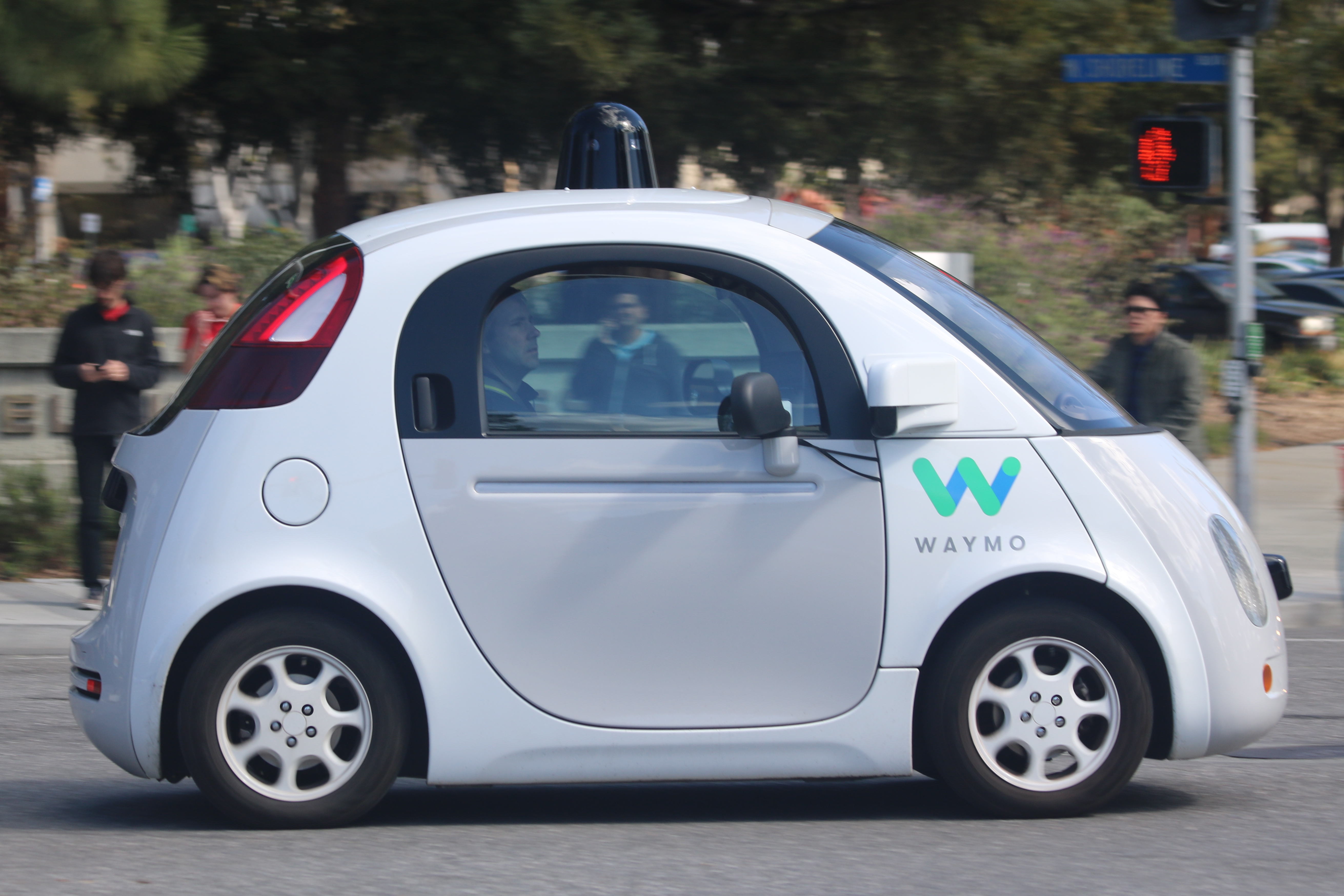
Transportation's complexity means that in most cases, training an AI in a real-world driving environment is impractical, and is achieved through simulator-based testing. AI-based systems control functions such as braking, lane changing, collision prevention, navigation and mapping.
Some autonomous vehicles do not allow human drivers (they have no steering wheels or pedals).
There are prototypes of autonomous automotive public transport vehicles such as autonomous rail transport in operation, electric mini-buses, and autonomous delivery vehicles, including delivery robots.
Autonomous trucks are in the testing phase. The UK government passed legislation to begin testing of autonomous truck platoons in 2018. A group of autonomous trucks follow closely behind each other. German corporation Daimler is testing its Freightliner Inspiration.
AI has been used to optimize traffic management, which can reduce wait times, energy use, and emissions.
Military
Aircraft simulators use AI for training aviators. Flight conditions can be simulated that allow pilots to make mistakes without risking themselves or expensive aircraft. Air combat can also be simulated.
AI can also be used to operate planes analogously to their control of ground vehicles. Autonomous drones can fly independently or in swarms.
AOD uses the Interactive Fault Diagnosis and Isolation System, or IFDIS, which is a rule-based expert system using information from TF-30 documents and expert advice from mechanics that work on the TF-30. This system was designed to be used for the development of the TF-30 for the F-111C. The system replaced specialized workers. The system allowed regular workers to communicate with the system and avoid mistakes, miscalculations, or having to speak to one of the specialized workers.
Speech recognition allows traffic controllers to give verbal directions to drones.
Artificial intelligence supported design of aircraft, or AIDA, is used to help designers in the process of creating conceptual designs of aircraft. This program allows the designers to focus more on the design itself and less on the design process. The software also allows the user to focus less on the software tools. The AIDA uses rule-based systems to compute its data. This is a diagram of the arrangement of the AIDA modules. Although simple, the program is proving effective.
NASA
In 2003 a Dryden Flight Research Center project created software that could enable a damaged aircraft to continue flight until a safe landing can be achieved. The software compensated for damaged components by relying on the remaining undamaged components.
The 2016 Intelligent Autopilot System combined apprenticeship learning and behavioral cloning whereby the autopilot observed low-level actions required to maneuver the airplane and high-level strategy used to apply those actions.
Maritime
Neural networks are used by situational awareness systems in ships and boats. There also are autonomous boats.
Footnotes
References
- (22 December 2017). "What can machine learning do? Workforce implications". Science.
- (2023). "Superhuman artificial intelligence can improve human decision-making by increasing novelty". [[Proceedings of the National Academy of Sciences of the United States of America.
- (2023). "The emergence of economic rationality of GPT". [[Proceedings of the National Academy of Sciences of the United States of America.
- (2024-03-22). "What is Generative AI? {{!}} IBM".
- (8 April 2020). "Use of Artificial Intelligence in Agriculture".
- (7 March 2022). "Classification of pig calls produced from birth to slaughter according to their emotional valence and context of production". Scientific Reports.
- (2011). "Population, Poverty, Production, Food Security, Food Sovereignty, Biotechnology and Sustainable Development: Challenges for the XXI Century". Bulletin of University of Agricultural Sciences and Veterinary Medicine Cluj-Napoca. Veterinary Medicine.
- (2019). "2019 7th International Conference on Cyber and IT Service Management (CITSM)".
- (2020). "Implementation of artificial intelligence in agriculture for optimisation of irrigation and application of pesticides and herbicides". Artificial Intelligence in Agriculture.
- (2025-02-04). "Generative AI at Work". The Quarterly Journal of Economics.
- (2023-07-14). "Experimental evidence on the productivity effects of generative artificial intelligence". Science.
- (18 August 2025). "MIT report: 95% of generative AI pilots at companies are failing". Fortune.
- (22 September 2025). "AI-Generated "Workslop" Is Destroying Productivity". Harvard Business Review.
- Frąckowiak-Szymański, Przemysław. (26 June 2025). "The Pros and Cons of Vibe Coding".
- (1 October 2025). "The human coders hired to mop up AI slop". NPR.
- (14 September 2025). "Vibe coding has turned senior devs into 'AI babysitters,' but they say it's worth it". TechCrunch.
- "Vibe Coding Is the New Open Source—in the Worst Way Possible".
- (31 May 2025). "Companies Are Discovering a Grim Problem With "Vibe Coding"". Futurism.
- (5 December 2017). "Google AI creates its own "child" bot". The Independent.
- (April 2022). "Experimental photonic quantum memristor". Nature Photonics.
- (July 2018). "Quantum materials for brain sciences and artificial intelligence". MRS Bulletin.
- (2 December 2021). "Artificial intelligence makes accurate quantum chemical simulations more affordable". Nature Portfolio Chemistry Community.
- (March 2021). "Quantum machine learning in high energy physics". Machine Learning: Science and Technology.
- {{Russell Norvig 2003
- (2009). "Proceedings of the International Conference on Management of Emergent Digital EcoSystems".
- Sara Ashley O'Brien. (12 January 2016). "Is this app the call center of the future?". CNN.
- "Using Google AI to convert speech to text".
- (20 July 2016). "New Google AI Brings Automation to Customer Service". Bloomberg.com.
- (25 February 2020). "Amazon.com tests customer service chatbots".
- (May 2024). "Innovative Applications in Businesses: An Evaluation on Generative Artificial Intelligence". Amfiteatru Economic.
- (2017). "Advanced analytics in hospitality". McKinsey & Company.
- (2019). "Proceedings of the International Scientific Conference - Sinteza 2019".
- "The promises and perils of new technologies to improve education and employment opportunities".
- "Role of AI in Energy".
- (30 January 2020). "Machine learning for energy consumption prediction and scheduling in smart buildings". SN Applied Sciences.
- (February 2021). "Machine learning based weighted scheduling scheme for active power control of hybrid microgrid". International Journal of Electrical Power & Energy Systems.
- (2020). "2020 IEEE International Conference on Power Systems Technology (POWERCON)".
- (15 March 2021). "Making Smart Grids Smarter with Machine Learning".
- (July 2022). "Enhancing automated analysis of marine soundscapes using ecoacoustic indices and machine learning". Ecological Indicators.
- (October 2018). "Machine learning for environmental monitoring". Nature Sustainability.
- (8 April 2019). "How machine learning can help environmental regulators". Stanford University.
- (19 April 2021). "AI empowers environmental regulators". Stanford University.
- (9 May 2022). "Plastic waste can now be found and monitored from space". euronews.
- "Global Plastic Watch".
- "AI may predict the next virus to jump from animals to humans". Public Library of Science.
- (28 September 2021). "Identifying and prioritizing potential human-infecting viruses from their genome sequences". PLOS Biology.
- (28 May 2018). "Machine Learning Seismic Wave Discrimination: Application to Earthquake Early Warning". Geophysical Research Letters.
- (11 May 2022). "Machine learning and gravity signals could rapidly detect big earthquakes". Science News.
- (3 April 2020). "A Distributed Multi-Sensor Machine Learning Approach to Earthquake Early Warning". Proceedings of the AAAI Conference on Artificial Intelligence.
- (September 2020). "Enhancing the reliability of landslide early warning systems by machine learning". Landslides.
- (2019). "Application of machine learning to an early warning system for very short-term heavy rainfall". Journal of Hydrology.
- (September 2020). "Detecting early warning signals of long-term water supply vulnerability using machine learning". Environmental Modelling & Software.
- (28 September 2021). "Deep learning for early warning signals of tipping points". Proceedings of the National Academy of Sciences.
- (15 June 2021). "A machine learning approach for early warning of cyanobacterial bloom outbreaks in a freshwater reservoir". Journal of Environmental Management.
- (August 2021). "Robust Meteorological Drought Prediction Using Antecedent SST Fluctuations and Machine Learning". Water Resources Research.
- (May 2020). "Prediction of droughts over Pakistan using machine learning algorithms". Advances in Water Resources.
- (May 2020). "Deep learning based drought assessment and prediction framework". Ecological Informatics.
- "Preparing for the future of artificial intelligence". National Science and Technology Council.
- (18 June 2018). "Research at NVIDIA: Transforming Standard Video Into Slow Motion with AI".
- (18 April 2019). "Artificial intelligence is helping old video games look like new".
- (4 March 2019). "Review: Topaz Sharpen AI is Amazing".
- Griffin, Matthew. (26 April 2018). "AI can now restore your corrupted photos to their original condition".
- (10 July 2018). "NVIDIA's AI can fix bad photos by looking at other bad photos".
- (24 February 2020). "Using AI to Colorize and Upscale a 109-Year-Old Video of New York City to 4K and 60fps".
- "YouTubers are upscaling the past to 4K. Historians want them to stop".
- (18 August 2022). "Google's DeepMind AI can 'transframe' a single image into a video".
- (28 January 2023). "Google's new AI turns text into music".
- (30 January 2023). "Google's new AI music generator can create - and hold - a tune".
- "CSDL | IEEE Computer Society".
- Jodka, Sara. (February 1, 2024). "Manipulating reality: the intersection of deepfakes and the law".
- (2019). "Video Verification in the Fake News Era".
- "Fake news debunker by InVID & WeVerify".
- "TUM Visual Computing & Artificial Intelligence: Prof. Matthias Nießner".
- (November 2018). "Will "Deepfakes" Disrupt the Midterm Election?".
- (2018). "2018 IEEE International Workshop on Information Forensics and Security (WIFS)".
- Lyons, Kim. (29 January 2020). "FTC says the tech behind audio deepfakes is getting better".
- "Audio samples from "Transfer Learning from Speaker Verification to Multispeaker Text-To-Speech Synthesis"".
- (11 December 2019). "Facebook AI Launches Its Deepfake Detection Challenge". IEEE Spectrum.
- (24 September 2019). "Contributing Data to Deepfake Detection Research".
- "New method detects deepfake videos with up to 99% accuracy". University of California-Riverside.
- "AI algorithm detects deepfake videos with high accuracy". techxplore.com.
- "Welcome to the new surreal. How AI-generated video is changing film.".
- Bean, Thomas H. Davenport and Randy. (2023-06-19). "The Impact of Generative AI on Hollywood and Entertainment".
- Cheng, Jacqui. (30 September 2009). "Virtual composer makes beautiful music—and stirs controversy".
- {{cite patent. link
- (4 July 2012). "Computer composer honours Turing's centenary".
- Hick, Thierry. (11 October 2016). "La musique classique recomposée". Luxemburger Wort.
- "Résultats de recherche - La Sacem".
- (2014). "Melomics music medicine (M3) to lessen pain perception during pediatric prick test procedure". Pediatric Allergy and Immunology.
- (10 October 2018). "Watson Beat on GitHub".
- (17 May 2018). "Songs in the Key of AI".
- (7 October 2020). "Hayeon, sister of Girls' Generation's Taeyeon, debuts with song made by AI".
- [http://www.narrativescience.com/solutions.html business intelligence solutions] {{webarchive. link. (3 November 2011. Narrative Science. Retrieved 21 July 2013.)
- "Big Data and Yahoo's Quest for Mass Personalization".
- "Artificial Intelligence Software that Writes like a Human Being".
- (6 December 2012). "Interactive Narrative: An Intelligent Systems Approach". [[AI Magazine]].
- (August 2002). "Narrative prose generation". Artificial Intelligence.
- (23 March 2016). "A Japanese AI program just wrote a short novel, and it almost won a literary prize". Digital Trends.
- (20 October 2020). "Bot News".
- Canavilhas, João. (September 2022). "Artificial Intelligence and Journalism: Current Situation and Expectations in the Portuguese Sports Media". Journalism and Media.
- (August 2018). "Artificial intelligence and sports journalism: Is it a sweeping change?". Technology in Society.
- Wu, Daniel. (2023-08-31). "Gannett halts AI-written sports recaps after readers mocked the stories". Washington Post.
- (23 February 2017). "Study reveals bot-on-bot editing wars raging on Wikipedia's pages". The Guardian.
- "The Shaky Ground Truths of Wikipedia".
- "AI can automatically rewrite outdated text in Wikipedia articles". Engadget.
- "Wikipedia Deploys AI to Expand Its Ranks of Human Editors".
- (9 January 2019). "Wikipedia taps Google to help editors translate articles". VentureBeat.
- (8 May 2019). "Wikipedia has a Google Translate problem". The Verge.
- "Why AI researchers like video games". The Economist.
- (2012). "Proceedings of the 9th conference on Computing Frontiers - CF '12".
- Maass, Laura E. Shummon. (1 July 2019). "Artificial Intelligence in Video Games".
- Markoff, John. (16 February 2011). "Computer Wins on 'Jeopardy!': Trivial, It's Not". [[The New York Times]].
- "AlphaGo – Google DeepMind".
- (12 March 2016). "Artificial intelligence: Google's AlphaGo beats Go master Lee Se-dol". BBC News.
- (27 May 2017). "After Win in China, AlphaGo's Designers Explore New AI".
- (May 2017). "World's Go Player Ratings".
- (May 2017). "柯洁迎19岁生日 雄踞人类世界排名第一已两年".
- (23 December 2020). "MuZero: Mastering Go, chess, shogi and Atari without rules".
- (12 March 2016). "AlphaGo beats human Go champ in milestone for artificial intelligence". [[Los Angeles Times]].
- Solly, Meilan. "This Poker-Playing A.I. Knows When to Hold 'Em and When to Fold 'Em".
- (9 January 2015). "Heads-up limit hold'em poker is solved". Science.
- (December 2013). "A Survey of Real-Time Strategy Game AI Research and Competition in StarCraft". IEEE Transactions on Computational Intelligence and AI in Games.
- (2017). "Facebook Quietly Enters StarCraft War for AI Bots, and Loses".
- (7 December 2018). "A general reinforcement learning algorithm that masters chess, shogi, and go through self-play". [[Science (journal).
- (18 October 2017). "'It's able to create knowledge itself': Google unveils AI that learns on its own". The Guardian.
- (7 July 2017). "The AI revolution in science". Science.
- (16 February 2016). "The superhero of artificial intelligence: can this genius keep it in check?". The Guardian.
- (26 February 2015). "Human-level control through deep reinforcement learning". Nature.
- (14 March 2017). "Google's DeepMind makes AI program that can learn like a human". The Guardian.
- (24 December 2020). "Mastering Atari, Go, chess and shogi by planning with a learned model". Nature.
- "You can now chat with a famous AI character on Viber. Here's how". [[ZDNET]].
- (19 August 2020). "Robot friends: Why people talk to chatbots in times of trouble". [[CNN]].
- (2019). "Proceedings of the 9th International Conference on Digital and Interactive Arts".
- "Fine art print - crypto art".
- "Analysis {{!}} Is That Trump Photo Real? Free AI Tools Come With Risks". Washington Post.
- "Google's image generator rivals DALL-E in shiba inu drawing". TechCrunch.
- "Midjourney's enthralling AI art generator goes live for everyone". PCWorld.
- (19 May 2022). "After Photos, Here's How AI Made A Trippy Music Video Out Of Thin Air".
- (2022-02-16). "Understanding and Creating Art with AI: Review and Outlook". ACM Transactions on Multimedia Computing, Communications, and Applications.
- (2018). "Reflecting on How Artworks Are Processed and Analyzed by Computer Vision: Supplementary Material".
- Cole, Samantha. (2023-02-01). "Netflix Made an Anime Using AI Due to a 'Labor Shortage,' and Fans Are Pissed".
- Christy, Charles A.. (17 January 1990). "Impact of Artificial Intelligence on Banking".
- O'Neill, Eleanor. (31 July 2016). "Accounting, automation and AI".
- (2 April 2015). "CTO Corner: Artificial Intelligence Use in Financial Services – Financial Services Roundtable". Financial Services Roundtable.
- "Artificial Intelligence Solutions, AI Solutions".
- Chapman, Lizette. (7 January 2019). "Palantir once mocked the idea of salespeople. Now it's hiring them".
- (2017). "Artificial Intelligence and Economic Theory: Skynet in the Market".
- (2017). "Artificial Intelligence and Economic Theory: Skynet in the Market".
- (16 May 2022). "The impact of artificial intelligence (AI) finance on financing constraints of non-SOE firms in emerging markets". International Journal of Emerging Markets.
- "The Financial Stability Implications of Artificial Intelligence".
- (5 January 2017). "Beyond Robo-Advisers: How AI Could Rewire Wealth Management".
- Asatryan, Diana. (3 April 2017). "Machine Learning Is the Future of Underwriting, But Startups Won't be Driving It".
- "Explainability & Fairness in Machine Learning for Credit Underwriting".
- (14 February 2017). "ZestFinance Introduces Machine Learning Platform to Underwrite Millennials and Other Consumers with Limited Credit History".
- (10 April 2017). "Technical Inefficiency, Allocative Inefficiency, and Audit Pricing". Journal of Accounting, Auditing & Finance.
- (November 2020). "The Ethical Implications of Using Artificial Intelligence in Auditing". Journal of Business Ethics.
- "LaundroGraph: Using deep learning to support anti–money laundering efforts". techxplore.com.
- (2022). "Proceedings of the Third ACM International Conference on AI in Finance".
- (2002). "Expert Systems".
- (May 1989). "Protrader: An Expert System for Program Trading". Managerial Finance.
- (July 1990). "Expert Systems for Personal Financial Planning". Journal of Financial Planning.
- (1995). "The FinCEN Artificial Intelligence System: Identifying Potential Money Laundering from Reports of Large Cash Transactions". IAAI-95 Proceedings.
- (September 2016). "'The reports of my death are greatly exaggerated'—Artificial intelligence research in accounting". International Journal of Accounting Information Systems.
- (1992). "A prototype expert system for fishway design". Environmental Monitoring and Assessment.
- Wayson, Roger L.. (1989). "Use of a Knowledge-Based Expert System to Maximize Airport Capacity in Harmony with Noise-Mitigation Plans". Transportation Research Record.
- (1995). "Potato Insect Expert System: Computerized Approach to Colorado Potato Beetle Management". Journal of Economic Entomology.
- (1996). "User's Manual for CORMIX: A Hydrodynamic Mixing Zone Model and Decision Support System for Pollutant Discharges into Surface Waters". U.S. Environmental Protection Agency.
- Thompsett, Louis. (2025-02-04). "What EU AI Act Means for Governance in Financial Sector".
- Szczytko, Jacek. (2025-08-15). "How will the AI Act alter the landscape for fintechs? Key requirements and penalties".
- "Regulation - EU - 2024/1689 - EN - EUR-Lex".
- (10 October 2025). "AI Credit Regulations Affecting Lending Business 2025".
- (10 May 2018). "10 Promising AI Applications in Health Care". Harvard Business Review.
- (August 2022). "Applications of Artificial Intelligence in Non-cardiac Vascular Diseases: A Bibliographic Analysis". Angiology.
- (28 March 2024). "What is artificial intelligence in medicine?". IBM.
- (29 October 2019). "Microsoft Using AI to Accelerate Cancer Precision Medicine".
- Dina Bass. (20 September 2016). "Microsoft Develops AI to Help Cancer Doctors Find the Right Treatments". Bloomberg L.P..
- Gallagher, James. (26 January 2017). "Artificial intelligence 'as good as cancer doctors'". BBC News.
- (18 October 1994). "Remote monitoring of high-risk patients using artificial intelligence".
- (February 2018). "Identifying Medical Diagnoses and Treatable Diseases by Image-Based Deep Learning". Cell.
- Senthilingam, Meera. (12 May 2016). "Are Autonomous Robots Your next Surgeons?". CNN.
- (2021). "Adoption of Machine Learning Systems for Medical Diagnostics in Clinics: Qualitative Interview Study". Journal of Medical Internet Research.
- (2011). "Cognitive Development in Partner Robots for Information Support to Elderly People". IEEE Transactions on Autonomous Mental Development.
- (4 August 2016). "Artificial Intelligence Will Redesign Healthcare – The Medical Futurist". The Medical Futurist.
- (February 2019). "Identifying Potential Ageing-Modulating Drugs In Silico". Trends in Endocrinology & Metabolism.
- (27 April 2022). "Discovery of new senolytics using machine learning".
- (2014). "Artificial intelligence in psychological practice: Current and future applications and implications". Professional Psychology: Research and Practice.
- (24 April 2020). "Machine learning using intrinsic genomic signatures for rapid classification of novel pathogens: COVID-19 case study". PLOS ONE.
- (7 June 2022). "Accurate virus identification with interpretable Raman signatures by machine learning". Proceedings of the National Academy of Sciences.
- "Artificial intelligence finds disease-related genes". Linköping University.
- "Researchers use AI to detect new family of genes in gut bacteria". UT Southwestern Medical Center.
- (2019). "Artificial intelligence for aging and longevity research: Recent advances and perspectives". Ageing Research Reviews.
- (April 2020). "Integrating Artificial Intelligence and Nanotechnology for Precision Cancer Medicine". Advanced Materials.
- Moore, Phoebe V.. (7 May 2019). "OSH and the Future of Work: benefits and risks of artificial intelligence tools in workplaces".
- (November 2019). "Artificial intelligence: Implications for the future of work". American Journal of Industrial Medicine.
- Gianatti, Toni-Louise. (14 May 2020). "How AI-Driven Algorithms Improve an Individual's Ergonomic Safety".
- Meyers, Alysha R.. (1 May 2019). "AI and Workers' Comp".
- (26 February 2020). "Artificial Intelligence Crowdsourcing Competition for Injury Surveillance".
- Ferguson, Murray. (19 April 2016). "Artificial Intelligence: What's To Come for EHS... And When?".
- (2024). "Introduction to Artificial Intelligence: from data analysis to generative AI". Intellisemantic Editions.
- (January 2021). "Artificial intelligence in drug discovery and development". Drug Discovery Today.
- "Allchemy – Resource-aware AI for drug discovery".
- (April 2022). "Computer-designed repurposing of chemical wastes into drugs". Nature.
- (25 September 2020). "Synthetic connectivity, emergence, and self-regeneration in the network of prebiotic chemistry". Science.
- (September 2019). "Deep learning enables rapid identification of potent DDR1 kinase inhibitors". Nature Biotechnology.
- (30 November 2020). "DeepMind is answering one of biology's biggest challenges". The Economist.
- Jeremy Kahn, [https://fortune.com/2020/12/01/lessons-from-deepminds-a-i-breakthrough-eye-on-ai/ Lessons from DeepMind's breakthrough in protein-folding A.I.], ''[[Fortune (magazine). Fortune]]'', 1 December 2020
- (2022-07-28). "DeepMind uncovers structure of 200m proteins in scientific leap forward".
- (2022-07-28). "AlphaFold reveals the structure of the protein universe".
- Nakamura, Satoshi. (2009). "Overcoming the language barrier with speech translation technology". Science & Technology Trends Quarterly Review.
- (8 December 2015). "Why 2015 Was a Breakthrough Year in Artificial Intelligence". Bloomberg.com.
- (31 July 2022). "Can artificial intelligence really help us talk to the animals?". The Guardian.
- K. Mandal, G. S. Pradeep Ghantasala, Firoz Khan, R. Sathiyaraj, B. Balamurugan. (2020). "Natural Language Processing in Artificial Intelligence". Apple Academic Press.
- (22 May 2019). "How China Uses High-Tech Surveillance to Subdue Minorities". The New York Times.
- (3 May 2019). "Security lapse exposed a Chinese smart city surveillance system".
- (24 September 2019). "AI traffic signals to be installed in Bengaluru soon".
- (2017). "Artificial Intelligence and Legal Analytics".
- (19 March 2017). "A.I. Is Doing Legal Work. But It Won't Replace Lawyers, Yet". The New York Times.
- Croft, Jane. (2 May 2019). "AI learns to read Korean, so you don't have to".
- (3 April 2024). "Application of artificial intelligence to eyewitness identification". Cognitive Research: Principles and Implications.
- (23 May 2016). "How We Analyzed the COMPAS Recidivism Algorithm".
- (12 January 2019). "Commentary: Bad news. Artificial intelligence is biased".
- Šimalčík, Matej. (2023). "Contemporary China: a New Superpower?". [[Routledge]].
- (8 October 2018). "Digital Spectrometry".
- "Digital Spectrometry Patent".
- "How artificial intelligence is moving from the lab to your kid's playroom". The Washington Post.
- (15 May 2019). "Application of artificial intelligence in oil and gas industry: Exploring its impact".
- Salvaterra, Neanda. (14 October 2019). "Oil and Gas Companies Turn to AI to Cut Costs". The Wall Street Journal.
- Ornes, Stephen. (August 27, 2020). "Quanta Magazine – How Close Are Computers to Automating Mathematical Reasoning?".
- Congressional Research Service. (2019). "Artificial Intelligence and National Security". Congressional Research Service.
- Iraqi, Amjad. (2024-04-03). "'Lavender': The AI machine directing Israel's bombing spree in Gaza".
- (2023-12-01). "'The Gospel': how Israel uses AI to select bombing targets in Gaza". The Guardian.
- Marti, J Werner. (10 August 2024). "Drohnen haben den Krieg in der Ukraine revolutioniert, doch sie sind empfindlich auf Störsender – deshalb sollen sie jetzt autonom operieren". Neue Zürcher Zeitung.
- (2023-03-01). "The role of artificial intelligence in the procurement process: State of the art and research agenda". Journal of Purchasing and Supply Management.
- (2023-08-02). "AI in Procurement {{!}} IBM".
- (27 May 2022). "What are the security risks of open sourcing the Twitter algorithm?".
- "Examining algorithmic amplification of political content on Twitter".
- (February 2016). "The Source and Credibility of Colorectal Cancer Information on Twitter". Medicine.
- (20 July 2018). "Supervised Machine Learning Bot Detection Techniques to Identify Social Twitter Bots". SMU Data Science Review.
- "The online information environment".
- (29 September 2020). "Deep learning for misinformation detection on online social networks: a survey and new perspectives". Social Network Analysis and Mining.
- (4 December 2018). "Combating Fake News with Interpretable News Feed Algorithms".
- (9 November 2020). "How artificial intelligence may be making you buy things". BBC News.
- (30 April 2018). "Revealed: how bookies use AI to keep gamblers hooked".
- Rowinski, Dan. (15 January 2013). "Virtual Personal Assistants & The Future Of Your Smartphone [Infographic]". ReadWrite.
- (16 February 2023). "Bing's A.I. Chat: 'I Want to Be Alive. 😈'". The New York Times.
- (2021). "2021 IEEE Symposium Series on Computational Intelligence (SSCI)".
- (2023-02-01). "A review of spam email detection: analysis of spammer strategies and the dataset shift problem". Artificial Intelligence Review.
- (January 2023). "Improved Phishing Attack Detection with Machine Learning: A Comprehensive Evaluation of Classifiers and Features". Applied Sciences.
- (11 December 2020). "What is AI? Everything you need to know about Artificial Intelligence". ZDNet.
- (February 7, 2018). "China's massive investment in artificial intelligence has an insidious downside". Science AAAS.
- (2018). "China bets on facial recognition in big drive for total surveillance". The Washington Post.
- (15 October 2019). "Facial recognition forced on 800 million Chinese internet users".
- (April 4, 2024). "Country policy and information note: Falun Gong, China, November 2023 (accessible)".
- Techredacteur, Joost Schellevis. (December 16, 2016). "Politie gaat verdachten opsporen met gezichtsherkenning".
- Boon, Lex. (August 25, 2018). "Meekijken met de 226 gemeentecamera's".
- "Successful and timely uptake of artificial intelligence in science in the EU – Scientific Advice Mechanism".
- "AI in science evidence review report – Scientific Advice Mechanism".
- (March 2022). "Restoring and attributing ancient texts using deep neural networks". Nature.
- (September 2020). "The Computerization of Archaeology: Survey on Artificial Intelligence Techniques". SN Computer Science.
- (December 2019). "Approximate Bayesian computation with deep learning supports a third archaic introgression in Asia and Oceania". Nature Communications.
- (15 December 2021). "Automated segmentation of microtomography imaging of Egyptian mummies". PLOS ONE.
- "DeepMind AI learns physics by watching videos that don't make sense". New Scientist.
- (11 July 2022). "Intuitive physics learning in a deep-learning model inspired by developmental psychology". Nature Human Behaviour.
- (11 August 2022). "Artificial physicist to unravel the laws of nature". Advanced Science News.
- (July 2022). "Automated discovery of fundamental variables hidden in experimental data". Nature Computational Science.
- Nuñez, Michael. (2023-11-29). "Google DeepMind's materials AI has already discovered 2.2 million new crystals".
- (December 2023). "Scaling deep learning for materials discovery". Nature.
- (29 November 2023). "Google AI and robots join forces to build new materials". Nature.
- (29 September 2020). "Reverse engineering of additive manufactured composite part by toolpath reconstruction using imaging and machine learning". Composites Science and Technology.
- (2014). "Proceedings of the 2014 Workshop on Artificial Intelligent and Security Workshop".
- (June 2021). "Two Sides of the Same Coin: Boons and Banes of Machine Learning in Hardware Security". IEEE Journal on Emerging and Selected Topics in Circuits and Systems.
- (7 January 2021). "DARPA Taps GrammaTech for Artificial Intelligence Exploration (AIE) Program".
- "How to Steal an AI".
- (27 July 2018). "Inverse molecular design using machine learning: Generative models for matter engineering". Science.
- (22 July 2022). "Scaffolding protein functional sites using deep learning". Science.
- (17 June 2019). ["Using Boolean network extraction of trained neural networks to reverse-engineer gene-regulatory networks from time-series data"](https://aaltodoc.aalto.fi/handle/123456789/38941?show=full }}{{page needed). Aalto University.
- (July 2010). "Data mining and machine learning in astronomy". International Journal of Modern Physics D.
- (March 2020). "Surveying the reach and maturity of machine learning and artificial intelligence in astronomy". WIREs Data Mining and Knowledge Discovery.
- (29 April 2021). "Artificial intelligence is learning how to dodge space junk in orbit". Space.com.
- (2020). "Emerging Trends in Computing and Expert Technology".
- (30 April 2022). "Could space-going billionaires be the vanguard of a cosmic revolution? {{!}} Martin Rees".
- "Artificial intelligence in space".
- (15 November 2019). "NASA Applying AI Technologies to Problems in Space Science".
- (December 2019). "Identifying extra-terrestrial intelligence using machine learning".
- (2018). "Fast Radio Burst 121102 Pulse Detection and Periodicity: A Machine Learning Approach". The Astrophysical Journal.
- (2019). "2019 International Conference on Smart Systems and Inventive Technology (ICSSIT)".
- (2 August 2019). "The Breakthrough Listen Search for Extraterrestrial Intelligence". Bulletin of the American Astronomical Society.
- "SkyCAM-5 - Chair of Computer Science VIII - Aerospace Information Technology". [[University of Würzburg]].
- "Project Galileo: The search for alien tech hiding in our Solar System". BBC Science Focus Magazine.
- (5 February 2022). "'Something's coming': is America finally ready to take UFOs seriously?". The Guardian.
- (27 January 2022). "2022 could be a turning point in the study of UFOs". livescience.com.
- "The Wonder of Avi Loeb".
- "Avi Loeb's Galileo Project Will Search for Evidence of Alien Visitation". Scientific American.
- "Galileo Project – Activities".
- "The Galileo Project: Harvard researchers to search for signs of alien technology". Sky News.
- (2021). "Computational Infrared Spectroscopy of 958 Phosphorus-Bearing Molecules". Frontiers in Astronomy and Space Sciences.
- "Chemists debate machine learning's future in synthesis planning and ask for open data".
- "Machine learning reveals recipe for building artificial proteins". phys.org.
- (2020). "An evolution-based model for designing chorismatemutase enzymes". Science.
- "Biologists train AI to generate medicines and vaccines". University of Washington-Harborview Medical Center.
- (30 October 2020). "Machine learning in chemical reaction space". Nature Communications.
- "Repurposed drug-seeking AI system generates 40,000 possible chemical weapons in just six hours". techxplore.com.
- (March 2022). "Dual use of artificial-intelligence-powered drug discovery". Nature Machine Intelligence.
- "AI drug algorithms can be flipped to generate bioweapons". www.theregister.com.
- (September 2021). "Mapping gene transcription and neurocognition across human neocortex". Nature Human Behaviour.
- (September 2020). "Identification of the human DPR core promoter element using machine learning". Nature.
- (2022). "Knowledge structure and emerging trends in the application of deep learning in genetics research: A bibliometric analysis [2000–2021]". Frontiers in Genetics.
- (25 September 2020). "A machine learning Automated Recommendation Tool for synthetic biology". Nature Communications.
- Pablo Carbonell. (2019). "Opportunities at the Intersection of Synthetic Biology, Machine Learning, and Automation". ACS Synthetic Biology.
- (February 2022). "Artificial Intelligence for Nanostructured Materials". Nanobiotechnology Reports.
- (July 2021). "A Machine Learning Tool to Predict the Antibacterial Capacity of Nanoparticles". Nanomaterials.
- (25 April 2018). "How AI is helping us discover materials faster than ever". The Verge.
- (26 November 2018). "Autonomous efficient experiment design for materials discovery with Bayesian model averaging". Physical Review Materials.
- (13 April 2021). "Discovery of temperature-induced stability reversal in perovskites using high-throughput robotic learning". Nature Communications.
- Anne Johnson. (2019). "Implications of artificial intelligence for cybersecurity: proceedings of a workshop". National Academies Press.
- (August 2021). "Machine learning and deep learning methods for intrusion detection systems: recent developments and challenges". Soft Computing.
- (16 January 2022). "Evaluation of AI-based use cases for enhancing the cyber security defense of small and medium-sized companies (SMEs)". Electronic Imaging.
- Randrianasolo, Arisoa. (2012). "Artificial intelligence in computer security: Detection, temporary repair and defense".
- (2015). "2015 International Conference on Advances in Computer Engineering and Applications".
- (2019). "Hands-On Artificial Intelligence for Cybersecurity: Implement smart AI systems for preventing cyber attacks and detecting threats and network anomalies". Packt Publishing Ltd.
- sarahrudge. "6 Ways AI is Making Transportation Safer and More Efficient".
- (3 April 2018). "Simulation-Based Identification of Critical Scenarios for Cooperative and Automated Vehicles". SAE International Journal of Connected and Automated Vehicles.
- (20 September 2016). "Moving forward: Self-driving vehicles in China, Europe, Japan, Korea, and the United States". Brookings.
- (2 February 2015). "Programming safety into self-driving cars". National Science Foundation.
- (12 October 2021). "Transportation Germany Unveils the World's First Fully Automated Train in Hamburg".
- (25 February 2021). "Railway digitalisation using drones".
- (9 January 2020). "World's fastest driverless bullet train launches in China". The Guardian.
- "Self-driving buses to appear on public roads for the first time". Inverse.
- "Europe's first full-sized self-driving urban electric bus has arrived". World Economic Forum.
- (2022). "Climate and environmental impacts of automated minibuses in future public transportation". Transportation Research Part D: Transport and Environment.
- (22 July 2020). "Waymo is designing a self-driving Ram delivery van with FCA". The Verge.
- (31 Aug 2021). "Walmart Presses Its Distribution Legacy To Lead In Automated Delivery". Forbes.
- (7 February 2020). "Self-driving delivery van ditches "human controls"". BBC News.
- Rita Liao. (25 May 2021). "JD.com, Meituan and Neolix to test autonomous deliveries on Beijing public roads". TechCrunch.
- (1 September 2021). "Grubhub testing delivery robots". techxplore.com.
- (24 August 2017). "The UK is about to Start Testing Self-Driving Truck Platoons".
- (5 May 2015). "World's First Self-Driving Semi-Truck Hits the Road".
- "Preparing for the future of artificial intelligence". National Science and Technology Council.
- (15 March 1999). "Automated Intelligent Pilots for Combat Flight Simulation". AI Magazine.
- [http://www.kbs.twi.tudelft.nl/Research/Projects/AIDA/ AIDA Homepage]. Kbs.twi.tudelft.nl (17 April 1997). Retrieved 21 July 2013.
- [http://crgis.ndc.nasa.gov/crgis/images/c/c9/88798main_srfcs.pdf The Story of Self-Repairing Flight Control Systems.] NASA Dryden. (April 2003). Retrieved 25 August 2016.
- Adams, Eric. (28 March 2017). "AI Wields the Power to Make Flying Safer—and Maybe Even Pleasant".
- (2016). "2016 IEEE Symposium Series on Computational Intelligence (SSCI)".
- "UB invests in student-founded startup".
This article was imported from Wikipedia and is available under the Creative Commons Attribution-ShareAlike 4.0 License. Content has been adapted to SurfDoc format. Original contributors can be found on the article history page.
Ask Mako anything about Applications of artificial intelligence — get instant answers, deeper analysis, and related topics.
Research with MakoFree with your Surf account
Create a free account to save articles, ask Mako questions, and organize your research.
Sign up freeThis content may have been generated or modified by AI. CloudSurf Software LLC is not responsible for the accuracy, completeness, or reliability of AI-generated content. Always verify important information from primary sources.
Report