From Surf Wiki (app.surf) — the open knowledge base
Apple Newton
PDA platform by Apple Inc
.jpg)
PDA platform by Apple Inc
| Field | Value |
|---|---|
| name | Newton |
| logo | Apple Newton logo.svg |
| logo_upright | 0.25 |
| image | Apple Newton MessagePad 100 with stylus.jpg |
| caption | Apple Newton MessagePad 100, with its stylus |
| developer | Apple Computer, Inc. |
| type | Bar PDA |
| release_date | |
| discontinued | |
| os | Newton OS |
| input | Touch screen |
| website |
the Apple-brand PDA platform
The Newton is a specified standard and series of personal digital assistants (PDAs) developed and marketed by Apple Computer, Inc. from 1993 to 1998. An early device in the PDA categorythe term itself originating with the Newtonit was the first to feature handwriting recognition. Newton devices run on a proprietary operating system, Newton OS; unlike the company's Macintosh computers, Apple licensed the software to third-parties, who released Newton devices alongside Apple's own MessagePad line.
Apple started developing the platform in 1987; concepted by Steve Sakoman as a tablet-like device with handwriting capabilities, he worked with AT&T Corporation to develop a low-power processor, Hobbit, for the project. However, slow progress and other issues led to Sakoman leaving Apple in 1990 to form Be Computer, Inc. The Newton project would be revitalized by Michael Tchao and Steve Capps who pitched the idea directly to CEO John Sculley; Apple invested in Acorn Computers who developed a specific ARM6-based RISC processor for the device. Apple introduced the Newton on , and shipments began on August 2,1993.
The Newton was marred with issues before its public release; bugs and software instability played a part in a series of continuous delays of its shipment date, while post-release problems with its handwriting recognition feature led to negative publicity and became a source of mockery. Sales of the Newton were well below Apple's expectations, and despite significant improvements in later hardware and version 2.0 of Newton OS, the platform was discontinued in 1998 at the direction of CEO Steve Jobs. Despite its commercial failure, the Newton was considered technologically innovative for its time and influenced many ideas for Apple's later popular products, the iPhone and iPad.
Product details
Application software
Most Newton devices were pre-loaded with a variety of software to aid in personal data organization and management. This included such applications as Notes, Names, and Dates, as well as a variety of productivity tools such as a calculator, conversion calculators (metric conversions, currency conversions, etc.), time-zone maps, etc. In later/2.x versions of the Newton OS these applications were refined, and new ones were added, such as the Works word processor and the Newton Internet Enabler, as well as the inclusion of bundled 3rd party applications, such as the QuickFigure Works spreadsheet (a "lite" version of Pelicanware's QuickFigure Pro), Pocket Quicken, the NetHopper web browser, and the Netstrategy EnRoute email client. Various Newton applications had full import/export capabilities with popular desktop office suite and PIM (Personal Information Manager) application file formats, primarily by making use of Apple's bundled Newton Connection Utilities and also the Newton Connection Kit, which was sold separately and only worked for Newton devices that used the 1.x versions of the Newton OS.
Notes
The Notes application allowed users to create small documents that could contain text that had been typed, or that had been recognized from handwriting, as well as free-hand sketches, "Shapes", and "ink text".

One of the new types of Notes stationery added to Newton OS 2.0 was a hierarchical, bullet-ed, collapsible, multi-line "Checklist", an implementation of outliner software. This could be used for organizing tasks, "to do" lists, sub-tasks, etc. Each bullet point could contain as many lines of text as desired. A bullet point could be dragged and placed underneath another bullet point, thus forming a hierarchical outline/tree. When a bullet point was dragged, the entire sub-tree of child bullet points underneath it (if any) would be dragged along as well. If a bullet point had child bullet points, tapping the parent's bullet point once would "roll up" all the children ("windowshade" effect). Tapping the parent bullet point again would make the children re-appear. Because this functionality arrived in Newton OS 2.0, several third parties made similar software before for OS 1.x Newton machines, the most notable of which was Dyno Notepad, released in 1993.
Names
The Names application was used for storing contacts. Contacts created either on the Newton device or on a Windows or Macintosh desktop PIM could be synchronized to each other. Entering a date in Names for fields such as birthday or anniversary automatically created corresponding repeating events in the Dates application. Each contact had an attached free-form notes field available to it, that could contain any mix of interleaved text, ink text, Shapes, or Sketches. Like Notes, Names could be extended by developers, to create special new categories of contacts with specialized pre-defined fields. Names shipped with three types of contacts, "people", "companies", and "groups", but a developer could define new types, for instance "client", "patient", etc. Stand Alone Software created the Stationery Construction Kit, a Newton software package, which allowed users to make stationery themselves without aid of any other tools.
Dates
Dates supplied calendar, events, meeting, and alarms functions, including an integrated "to do" list manager. It offered many different display and navigation styles, including a list view, graphical day "time blocking" view, or a week, month, or year grid. As with Names and Notes, Dates items created either on the Newton or on a Windows or Macintosh desktop PIM could be synchronized to each other.
Hardware models
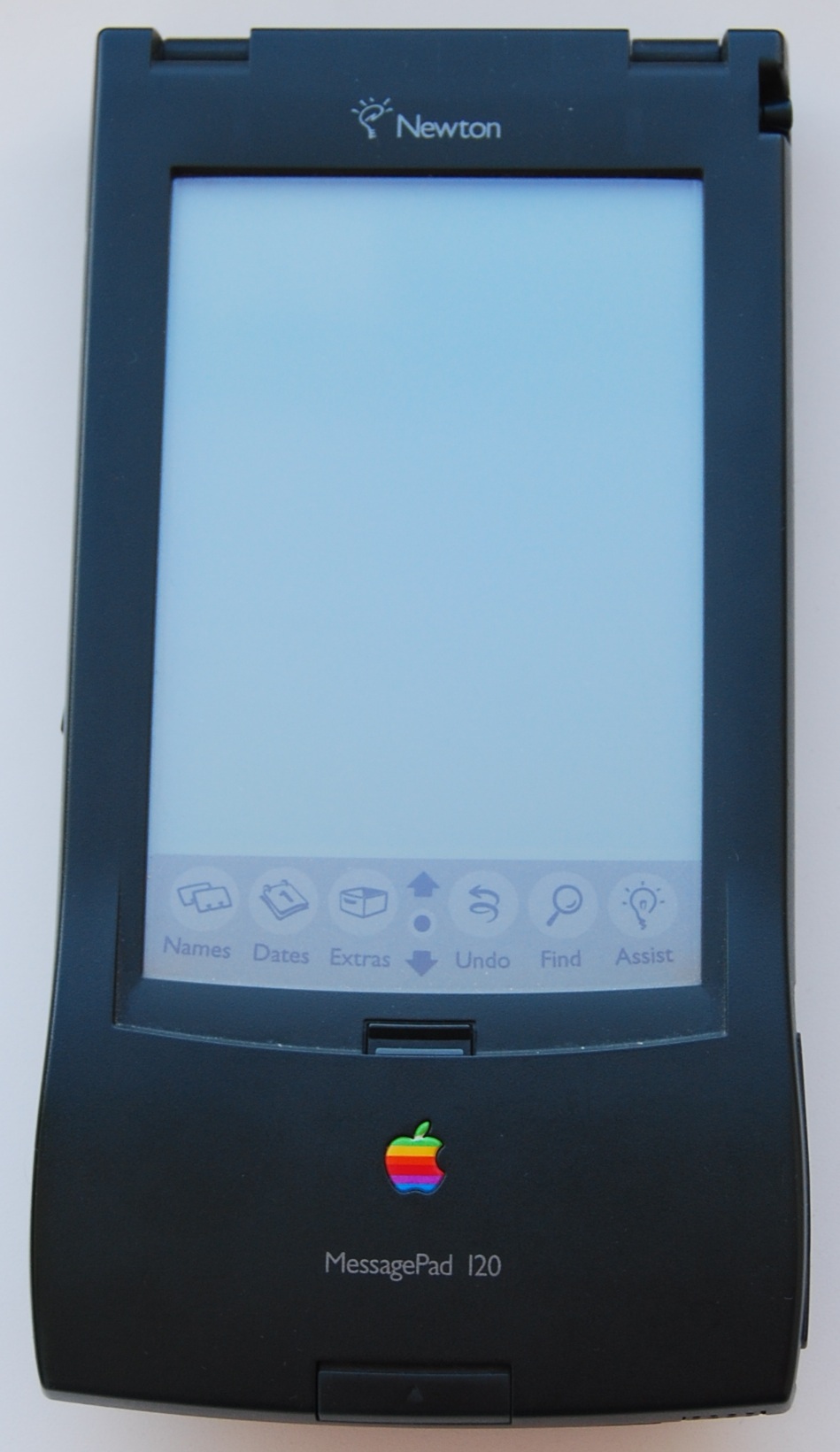
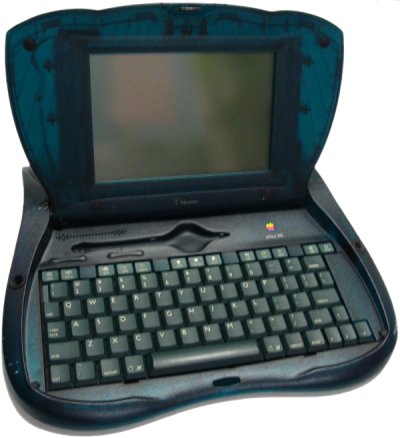

;Apple
- MessagePad (also known as the H1000, OMP or Original MessagePad)
- MessagePad 100 (same hardware as OMP, but newer system version)
- MessagePad 110
- MessagePad 120
- MessagePad 130
- eMate 300
- MessagePad 2000
- MessagePad 2100
;Motorola
- Motorola Marco
;Sharp
- ExpertPad PI-7000 (equivalent to OMP)
- ExpertPad PI-7100 (equivalent to MP 100)
;Digital Ocean
-
Tarpon
-
Seahorse
-
Siemens
-
Siemens Note Phone
;Harris
- Harris SuperTech 2000
Operating system and programming environment
NewtonScript is an advanced object-oriented programming language, developed by Apple employee Walter Smith. Some programmers complained about the $1000 cost of the Toolbox programming environment. Additionally, it required learning a new way of programming.
Newton OS had a file system, Soup, that enabled flexible ways of storing and retrieving data.
Development and lifetime
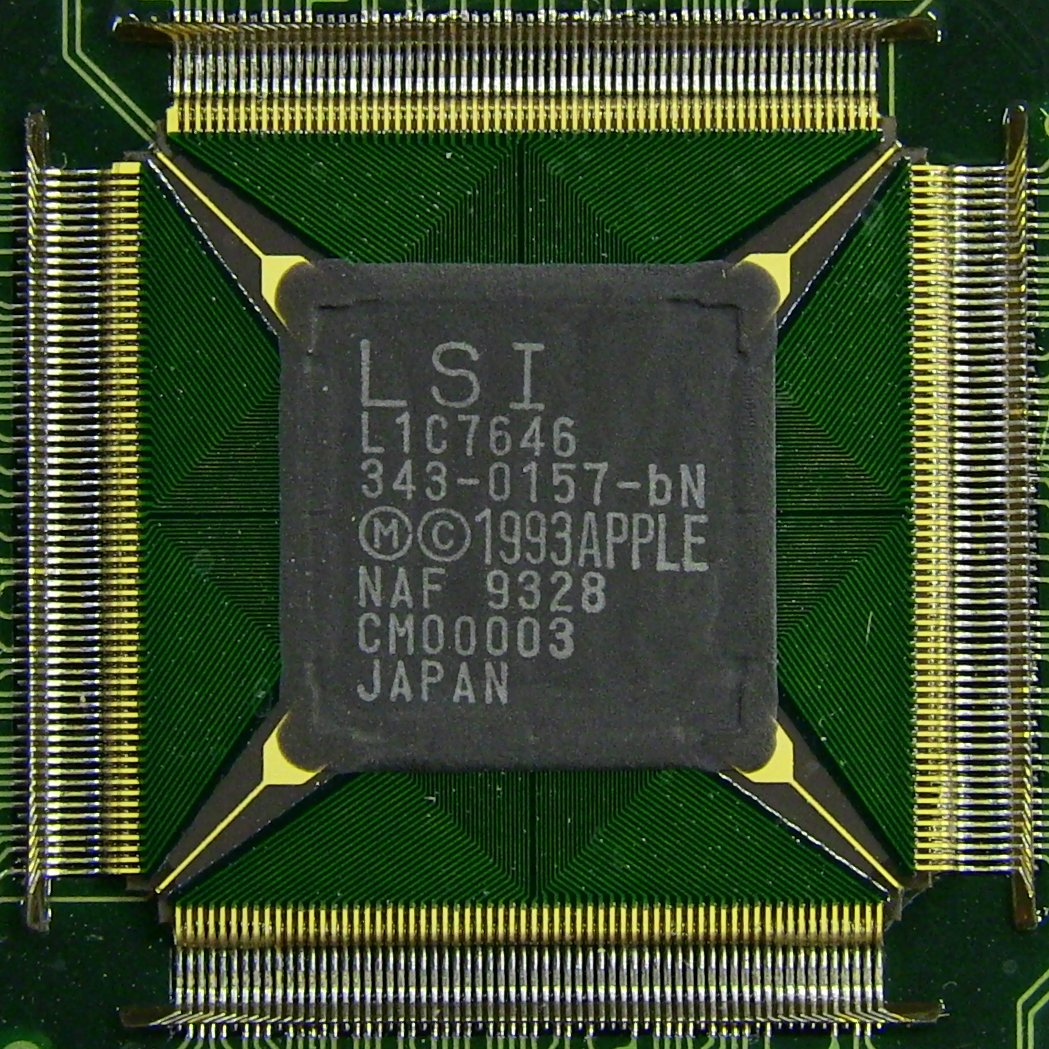
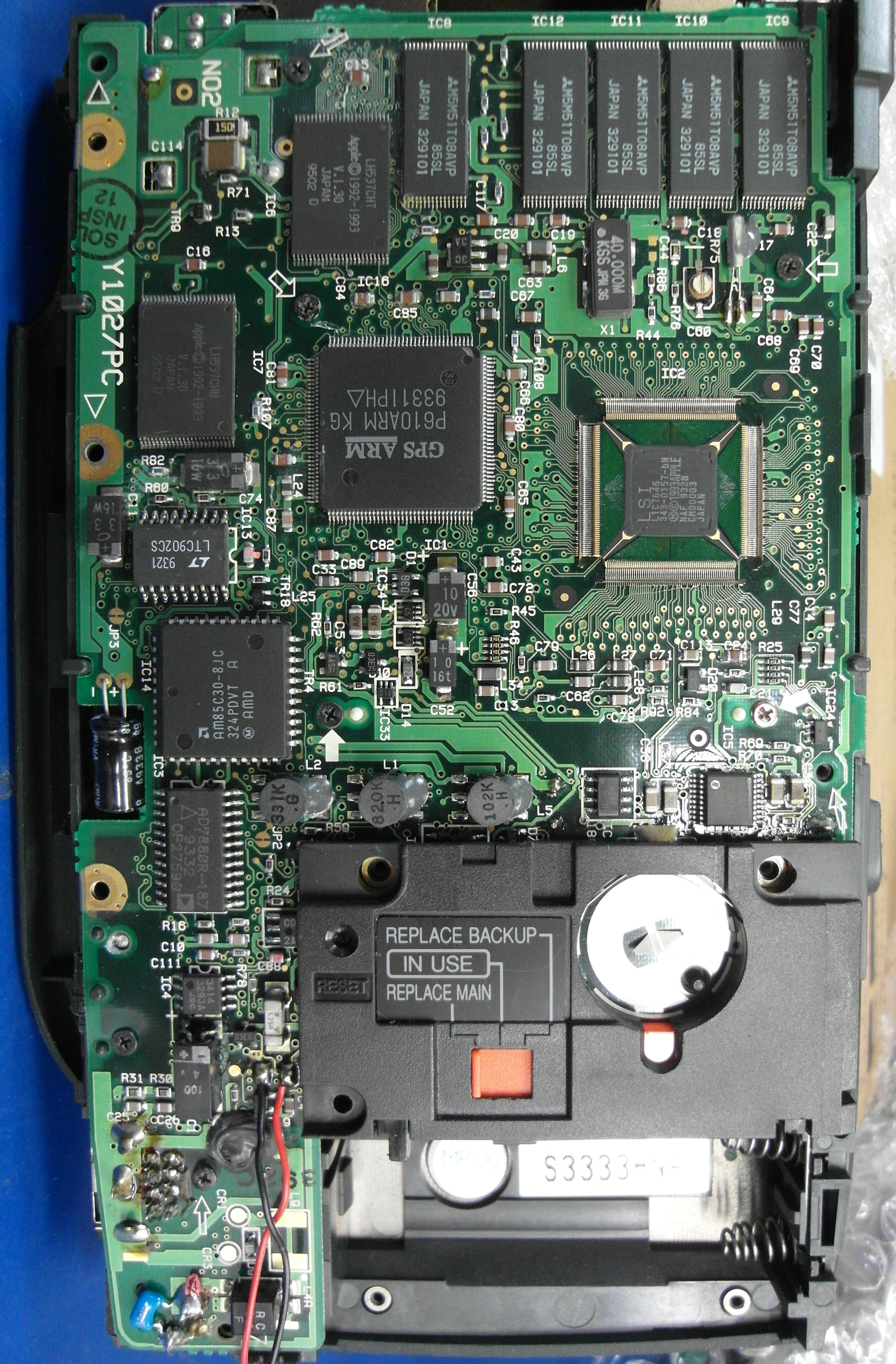
The Newton project was a personal digital assistant platform. The PDA category did not exist for most of Newton's genesis, and the phrase "personal digital assistant" was coined relatively late in the development cycle by Apple's CEO John Sculley, the driving force behind the project. Larry Tesler determined that an advanced, low-power processor was needed for sophisticated graphics manipulation. He found Hermann Hauser, co-founder of Acorn Computers which had developed the Acorn RISC Machine as first ARM architecture device, and put together Advanced RISC Machines, now Arm Ltd.
A smaller device was then designed by Jonathan Ive.
Although PDAs had been developing since the original Psion Organiser in 1984, the Newton has left one particular lasting impression: the term personal digital assistant was coined to refer to the Newton.
According to former Apple CEO John Sculley, the company invested approximately $100 million to develop Newton.
Release and reception
The Newton was considered innovative at its debut, but it suffered from its high price and problems with the handwriting recognition element, its most anticipated feature. The handwriting software was not ready by 1993 and its tendency to misread characters was widely derided in the media. This was parodied in The Simpsons episode "Lisa on Ice", where a scene makes fun of the Newton's handwriting recognition turning "Beat up Martin" into "Eat up Martha". Garry Trudeau also mocked the Newton in a weeklong arc of his comic strip Doonesbury, portraying it as a costly toy that served the same function as a cheap notepad, and using its accuracy problems to humorous effect. In one panel, Michael Doonesbury's Newton misreads the words "Catching on?" as "Egg Freckles", a phrase that became widely repeated as symbolic of the Newton's problems. This phrase was subsequently included as a trigger for an Easter egg in later editions of the MessagePad, producing a panel from the strip when it was entered on the device. In acknowledgement of the strip, Apple subsequently gifted a MessagePad to Trudeau.
Although the software improved substantially in Newton OS 2.0, it was not enough to inspire strong sales.
Cancellation
The Newton became popular in some industries, notably the medical field. However, the debut of the competing Palm Pilot substantially reduced its market share. Apple struggled to find a new direction for the Newton, and when Steve Jobs returned to the company in 1997, he killed the product line. He was critical of the device's weak performance, the management of the development team, and the stylus, which he disliked as it prevented the use of the fingers. Furthermore, with Apple already suffering heavy losses which jeopardized its survival, this made the unprofitable Newton a tempting target to axe. Jobs was likely also motivated by the fact that the Newton was the pet project of his old adversary Sculley. However, Jobs saw potential in the technology and concept, if not the execution, and eventually led Apple to create its multi-touch devices inspired by FingerWorks, the iPhone and iPad.
Newton post-cancellation{{anchor|Newton, Inc.}}
Before the Newton project was canceled, it was spun off into an Apple wholly owned subsidiary company, Newton, Inc.
Speculation continued for several years that Apple might release a new PDA with some Newton technology or collaborate with Palm. Feeding a bit of speculation, Apple put the "Print Recognizer" part of the Newton 2.1 handwriting recognition system into Mac OS X 10.2 Jaguar. It can be used with graphics tablets to seamlessly input handwritten printed text anywhere there was an insertion point on the screen. This technology, known as Inkwell, appears in the System Preferences whenever a tablet input device is plugged in. Larry Yaeger was the author of the original Rosetta recognizer on the Newton, and he was also responsible for porting it to Mac OS X. Patent applications were issued for a tablet based Macintosh. At an All Things Digital conference in 2004, Steve Jobs made reference to a new "Apple PDA" which the company had developed but had decided not to bring to market.
In September 2009, Michael Tchao, who pitched the original Newton concept to John Sculley, returned to Apple.
Emulation
Since 2004, the Einstein Project has been working on emulating the Newton for use as an alternative OS on other platforms. It is currently available for the Sharp Zaurus, Apple's Mac OS X, Nokia Maemo, Microsoft Windows, and the Pepper Pad 3. The emulator is an open source project, but requires an original Newton ROM to be installed in order to function. iPhones and iPads run Einstein since September 2010. The Android operating system runs Einstein since March 2011.[[File:Apple_Newton_and_iPhone.jpg|thumb|The Apple Newton MessagePad 2100, a 1997 model, running Newton OS, alongside the original iPhone from 2007 running [[iOS]]]]
Software development
Programs have been written for the Newton since its cancellation, including an RSS reader.
In popular culture
The Apple Newton and its poor handwriting recognition was lampooned on season six Simpsons episode "Lisa on Ice", when Kearney (one of the three teenaged thugs/school bullies) tells Dolph to take a memo on his Newton to "Beat up Martin," and the message comes up as "Eat up Martha", to which a frustrated Kearny throws the Newton away in disgust, hitting Martin Prince.
In the 1995 anime series Neon Genesis Evangelion, handheld devices modeled on the Newton can be seen multiple times, serving various internal functions within NERV.
In the 1995 film Under Siege 2: Dark Territory, the main character Casey Ryback (Steven Seagal) connects an Apple Newton PDA to the telephone network of the hijacked train on which the film is set, and sends a fax to his workplace, which is then forwarded to Admiral Bates, Ryback's contact at the Pentagon. The hijackers subsequently discover and hack the Newton, thus learning of Ryback's presence on the train.
In the 1998 interactive video game The X-Files Game, the main character uses an Apple Newton to make notes, read e-mail and navigate the different locations of the game.
During Apple's March 21, 2016, keynote conference, a celebration video called "40 Years in 40 Seconds" was unveiled. The video featured flashing text of names from Apple's most notable products and taglines in their forty-year history, including Newton. However, in Newton's case, it was the only name depicted in the video being explicitly scratched out, mimicking how users deleted text on the device, and referencing the full cancellation of the product line.
In the TV series For All Mankind season 3, episode 1, an alternative 1992 history Newton MessagePad with backlit (possibly color) display is shown at a briefing scene.
Notes
References
References
- Hormby, Tom. (August 6, 2013). "The Story Behind Apple's Newton". Low End Mac.
- "Newton MessagePad".
- Reimer, Jeremy. (2022-06-01). "Remembering Apple's Newton, 30 years on".
- Foresman, Chris. (2009-09-29). "Apple hires former Newton designer to head product marketing".
- Brown, Marcel. (May 29, 2015). "Apple Newton Announced". This Day in Tech History.
- Gallagher, William. (2023-08-03). "Newton's August 1993 launch set the stage for what would become the iPad and iPhone".
- McCracken, Harry. (2012-06-01). "Newton, Reconsidered".
- eZine. (2021-07-11). "Newtons' Lutions Issue 1 • Neperos".
- Honan, Matt. (August 5, 2013). "Remembering the Apple Newton's Prophetic Failure and Lasting Impact".
- "Revisiting the great-grandfather to the iPhone: The Apple Newton".
- (August 21, 2020). "Retro Apple: The Apple Newton MessagePad Was Well Ahead of Its Time".
- "Newton MessagePad - 1993".
- "Treading Lightly in a Sea of Hand-Held Computers".
- "The Apple Newton MessagePad Review".
- "Today in Apple history: Newton MessagePad reaches new heights".
- (May 12, 1997). "MessagePad 2000: New Newton Exceeds Expectations".
- "Newton MessagePad".
- . (1995). ["Apple MessagePad Handbook"](https://www.newted.org/download/manuals/0307258ANEWTONMP.PDF). *Apple Computer*.
- "First Look: Newton OS 2.0".
- "Newton MessagePad 120 (with OS 1.3 or 2.0)".
- "Apple Newton H1000 & MessagePad 100 – Specifications".
- "NEWTON MessagePads Facts and FAQs".
- . (1995). ["New Features of the Newton 2.0 Operating System"](https://www.yumpu.com/en/document/read/55991776/apple-newton-os-20-new-features-newton-os-20-new-features). *Apple Computer*.
- Marshall, Patrick. (18 April 1994). "Organized time".
- (July 24, 1997). "Newton Connection Utilities ReadMe". Apple, Inc..
- "Newton Connection Utilities". Apple, Inc..
- "Today in Apple history: Newton MessagePad inspires mobile revolution".
- (January 19, 1998). "Stationery Construction Kit". Stand Alone, Inc..
- Luckie, Douglas. "Newton MessagePad". Michigan State University.
- "Sharp's Newton ExpertPad". Michigan State University.
- (9 January 1995). "Newton-based PDA announced". InfoWorld Media Group, Inc..
- "Back before iPhones and Androids, we had these...".
- Hohl, Fritz. (August 16, 2013). "Siemens NotePhone".
- Lee, Yvonne L.. (1993-12-13). "Third-party vendors to offer Newton hardware". [[InfoWorld]].
- "Siemens Newton NotePhone". [[National Museum of American History]], [[Smithsonian Institution]].
- (19 February 1996). "Discord in hardwareland". IDG Network World Inc.
- "Walter Smith, software guy". waltersmith.us.
- Smith, Walter R.. (1994). "Proceedings of COMPCON '94". IEEE.
- Kuehl Julie. (January 13, 2012). "John Sculley: The Truth About Me, Apple, and Steve Jobs Part 2". The Mac Observer.
- (September 25, 2006). "Who Is Jonathan Ive? An in-depth look at the man behind Apple's design magic". [[BusinessWeek]].
- (2000). "Cyber Elite: Jonathan Ive". Time Digital.
- "PDA". authorSTREAM.
- [http://www.bloggersbase.com/gadgets-and-Mobile/history-of-pdas-part-1/ History of PDAs blog] {{webarchive. link. (July 8, 2011)
- Kawamoto, Dawn. (October 2, 2003). "Riding the next technology wave". CNET.
- Hide, Nick. (September 23, 2013). "The Simpsons' 'Eat Up Martha' was the first autocorrect fail". CNET.
- Markoff, John. (December 18, 1995). "Doonesbury' and Apple Hatch a Comic Surprise". New York Times.
- (2008). "Invisible Engines: How Software Platforms Drive Innovation and Transform Industries". [[MIT Press]].
- (1996-02-19). "Paradise Lost: Apple's Quest for Life after Death".
- Dormehl, Luke. (2020-05-22). "Today in Apple history: Newton spins off as its own company".
- (1997-08-06). "Newton, Inc Unveils New Corporate Identity and Headquarters".
- Yaeger, Larry. "Handwriting Recognition Technology in the Newton's Second Generation 'Print Recognizer' (The One That Worked)". Apple Computer World Wide Newton Conference, September 4–5, 2004.
- (August 13, 2004). "Euro filing reveals Apple handheld design images".
- Jade, Kasper. (June 7, 2004). "Jobs: Apple developed, but did not ship Apple PDA".
- Honan, Mat. "Remembering the Apple Newton's Prophetic Failure and Lasting Impact".
- Stone, Brad. (September 28, 2009). "Apple Rehires a Developer of Its Newton Tablet". The New York Times.
- Yarow, Jay. (July 26, 2011). "Secret Apple Execs You've Never Heard Of".
- "pguyot/Einstein". code.google.com.
- (March 13, 2011). "Apple Newton on Android". My Apple Newton.
- "Recent additions to the UNNA entry database". United Network of Newton Archives.
- "40Hz".
- (September 26, 2019). "Did 'The Simpsons' Predict Autocorrect?". [[Snopes.com]].
- "tweet".
- Molinari, Matteo; Kamm, Jim. (April 1, 2002). "Oops! Movie Mistakes That Made the Cut". [[Citadel Press]].
- [[Ebert, Roger]]. (July 17, 1995). "Under Siege 2: Dark Territory". RogerEbert.com.
- "Computer X-Files: The game is out there".
- Hackett, Stephen (March 22, 2016) [https://512pixels.net/2016/03/0-years-in-40-s/ Apple’s ’40 Years in 40 Seconds’ Video Annotated ] {{Webarchive. link. (March 30, 2022 ''512 Pixels'' (blog). Retrieved 2019-10-11)
- (November 2019). "For All Mankind".
This article was imported from Wikipedia and is available under the Creative Commons Attribution-ShareAlike 4.0 License. Content has been adapted to SurfDoc format. Original contributors can be found on the article history page.
Ask Mako anything about Apple Newton — get instant answers, deeper analysis, and related topics.
Research with MakoFree with your Surf account
Create a free account to save articles, ask Mako questions, and organize your research.
Sign up freeThis content may have been generated or modified by AI. CloudSurf Software LLC is not responsible for the accuracy, completeness, or reliability of AI-generated content. Always verify important information from primary sources.
Report