From Surf Wiki (app.surf) — the open knowledge base
Ape Escape (video game)
1999 video game

1999 video game
| Field | Value |
|---|---|
| title | Ape Escape |
| image | ApeEscapeNACover.jpg |
| caption | North American PlayStation cover art |
| developer | Sony Computer Entertainment Japan |
| publisher | Sony Computer Entertainment |
| director | Masamichi Seki |
| producer | |
| designer | |
| programmer | Yuji Yamada |
| composer | Soichi Terada |
| series | Ape Escape |
| platforms | |
| released | PlayStation |
| PlayStation Portable | |
| genre | Platform, action-adventure |
| modes | Single-player |
the video game
PlayStation Portable
Ape Escape is a 1999 platform game developed and published by Sony Computer Entertainment for the PlayStation. The first game in the Ape Escape series, the game tells the story of an ape named Specter who gains enhanced intelligence and a malevolent streak through the use of an experimental helmet. Specter produces an army of apes, which he sends through time in an attempt to rewrite history. Spike, the player character, sets out to capture the apes with the aid of special gadgets.
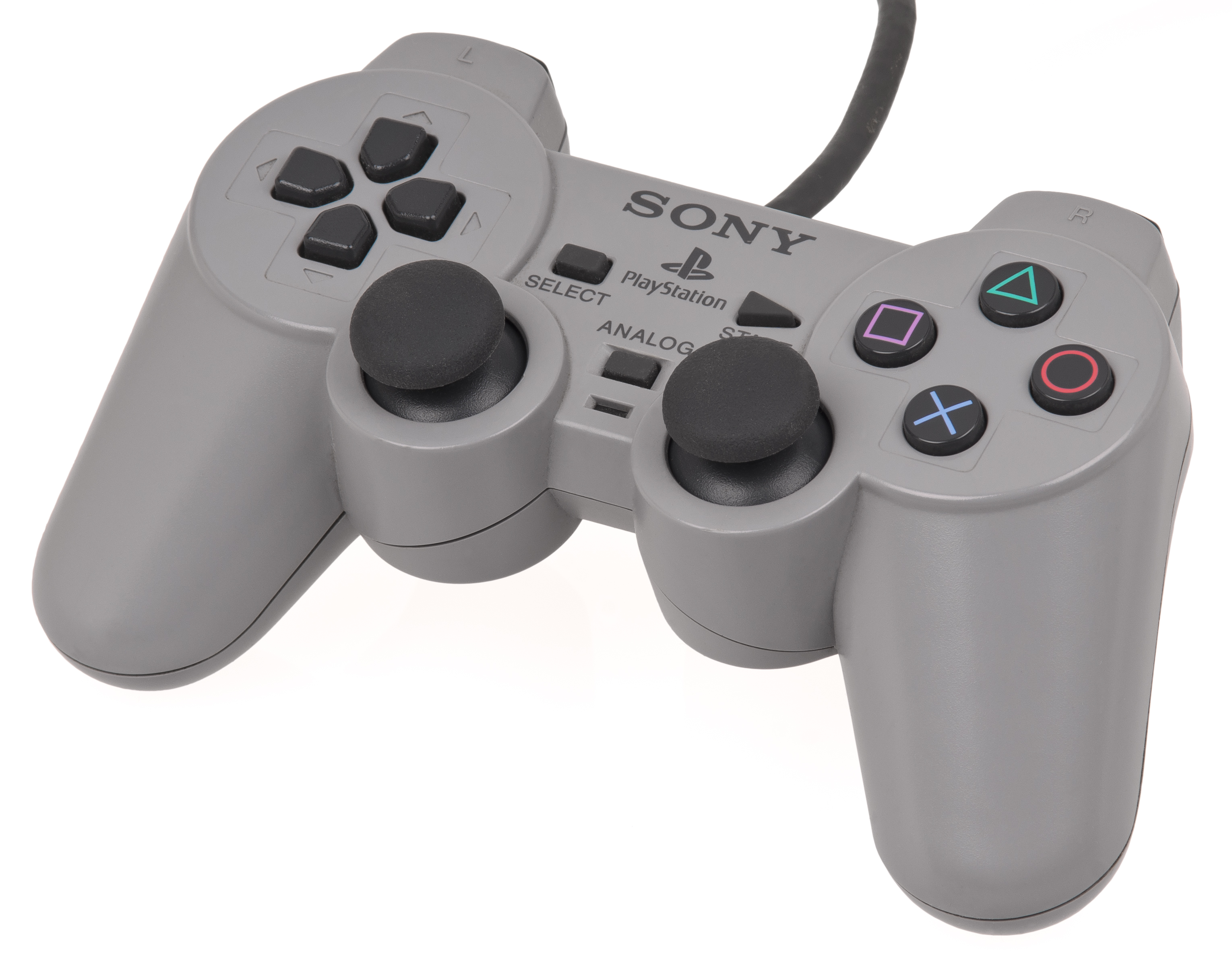
Ape Escape is played from a third-person perspective. Players use a variety of gadgets to pursue and capture the apes, traversing across several environments. The game's controls are heavily centered around the analog sticks, being the first game to require the use of the PlayStation's DualShock controller. Development of Ape Escape lasted over two years, and was generally focused on adapting to the use of the controller, which was a significant challenge for the development team.
Ape Escape was met with critical acclaim from critics, with praise particularly directed at the innovative use of the dual analog controls, as well as the graphics and music; the voice acting received minor criticism. The game is widely considered to be one of the greatest on the PlayStation console, and received several re-releases. The game also spawned numerous sequels and spin-offs, beginning with Ape Escape 2 in 2002. A remake, Ape Escape: On the Loose, was released for the PlayStation Portable in 2005 to mixed reviews.
Gameplay
Ape Escape is a platform and action-adventure game viewed from a third-person perspective. For most of the game, players control Spike, a boy tasked with pursuing and capturing the apes. To do so, players use gadgets such as the Stun Club against enemies and the Time Net to transport apes. More gadgets become available as players progress. Players also control vehicles like a rubber raft, which allows water travel, and the water net, which assists in underwater traversal. The controls are centered around the analog sticks: the left stick moves players, while the right manipulates gadgets.
The apes are equipped with helmets, which feature a siren representing their alarm level: blue means relaxed, and unaware of the player characters' presence; yellow is alert; and red indicates fully alarmed, resulting in attempting to escape or becoming hostile. An ape's personality can also be determined by the colour of shorts: yellow is standard, light blue means timid, and red represents aggressive. Some apes are equipped with weaponry, allowing them to attack players, or binoculars that allow them to identify players from long distances. Players are required to capture a specific number of apes to clear a level; remaining apes can be captured upon revisiting the level.
When players take damage, they lose a life. Players can recharge their health by collecting cookies. Throughout the game, players can gather Specter Coins, which can be found in hidden locations in each stage. Collecting enough Specter Coins unlocks three bonus mini-games: Ski Kidz Racing, a skiing game in which players race against opponents; Galaxy Monkey, a shoot 'em up where players fight against aliens; and Specter Boxing, a boxing game where players dodge and punch using the analog sticks.
Plot
The story begins when Specter, a white-haired monkey who is well known at his home in a monkey-themed amusement park, puts on a Monkey/Peak Point Helmet created by a Professor, which increases his intelligence beyond that of a regular monkey but, due to it being a prototype version, also twists his mind, turning him evil. Imbued with this new power, Specter gives Monkey Helmets to all the monkeys in the park and sets them loose, having them take over the local laboratory where the Professor and his assistant Natalie (Katie/Natsumi) are currently building a time machine. As Spike (Kakeru) and his best friend Jake (Buzz/Hiroki) arrive at the laboratory, they find themselves transported by Specter, along with all the other monkeys, to the various reaches of time. Realizing that leaving the monkeys to their own devices could rewrite history in disastrous ways, the Professor tasks Spike with finding all of the monkeys scattered across time and sending them back to the present.
Spike must also face off against Specter, who has not only built himself an advanced Monkey Helmet further increasing his own intelligence but has also brainwashed Jake to his side. After a lengthy series of captures and battles in segments of history ranging from the age of the dinosaurs, medieval times, and the present day, Spike is eventually able to capture all of the apes. Spike chases Specter to his deranged theme park, where he is holding a recently captured Professor, Natalie, and his friend Jake. Spike frees Jake of his mind control, and releases both the professor and Natalie, and goes on to find Specter in an alternative universe he calls the "Peak Point Matrix". Spike defeats Specter after a final battle, and he is captured and sent back to the zoo.
Development
A 25-person development team created Ape Escape over approximately 2.5 years. A team of three worked on the original prototype, led by producer Susumu Takatsuka, who had moved from Sega AM2; the other two, Yuji Yamada and Takamitsu Iijima, were recent graduates, and later became the game's lead programmer and character designer, respectively. They set out to create a 3D, open-field sandbox game similar to Super Mario 64. When executive producer Shuhei Yoshida joined development, he and Takatsuka hired experienced designer Kenji Kaido, initially as an associate producer and later a lead designer. Two designers, Hingo Matsumoto and Kenkichi Shimooka, were originally assigned to the game; Katsuyuki Kanetaka joined about a year into development. Most of the team consisted of largely inexperienced part-time college students and recent graduates, and those who participated in Sony's Net Yaroze project.
Shortly after the team began conceiving the game's concept, they attended a meeting about the development of the DualShock. Intrigued by its potential, they implemented its use in Ape Escape, making it the first game to require the use of the DualShock for gameplay. Conceptualizing the controls for the analog sticks was the team's greatest challenge; the controls underwent great testing prior to finalization. Believing players would get confused and lost in the 3D worlds, the team conceptualized having various animals to chase, serving as a clear objective to help players navigate its large, open areas. Due to the popularity of the Pipo monkey design by artist Takamitsu Iijima, they chose to focus only on monkeys. Iijima gave them helmets so players could easily see them from afar. The monkeys originally dropped feces when being chased, but this was replaced with slippery banana skins. To entice the player to capture all the monkeys and create replay value, each one was given a name and personality.
The game's music was composed by Soichi Terada, who wrote it on an Akai S1000 digital sampler, alongside an NEC computer and various synthesisers. After a game director listened to Terada's track "Sumo Jungle", he was given the opportunity to compose the music for Ape Escape. He wrote many tracks with high-speed tempos to fit with the characters' constant running. At the suggestion of producer Susumu Takatsuka, the music was designed to be interactive and playful; for example, entering sneaking mode causes the drum and bass to cut out, giving it a mellow atmosphere. Music from the game was included in Ape Escape Originape Soundtracks, published on November 18, 2011, by Terada's label Far East Recording. The gameplay sound effects were designed by Masaaki Kaneko, while the sound effects in the cutscenes were provided by Masatoshi Mizumachi. The English voice acting was recorded at Dubey Tunes Studios in San Francisco, California, with Sara Holihan and Hunter A. Pipes III serving as voice-over director and producer, respectively.
Ape Escape was officially announced in the April 1999 issue of Official U.S. PlayStation Magazine. A playable demonstration was integrated into the Jampack Summer '99 compilation CD released by PlayStation Underground. A second playable demonstration was included on a promotional compilation disc released by Pizza Hut on November 14. Promotions for the game were held on Cartoon Network during Sony's winter holiday marketing campaign of 1999. The game was released in North America on June 22, 1999. A remake, titled Ape Escape: On the Loose, was announced on May 11, 2004, during Sony's press conference at the Electronic Entertainment Expo. It was released as a launch title for the PlayStation Portable (PSP) on March 24, 2005. The remake features altered controls, due to the lack of a right analog stick on the PSP, as well as some slightly different graphics and mini-games.
Reception
Critical reception
Ape Escape received "universal acclaim", according to review aggregator Metacritic, based on 19 reviews. Japanese publication Famitsu gave it 32 out of 40, based on four reviews. Reviewers praised the game's use of analog controls, as well as its graphics and music, with minor criticism directed towards the voice acting.
GameRevolutions Johnny Liu considered the innovative controls were one of the game's standout features. GameSpots Peter Bartholow declared the controls "beautifully executed", praising the ease of use. Doug Perry of IGN felt that, while the controls are initially difficult, using the analog sticks became "new and refreshing". AllGames Scott Alan Marriott similarly found controls improved over time and praised the raft controls. Edge credited the distinct stages and original weapons, concluding that Ape Escape "offers enough novelty to make it worth serious consideration for anyone tired of the many me-too platformers". Next Generation felt the game's "general light-hearted cuteness makes it ideal for younger players, but its originality and challenge will also appeal to the most jaded hardcore players".
GameSpots Bartholow praised the visuals, naming the game "a sight to behold" and commending the use of colour and detail. IGNs Perry wrote the textures "aren't terribly stunning" and found the character design "rather fundamental", but felt the game's lighting and camera blended to create "a fantastic and gratifying effect". GameRevolutions Liu named the graphics "good, but not the best", noting frame rate slowdown. AllGames Marriott similarly mentioned pop-up issues and other glitches, but ultimately commended the graphics, noting the "distinct Japanese style".
AllGames Marriott praised the appropriateness of the music to the setting, and GameSpots Bartholow applauded the soundtrack's interactivity. GameRevolutions Liu felt the music improves as the game progresses, similarly commending its use with gameplay. IGNs Perry described the soundtrack as "a weird concoction of J-pop and techno-synth" and found the "poppy tunes" catchier than the "techno tunes". Criticism was directed at the voice acting; GameSpots Bartholow described it as "uniformly atrocious", while IGNs Perry referred to Spike's voice as "nothing special". The game's other sound effects, such as the ape noises, were met with positive reactions.
PlayStation Portable version
Ape Escape: On the Loose received "mixed or average reviews" according to Metacritic, based on 35 critics. Jeff Gerstmann of GameSpot lamented the loss of the "finely tuned control" of the original, but felt that the game "still has considerable charm". GameSpys David Chapman felt that, despite the noticeable flaws of the game, particularly the controls, it still remains "a lot of fun to play". Juan Castro of IGN praised the game's use of colour, noting its enhancement on the PlayStation Portable screen. Castro also warned that "fans of the series will probably miss the second analog stick", but felt that the gadgets mapped to the PSP's face buttons would suffice. *1Up.com*s Jeremy Parish criticised the porting of the game for being outdated, declaring it "a game that was better in another time, on another system, ported simply for cynical convenience". Parish felt that On the Loose served "to blemish the PSP's reputation ... as a dumping ground for warmed over 32-bit offerings far beyond their sell-by date".
Sales
Ape Escape sold 70,000 copies in Japan in its first three days, over 293,000 copies by the year's end, and more than 500,000 overall. It sold more than 600,000 copies in the United States, and earned the Greatest Hits label. By July 2003, it had sold 1.4 million copies worldwide. On the Loose sold over 250,000 copies, also earning the Greatest Hits label.
Legacy
Ape Escape is considered one of the most significant titles on the PlayStation console. IGNs Perry declared it "the best 3D platform game on the PlayStation", and GameSpots Bartholow named it "one of the best 3D platformers to date". AllGames Marriott described it as "one of the most enjoyable 3D platform games" on the PlayStation. IGN included Ape Escape in an article documenting the greatest PlayStation 3D platform games, and later named it the eighth greatest game on the console. In March 2004, Official UK PlayStation Magazine named it the ninth greatest game of all time. Game Informer ranked it 100 on its list of best games in 2001, praising its gameplay and innovation.
Ape Escape spawned a series of games, including sequels and spin-offs. A direct sequel, Ape Escape 2, was released for the PlayStation 2 (PS2) in July 2001, followed by Ape Escape 3 for PS2 in July 2005. Several spin-off titles were released exclusively in Japan: Pipo Saru 2001 in July 2001 and Saru! Get You! Million Monkeys in July 2006 for the PS2, followed by Saru Get You: Pipo Saru Racer in December 2006 and Saru! Get You! SaruSaru Big Mission in July 2007 for the PSP. Another spin-off, Ape Quest, was also released worldwide for PSP in January 2008. A series of party games has also been released: Ape Escape: Pumped & Primed in July 2004 and EyeToy: Monkey Mania in August 2004 for PS2, as well as Ape Academy 2 for PSP in December 2005, and PlayStation Move Ape Escape for the PlayStation 3 in December 2010.
Spike is available as a playable character in PlayStation All-Stars Battle Royale (2012), and an ape costume is available as a downloadable outfit in some of the LittleBigPlanet games (2008–2012). A mini-game featuring an ape from Ape Escape is included in Metal Gear Solid 3: Snake Eater (2004) and the PlayStation 5 and Windows versions of its remake Metal Gear Solid Delta: Snake Eater (2024). Astro Bot (2024) features a dedicated Ape Escape level in which the player, dressed as Spike, captures apes; several apes are also available as collectible "Bots" and Spike and Specter as "Special Bots".
Ape Escape was added to the Deluxe tier of the PlayStation Plus lineup in May 2022, playable on PlayStation 4 and PlayStation 5 with full Trophy support. On the Loose was added in August 2023.
Notes
References
References
- {{harvnb. Ann. Hanshaw. 1999
- Parish, Jeremy. (March 28, 2005). "''Ape Escape: On the Loose''". [[Ziff Davis]].
- Marriott, Scott Alan. "''Ape Escape'' – Review". [[All Media Network]].
- (October 14, 1999). "Sony Commences Million Dollar Campaigns". [[Ziff Davis]].
- Buchanan, Levi. (May 2, 2008). "DualShock's 10th Anniversary". [[Ziff Davis]].
- (August 1999). "''Ape Escape''". [[Future Publishing]].
- (June 30, 2006). "プレイステーション – サルゲッチュ". [[Enterbrain]].
- (November 18, 2011). "''Ape Escape Originape Soundtracks''". Elvista Media Solutions Corp..
- "''Game Rave'' Presents: Pizza Hut: Disc 1". Game Rave.
- Liu, Johnny. (July 1, 1999). "''Ape Escape'' Review". [[CraveOnline]].
- Gerstmann, Jeff. (March 24, 2005). "''Ape Escape: On the Loose'' Review". [[CBS Interactive]].
- Bartholow, Peter. (June 18, 1999). "''Ape Escape'' Review". [[CBS Interactive]].
- Chapman, David. (March 28, 2005). "GameSpy: ''Ape Escape: On the Loose''". IGN Entertainment.
- Cork, Jeff. (November 16, 2009). "''Game Informer''{{'}}s Top 100 Games Of All Time (Circa Issue 100)". [[GameStop]].
- Packwood, Lewis. (December 27, 2025). "How ''Ape Escape''{{'}}s DualShock legacy lives on in today's PS5 games: 'We'll never make it compatible with regular controls!'". [[Future plc]].
- Perry, Douglass. (June 7, 1999). "''Ape Escape''". [[Ziff Davis]].
- (July 15, 1999). "The Greatest PlayStation Games Ever: 3D Platformers". [[Ziff Davis]].
- Castro, Juan. (March 24, 2005). "''Ape Escape: On the Loose''". [[Ziff Davis]].
- Perry, Doug. (June 23, 1999). "''Ape Escape''". [[Ziff Davis]].
- (June 8, 2000). "Top 25 Games of All Time: #6–10". [[Ziff Davis]].
- (1999). "Ape Escape Instruction Booklet". [[Sony Computer Entertainment]].
- "''Ape Escape''". [[Fandom, Inc.]].
- "''Ape Escape: On the Loose''". [[Fandom, Inc.]].
- (August 1999). "''Ape Escape''". [[Imagine Media]].
- (March 2004). "Best Games of All Time". [[Future plc]].
- (November 18, 2011). "''Ape Escape Originape Soundtracks'' / サルゲッチュ・オリジサル・サウンドトラック by ''Ape Escape'', Soichi Terada". [[Apple Inc..
- (July 1999). "Q&A". [[Imagine Media]].
- (May 19, 1999). "''PlayStation Underground'' Jampack - Summer '99". IGN.
- Kujawa, Kraig. (April 1999). "Jungle Fever". [[Ziff Davis]].
- (June 22, 1999). "''Ape Escape'' Released for the PlayStation". [[ZDNET]].
- Thorsen, Tor. (May 11, 2004). "Avalanche of PSP games unveiled". [[Fandom (website).
- Thorsen, Tor. (February 3, 2005). "PSP launching March 24". [[CBS Interactive]].
- Wada, Tetsuro. (May 25, 2015). "Soichi Terada Interview! Music of Happiness". Tokyo Digital Music Syndicates.
- Yarwood, Jack. (June 4, 2025). "''Ape Escape'', Sony's Groundbreaking Platformer That Unlocked The DualShock's Potential". [[Gamer Network]].
- (1999). "''Ape Escape''". [[Sony Computer Entertainment]].
- Fisher, Ken. (July 24, 2006). "Sony talks up the future of the PSP at Comic-Con". [[Condé Nast]].
- (January 10, 2002). "PlayStation Greatest Hits: Complete List". [[Ziff Davis]].
- Halverson, Dave. (July 2003). "''Ape Escape 2''". [[Future Publishing]].
- "1999 Top 300". Game Data Library.
- "Game Data Library".
- "1991 H1 Top 100". Game Data Library.
- "PS1 US Sales from 1995-2003".
- Nix, Marc. (September 17, 2005). "TGS 2005: ''Ape Escape Academy 2''". [[Ziff Davis]].
- (January 22, 2002). "''Ape Escape'' Sequel At World Hobby Fair". [[Ziff Davis]].
- Gantayat, Anoop. (July 15, 2005). "''Ape Escape 3''". [[Ziff Davis]].
- (August 9, 2006). "''Ape Escape Racing''". [[Ziff Davis]].
- Haynes, Jeff. (January 18, 2008). "''Ape Quest'' Review". [[Ziff Davis]].
- Foster, George. (September 5, 2024). "''Astro Bot'' Has A Full Level Of ''Ape Escape'' In It". [[Valnet]].
- Tailby, Stephen. (February 14, 2025). "''Astro Bot'': All Special Bots". [[Hookshot Media]].
- Hooson, Naren. (October 1, 2012). "''PlayStation All-stars'' characters have all been revealed". [[VG247]].
- Yoon, Andrew. (June 29, 2007). "''Ape Escape: Saru Saru Big Mission'' downloadable demo". [[AOL]].
- Gantayat, Anoop. (June 21, 2004). "Hands On: ''Saru Eye Toy''". [[Ziff Davis]].
- Kietzmann, Ludwig. (January 21, 2009). "''LittleBigPlanet'' getting ''WipEout'', ''Ape Escape'' costumes". [[AOL]].
- Gantayat, Anoop. (July 25, 2006). "''Ape Escape: Million Monkeys'' Playtest". [[Ziff Davis]].
- Yip, Spencer. (September 28, 2011). "''Metal Gear Solid HD Collection'' Has ''Monster Hunter'' Missions, But No Snake Vs. Monkey". [[Curse, Inc.]].
- Walker, Ian. (February 14, 2025). "''Metal Gear Solid Delta'' on Xbox replaces ''Ape Escape'' minigame with ''Bomberman''". [[Vox Media]].
- Smith, David. (June 18, 2001). "''Piposaru 2001''". [[Ziff Davis]].
- Moriarty, Colin. (June 23, 2011). "PlayStation Move ''Ape Escape'' Release Date Revealed". [[Ziff Davis]].
- Lewis, Ed. (August 10, 2004). "''Ape Escape: Pumped & Primed'' Announced". [[Ziff Davis]].
- Ivan, Tom. (May 23, 2022). "The full PlayStation Plus games library line-up has been confirmed for Asia". [[Gamer Network]].
- Ivan, Tom. (August 15, 2023). "August's PlayStation Plus Game Catalogue titles are now available to claim". [[Gamer Network]].
- Ivan, Tom. (May 23, 2022). "More classic PlayStation games have added trophy support". [[Gamer Network]].
This article was imported from Wikipedia and is available under the Creative Commons Attribution-ShareAlike 4.0 License. Content has been adapted to SurfDoc format. Original contributors can be found on the article history page.
Ask Mako anything about Ape Escape (video game) — get instant answers, deeper analysis, and related topics.
Research with MakoFree with your Surf account
Create a free account to save articles, ask Mako questions, and organize your research.
Sign up freeThis content may have been generated or modified by AI. CloudSurf Software LLC is not responsible for the accuracy, completeness, or reliability of AI-generated content. Always verify important information from primary sources.
Report