From Surf Wiki (app.surf) — the open knowledge base
Aomori Prefecture
Prefecture of Japan

Prefecture of Japan
| Field | Value | |
|---|---|---|
| name | Aomori Prefecture | |
| native_name | 青森県 | |
| settlement_type | Prefecture | |
| translit_lang1 | Japanese | |
| translit_lang1_type | Japanese | |
| translit_lang1_info | 青森県 | |
| translit_lang1_type1 | Rōmaji | |
| translit_lang1_info1 | Aomori-ken | |
| image_skyline | {{Multiple image | |
| border | infobox | |
| total_width | 290 | |
| image_style | border:1; | |
| perrow | 1/2/2 | |
| image1 | An apple branch with Mount Iwaki in the background.jpg | |
| alt1 | Apple blossoms in front of a mountain | |
| caption1 | Mount Iwaki and apple blossom | |
| image2 | Sanmon of Bodaiji temple with Mount Osore in the background.jpg | |
| alt2 | Japanese Buddhist temple | |
| caption2 | Mount Osore | |
| image3 | Odai Yamamoto I potsherds.jpg | |
| alt3 | Potsherds from the Ōdai Yamamoto I site | |
| caption3 | Jōmon period potsherds from Ōdai Yamamoto I Site | |
| image4 | Oirase-keiryu.jpg | |
| alt4 | River flowiing through forest | |
| caption4 | Oirase River | |
| image5 | Hakkoda snow monsters (51885477032).jpg | |
| alt5 | Snow covered trees covering a mountainside | |
| caption5 | Snow-covered trees on the Hakkōda Mountains | |
| image_flag | Flag of Aomori Prefecture.svg | |
| flag_alt | Flag with green map of the prefecture on white background | |
| image_blank_emblem | Emblem of Aomori Prefecture.svg | |
| blank_emblem_alt | Green map of the prefecture on white background | |
| blank_emblem_type | Symbol | |
| image_map | Map of Japan with highlight on 02 Aomori prefecture.svg | |
| coordinates | ||
| subdivision_type | Country | |
| subdivision_name | Japan | |
| subdivision_type1 | Region | |
| subdivision_name1 | Tōhoku | |
| subdivision_type2 | Island | |
| subdivision_name2 | Honshu | |
| established_title | Establishment as part of Mutsu Province | |
| established_date | Around 1094 | |
| established_title1 | Established as part of Rikuō Province | |
| established_date1 | December 7, 1868 | |
| established_title2 | Establishment of Aomori Prefecture | |
| established_date2 | September 4, 1871 | |
| seat_type | Capital | |
| seat | Aomori | |
| parts_type | Subdivisions | |
| parts_style | coll | |
| p1 | Districts: 8 | |
| p2 | Municipalities: 40 | |
| leader_title | Governor | |
| leader_name | Sōichirō Miyashita | |
| area_total_km2 | 9,645.64 | |
| area_water_percent | 1.2 | |
| area_rank | 8th | |
| elevation_max_point | Mount Iwaki | |
| elevation_max_ft | 5,330 | |
| elevation_max_m | 1624.7 | |
| elevation_min_point | Pacific Ocean | |
| elevation_min_ft | 0 | |
| elevation_min_m | 0 | |
| population_demonym | Aomorian | |
| population_total | 1,188,043 | |
| population_as_of | July 1, 2023 | |
| population_rank | 31st | |
| population_density_km2 | auto | |
| demographics_type2 | GDP | |
| demographics2_footnotes | ||
| demographics2_title1 | Total | |
| demographics2_info1 | JP¥ 4,464 tillion | |
| US$ 28.58 billion (2021) | ||
| iso_code | JP-02 | |
| blank_name_sec1 | Longitude | |
| blank_info_sec1 | 139°30 E to 141°41 E | |
| blank1_name_sec1 | Latitude | |
| blank1_info_sec1 | 40°12 N to 41°33 N | |
| website | ||
| module | {{Infobox place symbols | embedded=yes |
| region | Aomori Prefecture | |
| region_type | prefecture | |
| country | Japan | |
| anthem | Hymn of Aomori Prefecture | |
| song | Message of the Blue Forest | |
| bird | Bewick's swan (Cygnus bewickii) | |
| fish | Japanese halibut (Paralichthys olivaceus) | |
| flower | Apple blossom (Malus domestica) | |
| tree | Hiba (Thujopsis dolabrata) | |
| population_blank1_title | Dialects | |
| population_blank1 | Nanbu・Tsugaru・ | |
| anthem | Aomori-ken sanka |
the Japanese prefecture
US$ 28.58 billion (2021)
Aomori Prefecture is a prefecture of Japan in the Tōhoku region. The prefecture's capital, largest city, and namesake is the city of Aomori. Aomori is the northernmost prefecture on Japan's main island, Honshu, and is bordered by the Pacific Ocean to the east, Iwate Prefecture to the southeast, Akita Prefecture to the southwest, the Sea of Japan to the west, and Hokkaido across the Tsugaru Strait to the north. Aomori Prefecture is the eighth-largest prefecture, with an area of 9,645.64 sqkm, and the 31st-most populous prefecture, with more than 1.18 million people. Mount Iwaki, an active stratovolcano, is the prefecture's highest point, at 1624.7 m.
Humans have inhabited the prefecture for at least 15,000 years, and the oldest evidence of pottery in Japan was discovered at the Jōmon period Ōdai Yamamoto I Site. After centuries of rule by the Nanbu and Tsugaru clans, the prefecture was formed out of the northern part of Mutsu Province during the Meiji Restoration in the 19th century. The entire Tōhoku region, including Aomori Prefecture, experienced significant growth in population and economy until the late 20th century, when a significant population decline began. Though the prefecture remains dominated by primary sector industries, especially apple orchards, it also serves as a transportation and logistics hub due to its location. Additionally, it is the largest producer of black garlic in Japan. Tourism is also a significant part of the prefecture's economy, especially due to the Jōmon Prehistoric Sites in Northern Japan and Shirakami-Sanchi World Heritage Sites.
Aomori Prefecture has a distinctive subculture influenced by its distant location relative to the central government of Japan and the region's long, snowy winters. It is the birthplace of the traditional Tsugaru-jamisen, a local version of the three-stringed musical instrument known as shamisen. Embroidery, pottery, lacquerware, cabinetry, and iron working are also significant crafts in the prefecture. Various porridges and soups are distinctive to Aomori Prefecture. Several festivals are held in Aomori Prefecture; the most noted of which is Aomori Nebuta Matsuri. Aomori Prefecture is home to several association football, baseball, basketball, and ice hockey teams. The prefecture's religious beliefs are heavily rooted in Shinto and Buddhism; it is noted for its blind mediums and purported tomb of Jesus.
Etymology
The name Aomori can be literally translated as "green forest". The name was first given to a port settlement established by the Hirosaki Domain in 1624 (modern Aomori City), and most likely originates from a small forest on a hill that existed nearby, which is said to have been used by fishermen as a landmark.
History
Jōmon period
The Jōmon period is the time between , during which Japan was inhabited by the Jōmon people, a diverse hunter-gatherer and early agriculturalist population. The oldest evidence of pottery in Japan was found at the Ōdai Yamamoto I Site in the town of Sotogahama in the northwestern part of the prefecture. The relics found there suggest that the Jōmon period began about 15,000 years ago. By 7,000 BCE, fishing cultures had developed along the shores of the prefecture. Around 3,900 BCE, settlement at the Sannai-Maruyama Site in the present-day city of Aomori began. The settlement shows evidence of wide interaction between the site's inhabitants and people from across Jōmon period Japan, including Hokkaido and Kyushu. The settlement of Sannai-Maruyama ended around 2,300 BCE for unknown reasons. Its abandonment was likely due to the population's subsistence economy being unable to result in sustained growth, with its end being spurred on by the reduced amount of natural resources during a neoglaciation. The Jōmon period continued up to 300 BCE in present-day Aomori Prefecture at the Kamegaoka site in the city of Tsugaru where small statuettes called Shakōkidogū have been found.
Yayoi period to Heian period
The Yayoi period, , is one of the major historical periods of the Japanese archipelago. It is generally defined as the era between the beginning of food production based on rice cultivation in Japan and the emergence of keyhole-shaped burial mounds. The Yayoi people were mostly Chinese immigrants and their descendants. The region, known then as Michinoku, was inhabited by the Emishi. It is not clear if the Emishi were the descendants of the Jōmon people, a group of the Ainu people, or if both the Ainu and Emishi were descended from the Jōmon people. The northernmost tribe of the Emishi that inhabited what would become Aomori Prefecture was known as the Tsugaru. Historic records mention a series of destructive eruptions in 917 from the volcano at Lake Towada. The eruptive activity peaked on August 17. The Heian period, , was characterized by centralized government influenced by China. Throughout this period, the Emishi were slowly subdued by the Imperial Court in Kyoto before being incorporated into Mutsu Province by the Northern Fujiwara around 1094. The Northern Fujiwara continued to rule the Tōhoku region until 1189. Mutsu Province was a large province that was later broken into Fukushima, Miyagi, Iwate, and Aomori Prefectures and the municipalities of Kazuno and Kosaka in Akita Prefecture.
The Northern Fujiwara set up the port settlement of Tosaminato in present-day Goshogawara to develop trade between their lands, Kyoto, and continental Asia. The Northern Fujiwara were deposed in 1189 by Minamoto no Yoritomo, who would go on to establish the Kamakura shogunate, which is known for the emergence of the samurai, the warrior caste, and for the establishment of feudalism in Japan.
Kamakura period
The Kamakura period is a phase that marks the governance by the Kamakura shogunate between . Minamoto no Yoritomo incorporated Mutsu Province into the holdings of the Kamakura shogunate. Nanbu Mitsuyuki, founder of the Nanbu clan, was awarded vast estates in Nukanobu District after he had joined Minamoto no Yoritomo at the Battle of Ishibashiyama in 1180 and the conquest of the Northern Fujiwara.
Nanbu Mitsuyuki built Shōjujidate Castle in what is now Nanbu, Aomori. The eastern area of the current prefecture was dominated by horse ranches, and the Nanbu grew powerful and wealthy on the supply of warhorses. These horse ranches were fortified stockades, numbered one through nine (Ichinohe through Kunohe), and were awarded to the six sons of Nanbu Mitsuyuki, forming the six main branches of the Nanbu clan. The northwestern part of the prefecture was awarded to the Andō clan for their role in driving the Northern Fujiwara out of Tosaminato. The port was expanded under the rule of the Andō clan and they traded heavily with the Ainu in Ezo. Conflict would break out between the Ainu and the Andō clan in 1268 and again in the 1320s. The conflict ended after the Nanbu intervened at the behest of the shogunate. The conflict weakened the Kamakura shogunate in its later years. The Andō became split into northern (Andō) and southern (Akita) divisions. During this time, the Emishi were gradually assimilated into the warrior class.
Buddhism expanded greatly in Japan during this period, with six new schools of Buddhism being founded: Pure Land, Rinzai, Jōdo Shinshū, Sōtō, Nichiren school, and the Ji-shū branch of Pure Land. While these new schools of Buddhism spread to Aomori Prefecture, the process was slow due to the distance from Kamakura. Buddism is Aomori remained strongly blended with older schools of Buddism in Aomori Prefecture, especially Shugendō and Tendai.
Muromachi period
The Muromachi period, , saw the rise of the Muromachi or Ashikaga shogunate and Onmyōji, practitioners of astronomy and divination, into high governmental positions. At the onset of the Ashikaga shogunate, the Nanbu and Andō continued to rule the area, with the Nanbu controlling the current prefecture's southeastern section and the Andō controlling the Shimokita and Tsugaru peninsulas. The Andō also were involved with controlling the fringes of Ezo, splitting their attention. In 1336, the Andō completed construction of Horikoshi Castle during the Northern and Southern Courts period. During the Muromachi, the Nanbu slowly began edging the Andō out of present-day Aomori Prefecture. The Andō were pushed out of Tosaminato in 1432, retreating to Ezo, giving the Nanbu control over all their lands. The port settlement would fall into disrepair under the Nanbu.
During the Muromachi period, Aomori Prefecture became a key part of the Japan-Ezo-Northern Asia trade network. Tosaminato on the Tsugaru Peninsula was the primary port for this trade network. By this timeframe the Emishi no longer existed as a distinct polity, but their culture was still influential. Relations with the Ainu in Hokkaido were still strong.
Sengoku period
The Sengoku period of the 15th and 16th centuries is an era in which civil wars and social upheavals took place almost continuously, similar to the Early Middle Ages in Europe. During the Sengoku period, the Nanbu clan collapsed into several rival factions. One faction under Ōura Tamenobu asserted their control over the Hirosaki Domain. His clan, originally the Ōura clan, was of uncertain origins. According to later Tsugaru clan records, the clan was descended from the noble Fujiwara clan and had an accent claim to ownership of the Tsugaru region on the Tsugaru Peninsula and the area surrounding Mount Iwaki in the northwestern corner of Mutsu Province; however, according to the records of their rivals, the Nanbu clan, clan progenitor Ōura Tamenobu was born as either Nanbu Tamenobu or Kuji Tamenobu, from a minor branch house of the Nanbu and was driven from the clan due to discord with his elder brother.
In any event, the Ōura were hereditary vice-district magistrates under the Nanbu clan's local magistrate Ishikawa Takanobu; however, in 1571, Tamenobu attacked and killed Ishikawa and began taking the Nanbu clan's castles in the Tsugaru region. He captured castles at Ishikawa, Daikoji and Aburakawa, and soon gathered support of many former Nanbu retainers in the region. After pledging fealty to Toyotomi Hideyoshi, he was confirmed as an independent warlord in 1590 and changed his name to "Tsugaru", formally establishing the Tsugaru clan. Tsugaru Tamenobu assisted Hideyoshi at the Battle of Odawara, and accompanied his retinue to Hizen during the Korean Expedition. Afterwards, he sided with Tokugawa Ieyasu during the Battle of Sekigahara in 1600.
Control of this region during the Sengoku period was splintered than the more central parts of Japan. Villagers were often forced to labor for the local rulers and feed soldiers. It was also more culturally diverse because of the Emishi-descendants and presence of the Wajin and Ainu. By this time the transition from a hunter-gatherer society to subsistence farming was fairly complete. The people of this region grew rice, barley, wheat, and millet and fished.
Edo period

During the Edo period, , Japan was under the rule of the Tokugawa shogunate and some 300 regional daimyo, or feudal lords. The Edo period was a prolonged era of peace, stability, economic expansion, and urbanizaion. After the establishment of the Tokugawa Shogunate, the Nanbu ruled the Shimokita Peninsula and the districts immediately to the south of it. The area to the west of the Nanbu's holdings and to the north of the lands held by the Akita clan were all controlled by the Tsugaru clan, from their capital at Hirosaki. Work on Hirosaki Castle was completed in 1611, replacing Horikoshi Castle as the Tsugaru clan's fortress. By 1631, the Tsugaru clan had solidified their control over their gains made during the Sengoku period. Mutsu Province was struck by the Tenmei famine between 1781 and 1789, due to lower than usual temperatures that were exacerbated by volcanic eruptions at Mount Iwaki, near the Tsugaru clan's capital, Hirosaki, between November 1782 and June 1783.
At the beginning of the Edo period, the last pockets of Ainu people in Honshu still lived in the mountainous areas on the peninsulas of the prefecture. They interacted with the ruling clans to some extent, but they primarily lived off of fishing the waters of Mutsu Bay and the Tsugaru Strait. The Tsugaru clan made two big pushes to assimilate the Ainu; the first came in 1756 and the second came in 1809. Records show that the clan was successful in wiping out the Ainu culture in their holdings, though some geographic names in Aomori Prefecture still retain their original Ainu names. While there was still Ainu contact through trade and fishing, long-term Ainu settlement in Aomori Prefecture had essentially ended by the late Edo period (18th-19th centuries). The Ainu left behind many artifacts and some place and nature-related words are of Ainu origin, such as Hiranai.
Most people during this time lived in villages or on farms. These communities were small and tight-knit with people relying on mutual support. During this time, education become much more common all over Japan, including for commoners. This included Aomori Prefecture, though at a slower rate due to the remoteness, rural nature, and harsh winters.
Meiji Restoration to World War II

The Meiji Restoration in 1868 restored imperial rule to Japan, with Emperor Meiji assuming the throne. Despite the 1867 resignation of the last shogun, Tokugawa Yoshinobu, the Boshin War had reached northern Japan by late 1868. On September 20, 1868 the pro-Shōgunate Ōuetsu Reppan Dōmei was proclaimed at Morioka, the capital of the Nanbu clan who ruled Morioka Domain. The Tsugaru clan first sided with the pro-imperial forces of Satchō Alliance, and attacked nearby Shōnai Domain. The Tsugaru soon switched course, and briefly became a member of the Ōuetsu Reppan Dōmei. For reasons unclear, the Tsugaru backed out of the alliance and re-joined the imperial cause after a few months. The Nanbu and Tsugaru clans resumed their old rivalry and fought at the Battle of Noheji.
As a result of the minor skirmish, the Tsugaru clan was able to prove its defection from the Ōuetsu Reppan Dōmei and loyalty to the imperial cause. Tsugaru forces later joined the imperial army in attacking the Republic of Ezo at the Battle of Hakodate, where the pro-Shōgunate forces were finally defeated. As a result, the entire clan was able to evade the punitive measures taken by the Meiji government on other northern domains.
In 1868, Mutsu Province was broken up into five provinces in the aftermath of the Boshin War, with a new province, Rikuō, occupying what would later become Aomori Prefecture and the northwestern corner of Iwate Prefecture. On September 4, 1871, Rikuō Province was abolished and divided, establishing today's Aomori Prefecture. Its capital was briefly located in Hirosaki, but it was moved on September to 23, 1871 to the centrally located port village, Aomori City.
The prefecture's new capital, Aomori City, saw rapid expansion due to its importance as a logistic hub in northern Japan. It became a town in 1889 and then a city in 1898. The Nippon Railway, a private company, completed the Tōhoku Main Line in 1891, linking Aomori to Ueno Station in Tokyo. Despite problems with harsh winters and little previous urban development, this accomplishment was crucial to the rapid population and economic development of the prefecture after the Meiji Restoration.

On October 30, 1889, an American merchant ship, Cheseborough, was wrecked off the prefecture's west coast near the village Shariki; many of the ship's crew were saved by the villagers. During a military exercise on January 23, 1902, 199 soldiers died after getting lost during a blizzard in the Hakkōda Mountains disaster. On May 3, 1910, a fire broke out in the . Fanned by strong winds, the fire quickly devastated the whole city. The conflagration claimed 26 lives and injured a further 160 residents. It destroyed 5,246 houses and burnt 19 storage sheds and 157 warehouses. Sabishiro Beach, Misawa was the departure point for Clyde Pangborn and Hugh Herndon when they began the first successful nonstop trans-Pacific flight on October 4, 1931. They landed in East Wenatchee, Washington a little over 41 hours later.
Throughout much of World War II, the conflict remained distant for the people of Aomori Prefecture. Its ports and railways served to connect Hokkaido to the rest of Japan, chiefly bringing coal from the north to production sites in Japan's more populous areas. This connectivity became a strategic target for the American forces as the war neared its conclusion. American carrier-based aircraft attacked Aomori Prefecture on July 14, 1945, destroying infrastructure across the prefecture, including the Seikan Ferry, naval facilities in Mutsu and Misawa, Hachinohe Airfield, and the ports and railways of Aomori and Hachinohe. At 10:30 p.m. on July 28, 1945, a group of 61 American B-29 bombers bombed the city of Aomori. Despite prior warnings, the estimated civilian impact of the air raid on the city was significant,{{cite web|url=https://www.digital.archives.go.jp/gallery/en/0000000087|publisher=National Archives of Japan
1945 to present
During the occupation of Japan, Aomori Prefecture's military bases were controlled by the US military. Hachinohe Airfield was occupied until 1950, and was called Camp Haugen. Misawa Air Base was occupied and rebuilt by the United States Army Air Forces; since then the base has been shared by the Japanese military and the US military.
The occupation government began an extensive Land Reclamation Policy (LRP) in 1946 aimed at reintegrating the seven million repatriates from Japan's former Asian colonies. This resulted in 269 new villages and 29,612 households on approximately 24400 ha of land in Aomori Prefecture.

In March 1985, after 23 years of labor and a financial investment of 690 billion yen, the Seikan Tunnel finally linked the islands of Honshū and Hokkaido, thereby becoming the longest tunnel of its kind in the world. Almost exactly three years later, on March 13, railroad service was inaugurated on the Tsugaru Kaikyo Line. The tunnel's opening to rail traffic saw the end of the Seikan Ferry rail service. During their 80 years of service, the Seikan rail ferries sailed between Aomori City and Hakodate some 720,000 times, carrying 160 million passengers. Ferry service continues to operate between the cities, ferrying automobile traffic and passengers rather than trains.
On June 2, 2007, four North Korean defectors reached Aomori Prefecture, after having been at sea for six days, marking the second known case ever where North Korean defectors have successfully reached Japan by boat. This was a family of four who were picked up by the Japan Coast Guard and taken to the port of Fukaura. They were eventually flown to Incheon International Airport in South Korea at their own request.
On March 11, 2011, a magnitude 9.0 earthquake struck the east coast of Japan. The southeastern coast of Aomori Prefecture was affected by the resulting tsunami: three people died and one was missing. Buildings along harbors were damaged, with boats thrown about in the streets. Disruptions as result of the earthquake to road and rail networks were widespread throughout the prefecture in the days following the earthquake. The Tōhoku Shinkansen rail line was significantly damaged, cutting connectivity from the prefecture to points south along the line until full service was restored in late September.
During the first week of January 2025, a record setting disaster-level snowfall hit Aomori Prefecture, with snow depths as much as 3.74 m. Sōichirō Miyashita, the provincial governor, called this snowfall a "disaster" and invoked the Disaster Relief Act, the first time the prefecture had done so in 13 years. At least 4 people died as a result of the snowfall. This snowfall did massive damage to the prefecture's important apple harvest, causing an estimated ¥10 billion (US$64.8 million) in damage to the crop.
Geography


Aomori Prefecture is the northernmost prefecture in the Tōhoku region, lying on the northern end of the island of Honshu. It faces Hokkaido from across the Tsugaru Strait and it borders Akita and Iwate in the south. The prefecture is flanked by the Pacific Ocean to the east and the Sea of Japan to the west with the Tsugaru Strait linking those bodies of water to the north of the prefecture. The islets of Kyūroku-jima in the Sea of Japan are the prefecture's westernmost point. Ōma, at the northwestern tip of the axe-shaped Shimokita Peninsula, is the northernmost point of Honshu. The Shimokita and Tsugaru Peninsulas enclose Mutsu Bay. Between those peninsulas lies the smaller Natsudomari Peninsula, the northern end of the Ōu Mountains. The three peninsulas are prominently visible in the prefecture's symbol, a stylized map. Aomori Prefecture is the eighth-largest prefecture, with an area of 9,645.64 sqkm, and the 31st-most populous prefecture, with more than 1.18 million people. Mount Iwaki, an active stratovolcano, is the prefecture's highest point, at almost 1625 m.
Lake Ogawara lies at the base of the Shimokita Peninsula. It is the prefecture's largest lake and the eleventh largest in Japan. It is also the largest brackish lake in the Tōhoku area. Lake Towada sits in a volcanic caldera, straddles Aomori Prefecture's boundary with Akita. It is a primary feature of Towada-Hachimantai National Park and is Honshu's largest caldera lake. Also within the park, the Oirase River flows east towards the Pacific Ocean from Lake Towada. Another feature of the park, the Hakkōda Mountains, an expansive volcanic group, rises in the lands to the south of the city of Aomori and north of Lake Towada.
Shirakami-Sanchi, a UNESCO World Heritage Site, is located in the Shirakami Mountains in the western part of the prefecture. The site contains the largest surviving virgin beech forest in East Asia, which is home to over 87 species of birds. Mount Iwaki, a stratovolcano and the prefecture's highest point lies to northeast of the Shirakami Mountains. The lands to the east and northeast of Mount Iwaki are an expansive floodplain that is drained by the Iwaki River. Hirosaki, the former capital of the Tsugaru clan, sits on the banks of the river.
As of March 31, 2019, 12 percent of the total land area of the prefecture was designated as Natural Parks, namely the Towada-Hachimantai and Sanriku Fukkō National Parks; Shimokita Hantō and Tsugaru Quasi-National Parks; and Asamushi-Natsudomari, Ashino Chishōgun, Iwaki Kōgen, Kuroishi Onsenkyō, Nakuidake, Ōwani Ikarigaseki Onsenkyō, and Tsugaru Shirakami Prefectural Natural Parks; and Mount Bonju Prefectural Forest.
Natural resources

Aomori Prefecture is highly biodiverse and rural, with forests covering 66 percent of its land and it promotes responsible forestry practices; the exemplars are the virgin Japanese beech forests of Shirakami-Sanchi. The Shirakami Mountains are primarily granite and sedimentary rock and also include rhyolite and quartz diorite. The prefecture has many waterfalls and rivers. Significant birds and mammals include: harlequin duck, Hodgson's hawk eagle, golden eagle, black woodpecker, Japanese serow, Japanese dormouse, Japanese macaquethose found on Shimokita Peninsula are the world's northernmost wild primates, and Tsukinowa bear.
Being surrounded on three sides by ocean, marine resources are a significant food source for the entire country of Japan, not just the prefecture, which includes: tuna (especially the "black diamond" type from Ōma), akaika (flying squid), scallop, flounder, monkfish, sea urchin roe, and konbu (kelp).
In 2011, non-ferrous metal mining was 23.7 percent of the prefecture's economy. Ferrous metals and nickel are also mined. The Hachinohe mine is a limestone quarry that is the lowest point in Japan at 170 m below sea level. Tsugaruite is a sulfosalt mineral still being researched that was discovered at the Yunosawa mine in the Tsugaru region in 1997 and approved as a new mineral by the International Mineralogical Association in 1998.
Cities, towns, and villages
Main article: List of mergers in Aomori Prefecture
Climate

Aomori Prefecture has four distinct seasons, with an average annual temperature of 10 C. Variations in climate exist between the eastern (Pacific Ocean) and the western (Sea of Japan) parts of the prefecture. This is in part due to the Ōu Mountains that run north to south in the middle of the prefecture, dividing the two regions. The western side is subject to heavy monsoons and receives little sunshine; it experiences heavy snowfall during the winter. The eastern side is subject to low clouds brought in by northeasterly winds during the summer months, known locally as Yamase winds, from June through August, with temperatures staying relatively low. There are instances of Yamase winds making summers so cold that food production is hindered. The lowest recorded temperature during the winter is -9.3 C, and the highest recorded temperature during the summer is 33.1 C. The city of Aomori and the surrounding areas are known for having the heaviest snowfall in the world. In 2016, AccuWeather ranked Aomori as the snowiest city in the world.
Aomori Prefecture's typically heavy snowfalls are caused by cold dry air from Siberian masses moving south, reaching the Sea of Japan, where they pick up significant amounts of moisture, thereby causing heavy snowfalls when they reach Japan's mountains. The Kuroshio Current is a major cause of the warm ocean waters in the area.{{cite journal|journal=Journal of the Meteorological Society of Japan |series=II|title=Air Mass Calendar|last1=Arakawa
Temperature comparison
| City | Jan | Feb | Mar | Apr | May | Jun | Jul | Aug | Sep | Oct | Nov | Dec | |||||
|---|---|---|---|---|---|---|---|---|---|---|---|---|---|---|---|---|---|
| Aomori City{{cite web | script-title=ja:気象庁 / 平年値(年・月ごとの値) | trans-title=Aomori Prefecture Aomori | publisher = Japan Meteorological Agency | language=Japanese | access-date = September 11, 2025}} | 1.8 / | 2.7 / | 6.8 / | 13.7 / | 18.8 / | 22.1 / | 26.0 / | 27.8 / | 24.5 / | 18.3 / | 11.2 / | |
| Hachinohe | 2.8 / | 3.6 / | 7.6 / | 13.8 / | 18.7 / | 21.1 / | 24.9 / | 26.5 / | 23.6 / | 18.2 / | 11.9 / | 5.4 / | |||||
| Mutsu | 1.8 / | 2.4 / | 6.3 / | 12.7 / | 17.8 / | 20.8 / | 24.1 / | 25.8 / | 23.2 / | 17.6 / | 10.9 / | 4.4 / | |||||
| Fukaura{{cite web | script-title=ja:観測史上1~10位の値(年間を通じての値) | publisher = Japan Meteorological Agency | trans-title= Fukaura (Aomori Prefecture: The Top 10 Highest Values in Recorded History | language=Japanese | access-date =September 11, 2025}} | 2.3 / | 3.0 / | 6.7 / | 12.7 / | 17.8 / | 21.6 / | 25.3 / | 27.1 / | 23.6 / | 17.5 / | 11.1 / | |
| Ōma | 2.2 / | 2.7 / | 6.2 / | 11.0 / | 15.0 / | 18.4 / | 22.3 / | 24.8 / | 22.8 / | 17.4 / | 11.0 / | 4.8 / | |||||
| Sukayu Onsen{{cite web | script-title=ja:観測史上1~10位の値(年間を通じての値) | trans-title= Sukayu Onsen (Aomori Prefecture: The Top 10 Highest Values in Recorded History | publisher = Japan Meteorological Agency | language=Japanese | access-date = September 11, 2025}}{{cite web | url = | -5.1 / | -4.3 / | -0.2 / | 6.4 / | 13.1 / | 17.6 / | 21.1 / | 21.9 / | 17.7 / | 11.4 / | 4.5 / |
Demographics
A person living in or from Aomori Prefecture is referred to as an Aomorian in English. As of 2020, the prefecture had a total population of 1.23 million residents, accounting for just over 1 percent of Japan's total population. Approximately 45 percent of Aomori Prefecture's residents live in its two core cities, Aomori and Hachinohe, on its coastal plains. The majority of the prefecture is covered in forested mountain ranges, with population centers occupying valleys and plains. Aomori is the third-most populous prefecture in the Tōhoku region, after Miyagi Prefecture and Fukushima Prefecture.
Aomori Prefecture's population grew until the late 20th century; it peaked at 1.52 million in 1985, dropped to 1.23 million by 2020 and by 2023 was 1.19 million. Japan's population growth rate started declining in 1970 and the total population peaked in 2010 at 128 million; dropping to 123.3 million by 2025. Aomori Prefecture has the 5th highest percentage of population of seniors among all prefectures at 34.8 percent. This percentage is expected to be 46.8 percent by 2045, resulting in the prefecture having the second highest rate above age 65 by then. The total population is expected to fall by 35 percent by 2050. The prefecture's declining total fertility rate (TFR) was 6.32 in 1925, but by 2008 it had fallen to 2.04. In 2022, the prefecture's birth rate was 1.24, the lowest in its recorded history.
In 2018, Aomori Prefecture saw the second largest decrease in the number of Japanese citizens out of any prefecture in the country. Only neighboring Akita Prefecture lost more citizens than Aomori Prefecture. In July 2025 the "Aomori Declaration" was issued by a meeting held in Aomori City of the National Governors' Association to address Japan's declining population, describing it as "the biggest challenge" facing the country. In 2017, 23,529 people moved out of Aomori Prefecture, while 17,454 people moved to the prefecture.
In 2020, 583,402 of the prefecture's residents were men and 654,582 were women, 10.8 percent of the population was below the age of 15, 56.6 percent of residents were between the ages of 15 and 64, and 32.6 percent was above the age of 64. In the same year the prefecture had a density of 130.9 people per square kilometer. Japan is noted for long lifespans, however Aomori Prefecture has the lowest male and female life expectancy of the whole country, for which high salt consumption and low physical activity are factors.
In 2020, Aomori Prefecture the fifth lowest ratio of foreign immigrants of all Japan's prefectures. Scholars suggest that immigration is not expected to reverse the prefecture's population decline. In 2007, Aomori Prefecture had the 7th lowest number of international marriages among all of Japan's prefectures, with only 664 marriages where one of the spouses was a foreigner. Efforts have been made to attract more foreign workers to address the labor shortage but so far these efforts have been insufficient to meet needs.
Economy

Like much of the Tōhoku Region, Aomori Prefecture remains dominated by primary sector industries, such as farming, forestry and fishing. The prefecture's forestry industry is centered around the cultivation and harvesting of hiba, a cypress tree utilized in construction of wooden structures across the country. In 2021, its economy had a GDP of 4,464 billion yen, which represented about 0.8 percent of Japan's economy. Aomori Prefecture generates the largest amount of wind energy out of the prefectures of Japan, with large wind farms located on the Shimokita Peninsula and Tsugaru. The peninsula is also home to the inactive Rokkasho Reprocessing Plant that is owned by Japan Nuclear Fuel Limited, a company headquartered in the village of Rokkasho that is involved in the production of nuclear fuel, as well as the reprocessing, storage, and disposal of nuclear waste. In July 2024, the governor of Aomori Prefecture announced the approval of a nuclear waste storage facility in town of Mutsu. The city of Hachinohe is home to the Pacific Metals Company, a manufacturer of ferronickel products.
Agriculture

Aomori Prefecture is a leading agricultural region in Japan. It has Japan's largest producer of apples for more than 100 years, growing about 60 percent of Japan's total apple production, producing 50 million tons yearly. The cultivation of apples in the prefecture began in 1875 when the prefecture was given three varieties of Western origin to grow. Most imported apple trees came from the France and United States. The apples are consumed within Japan and exported to the United States, China, Taiwan, and Thailand. Aomori Prefecture is also ranked highly in the nation's production of redcurrant, burdock, and garlic, accounting for 81, 37, and 66 percent, respectively, of the country's production. Climate change is having a negative impact on agriculture in Aomori Prefecture, especially on apples and other fruits.
Aomori Prefecture is also the center of Hakkōda cattle rearing, a rare, region-specific breed of Japanese Shorthorn. The town of Gonohe has a long history as a breeding center for horses, popular among the samurai. With the decline of the samurai, Gonohe's horses continued to be bred for their meat. The lean horse meat is coveted as a delicacy, especially when served in its raw form, known as basashi. The Aomori Prefecture coastline along Mutsu Bay is a large source of scallops; they are particularly a specialty of the town Hiranai, where the calm water around Natsudomari Peninsula makes a good home for them.
Tourism

With a growth rate of 43.5%, Aomori Prefecture was among the top five prefectures of Japan in terms of growth rate in foreign tourists between 2012 and 2017. Heavy marketing of the prefecture's strong connection to the Jōmon culture significantly increased heritage tourism and kept this trend going through at least 2023. The total number of overnight visitors to the prefecture in 2019 was 5,060,000, with around 296,000 being foreigners. In terms of guest-nights, foreign visitors accounted for 356,550 nights in 2018, dipped to a low of 17,090 nights in 2021 due to COVID-19, and reached an all-time high of 435,010 in 2024.
This influx of foreign tourists has led to the construction of more hotels in Aomori Prefecture. Major draws to the prefecture are its apple industry, historic sites, museums, and national parks. Several of the prefecture's Jōmon period historic sites were nominated in January 2009 to become UNESCO World Heritage Sites and were placed on the World Heritage Tentative List. On July 27, 2021 the other Jōmon sites, totaling 17 sites, in neighboring prefectures were placed on the World Heritage Site list. These sites were the second sites in Aomori Prefecture placed on the list. The first was Shirakami-Sanchi, an area of virgin forests. Tourist access to Shirakami-Sanchi is heavily restricted due to its delicate ecosystem, though several water features, trails, and roads can be accessed by its visitors. About 35.2 million domestic travelers visited Aomori Prefecture in 2016, while about 95,000 foreign tourists visited in 2017.
Military
Aomori Prefecture and the Tsugaru Strait are of strategic value to both Japan and the United States, as the strait serves as an access point for the United States Navy into the Sea of Japan where they can put pressure on Russia, China, and North Korea. The prefecture also hosts Misawa Air Base, the only combined, joint U.S. service installation in the western Pacific servicing Army, Navy, Marine Corps, Space Force, and Air Force, as well as the Japan Self-Defense Forces.
Culture
Crafts
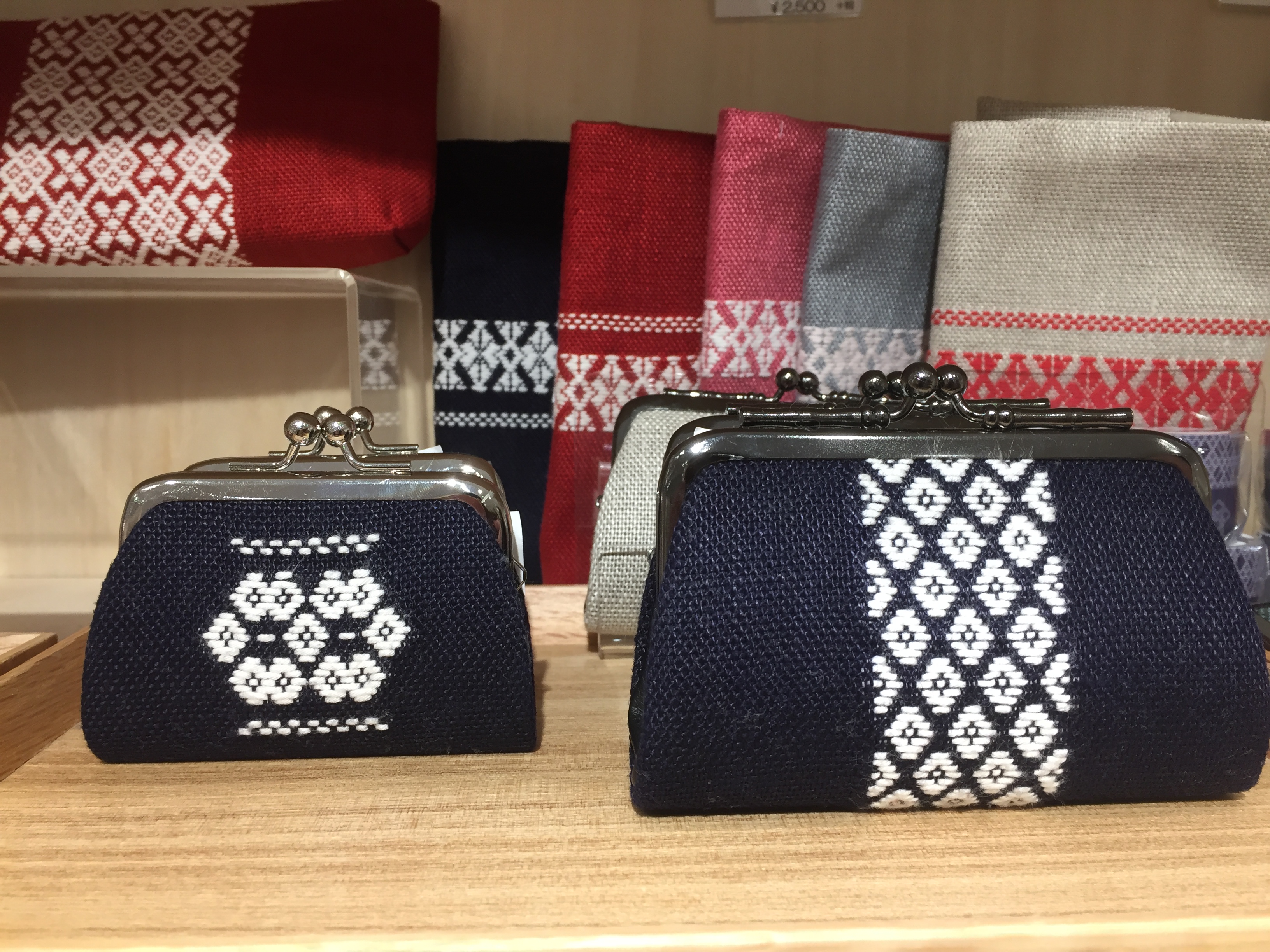
The Tsugaru region of Aomori Prefecture is the birthplace of the traditional Tsugaru-jamisen, a local style of music played on the shamisen (a threestringed musical instrument). A notable player of the style was Takahashi Chikuzan, a blind musician from Hiranai, who wandered around the country and eventually gained nationwide appeal. Aomori Prefecture is also where the decorative embroidery styles, kogin-zashi and Nanbu hishizashi originated, as more utilitarian textile techniques during the Edo period. The peasant women of the area, who created the styles, used them to make linen clothing more robust and warm during the harsh winters since cotton was unavailable to the lower class. Wooden horse figures called Yawata-uma (also Hachinohe horse) Have Been Made in the Former Holdings of the Nanbu for 700 Years. Hachinohe horses are often given at celebrations as they are believed to bring good luck. Other crafts native to Aomori Prefecture include pottery, lacquerware, cabinetry, and iron working. The type of lacquerware specific to Aomori Prefecture is known as Tsugaru-Nuri.
Cuisine

Aomori Prefecture has given rise to several soups: ke porridge or Keno-jiru, which consists of miso soup with diced root vegetables and wild plants such as butterbur and bracken with tofu from the Tsugaru area; ichigoni, a sea urchin roe and abalone soup in which the sea urchin roe looks like strawberries, known as ichigo in Japanese, from the town of Hashikami; hittsumi a roux with chicken and vegetables from the Nanbu area; Hachinohe senbei soup a hearty soup with Nanbu senbei loaded with vegetables and chicken; jappa-jiru a vegetable soup with cod roe from Aomori City; and keiran a red bean dumpling soy sauce soup served during special occasions on the Shimokita Peninsula. Another dish that was created in the area surrounding Mutsu Bay is kaiya in the Tsugaru area or kayaki on the Shimokita Peninsula, it is a boiled miso and egg dish mixed with fish or scallop meat on a large scallop shell that serves as both the cookware and dishes. In 2006, the production of aged black garlic began in Aomori Prefecture. The prefecture has since become the largest producer of black garlic in Japan.
Festivals
Main article: List of festivals in Aomori Prefecture

Aomori Prefecture hosts the Aomori Nebuta Matsuri, one of the annually in early August. The other two Great Festivals are Akita Kanto and the Sendai Tanabata, which are held elsewhere in Tōhoku. During late April, hanami festivals are held across the prefecture, with the most prominent being located on the grounds of Hirosaki Castle. Many unique festivals are held during summer with bright lights, floats, dancing and music; including Aomori Nebuta Matsuri as well as several other iterations of the festival throughout the towns and cities of the prefecture. Winter is centered on snow festivals where attendees can view ice sculptures and eat local cuisine inside ice huts. Tsugaru's festivals tie in to its past and are more rural and community in nature than religious; even though they mix Shinto and Buddhist practices as well as music and dance.
Arts and literature
Osamu Dazai, the writer of Japan's second most popular novel No Longer Human, is one of the prefecture's best-known writers. Shunsuke Kikuchi, a composer for series such as Dragon Ball and Doraemon, was born in the city of Hirosaki. The creator of the supernatural manga series Shaman King, Hiroyuki Takei, is from the village of Yomogita in northwestern Aomori Prefecture. The comedian Daimaō Kosaka, known widely for his viral single "PPAP (Pen-Pineapple-Apple-Pen)", was born in Aomori Prefecture. Sōsaku-hanga artist Shikō Munakata was born in Aomori City. Much of his art was inspired by the prefecture's natural qualities and rural culture.
Religion

Japanese religious beliefs are very syncretic, known as Shinbutsu-shūgō. About 95 percent of the population is either Buddhist or Shinto. The formal separation of those two religions did not occur until the late 19th century and is known as Shinbutsu bunri. This began occurring during the Meiji Restoration when a series of laws began to be passed. There is no agreement among modern theologians as to the degree of melding of the two religions. Christianity comprises about 1-2 percent of the population of Japan. The Christian population is concentrated mostly in Tokyo and western Japan. In Aomori Prefecture in 2018, there were only 5,582 Christians out of a populations of about 1.2 million.
The Takayama Inari Shrine is a Shinto shrine located in Tsugaru. People come here to offer prayers on behalf of business prosperity, plentiful harvests, and maritime safety. There is a memorial with a Christian cross dedicated to American sailors who died when the Cheseborough ran aground in a typhoon at Shariki, Aomori in 1889.
Mount Osore, located on the Shimokita Peninsula of the prefecture, is covered with a barren landscape, jagged rock formations, and smells of sulfuric gases. It is considered a gateway to the underworld in some belief systems. The Bodai-ji Temple is located here and it specializes in taking care of the dead and is the traditional home to the itako blind mediums who connect with the dead.{{cite news|url=https://japantoday.com/category/features/travel/mount-osore-a-bewitching-natural-underworld-hidden-at-the-tip-of-aomori|title= Mount Osore: A Bewitching Natural Underworld, Hidden at the Tip of Aomori|work=The Japan Times|date=March 4, 2019|access-date=September 5, 2025}}
Blind mediums

Itako, also known as ichiko or ogamisama, are blind women who train to become spiritual mediums in Japan. They are strongly associated with Aomori Prefecture and today they are most commonly associated with the Mt. Osore area of the prefecture. Itako have traditionally gathered there for an annual festival to channel the dead. Itako perform ceremonies to communicate with spirits of the recently deceased,{{cite book|author-link=Carmen Blacker
The tradition of itako arose because in earlier times the prefecture had very poor nutrition and sanitation, causing many children to go blind. In order for these children to be able to make a living, the females were trained as itako and the males for professions such as acupuncture, massage, moxibustion, and playing shamisen. Blindness has long been associated with spiritual powers in Japan.
Itako training traditionally began at a very young age, and included ritualized exposure to cold water. Hundreds of buckets of ice water could be poured on their bodies over the course of a few days. This education for itako takes about three years, and also includes memorization of songs and sutras. This training involves severe ascetic practices, after which the woman is said to be able to communicate with Japanese Shinto spirits, kami, and the spirits of the dead. At the end of this training, a ceremony is held, announcing the marriage of the itako and her patron spirit. Itako perform rituals tied to communication with the dead and divination. In the 1950s to 1970s there were still dozens of itako in the prefecture. The practice has been on the decline since then. As of 2009, there were only 20 living itako in Japan, all more than 40 years old.
Tomb of Christ
Main article: Kirisuto no Haka

Purportedly ancient documents were published in 1935, claiming Jesus preached and died at age 106 in Shingō village in Aomori Prefecture. This is one of many claims is made in a group of documents known as the "Takeuchi documents" or "Takeuchi manuscript", which claim Jesus did not die on the cross, but rather his brother did and Jesus made his way to Aomori Prefecture via Siberia. According to the documents, Jesus then married a young woman named Miyuko and fathered three daughters. During this time he trained for 12 years and then began to spread Christianity. Historian and literature professor examined the Takeuchi documents in 1935 and proved them modern forgeries. His purported grave is in Shingō has become a tourist attraction and 20,000-30,000 thousand visitors see it every year. In June 1964 an annual festival began being held at the gravesite. Jesus' eldest purported daughter married into the Sawaguchi family and there are still members of that family who claim non-Asian physical characteristics and lineage from Jesus.
Landmarks

Hirosaki Castle was the seat of the Tsugaru clan; it was constructed in 1611. It is the only castle in the Tōhoku region from the Edo period that is still standing and is located in the western part of the prefecture. Festivals held on the grounds of Hirosaki Castle include the Cherry Blossom Festival and Snow Lantern Festival.
The Sannai-Maruyama Site is an early-middle Jōmon period site where thousands of artifacts have been found. It is located in Sannai, Aomori City. It was designated as a Special National Historical Site of Japan in 2000, and a UNESCO World Heritage Site as part of the Jōmon Prehistoric Sites in Northern Japan collection in 2021. The site has various reconstructions of Jōmon structures, and a museum that displays and houses artifacts collected on the site, which have collectively been designated an Important Cultural Property of Japan.
Osamu Dazai Memorial Museum, also known as Shayōkan, is a museum that was formerly a writer's home built in 1907 located in Kanagi area of Goshogawara. While consisting mostly of Japanese style architecture, there are also Westen influences, such as the staircase. It is an Important Cultural Property of Japan.

The Aomori Museum of Art is located near the Sannai-Maruyama Site, which inspired the museum's partially buried structure. It opened in 2006 focusing on highlighting the arts of northern Tōhoku. An 8.5 m tall concrete sculpture of a dog has become the museum's symbol. The museum has helped increase tourism in the area and is most noted for its collection of Marc Chagall's backdrops for the play Aleko. The Towada Art Center is a set of geometric structures designed by SANAA and opened in 2008 in an effort to revitalize downtown Towada. It focuses on art that blends city structures and nature. Some of the works it holds are by Ron Mueck and Yoko Ono.
The Aomori Prefecture Tourist Center, also known as Aomori Prefecture Tourism Information Center (ASPAM: "Aomori", "Sightseeing", "Products", "Mansion"), is large triangle shaped building built in 1986 in Aomori City used to promote tourism in the prefecture. It has a 360-degree panoramic movie theater, a Kogin-zashi embroidery demonstration, apple sales, and an observatory.
Sports
The two largest cities of the prefecture, Aomori and Hachinohe, both host professional sports teams. Both cities have professional soccer clubs in the Japan Professional Football League: Aomori City's ReinMeer Aomori and Hachinohe's Vanraure Hachinohe. Other professional sports teams in the two cities include the Aomori Wat's, a basketball team from Aomori City in the B.League and the Tohoku Free Blades, an ice hockey team from Hachinohe that competes in the Asia League. Aomori Prefecture hosted the 2003 Asian Winter Games in February 2003. Approximately 1,200 athletes from 29 Asian countries participated in the games. Five venues across the prefecture held 51 different events. Aomori Prefecture is scheduled to host the 80th National Sports Festival of Japan in 2026. Aomori Prefecture was to have hosted these games in 2025, but due to the COVID-19 pandemic the games were delayed for a year. The prefecture has produced some professional athletes. Yoshisada Yonezuka from the town of Nakadomari was a martial arts instructor for USA Judo. He coached the team in the 1988 and 1992 Summer Olympics. Several ice hockey players are from Aomori, such as Masami Tanabu, who later became a politician, and Fumika Sasano.
| Club | Sport | League | Stadium and city | Aomori Wat's | ReinMeer Aomori | Tohoku Free Blades | Vanraure Hachinohe |
|---|---|---|---|---|---|---|---|
| Basketball | B.League (East Second Division) | Maeda Arena, Aomori | |||||
| Association football | Japan Football League (JFL) | Maeda Arena, Aomori | |||||
| Ice hockey | Asia League Ice Hockey | Flat Arena, Hachinohe | |||||
| Association football | Japan Professional Football League (J3 League) | Prifoods Stadium, Hachinohe |
| Club | Sport | League | Stadium and city | Blancdieu Hirosaki FC | ||||||
|---|---|---|---|---|---|---|---|---|---|---|
| Association football | Tohoku Soccer League (Division 1) | Hirosaki Sports Park, Hirosaki | ||||||||
| Baseball | Japan Amateur Baseball Association | title=弘前アレッズが青森県社会人野球選抜と対戦-ネットを使った生中継も | trans-title=Hirosaki Areds to Play Against Selection of Aomori Baseball Teams to be Livestreamed | url=https://hirosaki.keizai.biz/headline/70/ | work=Minkei Local News Network | language=ja | date= June 30, 2014 | access-date= October 12, 2020}} | ||
| Baseball | Japan Amateur Baseball Association | Goshogawara |
Other teams
The Aomori Curling Club was a member of the Japan Curling Association from the city of Aomori that represented Japan in the 2006 Winter Olympics and the 2010 Winter Olympics and several World Curling Championships. The club was disbanded in 2013.
Sumo
The prefecture is known as the "kingdom of sumo" due to the success of its wrestlers in the professional divisions. Aomori is the home prefecture of (the highest rank in sumo) Kagamisato, Wakanohana I, Tochinoumi, Wakanohana II, Takanosato, and Asahifuji. Although the prefecture is second in terms of producing the most (behind Hokkaido), Aomori earned its title by always having at least one wrestler from the prefecture in the top division since Ichinoya in 1883. In September 2025, this continuity was threatened when Takerufuji withdrew due to injury, forcing him to drop down to the second division for the November tournament. At the same time, however, Nishikifuji achieved a high enough score to return him to the top division, thus continuing the streak for a 142nd year. The prefecture is facing a decline in the number of professional recruits, falling from 50 natives in the 1950s, to just 10 in the 2020s.
Government

Aomori Prefecture's head of government is a governor, with the seat of the prefectural government in the city of Aomori. There are 48 members in the Aomori Prefectural Assembly, which is unicameral. Members are elected to four-year terms. In terms of national politics, the prefecture has three single-member districts: Aomori 1st district, Aomori 2nd district, Aomori 3rd district, each a constituency of the House of Representatives in the national Diet of Japan. In addition, the prefecture has two members elected from the Aomori at-large district to the House of Councillors in the Diet. The at-large members are elected to six-year terms in staggered elections every three years.
Aomori Prefecture is a stronghold of Japan's Liberal Democratic Party (LDP), though the Constitutional Democratic Party of Japan (CDP) has won some elections since its formation in 2017. One of Aomori Prefecture's notable politicians is LDP member Tadamori Ōshima, who served as the Minister of Education, Culture, Sports, Science and Technology (2000-2002), Minister of Agriculture, Forestry and Fisheries (2002-2003), and Speaker of the House of Representatives of Japan (2015-2021). He also held several leadership positions in the LDP.
Education

Aomori Prefecture's most prominent university is Hirosaki University, which was formed by the combination of several colleges and higher education schools in 1949 in accordance with the National School Establishment Law of 1949. The prefecture has two other public universities, Aomori Public University and the Aomori University of Health and Welfare. Several private universities are also located in Aomori Prefecture. Among them are Aomori University, Hachinohe Gakuin University, Hachinohe Institute of Technology, Hirosaki Gakuin University, Hirosaki University of Health and Welfare, Tohoku Women's College, and the Towada Campus of Kitasato University.
The Aomori Prefecture Board of Education oversees various aspects of the prefecture's educational system including the management of libraries, the Aomori Prefectural Museum, and various educational support offices and centers. The declining population has resulted in significant decreases in the number of schools and enrollment, but with a slight increase in the budget due to rising costs. The prefecture allocated 130.3 billion yen towards education in 2018 and 131.8 billion yen in 2025. In 2017 the prefecture's public school system was teaching 133,507 students, a sharp decrease from a total of 173,537 students ten years earlier. By 2024 the enrollment dropped to 126,406 students. Overall in 2018, the prefecture had 94 kindergartens (1 of which is a national school and 3 that are public), 289 elementary schools (1 of which is a national school and 288 that are run by municipal governments), 161 middle schools (1 of which is a national school, another which is run by the prefecture, 4 that are private, and 155 that are run by municipal governments), and 95 high schools. By 2025 the number of schools had dropped to 242 elementary schools (1 national, 241 municipal), 151 middle schools (national: 1, prefectural: 1, municipal: 143, private: 6), and 1 cumpulsory school; with the number of high schools dropping to 46 public and 17 private schools.
Transportation
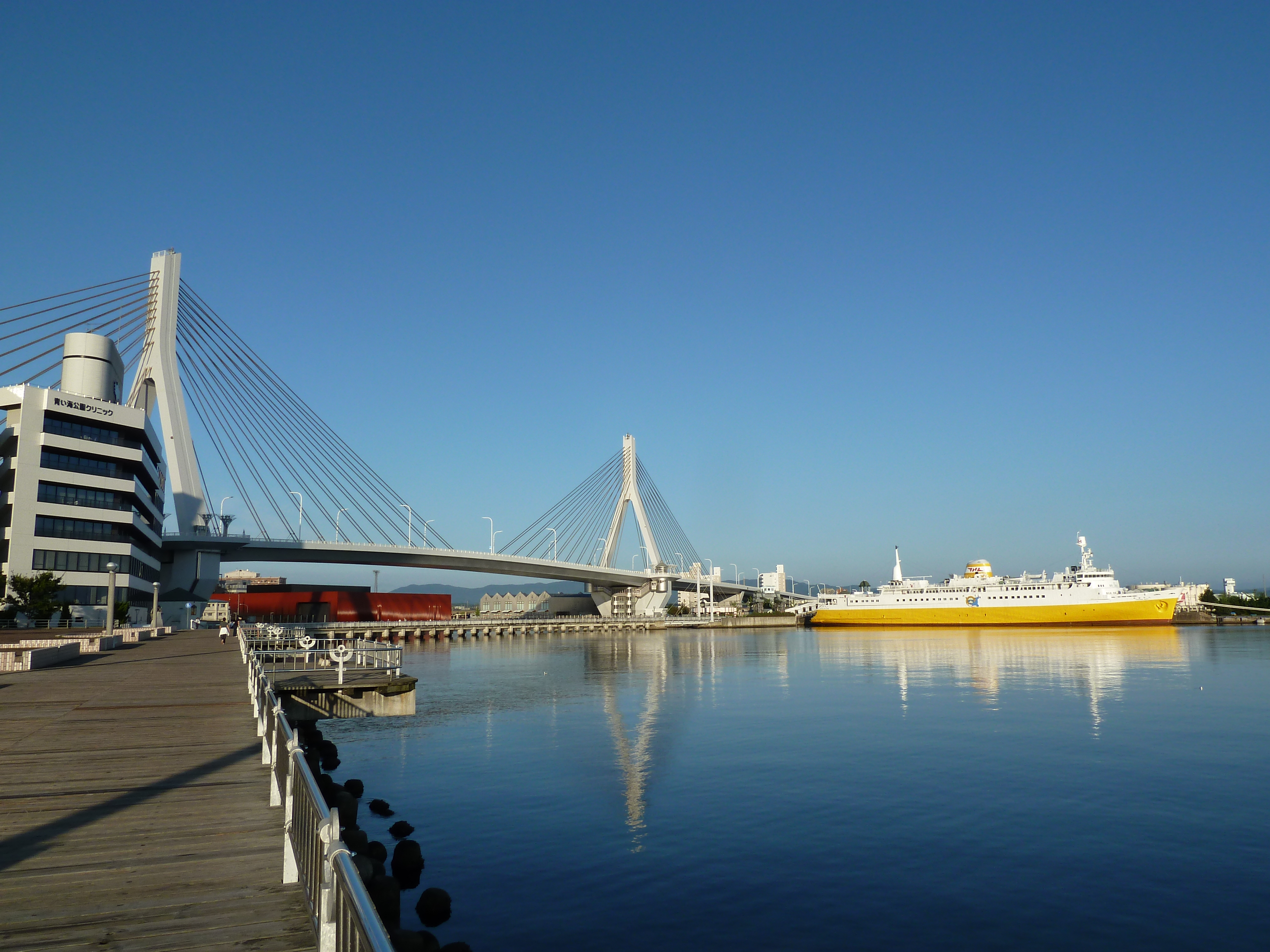
Aomori Prefecture has 20,818.1 km of roads, highways, and streets, along with 229 km of expressways. Four major expressways pass through the prefecture: the Tōhoku Expressway, which runs south–north through center of the prefecture; the incomplete Tsugaru Expressway, running east–west in the southwestern portion of the prefecture; the partially-complete Hachinohe-Kuji Expressway that travels south–north along the prefecture's eastern coast to Hachinohe; and the partially-complete Shimokita Expressway that travels south–north along Shimokita Peninsula from the town of Noheji to the city of Mutsu.
Several auxiliary routes of the Tōhoku Expressway also serve the prefecture. The Aomori Expressway and Hachinohe Expressway, spur routes into the eastern part of the city of Aomori and central Hachinohe. A spur of the Hachinohe Expressway continues northwest across the eastern side of the prefecture towards the prefecture's capital. It is made up of several named routes: the Momoishi Toll Road, the Daini-Michinoku Toll Road, the Kamikita Expressway, and the Michinoku Toll Road. Several national highways pass through the prefecture. National routes 4, 7, and 45 are primary routes that link the prefectural capital to the capitals of other prefectures across Japan. Additional national routes in Aomori Prefecture include routes 101, 102, 103, 104, 279, 280, 282, 338, 339, 340, 394, and 454. Two of the prefecture's national highways also continue north across the Tsugaru Strait to Hokkaido: National Route 279, which is carried to Hakodate by the Tsugaru Kaikyō Ferry; and National Route 280, which was previously carried by ferry to the town of Fukushima, Hokkaido, though the route is still signed from Fukushima to Hakodate.
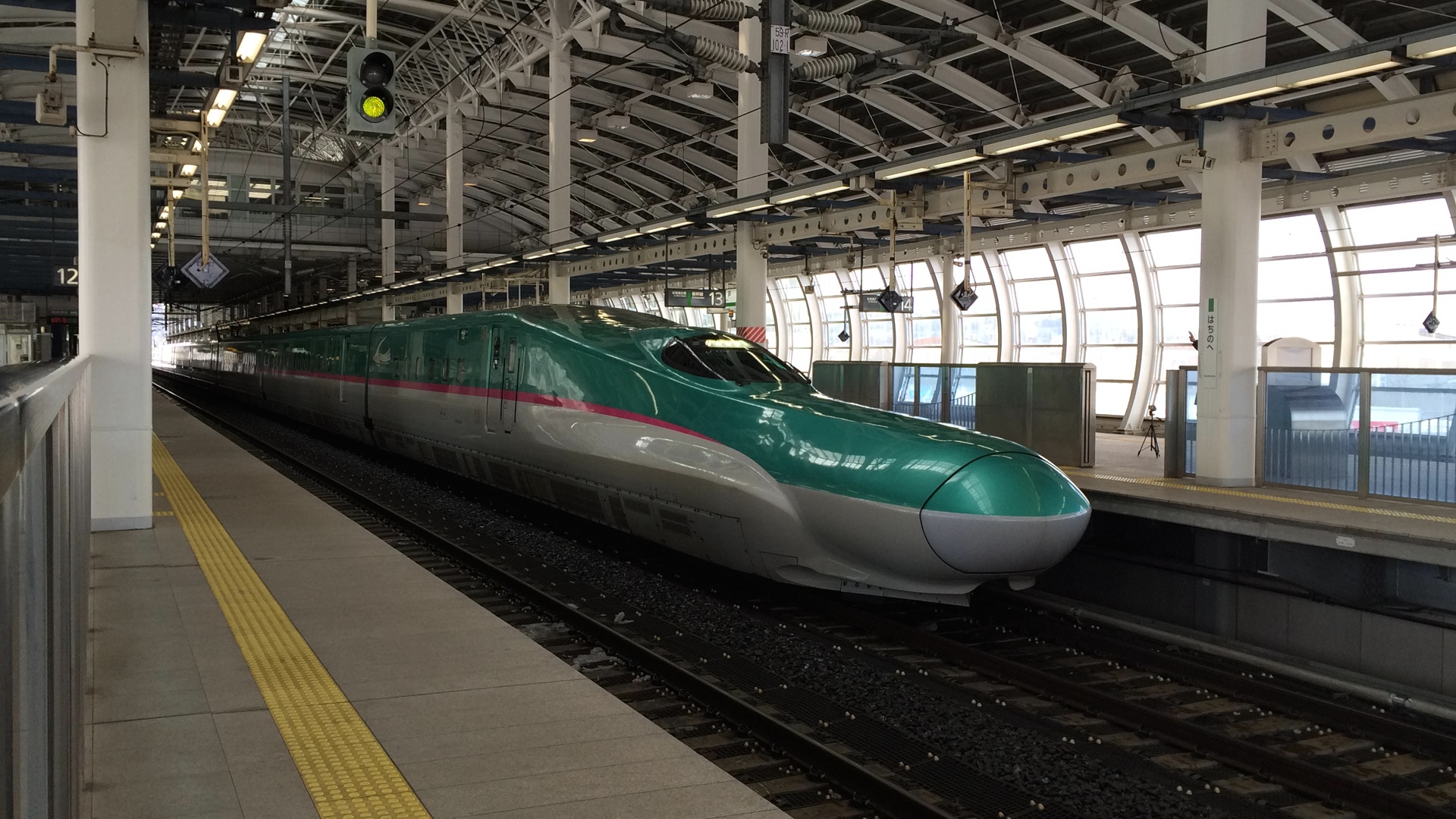
Railways have played an important role in Aomori Prefecture's transportation network and development since the Meiji period. Aomori Station, Shin-Aomori Station, Hachinohe Station, Hirosaki Station, and Shichinohe-Towada Station are major rail stations operating in Aomori Prefecture. The East Japan Railway Company (JR East), operates several rail lines in the prefecture: the Tōhoku Shinkansen, the Tōhoku Main Line, the Ōu Main Line, the Ōminato Line, the Gonō Line, the Hachinohe Line, and the Tsugaru Line. Other notable rail operators in the prefecture are the Hokkaido Railway Company (JR Hokkaido), that runs the Hokkaido Shinkansen through the Seikan Tunnel to and from Hokkaido, the Aoimori Railway that operates passenger services on the Tōhoku Main Line, and the northernmost privately owned railway in Japan, the Tsugaru Railway.
Maritime transport in Aomori Prefecture operates primarily from the ports of Aomori City, Mutsuogawara, and Hachinohe, though smaller ports are found throughout the prefecture. The ports at Aomori City and Hachinohe both serve cruise ships and ferry lines. Additionally, a ferry line operates between Ōma and Hakodate. Prior to the opening of the Seikan Tunnel, rail ferries operated by the Japanese National Railways linked Aomori Station and Hakodate Station as the primary connection between Hokkaido and the rest of Japan. A museum dedicated to the historic rail ferries operates near Aomori Station in a former rail ferryboat, the Hakkoda Maru. In April 1995, Aomori Airport began offering a regular international air service.
There are two commercial airports located within Aomori Prefecture, Aomori Airport and Misawa Airport. Both airports are relatively small, though Aomori Airport offers regular international flights to South Korea and Taiwan, in addition to domestic flights to several cities. Combined the prefecture's two commercial airports moved 1.56 million passengers in 2024, with Aomori Airport handling 1.23 million of them.
Symbols and names

During the Lowell Observatory Near-Earth-Object Search conducted in Flagstaff, Arizona for main-belt asteroids that have a risk of coming close to Earth, observers discovered 19701 Aomori, an asteroid which they named after Aomori Prefecture. 19701 Aomori was given its name on May 9, 2012 after the 2011 Tōhoku earthquake and tsunami to pay respect towards the damaged communities along the prefecture's southeastern coast.
Prefectural symbols
Since 1961, the prefectural symbol of Aomori is a green stylized map of the prefecture on a white background, showing the crown of Honshū: the Tsugaru, Natsudomari and Shimokita Peninsulas. The green is representative of development while the white symbolizes the vastness of the world.
The prefectural bird has been Bewick's swan since 1964, the species migrates to the area during the winter. In 1966, the prefecture designated the hiba (Thujopsis dolabrata) as its prefectural tree. The apple blossom was designated as the prefectural flower in 1971 to pay homage to the prefecture's apple production. In 1987, the Japanese halibut was designated as the prefectural fish.
Dialects
-v2.jpg)
Tōhoku dialect, one of the three main dialects of Japan, is spoken in Aomori Prefecture. The most widespread variants are the Tsugaru dialect, Nanbu dialect, and Shimokita dialect. The boundary determining which of these dialects are spoken is mainly along the former border of the Tsugaru and Nanbu clans between Hiranai and Noheji, with some overlap. Speakers of the Tsugaru dialect are typically centered around Hirosaki, while those who use the Nanbu dialect are centered around Hachinohe. The Shimokita dialect is used on the Shimokita Peninsula around Mutsu and has been recognized as having enough differences to distinguish it from the Nanbu dialect. It was also used in combination with the Nanbu dialect in an early Japanese–Russian dictionary written by a man whose father came from the Shimokita Peninsula. The Ainu people, culture, and language still influence Aomori Prefecture, including several Ainu words that are still in use, place names in particular.
The oldest discovered compilation of words and phrases of the Nanbu dialect was written in 1790 followed by a dictionary of the Tsugaru dialect in 1809. Special features of the Aomori Prefecture dialects include an atypical intonation, voicing consonants that are typically unvoiced (e.g. [k] sounds become [g]), and the addition of voiced velar nasal sounds and corresponding kana (か゚ [ŋa], き゚ [ŋi], く゚ [ŋu], け゚ [ŋe], and こ゚ [ŋo]).
There is a negative connotation associated with the Tōhoku dialect, associated with rurality and laziness. In shogunate times, government officials visiting the prefecture considered the Nanbu dialect very hard to understand. People from the entire Tōhoku region were often considered unsophisticated, simple, and rural and their accent was often the object of jokes. The name for the defunct Mutsu Province uses the same kanji symbol, 陸奥, as the Japanese phrase for 'land far from the capital' or 'end of the road'. The inhabitants were called lit. shrimp barbarians and lit. citizens of the outer world. Due to these negative perceptions, speakers of Tōhoku dialects will often hide their accents. A study performed in 2016 indicated that people from Aomori Prefecture who are 70 years and older frequently use these dialects, while use becomes less frequent the younger a person is, regardless of fluency. Additionally, the study revealed that when traveling to Tokyo, older generations will continue to use their dialect, while younger generations switch to standard Japanese. Over half of each generation surveyed preferred to use their local dialect when talking to Tokyoites in Aomori Prefecture. Dialectal forms are more common in the Tsugaru region of Aomori Prefecture and forms a significant part of the cultural identity of the local population. Southern Tōhoku reveals a transition from standard language to dialects of Aomori Prefecture.
Media

The largest newspaper by readership in Aomori Prefecture is The Tō-Ō Nippō Press with a daily readership of 205,000, 55 percent of the total share of the newspaper market in the region. The newspaper also runs a radio news station which is broadcast by the Aomori Broadcasting Corporation (RAB). Other local newspapers are Hachinohe's The Daily Tōhoku Shimbun, Hirosaki's Mutsu Shimpō, and Kuroishi's Tsugaru Shinpō.
Four television stations are broadcast in Aomori Prefecture. RAB is a television and radio broadcaster based in the capital that is affiliated with the Japan Radio Network, National Radio Network, and Nippon News Network. RAB uses the call signs JOGR-DTV for digital television broadcasts and JOGE, JOGO, and JOGR for radio broadcasts in Hirosaki, Hachinohe, and Aomori City, respectively. Japan News Network's affiliate, Aomori Television began broadcasting with the call sign JOAI on 1 December 1969. Asahi Broadcasting Aomori. NHK broadcasts radio, television, and digital television from NHK Aomori with the call signs JOTC and JOTG. NHK radio services began on April 17, 1941, while television broadcasts commenced on March 22, 1959.
Hani Motoko, a native of Hachinohe, is considered to be Japan's first female journalist. She became known for her column about famous Japanese women that began publication in 1897 in the Hōchi Shimbun. Motoko later started a journal, that focused on the values of middle-class women.
Notes
References
References
- "青森県の人口と面積". Aomori Prefecture.
- (July 2023). "青森県の推計人口-月報-2023年(令和5年)". Aomori Open Data Catalog.
- (2020). "2020年度国民経済計算(2015年基準・2008SNA) : 経済社会総合研究所 - 内閣府".
- (May 20, 2020). "場所・気候". Aomori Prefefcture Government.
- NHK Publishing. (May 24, 2016)
- "青森県 (Aomori ken)". Japan Dictionary.
- Thornber, Karen. (2012). "Ecoambiguity: Environmental Crises and East Asian Literatures". University of Michigan Press.
- Room, Adrian. (2006). "Placenames of the World: Origins and Meanings of the Names for 6,600 Countries, Cities, Territories, Natural Features and Historic Sites". McFarland.
- "青森県史の質問箱01|青森県庁ウェブサイト". Aomori Prefectural Government.
- "Top Things to Do and Places to See in Aomori". Japan Air Lines.
- "History of Aomori". Amazing Aomori: The Official Aomori Travel Guide.
- (February 1, 2016). "「青森」地名伝承の誤解=41". The Mutsu Shimpō.
- (2016). "Hunting Dogs as Environmental Adaptations in Jōmon Japan". Antiquity.
- (2015). "Human Genetic Diversity in the Japanese Archipelago: Dual Structure and Beyond". Genes & Genetic Systems.
- Robbeets, Martine. (2015). "Diachrony of Verb Morphology: Japanese and the Transeurasian Languages". De Gruyter.
- (2019). "Historic Site, Odai-Yamamoto Site". Jomon Archaeological Sites in Hokkaido and Northern Tohoku.
- "Choshichiyachi Shell Midden". Jomon Archaeological Sites in Hokkaido and Northern Tohoku.
- Habu, Junko. "Growth and Decline in Complex Hunter-Gatherer Societies: A Case Study from the Jomon Period Sannai Maruyama Site, Japan". [[Cambridge University Press]].
- (December 1, 2013). "Climate Change, Human Impacts on the Landscape, and Subsistence Specialization: Historical Ecology and Changes in Jomon Hunter-Gatherer Lifeways". University of California, Berkeley.
- "日本史/弥生時代". Nagoya Field Museum.
- (2007). "A Comment on the Yayoi Period Dating Controversy". Bulletin of the Society for East Asian Archaeology.
- Shoda, Shin'ya. (2010). "Radiocarbon and Archaeology in Japan and Korea: What has Changed Because of the Yayoi Dating Controversy?". Cambridge University Press (CUP).
- Hanihara, Kazuro. (1990). "Emishi, Ezo and Ainu: An Anthropological Perspective". Japan Review.
- "十和田". [[Japan Meteorological Agency]].
- Collins, Randall. (1997). "An Asian Route to Capitalism: Religious Economy and the Origins of Self-Transforming Growth in Japan". American Sociological Review.
- Hudson, Mark J.. (1999a). "Ainu Ethnogenesis and the Northern Fujiwara". Arctic Anthropology.
- {{harvnb. Hudson. 1999a
- (October 30, 2024). "Aomori's Famous Apples, Snow and Nebuta Festival". Kodawari Times.
- "地名「三陸地方」の起源に関する地理学的ならびに社会学的問題". Iwate University, Faculty of Education.
- Nussbaum, Louis-Frédéric. (2005). "Japan Encyclopedia". Harvard University Press.
- "十三湊遺跡". [[Agency for Cultural Affairs]].
- Yanaga, Chitoshi. (1939). "Source Materials in Japanese History: The Kamakura Period". Journal of the American Oriental Society.
- Asaka, Hiroshi. (2014). "Portraits of Samurai". Bulletin of the Detroit Institute of Arts.
- Sansom, George. (1969). "A History of Japan to 1334". Stanford University Press.
- (May 20, 2020). "伝説・地名". Aomori Prefecture Government.
- {{harvnb. Sansom. 1969
- Turnbull, Stephen. (1998). "The Samurai Sourcebook". Cassell & Co..
- Turnbull, Stephen. (1977). "The Samurai, A Military History". MacMillan Publishing Co., Inc..
- "聖寿寺館跡". Agency for Cultural Affairs.
- (September 12, 2017). "陸奥・福島城(青森県・十三湊)の見どころと安藤氏の乱".
- {{harvnb. Sansom. 1969
- (1998). "Re-visioning Kamakura Buddhism". University of Hawai'i Press.
- Picken, Stuart D. B.. (1994). "Essentials of Shinto - An Analytical Guide to Principal Teachings". Greenwood Press.
- Toshiaki, Yanagihara. (2013). "Onmyōdō in the Muromachi Period". Japanese Journal of Religious Studies.
- (2014). "津軽氏城跡". Hirosaki City.
- (July 1, 2008). "青森県史資料編中世2「安藤氏・津軽氏関係資料」". Aomori Prefecture.
- "十三湊遺跡 - とさみなといせき". Agency For Cultural Affairs.
- "よみがえる十三湊(とさみなと)遺跡". National Museum of Japanese History.
- Hudson, Mark J.. (1999). "Ruins of Identity: Ethnogenesis in the Japanese Islands". University of Hawai‘i Press.
- Friday, Karl F.. (1997). "Pushing beyond the Pale: The Yamato Conquest of the Emishi and Northern Japan". The Journal of Japanese Studies.
- Hall, John Whitney. (1961). "Foundations of the Modern Japanese Daimyo". The Journal of Asian Studies.
- Ravina, Mark. (1999). "Land and Lordship in Early Modern Japan". Stanford University Press.
- Staff. (1976). "Tokugawa Bakufu to Tozama 117 Han". Rekishi Dokuhon.
- McClellan, Edwin. (1985). "Woman in the Crested Kimono". Yale University Press.
- {{harvnb. Ravina. 1999
- Friday, Karl F.. (2003). "Samurai, Warfare and the State in Early Medieval Japan". Routledge.
- (1990). "The Cambridge History of Japan". University of Cambridge.
- (2016). "Rice, Agriculture, and the Food Supply in Premodern Japan". Routledge.
- Lewis, James Bryant. (2003). "Frontier Contact Between Choson Korea and Tokugawa Japan". Routledge.
- (April 3, 2012). "弘前公園の歴史". Hirosaki Park.
- "「命を救った食べ物~飢饉の歴史と生きるための食物~」". Iwate Prefecture Government.
- Tanaka, Sakurako. (2000). "The Ainu of Tsugaru: The Indigenous History and Shamanism of Northern Japan". University of British Columbia.
- Howell, David L.. (1994). "Ainu Ethnicity and the Boundaries of the Early Modern Japanese State". Past & Present.
- Tamura, Suzuko. (2000). "The Ainu Language". Sanseidō.
- Hamada, Shingo. (2015). "Ainu Geographic Names and an Indigenous History of the Herring in Hokkaido". The Canadian Journal of Native Studies.
- (2025). "平内町勢要覧". Town of Hiranai.
- Kondo, Takashi. (1967). "藩 政 村 の 集 落 構 成". Japanese Journal of Human Geography.
- (October 24, 2022). "“Terakoya”: Edo-Period Education for All". Nippon Communications Foundation.
- Yakua, Tomohiro. (2003). "Literacy in Tokugawa Japan". The Japanese Journal of Educational Research.
- (March 24, 2025). "Edo Period (1600-1868) - Economy and Culture". Japan Reference.
- "Section 3 – The spread of education and culture and the growth of manufacturing". Society for the Dissemination of Historical Fact.
- Horie, Hideichi. (1952). "Revolution and Reform in Meiji Restoration". Kyoto University Economic Review.
- {{harvnb. McClellan. 1985
- {{harvnb. Ravina. 1999
- Onodera, Eikō. (2005). "Boshin nanboku Sensō to Tōhoku seiken". Kita no mori.
- Hillsborough, Romulus. (2005). "Shinsengumi". Tuttle Publishing.
- {{harvnb. Ravina. 1999
- (June 24, 2020). "年表で見る青森県の歴史". Aomori Prefecture Government.
- Free, Dan. (2008). "Early Japanese Railways 1853–1914: Engineering Triumphs That Transformed Meiji-era Japan". Tuttle Publishing.
- {{harvnb. Free. 2008
- Tang, John P.. (2014). "Railroad Expansion and Industrialization: Evidence from Meiji Japan". The Journal of Economic History.
- Ike, Nobutaka. (1995). "The Pattern of Railway Development in Japan". The Far Eastern Quarterly.
- Harootunian, Harry D.. (1960). "The Economic Rehabilitation of the Samurai in the Early Meiji Period". The Journal of Asian Studies.
- (November 7, 1889). "Wrecked Off the Japan Coast. Nineteen of the Crew of an American Ship Lost". [[The New York Times]].
- Matsuki, Akitomo. (September 2008). "A medical study on the winter march accident at Mount Hakkoda". Nihon Ishigaku Zasshi.
- "Column 6 Mt. Hakkoda". National Diet Library.
- Suzuki. (April 1, 2019). "明治43年5月3日に起きた青森大火". City of Aomori.
- "Pangborn-Herndon Memorial Site". National Park Service.
- "Miss Veedol & Misawa Sister City: Why Is There a Red Plane on the City's Logo?". East Wenatchee, Washington.
- (July 1, 1946). "United States Strategic Bombing Survey Summary Report (Pacific War)". United States Government Printing Office.
- (August 17, 2023). "Gov't Threat Led to Increased Carnage from WWII Air Raid on North Japan City: Expert". Mainichi Japan.
- Carter, Kit C.. "Combat Chronology 1941-1945". Air Force Historical Research Agency.
- Bradley, F. J.. (1999). "No Strategic Targets Left". Turner Publishing Company.
- Hoyt, Edwin Palmer. (2000). "Inferno". Madison Books.
- Garon, Sheldon. (December 1, 2016). "Defending Civilians against Aerial Bombardment: A Comparative/Transnational History of Japanese, German, and British Home Fronts, 1918-1945". Asia-Pacific Journal Japan Focus.
- Wainstock, Dennis. (1996). "The Decision to Drop the Atomic Bomb". Praeger.
- (June 2018). "U.S. Army in Japan 1945~". [[United States Army, Japan]].
- "Misawa Air Force Base in Misawa, Japan". Military Bases.com.
- "35th Fighter Wing Heritage". Misawa Air Base, United States Air Force.
- Torsello, Davide. (2002). "The Paths to Difference: Social and Economic Choices in Three Post-War Agrarian Settlements of North-Eastern Japan". Social Science Japan Journal.
- (March 13, 2018). "30 Years on, World's Longest Undersea Tunnel Faces Challenges". Japan Wire by Kyodo News.
- Takashima, S.. (2001). "Railway Operators in Japan 2: Hokkaido". Japan Railway and Transport Review.
- (March 14, 1988). "Longest Undersea Tunnel Opens in Japan". The Straits Times.
- (April 24, 1988). "An Engineering Marvel for the 21st Century". The Straits Times.
- (June 3, 2007). "4 North Korean Defectors Reach Japan After 6 Days on the Open Sea". Japan News Review.
- (June 3, 2007). "Defectors Make Way to Japan". Korea JoonAng Daily.
- (June 16, 2017). "4 NK Defectors Fly in Seoul from Japan". The Korea Times.
- "平成23年(2011年)東北地方太平洋沖地震(東日本大震災)について(第161報)(令和3年3月9日)". 総務省消防庁災害対策本部.
- "震度データベース検索". [[Japan Meteorological Agency]].
- "M9.0 - Tohoku, Japan - March 11, 2011". Earthscope: University of Alaska - Fairbanks.
- (2013). "東日本大震災からの復旧・復興の1年の歩み". Aomori Prefecture Government.
- (September 23, 2011). "仙台—東京「はやぶさ」8分短縮 半年ぶりダイヤ復旧". [[The Asahi Shimbun]].
- (January 7, 2025). "Snow 'Disaster' Hits Aomori; 2 Die, 12 Injured in Cleanup Work". The Asahi Shimbun.
- (January 8, 2025). "Heavy Snow Kills 4, Causes Various Damage in Aomori Prefecture in 1st Week of 2025; More Cold Weather Expected". The Japan News via The Yomiuri Shimbun.
- (February 12, 2025). "Lucrative Apple Harvest Threatened After Heavy Snow Blankets Aomori". Kyodo News.
- "About Aomori". Amazing Aomori: The Official Aomori Travel Guide.
- (May 20, 2020). "場所・気候". Aomori Prefecture Government.
- Takiguchi, Takahiro. (July 30, 2025). "Stunning Shimokita: Unworldly Beauty, Attractions in Japan’s Northernmost Peninsula". Stars and Stripes Japan.
- Takaaki Nihei. (2018). "The Regional Geography of Japan". The Hokkaido University Press.
- (2023). "Aomori Prefecture". The East Asia Local and Regional Government Congress.
- Gomez, Christopher. (2012). "Historical 3D Topographic Reconstruction of the Iwaki Volcano Using Structure from Motion from Uncalibrated Aerial Photographs". University of Canterbury.
- (2013). "Iwakisan". Smithsonian Institution Global Volcanism Program.
- (February 21, 2020). "Lake Ogawara Brackish Water Clam". [[Ministry of Agriculture, Forestry and Fisheries (Japan).
- (October 3, 2020). "Explore Towada-Hachimantai National Park". Japan National Tourism Organization.
- (1992–2018). "Shirakami-Sanchi". United Nations.
- (March 14, 2012). "Shirakami Mountains - World Heritage Region". Aomori Prefecture.
- link. [[Ministry of the Environment (Japan). Ministry of the Environment]]
- link. Aomori Prefecture. (31 March 2017)
- (August 2013). "Aomori Prefecture". EU-Japan Centre for Industrial Cooperation.
- (6 July 2021). "Reproductive characteristics of Japanese monkeys on Shimokita Peninsula, Japan, the northernmost habitat of wild primates in the world". Journal of Veterinary Medical Science.
- "Black Diamonds of the Sea". Japan National Tourism Organization.
- Yadaka, Hikari. (September 22, 2025). "Water from Deep Underground Supports Flounder Farming in Aomori; Climate Change Pushes Prefecture's Marine Industry to Switch from Fishing to Aquaculture". The Japan News via The Yomiuri Shimbun.
- Fackler, Martin. (September 19, 2009). "Tuna Town in Japan Sees Falloff of its Fish". New York Times.
- (April 13, 2023). "Aomori Prefecture". Nippon Communications Foundation.
- "Monkfish Cuisine". Amazing Aomori: The Official Aomori Trave Guide.
- (1981). "Ferro-Nickel Smelting at Hachinohe Works of Pacific Metals Co., Ltd". Journal of the Mining and Metallurgical Institute of Japan.
- "JP Aomori". Observatory of Economic Complexity.
- "施設見学ガイド 八戸鉱山株式会社 八戸石灰鉱山(八戸キャニオン)". The Information Center for Energy and Environment Education.
- Shimizu, M.. (December 1998). "Tsugaruite, Pb4As2S7, a New Mineral Species from the Yunosawa Mine, Aomori Prefecture, Japan". Mineralogical Magazine Via Cambridge University Press.
- Biagioni, Cristian. (2021). "Determination of the Crystal Structure and Redefinition of Tsugaruite, Pb28As15S50Cl, the First Lead-Arsenic Chloro-Sulfosalt". The Canadian Mineralogist.
- Takai, Hiroshi. (2006). "Characteristics of the Yamase Winds Over Oceans Around Japan Observed by the Scatterometer-Derived Ocean Surface Vector Winds". Journal of the Meteorological Society of Japan.
- (2019-02-25). "Aomori, Japan: World's Snowiest City?".
- Kuhne, Michael. (January 21, 2016). "Top 10 Snowiest Major Cities Around the World". AccuWeather.
- (June 2015). "The Pliocene to recent history of the Kuroshio and Tsushima Currents: a multi-proxy approach". Progress in Earth and Planetary Science.
- (2020). "Illuminating the Past to See the Future of Western Boundary Currents: MICROPALEONTOLOGICAL INVESTIGATIONS OF THE KUROSHIO CURRENT EXTENSION". Oceanography.
- (2024). "Climate Change Aomori". Meteo Blue, University of Basel.
- Tomoyuki, Yamamoto. (August 7, 2025). "Kelp Under Threat in Hokkaidō Waters: The Impact of Climate Change on Japan's Marine Products". Nippon Communications Foundation.
- (January 2025). "Climate change impacts on seasonal runoff in the snowy Japan Sea region of Honshu, Japan". Hydrological Research Letters.
- Sakata, Atsuro. (March 12, 2023). "Climate change quietly slaying Japan's 'juhyo' ice monsters". The Asahi Shimbun.
- "Aomorishi Climate, Weather by Month, Average Temperature (Japan) - Weather Spark". Weatherspark.
- "Hachinohe Climate, Weather by Month, Average Temperature (Japan)". Weather Spark.
- "Monthly Mean Daily maximum temperature - Hachinohe". [[Japan Meteorological Agency]].
- "Extreme for Hachinohe". [[Japan Meteorological Agency]].
- "Mutsu Climate, Weather by Month, Average Temperature (Japan)". Weather Spark.
- link. [[Japan Meteorological Agency]]
- link. [[Japan Meteorological Agency]]
- link. [[Japan Meteorological Agency]]
- "Oma, Japan - Climate & Monthly Weather Forecast". Weather Atlas.
- link. [[Japan Meteorological Agency]]
- link. [[Japan Meteorological Agency]]
- (2020). "2020 Population Census – Population and Households of Japan – 2020 Major Results". Statistics Bureau of Japan.
- (202). "2020 Population Census – Population and Households of Japan – 2020 Summary of the Results". Statistics Bureau of Japan.
- Morin, Relman. (November 30, 1938). "Peasants Believe Jesus Died In Japan and Is Buried There". Daily Iowan.
- (December 2010). "Finding Mr Right: New Looks at Gendered Modernity in Japanese Televised Romances". Japanese Studies.
- Gottlieb, Nanette. (2012). "Language in Public Spaces in Japan". Routledge.
- "Explore the Great Outdoors in Japan's Hiking Paradise, Aomori!". Amazing Aomori: The Official Aomori Travel Guide.
- (1990). "Final Report of the 1985 Population Census". National Institutes of Health.
- Kushida, Kenji. (2024). "Japan's Demographic Challenges: Economic, Political, and Social Issues". Carnegie Endowment for International Peace.
- (June 1, 2025). "Populatains Estimates by Age and Sex". Statistics Bureau of Japan.
- Kumagai, Fumie. (2010). "Forty Years of Family Change in Japan: A Society Experiencing Population Aging and Declining Fertility.". Journal of Comparative Family Studies.
- (July 4, 2024). "Utility of the Rurality Index for Japan for Exploring Good Practice Solutions for Declining Birthrates in Rural Areas". Journal of General and Family Medicine.
- Kaneko, Karin. (April 14, 2025). "Japan's Population Shrinks for the 14th Consecutive Year". [[The Japan Times]].
- (July 24, 2025). "Governors Urge Central Government to Address Japan's Shrinking Population". The Japan Times.
- Miyahara, Motohide. (November 18, 2022). "The Myth of Average: Active Senior Citizens in the Aomori Prefecture in Japan". Anthropology & Aging.
- (2020). "List of Datasets: Population and Households (downloadable Excel Sheet)". Ministry of Internal Affairs and Communications: Official Statistics of Japan.
- Morgan, Charlies V.. (2007). "International Marriages in Japan: A Prefecture-level Analysis". International Journal of Sociology of the Family.
- (December 2019). "「青森ヒバ」とは". Tōhoku Regional Forest Office.
- (2021). "Economic Overview of Tohoku Region". Tohoku Bureau of Economy, Trade and Industry.
- "Significance of the Largest Onshore Wind Farm in Japan". Sumitomo Electric.
- (March 28, 2025). "Cosmo Eco Power Plans up to 200MW Shimokita Wind Farm in Aomori Prefecture, Eyes 2032 or Later COD". Japan Energy Hub.
- (April 26, 2021). "Japan Nuclear Fuel Ltd - Company Profile". [[Bloomberg News]].
- (July 29, 2024). "Aomori Governor to OK Nuclear Waste Storage, First of its Kind". Asahi Shimbun.
- (May 20, 2020). "世界一と日本一". Aomori Prefecture Government.
- "Tohoku Aomori Take the Road Less Traveled to Aomori". Japan National Tourism Organization.
- "The Story of the Best Apples in Japan". Amazing Aomori: The Official Aomori Travel Guide.
- Shirai, Izumi. (January 2018). "The Formation and Maintenance of a Regional Brand: A Case Study of Apple Production in Aomori Prefecture in Modern Japan". Japanese Research in Business History.
- de St. Maurice, Greg. (October 2025). "Food Beyond Terroir: Tasting Place and Placing Taste in Global Perspective". Berghahn Books.
- (2007). "Climate Fragility Risks in Japan: Some Initial Reflections".
- "Aomori City Homepage – The Story of Aomori". Aomori City.
- 青森県平内町. "水産業 – 青森県平内町". Hiranai Town.
- "Towada-Hachimantai National Park". Japanese Ministry of the Environment.
- (June 5, 2018). "Tourism Boom Spreads Economic Benefits to Rural Japan". The Nikkei.
- (2019). "Attractions Discovered by Inbound Tourists Widen the Choice for Japanese Tourists". Research Intitute of Economy, Trade and Industry.
- Driand, Riela Provi. (2021). "Time-Slip Journey to Jomon Period: A Case Study of Heritage Tourism in Aomori Prefecture, Japan". Heritage.
- (November 7, 2019). "Theme 1:Promotion of Tourism/Regional Report". The 10th East Asia Local and Regional Government Congress.
- (February 2025). "2024年の本県外国人延べ宿泊者数が過去最多となりました". Aomori Prefecture.
- (2024). "青森県 観光戦略 2024 - 2028".
- (2021). "Evaluations of Nominations of Cultural and Mixed Properties (WHC-21/44.COM/INF.8B1)". [[UNESCO]].
- (2025). "Jomon Prehistoric Sites in Northern Japan". UNESCO.
- "Shirakami-Sanchi". UNESCO.
- (2021). "World Heritage Site, Shirakami Sanchi". Aomori Prefecture.
- Kristensen, Hans. (July 21, 1999). "Japan Under the US Nuclear Umbrella". Nautilus Institute for Security and Sustainability.
- (2025). "Misawa Air Base 35th Fighter Wing". US Air Force.
- Johnson, Henry. (2006). "Tsugaru Shamisen: from Region to Nation (and Beyond) and Back Again". University of Texas Press.
- "Takahashi Chikuzan". The International Shakuhachi Society.
- (2017). "History of Company". Hirosaki Kogin Laboratory.
- (2019). "Nanbu Hishizashi". Visit Hachinohe.
- "Kogin Zashi Technique". Textile Research Centre, Leiden.
- (2019). "The Folk Crafts of Hachinohe". Visit Hachinohe.
- "Paint Yawata-Uma (Hachinohe Horses) and Make ''Enburi mini-eboshi'' (Ancient Noble Headgear)(Nejo Castle Site): Experience the culture of the Hachinohe region with traditional art and crafts". Travel to Tōhoku: The Official Tourism Website of Tōhoku, Japan.
- (2019). "Decorate-Your-Own ''Yawata-uma'' aka 'Hachinohe Horses'". Visit Hachinohe.
- Chicco, Gianfranco. (September 11, 2024). "Designers, Technologists and Artisans Breathe New Life into Japanese Craft at the V&A". London Design Festival.
- Yamada, Mio. (May 18, 2024). "A New Initiative Rethinks Old Tohoku Crafts". The Japan Times.
- "Craft x Tech Tohoku Project". Victoria and Albert Museum South Kensington.
- (July 1, 2012). "青森県の文化(郷土料理)". Aomori Prefecture Government.
- Sasaki, Jin-ichi. (2021). "What is Black Garlic?". Aomori Black Garlic Association.
- (July 8, 2020). "東北三大祭り中止/雌伏の時を経て来年こそ". Kahoku Shimpō.
- "Hanami (Cherry Blossom Viewing)". [[JTB Corporation]].
- Ong, Raina. (April 22, 2025). "Hirosaki: Approaching Full Bloom". Japan National Tourism Organization.
- (July 19, 2017). "Aomori's Festivals Make the Short Summer of Northland More Excited". Aptinet Aomori Prefectural Government.
- (March 2015). "Nebuta & Neputa- How to Enjoy - Guidebook". Aptinet Aomori Prefectural Government.
- (January 12, 2016). "Winter Festival in Aomori, 2016". Aptinet Aomori Prefectural Government.
- "Hirosaki Castle Yuki-Doro Festival (Snow Lantern Festival)". Amazing Aomori: The Official Aomori Travel Guide.
- Rausch, Anthony S.. (2009). "Creating Tsugaru Studies: The Paradox of Area Studies at the Local Level". Journal of International and Area Studies.
- (August 18, 2007). "太宰「人間失格」、人気漫画家の表紙にしたら売れて売れて". Yomiuri Shimbun.
- (1985). "The Saga of Dazai Osamu: A Critical Study with Translations". Stanford University Press.
- (February 11, 2025). "作曲家 菊池俊輔さんの音楽に親しむ催し 出身地の弘前で開催". NHK.
- (October 16, 2020). "漫画シャーマンキング展、青森で8日から". The Tō-Ō Nippō Press.
- St. Michel, Patrick. (November 4, 2016). "'PPAP' Goes the World: How Pikotaro Became a Viral Smash". The Japan Times.
- (2010). "Munakata Shiko's Career". Munakata Shiko Memorial Museum of Art.
- Whatley, Katherine. (April 12, 2018). "Layers of Artistic Heritage in Aomori Prefecture". The Japan Times.
- Kisala, Robert. (2005). "Nanzan Guide to Japanese Religions". University of Hawai‘i Press.
- (February 27, 2018). "Buddhists". Statistics Bureau of Japan.
- (February 27, 2018). "Shintoists". Statistics Bureau of Japan.
- Stone, Jacqueline. (1993). "Review of ''Of Heretics and Martyrs in Meiji Japan: Buddhism and Its Persecution'' by James Edward Ketelaar". Harvard Journal of Asiatic Studies.
- (July 2000). "Shinto in History: Ways of the Kami". University of Hawai‘i Press.
- (2020). "Religious Composition by Country, 2010-2020". Pew Research.
- (2022). "2022 Report on International Religious Freedom: Japan". US Department of State.
- (February 27, 2018). "Christians". Statistics Bureau of Japan.
- "Takayama Inari Shrine". Tsugaru City Official English Site.
- (1987). "American Merchant Ships, 1850-1900 (Series II)". Dover Publications.
- Ōnishi, Naruaki. (January 16, 2025). "Osorezan: Rendezvous with the Dead on "Mount Dread"". Nippon Communications Foundation.
- (August 20, 2009). "As Japan's Mediums Die, Ancient Tradition Fades". New York Times.
- (2003). "Immortal Wishes: Labor and Transcendence on a Japanese Sacred Mountain". Duke University press.
- (2013). "Shinto in History: Ways of the Kami". Routledge.
- Tadashi, Shinohara. (January 17, 2023). "Voices from the Other Side: Aomori's Traditional "Itako" Mediums". Nippon Communications Foundation.
- (2009). ["The Last Biwa Singer: A Blind Musician in History, Imagination and Performance"](https://muse.jhu.edu/book/40567}}{{subscription required). East Asia Program, Cornell University.
- "The Life of a Shamaness: Scenes from the Shamanism of Northeastern Japan".
- "Itako no Kuchiyose".
- (1995). "Discourses of the Vanishing Modernity, Phantasm, Japan". University of Chicago Press.
- (January 8, 2024). "Japan Trivia: Aomori Pref. Village Proud Host of 'Christ's Tomb'". The Mainichi.
- Palmer, Spencer J.. (1970). "Did Christ Visit Japan?". [[Brigham Young University]].
- Kano, Kokichi. "天津教古文書の批判 狩野亨吉". Iwanami Shoten via Aozora Bunko Online Digital Library.
- Minoru, Harada. (March 2020). "偽書が揺るがせた日本史". Yamakawa Publishing.
- Lidz, Franz. (January 2013). "The Little-Known Legend of Jesus in Japan". Smithsonian Magazine.
- Ryōsuke, Okamoto. (March 20, 2019). "Keeping the Faith: Christ's Tomb in Aomori and Japanese Religion". Nippon Communications Foundation.
- "Hirosaki Castle". Japan National Tourism Organization.
- "Excavated Items from the Sannai-Maruyama Site in Aomori Prefecture". Agency for Cultural Affairs.
- "Sannai Maruyama Ruins". Agency for Cultural Affairs.
- "Sannai Maruyama Site". UNESCO.
- (September 1, 2021). "New Cultural UNESCO World Heritage Site in Japan". Japan National Tourism Organization.
- "青森県三内丸山遺跡出土品". Agency for Cultural Affairs.
- (July 25, 2018). "Aomori's Shayōkan Museum: Writer Dazai Osamu's Childhood Home". Nippon.
- "Tsushimakejuutaku Shuoku". Agency for Cultural Affairs.
- Takemi, Kuresawa. (2023). "History of Japanese Art After 1945: Institutions, Discourse, Practice". Leuven University Press.
- Richard, Sophie. (2019). "The Art Lover's Guide To Japanese Museums". Modern Art Press.
- "Aomori Museum of Art". Japan Travel.
- "Aomori Museum of Art". Japan Cultural Expo 2.0.
- "Amazing New Art Center Concept, and the Beautiful Towada Lake". Japan National Tourism Organization.
- "Aomori Prefectural Center for Industry and Tourism, ASPAM". Amazing Aomori: The Official Aomori Travel Guide.
- "八戸スポーツ振興協議会". City of Hachinohe.
- "Aomori 2003". Olympic Council of Asia.
- (October 2020). "青森アジア競技大会2003". Japanese Olympic Committee.
- (July 2, 2020). "第80回国民スポーツ大会". Aomori Prefecture Government.
- (September 4, 2020). "青森国民スポーツ大会、1年延期か 県が了承方針". [[Kahoku Shimpō]].
- (2023). "New Aomori Prefectural Athletic Park Maeda Arena 50m Pool". Obayashi Company.
- (2000). "スポーツ大国の群像". Town of Nakadomari.
- (October 20, 2014). "Yoshida Yonezuka Obituary". [[The Star-Ledger]].
- "Masami Tanabu Olympic Results".
- 政治部, 時事通信. (March 27, 2025). "田名部匡省さん死去 90歳、元農水相:時事ドットコム".
- (August 31, 2021). "IIHF Ice Hockey Women's World Championship – Player Statistics by Team: JPN - Japan".
- (October 13, 2020). "青森ワッツ、ホーム開幕節は連敗 B2リーグ". Mainichi Shimbun.
- (2020). "クラブ案内". RainMeer Aomori.
- "Tōhoku Free Blades". Asia League Ice Hockey.
- (October 2020). "ヴァンラーレ八戸". J.League.
- (2020). "クラブ概要". Blancdieu Hirosaki FC.
- (June 30, 2014). "弘前アレッズが青森県社会人野球選抜と対戦-ネットを使った生中継も". Minkei Local News Network.
- "チーム青森を応援していただいた皆様へを掲載". Team Aomori.
- (January 12, 2025). "相撲の所作に見る日本人の美しさ 青森市の相撲史研究家 今靖行さん(72)". Sankei Shimbun.
- (September 23, 2025). "十両・錦富士が勝ち越し 「相撲王国」青森県勢の幕内在位継続へあと1勝/秋場所". Sankei Sports.
- (October 3, 2025). "相撲どころ、歴史つなぐ 幕内連続142年の青森―大相撲}trans-title=Sumo's Home, Connecting History: Aomori, with 142 Consecutive Years of Makuuchi Wrestling - Grand Sumo". Jiji Press.
- (October 9, 2025). "【ベテラン記者コラム(778)】「相撲王国」の名をはせた青森県 県勢初の横綱鏡里と小説家・太宰治". Sankei Sports.
- (September 8, 2020). "多くの横綱や名力士を輩出した「相撲王国」青森県 関取ゼロに現実味". Sankei Shimbun.
- (January 6, 2023). "青森知事選 むつ・宮下宗一郎市長が出馬意向表明". Kahoku News.
- (2025). "The History of the Prefectural Assembley". Fukuoka Prefectural Assembley.
- "青森県の衆議院小選挙区の区割りについて(平成29年以降)". Aommori Prefecture.
- "青森選挙区 - 第27回参議院議員選挙 2025年(参議院議員通常選挙)2025年07月20日投票 | 選挙ドットコム". Senkyo Election.com.
- "青森 参議院選挙結果・開票速報 参院選2022 - NHK". NHK.
- Fackler, Martin. (August 26, 2009). "In Front, Japan's Opposition Senses a Chance to Govern". The New York Times.
- link. ザ・選挙. Senkyo JANJAN
- (January 26, 2023). "横綱審議委員に大島理森前衆院議長と大正製薬の上原茂社長". The Sanskei News.
- "Minister of Agriculture, Forestry and Fisheries Tadamori Ōshima". Japan Kantei, Prime Minister's Office of Japan.
- (2020). "History". Hirosaki University.
- link. Aomori Public University
- "Aomori University of Health and Welfare". Japanese College and University Portraits.
- "Search Japanese Universities in Aomori". Japan Study Support.
- (2018). "青森県の教育". Aomori Prefecture Board of Education.
- (March 31, 2025). "令和7年度 ⻘森県教育委員会関係予算". Aomori Prefecture.
- (May 1, 2024). "学校一覧-2020年~2024年(令和2年~令和6年)". Aomori Open Data Catalog.
- (July 23, 2025). "小・中学校一覧". Aomori Prefecture.
- (April 3, 2025). "高等学校一覧". Aomori Prefecture.
- (2024). "都道府県別道路現況". Ministry of Land, Infrastructure, Transport and Tourism.
- (June 27, 2008). "高速道路ネットワーク整備計画". Aomori Prefectural Government.
- (January 31, 2020). "青森県の主要幹線道路". Aomori Prefectural Government.
- (2016). "一般国道の路線別, 都道府県別道路現況". Ministry of Land, Infrastructure, Transport and Tourism.
- (December 2017). "Aomori". East Japan Railway Company.
- (December 22, 2020). "Tsugaru Railway". Goshogawara City.
- (June 2020). "About the Aomori Port Office". Aomori Port Office.
- (June 3, 2020). "List of Ports in Japan". Ministry of Land, Infrastructure, Transport, and Tourism.
- (2012). "航路のご案内". Aomori Ferry Public Corporation.
- "The Aomori/Hakodate Ferryboat Memorial Ship "Hakkoda-Maru"". Amazing Aomori: The Official Aomori Travel Guide.
- "概要". Aomori Airport Administration Office.
- (2020). "Access to Airports and Main Station". Aomori Prefectural Government.
- (September 1, 2025). "出発便:青森空港発". Aomori Airport.
- (April 2025). "空港管理状況". [[Ministry of Land, Infrastructure, Transport and Tourism]].
- (July 23, 2004). "About LONEOS". The Lowell Observatory Near-Earth-Object Search.
- "19701 Aomori (1999 SH19)". [[Jet Propulsion Laboratory]].
- (May 20, 2020). "シンボル". Aomori Prefecture.
- (March 2016). "青森県における方言の地域産と世代差". [[Komazawa University]].
- Tetsuo, Hirayama. (2003). "青森県のことば". Meiji Shoin.
- {{harvnb. Tetsuo. 2003
- (February 1, 2011). "天地人". The Tō-Ō Nippō Press.
- Tranter, Nicolas. (June 25, 2012). "The Languages of Japan and Korea". Routledge.
- Patrie, James. (1982). "The Genetic Relationship of the Ainu Language". University of Hawai'i Press.
- {{harvnb. Tetsuo. 2003
- {{harvnb. Tetsuo. 2003
- {{harvnb. Yuuki. Masayasu. 2016
- {{harvnb. Tetsuo. 2003
- Ramsey, S. Robert. (2004). "The Japanese Language and the Making of Tradition". Japanese Language and Literature.
- {{harvnb. Johnson. 2006
- Hirano, Katsuya. (2016). "The Routledge Handbook of the History of Settler Colonialism". Routledge.
- (July 25, 2011). "All You Need to Know About Japan's Weirdest Dialect, Tohoku-ben". Tofugu Kanji Language Learning.
- {{harvnb. Yuuki. Masayasu. 2016
- {{harvnb. Yuuki. Masayasu. 2016
- Guo, Nanyan. (2005). "Tsugaru: Regional Identity on Japan's Northern Periphery". University of Otago Press.
- Hanzawa, Yasushi. (October 13, 2023). "Changes in Deontic Expression in the Tohoku Region". Studies in Geolinguistics.
- "Company Listing". Tō-Ō Nippō.
- "Media". Aomori Broadcasting Corporation.
- "会社概要". The Daily Tōhoku Shimbun.
- (2025). "本社事業についてのご案内". The Mutsu Shimpō.
- "会社概要". Tsugaru Shimpō.
- (September 7, 2020). "青森県放送局情報". NHK Aomori Broadcasting Station.
- Kahn, B. Winston. (1997). "Hani Motoko and the Education of Japanese Women". [[Taylor & Francis]].
This article was imported from Wikipedia and is available under the Creative Commons Attribution-ShareAlike 4.0 License. Content has been adapted to SurfDoc format. Original contributors can be found on the article history page.
Ask Mako anything about Aomori Prefecture — get instant answers, deeper analysis, and related topics.
Research with MakoFree with your Surf account
Create a free account to save articles, ask Mako questions, and organize your research.
Sign up freeThis content may have been generated or modified by AI. CloudSurf Software LLC is not responsible for the accuracy, completeness, or reliability of AI-generated content. Always verify important information from primary sources.
Report