From Surf Wiki (app.surf) — the open knowledge base
Anti-Armenian sentiment
Strong aversion and prejudice against Armenians
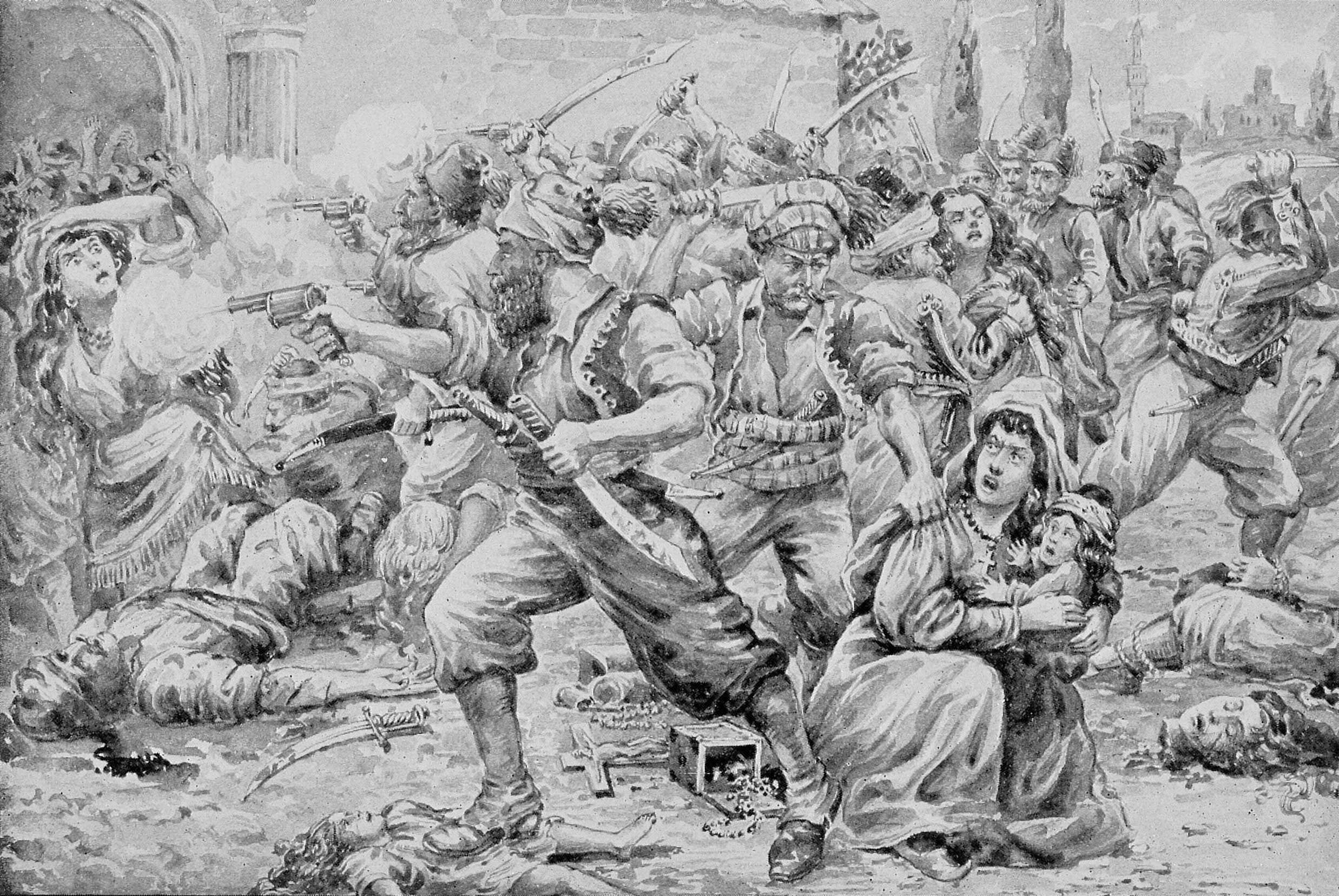
Strong aversion and prejudice against Armenians
Anti-Armenian sentiment, also known as anti-Armenianism and Armenophobia, encompasses a wide-ranging spectrum of hostile attitudes and expressions of negative feelings (e.g., fear, aversion, derision, suspiciousness, dislike, etc.), as well as overt racism, harmful stereotypes, and/or prejudice towards Armenians, Armenia, and Armenian culture.
Historically, anti-Armenianism has manifested itself in several ways, ranging from expressions of hatred or of discrimination against individuals of Armenian ethnic background to organized pogroms by mobs or state-sanctioned genocide. Historically, the most destructive and lethal instances of Armenophobia include the Hamidian massacres (1894–1897), the Adana massacre (1909), the Armenian genocide (1915), the Sumgait pogrom (1988), and Operation Ring (1991).
Modern anti-Armenianism frequently consists of expressions of opposition to the actions or existence of an Armenian state, implicit or explicit denial of the Armenian genocide, or belief in an Armenian conspiracy to fabricate history and manipulate public and political opinion for political gain. Anti-Armenianism has also manifested as extrajudicial killing or intimidation of people of Armenian heritage and destruction of cultural monuments.
Turkey

Main article: Anti-Armenian sentiment in Turkey, Armenian genocide recognition#Position of Turkey, Armenia–Turkey relations
Armenian genocide and its denial
Main article: Armenian genocide denial
Although in the time of the Ottoman Empire's occupation of historically Armenian lands (alongside other territories throughout Africa, Asia, and Europe), Armenians who lived across the empire's territory were, in practice, able to achieve relatively high social status and significant personal wealth as members of the community, they were never considered de jure equal to the majority Turkish citizens, having their social status limited to "second-class citizens," including being regarded as fundamentally alien to the predominantly Muslim (Turkish) character of Ottoman society. In 1895, several revolts among the Armenian subjects of the Ottoman Empire in pursuit of equal treatment led to Sultan Abdül Hamid deciding to respond by indiscriminately targeting the empire's Armenian population, which eventually resulted in the notorious Hamidian massacres, during which between 100,000 and 300,000 Armenians were murdered.
During and after World War I, the Ottoman government, led by the CUP triumvirate, perpetrated a massacre of between 1.2 and 1.8 million Armenians, in one of the greatest atrocities in history, known as Armenian genocide. The Turkish government continues to aggressively deny the Armenian genocide. This position has been criticized in a letter from the International Association of Genocide Scholars to – then Turkish Prime Minister, now President – Recep Tayyip Erdoğan.
Contemporary
Cenk Saraçoğlu argues that anti-Armenian attitudes in Turkey "are no longer constructed and shaped by social interactions between the 'ordinary people' ... Rather, the Turkish media and state promote and disseminate an overtly anti-Armenian discourse." According to a 2011 survey in Turkey, 73.9% of respondents admitted having unfavorable views toward Armenians. The survey showed an unfavorable stance toward Armenians was "relatively more widespread among those participants with lower levels of education and socioeconomic status." According to Minority Rights Group, while the government recognizes Armenians as a minority group, as used in Turkey, this term denotes second-class status.

Hrant Dink, the editor of the weekly bilingual newspaper Agos, was assassinated in Istanbul on January 19, 2007, by Ogün Samast, who was reportedly acting on the orders of Yasin Hayal, a militant Turkish ultra-nationalist. For his statements on Armenian identity and the Armenian genocide, Dink had been prosecuted three times under Article 301 of the Turkish Penal Code for "insulting Turkishness." (The law was later amended by the Turkish parliament, changing "Turkishness" to "Turkish Nation" and making it more difficult to prosecute individuals for the said offense.) Dink had also received numerous death threats from Turkish nationalists who viewed his "iconoclastic" journalism (particularly regarding the Armenian genocide) as an act of treachery.
İbrahim Şahin and 36 other alleged members of the Turkish ultra-nationalist Ergenekon group were arrested in January 2009 in Ankara. The Turkish police said the roundup was triggered by orders Şahin gave to assassinate 12 Armenian community leaders in Sivas. According to the official investigation in Turkey, Ergenekon also had a role in the murder of Hrant Dink.
In 2002, a monument was erected in memory of Turkish-Armenian composer Onno Tunç in Yalova, Turkey. The monument to the composer of Armenian origin was subjected to much vandalism over the course of the years, in which unidentified people had taken out the letters on the monument. In 2012, the Yalova Municipal Assembly decided to remove the monument. Bilgin Koçal, the former mayor of Yalova, informed the public that the memorial had been destroyed by time and that it would shortly be replaced with a new one in the memory of Tunç. On the other hand, a similar memorial stays in place at the village of Selimiye, where an aircraft had crashed; and the people in the village of 187 expressed their protest about the vandalism claims regarding the memorial in Yalova, adding that they paid from their own funds to keep up the maintenance of the monument in their village against the wearing effect of natural causes.

Sevag Balikci, a Turkish soldier of Armenian descent, was shot dead on April 24, 2011, the day of the commemoration of the Armenian genocide, while serving in the military in Batman. It was later discovered that killer Kıvanç Ağaoğlu was an ultra-nationalist. Through his Facebook profile, it was uncovered that he was a sympathizer of nationalist politician Muhsin Yazıcıoğlu and Turkish agent/contract killer Abdullah Çatlı, who himself had a history of anti-Armenian activity, such as the Armenian Genocide Memorial bombing in a Paris suburb in 1984. Furthermore, his Facebook profile also showed that he was a Great Union Party (BBP) sympathizer, a far-right nationalist party in Turkey. Testimony given by Sevag Balıkçı's fiancée stated that he was subjected to psychological pressure at the military compound. She was told by Sevag over the phone that he feared for his life because a certain military serviceman threatened him by saying, "If war were to happen with Armenia, you would be the first person I would kill."
On February 26, 2012, on the anniversary of the Khojaly Massacre, the Atsız Youth led a demonstration in Istanbul that contained hate speech and threats towards Armenia and Armenians. Chants and slogans during the demonstration include: "You are all Armenian, you are all bastards", "bastards of Hrant [Dink] can not scare us", and "Taksim Square today, Yerevan Tomorrow: We will descend upon you suddenly in the night."
In 2012, the ultra-nationalist ASIM-DER group (founded in 2002) had targeted Armenian schools, churches, foundations, and individuals in Turkey as part of an anti-Armenian hate campaign.
Azerbaijan
Main article: Anti-Armenian sentiment in Azerbaijan, Armenia–Azerbaijan relations}}{{Excerpt, Anti-Armenian sentiment in Azerbaijan
Status of Armenian cultural monuments
In November 2020, the British newspaper The Guardian wrote about Azerbaijan's campaign of comprehensive "cultural cleansing" in Nakhichevan:
Satellite imagery, extensive documentary evidence, and personal accounts showed that 89 churches, 5,840 khachkars, and 22,000 tombstones were destroyed between 1997 and 2006, including the medieval necropolis of Djulfa, the largest ancient Armenian cemetery in the world. The Azerbaijani response has consistently been to simply deny that Armenians had ever lived in the region.
The most publicized case of mass destruction concerns gravestones at a medieval Armenian cemetery in Julfa, a sacred site of the Armenian Apostolic Church. Charles Tannock, the member of the foreign affairs committee of the European Parliament, argued: "This is very similar to the Buddha statues destroyed by the Taliban. They have concreted the area over and turned it into a military camp." The destruction of the cemetery has been widely described by Armenian sources, and some non-Armenian sources, as an act of cultural genocide.
European Parliament published a resolution on 10 March 2022, condemning the destruction of the Armenian heritage in Artsakh (Nagorno-Karabakh). The resolution read:
European Parliament ... Strongly condemns Azerbaijan's continued policy of erasing and denying the Armenian cultural heritage in and around Nagorno-Karabakh, in violation of international law and the recent decision of the ICJ...
Ongoing genocide risk
Since 2020, Azerbaijan has attacked Armenian positions in Nagorno-Karabakh/Artsakh (Second Nagorno-Karabakh War), Armenia (border crisis), and has also imposed a blockade on the Republic of Artsakh. These events have resulted in numerous organizations, including those which specialize in genocide studies, reporting that Armenians are at risk of being subjected to another genocide. The Lemkin Institute for Genocide Prevention considers Armenians to be "one of the most threatened identities in the world today." Sheila Paylan, international criminal lawyer and legal advisor to the United Nations has warned that "The international community should take its R2P [Responsibility to Protect] commitments more seriously or risk becoming silently complicit in the next Armenian genocide—or ethnic cleansing." Caucasus expert Laurence Broers draws parallels between "the Russian discourse about Ukraine as an artificial, fake nation, and the Azerbaijani discourse about Armenia, likewise claiming it has a fake history", thereby elevating the conflict to an "existential level" for Armenians. A coalition of various human rights organizations also issued a collective genocide warning in response to the blockade: "All 14 risk factors for atrocity crimes identified by the UN Secretary-General's Office on Genocide Prevention are now present."
- The Lemkin Institute for Genocide Prevention – Since 2021, the organization has issued various "Red Flag Alerts" on Azerbaijan which the organization says poses a threat of genocide to Armenians. It described the Azerbaijan's blockade of the Republic of Artsakh as "a criminal act which intends to create terror and unbearable conditions of life for the population of Artsakh. These events are not isolated events; they are, instead, being committed within a larger genocidal pattern against Armenia and Armenians by the Azerbaijani regime." The group also wrote "The genocidal intent of Baku has never been clearer and the actions carried out up to the moment highly predict this outcome."
- Genocide Watch – issued its own genocide warnings in September 2020 saying that "Because of Azerbaijan’s invasion of Artsakh...Genocide Watch considers Azerbaijan to be at Stage 9: Extermination and at Stage 10: Denial. Genocide Watch considers that Azerbaijan's leadership may intend to forcibly deport the Armenian population of Artsakh by committing genocidal massacres that will terrorize Armenians into leaving Artsakh." In September 2022, Genocide Watch issued another alert stating, "Due to its unprovoked attacks and genocidal rhetoric against ethnic Armenians, Genocide Watch considers Azerbaijan's assault on Armenia and Artsakh to be at Stage 4: Dehumanization, Stage 7: Preparation, Stage 8: Persecution, and Stage 10: Denial." The group wrote a letter to the EU council, warning that the European Union "is turning a blind eye to the Azerbaijani dictatorship for geopolitical and resource reasons" and that Azerbaijan's "intentions are clear: to wipe out all traces of Armenian life and of an Armenian presence in this region. Azerbaijani President, Ilham Aliyev, has consistently and repeatedly stated that he intends to eradicate the indigenous Armenians dwelling in Artsakh."
- The International Association of Genocide Scholars (IAGS) – issued similar statements in October 2020: "Direct Turkish involvement in the decades-long [Nagorno-Karabakh] conflict is ... a fact that threatens to annihilate Armenians in Artsakh and beyond. A recent statement issued by the Turkish president, Recep Tayyip Erdogan, read that they, Turkey, were going 'to continue to fulfill the mission of their grandfathers, which was carried out a century ago in the Caucasus'. This constitutes a direct threat of continuing the Armenian genocide that began in 1915...History, from the Armenian genocide to the last three decades of conflict, as well as current political statements, economic policies, sentiments of the societies and military actions by the Azerbaijani and Turkish leadership should warn us that genocide of the Armenians in Nagorno-Karabakh, and perhaps even Armenia, is a very real possibility." In October 2022, the IAGS issued another statement condemning Azerbaijan's September 2022 attacks on the Republic of Armenia: "Significant genocide risk factors exist in the Nagorno-Karabakh situation concerning the Armenian population" and "dehumanizing and other [irredentist] statements [from Azerbaijani government officials] demonstrate the existence of a risk of genocide, and may amount to incitement to genocide and possibly other international crimes."
Iran
Despite the supposed protections given to Armenians in Iran, hate speech against Armenians (and Christians) has been found among far-right internet circles, with Armenians being referred to as “dogs”, signifying a rising anti-Armenian sentiment among Iranians in the country and the diaspora. Hate crimes against and detainment of Armenian Christians also have occurred, mostly against Armenian Christians evangelizing the populace (mostly underground Persian Christian converts), a notable example being Haik Hovsepian Mehr.
Russia
A 19th-century Russian explorer, Vasili Lvovich Velichko, who was active during the period when the Russian tsarism carried out a purposeful anti-Armenian policy, wrote "Armenians are the extreme instance of brachycephaly; their actual racial instinct make them naturally hostile to the State."
According to a 2012 VTSIOM opinion research, 6% of respondents in Moscow and 3% in Saint Petersburg were "experiencing feelings of irritation, hostility" toward Armenians. In the 2000s, there were racist murders of Armenians in Russia. In 2002, an explosion took place in Krasnodar near the Armenian church which the local community believed was a terrorist act.
Georgia

In Georgia, Armenians are often stereotyped as greedy or dishonest, and public figures, including politicians, have frequently faced accusations of hiding their Armenian background. Georgian philosopher Giorgi Maisuradze stated that Armenophoia is "the oldest form of xenophobia in Georgia."
In the late 19th century and early 20th century, anti-Armenian sentiment was prevalent in both socialist and nationalist Georgian circles. The economic dominance of Armenians in Tbilisi fueled verbal attacks on Armenians. Droeba, an influential journal, described Armenians as people who "strip our streets and fatten their pockets" and "but the last piece of property from our indebted peasant families." Both Ilia Chavchavadze and Akaki Tsereteli, two major literary figures, attacked Armenians for their perceived mercantilism. Tsereteli portrayed Armenians as a flea sucking Georgian blood in one fable. Chavchavadze denounced Armenians for "eating the bread baked by someone else or drinking that which is creating by another's sweat." Chavchavadze's newspaper, Iveria, depicted Armenians as "sly moneylenders and unscrupulous traders", according to Stephen F. Jones. The Social Democratic Party of Georgia (Georgian Mensheviks) attacked the bourgeoisie and imperialism to liberate Georgia from both Russian imperialism and perceived Armenian economic exploitation. During the existence of the Democratic Republic of Georgia (1918–21), the independent Georgian government saw Armenians as a potential "fifth column" for their supposed loyalty to the First Republic of Armenia and subject to manipulation by foreign powers. The Georgian–Armenian War of December 1918 increased anti-Armenian sentiments in Georgia.
Joseph Stalin wrote in his 1913 essay Marxism and the National Question:
What exists in Georgia is anti-Armenian nationalism but this is because there is an Armenian big bourgeoisie which, by crushing the small and as yet weak Georgian bourgeoisie, thrusts the latter towards anti-Armenian nationalism.
In post-Soviet Georgia, the government has engaged in cultural cleansing against its Armenian population through state-backed closure of Armenian cultural centers and schools, enforced Kartvelization (forced usage of the Georgian language) of churches, pressured name changes, propaganda portraying Armenians as outsiders, and economic suppression of Armenian-populated regions. The first president Zviad Gamsakhurdia, an outspoken nationalist, viewed Armenians, along with other ethnic minorities, as "guests" or "aliens" who threaten Georgia's territorial integrity.
Around the time of the 2007 parliamentary elections in the breakaway region of Abkhazia, the Georgian media emphasized the factor of ethnic Armenians in the area. The Georgian newspaper Sakartvelos Respublika predicted that much of the parliament would be Armenian and that there was even a chance of an Armenian president being elected. The paper also reported that the Abkhazian republic might already be receiving financial assistance from Armenians living in the United States. Some Armenian analysts believe such reports are attempting to create conflict between Armenians and ethnic Abkhazians to destabilize the region.
A policy of desecration of Armenian churches and historical monuments on the territory of Georgia has actively been pursued. On November 16, 2008, Georgian monk Tariel Sikinchelashvili vandalised the graves of patrons of art Mikhail and Lidia Tamamshev. The Armenian Church of Norashen in Tbilisi, built in the middle of the 15th century, has been desecrated and misappropriated by the Georgian government despite the fact that both Armenia's and Georgia's Prime-Ministers have reached an agreement on not to maltreat the church. Due to no law on religion, the status of Surb Norashen, Surb Nshan, Shamhoretsor Surb Astvatsatsin (Karmir Avetaran), Yerevanots Surb Minas and Mugni Surb Gevorg in Tbilisi and Surb Nshan in Akhaltsikhe is unknown since being confiscated during the Soviet era. Armenians in Georgia and Armenia have demonstrated against the destruction. On November 28, 2008, Armenian demonstrators in front of the Georgian embassy in Armenia demanded that the Georgian government immediately cease encroachments on the Armenian churches and punish those guilty, calling the Georgian party's actions "white genocide".
In 2011, Georgia's Culture Minister Nika Rurua sacked director Robert Sturua as head of the Tbilisi national theatre for "xenophobic" comments he made earlier this year, officials reported. "We are not going to finance xenophobia. Georgia is a multicultural country", Rurua said. Provoking public outrage, Sturua said in an interview with local news agency that "Saakashvili doesn't know what Georgian people need because he is Armenian." "I do not want Georgia to be governed by a representative of a different ethnicity", he added.
In 2014, the Armenian Ejmiatsin Church in Tbilisi was attacked. The Armenian diocese said it was "a crime committed on ethnic and religious grounds."
In 2018, the Tandoyants Armenian church in Tbilisi was gifted to the Georgian Orthodox Patriarchate. The Diocese of the Armenian Apostolic Holy Orthodox Church in Georgia stated that the church was "illegally transferred" to the Georgian Patriarchate. According to the Human Rights Education and Monitoring Center, Tandoyants is not the only historic Armenian church the Georgian Patriarchate has targeted. There are at least six others the Patriarchate has its sights set on.
United States
Early 20th century
There has been historic prejudice against Armenians in the United States throughout various times, at least beginning from the early 1900s.
In early 1900s, Armenians were among the group of minorities who were barred from loaning money, land, and equipment particularly because of their race. They were referred to as "lower class Jews". Moreover, in Fresno, California, among other minorities Armenians lived on one side of Van Ness Blvd., while the residents of European white origin lived on the other side. A deed from one home there stated, "Neither said premises nor any part thereof shall be used in any matter whatsoever or occupied by any Black, Chinese, Japanese, Hindu, Armenian, Asiatic or native of the Turkish Empire."
Between the 1920s and the 1960s, some houses in the Rock Creek Hills neighborhood of Kensington, Maryland, a suburb of Washington, D.C., included anti-Armenian language in racial covenants that were part of property deeds. One deed in Rock Creek Hills declared that homes in the neighborhood "shall never be used or occupied by...negroes or any person or persons, of negro blood or extraction, or to any person of the Semitic Race, blood or origin, or Jews, Armenians, Hebrews, Persians and Syrians, except...partial occupancy of the premises by domestic servants."
In Anny Bakalian's book Armenian-Americans: From Being to Feeling Armenian, various groups of Armenians were polled for discrimination based on their identity. Roughly 77% of US-born Armenians felt they were discriminated in getting a job while 80% responded positively to a question whether they felt discriminated in getting admitted to a school.
American historian Justin McCarthy is known for his controversial view that no genocide was intended by the Ottoman Empire but that both Armenians and Turks died as the result of civil war. Some attribute his denial of the Armenian genocide to anti-Armenianism, as he holds an honorary doctorate of the Turkish Boğaziçi University and he is also a board member of the Institute of Turkish Studies.
Since the 1990s
On April 24, 1998, during a campus exhibit organized by the Armenian Students' Association at UC Berkeley, Hamid Algar, a professor of Islamic & Persian Studies, reportedly approached a group of organizers and shouted, "It was not a genocide but I wish it was—you lying pigs!" The students also claimed that Algar also spat at them. Following the incident members of the Armenian Students' Association filed a report with campus police calling for an investigation. After a five-month investigation the Chancellor's office issued an apology, though no hate charges were filed as incident did not create a "hostile environment". On March 10, 1999, the Associated Students of University of California (ASUC) passed a resolution titled, "A Bill Against Hate Speech and in Support of Reprimand for Prof. Algar", condemning the incident and calling for Chancellor to review the university decision not to file charges.
In 1999, after Rafi Manoukian got elected to Glendale City Council, one resident attended the council's meetings every week to "tell Armenians to go back where they came from." Manoukian campaign had made a point to galvanize Glendale's large Armenian American electorate.
In April 2007, the Los Angeles Times Managing Editor Douglas Frantz blocked a story on the Armenian genocide written by Mark Arax, allegedly citing the fact Arax was of Armenian descent and therefore had a biased opinion on the subject. Arax, who has published similar articles before, has lodged a discrimination complaint and threatened a federal lawsuit. Frantz, who did not cite any specific factual errors in the article, is accused of having a bias obtained while being stationed in Istanbul, Turkey. Harut Sassounian, an Armenian community leader, accused Frantz of having expressed support for denial of the Armenian genocide and has stated he personally believed that Armenians rebelled against the Ottoman Empire, an argument commonly used to justify the killings. Frantz resigned from the paper not long afterward, possibly due to the mounting requests for his dismissal from the Armenian community.
In March 2012, three of five Glendale Police Department's officers of Armenian origin filed a lawsuit in Los Angeles County Superior Court against Glendale Police Department claiming racial discrimination.
Another incident that received less coverage was a series of hate mail campaigns directed at Paul Krekorian, a city council candidate for Californian Democratic Primary, making racist remarks and accusations that the Armenian community was engaging in voter fraud.{{cite web|url=http://www.anca.org/press_releases/press_releases.php?prid=959|title=Armenian Community Condemns Anti-Armenian Attacks During California Democratic Primary Election |access-date=6 April 2015}}
In 2016, during a race between Glendale City Clerk Ardy Kassakhian and Glendale Council Member Laura Friedman for the 43rd District Assembly seat, Kassakhian's campaign faced numerous threats and criticism based on the candidate's ethnicity. At one point in the campaign Kassakhian's office was evacuated after receiving a phone call that threatened the safety of employees and volunteers.{{cite web|url=http://asbarez.com/156656/xenophobia-and-death-threats-plague-glendale-politics/|title=Xenophobia and Death Threats Plague Glendale Politics |access-date=3 November 2016}}
On April 20, 2016, Armenian genocide denial propaganda appeared in the sky over the Hudson River between Manhattan and Northern New Jersey. The skywriting featured messages such as "101 years of Geno-lie", "BFF = Russia + Armenia", and "FactCheckArmenia.com". The aerial stunt was part of a campaign by the website Fact Check Armenia, an Armenian genocide denialist site. The writing could be seen from roughly a 15-mile (24 km) radius. The media attention from the incident resulted in an official apology by the skywriting company.{{cite web|url=https://www.vice.com/en/article/geico-helped-put-a-sky-message-above-nyc-denying-turkeys-genocide-in-armenia/|title=GEICO-Sponsored Company Put a Sky Message Above NYC Denying Turkey's Genocide of Armenians |access-date=22 April 2016}}
In the 4th episode of Season 3 of the CBS sitcom 2 Broke Girls (aired on October 14, 2013) "when a new cappuccino maker is brought into the cupcake store by a co-worker, he says he bought it for a cheap price from a person who stole it but sells it at a profit, adding 'it's the Armenian way.' When the character is pressed that he is not Armenian, he says 'I know. But, it's the Armenian way. This scene was characterized as "racist" by Asbarez Editor Ara Khachatourian, who criticized CBS for promotion of racial stereotypes in their shows.
In the January 9, 2018, episode of the Comedy Central late-night program The Daily Show Trevor Noah stated: "This is, like, really funny. Only Donald Trump could defend himself and, in the same sentence, completely undermine his whole point. It would be like someone saying, 'I'm the most tolerant guy out there, just ask this filthy Armenian. Armenian American organizations criticized Noah for alleged racism against Armenians. In a joint press release the Armenian Bar Association and the Armenian Rights Watch Committee (ARWC) compared "Filthy Armenians" to other offensive racial epithets, which although "may have been intended to coax a laugh from the audience by ridiculing President Trump's self-proclaimed genius and tolerance", constitutes "affront and slander". The organizations called for The Daily Show and Trevor Noah to issue a retraction and an apology. The Armenian National Committee of America (ANCA) also called for an apology. On October 29 and December 12, 2019, the U.S. House of Representatives and the U.S. Senate officially recognized the Armenian genocide. In July 2020 the KZV Armenian School and its adjacent Armenian Community Center in San Francisco were vandalized overnight with threatening and racist graffiti. According to San Francisco officials, the attack claimed to support a violent, anti-Armenian movement led by Azerbaijan. The messages contained curse words and appeared to be connected to increased tensions between Azerbaijan and Armenia. The Speaker of the United States House of Representatives Nancy Pelosi noted that "The KZV Armenian School is a part of the beautiful fabric of our San Francisco family. The hateful defacing of this place of community and learning is a disgrace." San Francisco District Attorney Chesa Boudin and San Francisco Mayor London Breed also condemned the hate act. On April 24, 2021, U.S. President Joe Biden officially recognized the Armenian genocide. On September 24, 2021, the St. Peter Armenian Church in Fernando Valley, California, was vandalized. The suspect broke eight very rare stained glass windows of the church with a baseball bat. The ANCA-WR Executive Director Armen Sahakyan said “This act of vandalism is especially concerning as we recently marked one year since the Armenophobic hate crimes that took place in San Francisco.”. The Los Angeles Police Department continues its investigation on this crime.
In the 2022 Los Angeles City Council scandal, Nury Martinez referred to Areen Ibranossian, an advisor to councillor Paul Krekorian, as "The guy with one eyebrow." Martinez wasn't able to recall the last name and Cedillo replied "It ends in i-a-n, I bet you." Ibranossian said, "This type of depiction of Armenians is not uncommon and is too often tolerated." Growing up in Torrance, California, he was called "towel head" and "camel jockey."
In 2023, the Consumer Financial Protection Bureau (CFPB) ordered Citigroup to pay $24.5 million in fines and $1.4 million in restitution to Armenian Americans, alleging that the bank had illegally discriminated against members of the ethnic group and had unjustly denied them credit cards for which they had applied in a period beginning in 2015 and ending in 2021. According to the CFPB, Citigroup employees used the presence of -ian or -yan in applicant surnames as an indicator that a customer should undergo enhanced screening processes, while also deciding to avoid making mention of this screening method in emails. (The suffixes -ian and -yan are frequently found in Armenian surnames.)
Israel
Israel-Armenia relations have been complicated throughout history, resulting in anti-Armenian sentiments in Israel.
The Jerusalem Post reported in 2009 that out of all Christians in Jerusalem's Old City Armenians were most often spat on by Haredi and Orthodox Jews. In 2011 several instances of spitting and verbal attacks on Armenian clergymen by Haredi Jews were reported in the Old City. In a 2013 interview Armenian Patriarch of Jerusalem Nourhan Manougian stated that Armenians in Israel are treated as "third-class citizens". In 2019, it was reported that 60 Armenian Church students attempted to lynch two Jewish men on the eve of Shavuot in Jerusalem, further increasing tensions between the religious groups.
In 2023, Al Jazeera reported that anti-Christian violence, coinciding with anti-Palestinian violence, is becoming more widespread and normalized, especially by fundamentalist and right-wing Jews. Various anti-Christian laws were made, including limiting the amount of worshippers who can enter the Holy Sepulchre. 30 graves in Mount Zion were vandalized, and the Armenian quarter was spray-painted with the words "Death to Arabs, Christians and Armenians."
Israel has long refused to recognize the Armenian genocide, mainly to avoid harming its relations with Turkey. Former President and Prime Minister of Israel Shimon Peres referred to the history of the Armenian Genocide as "meaningless" and said that "We reject attempts to create a similarity between the Holocaust and the Armenian allegations. Nothing similar to the Holocaust occurred. It is a tragedy what the Armenians went through but not a genocide." Other major figures and organizations in Israel have also propped up Turkey's genocide denial. In particular, the Turkish Israeli and Azerbaijani Israeli communities have encouraged genocide denial in Israel. The Knesset Committee on Education, Culture and Sports recognized the Armenian Genocide on August 1, 2016. When visiting the Israeli President the Armenian Patriarchate of Jerusalem on May 9, 2016, Reuven Rivlin concluded his speech by saying that "the Armenians were massacred in 1915. My parents remember thousands of Armenian migrants finding asylum at the Armenian Church. No one in Israel denies that an entire nation was massacred. Recognition of the Armenian Genocide in Israel remains to be an extremely contentious issue influenced heavily by Azerbaijan-Israel Relations.
Israel's strategic alliance with Azerbaijan and Armenia's alliance with Iran have both resulted in hostility between the Israeli and Armenian governments and the subsequent deterioration of Armenia-Israel relations. In both the First and Second Nagorno-Karabakh Wars, Israel has supplied Azerbaijan with advanced weaponry. At a protest against Israel's arms sales to Azerbaijan, counter-protesters smashed a protester's car and blocked the road they were driving along. Many Israelis have also sympathized with Azerbaijan due to Azerbaijan's long and peaceful historical relations with Jews. Because of strong relations between Israel and Azerbaijan, pro-Israeli lobbying groups such as AIPAC have defended and lobbied for Azerbaijan against Armenia.
Daesh
With the breakout of the Syrian Civil War and subsequent rise of Daesh, Armenians, alongside Assyrians, Alawites and Shia Muslims, were some of the groups persecuted in areas occupied by Daesh militants. Armenian sites were targets of Daesh' infamous cultural destruction. After occupying Raqqa, Daesh fighters destroyed the Church of the Martyrs, an Armenian Catholic church.
More infamously, Daesh fighters destroyed the Armenian Genocide Memorial in Deir-ez-Zor, culturally significant to Armenians, as Deir-ez-Zor was the last destination before Armenians in 1915 would reach the Syrian Desert, with many dying along the way.
As Daesh began taking control of many cities, towns and villages, thousands of Christians were forced to flee, either abroad or to other, safer areas in Syria.
Others
Pakistan
Pakistan is the only United Nations member state that has not recognized the Republic of Armenia, citing its support to Azerbaijan in the Nagorno-Karabakh conflict.
Tajikistan
In early 1990, 39 Armenian refugees from Azerbaijan were settled in Tajikistan. False rumors spread that allegedly up to 5,000 Armenians were being resettled in new housing in Dushanbe (which was experiencing acute housing shortage at that time). This led to riots which targeted both the Communist government and Armenians. The Soviet Ministry of Interior (MVD) suppressed the demonstrations, during which more than 20 people were killed and over 500 were injured.
Greece (Byzantine Empire)
The Armenians had good relations with the Byzantine Empire for its political and military achievements until the mid-11th century when the Eastern Roman Emperors Constantine IX Monomachos and Constantine X Doukas forbade the Armenian Catholicos, Petros I Gethadardz (1019–1059) and then Khachik II Anetsi (1059–1065) to reside in Ani, where the patriarchate was located and began persecuting Armenians as part of Chalcedonianism and Constantine X campaign crack downs on the Anatolian-landed aristocracy faction which was dominated by mostly Armenian descent generals.
Ukraine
In 1944, in the town of Kuty in eastern Poland, Ukrainian nationalists from the OUN-UPA massacred (as part of the Massacres of Poles in Volhynia and Eastern Galicia) Armenians and Poles, killing 200 people. Kuty was the largest concentration of Armenians in Poland.
In 2009, an ethnic conflict broke out in the city of Marhanets following the murder of a Ukrainian man by an Armenian. A fight between Ukrainians and Armenians started in the "Scorpion" café, and later turned into riots and pogroms against Armenians, accompanied by the burning of houses and cars, which led to exodus of Armenians from the city.
In 2023, Armenian media accused Oleksiy Danilov, the secretary of Ukraine's National Security and Defense Council, of making anti-Armenian statements.
East Turkestan
Uyghur separatist leader Isa Alptekin spouted anti-Armenian rhetoric while he was in Turkey and claimed that "our innocent Turkish Muslim brothers" were massacred by "Armenian murderers".
In 2019, amidst the ongoing persecution of Uyghurs in China, Armenian Weekly ran an article questioning if Armenians should even care about Uyghur plight; many Armenians reacted negatively and saw Uyghurs as Turkish stooges who perpetuated anti-Armenian sentiment among the Uyghur population.
Notes
References
References
- Black Garden, by Thomas De Waal (Aug 25, 2004), page 42
- Communal Violence: The Armenians and the Copts as Case Studies, by Margaret J. Wyszomirsky, World Politics, Vol. 27, No. 3 (Apr., 1975), p. 438
- [http://www.armenian-genocide.org/hamidian.html Hamidian Massacres], Armenian Genocide.
- Levon Marashlian. ''Politics and Demography: Armenians, Turks, and Kurds in the Ottoman Empire''. Cambridge, MA: Zoryan Institute, 1991.
- Samuel Totten, Paul Robert Bartrop, Steven L. Jacobs (eds.) ''Dictionary of Genocide''. Greenwood Publishing, 2008, {{ISBN. 0-313-34642-9, p. 19.
- Noël, Lise. ''Intolerance: A General Survey''. Arnold Bennett, 1994, {{ISBN. 0-7735-1187-3, p. 101.
- Schaefer, Richard T. (2008). "Encyclopedia of Race, Ethnicity, and Society".
- "INTERNATIONAL ASSOCIATION OF GENOCIDE SCHOLARS".
- (2011). "Kurds of Modern Turkey: Migration, Neoliberalism and Exclusion in Turkish Society". [[I.B. Tauris]].
- (2 May 2011). "Turkish citizens mistrust foreigners, opinion poll says". [[Hürriyet Daily News]].
- "Minority Rights Group International: Turkey: Armenians".
- (11 October 2015). "Grew up Kurdish, forced to be Turkish, now called Armenian".
- (2 February 2007). "Samast'a jandarma karakolunda kahraman muamelesi". Radikal.
- (12 January 2012). "Turkey remembers murdered journalist".
- Harvey, Benjamin. (2007-01-24). "Suspect in Journalist Death Makes Threat". [[Associated Press]].
- (2007-01-19). "Turkish-Armenian writer shot dead". [[BBC News]].
- Robert Mahoney. (2006-06-15). "Bad blood in Turkey". Committee to Protect Journalists.
- (2007-01-22). "IPI Deplores Callous Murder of Journalist in Istanbul". [[International Press Institute]].
- "Turkey".
- [[Committee to Protect Journalists]]. (2007-01-19). "Turkish-Armenian editor murdered in Istanbul".
- [http://www.marketwatch.com/news/story/turkish-police-uncover-arms-cache/story.aspx?guid={689660F3-E034-49B9-A123-C2E808A2AE8A}&dist=msr_1 Turkish police uncover arms cache, ''The Wall Street Journal'', Jan. 10, 2009]
- "E.I.R. GmbH".
- Montgomery, Devin. (2008-07-12). "Turkey arrests two ex-generals for alleged coup plot". [[JURIST]].
- BÜYÜKFURAN ARMUTLU, İbrahim. (2002-06-11). "Onno Tunç anıtı açıldı". Hürriyet.
- "Turkish municipality destroys monument of Armenian musician, composer".
- Helix Consulting LLC. "Monument to Armenian musician Onno Tunc destroyed in Turkey".
- (30 April 2012). "Onno Tunç anıtını yıktık çünkü ...". Sabah.
- "Haber - Onno Tunç anıtı'na Selimiye halkı el sürdürmüyor!".
- "January-April 2014 Media Watch on Hate Speech and Discriminatory Language Report". Hrant Dink Foundation.
- (2012-01-27). "Armenian private killed intentionally, new testimony shows". Today's Zaman.
- "Sevag Şahin'i vuran asker BBP'li miydi?".
- "Title translated from Turkish: What Happened to Sevag Balikci?". Radikal.
- "Fiancé of Armenian soldier killed in Turkish army testifies before court". News.am.
- (February 26, 2012). "Azeris mark 20th anniversary of Khojaly Massacre in Istanbul". Hurriyet.
- (28 November 2012). "Ultra-nationalist group targets Turkey's Armenians". Zaman.
- (19 November 2020). "The ceasefire agreement with Azerbaijan comes with great risks for Armenia". The Guardian.
- (23 October 2011). "Azerbaijan 'flattened' sacred Armenian site". [[The Independent]].
- (2014). "Modern Pagan and Native Faith Movements in Central and Eastern Europe". Routledge.
- (13 January 2006). "Cultural War: Systematic destruction of Old Julfa khachkars raises international attention". [[ArmeniaNow]].
- (2015). "The Routledge History of Genocide". Routledge.
- (2022-03-10). "EU Parliament condemns destruction of Armenian heritage in Nagorno-Karabakh".
- "JOINT MOTION FOR A RESOLUTION on the destruction of cultural heritage in Nagorno-Karabakh".
- (October 24, 2022). "Statement on Azerbaijani Aggression Against the Republic of Armenia and the Indigenous Armenians of the South Caucasus".
- Veldkamp, Joel. (19 December 2022). "Genocide Warning for Nagorno Karabakh issued by human rights organizations".
- (September 23, 2022). "Genocide Warning: Azerbaijan and Nagorno-Karabakh".
- "Genocide Warning: Nagorno Karabakh".
- "Annual Report 2022 {{!}} Lemkin Institute For Genocide Prevention".
- (2022-12-14). "Do the Armenians Face a Second Genocide?".
- Boy, Ann-Dorit. (2023-01-18). "Blockade in the Southern Caucasus: "There Is Every Reason to Expect More Violence This Year"". Der Spiegel.
- "Armenia Project".
- "Red Flag Alert for Genocide - Azerbaijan - Update 5".
- "Red Flag Alert for Genocide - Azerbaijan Update 4".
- Watch, Genocide. (2020-11-06). "Genocide Emergency Alert on the War in Artsakh (Nagorno-Karabakh)".
- (2022-05-15). "Open Letter to Charles Michel, President of the European Council, Regarding Complicity in Genocide".
- "@LemkinInstitute".
- "Statement from a group of Genocide scholars on the Imminent Genocidal Threat deriving from Azerbaijan and Turkey against Artsakh (Nagorno-Karabakh)".
- "Accusations of Sabotage and Calls for Elimination: Iran's Month in Hate Speech".
- "В.А.Шнирельман, "Албанский миф" в кн.: "Войны памяти. Мифы, идентичность и политика в Закавказье", М., ИКЦ, "Академкнига", 2003".
- Benthall, Jonathan (ed.), The best of Anthropology Today, 2002, Routledge, {{ISBN. 0-415-26255-0, p. 350 by Anatoly Khazanov
- (24 January 2012). "Москвичи и петербуржцы - о своих этнических симпатиях и антипатиях".
- [https://www.theguardian.com/world/2006/apr/24/russia.nickpatonwalsh Armenian student killed in Moscow race attack] Nick Paton Walsh in Moscow, The Guardian, Monday 24 April 2006
- [http://www.rferl.org/content/article/1075252.html Six Russians Jailed For Racist Killing Of Armenian] March 14, 2007, (Reuters)
- Mibchuani, Teimuraz. (2009). "Armenian Battalion Named After Bagramyan and Ethnic Cleansing of Georgians in Abkhazia". Georgian Foundation for Strategic and International Studies.
- (11 November 2002). "Armenian Church In Russia Damaged By Blast". azatutyun.am.
- (2024-10-14). "Armenophobic attacks by pro-government media target Georgian opposition leader".
- (2020-12-10). "Armenophobia: ‘the oldest form of xenophobia in Georgia’".
- (2005). "[[Stalin: A Biography]]". [[Harvard University Press]].
- "Marxism and the National Question". [[Marxists Internet Archive]].
- (2011). "A Handbook of Dialogue Trust and Identity". Wydawnictwo Pogranicze.
- (1993). "Georgian- Armenian Relations in 1918-20 and 1991-94: A Comparison". [[Armenian Review]].
- ""Ŕđě˙íńęčé âîďđîń" â Ŕáőŕçčč ăëŕçŕěč ăđóçčíńęčő ŃĚČ". ČŔ REGNUM.
- "Focus on Faction: Georgian media stirs Abkhazian-Armenian "conflict" - News - ArmeniaNow.com".
- [http://ancestralstones.com/cultural_genocide_en.pdf The cultural genocide of Armenian historical monuments in Georgia, Organisation for the support of the Armenian Diocese in Georgia "Kanter"]
- "Vandalism and misappropriation of Armenian churches in Georgia goes on". [[PanARMENIAN.Net]].
- United Nations High Commissioner for Refugees. "Refworld - Georgia: Collapse of Armenian Church Provokes Row". Refworld.
- "Armenians of Georgia urge to stop barbarous destruction of Armenian cultural heritage". [[PanARMENIAN.Net]].
- (February 2025). ["Protest Action Against Encroachments On Armenian Churches in Georgia Held in Yerevan"](http://www.defacto.am/index.php?OP=71341281}}{{dead link). defacto.am.
- [https://archive.today/20130103045851/http://www.google.com/hostednews/afp/article/ALeqM5i0gmRdSadqY6Pjer8kJoCZbOnKyA?docId=CNG.0f536b3f87ac380c93fc984fd8fcf6c4.921 Georgia sacks theatre legend for 'xenophobia', AFP, August 2011]
- "Đîáĺđň Ńňóđóŕ: Ńŕŕęŕřâčëč — ŕđě˙íčí". Đîńáŕëň.
- (20 July 2014). "Priests attacked at Armenian church in Tbilisi".
- [https://eurasianet.org/georgian-orthodox-church-takes-aim-at-armenian-churches Georgian Orthodox Church takes aim at Armenian churches "There is interest in erasing any evidence of Armenians in Tbilisi." by Neil Hauer, Bradley Jardine, Eurasianet, Nov 5, 2018]
- Diana Aguilera. (8 December 2015). "Diversity In Fresno: How Racial Covenants Once Ruled Prestigious Neighborhoods".
- "Racist housing covenants haunt property records across the country. New laws make them easier to remove.". [[The Washington Post]].
- Anny Bakalian. Armenian-Americans, From Being to Feeling Armenian. 1993. {{ISBN. 978-1560000259, pp. 223-4
- Stanley, Alessandra. (2006-04-17). "A PBS Documentary Makes Its Case for the Armenian Genocide, With or Without a Debate". [[The New York Times]].
- MacDonald, David B. ''Identity Politics in the Age of Genocide: the Holocaust and Historical Representation''. London: Routledge, 2008, p. 121. {{ISBN. 0-415-43061-5.
- (2008-11-04). "Board of Governors". [[Institute of Turkish Studies]].
- (6 May 1998). "Berkeley Professor Spits at Armenian Student". Asbarez.com.
- (16 March 1999). "UC Berkeley Senate Calls On Prof. to Apologize". Asbarez.com.
- (3 November 2016). "Xenophobia and Death Threats Plague Glendale Politics".
- "Armenian genocide dispute erupts at LAT". LA Observed.
- "Genocide Controversy Leads L.A. Times Managing Editor To Resign".
- (8 March 2012). "3 Armenian police claim discrimination by Glendale department". Los Angeles Times.
- Khachatourian, Ara. (16 October 2013). "CBS Network's Streak of Racism Continues". [[Asbarez]].
- (9 January 2018). "Late-night hosts on Oprah's Golden Globes speech: 'A year ago, I would've called it presidential'". [[The Guardian]].
- (10 January 2018). "U.S. Nationally Televised "Comedy Central" Joke about Trump Bombs, Smearing All Armenians". [[Hetq Online]].
- (12 January 2018). "Action Alert: Stand Up to Trevor Noah and the Daily Show". [[Asbarez]].
- (October 29, 2019). "House Passes Resolution Recognizing Armenian Genocide".
- (December 12, 2019). "Senate passes resolution to formally 'commemorate the Armenian Genocide'".
- [https://www.sfchronicle.com/crime/article/Armenian-school-in-SF-vandalized-with-threats-15432780.php Armenian school in SF vandalized with threats, hate speech as conflicts with Azerbaijan intensify, Megan Cassidy and Brett Simpson, San Francisco Chronicle, July 25, 2020]
- [https://www.sfgate.com/bayarea/article/SF-Armenian-school-community-center-vandalized-15434127.php SF Armenian school, community center vandalized with hateful graffiti, By Eric Ting, SFGATE, 25.07.2020]
- [http://asbarez.com/195693/attack-on-kzv-school-armenian-center-to-be-investigated-as-hate-crime/ Attack on KZV School, Armenian Center to be Investigated as Hate Crime], ''[[Asbarez]]'', 25.07.2020
- (April 24, 2021). "Statement by President Joe Biden on Armenian Remembrance Day".
- "St. Peter Armenian Church in San Fernando Valley vandalized".
- (October 11, 2022). "Nury Martinez leak reveals insults about Jews, Armenians too".
- (October 11, 2022). "Column: Almost no one was spared in that racist conversation among top L.A. Latino officials". [[Los Angeles Times]].
- (8 November 2023). "Citigroup Fined for Discriminating Against Armenian Americans". [[The Wall Street Journal]].
- Matthews, Chris. (8 November 2023). "CFPB fines Citi $26 million for 'intentional' discrimination against Armenian Americans". [[MarketWatch]].
- Saul, Derek. (8 November 2023). "Citigroup Fined $25.9 Million For Allegedly Discriminating Against Armenian Americans". [[Forbes]].
- Derfner, Larry. (26 November 2009). "Mouths filled with hatred". [[The Jerusalem Post]].
- Rosenberg, Oz. (6 November 2011). "Armenian clergy subjected to Haredi spitting attacks". Haaretz.
- (29 June 2012). "'We are third-class citizens,' says Armenian Patriarch of Jerusalem". [[Haaretz]].
- (18 June 2019). "Report: 60 Armenian-Church Students Attempted Lynching of 2 Jews on Eve of Shavuot".
- Al Jazeera Staff. (9 April 2023). "'Death to Christians': Violence steps up under new Israeli gov't".
- (5 September 2017). "Quote by Israeli Foreign Minister Shimon Peres".
- "The Jews Who Befriended Turkey and Became Genocide Deniers". Haaretz.
- (2016-08-01). "Israeli Knesset Committee Recognizes Armenian Genocide".
- (27 April 2021). "Why Israel won't follow Biden's lead and recognize Armenian genocide".
- (17 October 2020). "In Israel, Azeris attacked peaceful Armenian protesters with batons and stones".
- "How pro-Israel Jews Became Azerbaijan's Secret Weapon in Washington". Haaretz.
- Hubbard, Ben. (23 July 2014). "Islamic State Controls Raqqa". The New York Times.
- Toi Staff. (22 September 2014). "IS said to destroy Armenian Genocide memorial".
- (14 February 2012). "Pakistani President: "Islamabad will support Azerbaijan in Nagorno Karabakh issue"". [[ArmeniaNow]].
- Horowitz, Donald L.. (2002). "The Deadly Ethnic Riot". University of California Press.
- Takeyh, Ray. (2004). "The Receding Shadow of the Prophet". Greenwood Publishing Group.
- Aleksanyan, V. A.. (2025). "The Religious Policy of Byzantine to Disestablish the Armenian Catholicosate". V. A. Aleksanyan.
- [[Tadeusz Isakowicz-Zaleski]], ''Przemilczane ludobójstwo na Kresach'', Kraków 2008,{{ISBN. 978-83-922939-8-9
- Romuald Niedzielko, ''Kresowa księga sprawiedliwych 1939-1945. O Ukraińcach ratujących Polaków poddanych eksterminacji przez OUN i UPA'', Warszawa 2007, {{ISBN. 978-83-60464-61-8
- Sanamyan, Emil. (3 July 2009). "Armenians targeted in Ukraine incident". [[Armenian Reporter]].
- [http://www.analitik.org.ua/current-comment/int/4a530eba67afe/ Межнациональные столкновения в Марганце] {{Webarchive. link. (2012-04-26 "Армяне массово выезжают в другие города.")
- (25 January 2023). "Ukrainian Official Explains 'Anti-Armenian' Statement". Azatutyun.am.
- "İsa Yusuf Alptekin ve Türkiye'nin Siyasal Hayatına Etkileri".
- https://armenianweekly.com/2019/02/20/should-armenians-care-about-the-plight-of-the-uyghurs/
This article was imported from Wikipedia and is available under the Creative Commons Attribution-ShareAlike 4.0 License. Content has been adapted to SurfDoc format. Original contributors can be found on the article history page.
Ask Mako anything about Anti-Armenian sentiment — get instant answers, deeper analysis, and related topics.
Research with MakoFree with your Surf account
Create a free account to save articles, ask Mako questions, and organize your research.
Sign up freeThis content may have been generated or modified by AI. CloudSurf Software LLC is not responsible for the accuracy, completeness, or reliability of AI-generated content. Always verify important information from primary sources.
Report