From Surf Wiki (app.surf) — the open knowledge base
Antennapedia
Hox gene
Hox gene
| Field | Value |
|---|---|
| UniProt | P02833 |
| Organism | Drosophila melanogaster |
| Name | Homeotic protein antennapedia |
| Symbol | antp |
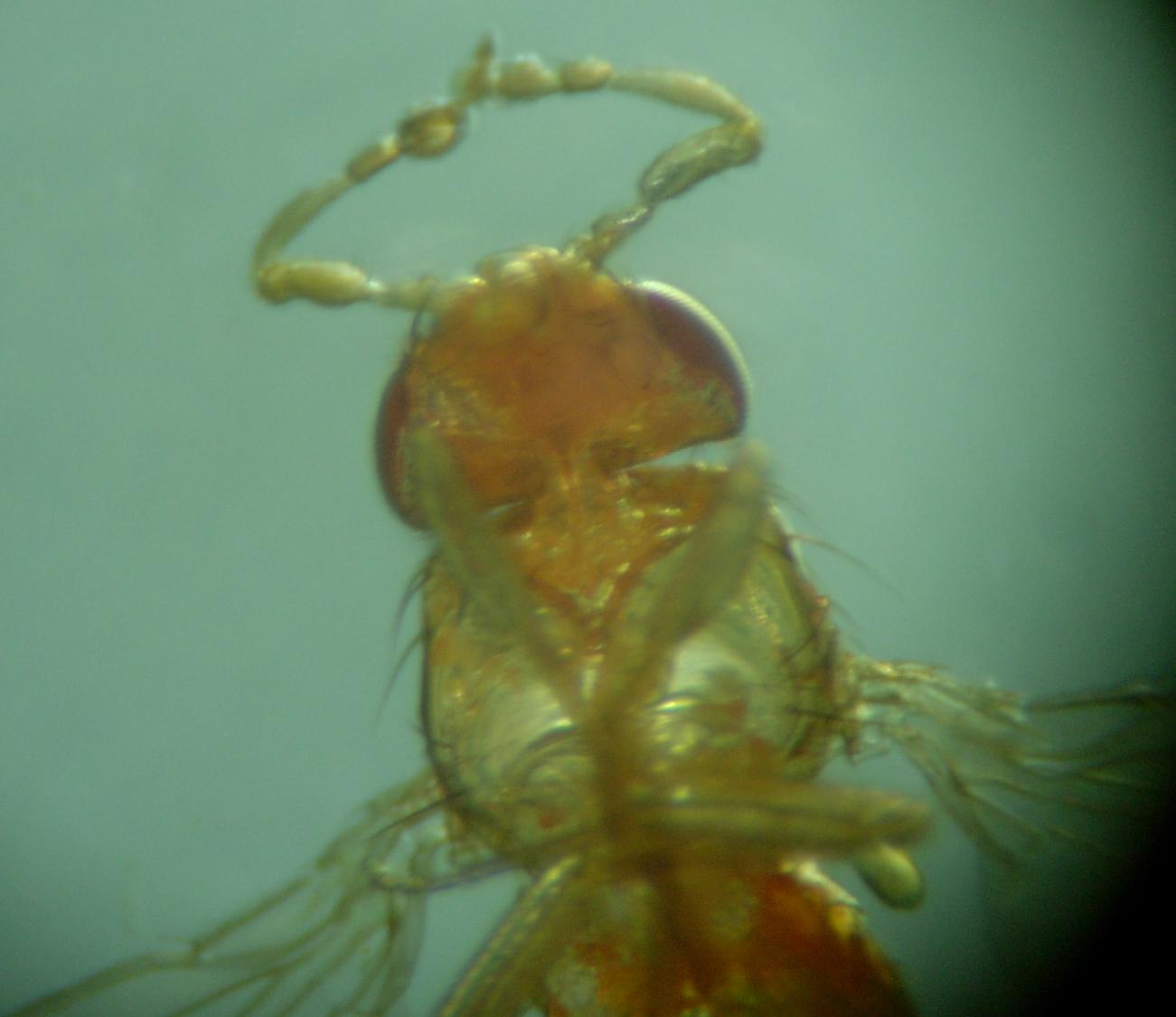
Antennapedia (abbreviated Antp) is a Hox gene first discovered in Drosophila which controls the formation of legs during development. Loss-of-function mutations in the regulatory region of this gene result in the development of the second leg pair into ectopic antennae. By contrast gain-of-function alleles convert antennae into ectopic legs.
This is just one illustration of the tendency of organisms to exhibit variations on a theme: modulated repetition. Legs and antennae are related to one another as much as molars are to incisors, fingers are to toes, and arms are to legs.
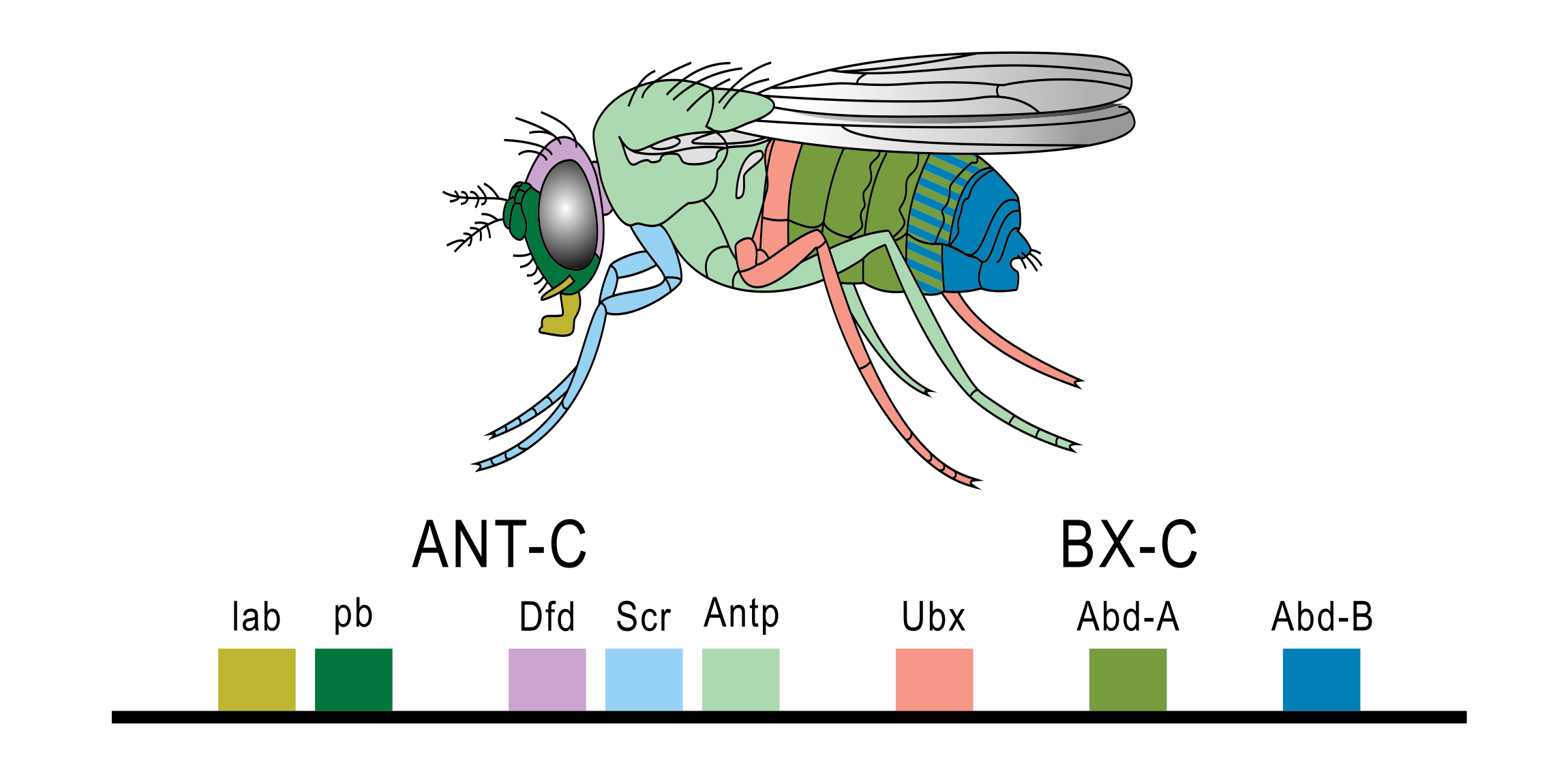
Antp also refers to a gene complex (ANT-C) in Drosophila ending with the Antp gene. It is responsible for formation and differentiation of the thoracic and head segments of the fly's body.
Origin of ''Antennapedia''-class homeobox gene
The origin of the ancestor homeobox gene is an important aspect of the evolution of the Antp-class Hox genes. Early evolution of the Antp-class genes may have predated the divergence of cnidarians. However, the role that Antp plays in the spatial body development of cnidarians remains unclear. A widely accepted theory is that the ancestor Hox cluster containing three genes arose in the early metazoan era. It is suggested that Antennapedia arose from Evx, a non-Hox family of genes. This duplication event of Evx into the Antp-class probably occurred prior to cnidarian divergence, as there are Cnidarians with Evx and without Hox class genes and vice versa.
''Antennapedia'' in arachnids
Recent studies have observed that down-regulation of the Antp gene in Parasteatoda tepidariorum leads to the development of a pair of ectopic legs, resulting in 10-legged mutant spiders. Drosophila Antp is thought to play an important role in the role of ectopic leg or antenna placement, but not in abdominal leg suppression. However, recent research supported that leg suppression was indeed performed by Antp in arachnids. This suggests that spiders and insects may have separately developed strategies of the leg suppression via the evolutionary pressure of convergence. Arachnids' Antp gene is different from other Antp Hox clusters, suggesting that it has evolved via a divergence event leading to the development on the leg suppression function. This example suggests how the functions of homeobox genes including Antp have evolved over time to account for different lineages' needs.
''HoxC6'': an ortholog of Antp
Although it is known that Antp-class homeobox genes play some sort of role in transcriptional processes, not all of their actions and functions have been discovered. Recent studies observed Antp and the Hox ortholog HoxC6 in Xenopus in order to further distinguish the evolution of these orthologues. HoxC6 was found to play an important role in gastrulation in the vertebrate Xenopus. However, gastrulation was also a target in the Drosophila Antp gene. The anterior–posterior pattern mechanism is highly conserved in these genes, as its function in Xenopus is clear, but it is unclear why it would be a target in Drosophila. The similarities continuously observed between Hox genes in vertebrates and Drosophila suggests a complex evolutionary history of the Antp Hox gene cluster, as well as reaffirms the importance of the conservation of this gene cluster in the evolution of body morphology.
References
References
- (1987). "Redesigning the body plan of Drosophila by ectopic expression of the homoeotic gene Antennapedia". Nature.
- (April 2000). "Evolution of Antp-class genes and differential expression of Hydra Hox/paraHox genes in anterior patterning". Proceedings of the National Academy of Sciences of the United States of America.
- (March 2012). "Divergent role of the Hox gene Antennapedia in spiders is responsible for the convergent evolution of abdominal limb repression". Proceedings of the National Academy of Sciences of the United States of America.
- (December 2011). "Analyzing the function of a hox gene: an evolutionary approach". Development, Growth & Differentiation.
This article was imported from Wikipedia and is available under the Creative Commons Attribution-ShareAlike 4.0 License. Content has been adapted to SurfDoc format. Original contributors can be found on the article history page.
Ask Mako anything about Antennapedia — get instant answers, deeper analysis, and related topics.
Research with MakoFree with your Surf account
Create a free account to save articles, ask Mako questions, and organize your research.
Sign up freeThis content may have been generated or modified by AI. CloudSurf Software LLC is not responsible for the accuracy, completeness, or reliability of AI-generated content. Always verify important information from primary sources.
Report