From Surf Wiki (app.surf) — the open knowledge base
Aníbal Cavaco Silva
Former prime minister and president of Portugal

Former prime minister and president of Portugal
| Field | Value |
|---|---|
| honorific-prefix | His Excellency |
| honorific-suffix | GCC GColTE GColL GColIH |
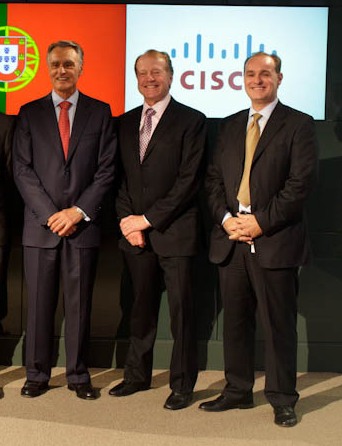
| image | Cavaco Silva 2013 crop.jpg |
| caption | Cavaco Silva in 2013 |
| office | President of Portugal |
| primeminister | José Sócrates |
| Pedro Passos Coelho | |
| António Costa | |
| term_start | 9 March 2006 |
| term_end | 9 March 2016 |
| predecessor | Jorge Sampaio |
| successor | Marcelo Rebelo de Sousa |
| order1 | |
| office1 | Prime Minister of Portugal |
| president1 | António Ramalho Eanes |
| Mário Soares | |
| deputy1 | Eurico de Melo |
| term_start1 | 6 November 1985 |
| term_end1 | 25 October 1995 |
| predecessor1 | Mário Soares |
| successor1 | António Guterres |
| office2 | President of the Social Democratic Party |
| term_start2 | 19 May 1985 |
| term_end2 | 19 February 1995 |
| 1blankname2 | Secretary-General |
| 1namedata2 | Manuel Dias Loureiro |
| José Falcão e Cunha | |
| José Nunes Liberato | |
| predecessor2 | Rui Machete |
| successor2 | Fernando Nogueira |
| office4 | Minister of Finance |
| term_start4 | 3 January 1980 |
| term_end4 | 9 January 1981 |
| primeminister4 | Francisco Sá Carneiro |
| predecessor4 | António de Sousa Franco |
| successor4 | João Morais Leitão |
| office5 | |
| term_start5 | 4 November 1985 |
| term_end5 | 12 August 1987 |
| constituency5 | Lisbon |
| birth_name | Aníbal António Cavaco Silva |
| birth_date | |
| birth_place | Boliqueime, Portugal |
| party | Social Democratic |
| (since 1974) | |
| spouse | |
| children | 2 |
| alma_mater | Technical University of Lisbon |
| Alcuin College, York | |
| signature | Signature Aníbal Cavaco Silva-edit.svg |
| website |
| honorific-prefix = His Excellency | honorific-suffix = GCC GColTE GColL GColIH Pedro Passos Coelho António Costa Mário Soares José Falcão e Cunha José Nunes Liberato (since 1974) Alcuin College, York Aníbal António Cavaco Silva (; born 15 July 1939) is a Portuguese economist and politician who served as the president of Portugal, from 9 March 2006 to 9 March 2016, and as prime minister of Portugal, from 6 November 1985 to 25 October 1995.
Early life and career
Aníbal António Cavaco Silva was born in Boliqueime, Loulé, Algarve, and Maria do Nascimento Cavaco. He was initially an undistinguished student. As a 12-year-old, he failed the 3rd grade of the Commercial School, and his grandfather put him working on the farm as punishment. After returning to school, Cavaco Silva went on to become an accomplished student. Cavaco Silva then went to Lisbon, where he took a vocational education course in accounting from Instituto Comercial de Lisboa (Instituto Superior de Contabilidade e Administração de Lisboa (ISCAL), today) in 1959. In parallel, he was admitted for university education at the Instituto Superior de Ciências Económicas e Financeiras de Lisboa (ISCEF) of the Technical University of Lisbon (UTL) (currently the Instituto Superior de Economia e Gestão (ISEG) of the University of Lisbon), and obtained in 1964, with distinction, a degree in economics and finance (he scored a mark of 16 out of 20). While studying in Lisbon, Cavaco Silva was an athlete of CDUL athletics department from 1958 to 1963. Between 1963 and 1964, he was drafted into the Portuguese Army Artillery for compulsory 11-month military service, serving in a battalion in Lourenço Marques in Portuguese Mozambique. Cavaco Silva studied a graduate course at the University of York in England.
Returning to Portugal, he took up a post as assistant professor in ISCEF (1974), professor at the Catholic University of Portugal (1975), extraordinary professor at the New University of Lisbon (1979) and finally director of the Office of Studies of the Bank of Portugal.
Cavaco Silva has published several academic works in economics, including in subfields like monetary policy and monetary unions. He received an Honorary Doctorate from Scotland's Heriot-Watt University in 2009.
Political career
Early years
Cavaco Silva joined the Social Democratic Party in 1974. Between 1980 and 1981, he was finance minister under Prime Minister Francisco Sá Carneiro's government. Five years later, in 1985, Cavaco Silva was elected party leader.
Prime minister
The 1985 legislative election was complicated by the arrival of a new political party, the Democratic Renewal Party (PRD), which had been formed by the supporters of the President, António Ramalho Eanes. In the 250-member Assembly of the Republic, the nation's legislature, the PRD won 45 seats – at the expense of every party except Cavaco Silva's PSD. Despite winning less than 30 per cent of the popular vote, the PSD was the only traditional political party not to suffer substantial losses. Its 88 seats, in fact, represented a gain of 13 over the previous election. Accordingly, Cavaco Silva became prime minister on 6 November 1985.
Cavaco Silva headed a minority government. On most issues, his Social Democrats could rely on the 22 votes of the Social and Democratic Center Party (CDS), but the two parties' combined 110 votes fell 16 short of a parliamentary majority. The Socialists (PS) and Communists (CDU) held 57 and 38 seats respectively; Cavaco Silva could govern if the 45 members of the PRD, who held the balance of power, abstained.
According to a contemporary report in The New York Times, Cavaco Silva's first government presided over an "economic boom". The article described him as "pro-American" and committed to the European Community.

In 1987, the PRD withdrew its tacit support, and a parliamentary vote of no confidence forced President Mário Soares to call an early election. Cavaco Silva's Social Democrats captured 50.2 per cent of the popular vote and 148 of the 250 seats in the legislature. Far behind were the Socialists, with only 60 seats, and the Communists, with 31. The CDS and the PRD were virtually wiped out, left with only four and seven seats, respectively. This was the first time since the 1974 revolution that a single party had won an outright majority in the national parliament. At the time, it was also the largest majority that a Portuguese party had ever won in a free election.

Although the occurrence of economic growth and a public debt relatively well-contained as a result of the number of civil servants was increased from 485,368 in 1988 to 509,732 in 1991, which was a much lower increase than that which took place in the following years until 2011 marked by irrational and unsustainable State employment, from 1988 to 1993, during the government cabinets led by Cavaco Silva, the Portuguese economy was radically changed. As a result, there was a sharp and rapid decrease in the output of tradable goods and a rise in the importance of the non-tradable goods sector in the Portuguese economy.
In the 1991 election Cavaco Silva's party had a majority even larger (50.6 per cent) than the one of four years earlier. After 10 years in office, he decided not to run for another term as party leader, not contesting the 1995 election, and the PSD, lacking a leader of his stature, lost 48 seats and the election to the Socialists.
Post-premiership
Cavaco Silva contested the 1996 presidential election but was defeated by the Mayor of Lisbon, Jorge Sampaio, the Socialist candidate. Retiring from politics, he served for several years as an advisor to the board of the Banco de Portugal (Bank of Portugal) but retired from this position in 2004. He then became a full professor at the School of Economics and Management of the Catholic University of Portugal, where he taught the undergraduate and MBA programs.
He is a member of the Club of Madrid and an honorary member of the International Raoul Wallenberg Foundation.
President of the Republic

On 20 October 2005, Cavaco Silva announced his candidacy for the 2006 presidential election. He was elected President of the Republic on 22 January 2006 with 50.6% of votes cast, avoiding a run-off. He is the first elected center-right president in Portugal since 1974. He is also the second former prime minister to be elected president, after Mário Soares.

He was sworn in on 9 March 2006, becoming Portugal's first right-of-centre head of state in three decades. He is also the president of the Portuguese Council of State.
Cavaco Silva's term was initially marked by a mutual understanding with the government led by Socialist José Sócrates, which he referred to as "strategic cooperation".
The most controversial moment of his presidency was when the Assembly of the Republic passed a bill for the holding of a pre-legislative referendum on the legalization of abortion in Portugal without any restrictions in the first 10 weeks of pregnancy. After the parliamentary approval of the bill summoning the referendum, Cavaco Silva referred the matter to the Portuguese Constitutional Court, which declared both the proposed legalization and the referendum constitutional by a narrow 7–6 margin. Cavaco Silva, who could still have vetoed the referendum bill, decided to sign it into law and thus allowed the referendum. The majority of the Portuguese electorate abstained from the referendum, but the vote for legalization prevailed among those who chose to cast their ballot.

Cavaco Silva was reelected president of Portugal on 23 January 2011 with 52,92% of the vote, and he took office for his second five-year term on 9 March 2011.
2015 constitutional crisis
At the general election on 4 October 2015 to the Assembly of the Republic, the unicameral Portuguese parliament, the right-wing government of Prime Minister Pedro Passos Coelho lost its majority, with centre-left and far-left opposition parties gaining more than half of the seats. As Passos Coelho's own Social Democratic Party remained the largest in parliament, and still had the support of the much smaller CDS – People's Party, Cavaco Silva allowed Passos Coelho to continue as prime minister, giving him the first chance to form a new government. Passos Coelho was unable to find any new partners and was widely expected to stand down, but on 22 October Cavaco Silva invited him to form a new government, even if it were a minority government. On 24 October Cavaco Silva explained his thinking:
António Costa, leader of the Socialist Party, called this a grave mistake and added "It is unacceptable to usurp the exclusive powers of parliament. The Socialists will not take lessons from Professor Cavaco Silva on the defence of our democracy." The Green politician Rui Tavares commented "The president has created a constitutional crisis. He is saying that he will never allow the formation of a government containing Leftists and Communists. People are amazed by what has happened." The opposition parties quickly announced their intention to bring down the new government in a motion of rejection.
Eventually, Passos Coelho's government fell on a motion of no confidence, and the president appointed António Costa, the leader of the Socialists, as prime minister in his place.
Family
Cavaco Silva married Maria Alves da Silva at the Church of the Monastery of São Vicente de Fora, São Vicente de Fora, Lisbon, on 20 October 1963. The couple had a daughter Patricia, and a son Bruno. He has five grandchildren, four of whom were born to his daughter. One of them, António Montez, is a professional footballer.
Aníbal Cavaco Silva had two brothers: António Cavaco Silva (1947–2010), and Rogério Cavaco Silva (1935–2025). Rogério Cavaco Silva was a businessman and a victim of the Dominion of Melchizedek scam.
Honours
National honours
Source:
- [[File:PRT Order of Prince Henry - Grand Collar BAR.svg|55px]] Grand Collar of the Order of Prince Henry (5 July 2022)
- [[File:PRT Order of Liberty - Grand Collar BAR.svg|55px]] Grand Collar of the Order of Liberty (9 March 2016)
- [[File:PRT Military Order of the Tower and of the Sword - Grand Collar.svg|55px]] Grand Collar of the Military Order of the Tower and Sword (9 March 2011)
- [[File:PRT Three Orders BAR.svg|55px]] Grand Cross of the Sash of the Three Orders (9 March 2006)
- [[File:PRT Order of Christ - Grand Cross BAR.svg|55px]] Grand Cross of the Military Order of Christ (29 November 1995)
Foreign honours
.svg)
- Austria:
- Grand Star of the Decoration of Honour for Services to the Republic of Austria (31 August 2009)
- Grand Decoration of Honour in Gold with Sash of the Decoration of Honour for Services to the Republic of Austria (14 July 1997)
- Brazil:
- Grand Collar of the Order of the Southern Cross (22 April 2008)
- Grand Cross of the Order of the Southern Cross (4 February 1991)
- Grand Cross of the Order of Rio Branco (8 October 1991)
- Grand Cross of the Order of the National Congress (4 February 1991)
- Bulgaria: First Class of the Order of the Stara Planina (8 June 2015)
- Cape Verde: First Class of the (14 July 2010)
- Chile:
- Collar of the Order of Merit (15 November 2007)
- Grand Cross of the Order of Merit (20 July 2007)
- Grand Cross of the Order of Bernardo O'Higgins (16 November 2010)
- Colombia:
- Grand Collar of the Order of Boyacá (14 November 2012)
- Grand Cross of the Order of Boyacá (23 May 1988)
- Cyprus: Grand Cross of the Order of Makarios III (20 November 1990)
- East Timor: Grand Collar of the Order of Timor-Leste (6 August 2012)
- Ecuador: Grand Cross of the National Order of Merit (25 January 1991)
- Estonia: Collar of the Order of the Cross of Terra Mariana (13 October 2008)
- Finland: Grand Cross of the Order of the White Rose of Finland (8 March 1991)
- Germany:
- Grand Cross Special Class of the Order of Merit of the Federal Republic of Germany (26 May 2009)
- Grand Cross of the Order of Merit of the Federal Republic of Germany (25 January 1991)
- Greece: Grand Cross of the Order of Honour (15 May 1990)
- Guinea-Bissau: Grand Cross of the (4 February 1991)
- Holy See: Knight with the Collar of the Order of Pope Pius IX (30 August 2010)
- Jordan:
- Collar of the Order of Al-Hussein bin Ali (28 May 2009)
- Grand Cordon with Brilliants (Special Class) of the Supreme Order of the Renaissance (10 December 2009)
- Latvia: Grand Cross of the Cross of Recognition (22 November 2010)
- Lithuania: Grand Cross with Golden Chain of the Order of Vytautas the Great (25 July 2007)
- Luxembourg:
- Knight of the Order of the Gold Lion of the House of Nassau (9 September 2010)
- Grand Cross of the Order of the Oak Crown (4 February 1991)
- Malta: Honorary Companion of Honour with Collar of the National Order of Merit (11 December 2008)
- Mexico: Collar of the Order of the Aztec Eagle (2 June 2014)
- Morocco:
- Grand Cordon of the Order of Ouissam Alaouite (13 February 1995)
- Grand Officer of the Order of Ouissam Alaouite (17 May 1991)
- Mozambique: First Class of the Order of Friendship and Peace (7 October 2014)
- Netherlands: Knight Grand Cross of the Order of Orange-Nassau (25 March 1992)
- Norway: Grand Cross of the Order of St Olav (5 November 2008)
- Palestine: Grand Cordon of the Order of the Star of Palestine (19 July 1995)
- Panama: Collar of the Order of Manuel Amador Guerrero (30 July 2013)
- Peru: Grand Collar of the Order of the Sun of Peru (19 November 2012)
- Poland:
- Knight of the Order of the White Eagle (22 June 2012)
- Grand Cross of the Order of Polonia Restituta (1 October 2008)
- Qatar: Collar of the Order of Merit (10 December 2009)
- Romania: Collar of the Order of the Star of Romania (16 June 2015)
- Slovakia: Grand Cross of the Order of the White Double Cross (4 September 2008)
- Sovereign Military Order of Malta:
- Collar of the Order pro Merito Melitensi (23 November 2010)
- Grand Cross, Special Class of the Order pro Merito Melitensi (25 January 1991)
- Spain:
- Collar of the Order of Isabella the Catholic (24 September 2006)
- Knight Grand Cross of the Order of Isabella the Catholic (8 September 1993)
- Sweden:
- Knight of the Royal Order of the Seraphim (9 May 2008)
- Commander Grand Cross of the Order of the Polar Star (9 February 1987)
- Tunisia:
- Grand Cordon of the Order of the Republic (18 November 1993)
- Grand Cordon of the Order of 7th November (18 November 1993)
- Turkey: Recipient of the Order of the State of the Republic of Turkey (24 November 2009)
- Venezuela: Grand Cordon of the Order of the Liberator (18 November 1987)
State visits
Main article: List of international presidential trips made by Aníbal Cavaco Silva

Cavaco Silva made state visits to countries in Europe, Africa, Asia and the Americas. In September 2006, on his first state visit, he visited Portugal's neighbour, Spain.
Electoral history
PSD leadership election, 1985
|- style="background-color:#E9E9E9" ! align="center" colspan=2 style="width: 60px"|Candidate ! align="center" style="width: 50px"|Votes ! align="center" style="width: 50px"|%
| - |
|---|
| - |
| - style="background-color:#E9E9E9" |
| - |
| } |
Legislative election, 1985
Main article: 1985 Portuguese legislative election
|- ! colspan="2" | Party ! Candidate ! Votes ! align="center" style="width: 50px"|% ! align="center" style="width: 50px"|Seats ! align="center" style="width: 50px"|+/−
| - |
|---|
| - |
| - |
| - |
| - |
| - |
| 128,846 |
| - |
| 145,319 |
| - style="background-color:#E9E9E9" |
| 5,798,929 |
| - |
| } |
Legislative election, 1987
Main article: 1987 Portuguese legislative election
|- ! colspan="2" | Party ! Candidate ! Votes ! align="center" style="width: 50px"|% ! align="center" style="width: 50px"|Seats ! align="center" style="width: 50px"|+/−
| - |
|---|
| - |
| - |
| - |
| - |
| 219,715 |
| - |
| 123,668 |
| - style="background-color:#E9E9E9" |
| 5,676,358 |
| - |
| } |
Legislative election, 1991
Main article: 1991 Portuguese legislative election
|- ! colspan="2" | Party ! Candidate ! Votes ! align="center" style="width: 50px"|% ! align="center" style="width: 50px"|Seats ! align="center" style="width: 50px"|+/−
| - |
|---|
| - |
| - |
| - |
| - |
| - |
| 132,495 |
| - |
| 110,672 |
| - style="background-color:#E9E9E9" |
| 5,735,431 |
| - |
| } |
Presidential election, 1996
Main article: 1996 Portuguese presidential election
|- ! colspan="2" |Candidate ! Votes ! align="center" style="width: 50px"|%
| - |
|---|
| - |
| 132,791 |
| - style="background-color:#E9E9E9" |
| 5,762,978 |
| - |
| } |
Presidential election, 2006
Main article: 2006 Portuguese presidential election
|- ! colspan="2" |Candidate ! Votes ! align="center" style="width: 50px"|%
| - |
|---|
| - |
| - |
| - |
| - |
| - |
| 102,785 |
| - style="background-color:#E9E9E9" |
| 5,590,132 |
| - |
| } |
Presidential election, 2011
Main article: 2011 Portuguese presidential election
|- ! colspan="2" |Candidate ! Votes ! align="center" style="width: 50px"|%
| - |
|---|
| - |
| - |
| - |
| - |
| - |
| 277,593 |
| - style="background-color:#E9E9E9" |
| 4,492,453 |
| - |
| } |
Bibliography
- Cavaco Silva, Autobiografia Política, in 2 Vols.
References
| - |
|---|
| - |
References
- "Aníbal Cavaco Silva, PSD".
- (March 7, 2016). "A "década de betão" do cavaquismo".
- (2025-10-01). "Morreu Teodoro Gonçalves Silva, pai do Presidente da República".
- {{in lang. (October 2016)
- "Aníbal Cavaco Silva". Museu da Presidência da República.
- {{in lang. Record]]
- [http://noticias.uol.com.br/ultnot/lusa/2006/01/22/ult611u70070.jhtm Cavaco Silva – Perfil], source [[Agência Lusa]]; website [[Universo Online. UOL]] (January 2006)
- "Honorary Graduates 2009".
- David B. Goldey, "The Portuguese elections of 1987 and 1991 and the presidential election of 1991." ''Electoral Studies'' 11.2 (1992): 171-176.
- {{in lang. TSF]] (27 December 2012)
- {{in lang. en [http://www.clubmadrid.org The Club of Madrid is an independent organization dedicated to strengthening democracy around the world by drawing on the unique experience and resources of its Members – 66 democratic former heads of state and government]
- (9 March 2006). "Former PM takes oath as Portuguese head of state". Irish Examiner.
- "Portugal votes – DW – 01/23/2011". dw.com.
- Eurozone crosses Rubicon as Portugal's anti-euro Left banned from power] in ''[[The Daily Telegraph]]'' dated 24 October 2015, online at telegraph.co.uk, accessed 25 October 2015
- (25 November 2015). "Portugal gets Antonio Costa as new PM after election winner only lasted 11 days". the Guardian.
- (21 July 1987). "MAN IN THE NEWS: ANIBAL CAVACO SILVA; The Runaway Winner in Portugal". [[The New York Times]].
- (14 January 2009). "Já nasceu o quinto neto de Maria e Aníbal Cavaco Silva". Caras.
- (27 November 2021). "Neto de Cavaco Silva chamado: António Montez deve jogar contra o Benfica". [[Record (Portuguese newspaper).
- (April 23, 2010). "Óbito: Morreu irmão de Cavaco Silva, Presidente cancela agenda hoje e sábado".
- (December 3, 2025). "Morreu irmão de Cavaco Silva, Rogério Cavaco Silva".
- . (October 27, 2002). ["Tribunal da Relação anula julgamento de burla com empresas 'off-shore'"](https://www.publico.pt/2002/10/27/economia/noticia/tribunal-da-relacao-anula-julgamento-de-burla-com-empresas-offshore-192327). *[[Público (Portugal)*.
- Gomes, Adelino. (November 14, 2005). "Burla que vitimou irmão de Cavaco Silva regressa hoje a tribunal". [[Público (Portugal).
- . (May 5, 2006). ["Burlaram 50 em 5 milhões"](https://www.cmjornal.pt/cm-ao-minuto/detalhe/burlaram-50-em-5-milhoes). *[[Correio da Manhã (Portugal)*.
- . (May 22, 2006). ["'Só quero ver se recebo o meu dinheiro'"](http://regiaodanazare.com/JournalNews/JournalNewsDetail.aspx?news=3c6204c6-c431-4dd2-9398-4c310afc9c7c). *Região da Nazaré*.
- "Entidades nacionais agraciadas com ordens portuguesas". Presidencia de Portugal.
- "Entidades nacionais agraciadas com ordens estrangeiras". Presidencia de Portugal.
- "Presidente visita Espanha em Setembro". Diário de Notícias.
- (2 September 2006). "Cavaco quatro dias em Espanha". [[Jornal de Notícias]].
- [https://ubibliorum.ubi.pt/bitstream/10400.6/2797/1/Disserta%C3%A7%C3%A3o%20de%20Mestrado%20em%20Ci%C3%AAncia%20Pol%C3%ADtica%20-%20Nuno%20Freire.pdf "Aníbal Cavaco Silva, o PSD e a Evolução da Democracia Portuguesa: o XI Governo Constitucional (1987-1991)"], ''Nuno Marques Freire, UNIVERSIDADE DA BEIRA INTERIOR Faculdade de Ciências Socias e Humanas'', October 2012. Retrieved 29 December 2022.
- "Resultados AR 1985". Comissão Nacional de Eleições.
- "Resultados AR 1987". Comissão Nacional de Eleições.
- "Resultados AR 1991". Comissão Nacional de Eleições.
- "Resultados PR 1996". Comissão Nacional de Eleições.
- "Resultados PR 2006". Comissão Nacional de Eleições.
- "Resultados PR 2011 Rectificado". Comissão Nacional de Eleições.
This article was imported from Wikipedia and is available under the Creative Commons Attribution-ShareAlike 4.0 License. Content has been adapted to SurfDoc format. Original contributors can be found on the article history page.
Ask Mako anything about Aníbal Cavaco Silva — get instant answers, deeper analysis, and related topics.
Research with MakoFree with your Surf account
Create a free account to save articles, ask Mako questions, and organize your research.
Sign up freeThis content may have been generated or modified by AI. CloudSurf Software LLC is not responsible for the accuracy, completeness, or reliability of AI-generated content. Always verify important information from primary sources.
Report