From Surf Wiki (app.surf) — the open knowledge base
Anglican Communion
International Christian communion

International Christian communion
| Field | Value | |
|---|---|---|
| name | Anglican Communion | |
| icon | Cantercross.svg | |
| icon_width | 25px | |
| image | Canterbury-cathedral-wyrdlight.jpg | |
| caption | Canterbury Cathedral | |
| main_classification | Protestant | |
| orientation | Anglican | |
| polity | Episcopal | |
| type | Communion | |
| theology | Anglican doctrine | |
| founder | Charles Longley | |
| founded_date | 1867 | |
| founded_place | Lambeth Conference, London, England | |
| leader_title1 | Primate | |
| leader_name1 | Sarah Mullally | |
| leader_title2 | Secretary General | |
| leader_name2 | Anthony Poggo | |
| leader_title3 | Deputy Secretary General, ACC | |
| headquarters | London, England | |
| separated_from | Roman Catholic Church | |
| scripture | Protestant Bible | |
| branched_from | Church of England | |
| separations | Continuing Anglican movement (1977) | |
| Some participants in the Anglican realignment (since 2002; partial) | ||
| Personal ordinariate (2009) | ||
| area | Worldwide | |
| members | 85–110 million (2025) | |
| website | anglicancommunion.org | |
| logo | [[File:Anglican Communion logo.png | 70px]] |
churches in full communion with the archbishop of Canterbury
Some participants in the Anglican realignment (since 2002; partial) Personal ordinariate (2009)
The Anglican Communion (AC) is a Christian communion consisting of the autocephalous national and regional churches historically in full communion with the archbishop of Canterbury in England, who has acted as a focus of unity, recognised as primus inter pares ("first among equals"), but without formal authority in Anglican provinces outside of the Church of England. Most, but not all, member churches of the communion are the historic national or regional Anglican churches.
With approximately 85–110 million members in 2025,Multiple sources:
- among its 47 member churches, it is the thirdMultiple sources:
- or fourth largest Christian communion of churches globally, after the Catholic, Eastern Orthodox, and, possibly, World Communion of Reformed Churches.Multiple sources:
- In 2021, excluding the United and Uniting churches, research published in the World Christian Database estimated that the Anglican Communion had 97,399,000 members. The Anglican Communion considers baptism to be "the traditional gauge" or definition for membership.
The Anglican Communion was officially and formally organised and recognised as such at the Lambeth Conference in 1867 in London under the leadership of Charles Longley, Archbishop of Canterbury. The churches of the Anglican Communion consider themselves to be part of the one, holy, catholic and apostolic church, with their liturgy based on the Book of Common Prayer. The traditional origins of Anglican doctrine are summarized in the Thirty-nine Articles (1571) and The Books of Homilies.
As in the Church of England itself, the Anglican Communion includes the broad spectrum of beliefs and liturgical practises found in the Evangelical, Central and Anglo-Catholic traditions of Anglicanism; both the larger Reformed Anglican and the smaller Arminian Anglican theological perspectives have been represented. Each national or regional church is fully independent, retaining its own legislative process and episcopal polity under the leadership of a local primate. For many adherents, Anglicanism represents a distinct form of Reformed Protestantism that emerged under the influence of the Reformer Thomas Cranmer; for others, it is a via media between two branches of Protestantism—Lutheranism and Calvinism; or for yet others, it is a denomination that is both Catholic and Reformed. Full participation in the sacramental life of each church is available to all communicant members.
Most members of the churches of the Anglican Communion live in the Anglosphere: a group of dozens of countries and regions that are predominantly English-speaking, often former British colonies or territories, many of which still voluntarily associate as members of the Commonwealth. Because of their historical link to England (ecclesia anglicana means "English church"), some of the member churches are known as "Anglican", such as the Anglican Church of Canada. Others, for example the Church of Ireland and the Scottish Episcopal and American Episcopal churches, have official names that do not include "Anglican". Conversely, some churches that do use the name "Anglican" are not part of the communion. These have generally disaffiliated over disagreement with the progress and direction of the broader Communion.
History
Main article: History of the Anglican Communion
The Anglican Communion traces much of its growth to the older mission organisations of the Church of England such as the Society for Promoting Christian Knowledge (founded 1698), the Society for the Propagation of the Gospel in Foreign Parts (founded 1701) and the Church Missionary Society (founded 1799). The Church of England (which until the 20th century included the Church in Wales) initially separated from the Roman Catholic Church in 1534 in the reign of Henry VIII, reunited briefly in 1555 under Mary I and then separated again in 1570 under Elizabeth I (the Roman Catholic Church excommunicated Elizabeth I in 1570 in response to the Act of Supremacy 1559).
The Church of England has always thought of itself not as a new foundation but rather as a reformed continuation of the ancient "English Church" (Ecclesia Anglicana) and a reassertion of that church's rights. As such it was a distinctly national phenomenon. The Church of Scotland was formed as a separate church from the Roman Catholic Church as a result of the Scottish Reformation in 1560 and the later formation of the Scottish Episcopal Church began in 1582 (in the reign of James VI) over disagreements about the role of bishops.
The Church of England was the established church not only in England, but in its trans-Oceanic colonies. Thus the only member churches of the present Anglican Communion existing by the mid-18th century were the Church of England, its closely linked sister church the Church of Ireland (which also separated from Roman Catholicism under Henry VIII) and the Scottish Episcopal Church which for parts of the 17th and 18th centuries was partially underground (it was suspected of Jacobite sympathies).
The oldest-surviving Anglican church building outside the British Isles is St Peter's Church in St. George's, Bermuda, established in 1612 (though the actual building had to be rebuilt several times over the following century). This is also the oldest surviving non-Roman Catholic church in the New World. It remained part of the Church of England until 1978 when the Anglican Church of Bermuda was formed.
Global spread of Anglicanism
The enormous expansion in the 18th and 19th centuries of the British Empire brought Anglicanism along with it. At first all these colonial churches were under the jurisdiction of the bishop of London. After the American Revolution, the parishes in the newly independent United States found it necessary to break formally from a church whose supreme governor was (and remains) the British monarch. Thus they formed their own dioceses and national church, the Episcopal Church in the United States of America, in a mostly amicable separation.
At about the same time, in the colonies which remained linked to the crown, the Church of England began to appoint colonial bishops. In 1787, Charles Inglis (Bishop of Nova Scotia) was appointed with jurisdiction over all of British North America; in time several more colleagues were appointed to sees in other provinces in present-day Canada. In 1814, a bishop of Calcutta was appointed. In 1824 the first bishop was sent to the West Indies. And in 1836 Australia received its first Anglican bishop. By 1840 there were still only ten colonial bishops in the Church of England; but this small beginning quickly facilitated the growth of Anglicanism around the world. In 1841, a "Colonial Bishoprics Council" was set up and soon many more dioceses were created.
In time, it became natural to group these into provinces and a metropolitan bishop was appointed for each province. Although it had at first been somewhat established in many colonies, in 1861 it was ruled that, except where specifically established, the Church of England had just the same legal position as any other church. Thus a colonial bishop and colonial diocese was by nature quite a different thing from their counterparts back home. In time bishops came to be appointed locally rather than from England and eventually national synods began to pass ecclesiastical legislation independent of England.
A crucial step in the development of the modern communion was the idea of the Lambeth Conferences (discussed above). These conferences demonstrated that the bishops of disparate churches could manifest the unity of the church in their episcopal collegiality despite the absence of universal legal ties. Some bishops were initially reluctant to attend, fearing that the meeting would declare itself a council with power to legislate for the church; but it agreed to pass only advisory resolutions. These Lambeth Conferences have been held roughly every ten years since 1878 (the second such conference) and remain the most visible coming-together of the whole communion.
The Lambeth Conference of 1998 included what has been seen by Philip Jenkins and others as a "watershed in global Christianity". The 1998 Lambeth Conference considered the issue of the theology of same-sex attraction in relation to human sexuality. At this 1998 conference, for the first time in centuries, the primates of churches in many developing regions—including some from Africa, Asia and Latin America—prevailed over the bishops of more prosperous countries (many from the US, Canada and the UK) who had supported a more progressive interpretation of Anglican doctrine. Seen in this light, 1998 is a date that marked the shift from a West-dominated Christianity to one wherein the growing churches of "the two-thirds world" are predominant.
21st-century ''de facto'' schisms
Many of the provinces in developed countries have continued to adopt more liberal stances on sexuality and other issues, resulting in a number of de facto schisms, such as the series of splits which led to the creation of the Anglican Church in North America. Many churches are now in full communion with only some other church members of the Communion, but are not with others; however, most churches that have historically been members continue to claim to be part of the Anglican Communion.
On 20 February 2023, following the decision of the Church of England to allow priests to bless same-sex partnerships, ten communion provinces and Anglican realignment churches, formed into the new Global South Fellowship of Anglican Churches, released a statement stating that they had declared "impaired communion" with the Church of England and no longer recognised Justin Welby as "first among equals" among the bishops of the communion.
On 16 October 2025, the chairman of the Global Fellowship of Confessing Anglicans, Laurent Mbanda, declared the future creation of a "Global Anglican Communion" independent from the See of Canterbury but also asserted "[they] have not left the Anglican Communion; [they] are the Anglican Communion." "The statement outlining that plan was signed by one person, Rwanda Archbishop Laurent Mbanda, who serves as chair of GAFCON's primate council." Following the announcement, Mbanda stated that the announcement of the "Global Anglican Communion" was "closer to a rebrand than a new organization" and that they are reforming the existing Anglican Communion. Bishops affiliated with GAFCON, in Kenya and Congo, responded that their provinces plan to remain a part of the existing structures of the Anglican Communion. In December, 2025, Mbanda released another letter restating his plan to remain in the Anglican Communion saying, "We will not walk with sin, but neither will we walk away from the Anglican Communion."
Differences and controversies
Some effects of the Anglican Communion's dispersed authority have been differences of opinion (and conflicts) arising over divergent practices and doctrine in the various parts of the communion. Disputes that had been confined to the Church of England could be dealt with legislatively in that realm, but as the communion spread into new countries and territories and across disparate cultures, controversies sometimes multiplied and intensified. These controversies have generally been of two types: liturgical and social.
Ordination of women
Rapid social change and the dissipation of British cultural hegemony over its former colonies contributed to disputes over the role of women, and the parameters of marriage and divorce. In the late 1970s, the Continuing Anglican movement produced a number of new church bodies in opposition to women's ordination, prayer book changes, and the new understandings concerning marriage. Currently, seven provinces of the communion, representing approximately 3% of Anglicans worldwide, do not ordain women as deacons, priests, or bishops; two ordain women only as deacons, 16 ordain women as deacons and priests but not as bishops, and 22 provinces, representing about "two thirds of Anglicanism," ordain women as deacons, priests, and bishops. On 3 October 2025, it was announced that the Crown Nominations Commission had nominated Sarah Mullally, the bishop of London as the next archbishop of Canterbury, which will make her the first woman to serve as archbishop of Canterbury and as the "first among equals" within the Anglican Communion. GAFCON Primates Council chairman (Laurent Mbanda) claimed a predominant reservation against women's ordination in the episcopacy.
Anglo-Catholicism
The first such controversy of note concerned that of the growing influence of the Catholic Revival manifested in the Tractarian and so-called Ritualist controversies of the late 19th and early 20th centuries. This controversy produced the Free Church of England and, in the United States and Canada, the Reformed Episcopal Church.
Abortion and euthanasia
While individual Anglicans and member churches within the communion differ over the circumstances in which abortion should or should not be permitted, Lambeth Conference resolutions have consistently held to a conservative view on the issue. The 1930 conference, the first to be held since the initial legalisation of abortion in Europe (in Russia in 1920), stated:
The 1958 conference's Family in Contemporary Society report affirmed the following position on abortion and was commended by the 1968 conference:
The subsequent Lambeth Conference, in 1978, made no change to this position and commended the need for "programmes at diocesan level, involving both men and women ... to emphasise the sacredness of all human life, the moral issues inherent in clinical abortion, and the possible implications of genetic engineering."
In the context of debates around and proposals for the legalisation of euthanasia and assisted suicide, the 1998 conference affirmed that "life is God-given and has intrinsic sanctity, significance and worth".
Same-sex unions and LGBT clergy
More recently, disagreements over homosexuality have strained the unity of the communion as well as its relationships with other Christian denominations, leading to another round of withdrawals from the Anglican Communion. Some churches were founded outside the Anglican Communion in the late 20th and early 21st centuries, largely in opposition to the ordination of openly homosexual bishops and other clergy and are usually referred to as belonging to the Anglican realignment movement, or else as "orthodox" Anglicans. These disagreements were especially noted when The Episcopal Church (US) consecrated an openly gay bishop in a same-sex relationship, Gene Robinson, in 2003, which led some Episcopalians to defect and found the Anglican Church in North America (ACNA); then, the debate reignited when the Church of England agreed to allow clergy to enter into same-sex civil partnerships, as long as they remained celibate, in 2005. The Church of Nigeria opposed the Episcopal Church's decision as well as the Church of England's approval for celibate civil partnerships.
According to the BBC, "The more liberal provinces that are open to changing Church doctrine on marriage in order to allow for same-sex unions include Brazil, Canada, New Zealand, Scotland, South India, South Africa, the US and Wales". In 2023, the Church of England announced that it will authorise "prayers of thanksgiving, dedication and for God's blessing for same-sex couples". The Church of England also permits clergy to enter into same-sex civil partnerships. In 2024, the Church of England's General Synod voted to support allowing clergy to enter in civil same-sex marriages. In 2023, the Anglican Church of Southern Africa's bishops approved the drafting of prayers that could be said with same-sex couples and the draft prayers were published for consideration in 2024. The Church of Ireland has no official position on civil unions, and one senior cleric has entered into a same-sex civil partnership. The Church of Ireland recognised that it will "treat civil partners the same as spouses". The Anglican Church of Australia does not have an official position on homosexuality, and each diocese is allowed to bless same-sex couples if they choose. In 2025, the Church in Wales elected Cherry Vann as the Archbishop of Wales, making her the first woman to serve as Archbishop in the United Kingdom and the first openly LGBTQ and partnered bishop to be a Primate within the Anglican Communion.
The conservative Anglican churches encouraging the realignment movement are more concentrated in the Global South. For example, the Anglican Church of Kenya, the Church of Nigeria and the Church of Uganda have opposed homosexuality. GAFCON, a fellowship of conservative Anglican churches, has appointed "missionary bishops" in response to the disagreements with the perceived liberalisation in the Anglican churches in North America and Europe. In 2023, ten archbishops within the Anglican Communion and two breakaway churches in North America and Brazil from the Global South Fellowship of Anglican Churches (GSFA) declared a state of impaired communion with the Church of England and announced that they would no longer recognise the archbishop of Canterbury as the "first among equals" among the bishops in the Anglican Communion. However, in the same statement, the ten archbishops said that they would not leave the Anglican Communion. In 2024, the GSFA met again establishing "a new structure," no longer recognising the Archbishop of Canterbury "as the de facto leader" of the Anglican Communion, but the GSFA reiterated that they intend to remain in the Anglican Communion. In 2025, after the Church in Wales elected the first openly lesbian and partnered primate in the Anglican Communion, the GSFA criticized the appointment.
Debates about social theology and ethics have occurred at the same time as debates on prayer book revision and the acceptable grounds for achieving full communion with non-Anglican churches.
Ecclesiology, polity and ethos
Main article: Anglican doctrine
The Anglican Communion has no official legal existence nor any governing structure that might exercise authority over the member churches. There is an Anglican Communion Office in London, under the aegis of the archbishop of Canterbury, but it serves only in a supporting and organisational role. The communion is held together by a shared history, expressed in its ecclesiology, polity and ethos, and also by participation in international consultative bodies.
Three elements have been important in holding the communion together: first, the shared ecclesial structure of the component churches, manifested in an episcopal polity maintained through the apostolic succession of bishops and synodical government; second, the principle of belief expressed in worship, investing importance in approved prayer books and their rubrics; and third, the historical documents and the writings of early Anglican divines that have influenced the ethos of the communion.
Originally, the Church of England was self-contained and relied for its unity and identity on its own history, its traditional legal and episcopal structure, and its status as an established church of the state. As such, Anglicanism was from the outset a movement with an explicitly episcopal polity, a characteristic that has been vital in maintaining the unity of the communion by conveying the episcopate's role in manifesting visible catholicity and ecumenism.
Early in its development following the English Reformation, Anglicanism developed a vernacular prayer book, called the Book of Common Prayer. Unlike other traditions, Anglicanism has never been governed by a magisterium nor by appeal to one founding theologian, nor by an extra-credal summary of doctrine (such as the Westminster Confession of the Presbyterian churches). Instead, Anglicans have typically appealed to the Book of Common Prayer (1662) and its offshoots as a guide to Anglican theology and practise. This has had the effect of inculcating in Anglican identity and confession the principle of lex orandi, lex credendi ("the law of praying [is] the law of believing").
Protracted conflict through the 17th century, with radical Protestants on the one hand and Roman Catholics who recognised the primacy of the Pope on the other, resulted in an association of churches that was both deliberately vague about doctrinal principles, yet bold in developing parameters of acceptable deviation. These parameters were most clearly articulated in the various rubrics of the successive prayer books, as well as the Thirty-nine Articles of Religion (1563). These articles have historically shaped and continue to direct the ethos of the communion, an ethos reinforced by its interpretation and expansion by such influential early theologians such as Richard Hooker, Lancelot Andrewes and John Cosin.
With the expansion of the British Empire and the growth of Anglicanism outside Great Britain and Ireland, the communion sought to establish new vehicles of unity. The first major expressions of this were the Lambeth Conferences of the communion's bishops, first convened in 1867 by Charles Longley, the archbishop of Canterbury. From the beginning, these were not intended to displace the autonomy of the emerging provinces of the communion, but to "discuss matters of practical interest, and pronounce what we deem expedient in resolutions which may serve as safe guides to future action".
Chicago Lambeth Quadrilateral
One of the enduringly influential early resolutions of the conference was the so-called Chicago-Lambeth Quadrilateral of 1888. Its intent was to provide the basis for discussions of reunion with the Roman Catholic and Orthodox churches, but it had the ancillary effect of establishing parameters of Anglican identity. It establishes four principles with these words: That, in the opinion of this Conference, the following Articles supply a basis on which approach may be by God's blessing made towards Home Reunion:
(a) The Holy Scriptures of the Old and New Testaments, as "containing all things necessary to salvation," and as being the rule and ultimate standard of faith.
(b) The Apostles' Creed, as the Baptismal Symbol; and the Nicene Creed, as the sufficient statement of the Christian faith.
(c) The two Sacraments ordained by Christ Himself – Baptism and the Supper of the Lord – ministered with unfailing use of Christ's Words of Institution, and of the elements ordained by Him.
(d) The Historic Episcopate, locally adapted in the methods of its administration to the varying needs of the nations and peoples called of God into the Unity of His Church.
Instruments of communion
The archbishop of Canterbury's role is strictly symbolic and unifying, while the communion's three international bodies are consultative and collaborative; their resolutions have no legal effect on the autonomous provinces of the communion. However, in combination those four bodies do function as "instruments of communion", because all churches of the communion participate in them. In order of antiquity, they are:
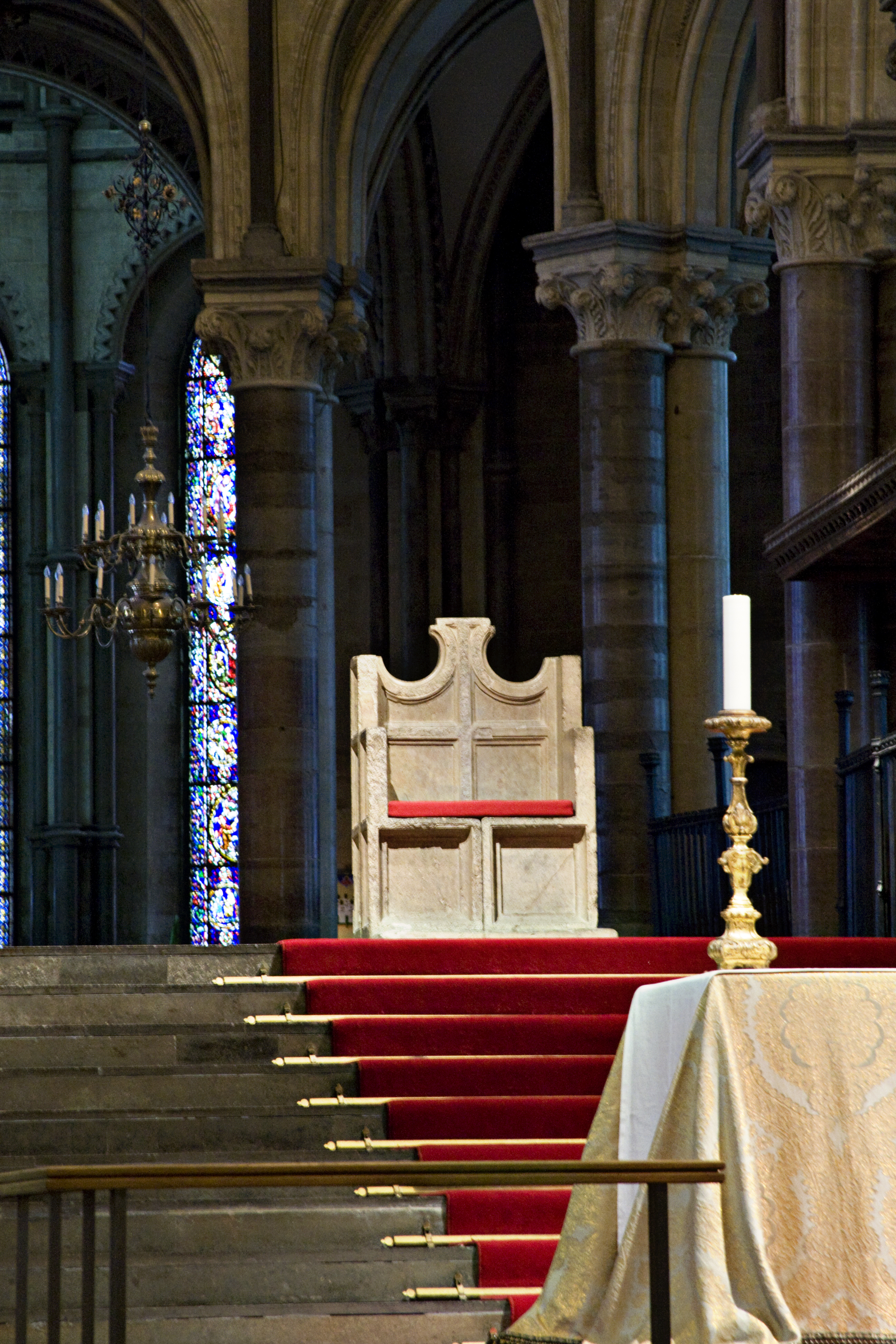
- The archbishop of Canterbury functions as the spiritual head of the communion. The archbishop is the focus of unity, because no Anglican church has historically claimed membership in the communion without being in communion with the archbishop of Canterbury. The current archbishop-designate is Sarah Mullally.
- The Lambeth Conference (first held in 1867) is the oldest Anglican international consultative body. It is a forum for bishops of the communion to reinforce unity and collegiality, to discuss matters of mutual concern, and to pass resolutions intended to act as guidelines to the individual churches. It is held roughly every ten years and invitation is by the archbishop of Canterbury.
- The Anglican Consultative Council (first met in 1971) was created by a 1968 Lambeth Conference resolution, and meets usually at three-yearly intervals. The council consists of representative bishops, other clergy and laity chosen by the 38 provinces. The body has a permanent secretariat, the Anglican Communion Office, of which the archbishop of Canterbury is president.
- The Primates' Meeting (first met in 1979) is a forum for international consultation and deliberation, first convened by Archbishop Donald Coggan for "leisurely thought, prayer and deep consultation".
Because there is no binding authority in the Anglican Communion, these international bodies are vehicles for consultation and persuasion. In the late twentieth and early twenty-first centuries, they have debated issues of conformity in doctrine, discipline, worship and ethics. The most controversial issues have related to gender and sexuality: some provinces of the communion (particularly in Africa and Asia) object to the changing acceptance of LGBTQ+ individuals (particularly by the North American and European churches). This has led to disagreements on the churches' differing practices of blessing same-sex unions, ordaining and consecrating priests and bishops who are (or have been) in same-sex relationships, and to the process by which changes were undertaken. Some churches have also objected to the ordination of female priests and bishops. This debate is known as the Anglican realignment.
Those who objected condemned these changes as unscriptural, unilateral, and lacking prior agreement from the communion. The American Episcopal Church and the Anglican Church of Canada responded that their actions had been undertaken after lengthy scriptural and theological reflection, were legal according to their own canons and constitutions, and made after extensive consultation with the provinces of the communion. The Primates' Meeting voted to request those two churches withdraw their delegates from the 2005 meeting of the Anglican Consultative Council. Canada and the United States decided to attend the meeting but without exercising their right to vote. They were not expelled or suspended; there is no mechanism in this voluntary association to suspend or expel an independent province of the communion. Because membership is based on a province's communion with Canterbury, expulsion would require the archbishop of Canterbury's refusal to be in communion with the affected jurisdictions. Following the recommendation of the Windsor Report, Rowan Williams (the then archbishop of Canterbury) established a working group to examine the feasibility of an Anglican covenant which would articulate the conditions for communion in some fashion.
Nairobi-Cairo proposals
In 2025, the Inter-Anglican Standing Committee on Unity, Faith and Order within the Anglican Communion proposed a series of changes to the Instruments of Communion that would result "in service of a de-centred, polycentric understanding of the mission of the Church. . . The leadership of the Communion should look like the Communion," according to the report. The Nairobi-Cairo proposals suggests amending the definition of membership in the Anglican Communion to no longer include reference to being in full communion with the Archbishop of Canterbury; instead, the reference to Canterbury would be a historical connection. Additionally, there would be a rotating presidency of the Anglican Consultative Council among the five regions of the communion, and the role of calling the Lambeth Conference and Primates' Meeting, traditionally held by the Archbishop of Canterbury, would include greater input from the Primates' Standing Committee. This has both been described as an effort to further decolonize the structures of the Anglican Communion as well as an effort to hold together autonomous member churches with disagreements.
Organisation
Provinces

The Church of Ireland serves both Northern Ireland and the Republic of Ireland and the Anglican Church of Korea serves South Korea and, theoretically, North Korea. Indian Anglicanism is divided into the Church of North India, and the Church of South India. The Diocese in Europe (formally the Diocese of Gibraltar in Europe), in the Province of Canterbury, is also present in Portugal and Spain. The Episcopal Church, USA-affiliated Convocation of Episcopal Churches in Europe has affiliates in Austria, Belgium, France, Georgia, Germany and Italy.|center]]
The Anglican Communion, which currently is experiencing impaired communion and division, consists of forty-two autonomous provinces each with its own primate and governing structure and of five extra-provincials under the metropolitan authority of the Archbishop of Canterbury. These provinces may take the form of national churches (such as in Canada, Uganda, or Japan) or a collection of nations (such as the West Indies, Central Africa, or Southeast Asia). The Church of England Yearbook reported 93,511,730 members of the Anglican Communion in 2024.
Excluding the United churches in South Asia, the World Christian Database, published in 2021 and produced by the Center for the Study of Global Christianity at Gordon-Conwell Theological Seminary, estimated that the Anglican Communion had 97,399,000 members in 2020 with 63,556,000 in Africa, 24,400,000 in Europe, 4,565,000 in Oceania, 2,689,000 in Northern America, 1,230,000 in Asia, and 959,000 in Latin America. The United Churches in South Asia include over 5,000,000 in South India, 2,300,000 in North India, 1,900,000 in Pakistan, and 22,600 in Bangladesh.
The ten largest member churches of the Anglican Communion, as measured by total reported membership, not by active membership, are reportedly the churches based in England, Nigeria, Uganda, Kenya, Australia, South India, Southern Africa, South Sudan, Tanzania, and the Episcopal Church.
| Provinces | Territorial Jurisdiction | Membership (active members) | Membership (Self-identified members) | Membership (baptized members) | Year | ||||||||||||
|---|---|---|---|---|---|---|---|---|---|---|---|---|---|---|---|---|---|
| Episcopal/Anglican Province of Alexandria | Algeria, Djibouti, Egypt, Ethiopia, Eritrea, Libya, Somalia, Tunisia | 50,000 | url=https://www.oikoumene.org/member-churches/the-episcopal/anglican-province-of-alexandria | title=Episcopal/Anglican Province of Alexandria | website=World Council of Churches | date=January 2022 | accessdate=March 28, 2025}} | ||||||||||
| Anglican Church in Aotearoa, New Zealand and Polynesia | New Zealand, Cook Islands, Fiji, Samoa, Tonga | 253,631 | 630,000 | url=https://stpaulspapanui.org.nz/census-2023-more-christians-than-anglicans-in-new-zealand/ | title=Census 2023 – More Christians than Anglicans in New Zealand | date=14 November 2024 | accessdate=March 28, 2025}} | ||||||||||
| Anglican Church of Australia | Australia | 2,496,273 | 3,881,000 | url=https://www.abs.gov.au/census/find-census-data/community-profiles/2021/AUS/download/GCP_AUS.xlsx | title=Census of Australia | accessdate=March 28, 2025}} | |||||||||||
| Church of Bangladesh | Bangladesh | 22,600 | archiveurl=https://web.archive.org/web/20220819042542/https://churchofbangladesh.org/congregations/structure/ | archivedate=August 19, 2022 | url=https://churchofbangladesh.org/congregations/structure/ | accessdate=August 19, 2022 | title=Church of Bangladesh Statistics | date=February 2012 }} | |||||||||
| Anglican Episcopal Church of Brazil | Brazil | 19,400 | 135,000 | url=http://www.abhr.org.br/plura/ojs/index.php/anais/article/viewFile/617/520 | title=The evangelicals in numbers in Brazil | author=Daniel Rocha and Paola La Guardia Zorzin | date=2012 | accessdate=March 23, 2018 | archive-date=4 April 2017 | archive-url=https://web.archive.org/web/20170404030938/http://www.abhr.org.br/plura/ojs/index.php/anais/article/viewFile/617/520 | url-status=dead | page=7}} | |||||
| Province of the Anglican Church of Burundi | Burundi | 1,000,000 | 1,276,000 | url=https://www.e-n.org.uk/world-news/2019-07-burundi-the-advancing-role-of-the-anglican-church/ | title=Burundi: the advancing role of the Anglican Church | date=July 1, 2019 | author=Seth Ndayirukiye | access-date=November 3, 2025}} | |||||||||
| Anglican Church of Canada | Canada | 294,931 | 1,134,315 | 636,000 | last1=Elliot | first1=Neil | title=Dioceses of the ACC – by numbers | url=https://numbersmatters.ca/2024/03/15/dioceses-of-the-acc-by-numbers/ | website=Numbers Matters | quote=(Neil Elliot is the statistics officer for the Anglican Church of Canada.) | access-date=17 March 2024 | date=March 15, 2024}} | |||||
| Church of the Province of Central Africa | Botswana, Malawi, Zambia, Zimbabwe | 900,000 | 1,788,000 | url=http://www.oikoumene.org/en/member-churches/church-of-the-province-of-central-africa | title=Church of the Province of Central Africa – World Council of Churches | website=www.oikoumene.org | date=January 1956 | language=en | access-date=14 June 2016}} | ||||||||
| Anglican Church in Central America | Costa Rica, El Salvador, Guatemala, Nicaragua, Panama | 35,000 | 126,000 | last=Michael | first=Mark | date=2022-05-02 | title=Juan David Alvarado Elected Central American Primate | url=https://livingchurch.org/news/news-anglican-communion/juan-david-alvarado-elected-central-american-primate/ | access-date=2025-04-27 | website=The Living Church | language=en-US}} | ||||||
| Anglican Church of Chile | Chile | 23,300 | url=http://www.iach.cl/2018/11/05/iglesia-anglicana-de-chile-se-convierte-en-la-provincia-40o-del-mundo/ | title=Iglesia Anglicana de Chile se convierte en la provincia 40º del mundo, Anglican Church of Chile Official Website (Spanish) | accessdate=7 November 2018 | archive-url=https://web.archive.org/web/20181107225133/http://www.iach.cl/2018/11/05/iglesia-anglicana-de-chile-se-convierte-en-la-provincia-40o-del-mundo/ | archive-date=7 November 2018 | url-status=dead }} | |||||||||
| Province of the Anglican Church of the Congo | Democratic Republic of the Congo, Republic of Congo | 557,000 | url=http://www.oikoumene.org/en/member-churches/church-of-christ-in-congo-anglican-community-of-congo | title=Church of Christ in Congo – Anglican Community of Congo – World Council of Churches | website=www.oikoumene.org | date=January 1961 | language=en | accessdate=14 June 2016}} | |||||||||
| Church of England | England, Crown Dependencies, Europe | 1,019,000 | 15,291,182 | 23,000,000 | url=https://www.churchofengland.org/media/press-releases/church-england-attendance-rises-fourth-year | accessdate=July 15, 2025 | date=May 16, 2025 | title=British Social Attitudeshurch of England attendance rises for fourth year}} | |||||||||
| Hong Kong Sheng Kung Hui | Hong Kong, Macau | 30,000 | url=http://churchsociety.org/issues_new/communion/iss_communion_howbig.asp | archiveurl=https://web.archive.org/web/20071024064221/http://churchsociety.org/issues_new/communion/iss_communion_howbig.asp | archivedate=October 24, 2007 | accessdate=October 24, 2007 | title=Church of England}} | ||||||||||
| Church of the Province of the Indian Ocean | Madagascar, Mauritius, Seychelles | 600,000 | url=https://www.oikoumene.org/member-churches/church-of-the-province-of-the-indian-ocean | title=Anglican Province of the Indian Ocean | website=World Council of Churches | date=January 1975 | accessdate=March 28, 2025}} | ||||||||||
| Church of Ireland | Republic of Ireland, Northern Ireland | 343,400 | 2023 | ||||||||||||||
| Anglican Church in Japan | Japan | 22,000 | 58,000 | url=http://www.nskk.org/province/en_index.html | title=Anglican Church in Japan | accessdate=March 28, 2025}} | |||||||||||
| Episcopal Church in Jerusalem and the Middle East | Bahrain, Cyprus, Iran, Iraq, Israel, Jordan, Kuwait, Lebanon, Oman, Palestine, Qatar, Saudi Arabia, Syria, United Arab Emirates, Yemen | 39,882 | url=http://www.oikoumene.org/en/member-churches/episcopal-church-in-jerusalem-and-the-middle-east | title=Episcopal Church in Jerusalem and the Middle East – World Council of Churches | website=www.oikoumene.org | date=January 1976 | language=en | accessdate=March 28, 2025}} | |||||||||
| Anglican Church of Kenya | Kenya | 5,860,000 | 8,288,000 | url=https://www.ackenya.org/wp-content/uploads/2019/02/DECADE-STRATEGY-2018-2027.pdf | title=ACK Decade Strategy 2017 | page=2 | accessdate=June 19, 2025}} | ||||||||||
| Anglican Church of Korea | South Korea, North Korea | 65,000 | 85,900 | url=https://www.oikoumene.org/member-churches/anglican-church-of-korea | title=Anglican Church of Korea | date=January 1999 | accessdate=March 28, 2025}} | ||||||||||
| Anglican Church of Melanesia | New Caledonia, Solomon Islands, Vanuatu | 200,000 | 409,000 | url=https://www.oikoumene.org/member-churches/church-of-melanesia | title=Church of Melanesia | date=January 1977 | accessdate=March 28, 2025}} | ||||||||||
| Anglican Church of Mexico | Mexico | 22,000 | 30,000 | 100,000 | url=https://www.cambridge.org/core/journals/journal-of-anglican-studies/article/abs/north-to-south-a-reappraisal-of-anglican-communion-membership-figures/2DE9B1D5B85A164090A393735AACA1FB | title=De North to South: A Reassessment of Membership in the Anglican Communion 2009 | journal=Journal of Anglican Studies | date=May 2016 | volume=14 | issue=1 | pages=71–95 | doi=10.1017/S1740355315000212 | accessdate=December 19, 2020 | archiveurl=https://web.archive.org/web/20201219205914/http://www.cronica.com.mx/notas/2009/467560.html | archivedate=December 19, 2020 | last1=Muñoz | first1=Daniel }} |
| Anglican Church of Mozambique and Angola | Angola and Mozambique | 768,200 | url=https://www.state.gov/reports/2022-report-on-international-religious-freedom/mozambique/ | title=Report on Religious Freedom | website=United States Department of State: Mozambique | date=2022 | accessdate=March 31, 2025}} | ||||||||||
| Church of the Province of Myanmar | Myanmar | 62,000 | url=http://www.oikoumene.org/en/member-churches/church-of-the-province-of-myanmar | title=Church of the Province of Myanmar – World Council of Churches | website=www.oikoumene.org | date=January 1971 | language=en | accessdate=June 14, 2016}} | |||||||||
| Church of Nigeria | Nigeria | 7,600,000 | 21,604,000 | url=https://www.oikoumene.org/en/member-churches/church-of-nigeria-anglican-communion | title=Church of Nigeria | date=January 1980 | accessdate=March 28, 2025}} | ||||||||||
| Church of North India | Bhutan, India | 2,300,000 | archiveurl=https://web.archive.org/web/20250713181807/https://cnisynod.org/brief-demography/ | archivedate=July 13, 2025 | url=https://cnisynod.org/brief-demography/ | title=Demographics of the Church of North India | accessdate=October 22, 2025}} | ||||||||||
| Church of Pakistan | Pakistan | 1,900,000 | url=https://worldmethodistcouncil.org/statistical-information/ | title=Statistics of the World Methodist Council | date=9 November 2019 | accessdate=July 8, 2020 | archiveurl= https://web.archive.org/web/20200710163106/https://worldmethodistcouncil.org/statistical-information/ | archivedate=July 10, 2020}} | |||||||||
| Anglican Church of Papua New Guinea | Papua New Guinea | 233,228 | author=Roko. Hajily Koloma. Kele | title=Papua New Guinea 2011 National Census Report - National Statistical Office | url=http://sdd.spc.int/en/resources/document-library?view=preview&format=raw&fileId=218 | website=sdd.spc.int | accessdate=2 September 2016 | archivedate=August 12, 2017 | archiveurl=https://web.archive.org/web/20170812174041/http://sdd.spc.int/en/resources/document-library?view=preview&format=raw&fileId=218 }} | ||||||||
| Episcopal Church in the Philippines | Philippines | 179,007 | title=2020 Philippine Census | url=https://psa.gov.ph/system/files/phcd/3_Statistical%20Table%20for%20Religious%20Affiliation%20%28for%20Posting%29_RML_12082022_PMMJ_CRD_1.xlsx | publisher=Philippine Statistics Authority | accessdate=October 9, 2024 | archiveurl=https://web.archive.org/web/20230310184554/https://psa.gov.ph/sites/default/files/attachments/ird/pressrelease/3_Statistical%20Table%20for%20Religious%20Affiliation%20%28for%20Posting%29_RML_12082022_PMMJ_CRD_1.xlsx | archivedate=March 10, 2023}} | |||||||||
| Anglican Church of Rwanda | Rwanda | 383,904 | 1,240,000 | 1,557,000 | url=https://en.igihe.com/spip.php?page=mv2_article&id_article=56079 | title=1.5 million followers, 1,300 schools and hospitals: The Anglican Church's century in Rwanda | date=October 27, 2025 | accessdate=November 4, 2025}} | |||||||||
| Scottish Episcopal Church | Scotland | 22,990 | 72,359 | accessdate=August 4, 2025 | title=42nd Annual Report of Scottish Episcopal Church | page=88 | url=https://www.scotland.anglican.org/wp-content/uploads/42nd-Annual-Report.pdf | archiveurl=https://web.archive.org/web/20250531124040/https://www.scotland.anglican.org/wp-content/uploads/42nd-Annual-Report.pdf | archivedate=May 31, 2025}} | ||||||||
| Anglican Church of South America | Argentina, Bolivia, Paraguay, Peru, Uruguay | 22,500 | 46,100 | 53,600 | url=http://www.oikoumene.org/en/member-churches/anglican-church-of-south-america | title=Anglican Church of South America – World Council of Churches | website=www.oikoumene.org | date=January 1995 | language=en | accessdate=April 2, 2025 | archive-date=15 January 2023 | archive-url=https://web.archive.org/web/20230115163607/https://www.oikoumene.org/member-churches/anglican-church-of-south-america | url-status=live}} | ||||
| Church of the Province of South East Asia | Brunei, Cambodia, Indonesia, Laos, Malaysia, Nepal, Singapore, Thailand, Vietnam | 98,000 | 224,200 | url=https://scispace.com/pdf/north-to-south-a-reappraisal-of-anglican-communion-4tqnapsp8r.pdf | title=How many Anglicans are there in the Anglican Church in North America? | accessdate=March 28, 2025}} | |||||||||||
| Church of South India | India, Sri Lanka | 5,000,000 | url=https://www.cwmission.org/church-of-south-india-celebrates-75th-anniversary-calls-for-an-end-to-discrimination/ | title=Church of South India Celebrates 75th Anniversary, Calls for an End to Discrimination Against the Outcast | date=October 11, 2022 | accessdate=April 25, 2025 | archive-date=19 May 2025 | archive-url=https://web.archive.org/web/20250519061033/https://www.cwmission.org/church-of-south-india-celebrates-75th-anniversary-calls-for-an-end-to-discrimination/ | url-status=dead}} | ||||||||
| Province of the Episcopal Church of South Sudan | South Sudan | 5,000,000 | url=https://www.casss.org.uk/about-south-sudan/ | title=About South Sudan | date=10 July 2018 | accessdate=November 3, 2025 | archivedate=September 25, 2020 | archiveurl= https://web.archive.org/web/20200925042043/https://www.casss.org.uk/about-south-sudan/}} | |||||||||
| Anglican Church of Southern Africa | Eswatini, Lesotho, Namibia, Saint Helena, South Africa | 2,300,000 | 3,007,200 | 4,000,000 | 2016 | ||||||||||||
| Province of the Episcopal Church of Sudan | Sudan | 1,000,000 | url=http://www.anglicannews.org/news/2014/07/celebrations-in-sudan-as-new-internal-provincial-archbishop-enthroned.aspx | title= Province of the Episcopal Church of Sudan and South Sudan | date=July 28, 2014 | accessdate=October 16, 2018 | archiveurl=https://web.archive.org/web/20181016135108/http://www.anglicannews.org/news/2014/07/celebrations-in-sudan-as-new-internal-provincial-archbishop-enthroned.aspx | archivedate=October 16, 2018}} | |||||||||
| Anglican Church of Tanzania | Tanzania | 2,000,000 | 3,318,000 | 4,234,000 | url=https://www.oikoumene.org/member-churches/anglican-church-of-tanzania | website=World Council of Churches | title=Anglican Church of Tanzania | date=January 1948 | accessdate=2 April 2025}} | ||||||||
| Church of Uganda | Uganda | 13,311,801 | 16,297,000 | url=https://www.ubos.org/wp-content/uploads/2024/12/National-Population-and-Housing-Census-2024-Final-Report-Volume-1-Main.pdf | title= 2024 National Population and Housing Census: Final Report, Volume 1 | accessdate=20 April 2025}} | |||||||||||
| Episcopal Church | British Virgin Islands, Colombia, Cuba, Dominican Republic, Ecuador, Europe, Guam, Haiti, Honduras, Northern Mariana Islands, Puerto Rico, Taiwan, United States, United States Virgin Islands, Venezuela | 1,547,779 | 2,635,000 | 2,255,900 | 2016-2023 | ||||||||||||
| Church in Wales | Wales | 45,759 | 709,335 | last1=Zurlo | first1=Gina A. | title=The World Christian Encyclopedia: Christianity in 223 Countries | url=https://brill.com/view/book/9789004541047/BP000018.xml | access-date=2026-01-02 | website=brill.com | date=2023 | pages=102–121 | doi=10.1163/9789004541047_009 | isbn=978-90-04-54104-7 }} | date=20 May 2018 | title=Church of Wales | url=https://www.walesonline.co.uk/news/wales-news/church-wales-spend-10m-breathe-14681635 | accessdate=28 March 2025}} |
| Church of the Province of West Africa | Cameroon, Cape Verde, Gambia, Ghana, Guinea, Liberia, Senegal, Sierra Leone | 1,565,000 | url=https://livingchurch.org/news/news-anglican-communion/ben-smith-to-serve-as-west-african-primate/ | title=Ben-Smith to serve as primate of West Africa | date=May 11, 2022 | accessdate=June 20, 2025 | author=Mark Michel | archive-url=https://web.archive.org/web/20240920025822/https://livingchurch.org/news/news-anglican-communion/ben-smith-to-serve-as-west-african-primate/ | archive-date=20 September 2024}} | ||||||||
| Church in the Province of the West Indies | Anguilla, Antigua and Barbuda, Aruba, Bahamas, Barbados, Belize, Cayman Islands, Dominica, Grenada, Guyana, Jamaica, Montserrat, Saba, Saint Barthélemy, Saint Kitts and Nevis, Saint Lucia, Saint Martin, Saint Vincent and the Grenadines, Sint Eustatius, Trinidad and Tobago, Turks and Caicos Islands | 770,000 | url=http://www.oikoumene.org/en/member-churches/church-in-the-province-of-the-west-indies | title=Church in the Province of the West Indies – World Council of Churches | website=www.oikoumene.org | date=January 1948 | language=en | accessdate=June 14, 2016 | archive-date=15 January 2023 | archive-url=https://web.archive.org/web/20230115163608/https://www.oikoumene.org/member-churches/church-in-the-province-of-the-west-indies | url-status=live}} | ||||||
| Anglican Communion | Global | 59,771,442 | 80,158,323 | url=https://www.christiantoday.com/news/anglican-membership-figures-could-be-out-by-millions? | title=Anglican membership figures could be out by millions | date=November 12, 2015 | author=Ruth Gleuth Gledhill | accessdate=July 15, 2025}} | 2004-2024 |
Extraprovincial churches
In addition to the forty-two provinces, there are five extraprovincial churches under the metropolitical authority of the archbishop of Canterbury.
| Provinces | Territorial Jurisdiction | Membership (active members) | Membership (Self-identified members) | Membership (baptized members) | Year |
|---|---|---|---|---|---|
| Anglican Church of Bermuda | Bermuda | 9,647 | 14,000 | 2010-2017 | |
| Church of Ceylon | Sri Lanka | 50,000 | 54,200 | 2006-2017 | |
| Parish of the Falkland Islands | Falkland Islands | 810 | 2010-2017 | ||
| Lusitanian Catholic Apostolic Evangelical Church | Portugal | 2,700 | 5,000 | 2010-2017 | |
| Spanish Reformed Episcopal Church | Spain | 5,000 | 11,900 | 2010-2017 |
Former provinces
| Province | Territorial Jurisdiction | Year Established | Year Dissolved |
|---|---|---|---|
| Chung Hua Sheng Kung Hui | China | 1912 | 1949 (1958) |
| Church of Hawaii | Hawaii | 1862 | 1902 |
| Church of India, Pakistan, Burma and Ceylon | Bangladesh, India, Myanmar, Pakistan, Sri Lanka | 1930 | 1970 |
| Protestant Episcopal Church in the Confederate States of America | Confederate States of America | 1861 | 1865 |
| United Church of England and Ireland | England, Wales, Ireland | 1800 | 1871 |
New provinces in formation
In September 2020, the archbishop of Canterbury announced that he had asked the bishops of the Church of Ceylon to begin planning for the formation of an autonomous province of Ceylon, so as to end his current position as metropolitan of the two dioceses in that country.
In 2023, the Church of the Province of Central Africa approved a plan to subdivide into three new national provinces, so that churches in Malawi, Zambia, and Zimbabwe would become independent of each other, while churches in Botswana could form a fourth national province or be integrated into one of the other three national provinces being formed.
In relation to the Church of the Province of West Africa, it was announced that "the process is in motion for Ghana to become an autonomous province, once it has fulfilled the conditions and guidelines set by the Anglican Communion."
Churches in full communion
In addition to other member churches, the churches of the Anglican Communion are in full communion with the Old Catholic churches of the Union of Utrecht and the Scandinavian Lutheran churches of the Porvoo Communion in Europe, the India-based Malankara Mar Thoma Syrian and Malabar Independent Syrian churches and the Philippine Independent Church, also known as the Aglipayan Church.
Ecumenical relations
Historic episcopate
The churches of the Anglican Communion have traditionally held that ordination in the historic episcopate is a core element in the validity of clerical ordinations. The Roman Catholic Church, however, does not recognise Anglican orders (see Apostolicae curae). Some Eastern Orthodox churches have issued statements to the effect that Anglican orders could be accepted, yet have reordained former Anglican clergy; other Eastern Orthodox churches have rejected Anglican orders altogether. In 1922, the Ecumenical Patriarch of Constantinople, Meletius IV, issued a statement recognising that Anglican Holy Orders, through apostolic succession, possess the same validity as those of the Roman, Old Catholic, and Armenian Churches. By 1946, five autocephalous Orthodox jurisdictions recognised the validity of Anglican Holy Orders, including Constantinople, Alexandria, Jerusalem, Cyprus, and Romania. This recognition, however, was conditional because from an Eastern Orthodox standpoint, no Holy Orders outside of their church could truly be valid without a complete church reunion. The Church of Greece also recognised the validity of Anglican Orders in 1939, albeit "by economy" or "as an indulgence;" these recognitions have "not been rescinded." However, in 1948, the Russian Orthodox Church responded that it would not recognise Anglican Orders unless recognition was given by a council of autocephalous Orthodox churches. Orthodox bishop Kallistos Ware explains this apparent discrepancy as follows:
Notes
Subnotes
References
Citations
Sources
- {{cite book |editor1-last=Booty |editor1-first=John E. |editor2-last=Sykes |editor2-first=Stephen |editor2-link=Stephen Sykes |editor3-last=Knight |editor3-first=Jonathan |publication-date=2004
- {{cite journal |archive-url=https://ghostarchive.org/archive/20221009/http://aura.abdn.ac.uk/bitstream/2164/3055/1/Anglican_Communion_Conflict_revision_01102010.pdf |archive-date=9 October 2022 |url-status=live |hdl-access=free
- {{cite book
- {{cite book |editor-last=Cross |editor-first=F. L. |editor-link=Frank Leslie Cross
- {{cite book |author-link=Philip Jenkins |url-access=registration
- {{cite journal |archive-url=https://ghostarchive.org/archive/20221009/http://aura.abdn.ac.uk/bitstream/2164/4260/1/Religiousfields_author_non_format.pdf |archive-date=9 October 2022 |url-status=live |hdl-access=free
- {{cite book |chapter-url=https://books.google.com/books?id=bW3sXBjnokkC&pg=PA27 |editor-last=Melton |editor-first=J. Gordon |editor-link=J. Gordon Melton |access-date=6 December 2020 |archive-date=15 January 2023 |archive-url=https://web.archive.org/web/20230115164200/https://books.google.com/books?id=bW3sXBjnokkC&pg=PA27 |url-status=live
- {{cite journal |access-date=2 February 2015 |archive-date=15 January 2023 |archive-url=https://web.archive.org/web/20230115165720/https://www.academia.edu/6408119 |url-status=live
- {{cite Catholic Encyclopedia
- {{cite book
- {{cite book
- {{cite book |author1-link=Henry Benjamin Whipple |access-date=11 October 2017 |archive-date=17 July 2011 |archive-url=https://web.archive.org/web/20110717054256/http://anglicanhistory.org/usa/whipple/unity1896/ |url-status=live
References
- (20 July 2012). "St Francis of Assisi Episcopal Church History".
- "The Anglican Communion".
- (2020-05-12). "The Anglican Communion".
- Chapman, Mark D.. (2015). "Anglicanism, Japan, and the Perception of a Higher Civilization in the Early Twentieth Century". Anglican and Episcopal History.
- "Member Churches".
- "How much influence does the global Anglican Communion have in choosing the next Archbishop of Canterbury?".
- Bumgardner, David. (2025-10-17). "A house divided: The Anglican communion's great reset".
- Anglican Communion Office. "Anglican Communion: Member Churches".
- Zurlo, Gina A.. (2022). "Global Christianity: a guide to the world's largest religion from Afghanistan to Zimbabwe". Zondervan Academic.
- (2020). "World Christian encyclopedia". Edinburgh University Press.
- Gledhill, Ruth. (2015-11-12). "Anglican membership figures could be out by millions".
- (28 April 2020). "Treasures of the Anglican Witness: A Collection of Essays". Partridge Publishing.
- "Anti-Arminians: The Anglican Reformed Tradition from Charles II to George I". [[The Gospel Coalition]].
- (2003). "Anglican and Episcopal History". Historical Society of the Episcopal Church.
- (1999). "A brief history of CMS". Church Mission Society.
- "History of the Church of England".
- (22 February 2010). "History".
- (11 July 2011). "The Origins of the Scottish Episcopal Church".
- "St. Peter's Church".
- "History of The Episcopal Church".
- Hebb, Ross N.. (2007). "Bishop Charles Inglis and Bishop Samuel Seabury: High Churchmanship in Varying New World Contexts". Anglican and Episcopal History.
- "History and Impact of the Lambeth Conference – The Lambeth Conference".
- Staff. (21 February 2023). "Anglican group rejects Archbishop of Canterbury as schism widens".
- Lawless, Jill. (20 February 2023). "Anglican bishops reject leader Welby over gay marriage".
- (16 October 2025). "The Future Has Arrived".
- Michael, Mark. (October 17, 2025). "Analysis: GAFCON Creates Global Anglican Communion". [[The Living Church]].
- Felsbourg, Hannah. (2025-10-17). "GAFCON announces new communion".
- (2025-10-17). "Orthodox Anglicans create new Communion that rejects leadership of Archbishop of Canterbury".
- "Gafcon letter declares that it is the Communion now, minus Canterbury and all related 'Instruments'".
- (2025-10-23). "Little evidence so far that Anglican leaders plan to join GAFCON in leaving Anglican Communion".
- Wyatt, Tim. (2025-10-22). "The Anglican Communion Is Coming Apart".
- (2025-10-17). "Enough's Enough! — A Bible-Centred Reordering of Global Anglicanism — with Laurent Mbanda".
- Taylor, Jenan. (2025-10-21). "GAFCON announcement 'not the Anglican way'".
- Arama, Justin Badi. (2025-12-20). "GSFA Chairman's Christmas 2025 Pastoral Letter".
- Uwaezuoke Chukwuedo, Mercy. (September 2024). "Women, Leadership, and Ordination in the Anglican Church in Nigeria".
- (2025-10-03). "Sarah Mullally named as new Archbishop of Canterbury".
- (2025-10-03). "Sarah Mullally Is Named as First Female Archbishop of Canterbury".
- (3 October 2025). "Canterbury Appointment Abandons Anglicans".
- (2005). "Resolution 16, The Life and Witness of the Christian Community – Marriage and Sex". Anglican Communion Office.
- (1958). "The Lambeth Conference 1958: Resolutions and Reports". SPCK and Seabury Press.
- (2005). "Resolution 22, Responsible Parenthood". Anglican Consultative Council.
- (2005). "Resolution 10, Human Relationships and Sexuality". Anglican Communion Office.
- (2005). "Resolution 1.14, Euthanasia". Anglican Communion Office.
- (August 2006). "BBC NEWS {{!}} UK {{!}} England {{!}} Beds/Bucks/Herts {{!}} Gay cleric's 'wedding' to partner".
- (8 August 2005). "Revd Akinola's Response to Church of England Civil Partnerships Stance {{!}} Christian News on Christian Today".
- (11 January 2016). "Church split over homosexuality would be a failure – Welby". BBC.
- (20 January 2023). "Draft prayers of thanksgiving, dedication and for God's blessing for same-sex couples published".
- (18 January 2023). "Church of England says no to gay marriage but Archbishop of Canterbury welcomes blessings for same-sex couples in historic first".
- Millard, Egan. (20 January 2023). "Church of England releases draft prayers for same-sex blessings; archbishop of Canterbury says he won't use them".
- Bates, Stephen. (11 February 2010). "Church of England General Synod extends pension rights for gay partners".
- Henderson, Cameron. (2024-07-08). "Church takes first steps to allowing gay priests to marry". The Telegraph.
- Billson, Chantelle. (2024-07-10). "Church of England body approves proposals to allow gay clergy to marry".
- (2023-03-14). "Domestic Prayers for Same-Sex Couples in South Africa".
- "Bishops in Southern Africa agree to prayers but not blessings for same-sex couples".
- Makgoba, Thabo. (April 25, 2024). "Archbishop urges Anglicans to study draft prayers for ministry to same-sex couples".
- (5 September 2011). "Minister Rev Tom Gordon civil partnership 'welcomed' – BBC News".
- "Listening process vital to bring gay, lesbian clergy in from margins". The Irish Times.
- (15 July 2008). "BBC NEWS {{!}} Special Reports {{!}} Anglican Church around the world".
- Michael, Mark. (2020-11-13). "Tribunal Authorizes Same-Sex Blessings in Australia".
- Swerling, Gabriella. (2025-07-30). "UK's first female archbishop appointed". The Telegraph.
- (2025-07-30). "Cherry Vann announced as new Archbishop of Wales".
- Michael, Mark. (2025-07-30). "Wales Elects First Female Archbishop".
- Sherwood, Harriet. (14 January 2016). "Anglican church avoids split over gay rights – but liberals pay price".
- "GAFCON considers a missionary bishop for UK".
- Rocca, Francis X.. (20 February 2023). "Conservative Anglican Leaders Call for Break With Church of England Over Same-Sex Blessings". Wall Street Journal.
- (23 February 2023). "GSFA Demands Anglican Communion Reset".
- (28 June 2024). "Global South Fellowship of Anglican Churches meets under a new structure".
- Arama, Justin Badi. (2025-07-31). "GSFA statement on Cherry Vann election".
- Davidson, R. T. (ed.) (1889). ''The Lambeth Conferences of 1867, 1878, and 1888: With the Official Reports and Resolutions Together with the Sermons Preached at the Conferences''. Society for Promoting Christian Knowledge.
- ''The Book of Common Prayer of the Episcopal Church'', Seabury Press, 1979, p. 877
- "Anglican Communion".
- "Anglican international bodies".
- Jeremy Morris, ''The Oxford History of Anglicanism, Volume IV: Global Western Anglicanism, c. 1910–Present'' (Oxford University Press, 2017), 320–22. {{ISBN. 9780192518262
- Nzwili, Fredrick. (2023-02-16). "'We cannot walk with you unless you repent,' African archbishops tell Church of England".
- (7 July 2006). "Archbishop of Canterbury: address to General Synod on the Anglican Communion". ACNS.
- "Anglican Communion Listing".
- "Church of South India celebrates 75th anniversary, calls for an end to discrimination against the casteless - Council for World Mission".
- Fasse, Christoph. "Address data base of Reformed churches and institutions".
- (1971-01-01). "Church of Pakistan {{!}} World Council of Churches".
- (2012-02-01). "Structure".
- Michael, Mark. (2025-10-09). "Analysis: Church Leaders Respond to Mullally's Selection".
- (January 2022). "Episcopal/Anglican Province of Alexandria".
- (14 November 2024). "Census 2023 – More Christians than Anglicans in New Zealand".
- Anglican Church in Aotearoa, New Zealand and Polynesia. "About / Home – Anglican Church in Aotearoa, New Zealand and Polynesia".
- Muñoz, Daniel. (May 2016). "North to South: A Reappraisal of Anglican Communion Membership Figures". Journal of Anglican Studies.
- (1948-01-01). "Anglican Church of Australia {{!}} World Council of Churches".
- "Census of Australia".
- "Research for the Living in Love and Faith project:The impact on Churches of decision-making regarding questions of sexuality and marriage".
- "2021 Australian Census".
- (28 June 2017). "Number of Australian Anglicans falls by 580,000 in five years: Census 2016". tma.melbourneanglican.org.au.
- (February 2012). "Church of Bangladesh Statistics".
- (January 1975). "Church of Bangladesh – World Council of Churches".
- Daniel Rocha and Paola La Guardia Zorzin. (2012). "The evangelicals in numbers in Brazil".
- (January 1966). "Igreja Episcopal Anglicana do Brasil".
- Seth Ndayirukiye. (July 1, 2019). "Burundi: the advancing role of the Anglican Church".
- "Anglican Communion Detail".
- (2019). "Church of England Year Book 2020 : A Directory of Local and National Structures and Organizations and the Churches and Provinces of the Anglican Communion". Church House Publishing.
- "Ethnocultural and religious diversity – 2021 Census promotional material".
- (March 15, 2024). "Dioceses of the ACC – by numbers".
- (January 1956). "Church of the Province of Central Africa – World Council of Churches".
- "Religion in Sub-Saharan Africa".
- Michael, Mark. (2022-05-02). "Juan David Alvarado Elected Central American Primate".
- (2017). "Growth and decline in the Anglican communion: 1980 to the present". Routledge.
- "Iglesia Anglicana de Chile se convierte en la provincia 40º del mundo, Anglican Church of Chile Official Website (Spanish)".
- (January 1961). "Church of Christ in Congo – Anglican Community of Congo – World Council of Churches".
- (May 16, 2025). "British Social Attitudeshurch of England attendance rises for fourth year".
- "data from the British Social Attitudes survey".
- "A History of Global Anglicanism – Cambridge University Press".
- (2023). "Europe's religious landscape: Faith and religious diversity in an era of rapid change".
- "Church Society – Issues – Anglican Communion – How Big?".
- (January 1975). "Anglican Province of the Indian Ocean".
- "Church of Ireland".
- (February 2024). "Republic of Ireland Census 2022".
- "2021 Northern Ireland Census".
- "The Church of Ireland – About Us".
- "Anglican Church in Japan".
- "About Nippon Sei Ko Kai".
- (January 1976). "Episcopal Church in Jerusalem and the Middle East – World Council of Churches".
- "ACK Decade Strategy 2017".
- (2025). "Equiping Law Leaders for Christian Ministry in the Anglican Church of Kenya through Theological Education by Extension. Prospects and Challenges". Southern African Journal of Missiology, Department of Christian Spirituality, Church History and Missiology, University of South Africa.
- (January 1999). "Anglican Church of Korea".
- (January 1999). "Anglican Church of Korea – World Council of Churches".
- (January 1977). "Church of Melanesia".
- "2020 Vanuatu Census".
- "Report on Religious Freedom".
- (January 1977). "Church of Melanesia – World Council of Churches".
- "Mexico".
- (2016-05-31). "Bishop visits Anglican worshipers in Mérida - Yucatán Magazine".
- (May 2016). "De North to South: A Reassessment of Membership in the Anglican Communion 2009". Journal of Anglican Studies.
- "Anglicanos mexicanos rechazan unirse a la Iglesia católica".
- (2022). "Report on Religious Freedom".
- "ALMA Link — IAMA: Igreja Anglicana de Mocambique e Angola, New Province for Angola and Mozambique inaugurated".
- "ALMA - Diocese of Angola".
- (January 1971). "Church of the Province of Myanmar – World Council of Churches".
- "Evidence for rapid growth of 'orthodox' Anglican churches in sub Saharan Africa questioned".
- (January 1980). "Church of Nigeria".
- (15 August 2013). "Anglican Heritage With Emphasis on The Church of Nigeria (Anglican Communion)". Church of Nigeria.
- "What is the Anglican Communion?". BBC News.
- McKinnon, Andrew. (2021). "Growth of the Church of Nigeria (Anglican Communion): fishing for converts, but are there holes in the net?".
- (20 July 2025). "The Church of Nigeria (Anglican Communion)".
- McKinnon, Andrew. (2020). "Demography of Anglicans in Sub-Saharan Africa: Estimating the Population of Anglicans in Kenya, Nigeria, South Africa, Tanzania and Uganda". Journal of Anglican Studies.
- "Demographics of the Church of North India".
- (January 1948). "Church of North India – World Council of Churches".
- (9 November 2019). "Statistics of the World Methodist Council".
- (January 1971). "Church of Pakistan – World Council of Churches".
- Roko. Hajily Koloma. Kele. "Papua New Guinea 2011 National Census Report - National Statistical Office".
- "2020 Philippine Census". Philippine Statistics Authority.
- (October 27, 2025). "1.5 million followers, 1,300 schools and hospitals: The Anglican Church's century in Rwanda".
- "42nd Annual Report of Scottish Episcopal Church".
- "Census 2022: Detailed ethnic group, Scotland, 2022".
- (January 1995). "Anglican Church of South America – World Council of Churches".
- "How many Anglicans are there in the Anglican Church in North America?".
- (October 1, 2004). "The Lambeth Commission on Communion".
- (March 20, 2014). "Anglican Organization".
- (7 November 2017). "Church of the Anglican Province of South-East Asia".
- "The Church".
- Conger, George. (2016-10-31). "Church of South India facing a constitutional crisis".
- (October 11, 2022). "Church of South India Celebrates 75th Anniversary, Calls for an End to Discrimination Against the Outcast".
- "CSI Christ Church – Location Map".
- (10 July 2018). "About South Sudan".
- "Anglican Communion Detail".
- (2023-10-04). "Anglican Church of Southern Africa declares Israel to be apartheid state".
- (January 1948). "Anglican Church of Southern Africa".
- "Anglican Church of Southern Africa (ACSA)".
- (July 28, 2014). "Province of the Episcopal Church of Sudan and South Sudan".
- (January 1948). "Anglican Church of Tanzania".
- "2024 National Population and Housing Census: Final Report, Volume 1".
- (January 1961). "Church of Uganda".
- "Episcopalians/Anglicans in the mainline tradition {{!}} Religious Landscape Study (RLS)".
- "2023 Episcopal Church Statistics".
- "Table of Statistics of the Episcopal Church (2020)". generalconvention.org.
- Muñoz, Daniel. (2016). "North to South: A Reappraisal of Anglican Communion Membership Figures". Journal of Anglican Studies.
- "Most Christians in England and Wales are Anglican or Catholic".
- "National data".
- (2023). "The World Christian Encyclopedia: Christianity in 223 Countries".
- (20 May 2018). "Church of Wales".
- Ruth Gleuth Gledhill. (November 12, 2015). "Anglican membership figures could be out by millions".
- "Bermuda".
- (January 1948). "Church of Ceylon". World Council of Churches.
- "Lusitanian Catholic Apostolic Evangelical Church".
- (January 1962). "Spanish Reformed Episcopal Church".
- Bearden, Robert E. L. Jr.. (Winter 1945). "The Episcopal Church in the Confederate States". The Arkansas Historical Quarterly.
- (30 September 2020). "In Rare Move, Welby Appoints Sri Lankan Bishop". The Living Church.
- (November 6, 2023). "Growing Church: Central Africa agrees women's ordination, more dioceses and new provinces".
- (January 1953). "Church of the Province of West Africa".
- Michael, Mark. (2022-09-01). "Archives: Constantinople Recognizes Anglican Orders (1922)".
- (25 March 2021). "Priest of the Church or Priest of a Church?: The Ecclesiology of Ordained Local Ministry". Bloomsbury Publishing USA.
- Monks, James L.. (1946-09-01). "Relations between Anglicans and Orthodox: Their Theological Development". Theological Studies.
- Battenhouse, Roy W.. (1948). "ORTHODOX STATEMENTS ON ANGLICAN ORDERS Edited by E. R. HardyJr. New York: Morehouse-Gorham, 1946. Pp. xxiii. 72. $1.00.". Church History.
- Monks, James. (1948). "The Orthodox Churches on Anglican Orders".
- "Excerpts from the Orthodox Church by Bishop Kallistos Ware". Fatheralexander.org.
This article was imported from Wikipedia and is available under the Creative Commons Attribution-ShareAlike 4.0 License. Content has been adapted to SurfDoc format. Original contributors can be found on the article history page.
Ask Mako anything about Anglican Communion — get instant answers, deeper analysis, and related topics.
Research with MakoFree with your Surf account
Create a free account to save articles, ask Mako questions, and organize your research.
Sign up freeThis content may have been generated or modified by AI. CloudSurf Software LLC is not responsible for the accuracy, completeness, or reliability of AI-generated content. Always verify important information from primary sources.
Report