From Surf Wiki (app.surf) — the open knowledge base
Andrews, South Carolina
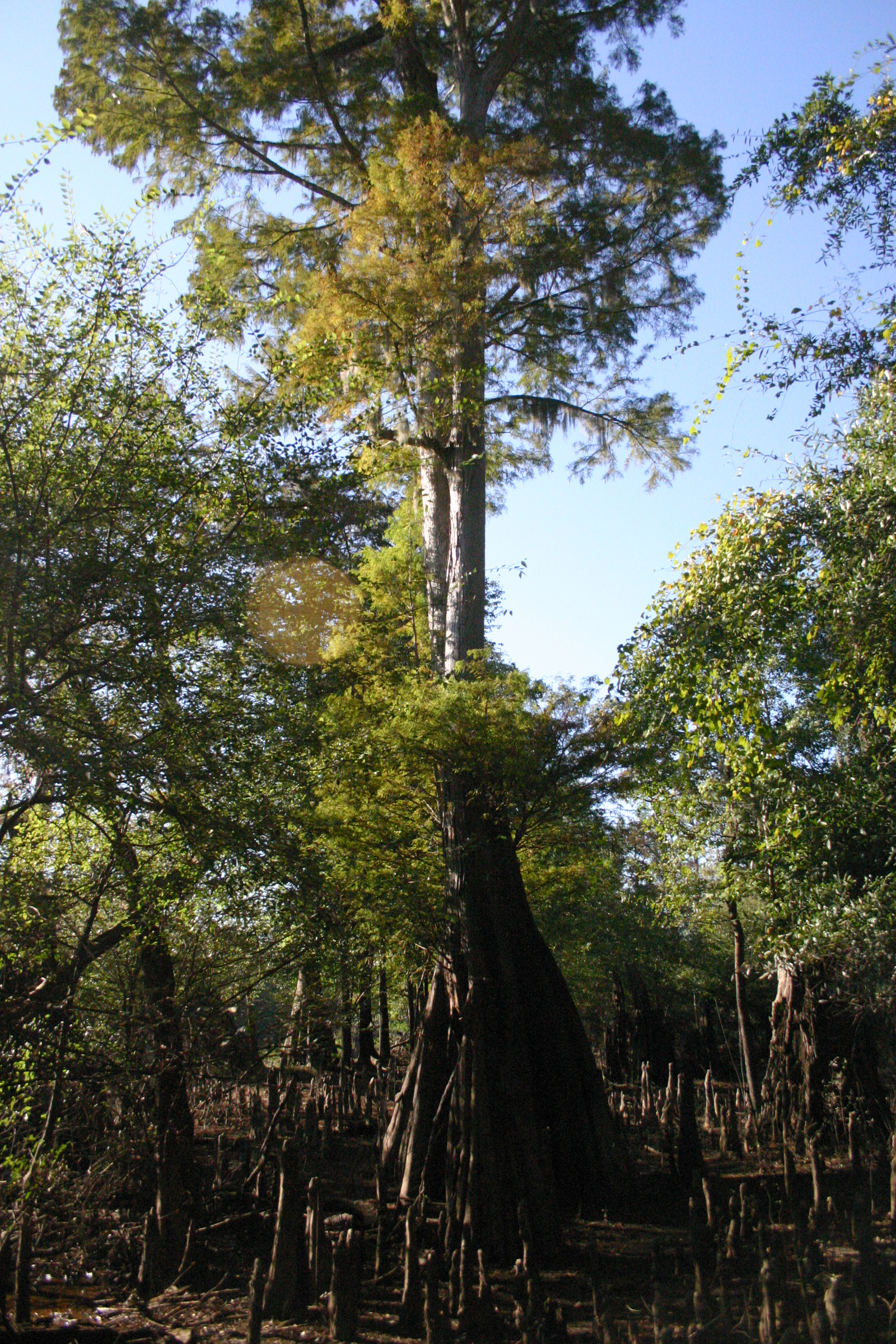
| Field | Value |
|---|---|
| official_name | Andrews |
| settlement_type | Town |
| image_skyline | Andrews_SC.jpg |
| image_caption | Downtown Andrews, SC |
| image_map | Georgetown County South Carolina incorporated and unincorporated areas Andrews highlighted.svg |
| mapsize | 260px |
| map_caption | Location in Georgetown County and the state of South Carolina. |
| subdivision_type | Country |
| subdivision_name | United States |
| subdivision_type1 | State |
| subdivision_name1 | South Carolina |
| subdivision_type2 | Counties |
| subdivision_name2 | Georgetown, Williamsburg |
| unit_pref | Imperial |
| area_footnotes | |
| area_total_km2 | 5.73 |
| area_land_km2 | 5.73 |
| area_water_km2 | 0.00 |
| area_total_sq_mi | 2.21 |
| area_land_sq_mi | 2.21 |
| area_water_sq_mi | 0.00 |
| population_as_of | 2020 |
| population_total | 2575 |
| population_density_km2 | 449.77 |
| population_density_sq_mi | 1165.16 |
| population_footnotes | |
| timezone | EST |
| utc_offset | -5 |
| timezone_DST | EDT |
| utc_offset_DST | -4 |
| elevation_footnotes | |
| elevation_ft | 33 |
| coordinates | |
| postal_code_type | ZIP code |
| postal_code | 29510 |
| area_codes | 843, 854 |
| blank_name | FIPS code |
| blank_info | 45-01450 |
| blank1_name | GNIS feature ID |
| blank1_info | 2405150 |
| website |
Andrews is a town in both Georgetown and Williamsburg counties in the U.S. state of South Carolina. Its total population was 2,575 at the 2020 census, down from 2,861 in 2010. General aviation airfield Robert F. Swinnie Airport is 2 mi east of its central business district.
Geography
Andrews is located in western Georgetown County, with a small portion extending west into Williamsburg County. U.S. Route 521 bypasses the town to the south, then passes through the west side of the town; the highway leads northwest 62 mi to Sumter and east 17 mi to Georgetown, the county seat. South Carolina Highway 41 leads northeast 24 mi to Hemingway and southwest 15 mi to Jamestown. Charleston is 59 mi to the southwest.
According to the United States Census Bureau, Andrews has a total area of 2.2 square miles (5.7 km2), all land.
Demographics
|align-fn=center
2020 census
| Race | Num. | Perc. |
|---|---|---|
| White (non-Hispanic) | 811 | 31.5% |
| Black or African American (non-Hispanic) | 1,609 | 62.49% |
| Native American | 7 | 0.27% |
| Asian | 5 | 0.19% |
| Pacific Islander | 1 | 0.04% |
| Other/Mixed | 60 | 2.33% |
| Hispanic or Latino | 82 | 3.18% |
As of the 2020 United States census, there were 2,575 people, 1,049 households, and 754 families residing in the town.
2000 census
As of the census of 2000, there were 3,068 people, 1,182 households, and 843 families residing in the town. The population density was 1,392.6 PD/sqmi. There were 1,347 housing units at an average density of 611.4 /sqmi. The racial makeup of the town was 60.76% African American, 37.55% White, 0.23% Native American, 0.88% from other races, and 0.59% from two or more races. Hispanic or Latino of any race were 1.43% of the population.
There were 1,182 households, out of which 35.5% had children under the age of 18 living with them, 40.2% were married couples living together, 26.4% had a female householder with no husband present, and 28.6% were non-families. 26.3% of all households were made up of individuals, and 11.6% had someone living alone who was 65 years of age or older. The average household size was 2.60 and the average family size was 3.12.
In the town, the population was spread out, with 30.5% under the age of 18, 8.8% from 18 to 24, 25.3% from 25 to 44, 22.1% from 45 to 64, and 13.3% who were 65 years of age or older. The median age was 35 years. For every 100 females, there were 77.8 males. For every 100 females age 18 and over, there were 73.3 males.
The median income for a household in the town was $19,375, and the median income for a family was $22,750. Males had a median income of $24,891 versus $17,344 for females. The per capita income for the town was $12,105. About 30.8% of families and 34.2% of the population were below the poverty line, including 45.8% of those under age 18 and 21.4% of those age 65 or over.
History
The towns of Rosemary and Harpers Crossroads were settled along the Georgetown and Western Railroad, which started operation in 1886. In 1905, the Seaboard Air Line Railroad built a route through the town, along with a sizable maintenance shop. In 1909, voters agreed to incorporate the two separate towns into a single community, which was named Andrews, after Colonel Walter H. Andrews, who played an important role in the incorporation. Andrews worked for the Atlantic Coast Lumber Co. and served as mayor through most of the 1920s. In 1915, a town hall was built, which is now a museum. By 1919, Andrews had reached a population of 2,000 and continued to grow. During the 1920s, Andrews had the title of being the fastest growing town in the United States for its age. The two schools were the Andrews School and the Rosemary School. These were segregated, with the Andrews School being the white school and Rosemary being the black.
When the Great Depression of the 1930s started, Andrews was hit hard, with population down by 700 when Seaboard scaled back its operations. In 1932, the local economy was dealt a further blow when the Atlantic Coast Lumber Co. closed its nearby plant. The lumber business never regained prominence in the area. The economy subsequently improved in the late 1930s when an International Paper paper mill was built in Georgetown County.
After World War II, the Andrews Development Board was incorporated to attract businesses to the area. Among the industries added were Brooks Veneer Co., the Beale and the Ingram lumber companies, the Rogers Saw Mill Co., the Hardee livestock market, the Andrews Ice Co., and the Oneita Knitting Mill. In 1970, the schools were integrated. Rosemary became a middle school. The Andrews school became the elementary/high school. In 1984, Andrews Elementary School was built. In 2000, new middle and high school facilities were built. An expansion to the local branch library began in 2010. It celebrated its centennial year in 2009.
Education
Public education in Andrews is administered by Georgetown County School District. The district operates Andrews Elementary School (child development-5th), Rosemary Middle School (6th-8th), and Andrews High School (9th-12th).
Trinity Christian Academy is a private institution.
Andrews has a public library, a branch of the Georgetown County Library.
Notable people
- Chris Rock
- Chubby Checker
References
References
- "ArcGIS REST Services Directory". United States Census Bureau.
- "U.S. Census website". [[United States Census Bureau]].
- {{GNIS. 2405150
- (April 2020}}{{cbignore). "Geographic Identifiers: 2010 Demographic Profile Data (G001): Andrews town, South Carolina". U.S. Census Bureau}}{{dead link.
- (April 2020}}{{cbignore). "Geographic Identifiers: 2010 Demographic Profile Data (G001): Andrews town, South Carolina". U.S. Census Bureau}}{{dead link.
- "Census Population API". United States Census Bureau.
- "Explore Census Data".
- Ramos, Aliana. (December 28, 2009). "Andrews relives 100-year history". [[The Sun News]].
- "Homepage". Georgetown County School District.
- "South Carolina libraries and archives". SCIWAY.
- "Chris Rock".
- (September 2, 2000). "Chubby Checker Still Enjoys Twistin' the Night Away".
This article was imported from Wikipedia and is available under the Creative Commons Attribution-ShareAlike 4.0 License. Content has been adapted to SurfDoc format. Original contributors can be found on the article history page.
Ask Mako anything about Andrews, South Carolina — get instant answers, deeper analysis, and related topics.
Research with MakoFree with your Surf account
Create a free account to save articles, ask Mako questions, and organize your research.
Sign up freeThis content may have been generated or modified by AI. CloudSurf Software LLC is not responsible for the accuracy, completeness, or reliability of AI-generated content. Always verify important information from primary sources.
Report