From Surf Wiki (app.surf) — the open knowledge base
Anaphora (rhetoric)
Repeating the same phrase before each clause for emphasis
Repeating the same phrase before each clause for emphasis
In rhetoric, an anaphora (, "carrying back") is a rhetorical device that consists of repeating a sequence of words at the beginnings of neighboring clauses, thereby lending them emphasis. In contrast, an epistrophe (or epiphora) is repeating words at the clauses' ends. The combination of anaphora and epistrophe results in symploce.
Functions
Anaphora is repetition at the beginning of a sentence to create emphasis. Other than the function of emphasizing ideas, the use of anaphora as a rhetorical device adds rhythm to a word as well as making it more pleasurable to read and easier to remember.
Anaphora serves the purpose of delivering an artistic effect to a passage. It is also used to appeal to the emotions of the audience in order to persuade, inspire, motivate and encourage them. In Dr. Martin Luther King Jr.'s famous "I Have a Dream" speech, he uses anaphora by repeating "I have a dream" eight times throughout the speech.
Usage
The voice of the Lord is over the waters; the God of glory thunders, the Lord, over many waters. The voice of the Lord is powerful; the voice of the Lord is full of majesty.
The voice of the Lord breaks the cedars; the Lord breaks the cedars of Lebanon. He makes Lebanon to skip like a calf, and Sirion like a young wild ox.
The voice of the Lord flashes forth flames of fire. The voice of the Lord shakes the wilderness; the Lord shakes the wilderness of Kadesh.
The voice of the Lord makes the deer give birth and strips the forests bare, and in his temple all cry, "Glory!"
Today, anaphora is seen in many different contexts, including songs, movies, television, political speeches, poetry, and prose.
Examples
She is good, but she lies She is hard on herself She is broken and won't ask for help She is messy, but she's kind She is lonely most of the time She is all of this mixed up and baked in a beautiful pie She is gone, but she used to be mine|char=|sign=Sara Bareilles|title=|source="She Used to Be Mine"}}{{Poemquote |For want of a nail the shoe was lost. For want of a shoe the horse was lost. For want of a horse the rider was lost. For want of a rider the message was lost. For want of a message the battle was lost. For want of a battle the kingdom was lost. And all for the want of a horseshoe nail.
** In time** all haggard hawks will stoop to lure, In time small wedges cleave the hardest oak, In time the flint is pierced with softest shower.
In what furnace was thy brain? What the anvil? what dread grasp Dare its deadly terrors clasp?
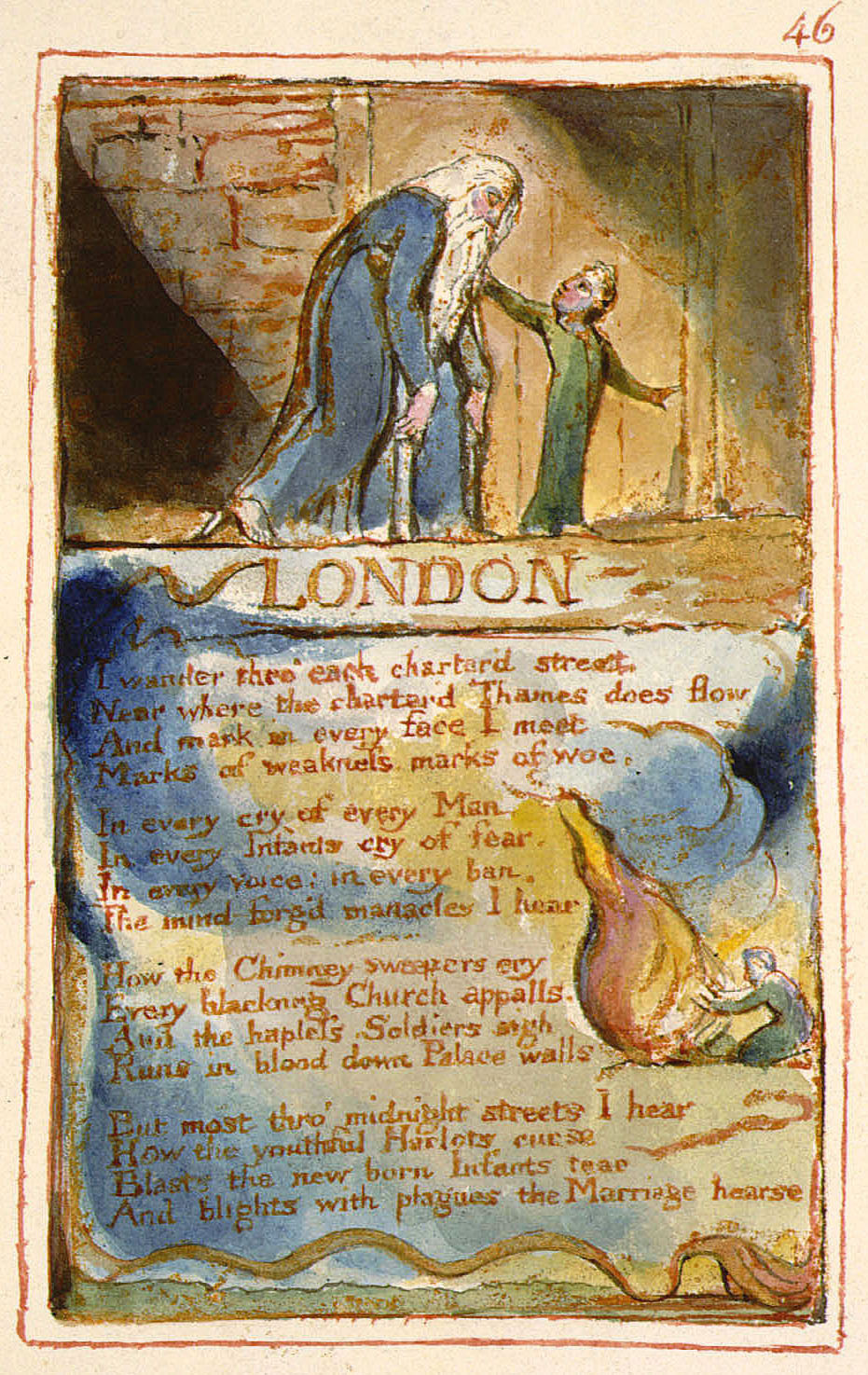
In every infant's cry of fear, In every voice, in every ban, The mind-forged manacles I hear:
Have struck those tyrants! Strike deep as my curse! Strike!and but once!
with charity for all; with firmness in the right, ...
Out of the mock-bird's throat, the musical shuttle, Out of the Ninth-month midnight, [...] Up from the mystic play of shadows twining and twisting as if they were alive, Out from the patches of briers and blackberries, From the memories of the bird that chanted to me, From your memories, sad brother, from the fitful risings and fallings I heard, From under that yellow half-moon late-risen and swollen as if with tears, From those beginning notes of yearning and love, there in the transparent mist, From the thousand responses of my heart never to cease, From the myriad thence-arous'd words, From the word stronger and more delicious than any, From such as now they start the scene revisiting,...
The rich proud cost of outworn buried age; When sometime lofty towers I see down-razed And brass eternal slave to mortal rage; When I have seen the hungry ocean gain Advantage on the kingdom of the shore, And the firm soil win of the watery main, Increasing store with loss and loss with store; When I have seen such interchange of state, Or state itself confounded to decay; Ruin hath taught me thus to ruminate, That Time will come and take my love away. This thought is as a death, which cannot choose But weep to have that which it fears to lose.
I am the worker sold to the machine. I am the Negro, servant to you all. I am the people, humble, hungry, mean--
I have a dream that one day this nation will rise up and live out the true meaning of its creed: 'We hold these truths to be self-evident: that all men are created equal.' I have a dream that one day on the red hills of Georgia the sons of former slaves and the sons of former slave owners will be able to sit down together at a table of brotherhood. I have a dream that one day even the state of Mississippi, a state, sweltering with the heat of injustice, sweltering with the heat of oppression, will be transformed into an oasis of freedom and justice. ** I have a dream** that my four little children will one day live in a nation where they will not be judged by the color of their skin but by the content of their character. I have a dream today.
Where is the wisdom we have lost in knowledge? Where is the knowledge we have lost in information?
Out of black bean and wet slate bread, Out of the acids of rage, the candor of tar, Out of creosote, gasoline, drive shafts, wooden dollies, They Lion grow.
Notes
References
References
- "Songs of Innocence and of Experience, object 46 (Bentley 46, Erdman 46, Keynes 46)". [[William Blake Archive]].
- Xiuguo Zhang. (2005). "English Rhetoric". 清华大学出版社有限公司.
- (n.d.). "Anaphora - Examples and Definition of Anaphora". n.p..
- Dlugan, Andrew. (17 February 2009). "Speech Analysis: I Have a Dream – Martin Luther King Jr.".
- Thompson, Derek. (2017-02-07). "Hit Makers: How to Succeed in an Age of Distraction". Penguin.
This article was imported from Wikipedia and is available under the Creative Commons Attribution-ShareAlike 4.0 License. Content has been adapted to SurfDoc format. Original contributors can be found on the article history page.
Ask Mako anything about Anaphora (rhetoric) — get instant answers, deeper analysis, and related topics.
Research with MakoFree with your Surf account
Create a free account to save articles, ask Mako questions, and organize your research.
Sign up freeThis content may have been generated or modified by AI. CloudSurf Software LLC is not responsible for the accuracy, completeness, or reliability of AI-generated content. Always verify important information from primary sources.
Report