From Surf Wiki (app.surf) — the open knowledge base
Ambon, Maluku
City and capital of Maluku, Indonesia
_en.png)
City and capital of Maluku, Indonesia
| Field | Value |
|---|---|
| name | Ambon |
| official_name | City of Ambon |
| Kota Ambon | |
| settlement_type | City |
| image_skyline | {{multiple image |
| border | infobox |
| total_width | 270 |
| image_style | border:1; |
| perrow | 1/2/2 |
| image1 | Ambon City of Music.jpg |
| caption1 | Ambon City of Music |
| image2 | Patung Pattimura.jpg |
| caption2 | Pattimura statue |
| image3 | Ambon Malam.jpg |
| caption3 | Panoramic view of Ambon Bay |
| image4 | Ambon Stad2.jpg |
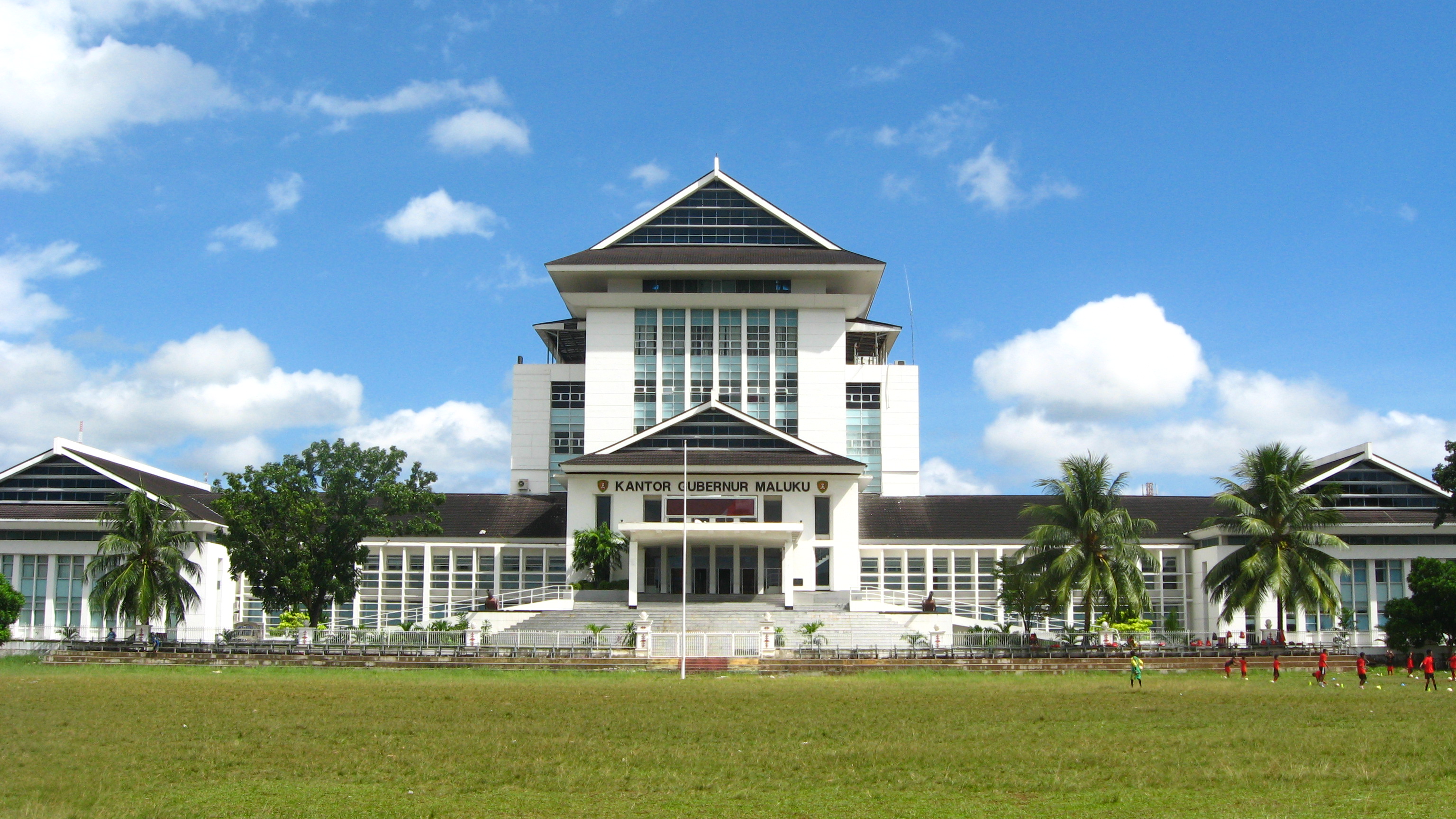
| caption4 | Governor office of Maluku |
| image5 | Gong Perdamaian Dunia Ambon.jpg |
| caption5 | World Peace Gong |
| image_flag | City_Flag_of_Ambon.png |
| image_shield | Lambang Ambon.png |
| motto | Bersatu Manggurebe Maju |
| image_map | Locator map of Ambon City in Maluku.png |
| mapframe | yes |
| mapframe-zoom | 8 |
| map_caption | Location within Maluku |
| pushpin_map | Indonesia_Maluku#Indonesia |
| pushpin_label_position | bottom |
| pushpin_map_caption | Location in Maluku and Indonesia |
| coordinates | |
| subdivision_type | Country |
| subdivision_name | |
| subdivision_type1 | Province |
| subdivision_name1 | Maluku |
| established_title | Incorporated |
| established_date | 7 September 1575 |
| leader_title | Mayor |
| leader_name | (indp.) |
| leader_title1 | Vice Mayor |
| leader_name1 | |
| leader_title2 | Legislature |
| leader_name2 | Ambon City Regional House of Representatives |
| area_total_km2 | 359.45 |
| elevation_m | 3 |
| population_total | 357289 |
| population_as_of | mid 2024 estimate |
| population_density_km2 | auto |
| population_note | |
| postal_code_type | Postcodes |
| area_code_type | Area code |
| area_code | (+62) 911 |
| website |
the city
Kota Ambon | mapframe-zoom = 8
Ambon (; formerly ) is the capital and largest city of the Indonesian province of Maluku. This city is also known as Ambon Manise, which means "beautiful" or "pretty" Ambon in the Ambonese language. It covers a land area of 359.45 km2, and had a population of 331,254 at the 2010 Census and 347,288 at the 2020 Census; the official estimate as of mid 2024 was 357,289. The city is divided into five administrative districts (kecamatan) – namely Nusaniwe, Sirimau, Teluk Ambon (Ambon Bay), Baguala (officially Teluk Ambon Baguala) and Leitimur Selatan (South Leitimur). Known as Indonesia's music city, Ambon became the first city in Southeast Asia to be recognised as the UNESCO City of Music in 2019.
The city is populated by a mix of ethnic Alifuru (original Moluccans), Javanese, Balinese, Butonese, Bugis, Makassar, Papuan, Minahasa, Minang, Flobamora (Flores, Sumba, Alor and Timor ethnics) and those of foreign descent (Chinese, Arabian-Ambonese, Spanish-Ambonese, German-Ambonese, Portuguese-Ambonese and Dutch-Ambonese). Between 1999 and 2002, there was social unrest motivated by racial intolerance.
History
Colonial era

Ambon was colonized by Portugal in 1526 and originally named Nossa Senhora de Anunciada, founded by Portuguese-Moluccan Governor Sancho de Vasconcelos. The Portuguese were driven out by the Dutch in 1605. Except for brief periods of British rule, the island remained under Dutch control until Indonesia's independence in 1945.
.svg)
During the Dutch period, Ambon was the seat of the Dutch resident and military commander of the Maluku Islands. The town was protected by Fort Victoria, and the 1911 Encyclopædia Britannica characterized it as "a clean little town with wide streets, well planted". The population was divided into two classes, orang burger (citizens) and orang negri (villagers), the former being a class of native origin enjoying certain privileges conferred on their ancestors by the old Dutch East India Company. There were also, besides the Dutch, some Arabs, Chinese and a few Portuguese settlers. Ambon was a center of Christian missionary activity, and Ambon and the surrounding islands have many Christians as well as the Muslims that predominate in most of Indonesia.
On 22 December 1902, the Apostolic Prefecture of Dutch New Guinea was established in the city, later to be promoted as the Diocese of Amboina.

Ambon Island was the site of a major Dutch naval base and was of strategic importance during WW2. In 1941, Dutch forces with the assistance of Australian forces reinforced Ambon in anticipation of a Japanese attack. Japanese forces attacked Ambon as part of their attack on the Dutch East Indies. Despite formidable defenses, Ambon fell when its defenders surrendered after four days of fighting on 3 February 1942. Following the battle, Japanese forces committed numerous acts of atrocities, including the execution of over 300 Dutch and Australian POWs at Laha airfield.
Conflicts since independence
In 1950 Ambon was the center of an uprising against Indonesian rule, caused by the self-proclaimed Republic of the South Moluccas. Indonesian troops invaded the city during the Invasion of Ambon and reasserted control in just a few months. Many important buildings such as the Victoria Fort (APRMS main base) were heavily damaged during the confrontation.
In April and May 1958 during the Permesta rebellion in North Sulawesi, the USA supported and supplied the rebels. Pilots from a Taiwan-based CIA front organisation, Civil Air Transport, flying CIA B-26 Invader aircraft, repeatedly bombed and machine-gunned targets in and around Ambon. On 27 April a CIA raid set fire to a military command post, a fuel dump and a Royal Dutch Shell complex. The attack on Shell was deliberate: the CIA had orders to hit foreign commercial interests in order to drive foreign trade away from Indonesia and undermine its economy. The next day, the same CIA pilot bombed Shell interests at Balikpapan in East Kalimantan on Borneo, which persuaded Shell to suspend tanker services from there.
On 28 April a CIA air raid damaged an Indonesian Army barracks next to a marketplace. On 30 April a CIA air raid hit the airstrip. On 7 May a CIA air raid attacked Ambon airstrip, seriously damaging a Douglas C-47 Skytrain and an Indonesian Air Force North American P-51 Mustang and setting fire to a number of fuel drums. On 8 May a CIA B-26 tried to bomb an Indonesian Navy gunboat in Ambon harbour. Its bomb missed but it then machine-gunned the boat, wounding two crew. The Indonesian National Armed Forces reinforced Ambon City's anti-aircraft defences with a number of 12.7 mm machine guns. On 9 May a CIA B-26 attacked the city again. The machine-gunners returned fire and an Indonesian Air Force P-51 Mustang chased the B-26, but it escaped.
On 15 May a CIA B-26 attacked a small ship, the Naiko, in Ambon Bay. The Naiko was a merchant ship that the Indonesian Government had pressed into military service, and she was bringing a company of Ambonese troops home from East Java. A CIA bomb hit the Naikos engine room, killing one crew member and 16 infantrymen and setting the ship on fire. The B-26 then attacked Ambon city, aiming for the barracks. Its first bomb missed and exploded in a market-place next door. The next landed in the barracks compound but bounced and exploded near an ice factory. The B-26 in the May air raids was flown by a CAT pilot called Allen Pope. On 18 May Pope attacked Ambon again. First he raided the airstrip again, destroying the C-47 and P-51 that he had damaged on 7 May. Then he flew west of the city and tried to attack one of a pair of troop ships being escorted by the Indonesian Navy. Indonesian forces shot down the B-26 but Pope and his Indonesian radio operator survived and were captured. Pope's capture immediately exposed the level of CIA support for the Permesta rebellion. Embarrassed, the Eisenhower administration quickly ended CIA support for Permesta and withdrew its agents and remaining aircraft from the conflict.
As part of the transmigration program in the 1980s, the Suharto government relocated many migrants, most of them Muslim, from densely overpopulated Java.
Between 1999 and 2002, Ambon was at the centre of sectarian conflict across the Maluku Islands. There was further religious violence in 2011.
Geography and climate
Topography
Most of the land area can be classified as hilly to steeply sloping, while 17% of the land area can be classified as more flat or shallow-sloped.
Climate
Ambon experiences a tropical rainforest climate (Af) according to Köppen Climate Classification as there is no real dry season. The driest month is November with total precipitation of 114 mm, while the wettest month is June with total precipitation of 638 mm. As it is located near the equator, the temperature throughout the year is constant. The hottest month is December, with an average temperature of 27.2 C, while the coolest month is July, with an average temperature 25.0 C. |Jan record high C = 35.5 |Feb record high C = 35.5 |Mar record high C = 35.0 |Apr record high C = 33.9 |May record high C = 32.3 |Jun record high C = 30.5 |Jul record high C = 30.0 |Aug record high C = 30.5 |Sep record high C = 31.1 |Oct record high C = 32.8 |Nov record high C = 34.4 |Dec record high C = 35.5 |Jan record low C = 22.2 |Feb record low C = 22.8 |Mar record low C = 22.2 |Apr record low C = 21.6 |May record low C = 20.0 |Jun record low C = 20.5 |Jul record low C = 20.0 |Aug record low C = 19.4 |Sep record low C = 18.9 |Oct record low C = 18.9 |Nov record low C = 21.1 |Dec record low C = 20.0
Administrative districts
The city is divided into five districts (kecamatan), tabulated below with their areas and their 2010 Census and 2020 Census populations, together with the official estimates as at mid 2024. The table also includes the locations of the district administrative centres, the number of administrative villages and subdistricts (kelurahan) in each district (totaling 20 urban kelurahan, 20 negari and 10 rural desa), and its post codes.
| Kode | ||
|---|---|---|
| Wilayah | Name of | |
| District | ||
| (kecamatan) | Area | |
| in | ||
| km2 | Pop'n | |
| Census | ||
| 2010 | Pop'n | |
| Census | ||
| 2020 | Pop'n | |
| Estimate | ||
| mid 2024 | Admin | |
| centre | No. | |
| of | ||
| villages | Post | |
| code | ||
| 81.71.01 | ||
| 81.71.02 | ||
| 81.71.03 | ||
| 81.71.04 | ||
| 81.71.05 |
Notes: (a) comprising 8 kelurahan and 5 negeri. (b) comprising 10 kelurahan, 3 negeri and one desa. (c) comprising 1 kelurahan, 2 negeri and 4 desa. (d) comprising 1 kelurahan, 2 negeri and 5 desa. (e) all negeri.
Like other regions in the (Maluku Islands), areas in Ambon are still considered to have the status of states, led by kings and queens.
| District | States |
|---|---|
| Nusaniwe | Urimessing, Benteng, Wainitu, Kudamati, Waihaong, Manggadua, Nusanive, Amahusu, Latuhalat, Seilale |
| Sirimau | Waihoka, Amantelu, Rijali, Karangpanjang, Batumeja, Batugajah, Ahusen, Honipopu, Uritetu, Pandankasturi, Galala, Hative, Batumerah, Soya |
| Teluk Ambon Baguala | Waiheru, Nania, Negrilama, Passo, Lateri, Latta, Halong |
| Teluk Ambon | |
| (Ambon Bay) | Laha, Tawiri, Greater Hative, Wayame, Rumatiga, Tihu, Poka, Hunuth |
| South Leitimor | Hatalai, Naku, Kilang, Ema, Hukurila, Hutumuri, Rutong, Leahari |
Nusanive
Nusanive District consists of the western part of the Leitimur Peninsula. The eight urban kelurahan form part of the built-up area of Ambon city in the centre of the north shore of that peninsula, while the eight negeri (desa) consist of the more rural areas to the west and south of that core. Three of these negeri have the same names as kelurahan in the core.
| Kode | ||
|---|---|---|
| Wilayah | Name of kelurahan, | |
| negeri or desa | Area | |
| in | ||
| km2 | Pop'n | |
| Estimate | ||
| mid 2023 | Post | |
| code | ||
| 81.71.01.2001 | ||
| 81.71.01.2002 | ||
| 81.71.01.2003 | ||
| 81.71.01.2004 | ||
| 81.71.01.2005 | ||
| 81.71.01.1006 | ||
| 81.71.01.1007 | ||
| 81.71.01.1008 | ||
| 81.71.01.1009 | ||
| 81.71.01.1010 | ||
| 81.71.01.1011 | ||
| 81.71.01.1012 | ||
| 81.71.01.1013 |
Sirimau
Sirimau District consists of the north-central part of the Leitimur Peninsula, and thus equates roughly to the core of the Ambon city built-up area.
| Kode | ||
|---|---|---|
| Wilayah | Name of kelurahan, | |
| negeri or desa | Area | |
| in | ||
| km2 | Pop'n | |
| Estimate | ||
| mid 2023 | Post | |
| code | ||
| 81.71.01.2001 | ||
| 81.71.02.2002 | ||
| 81.71.02.2003 | ||
| 81.71.02.2009 | ||
| 81.71.02.1010 | ||
| 81.71.02.1011 | ||
| 81.71.02.1012 | ||
| 81.71.02.1013 | ||
| 81.71.02.1014 | ||
| 81.71.02.1015 | ||
| 81.71.02.1016 | ||
| 81.71.02.1017 | ||
| 81.71.02.1018 | ||
| 81.71.02.1019 |
Teluk Ambon Baguala or simply Baguala
Teluk Ambon Baguala District (usually shortened to Baguala District) consists of the northeastern part of the Leitimur Peninsula, together with the isthmus connecting it to the main (Leihitu) portion of the island and the adjoining part of Leihitu.
| Kode | ||
|---|---|---|
| Wilayah | Name of kelurahan, | |
| negeri or desa | Area | |
| in | ||
| km2 | Pop'n | |
| Estimate | ||
| mid 2023 | Post | |
| code | ||
| 81.71.03.2001 | ||
| 81.71.03.2002 | ||
| 81.71.03.2003 | ||
| 81.71.03.2004 | ||
| 81.71.03.2005 | ||
| 81.71.03.2006 | ||
| 81.71.03.1018 |
Teluk Ambon
Teluk Ambon District consists entirely of the southern portion portion of Leihitu (and thus does not include any part of the Leitimur Peninsula), and faces the core area of the city across Ambon Bay.
| Kode | ||
|---|---|---|
| Wilayah | Name of kelurahan, | |
| negeri or desa | Area | |
| in | ||
| km2 | Pop'n | |
| Estimate | ||
| mid 2023 | Post | |
| code | ||
| 81.71.04.2001 | ||
| 81.71.04.2002 | ||
| 81.71.04.2003 | ||
| 81.71.04.2004 | ||
| 81.71.04.2005 | ||
| 81.71.04.2006 | ||
| 81.71.04.2007 | ||
| 81.71.04.2008 |
Leitimur Selatan
Leitimur Selatan District consists of the southeastern and eastern parts of the Leitimur Peninsula.
| Kode | ||
|---|---|---|
| Wilayah | Name of kelurahan, | |
| negeri or desa | Area | |
| in | ||
| km2 | Pop'n | |
| Estimate | ||
| mid 2023 | Post | |
| code | ||
| 81.71.05.2001 | ||
| 81.71.05.2002 | ||
| 81.71.05.2003 | ||
| 81.71.05.2004 | ||
| 81.71.05.2005 | ||
| 81.71.05.2006 | ||
| 81.71.05.2007 | ||
| 81.71.05.1008 |
Religion
Based on the 2010 census, the city was populated by 331,254 people; in the 2020 Census, this had reached 348,288 people, and the official estimate was 357,289 as at mid 2024. In 2010, the religious breakdown in Ambon was 50.78% Christians (with 48.37% being Protestants and 2.41% Catholics), 49.02% Muslims and 3% others.

Economy
Economic growth rate of Ambon City in 2014 was 5.96%. Gross Domestic Regional Product in 2014 both at current market price and at constant market price was increasing gradually. The increase, if compared to 2013 GDRP at current market price equal to 12.76 percent and 5.96 percent for GDRP at constant market price. The GDRP at current market price in Ambon 2014 was equal to Rp.9.9 trillion, whereas for GDRP at constant 2010 market price, it was equal to Rp.7.77 trillion.
In 2014, the gross domestic product per capita of Ambon based on current prices grew by 8.3 percent, while for the constant price in Ambon City grew by 1.7 percent. GDP per capita of Ambon City in 2014 is 25.16 Million (U $1,836.43). The poverty rate in the city of Ambon is 4.42% which is the smallest percentage of poverty in the province of Maluku.
All twenty one economic sectors in 2014 saw positive growth for GDRP of Ambon. For GDRP at current market price, the highest contribution was provided by the electricity and gas Sector with 34.2 percent, while the lowest was human health and Social Work activities with 6.61 percent.
Education
The city has 17 higher education institutions. These are:
State-owned institutions
- Pattimura University
- Ambon State Polytechnic Private Institutions
- College of Protestant Christianity Ambon
- Trinity College of Administrative Sciences
- Abdul Aziz Kataloka College of Administrative Sciences
- Rutu Nusa College of Economics Management
- Pasapua College of Health
- University of Darussalam Ambon
- Christian University of Indonesia Maluku
- Maritime Academy Maluku
- Caritas Secretary and Management Academy
- Ambon College of Computer Sciences
- Indonesian Islamic Religion Institute Ambon
- Industrial Academy ( AKPER RUKMIT ) Ambon
- Evangelical Theology College Indonesia
- Bethel Theology College Ambon
- St. Yohanes College Ambon
Places of interest

- Merah Putih Bridge
- Monument of Pattimura, Lapangan Merdeka
- Monument of Christina Martha Tiahahu, Karang Panjang
- Pattimura Stadium
- Ambon Plaza
- Liang beach
- Natsepa beach
- Santai Beach Resort
- Pintu Kota beach
- Galala-Poka Ferry crossing
- Batu Merah
- Ambon Bay at sunset
- Museum Siwalima at Batu Capeu
- Pukul Sapu Dance at Morela and Mamala (after seven days of Muslim's Eid al-Fitri)
- Siwang Paradise
Transportation
Ambon is served by Pattimura International Airport.
Twin towns – sister cities
Ambon is twinned with:
- AUS Darwin, Australia
- NED Vlissingen, Netherlands
References
Sources
References
- Badan Pusat Statistik, Jakarta, 28 February 2025, ''Kota Ambon Dalam Angka 2025'' (Katalog-BPS 1102001.8171)
- Biro Pusat Statistik, Jakarta, 2011.
- Badan Pusat Statistik, Jakarta, 2021.
- (28 July 2016). "Bekraf canangkan Ambon kota musik dunia".
- "Menuju Kota Musik Dunia, Ketua DPR RI Resmikan Dua Gedung Musik di Ambon | TERASMALUKU.COM | Semua Membacanya".
- (27 May 2013). "Lantik DPD PAPPRI, Tantowi Yahya Akui Ambon Kota Musik".
- "UNESCO designates 66 new Creative Cities | Creative Cities Network".
- {{Cite EB1911
- (11 June 1958). "Commons Sitting: Oral Answers to Questions {{ndash}} Indonesia (British Vessels)".
- (30 January 1999). "Ambon rioting leaves 100 dead in Indonesia". World Socialist Website.
- Guerin, Bill. (15 February 2002). "The Spice Islands legacy of violence". [[Asia Times]].
- Rayda, Nivell. (2 October 2011). "Religious Strife a Daily Reality in Ambon". [[Jakarta Globe]].
- "Klimatafel von Ambon / Insel Ambon, Molukken / Indonesien". Federal Ministry of Transport and Digital Infrastructure.
- Badan Pusat Statistik, Jakarta, 26 September 2024, ''Kecamatan Nusaniwe Dalam Angka 2024'' (Katalog-BPS 1102001.8171010)
- Badan Pusat Statistik, Jakarta, 2024, ''Kecamatan Sirimau Dalam Angka 2024'' (Katalog-BPS 1102001.8171020)
- Badan Pusat Statistik, Jakarta, 2024, ''Kecamatan Teluk Ambon Baguala Dalam Angka 2024'' (Katalog-BPS 1102001.8171020)
- Badan Pusat Statistik, Jakarta, 2024, ''Kecamatan Teluk Ambon Dalam Angka 2024'' (Katalog-BPS 1102001.8171031)
- Badan Pusat Statistik, Jakarta, 2024, ''Kecamatan Leitimur Selatan Dalam Angka 2024'' (Katalog-BPS 1102001.8171021)
- Anonymous.2015. Ambon City in Figures 2015.Indonesia: BPS Ambon Regional Office
- Trimahanani, Emy. (22 December 2020). "Siwang Paradise, Wisata Favorit Warga Kota Ambon".
- (30 July 2023). "Tak Hanya Darwin, Vlissingen - Belanda Juga Telah jadi Sister City dengan Ambon". Tribun Ambon.
This article was imported from Wikipedia and is available under the Creative Commons Attribution-ShareAlike 4.0 License. Content has been adapted to SurfDoc format. Original contributors can be found on the article history page.
Ask Mako anything about Ambon, Maluku — get instant answers, deeper analysis, and related topics.
Research with MakoFree with your Surf account
Create a free account to save articles, ask Mako questions, and organize your research.
Sign up freeThis content may have been generated or modified by AI. CloudSurf Software LLC is not responsible for the accuracy, completeness, or reliability of AI-generated content. Always verify important information from primary sources.
Report