From Surf Wiki (app.surf) — the open knowledge base
Alternaria
Genus of fungi
Genus of fungi
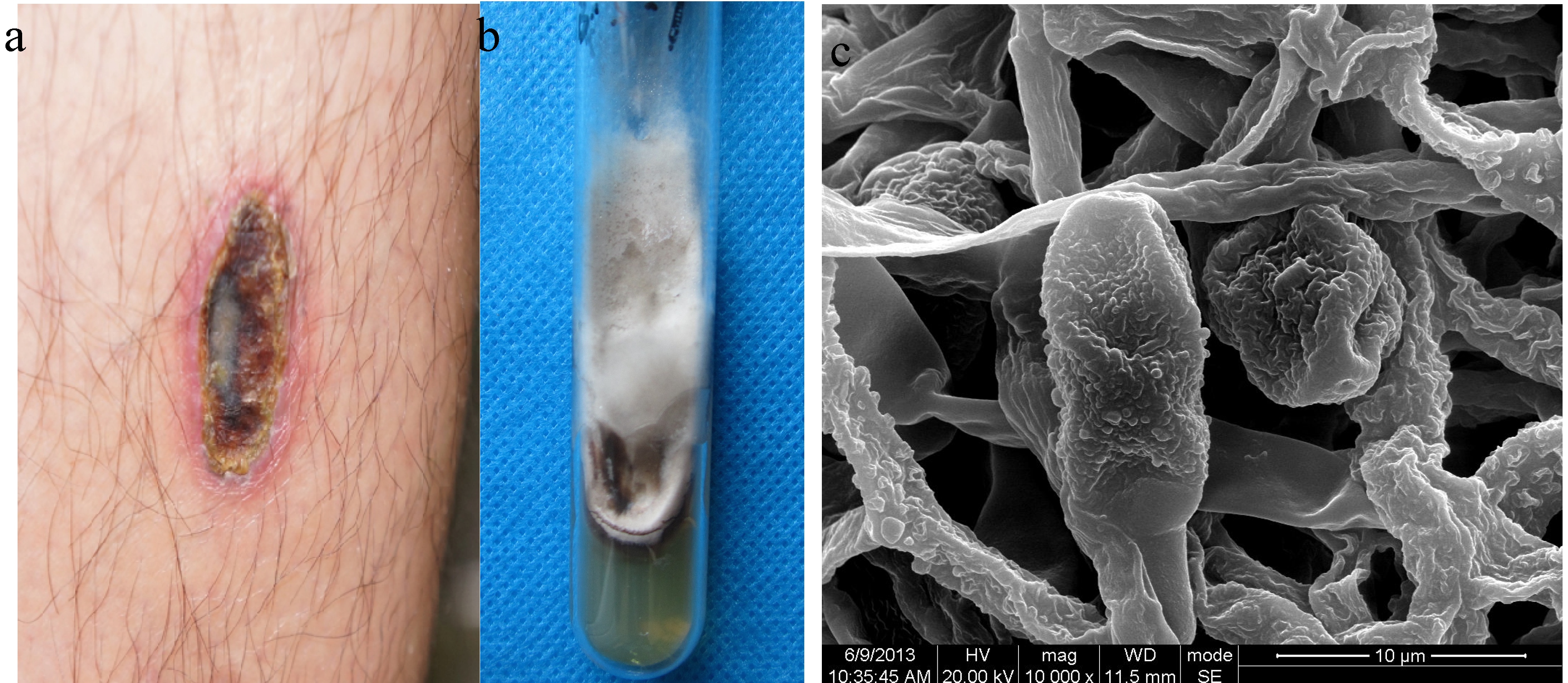
Alternaria is a genus of fungi that are found worldwide. Alternaria species are known as major plant pathogens. They are also common allergens in humans, growing indoors and causing hay fever or hypersensitivity reactions that sometimes lead to asthma. They are present in the human mycobiome and readily cause opportunistic infections in immunocompromised people such as AIDS patients.
There were about 600 known species in the genus in 2023 (although in 2008 the Dictionary of Fungi only listed 299). They are ubiquitous in the environment and are a natural part of funga almost everywhere. They are normal agents of decay and decomposition. The spores are airborne and found in the soil and water, as well as indoors and on objects. The club-shaped spores are single or form long chains. They can grow thick colonies which are usually green, black, or gray.
At least 20% of agricultural spoilage is caused by Alternaria species, with the most severe losses reaching 80% of yield. Many human health disorders can be caused by these fungi, which grow on skin and mucous membranes, including on the eyeballs and within the respiratory tract. Allergies are common, but serious infections are rare, except in people with compromised immune systems. However, species of this fungal genus are often prolific producers of a variety of toxic compounds. The effects most of these compounds have on animal and plant health are not well known. Many species of Alternaria modify their secondary metabolites by sulfoconjugation; however, the role of this process is not yet understood. The terms alternariosis and alternariatoxicosis are used for disorders in humans and animals caused by a fungus in this genus.
Not all Alternaria species are pests and pathogens; some have shown promise as biocontrol agents against invasive plant species. Some species have also been reported as endophytic microorganisms with highly bioactive metabolites.
The genus is now known to be polyphyletic.
Species
, the GBIF lists up to 602 species, while Species Fungorum lists about 645 species. Main article: List of Alternaria species
A selected few species are shown here.
- Alternaria alternata – Causes early blight of potato, leaf spot disease in Withania somnifera
- Alternaria allii - causes onion leaf blight
- Alternaria arborescens – causes stem canker of tomato
- Alternaria arbusti – causes leaf lesions on Asian pear
- Alternaria blumeae – causes lesions on Blumea aurita
- Alternaria brassicae – infests many vegetables and roses
- Alternaria brassicicola – grows on cole crops
- Alternaria burnsii – causing cumin blossom blight
- Alternaria carotiincultae – causes leaf blight on carrot
- Alternaria carthami
- Alternaria celosiae
- Alternaria cinerariae
- Alternaria citri – causes black rot on citrus plants
- Alternaria conjuncta – grows on parsnip
- Alternaria cucumerina – grows on various cucurbits
- Alternaria dauci – grows on carrot
- Alternaria dianthi
- Alternaria dianthicola
- Alternaria eichhorniae – infests water hyacinth plants, used as bioherbicide against these weeds
- Alternaria euphorbiicola – infests cole crops
- Alternaria eureka
- Alternaria gaisen – causes ringspot disease of pear
- Alternaria helianthi
- Alternaria helianthicola
- Alternaria hungarica
- Alternaria infectoria – infests wheat
- Alternaria japonica – infests cole crops
- Alternaria limicola – earliest diverging lineage of Section Porri
- Alternaria linicola - linseed plants (Linum usitatissimum)
- Alternaria longipes – infects tobacco
- Alternaria mali
- Alternaria molesta – may cause skin lesions on porpoises
- Alternaria panax – causes ginseng blight
- Alternaria perpunctulata
- Alternaria petroselini – causes parsley leaf blight
- Alternaria porri
- Alternaria quercicola
- Alternaria radicina – causes carrot decay
- Alternaria raphani
- Alternaria saponariae
- Alternaria selini – causes parsley crown decay
- Alternaria senecionis
- Alternaria solani – causes early blight in potatoes and tomatoes
- Alternaria smyrnii – infests alexanders and parsleys
- Alternaria tenuissima
- Alternaria triticina
- Alternaria ventricosa
- Alternaria zinniae
References
Other sources
References
- (2008). "Dictionary of the Fungi. 10th ed". CABI.
- Nowicki, Marcin. (30 August 2012). "Alternaria black bpot of crucifers: Symptoms, importance of disease, and perspectives of resistance breeding". Vegetable Crops Research Bulletin.
- (15 October 2015). "Identification of six new Alternaria sulfoconjugated metabolites by high-resolution neutral loss filtering". Rapid Commun Mass Spectrom.
- (July 2016). "How to Overcome the Antibiotic Crisis".
- (2012). "Fungal endophytes directly increase the competitive effects of an invasive forb". Ecology.
- Ran Yuping. (2016). "Modern Electron Microscopy in Physical and Life Sciences". InTech.
- "''Alternaria'' Nees ex Wallroth, 1816".
- "Species Fungorum - Search Page - Alternaria".
- (8 January 2009). "Studies on leaf spot disease of Withania somnifera and its impact on secondary metabolites". Indian Journal of Microbiology.
- (1996). "Phytotoxin production by ''Alternaria linicola'' and phytoalexin production by the linseed host.". Ann. Appl. Biol..
This article was imported from Wikipedia and is available under the Creative Commons Attribution-ShareAlike 4.0 License. Content has been adapted to SurfDoc format. Original contributors can be found on the article history page.
Ask Mako anything about Alternaria — get instant answers, deeper analysis, and related topics.
Research with MakoFree with your Surf account
Create a free account to save articles, ask Mako questions, and organize your research.
Sign up freeThis content may have been generated or modified by AI. CloudSurf Software LLC is not responsible for the accuracy, completeness, or reliability of AI-generated content. Always verify important information from primary sources.
Report