From Surf Wiki (app.surf) — the open knowledge base
Alma Redemptoris Mater
Medieval hymn to Mary, mother of Jesus
Medieval hymn to Mary, mother of Jesus
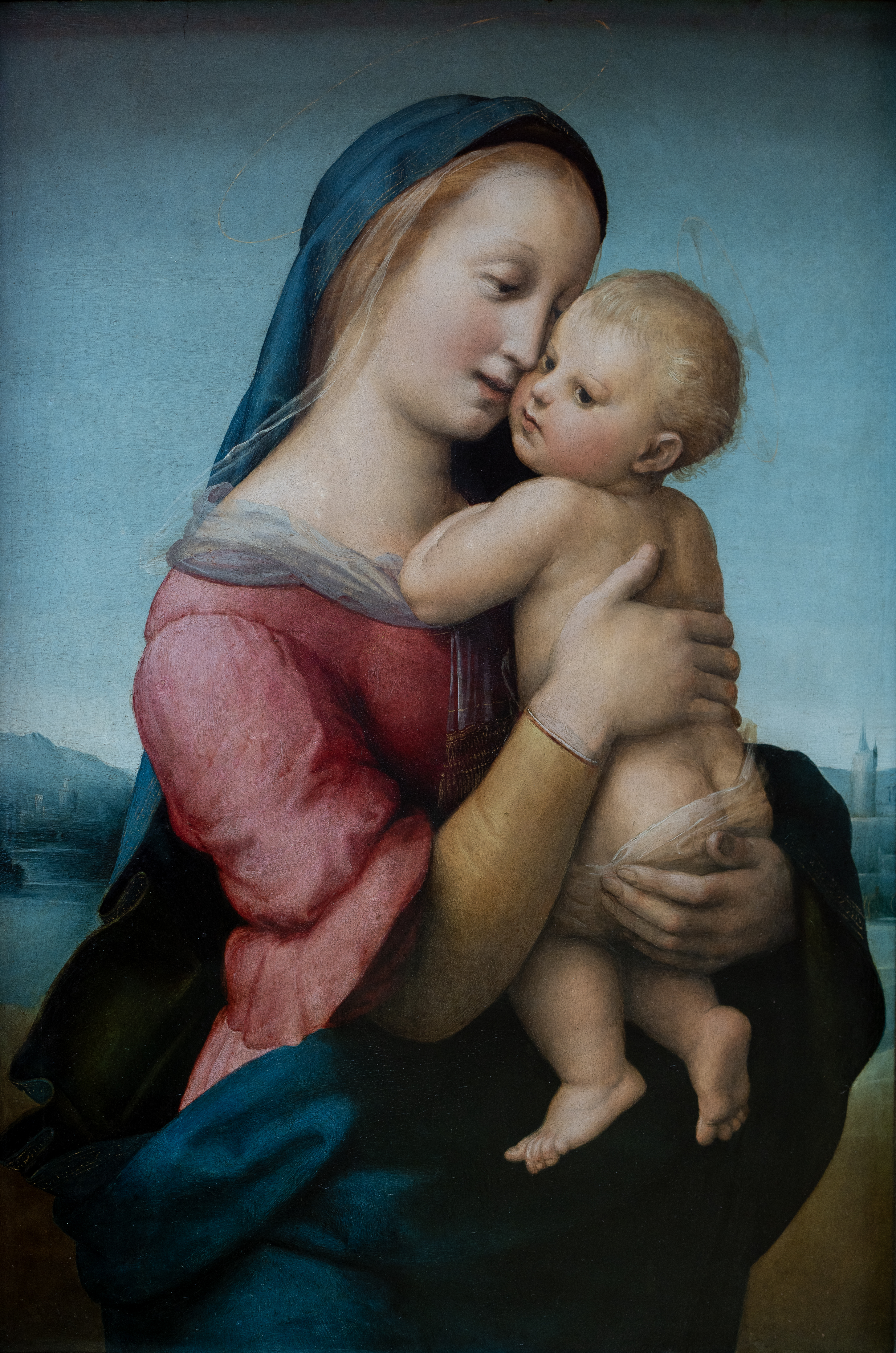
"Alma Redemptoris Mater" (; "Loving Mother of our Redeemer") is a Marian hymn, written in Latin hexameter, and one of four seasonal liturgical Marian antiphons sung at the end of the office of Compline (the other three being Ave Regina Caelorum, Regina Caeli and Salve Regina).
History
Hermannus Contractus (also called Herman the Cripple; 1013–1054) is said to have authored the hymn based on the writings of Saints Fulgentius, Epiphanius, and Irenaeus of Lyon. It is mentioned in The Prioress's Tale, one of Geoffrey Chaucer's Canterbury Tales.
At one time Alma Redemptoris Mater was briefly used as an antiphon for the hour of Sext for the feast of the Assumption, but since the 13th century it has been a part of Compline. Formerly it was recited at the end of the canonical hours only from the first Sunday in Advent until the Feast of the Purification (2 February). It was translated into English by, amongst others, John Henry Newman in "Tracts for the Times", No. 75 (Kindly Mother of the Redeemer).
Text

Latin
Alma Redemptóris Mater, quæ pérvia cæli Porta manes, et stella maris, succúrre cadénti, Súrgere qui curat pópulo: tu quæ genuísti, Natúra miránte, tuum sanctum Genitórem Virgo prius ac postérius, Gabriélis ab ore Sumens illud Ave, peccatórum miserére.
Depending on the period, the following combinations of a versicle, response, and collect are added. From the first Sunday of Advent until Christmas Eve, the collect from the Fourth Sunday of Advent is used, and thereafter until the Feast of the Presentation, the collect from Solemnity of Mary, Mother of God, is used.
The first collect (“Grátiam tuam quáesumus...”) is notably also used in Masses during Advent, and is exactly the same prayer that concludes the Angelus (another Marian devotion focused on the Incarnation).
From the first Sunday of Advent until Christmas Eve
℣. Ángelus Dómini nuntiávit Maríæ ℟. Et concépit de Spíritu Sancto.
Oremus Grátiam tuam quáesumus, Dómine, méntibus nostris infúnde; ut qui, ángelo nuntiánte, Christi Fílii tui Incarnatiónem cognóvimus, per passiónem ejus et crucem, ad resurrectiónis glóriam perducámur. Per eúmdem Christum Dóminum nostrum. ℟. Amen.
From First [[Vespers]] of [[Christmas]] until the [[Presentation of Jesus at the Temple|Presentation]]
℣. Post Partum Virgo invioláta permansísti. ℟. Dei Génitrix, intercéde pro nobis.
Orémus Deus, qui salútis ætérnæ beátæ Maríæ virginitáte fecúnda humáno géneri práemia præstitísti: tríbue, quáesumus, ut ipsam pro nobis intercédere sentiámus, per quam merúimus, Auctórem vitæ suscípere Dóminum nostrum Jesum Christum Fílium tuum. ℟. Amen.
English translation
Loving Mother of the Redeemer, who remains the accessible Gateway of Heaven, and Star of the Sea, Give aid to a falling people that strives to rise; O Thou who begot thy holy Creator, while all nature marvelled, Virgin before and after receiving that "Ave" from the mouth of Gabriel, have mercy on sinners.
From the first Sunday of Advent until Christmas Eve
℣. The Angel of the brought tidings unto Mary ℟. And she conceived by the Holy Ghost.
Let us pray. Pour forth we beseech Thee, O , Thy grace into our hearts, that we to whom the Incarnation of Christ, Thy Son, was made known by the message of an Angel, may, by His Passion and Cross, be brought to the glory of His Resurrection. Through the same Christ, our Lord. ℟. Amen.
From First Vespers of Christmas until the Presentation
℣. After childbirth, O Virgin, thou didst remain inviolate. ℟. Intercede for us, O Mother of God.
Let us pray. O God, Who by the fruitful virginity of blessed Mary, hast given to mankind the rewards of eternal salvation: grant, we beseech Thee, that we may experience her intercession for us, through whom we deserved to receive the Author of life, our Lord Jesus Christ, thy Son. ℟. Amen.
American Liturgy of the Hours translation
Loving mother of the Redeemer, gate of heaven, star of the sea, assist your people who have fallen yet strive to rise again, To the wonderment of nature you bore your Creator, yet remained a virgin after as before, You who received Gabriel's joyful greeting, have pity on us poor sinners.
Church Music Association of America translation
Kind mother of the Redeemer, who remain the open gate of heaven and the star of the sea: help your falling people who want to rise, you who bore your holy Parent, while nature marveled: a Virgin before and after, receiving that Ave from Gabriel's mouth, have mercy on [us] sinners.
Translation of [[Edward Caswall]] (1814-1878)
Mother of Christ! hear thou thy people’s cry, Star of the deep, and portal of the sky! Mother of him who thee from nothing made, Sinking we strive, and call to thee for aid: Oh, by that joy which Gabriel brought to thee, Thou Virgin first and last, let us thy mercy see.}}
In The Divine Office (1974) this is hymn number 118 and it recommends singing it to the tune SONG I, by Orlando Gibbons (1583-1625). This tune has a metre 10.10.10.10.10.10. Since the last line of the text has 12 syllables the tune will need to be modified.
Musical settings
Marc-Antoine Charpentier, 2 settings, Alma Redemptoris Mater H.21 (1675), for 2 voices and bc, Alma Redemptoris Mater H.44 (16 ?), for soloists, chorus, 2 violins and bc.
References
References
- :''The Tradition of Catholic Prayer'' by Christian Raab, Harry Hagan 2007 {{ISBN. 0-8146-3184-3 page 234
- (1958). "Gregorian Chant". Indiana University Press.
- {{Catholic Encyclopedia. Henry. Hugh. (1907)
- 0-87973-579-1 page 472
- Juergens, Sylvester P.. (2004). "The Roman Missal (1962)". Angelus Press.
- Mahoney, D.D., James P.. (1975). "The Liturgy of the Hours". Catholic Book Publishing Corp..
- Rice, Richard. (2012). "Parish Book of Chant, 2nd edition". CMAA.
- ''The Divine Office'' is a book for celebrations of the Liturgy of the Hours in the Catholic Church’s Roman Rite. It is published by Collins (London and Glasgow) and The Talbot Press (Dublin). There are three volumes. In Volume I the hymn is on page 621* and the recommended tune on page 632*. In ''A Shorter Morning and Evening Prayer'', Collins, 1983, ISBN 0005997348, the hymn is on page 315. The hymn was published in 1851 in ''Lyra Catholica'', published by E. Dunigan, page 84.
- Psychoyou, Theodora. "Les Meslanges latins".
This article was imported from Wikipedia and is available under the Creative Commons Attribution-ShareAlike 4.0 License. Content has been adapted to SurfDoc format. Original contributors can be found on the article history page.
Ask Mako anything about Alma Redemptoris Mater — get instant answers, deeper analysis, and related topics.
Research with MakoFree with your Surf account
Create a free account to save articles, ask Mako questions, and organize your research.
Sign up freeThis content may have been generated or modified by AI. CloudSurf Software LLC is not responsible for the accuracy, completeness, or reliability of AI-generated content. Always verify important information from primary sources.
Report