From Surf Wiki (app.surf) — the open knowledge base
Allah
Arabic word for God

Arabic word for God
the Arabic word for God
Allah ( ; , ) is the Arabic language term for God, specifically the monotheistic God of Abraham. Outside of Arabic languages, it is principally associated with Islam (in which it is also considered the proper name), although the term was used in pre-Islamic Arabia and continues to be used today by Arabic-speaking adherents of any of the Abrahamic religions, including Judaism and Christianity. It is thought to be derived by contraction from al-ilāh (الاله, ) and is linguistically related to other Semitic God names, such as Aramaic (ܐܲܠܵܗܵܐ arc) and Hebrew (אֱלוֹהַּ he).
The word "Allah" now conveys the superiority or sole existence of one God, but among the pre-Islamic Arabs, Allah was a supreme deity and was worshipped alongside lesser deities in a pantheon. Many Jews, Christians, and early Muslims used "Allah" and "al-ilah" synonymously in Classical Arabic. The word is also frequently, albeit not exclusively, used by Bábists, Baháʼís, Mandaeans, Indonesian Christians, Maltese Christians, and Sephardic Jews, "Allah." Encyclopædia Britannica. 2007. Encyclopædia Britannica as well as by the Gagauz people.
Etymology
The etymology of the word Allāh has been discussed extensively by classical Arab philologists. The majority of scholars consider it to be derived from a contraction of the Arabic definite article al- and ar "deity, god" to ar meaning "the deity, the God" Originally, ʾilāh was used as an epithet for the West Semitic creator god (the Ugaritic version of El), before being adopted as the proper name itself for this god.
Semitic cognates of "Allāh" appear in Semitic languages, such as the Aramaic (arc) in the absolute form, and in its definite/emphatic form, arc (arc), as in reflected in Biblical Aramaic. Also Syriac ܐܲܠܵܗܵܐ (syc), both meaning simply "god", or "deity", used by both monotheists and pagans. Others are Akkadian , Ugartic , and Phoenician . A minority hypothesis posits that Allah is a loanword from the Syriac Alāhā. A more likely theory is that, it is an adaptation of the word to the phonetic structure of Arabic.
Whether or not Allah can be considered as the personal name of God became disputed in contemporary scholarship. Islamic scholars have generally tried to explain the issue by rejecting approaches that associate this word with the names of other gods or that state it is derived from these names; grammarians of the Basra school regarded it as either formed "spontaneously" () or as the determined form of llāh (from the verbal root lyh with the meaning suggesting of "lofty" or "hidden"). In Islamic usage and indoctrination, Allah is God's most unique, proper name, and referred to as ('the Word of Majesty'). Jahm bin Safwan claimed that Allah is a name God created for himself and that names belong to the things God created.
History of usage
Pre-Islamic Arabia
Regional variants of the word Allah occur in both pagan and Christian pre-Islamic Arabian inscriptions.
According to Marshall Hodgson, it seems that in the pre-Islamic Arabia, some Arab Christians undertook pilgrimages to the Kaaba, a pagan temple at that time, honoring Allah there as the God the Creator. Archaeological excavations have led to the discovery of pre-Islamic inscriptions and tombs made by Arab Christians in the ruins of a church at Umm el-Jimal in Northern Jordan, which initially thought to be containing references to Allah by Enno Littmann, as the proper name of God; however, this view was rejected by a second translation of the five-verse inscription made by Bellamy et al. (1985 - 88). In an inscription of Christian martyrion dated to 512, references to al-ilah (الاله) appear in both Arabic and Aramaic. The inscription opens with the phrase "By the Help of al-ilah". Irfan Shahîd quoting the 10th-century encyclopedic collection Kitab al-Aghani notes that pre-Islamic Arab Christians have been reported to have raised the battle cry "Ya La Ibad Allah" (O slaves of Allah) to invoke each other into battle. According to Shahid, on the authority of 10th-century Muslim scholar Al-Marzubani, "Allah" was also mentioned in pre-Islamic Christian poems by some Ghassanid and Tanukhid poets in Syria and Northern Arabia.
Different theories have been proposed regarding the role of Allah in pre-Islamic polytheistic Meccan cults. According to Ibn Kathir, Arab idolaters considered Allah as an unseen God who created and controlled the Universe. Pagans believed worship of humans or animals who had fortunate occurrences in their life brought them closer to God. Pre-Islamic Meccans worshiped Allah alongside a host of lesser gods and those whom they called the "daughters of Allah". According to Islamic sources, the Meccans and their neighbors believed that the goddesses Al-lāt, Al-‘Uzzá, and Manāt, and in some cases the Angels, were the daughters of Allah. Some authors have suggested that polytheistic Arabs used the name as a reference to a creator god or a supreme deity of their pantheon. According to one Islamic hypothesis, the Kaaba was originally built by Abraham and his son Ishmael for the worship of a single supreme god, Allah, to whom people were called on pilgrimages. However, this place of worship was filled by the Quraysh with as many as 360 idols about a century before Muhammad's time. Some scholars have suggested that Allah may have represented a remote creator god who was gradually eclipsed by more particularized local deities. There is disagreement on whether Allah played a major role in the Meccan religious cult. No iconic representation of Allah is known to have existed. Muhammad's father's name was ar meaning "the slave of Allāh". The interpretation that Pre-Islamic Arabs once practiced Abrahamic religions is supported by some literary evidence, being the prevalence of Ishmael, whose God was that of Abraham, in pre-Islamic Arab culture.
Islamic period
Main article: God in Islam
Early Islam
"The Qur'ān insists that Muhammad and his followers worship the same God as the Jews (). The Qur'an's Allah is the same Creator God who covenanted with Abraham". Francis Edward Peters states that the Qur'an portrays Allah as both more powerful and more remote than Yahweh, and as a universal deity, unlike Yahweh who closely follows Israelites. Since the first centuries of Islam, Arabic-speaking commentators of Jewish, Christian, and Islamic faith used the term Allah as a generic term for the supreme being. Saadia Gaon used the term Allah interchangeably with the term ʾĔlōhīm. Theodore Abu Qurrah translates theos as Allah in his Bible, as in John 1:1 "the Word was with Allah". Muslim commentators likewise used the term Allah for the Biblical concept of God. Ibn Qutayba writes "You cannot serve both Allah and Mammon." However, Muslim translators of the Middle East, North Africa, and Asia rarely translated the Tetragrammaton, referring to the supreme being in Israelite tradition, as Allah. Instead, most commentators either translated Yahweh as either yahwah or rabb, the latter corresponding to the Jewish custom to refer to Yahweh as Adonai.
In contrast with pre-Islamic Arabian polytheism, as stated by Gerhard Böwering, God in Islam does not have associates and companions, nor is there any kinship between God and jinn. Pre Islamic Arabs believed in a blind, powerful, unstoppable and insensible fate over which man had no control. This was replaced with the Islamic belief of a powerful yet benevolent and merciful God's control over man's life. In the early periods of Islam, the concept of God was established as a personal deity living in the heavens. This understanding developed over time under the influence of Islamic theology, acquiring a transcendent character. However, in contrast to this transcendent and absolute conception of God established among the elite, the public and Sufis maintained the traditional understanding on God. Also actions and attributes such as coming, going, sitting, satisfaction, anger and sadness etc. similar to humans used for this God in the Quran were considered ar—"no one knows its interpretation except God" ()—by later scholars stating that God was free from resemblance to humans in any way.
Islamic theology
Islamic theology emphasises the absolute uniqueness and singularity of God in his essence, attributes, qualities, and acts. This emphasis was made despite a number of verses and hadiths that offer analogies for God, and it was gradually established over time. Instead, the term "mutashabih" was used for these verses, and the approach of "believing in the essence, not searching for its meaning" (Bila Kayf) was adopted. Understandings and expressions contrary to these definitions (tanzih) were described as shirk, which is considered one of the greatest sins in Islam, and it was said that those who did so would leave the religion.
God's Arsh (throne) and Kursi (pulpit) -may appear as chair or footstool in direct translations, often confused and used interchangeably in Islamic terminology- are also evaluated within this scope in Islamic theology;
"Indeed your Lord is Allah Who created the heavens and the earth in six Days, then established Himself on the Throne"
"You will see the angels all around the Throne, glorifying the praises of their Lord,....".
Named as the Ayat al-Kursi of Surah al-Baqarah literally is this; "Allah! There is no god except Him, the Living, Sustaining. Neither drowsiness nor sleep overtakes Him. To Him belongs whatever is in the heavens and whatever is on the earth. Who could possibly intercede with Him without His permission? He knows what is ahead of them and what is behind them, but no one can grasp any of His knowledge—except what He wills. His "Kursi" encompasses the heavens and the earth, and the preservation of both does not tire Him. He is High, Great."
Islamic teachings, in accordance with the principle of tawhid, also condemn statements that imply God is something comparable to known and created things. This understanding is based on the expressions in the chapter 112 of the Qur'an (Al-'Ikhlās, The Sincerity): These expressions were also used in polemics as a response to understandings that described God through the metaphor as father;
قُلْ هُوَ ٱللَّهُ أَحَدٌ ٱللَّهُ ٱلصَّمَدُ لَمْ يَلِدْ وَلَمْ يُولَدْ وَلَمْ يَكُن لَّهُۥ كُفُوًا أَحَدٌۢ ١ : Say, God is one God; : the eternal God: : He begetteth not, neither is He begotten: : and there is not any one like unto Him.
Most Qur'anic commentators, including al-Tabari (d. 923), al-Zamakhshari (d. 1143/44), and al-Razi (d. 1209), regard word Allah to be a proper noun ie (ar), while other names denote attributes or adjectives known as the 99 Names of Allah (ar lit. meaning: 'the beautiful names'). The most famous and frequently repeated names are "the Merciful" (ar-Raḥmān) and "the Compassionate" (ar), al-Aḥad ("the One") and Al Hayy (the living one). In a Sufi practice known as ar (Arabic: ذِكر الله, lit. "Remembrance of God"), the Sufi chants and contemplates the name Allah or other associated divine names to Him while regulating his or her breath. Islamic theology rejects definitions and expressions that imply a comparison between God and His creations, because He cannot be likened to His creations in any of His attributes. However, it is observed that many of these names are translated as "the most..." in a comparative mode, as in the expression ar ( , ), which is also used as an Islamic slogan.
Present day
Islam

The Islamic tradition to use Allah as the personal name of God became contested in contemporary scholarship, including the question, whether or not the word Allah should be translated as God. Umar Faruq Abd-Allah encouraged English-speaking Muslims to use God instead of Allah for the sake of finding "extensive middle ground we share with other Abrahamic and universal traditions".
Most Muslims use the Arabic phrase ar (meaning 'if God wills') untranslated after references to future events. Muslim devotional practices encourage beginning things with the invocation of ar (meaning 'In the name of God'). There are certain other phrases in praise of God that are commonly used by Muslims and left untranslated, including "ar" (Glory be to God), "ar" (Praise be to God), "ar" (There is no deity but God) or sometimes "ar" (There is no deity but You/ Him) and "ar" (God is the Most Great) as a devotional exercise of remembering God (dhikr).
Christianity
The Christian Arabs of today have no other word for "God" than "Allah". Similarly, the Aramaic word for "God" in the language of Assyrian Christians is am, or am. (Even the Arabic-descended Maltese language of Malta, whose population is almost entirely Catholic, uses Alla for "God".)
Arab Christians have used two forms of invocations that were affixed to the beginning of their written works. They adopted the Muslim ar, and also created their own Trinitarian ar as early as the 8th century. The Muslim ar reads: "In the name of God, the Compassionate, the Merciful." The Trinitized ar reads: "In the name of the Father and the Son and the Holy Spirit, One God." The Syriac, Latin and Greek invocations do not have the words "One God" at the end. This addition was made to emphasize the monotheistic aspect of Trinitarian belief and also to make it more palatable to Muslims.
Pronunciation
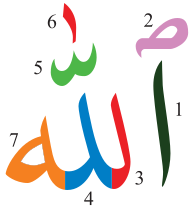
The word Allāh is generally pronounced , exhibiting a heavy ar, , a velarized alveolar lateral approximant, a marginal phoneme in Modern Standard Arabic. Since the initial alef has no hamza, the initial is elided when a preceding word ends in a vowel. If the preceding vowel is , the ar is light, , as in, for instance, the Basmala.
As a loanword
English and other European languages
The history of the name Allāh in English was probably influenced by the study of comparative religion in the 19th century; for example, Thomas Carlyle (1840) sometimes used the term Allah but without any implication that Allah was anything different from God. However, in his biography of Muḥammad (1934), Tor Andræ always used the term Allah, though he allows that this "conception of God" seems to imply that it is different from that of the Jewish and Christian theologies.
Languages which may not commonly use the term Allah to denote God may still contain popular expressions which use the word. For example, because of the centuries long Muslim presence in the Iberian Peninsula, the word ojalá in the Spanish language and oxalá in the Portuguese language exist today, borrowed from Andalusi Arabic xaa similar to ar (). This phrase literally means 'if God wills'. The German poet Mahlmann used the form "Allah" as the title of a poem about the ultimate deity, though it is unclear how much Islamic thought he intended to convey.
Some Muslims retain the name "Allāh" untranslated in English, rather than using the English translation "God".
Malaysian and Indonesian language
Main article: Titular Roman Catholic Archbishop of Kuala Lumpur v. Menteri Dalam Negeri, 2010 attacks against places of worship in Malaysia

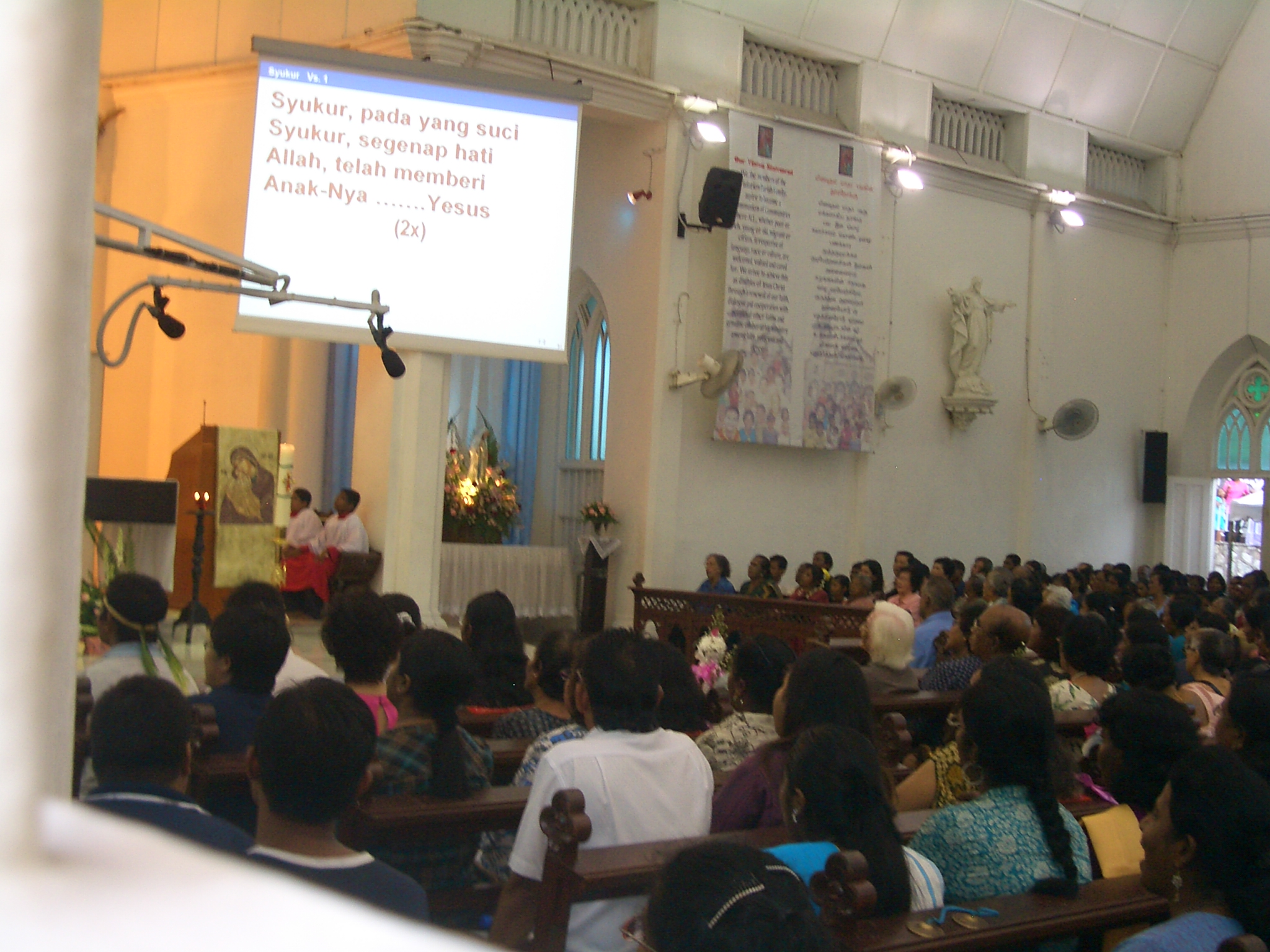
Christians in Malaysia and Indonesia use Allah to refer to God in the Malaysian and Indonesian languages (both of them standardized forms of the Malay language). Mainstream Bible translations in the language use Allah as the translation of Hebrew hbo (translated in English Bibles as "God"). This goes back to early translation work by Francis Xavier in the 16th century. The first dictionary of Dutch-Malay by Albert Cornelius Ruyl, Justus Heurnius, and Caspar Wiltens in 1650 (revised edition from 1623 edition and 1631 Latin edition) recorded Allah" as the translation of the Dutch word Godt. Ruyl also translated the Gospel of Matthew in 1612 into the Malay language (an early Bible translation into a non-European language, But compare: made a year after the publication of the King James Version), which was printed in the Netherlands in 1629. Then he translated the Gospel of Mark, published in 1638.
For a time it became illegal for non-Muslims to use "Allah" after the country experienced a social and political upheaval in the face of the word being used by Malaysian Christians and Sikhs. The government of Malaysia in 2007 prohibited usage of the term Allah in any other but Muslim contexts, but the Malayan High Court in 2009 overturned the law, ruling it unconstitutional. While Allah had been used for the Christian God in Malay for more than four centuries, the contemporary controversy was triggered by usage of Allah by the Roman Catholic newspaper The Herald. The government appealed the court ruling, and the High Court suspended implementation of its verdict until the hearing of the appeal. In October 2013 the court ruled in favor of the government's ban. In early 2014 the Malaysian government confiscated more than 300 bibles for using the word to refer to the Christian God in Peninsular Malaysia. However, the use of Allah is not prohibited in the two Malaysian states of Sabah and Sarawak. The main reason it is not prohibited in these two states is that usage has been long-established and local Alkitab (Bibles) have been widely distributed freely in East Malaysia without restrictions for years. Both states also do not have similar Islamic state laws as those in West Malaysia. The ban was overturned in 2021.
In reaction to some media criticism, the Malaysian government has introduced a "10-point solution" to avoid confusion and misleading information. The 10-point solution is in line with the spirit of the 18- and 20-point agreements of Sarawak and Sabah.
Typography

The word ar is always written without an ar to spell the ar vowel. This is because the spelling was established before Arabic spelling started regularly using ar to spell ar. However, in vocalized spelling, a small diacritic ar is added on top of the ar to indicate the pronunciation.
In the pre-Islamic Zabad inscription, God is referred to by the term الاله, that is, alif-lam-alif-lam-ha. This presumably indicates ar means "the god", without ar for ā.
Many Arabic type fonts feature special ligatures for Allah.
Since Arabic script is used to write other texts rather than Koran only, rendering ar + ar + ar as the previous ligature is considered faulty which is the case with most common Arabic typefaces.
:—SIL International}}
Unicode
Unicode has a code point reserved for ar, , in the Arabic Presentation Forms-A block, which exists solely for "compatibility with some older, legacy character sets that encoded presentation forms directly"; this is not recommended for new text. Instead, the word ar should be represented by its individual Arabic letters, while modern font technologies will generate the desired ligature.
The calligraphic variant of the word used as the emblem of Iran is encoded in Unicode, in the Miscellaneous Symbols range, at code point U+262B (☫). The flags that include the word are also present in the regional indicator symbols of Unicode: 🇮🇶, 🇸🇦, 🇦🇫, 🇮🇷, 🇺🇿.
Gallery
National flags with "Allah" written on them
File:Flag of Iraq.svg|Flag of Iraq with the Takbir written on it File:Flag of Saudi Arabia.svg|Flag of Saudi Arabia with the Shahada written on it File:Flag of the Taliban.svg|Flag of Afghanistan with the Shahada written on it File:Flag of Iran.svg|Flag of Iran with the Takbir written on it
Notes
References
General and cited references
- The Unicode Consortium, Unicode Standard 5.0, Addison-Wesley, 2006, , About the Unicode Standard Version 5.0 Book
References
- [http://dictionary.reference.com/browse/allah "Allah"]. ''[[Random House Webster's Unabridged Dictionary]]''.
- "Allah". [[Oxford Learner's Dictionaries]].
- (2024-03-18). "Definition of ALLAH".
- "God". PBS.
- "Islam and Christianity", ''Encyclopedia of Christianity'' (2001): Arabic-speaking Christians and Jews also refer to God as ''Allāh''.
- Gardet, L.. "Allah". Brill Online.
- Merriam-Webster. "Allah".
- Zeki Saritoprak. (2006). "Allah". [[Routledge]].
- Vincent J. Cornell. (2005). "God: God in Islam". MacMillan Reference USA.
- Christian Julien Robin. (2012). "Arabia and Ethiopia. In The Oxford Handbook of Late Antiquity". OUP USA.
- Anthony S. Mercatante & James R. Dow. (2004). "Allah". Facts on File.
- Encyclopedia of the Modern Middle East and North Africa, ''Allah''
- Willis Barnstone, Marvin Meyer ''The Gnostic Bible: Revised and Expanded Edition'' Shambhala Publications 2009 {{ISBN. 978-0-8348-2414-0 page 531
- Carl Skutsch. (2005). "Encyclopedia of the World's Minorities". Routledge.
- D.B. Macdonald. Encyclopedia of Islam, 2nd ed, Brill. "Ilah", Vol. 3, p. 1093.
- (2019). "Rain-Giver, Bone-Breaker, Score-Settler: Allāh in Pre-Quranic Poetry". American Oriental Society.
- Columbia Encyclopaedia says: Derived from an old Semitic root referring to the Divine and used in the Canaanite ''[[El (deity). El]]'', the Mesopotamian ''[[Ilah. ilu]]'', and the biblical ''[[Elohim]]'' and ''[[Eloah]]'', the word Allah is used by all Arabic-speaking Muslims, Christians, Jews, and other monotheists.
- [http://cal1.cn.huc.edu The Comprehensive Aramaic Lexicon] – Entry for ''ʼlh'' {{webarchive. link. (18 October 2013)
- [[Gerhard Böwering]]. [[Encyclopedia of the Quran]], Brill, 2002. Vol. 2, p. 318
- Reynolds, Gabriel Said. (2020). "Allah: God in the Qur'an". Yale university press.
- (2019). "Rain-Giver, Bone-Breaker, Score-Settler: Allāh in Pre-Quranic Poetry". American Oriental Society.
- Kiltz, David. "The Relationship between Arabic Allāh and Syriac Allāha." Der Islam 88.1 (2012): 47.
- Andreas Görke and Johanna Pink Tafsir and Islamic Intellectual History Exploring the Boundaries of a Genre Oxford University Press in association with The Institute of Ismaili Studies London {{ISBN. 978-0-19-870206-1 p. 478
- ibn ʿUmar al-Baydawi, ʿAbd Allah. (2016). "The Lights Of Revelation And The Secrets Of Interpretation". Beacon Books and Media Limited.
- It is generally accepted that the word is not derived from any root and does not carry a dictionary meaning and constitutes the proper name of the real god, or even if it has a dictionary meaning, it loses this meaning when it becomes the name of the real god./Kelimenin herhangi bir kökten türemiş olmayıp sözlük mânası taşımadığı ve gerçek mâbudun özel adını teşkil ettiği, yahut sözlükte bir anlamı olsa bile gerçek mâbuda ad olunca bu anlamı kaybettiği genellikle benimsenmektedir. https://islamansiklopedisi.org.tr/allah
- Morris S. Seale ''Muslim Theology A study of Origins with Reference to the Church Fathers'' Great Russel Street, London 1964 p. 58
- Hitti, Philip Khouri. (1970). "History of the Arabs". Palgrave Macmillan.
- Marshall G. S. Hodgson, ''The Venture of Islam: Conscience and History in a World Civilization'', [[University of Chicago Press]], p. 156
- James Bellamy, "Two Pre-Islamic Arabic Inscriptions Revised: Jabal Ramm and Umm al-Jimal", ''Journal of the American Oriental Society'', 108/3 (1988) pp. 372–378 (translation of the inscription) "This was set up by colleagues/friends of ʿUlayh, the son of ʿUbaydah, secretary/adviser of the cohort Augusta Secunda Philadelphiana; may he go mad/crazy who effaces it."
- Enno Littmann, Arabic Inscriptions (Leiden, 1949)
- Daniels, Peter T.. (2014). "The Type and Spread of Arabic Script".
- "M. A. Kugener, "Nouvelle Note Sur L'Inscription Trilingue De Zébed", Rivista Degli Studi Orientali, pp. 577-586.".
- Adolf Grohmann, Arabische Paläographie II: Das Schriftwesen und die Lapidarschrift (1971), Wien: Hermann Böhlaus Nochfolger, Page: 6-8
- Beatrice Gruendler, The Development of the Arabic Scripts: From the Nabatean Era to the First Islamic Century according to Dated Texts (1993), Atlanta: Scholars Press, Page:
- Irfan Shahîd, Byzantium and the Arabs in the Fourth Century, Dumbarton Oaks Trustees for Harvard University-Washington DC, page 418.
- Irfan Shahîd, Byzantium and the Arabs in the Fourth Century, Dumbarton Oaks Trustees for Harvard University-Washington DC, Page: 452
- A. Amin and A. Harun, Sharh Diwan Al-Hamasa (Cairo, 1951), Vol. 1, Pages: 478-480
- Al-Marzubani, Mu'jam Ash-Shu'araa, Page: 302
- L. Gardet, ''Allah'', Encyclopaedia of Islam, ed. by [[Hamilton Alexander Rosskeen Gibb. Sir H.A.R. Gibb]]
- Gerhard Böwering, ''God and his Attributes'', Encyclopedia of the Qur'an, ed. by [[Jane Dammen McAuliffe]]
- Zeki Saritopak, ''Allah'', The Qu'ran: An Encyclopedia, ed. by Oliver Leaman, p. 34
- Jonathan Porter Berkey. (2003). "The Formation of Islam: Religion and Society in the Near East, 600-1800". Cambridge University Press.
- Daniel C. Peterson. (26 February 2007). "Muhammad, Prophet of God". Wm. B. Eerdmans Publishing.
- Francis E. Peters. (1994). "Muhammad and the Origins of Islam". SUNY Press.
- Irving M. Zeitlin. (19 March 2007). "The Historical Muhammad". Polity.
- The Treasury of literature, Sect. 437
- The Beginning of History, Volume 3, Sect.10
- The Collection of the Speeches of Arabs, volume 1, section 75
- F.E. Peters, ''Islam'', p.4, Princeton University Press, 2003
- Thomas, Kenneth J. "Allah in Translations of the Bible." The Bible Translator 52.3 (2001): 301-306.
- Böwering, Gerhard, ''God and His Attributes'', Encyclopaedia of the Qurʼān, Brill, 2007.
- Williams, W. Wesley, "A study of anthropomorphic theophany and Visio Dei in the Hebrew Bible, the Quran and early Sunni Islam", University of Michigan, March 2009
- (15 August 2016). "bir söyleşide yaptığı ilgili açıklama".
- Knysh, Alexander D.. (1999-01-01). "Ibn 'Arabi in the Later Islamic Tradition: The Making of a Polemical Image in Medieval Islam". SUNY Press.
- Izutsu, Toshihiko. (1984-01-01). "Sufism and Taoism: A Comparative Study of Key Philosophical Concepts". University of California Press.
- Tabatabai, Allamah. "Al-Mizan Discourses".
- (1988). "The Qur'an Possesses Revelation and Exegesis". Islamic Ma'aref Foundation Institute.
- Mohammad Rafi-ud-Din. (1968). "The Manifesto of Islam: An Exposition of Islam as the Inevitable World Ideology of the Future". Din Muhammadi Press.
- Köylü, Murat. (2024-12-15). "Muslim Turcophobia: A Study of Two Missionary Authors". Cumhuriyet İlahiyat Dergisi.
- https://islamansiklopedisi.org.tr/kursi
- https://quran.com/al-araf/54
- https://quran.com/39
- "Surah Al-Baqarah - Ayatul Kursi".
- [[Arabic script in Unicode]] symbol for a Quran verse, U+06DD, page 3, [http://www.evertype.com/standards/iso10646/pdf/09419-encode-koranic.pdf Proposal for additional Unicode characters]
- [[Sale, G]] [[AlKoran]]
- Ibrahim, Zakyi. "To Use "God" or "Allah"?." American Journal of Islam and Society 26.4 (2009): i-vii.
- Bentley, David. (September 1999). "The 99 Beautiful Names for God for All the People of the Book". William Carey Library.
- Murata, Sachiko. (1992). "The Tao of Islam: a sourcebook on gender relationships in Islamic thought". SUNY.
- Carl W. Ernst, Bruce B. Lawrence, ''Sufi Martyrs of Love: The Chishti Order in South Asia and Beyond'', Macmillan, p. 29
- Andreas Görke and Johanna Pink Tafsir and Islamic Intellectual History Exploring the Boundaries of a Genre Oxford University Press in association with The Institute of Ismaili Studies London {{ISBN. 978-0-19-870206-1 p. 478
- Gary S. Gregg, ''The Middle East: A Cultural Psychology'', Oxford University Press, p.30
- Carolyn Fluehr-Lobban, ''Islamic Society in Practice'', University Press of Florida, p. 24
- M. Mukarram Ahmed, Muzaffar Husain Syed, ''Encyclopaedia of Islam'', Anmol Publications PVT. LTD, p. 144
- (1977). "The Cambridge history of Islam". University Press.
- Thomas E. Burman, ''Religious Polemic and the Intellectual History of the Mozarabs'', [[Brill Publishers. Brill]], 1994, p. 103
- (16 June 2018). "How do you pronounce "Allah" (الله) correctly?". ARABIC for NERDS.
- William Montgomery Watt, ''Islam and Christianity today: A Contribution to Dialogue'', [[Routledge]], 1983, p.45
- (2022). "Diccionario de la lengua española". Real Academia Española - ASALE.
- Islam in Luce López Baralt, ''Spanish Literature: From the Middle Ages to the Present'', Brill, 1992, p.25
- F. E. Peters, ''The Monotheists: Jews, Christians, and Muslims in Conflict and Competition'', [[Princeton University Press]], p.12
- link. (19 October 2013)
- The Indonesian Language: Its History and Role in Modern Society Sneddon, James M.; University of New South Wales Press; 2004
- The History of Christianity in India from the Commencement of the Christian Era: Hough, James; Adamant Media Corporation; 2001
- (1650). "Justus Heurnius, Albert Ruyl, Caspar Wiltens. "Vocabularium ofte Woordenboeck nae ordre van den alphabeth, in 't Duytsch en Maleys". 1650:65".
- Barton, John (2002–12). The Biblical World, Oxford, UK: Routledge. {{ISBN. 978-0-415-27574-3.
- North, Eric McCoy; Eugene Albert Nida ((2nd Edition) 1972). The Book of a Thousand Tongues, London: United Bible Societies.
- "Sejarah Alkitab Indonesia / Albert Conelisz Ruyl".
- "Encyclopædia Britannica: Albert Cornelius Ruyl".
- Roughneen, Simon. (14 October 2013). "No more 'Allah' for Christians, Malaysian court says". [[The Christian Science Monitor]].
- (2 January 2014). "BBC News - More than 300 Bibles are confiscated in Malaysia". BBC.
- (9 January 2014). "Catholic priest should respect court: Mahathir". [[Daily Express (Sabah).
- (29 March 2014). "Worship without hindrance". [[The Borneo Post]].
- [http://www.nzherald.co.nz/world/news/article.cfm?c_id=2&objectid=10620032 Sikhs target of 'Allah' attack], Julia Zappei, 14 January 2010, ''The New Zealand Herald''. Accessed on line 15 January 2014.
- [http://www.nzherald.co.nz/world/news/article.cfm?c_id=2&objectid=11139915 Malaysia court rules non-Muslims can't use 'Allah'], 14 October 2013, ''The New Zealand Herald''. Accessed on line 15 January 2014.
- [https://www.reuters.com/article/us-malaysia-religion-idUSBREA010C120140102 Malaysia's Islamic authorities seize Bibles as Allah row deepens], Niluksi Koswanage, 2 January 2014, Reuters. Accessed on line 15 January 2014. [https://www.reuters.com/article/us-malaysia-religion-idUSBREA010C120140102]
- (25 January 2014). "Bahasa Malaysia Bibles: The Cabinet's 10-point solution".
- (24 January 2014). "Najib: 10-point resolution on Allah issue subject to Federal, state laws". [[The Star (Malaysia).
- Idris Jala. (24 February 2014). "The 'Allah'/Bible issue, 10-point solution is key to managing the polarity". The Star.
- "Scheherazade New".
- Unicode of Allah https://unicodeplus.com/U+FDF2
- UnicodeThe Unicode Consortium. [https://www.unicode.org/faq/middleeast.html#5 FAQ - Middle East Scripts] {{webarchive. link. (1 October 2013)
- "''Unicode Standard 5.0'', p.479, 492".
- [https://unicodeplus.com/U+262B Farsi Unicode]
This article was imported from Wikipedia and is available under the Creative Commons Attribution-ShareAlike 4.0 License. Content has been adapted to SurfDoc format. Original contributors can be found on the article history page.
Ask Mako anything about Allah — get instant answers, deeper analysis, and related topics.
Research with MakoFree with your Surf account
Create a free account to save articles, ask Mako questions, and organize your research.
Sign up freeThis content may have been generated or modified by AI. CloudSurf Software LLC is not responsible for the accuracy, completeness, or reliability of AI-generated content. Always verify important information from primary sources.
Report